
 Business License
Remote Control Lawn Mower OEM: A Distributor's Guide to Private-Label Sourcing
In March 2024, Lars Hoffman lost a municipal contract in Gdansk because his catalog looked identical to three other resellers. Every bidder was offering the same blue-branded machine from the same Alibaba trading company. The procurement officer yawned and picked the lowest quote. Lars walked away with nothing but a lesson: if you don't own the brand, you don't own the margin.
If you're a distributor, dealer, or importer researching remote control lawn mower OEM options, you already know the problem. The slope-mower market is growing. Demand for remote-controlled equipment is climbing across Europe, North America, and Australia. But most suppliers will sell you a generic box with a sticker. That is not OEM. That is resale with extra steps.
This guide will show you what real remote control lawn mower OEM manufacturing looks like. You'll learn how to spot an actual factory versus a trading-company middleman, what certifications and customization options matter, and how to structure an OEM partnership that lets you build a brand instead of fighting on price. Whether you run a landscaping supply business, an agricultural equipment dealership, or an import operation, the right OEM partner determines whether you own your market or rent it.
Want to see what a real OEM program includes? Browse Vigorun's customized mower configurations →
What Does Remote Control Lawn Mower OEM Mean for Your Business?
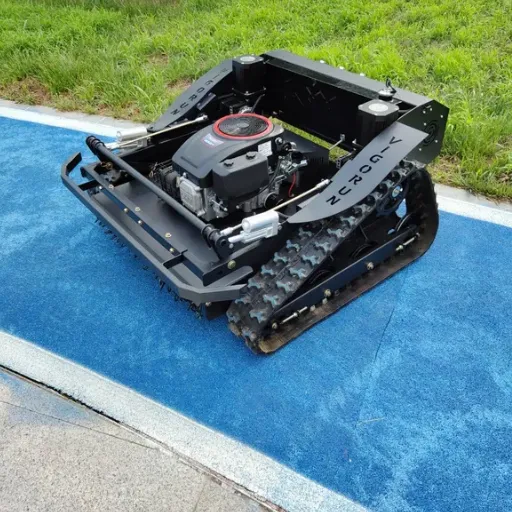
A remote control lawn mower OEM arrangement means the manufacturer builds the machine to your specification, under your brand, with your packaging and documentation. You are not buying someone else's leftover inventory. You are creating a product line that carries your logo, your color scheme, and your dealer support promise.
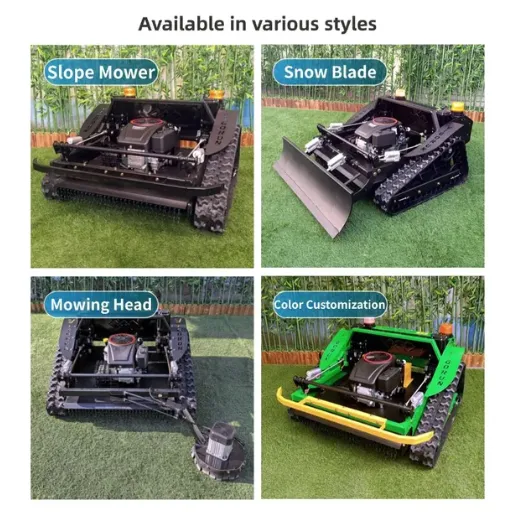
Real OEM goes deeper than slapping a decal on a stock unit. It includes custom paint or powder coat, branded control panels, your logo on the transmitter and chassis, operator manuals in your language with your contact details, and packaging designed for your local retail or warehouse environment. Some partners even co-develop model variants: a custom deck width for Australian properties, a specific engine spec for EURO VI preparation, or a transport-bed attachment for orchard markets.
For distributors, the difference is stark. A reseller moves boxes and competes on price. An OEM partner builds equity. Every unit sold under your brand strengthens your catalog, increases customer retention, and raises the barrier for competitors who can only offer generic imports.
Why Distributors Are Moving to Private Label Remote Control Mowers
The remote-controlled outdoor power equipment market has shifted. Five years ago, most buyers were early-adopter municipalities and wealthy estate owners. Today, commercial landscapers, solar-farm operators, and vineyard managers in 140-plus countries are spec'ing remote mowers as standard equipment. The distributors who serve them are realizing that private label remote control mower programs offer four advantages that off-the-shelf resale cannot match.
Margin control. When you OEM, you set the price. There is no Amazon listing undercutting your dealer network. No competitor flashing the exact same machine at cost plus five percent. Your brand creates perceived differentiation even when the chassis is similar.
After-sales ownership. Customers call you for parts and service. Because your name is on the machine, the relationship is yours. A well-structured remote control lawn mower OEM agreement includes lifetime parts support from the factory, so you never get stranded with a warranty claim you cannot fulfill.
Market positioning. A distributor with a branded slope-mower line can approach municipal procurement, agricultural cooperatives, and commercial landscaping fleets as a manufacturer partner, not a commodity broker. That positioning wins larger contracts and longer relationships.
Product evolution. Factory-direct OEM partners accept feedback. If your orchard customers need a narrower chassis for tight row spacing, or your municipal clients want an LED beacon kit for roadside visibility, a real manufacturer can engineer the change. A trading company cannot.
Mini-Story: The Dealer Who Doubled His Margin
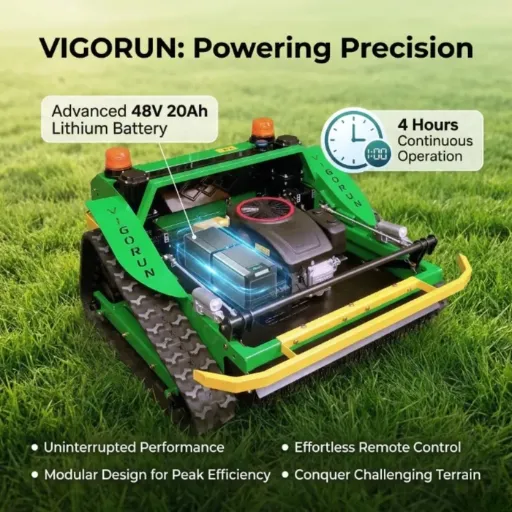
Henrik Eriksen ran a small outdoor equipment shop outside Oslo. For two years he sold standard remote mowers from a Chinese trading company. His margin was eighteen percent. His customers loved the machines but bought them online the moment they found a cheaper price.
In 2025, Henrik switched to an OEM remote control lawn mower program. He chose a custom forest-green color to match the Scandinavian market, added his logo to the transmitter and chassis, and produced Norwegian-language manuals with his service number on the cover.
His wholesale price from the factory dropped because he eliminated the trading-company markup. His retail price stayed the same. His effective margin jumped to thirty-four percent.
More importantly, his customers stopped price-shopping. The machine carried his brand, his manual, and his phone number. When a blade wore out, they called Henrik.
When a neighboring municipality needed a slope mower, they asked for the green machine from the local dealer. Henrik went from selling boxes to building a brand. That is what remote control lawn mower OEM sourcing should deliver.
Five Standards Every Remote Control Lawn Mower OEM Partner Must Meet
Not every factory that claims OEM capability can deliver. Before you sign an agreement or send a deposit, verify these five standards. They separate a real manufacturing partner from a repackaging operation.
1. In-House Manufacturing, Not Trading-Company Resale
A true remote control lawn mower manufacturer owns the production line. You should be able to visit the facility, watch chassis welding, engine installation, and QC testing. Ask for factory video, live virtual tours, or third-party audit documentation. Trading companies rent office space and ship someone else's product. They cannot control lead times, design changes, or quality consistency.
2. Certifications Ready for Your Market
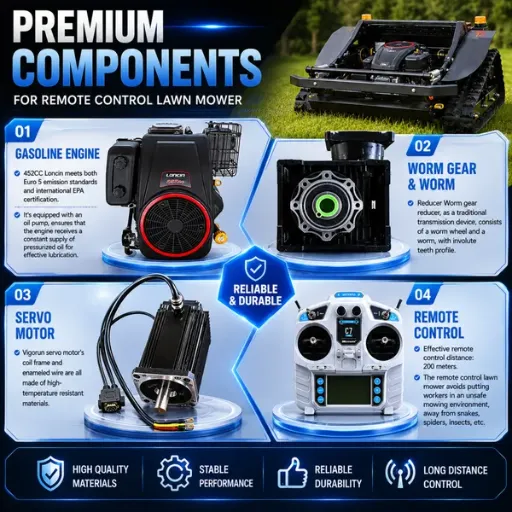
Your customers' customs brokers need documentation. Your OEM partner should ship CE certification for European markets, EPA emission compliance for North America, and EURO V or EURO VI engine certification wherever applicable. Verify that the certificates name the actual factory, not a shell company. CE marking standards and EPA emission guidelines are non-negotiable for regulated markets.
3. Customization Beyond the Logo
Basic OEM includes color, logo, and manual customization. Advanced OEM includes model-variant co-development, custom deck configurations, attachment integration, and packaging designed for your container-loading requirements. Ask whether the factory has an in-house R&D team and whether they have filed patents on their own designs. A partner with vertical engineering capability can evolve with your market.
4. 100% Pre-Delivery Testing
Every unit should pass indoor bench tests and outdoor field tests before it ships. Not spot checks. Not random samples. One hundred percent. Ask for the test protocol. A factory with a dedicated QC department and documented test ramps will show you photos, videos, and test reports without hesitation.
5. Stable Supply and Clear Lead Times
OEM relationships fail when supply chains wobble. Confirm monthly production capacity, typical lead times for standard and customized orders, and container-loading efficiency. A factory producing approximately two hundred units per month with optimized 20-foot and 40-foot container diagrams can plan a season with you. A trading company guessing at lead times cannot.
Factory Direct vs. Trading Company: The OEM Sourcing Gap
Most distributors who search for a remote control lawn mower OEM partner start on Alibaba or at a trade show. They find thirty listings that look similar. They request quotes. They pick the lowest price.
Six months later, they discover the supplier was a trading company that disappeared after the third container.
The difference between a factory and a trading company is not always obvious from a website. Here is how to tell.
A real factory will name its location precisely. "Weifang, Shandong Province, China" means something. It places the facility in the same industrial corridor as Weichai Power and Caterpillar SEM, where machinery manufacturing expertise runs deep. A trading company will say "China" or "Shenzhen" and avoid specifics.
A real factory will discuss R&D. They will mention patent applications, custom engineering projects, or model-line evolution. A trading company sells what is already in the warehouse. They cannot modify a chassis, adjust an engine mount, or develop a new attachment.
A real factory will offer OEM customization as a standard service, not a special favor. They will have established MOQs, color palettes, and documentation templates because they do this every week. A trading company will pause, check with their upstream supplier, and quote a premium for anything beyond the stock SKU.
Ready to talk to a factory, not a middleman? Learn about Vigorun's manufacturing background →
Mini-Story: The Container That Arrived Without Certifications
Marco Bellini, an Italian equipment importer, placed a twenty-foot container order with a trading company he found at a trade show in Bologna. The price was excellent. The brochures were glossy. The machines looked identical to a competitor's line he had seen in Germany.
When the container arrived in Milan, customs held it for eleven days. The CE documentation was missing. The engine certificates were copies of copies with no traceable factory name. Marco's broker could not verify EPA compliance for the two units bound for a Swiss distributor.
By the time the paperwork was sorted, Marco had missed his spring delivery window. Two dealers cancelled their orders.
The root cause was simple. The trading company had never manufactured anything. They had bought machines from an anonymous workshop, repackaged them, and promised certifications they did not control.
Marco eventually found a direct remote control lawn mower manufacturer with in-house CE, EURO V, and EPA documentation. His second container cleared customs in forty-eight hours. The lesson cost him twenty thousand euros and two distributor relationships.
What to Demand From a Remote Control Lawn Mower OEM Manufacturer
Once you have verified that your prospect is an actual factory, structure your OEM agreement around these deliverables. Do not assume they are standard. Confirm them in writing before the first deposit.
Custom branding scope. Define exactly what changes: chassis paint color, logo placement on the body and transmitter, control-panel labeling, operator manual cover and content, packaging artwork, and carton markings. Request physical samples or high-resolution mockups before production begins.
Certification documentation. Insist on original certificates or factory-authorized copies for CE, EPA, and EURO compliance. Confirm that the certificates name the factory entity that appears on your invoice and bill of lading. Mismatched documentation kills customs clearance.
Quality assurance protocol. Require written confirmation of 100% indoor and outdoor testing. Ask for test-ramp slope angles, engine run-in duration, radio range verification, and hydraulic pressure checks. A serious remote control lawn mower OEM partner will share this protocol without negotiation.
Parts and warranty support. Standard terms should include a twelve-month manufacturer warranty on defects plus a whole-life parts commitment. Ask how parts are ordered, typical air-freight lead times, and whether technical support is available in English via video call or direct messaging.
Volume and scaling terms. Clarify MOQ for the first order, volume discounts at five-unit, ten-unit, and container-load tiers, and lead-time guarantees. Ask about container-loading optimization. A factory that provides packing diagrams for twenty-foot and forty-foot containers has done this before.
See how Vigorun structures OEM and customized mower programs →
Mini-Story: From Five Units to Fifty
In 2023, Ana Torres started as a one-person import agent in Santiago. She bought five remote mowers from a factory in Shandong, added her own branding, and sold them to Chilean vineyard managers. The machines performed well.
Her customers asked for sprayer attachments. Then transport beds. Then a narrower chassis for tight row spacing.
Because her OEM partner had in-house R&D, Ana could request design changes that trading companies would have refused. Within eighteen months, her catalog grew from one mower model to four machine variants plus two attachments. She placed a fifty-unit container order for the 2025 season. Her brand now dominates the central-valley vineyard equipment market.
Ana's story illustrates why remote control lawn mower OEM partnerships matter. A factory that builds its own chassis can adapt. A trading company that buys stock cannot. For distributors in growing markets, that adaptability is the difference between a one-time sale and a category-leading brand.
Remote Control Lawn Mower OEM Pricing, MOQ, and Lead Times
Distributors always ask about numbers. While every OEM program varies based on customization depth and order volume, here are the benchmarks you should expect from a legitimate remote control lawn mower manufacturer.
| Item | Typical Range | Notes |
|---|---|---|
| MOQ for basic OEM | 5–10 units | Logo, color, manual customization |
| MOQ for advanced OEM | 20–40 units | Co-developed variants, custom packaging |
| Unit price (factory-direct) | 7,500–7,500–16,000 | Depends on engine, tracks, attachments |
| Lead time (standard) | 30–45 days | In-stock configurations |
| Lead time (custom OEM) | 45–60 days | Color, logo, manual, packaging changes |
| Container capacity (20 ft) | 4–6 units | Depends on crating and attachment mix |
| Container capacity (40 ft HC) | 10–14 units | Optimized loading with factory diagrams |
| Warranty | 12 months | Manufacturing defects, factory-backed |
| Parts support | Lifetime | Whole-life availability, air-freight option |
The key insight is not the absolute price. It is the total landed cost plus the margin structure. A factory-direct remote control lawn mower OEM partner eliminates trading-company markup, typically saving distributors fifteen to twenty-five percent on unit cost. That margin room funds your local marketing, dealer incentives, and after-sales service network.
Conclusion: Build Your Brand on a Proven Chassis
The remote control lawn mower OEM market rewards distributors who think like manufacturers. Generic resale is a race to the bottom. Private-label partnerships built on real factory capability, verified certifications, and co-development potential create sustainable competitive advantage.
If you are evaluating remote control lawn mower OEM partners, start with verification. Confirm factory ownership. Inspect certification originals. Review the test protocol. Talk to the engineer who designed the chassis, not just the sales representative who quotes it. The extra due diligence upfront prevents the customs delays, warranty nightmares, and supply gaps that destroy distributor businesses.
Vigorun Tech builds remote-controlled mowers, flail heads, and tracked chassis in Weifang, Shandong. We supply OEM color, logo, packaging, and documentation as a standard service. Every unit clears 100% indoor and outdoor field testing before shipment.
Our gasoline engines carry CE, EURO V, and EPA certification. We ship to approximately 140 countries, and we commit to whole-life parts support on every machine we build.
Request OEM Pricing and MOQ Details →
Whether you need five units to test your market or a container load to supply your dealer network, a real remote control lawn mower OEM partnership starts with the right factory. Choose a partner that builds, tests, and backs every unit. Your brand depends on it.
Recently Posted
-
Remote Control Lawn Mower for Steep Slopes: A Field Engineer's Guide
June 12, 2026Carlos Mendez watched the retention pond embankment from the cab of his pickup. The grass was knee-high, the grade was 38°, and th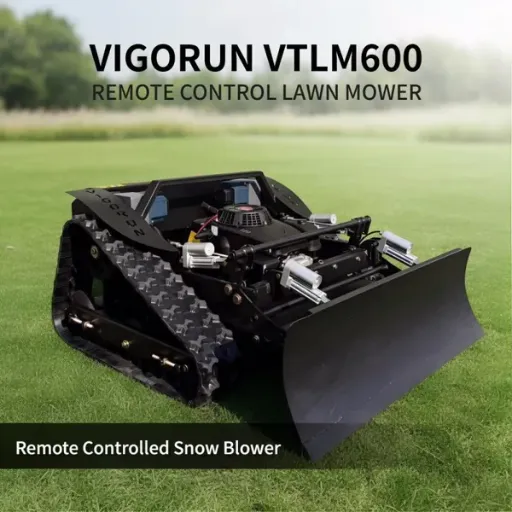 Read More
 -
How Does a Remote Control Lawn Mower Work? A Field Engineer's Breakdown
June 12, 2026Marcus Chen watched his first demonstration from 150 meters away. The operator held a boxy transmitter, thumbs on two joysticks, w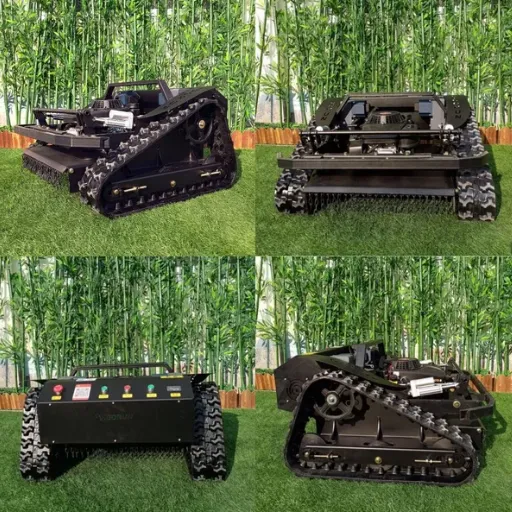 Read More
 -
Are Remote Control Lawn Mowers Worth It? A Factory-Direct ROI Breakdown
June 12, 2026Antonio Moretti paid his grounds crew EUR 38,000 in overtime last season to hand-strim a 12-hectare orchard in Piedmont. The next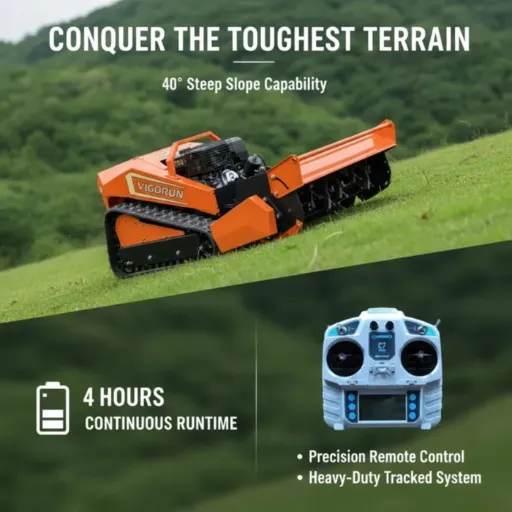 Read More
 -
Remote Control Lawn Mower Buyer's Guide: 7 Things to Check Before You Spend a Dollar
June 12, 2026Lars Hoffmann uncrated his new "slope mower" in March 2025 and drove it straight to the 30-degree embankment behind his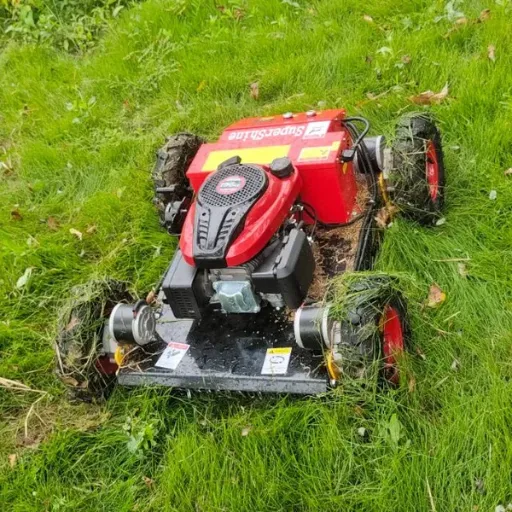 Read More

Contact Us
Recommended Products
-
 Vigorun Remote Control Electric Mower Self-Locking Slope Safety Crawler Mower for Lawn & GardenUS$ 2600 - 2700MOQ: 1 Set
 -
Vigorun RC Mower Remote Control Multi-Function Tool Carrier Remote-Controlled Electric MulcherUS$ 2800 - 2900MOQ: 1 Set
-
Vigorun Lawn Mowers Multi-Function Tool Carrier 1000mm Remote Control Forest Mulcher Flail MowerUS$ 8000 - 8200MOQ: 1 Set
-
Vigorun SPRY600 Tractor Sprayer Industrial 4-Stroke Agricultural Sprayers 600l for Soybean FieldsUS$ 2600 - 2700MOQ: 1 Set
-
Vigorun Grass Cutting Machine High-Speed (6 Km/h) Wheeled Lawn Mower for Tea & Coffee PlantationsUS$ 1000 - 1100MOQ: 1 Set
-
Vigorun Robot Brush Mower Euro 5/EPA Self-Locking Slope Safety Remote Control Track Lawn MowerUS$ 1700 - 17900MOQ: 1 Set
-
Vigorun Controlled Lawn Mower Anti-Rollback Security Lawn Mower Crawler for Slopes & HillsidesUS$ 2600 - 2700MOQ: 1 Set
-
Vigorun Robot Weed Cutter Quick-Change Attachment System Remote Controlled Motorcycle MulcherUS$ 2800 - 2900MOQ: 1 Set
-
Vigorun Remote Control Lawn Mower Quick-Change Attachment System Robot Tracked Forestry MulcherUS$ 8000 - 8200MOQ: 1 Set
-
Vigorun SPRY600 Boom Sprayer Electric Start Electric Sprayer Agricultural 600l for Cotton FieldsUS$ 2600 - 2700MOQ: 1 Set
-
Vigorun Brush Mower Euro 5/EPA Hazard-Free Operation Hightop Lawn Mower for Orchards & VineyardsUS$ 1000 - 1100MOQ: 1 Set
-
Vigorun Brush Cutter Robot High Transmission Efficiency 73% Crawler Lawn Mower for Steep SlopesUS$ 1700 - 17900MOQ: 1 Set
-
Vigorun Tractor Sprayer Agriculture Euro 5/EPA Agricultural Sprayers Self Starter for Wheat FieldsUS$ 2600 - 2700MOQ: 1 Set
-
Vigorun Grass Cutter Machine 16x Manual Efficiency Small Remote Control Lawn Mower for NurseriesUS$ 1000 - 1100MOQ: 1 Set
-
Vigorun RC Brush Cutter Euro 5/EPA Low Energy Consumption 6hp Crawler Remote Control Lawn MowerUS$ 1700 - 17900MOQ: 1 Set

-
Vigorun VTLM800 RC Mower Euro 5/EPA Remote Hazard Avoidance Robot Crawler Mower for Steep SlopesUS$ 2600 - 2700MOQ: 1 Set
-
Vigorun MTSK800 Automatic Grass Cutter Robot Euro 5/EPA User-Friendly Remote Control Mulcher RobotUS$ 2800 - 2900MOQ: 1 Set
-
Vigorun Lawn Mower Robot With Flail Mower/Hammer Flail/Forest Mulcher/Snow Blade Tracked MulcherUS$ 8000 - 8200MOQ: 1 Set
-
Tractor Sprayer, CE EPA Approved Gasoline Engine Gasoline Fst Power Spray Agriculture for Soybean Fields Vigorun SPRY600US$ 2600.00 - 2700.00MOQ: 1 Set
-
Vigorun SPRY600 Boom Sprayer, Remote Control Distance 200M Gasoline Engine Type Spraying Machine for Cotton FieldsUS$ 2600.00 - 2700.00MOQ: 1 Set