
 Business License

Land Clearing Mower: Heavy-Duty Buyer's Guide for 2026
The stump caught Marcus by surprise. He was three hours into clearing a five-acre lot outside Knoxville, running a mid-size rotary mower through chest-high brush, when the blade hit buried oak roots at full RPM. The spindle sheared clean off. The deck bent.
And his $4,200 machine became a very expensive paperweight before lunch.
If you're shopping for a land clearing mower, you already know that standard lawn equipment doesn't survive real brush. You need a machine built for saplings, rocks, uneven ground, and slopes that would tip a ride-on into the ditch. This guide compares the five machine types that actually handle land clearing, from walk-behind brush cutters to remote-controlled flail mowers, so you can match the tool to the terrain and protect your investment.
We build remote-controlled mowers, flail heads, and tracked chassis in Weifang, Shandong, and we test every unit on overgrown brush and 45-degree slopes before it ships. The recommendations below come from the same machines we send to operators in 140-plus countries.
Want to skip ahead to the machines? Browse the full Vigorun land clearing mower range and slope ratings →
What a Land Clearing Mower Actually Has to Handle
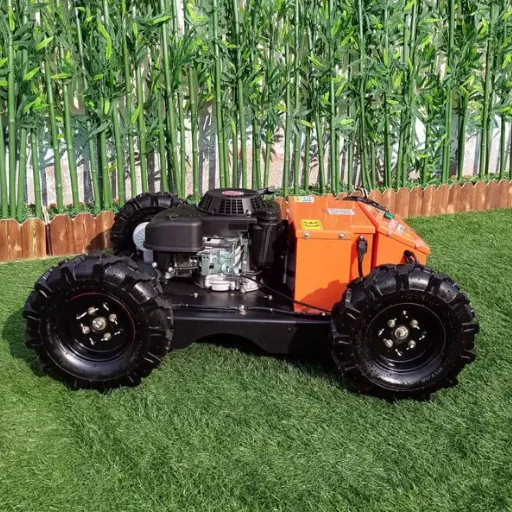
"Land clearing" covers more ground than most buyers realize. A pasture that sat idle for two seasons is a different job from a hillside choked with blackberries and saplings, and both are different from a commercial lot filled with construction debris and invasive weeds.
Before you spec a commercial land clearing mower, classify your actual conditions:
Grass and weeds up to 1 meter: Most rotary or flail mowers handle this on flat, clear ground. The challenge is volume, not toughness.
Brush and bramble up to 25 mm thick: Dense woody stems demand a brush cutter, flail mower, or dedicated land clearing machine. Rotary decks bog down or break spindles.
Saplings and heavy scrub up to 40 mm: Only a heavy duty land clearing mower with a flail head or forestry mulcher can process this safely. Consumer equipment won't survive.
Mixed debris and rock-strewn ground: Hidden obstacles change everything. Rotary blades strike hard objects and shatter. Flails pivot on impact and absorb the shock.
Terrain matters as much as vegetation. A flat field with thick brush is a different calculation from a 35-degree embankment with the same growth. Slope angle, soil moisture, and ground stability determine whether a person can safely walk the area, or whether the operator needs to stand 200 meters away and send a machine instead.
Safety Note: Cleared land hides more than rocks. Fence wire, rebar, abandoned equipment, and utility markers can all lurk under dense growth. Walk the site with a metal detector if the history of the property is unknown.
Five Land Clearing Mower Types Compared
There's no single best land clearing mower. There's only the right match for your vegetation, terrain, and labor budget.
| Machine Type | Best For | Max Vegetation | Slope Limit | Labor Required | Cost Range |
|---|---|---|---|---|---|
| Walk-behind brush cutter | Dense brush, flat to moderate slopes | 25 mm stems | 15° | Medium | 800–800–3,000 |
| Ride-on rotary mower | Grass, flat lawns, light weeds | 10–20 mm | 10–15° | Low | 2,500–2,500–8,000 |
| Ride-on flail mower | Heavy brush, rough flat ground | 25–40 mm | 15–20° | Low | 6,000–6,000–15,000 |
| Skid-steer mulcher | Forestry, demolition, large lots | 100+ mm trees | Flat to moderate | Medium-High | 25,000–25,000–80,000 |
| Remote-controlled flail mower | Heavy brush, steep slopes, hazardous terrain | 25–40 mm | 40–45° | One operator | 8,000–8,000–18,000 |
The gap between walk-behind and remote-controlled equipment is where most commercial operators get stuck. A walk-behind brush cutter handles dense growth, but it requires an operator on the ground, in the debris zone, and off balance on any slope past 15 degrees. A ride-on mower keeps the operator seated, but most ride-ons lose stability past 15 degrees and become a rollover risk past 20 degrees.
For land that combines thick brush with steep grades, riverbanks, levees, retention ponds, or orchard terraces, the remote control land clearing mower is the only option that keeps the operator safely away while the machine handles the vegetation and the slope.
Why a Flail Mower for Land Clearing Beats Rotary on Rough Ground
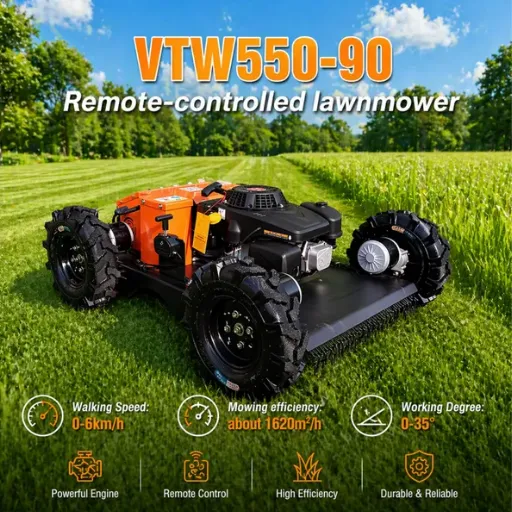
The flail head is the difference between a machine that survives the job and one that comes back bent.
A rotary mower spins one or two large blades at high speed. When the blade hits a rock, a stump, or a buried fence post, the impact transfers directly into the spindle, the deck, and the drivetrain. On flat, clean lawns, this design is efficient. On uncleared land, it's a liability.
A flail mower for land clearing uses dozens of small, hinged flails mounted on a horizontal drum. Each flail swings freely. When it strikes a hard object, it pivots away and absorbs the impact.
The drum keeps spinning. The machine keeps working. The operator keeps clearing.
The other advantage is cut quality on overgrown material. A rotary blade tends to push tall grass and brush forward before cutting, leaving uneven patches and windrows. A flail head pulls material inward and mulches it as it cuts, leaving a cleaner finish that decomposes faster. For contractors who need to clear and then sell or develop the land, that finish quality matters.
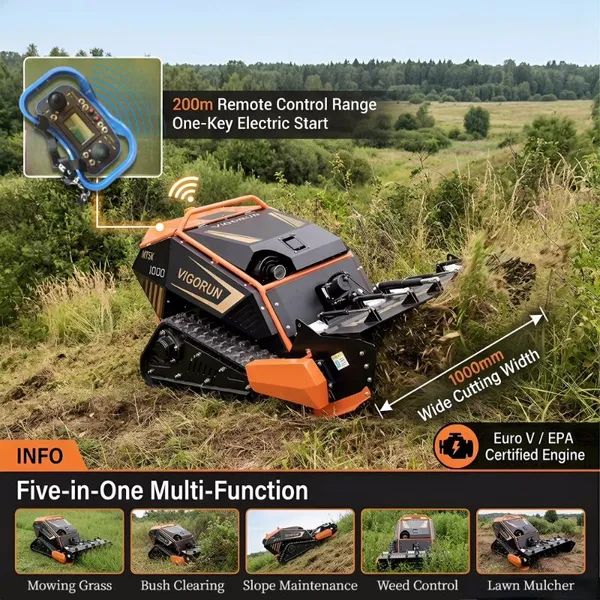
Interested in flail-head specs for your clearing jobs? See the MTSK1000 heavy-duty flail mower spec sheet →
Remote Control Land Clearing Mower: When the Terrain Fights Back
Some job sites are not safe for human operators. Period.
Steep embankments, unstable ground, hazardous debris, and extreme heat all put the operator at risk. OSHA data lists ride-on mower rollovers as a leading cause of serious injury in landscaping and grounds maintenance. On uncleared land, the risk multiplies because the operator cannot see the hazards hidden under the vegetation.
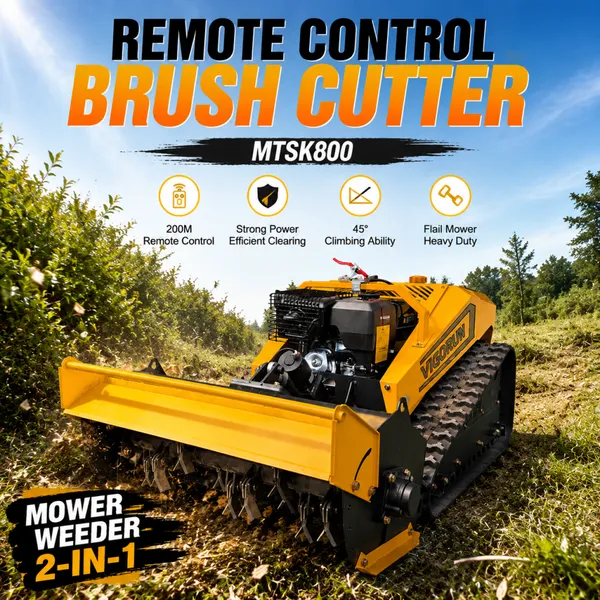
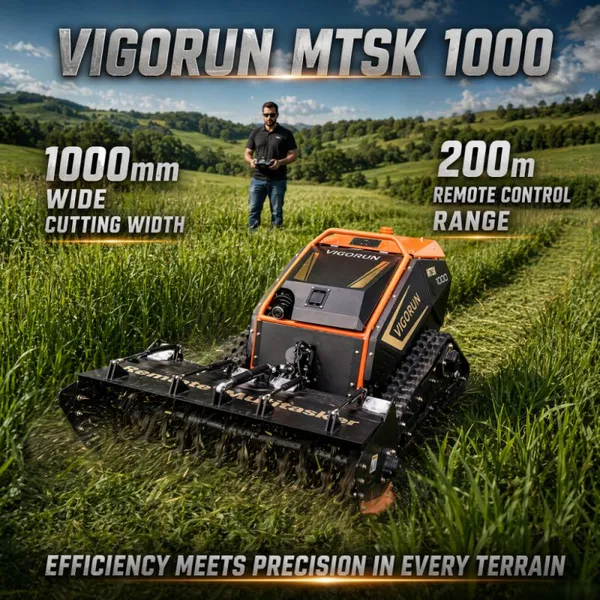
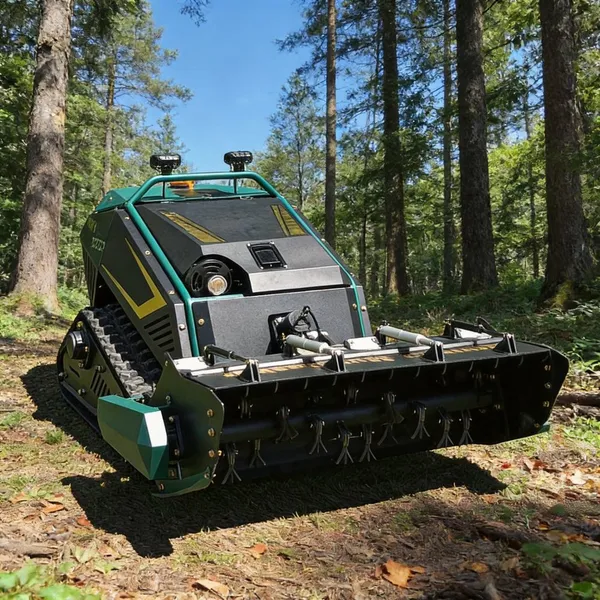
A tracked land clearing mower with remote control solves this by removing the operator from the danger zone entirely. The Vigorun remote platform, for example, uses a 2.4 GHz industrial radio with a 200-meter line-of-sight range. The operator stands on stable ground, often uphill of the work area, and controls the machine from a safe distance. If the machine tips, hits a stump, or encounters a hole, the operator is not on board.
The tracked chassis is the other critical factor. Rubber tracks distribute weight across a wider footprint than wheels, which reduces ground pressure and improves traction on loose or wet soil. On side slopes, the track profile grips where a tire would slide. The low center of gravity design keeps the machine stable on grades up to 45 degrees on dry grass.
For municipal crews, solar farm contractors, and land developers clearing steep or hazardous terrain, the remote control land clearing mower isn't a luxury. It's the only category that handles both the vegetation and the slope without putting a human in the danger zone.
Mini-Story: The Retention Pond Contract That Changed Everything
When the city of Gdansk put out a tender for retention pond maintenance in 2024, three contractors bid. Two proposed hand crews with brush cutters, quoting fourteen days and six workers. One contractor, Piotr, proposed a different approach: a single remote-controlled flail mower and one operator.
Piotr's bid was lower, but the city was skeptical. Could one machine really clear the 3.2-hectare pond embankment, with its 30-degree side slopes and dense reed growth, faster than a six-person crew?
It took four days. One operator. Zero safety incidents. The flail head processed reeds and woody brush alike, and the tracked chassis held the slope where a wheeled machine would have slid.
Piotr won the annual contract. The other two contractors now run remote machines on their own bids.
The lesson: on steep, overgrown terrain, the right land clearing mower doesn't just improve safety. It changes the economics of the job entirely.
Matching the Machine to Your Clearing Application
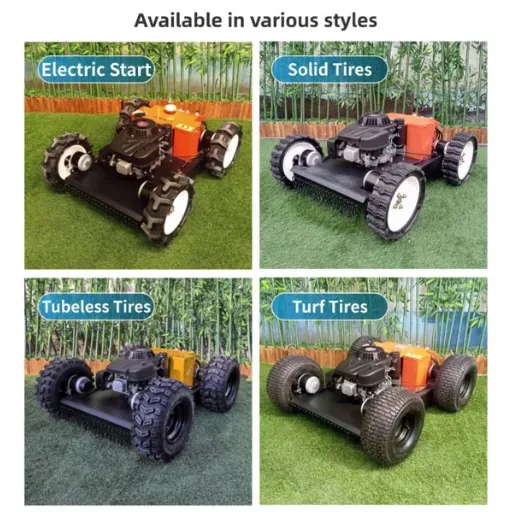
Different jobs demand different machines. Use this decision framework before you buy or rent.
Flat Fields and Pastures
For flat or gently rolling ground with grass, weeds, or light brush, a ride-on rotary or flail mower usually suffices. Commercial operators should spec at least a 48-inch deck and a 20-hp engine to handle dense growth without stalling. Budget 5,000to5,000to12,000 for a machine that will survive a season of heavy use.
Sloped Embankments and Riverbanks
Once the grade exceeds 15 degrees, ride-on mowers become dangerous. A walk-behind brush cutter works up to about 15 degrees, but the operator is still on the slope, in the debris zone, and fighting fatigue. For grades from 15 to 45 degrees, a tracked land clearing mower with remote control is the only safe option.
Orchards, Vineyards, and Terraced Land
Terraced land often combines narrow access, side slopes, and obstacles like trees or posts. A remote-controlled machine with a compact footprint and adjustable cutting height can clear between rows without damaging trunks or irrigation lines. The flail head is safer near obstacles than a large rotary blade.
Solar Farms and Utility Right-of-Way
Solar farm vegetation management requires regular clearing under panels, on perimeter slopes, and along access roads. The combination of low ground pressure (to protect buried conduit), slope capability (for panel ramps and berms), and remote operation (for safety near energized equipment) makes a remote control land clearing mower the standard choice for utility contractors.
Commercial Lots and Development Sites
Development sites often contain mixed debris: brush, rubble, rebar, and construction waste. No mower handles rebar. But a flail-equipped machine handles the brush and saplings while tolerating incidental contact with rocks and hard debris better than any rotary alternative. Always clear visible metal and concrete by hand first.
What to Demand From a Heavy Duty Land Clearing Mower
Whether you buy a walk-behind, a ride-on, or a remote-controlled machine, these specifications separate professional equipment from consumer toys.
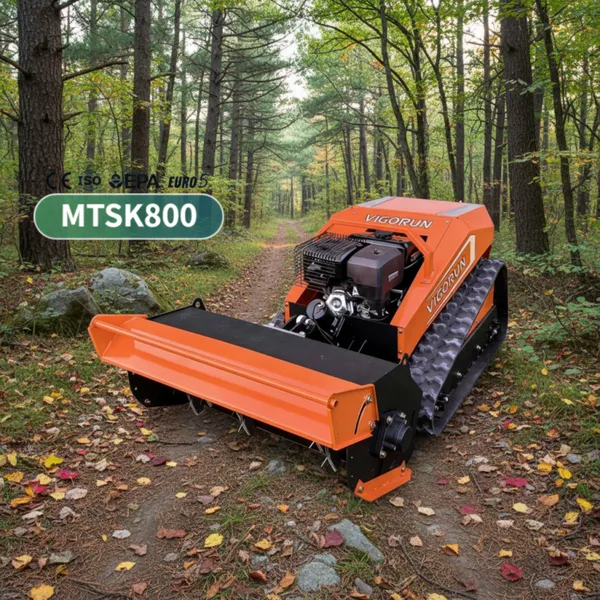
Engine and Emissions: Look for EURO V or EPA-certified gasoline engines if you operate in regulated markets. CE certification is mandatory for European resale. Ask for the certificate numbers, not just a logo on the brochure.
Cutting System: For brush and saplings, insist on a flail head with hammer or Y-flails rated for 25 mm material. For grass and light weeds, a rotary deck is fine. If the machine can't switch between the two, you're buying a single-purpose tool.
Track or Wheel Configuration: On slopes or soft ground, rubber tracks outperform wheels. Check the track width and the undercarriage design. A low center of gravity matters more on side slopes than raw horsepower.
Remote Range and Failsafes: For remote-controlled units, verify the radio range (200 meters is the industry benchmark for line-of-sight), the emergency stop function on both transmitter and chassis, and the lost-signal behavior. The machine should stop blade and motion automatically if signal is lost.
Warranty and Parts Support: A one-year warranty on manufacturing defects is the minimum. More important is parts availability. Ask whether the manufacturer stocks replacement flails, tracks, and drivetrain components, and how quickly they can ship to your region.
Pre-Delivery Testing: Every machine should be run and tested before it ships, not crated straight from the assembly line. Ask for a test report or video documentation.
Mini-Story: The Brush Fire That Never Happened
In central Portugal, wildfire risk is not theoretical. It is a annual threat that determines whether an orchard survives the summer. In 2023, João managed a 12-hectare hillside olive grove that had been partially abandoned. The undergrowth was thigh-high and dry by June.
He hired a crew with string trimmers. They cleared two hectares in five days. Then one of the workers found a wasp nest, another twisted an ankle on hidden rocks, and the crew refused to return to the steepest terraces. João was left with dry brush on a 25-degree slope and fire season approaching.
He rented a tracked land clearing mower with remote control. In three days, one operator cleared the remaining ten hectares. The flail head mulched the dry brush into fine material that decomposed instead of burning. The fire risk dropped. And João bought the machine outright before the next season.
Sometimes the best reason to clear land is the disaster you prevent.
Land Clearing Mower ROI: The Numbers That Matter
For commercial operators and municipal buyers, the decision comes down to cost versus output. Here is how the math breaks down on a typical 10-hectare clearing job with mixed brush and moderate slopes.
| Cost Factor | Hand Crew (6 workers) | Ride-On Mower + Crew | Remote Flail Mower (1 operator) |
|---|---|---|---|
| Labor days | 14 | 8 | 4 |
| Daily labor cost | $1,200 | $800 | $200 |
| Total labor | $16,800 | $6,400 | $800 |
| Equipment rental / depreciation | $400 | $1,200 | $1,600 |
| Fuel | $300 | $600 | $400 |
| Total job cost | $17,500 | $8,200 | $2,800 |
| Safety risk exposure | High | Medium | Low |
The remote control land clearing mower wins on labor cost, safety, and slope capability. The trade-off is a higher upfront purchase price. But on commercial contracts where steep or hazardous terrain is common, the machine pays for itself in well under a season.
For distributors, the ROI argument is even stronger. A contractor who saves $10,000 per job can afford to bid lower, win more contracts, and grow faster. The machine becomes a competitive weapon, not just a cost center.
Conclusion: Choose the Machine That Matches the Terrain
A land clearing mower isn't a luxury purchase for commercial operators. It's the tool that determines whether you can bid on the tough jobs, whether your crew comes home safe, and whether your equipment survives the season.
If your ground is flat and your growth is light, a ride-on flail mower may be all you need. If your jobs involve slopes, embankments, rocky terrain, or hazardous debris, a remote-controlled flail mower on a tracked chassis is the only category that clears the vegetation without risking the operator.
The five takeaways:
Classify your terrain first. Slope angle and ground conditions matter more than vegetation type.
Flail beats rotary on rough ground. The hinged flails absorb impact that would destroy a rotary spindle.
Remote control is a safety tool, not a gimmick. On slopes past 20 degrees, keeping the operator off the slope is the only responsible choice.
Demand certifications and testing. CE, EURO V, EPA, and pre-delivery field tests separate professional equipment from disposable imports.
Calculate total job cost, not just purchase price. The right machine wins bids and protects margins.
Ready to spec a land clearing mower for your fleet or your next contract? Request a quote on the MTSK or VTLM series and get FOB Shandong pricing with full CE documentation →
Recently Posted
-
Steep Slope 600mm Tracked 200m Remote Control 45 Degree Brushless Electric Lawn Mower
August 10, 2026*Integrated Drive System with 73 Percent Efficiency: The VTLM600 remote control lawn mower features a fully integrated brushless m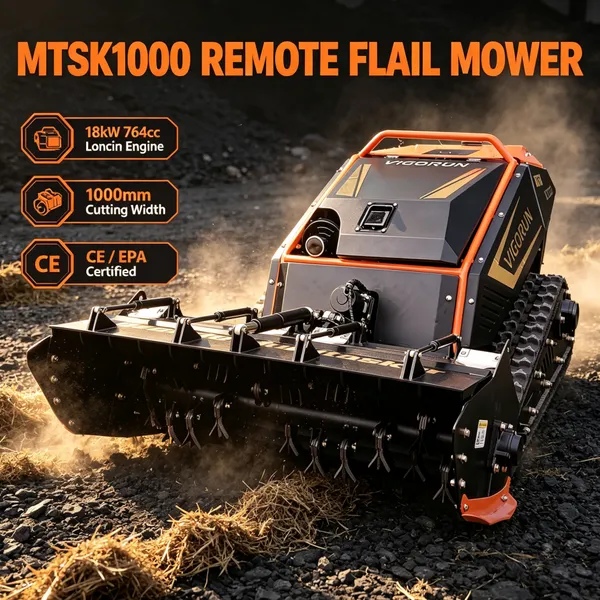 Read More
 -
Remote Controlled Pesticide Sprayer with 600L Tank 8.4m Boom for Agricultural Applications
August 10, 2026*Electric Start & 13kW Loncin Engine for Powerful Agricultural Spraying: Maximize field application efficiency with the SPRY60 Read More
 -
Self Propelled Agricultural Boom Sprayer with Adjustable Track for Modern Farming
August 10, 2026*Electric Start & 13kW Loncin Engine for Powerful Agricultural Spraying: Maximize field application efficiency with the SPRY60 Read More
 -
Automatic Remote Control Agricultural Spray Machine with 600L Chemical Tank and Boom System
August 10, 2026*Electric Start & 13kW Loncin Engine for Powerful Agricultural Spraying: Maximize field application efficiency with the SPRY60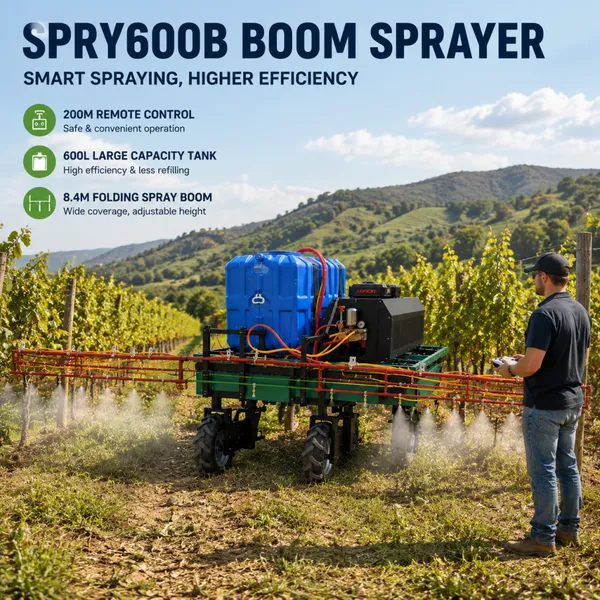 Read More

Contact Us
Recommended Products
-
 Vigorun Lawn Mower Robot, Industrial Dual 48V 1500W Motors MTSK1000 Mulcher Machine for Large LandscapesUS$ 7500.00 - 7700.00MOQ: 1 Set
 -
Farmland Orchards Battery Powered Mower Gasoline Golf Mower Robot Lawn Mower 3000m2 Vigorun Remote Control Grass MowerUS$ 2580 - 2700MOQ: 1 Unit
-
Vigorun MTSK800 Automatic Remote Control Grass Cutting Machine 48V 20Ah Battery Remote Flail MowerUS$ 2800 - 2900MOQ: 1 Set
-
Vigorun MTSK1000 Remote Control Mower 24hp Fail-Safe Slope Braking Remote Control Forest MulcherUS$ 8000 - 8200MOQ: 1 Set
-
Industry Electric Motor Lawn Mower Flail Mower Atv Gasoline Hedge Trimmer Battery LawnmowerUS$ 2580 - 2900MOQ: 1 Unit
-
Vigorun Agricultural Tractor Sprayer Euro 5/EPA Electric Agricultural Sprayer 600l for VineyardsUS$ 2600 - 2700MOQ: 1 Set
-
Remote Control Tracked Hillside Mower 800mm Cutting Width 60 Degree Slope for Steep Terrain VegetationUS$ 2600 - 2700MOQ: 1 Set
-
Vigorun VTLM600 RC Lawn Mower Robot CE EPA Certified 45° Extreme Slope Mini Crawler Lawn MowerUS$ 1700 - 17900MOQ: 1 Set
-
Remote Controlled High Efficiency Fog Cannon Spraying Machine 600L Tank for Agriculture and Dust ControlUS$ 2800 - 2900MOQ: 1 Set
-
Vigorun Radio Control Mowing Euro 5/EPA Self-Propelled & Precise 6hp Remote Control Crawler MowerUS$ 1700 - 1790MOQ: 1 Set
-
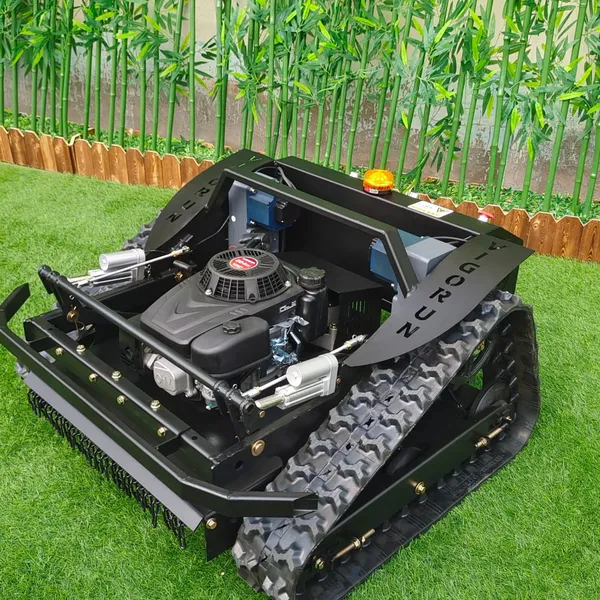
Factory Manufacturer Vigorun MTSK1000 1000MM Commercial Branch Cutter Flail Mower rc Remote Petrol Lawnmower Mower Grass Cutter TractorUS$ 8000 - 8200MOQ: 1 Set
-
Vigorun VTW550 Remote Control Grass Cutter Tractor Robot Gas Lawn Mower Grass Cutter Small Electric Lawn Mower Vigorun Lawn MowerUS$ 1000 - 1250MOQ: 1 Set
-
Vigorun Tech Gasoline Remote Control Lawn Mower Self-Locking Slope Safety RC Mower Tiller for EmbankmentsUS$ 2800.00 - 2900.00MOQ: 1 Set
-
Mower Gasoline Grass Cutter Machine Remote Control 1000mm Cut 35 Degree Slope Flail Hammer for Overgrown LandUS$ 7500 - 7700MOQ: 1 Set
-
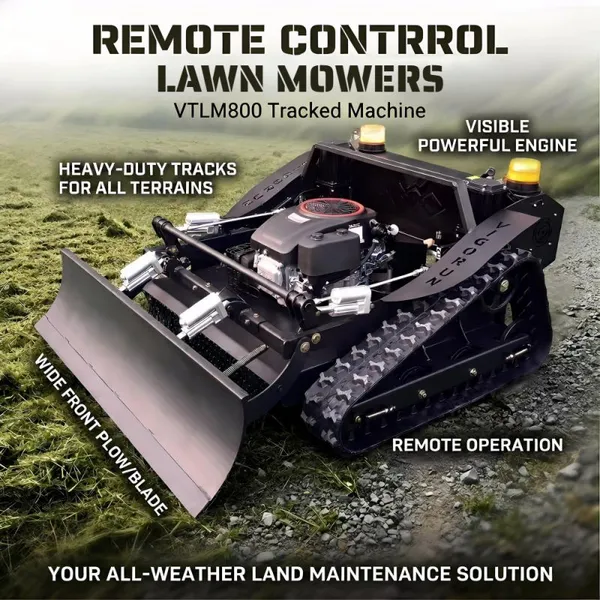
Vigorun VTLM800 Remote Control Electric Mower, Self-Locking Slope Safety Crawler Mower for Steep SlopesUS$ 2600.00 - 2700.00MOQ: 1 Set
-
Shrub and Brush Clearing MTSK800 MTSK1000 Flail Mower rc Remote Weeding Weeder MachineUS$ 2800 - 2900MOQ: 1 Set
-
RC Robot Lawn Mower Electric Remote Control Flail Grass Cutter Garden Cutting Machine MTSK1000US$ 8000 - 8200MOQ: 1 Set
-
Remote Manipulation Rubber Track Brush Cutter Industrial Flail Mower for Efficient Shrub ClearingUS$ 2000.00 - 2790.00MOQ: 1 Set
-
Vigorun MTSK1000 Rc Lawn Mower, Loncin 764CC Gasoline Engine Forestry Mulcher With Remote Control for ForestryUS$ 7500.00 - 7700.00MOQ: 1 Set
-
Vigorun VTC550 Zero Turn Electric Mower Quality Guaranteed Crawler Brush Cutter For Embankments & LeveesUS$ 1600 - 1690MOQ: 1 Set