
 Business License

How Does a Remote Control Lawn Mower Work? A Field Engineer's Breakdown
Marcus Chen watched his first demonstration from 150 meters away. The operator held a boxy transmitter, thumbs on two joysticks, while a tracked machine climbed a 30° embankment, spun 180 degrees, and dropped its cutting deck in one motion. Marcus had one question: how does a remote control lawn mower actually translate thumb movements into machine motion on a slope?
That question is more common than most manufacturers admit. Buyers see the video, read the range number, and still wonder what happens between the operator and the machine. This article answers it piece by piece.
We'll walk through the five systems that make a remote control lawn mower work: the radio link, the drivetrain, the cutting deck, the safety electronics, and the powerplant. By the end, you'll know how the signal travels, why the machine stops if it loses contact, and what separates a commercial unit from a hobby-grade toy.
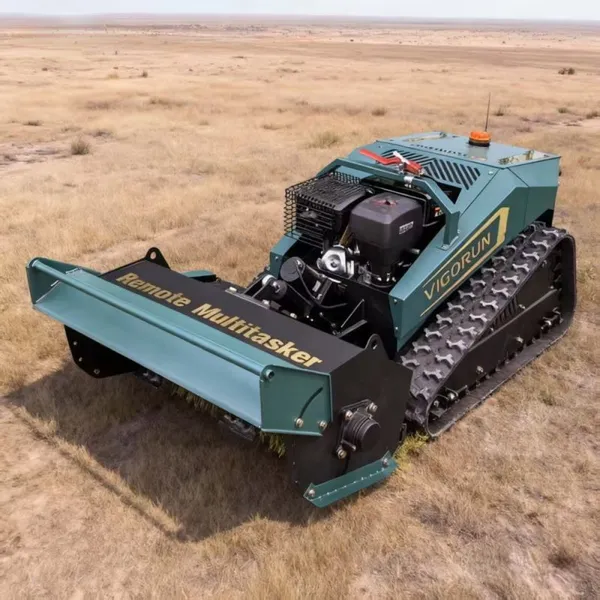
Browse the full Vigorun remote control lawn mower range to see how these systems come together in our tracked models.
What a Remote Control Lawn Mower Actually Is
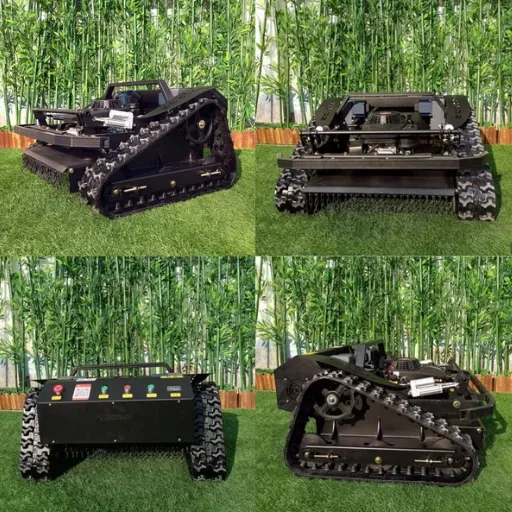
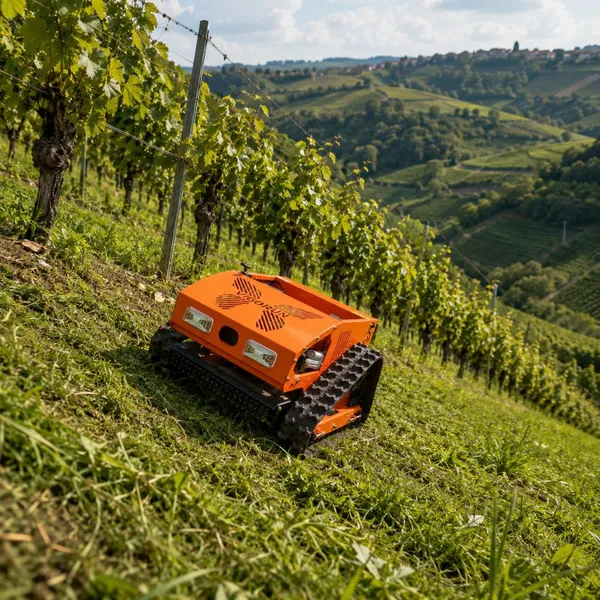
A remote control lawn mower is a self-propelled cutting machine controlled from a distance by a handheld radio transmitter. The operator does not ride on it. They stand safely away from the slope, the brush, and the debris while the machine handles the cut.
Commercial-grade units use a tracked or wheeled chassis, a gasoline or diesel engine, and an industrial radio system operating in the 2.4 GHz band. The operator sends commands via the transmitter. A receiver on the chassis translates those commands into motion, blade engagement, and emergency stops.
That distinction matters. A robot mower navigates by boundary wire and sensors. A ride-on mower puts the operator on the machine. A remote control lawn mower keeps the operator off the terrain entirely while giving them direct, real-time command over every movement.
The Radio Link: How Commands Travel 200 Meters
The core question behind "how does a remote control lawn mower work" is almost always about the radio. Most commercial systems use a 2.4 GHz industrial radio with frequency-hopping spread spectrum. Here is what that means in practice.
Transmitter and receiver
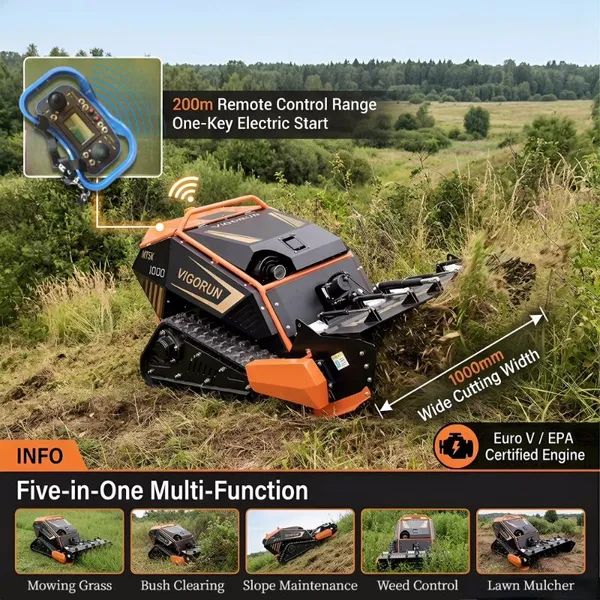
The operator holds a transmitter with two joysticks, toggle switches, and a prominent emergency-stop button. Each joystick movement sends a digital command: forward, reverse, left track, right track, blade on, blade off. The transmitter broadcasts these commands as encrypted radio packets.
A receiver mounted inside the chassis listens continuously. It decrypts the packets and passes instructions to the controller board, which manages the engine, hydraulics, and blade clutch. The whole round trip from thumb movement to machine response takes milliseconds.
Frequency hopping and interference resistance
Consumer RC toys often broadcast on a single fixed channel. A commercial remote control lawn mower hops across dozens of channels many times per second. If one channel picks up interference from a Wi-Fi router, drone, or another radio, the system jumps to a clear channel automatically.
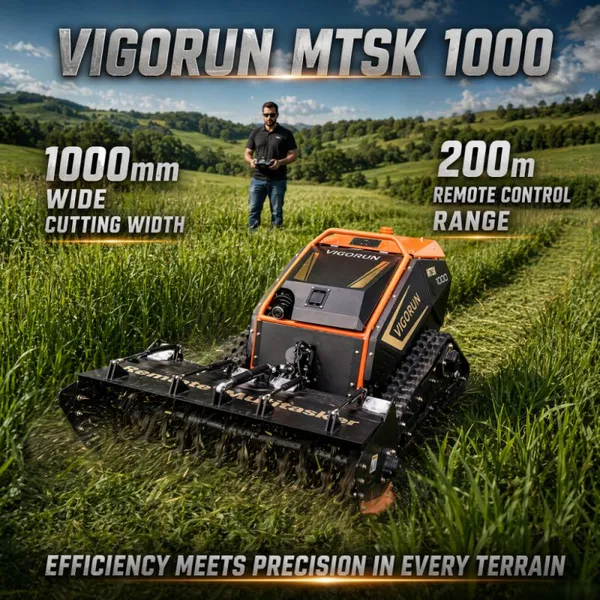
That is why Vigorun's 200-meter control range stays stable on job sites with power lines, cellular towers, and other equipment nearby.
Line of sight: the rule most operators break once
The 200-meter rating assumes line of sight between transmitter and receiver. A building, thick tree line, or steep terrain fold can block or reflect the signal. The receiver will still pick up commands through light vegetation, but heavy obstruction increases the chance of signal loss.
Safety note: Always position yourself where you can see the machine. The lost-signal failsafe will stop it, but stopping on a 35° slope is still less safe than never losing signal in the first place.
The Drivetrain: From Radio Signal to Track Motion
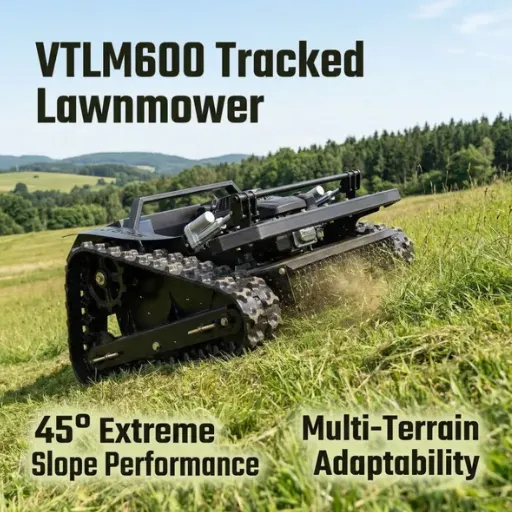
Once the receiver accepts a movement command, the controller board routes power to the drivetrain. Most commercial remote mowers use one of two drive systems.
Tracked hydrostatic drive
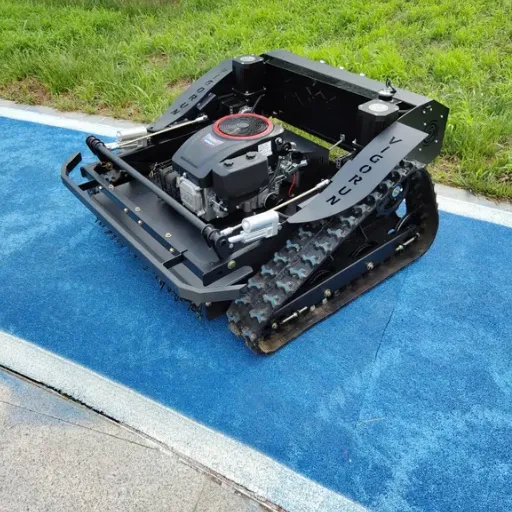
A gasoline engine powers a hydraulic pump. The pump sends pressurized oil to two hydraulic motors, one for each track. Push the left joystick forward, and the left track motor receives more flow. Pull it back, and a reversing valve sends flow in the opposite direction. Push both joysticks forward, and both tracks drive the machine straight.
The hydrostatic system gives precise speed control from zero to full forward or reverse. It also delivers high torque at low speed, which is exactly what a machine needs when it starts climbing a 45° slope from a dead stop.
Why tracks instead of wheels
Tracks distribute the machine's weight over a larger footprint than wheels. On soft, wet, or uneven terrain, that footprint prevents sinking and slipping. A rubber track with an aggressive lug pattern grips grass, clay, and loose embankment material far better than pneumatic tires.
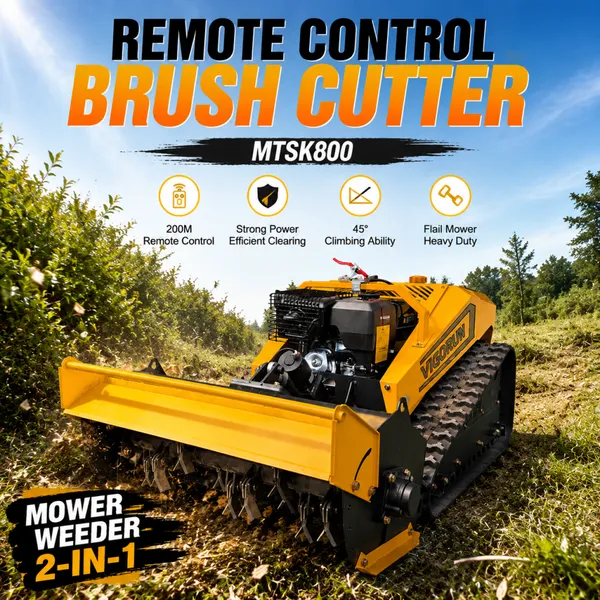
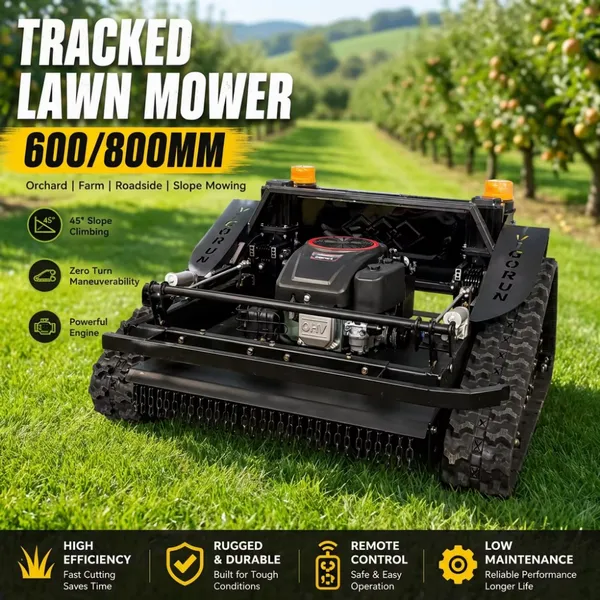
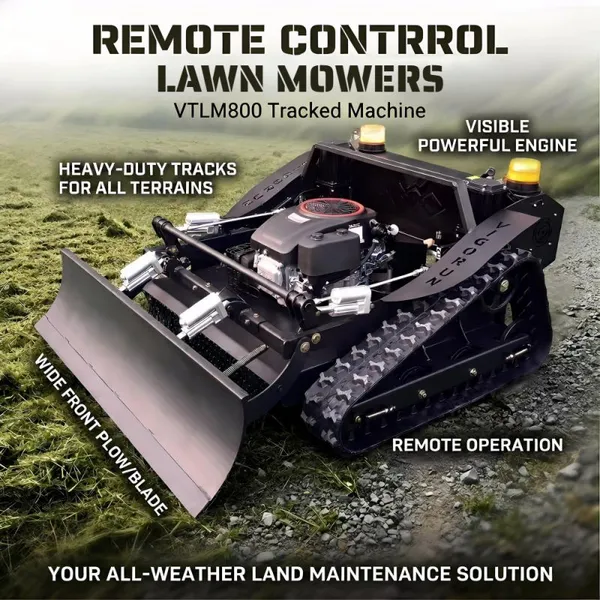
The Vigorun VTLM800 uses a rubber-track chassis specifically for this reason. The 45° slope rating depends as much on track geometry as on engine power.
The Cutting System: Rotary Deck vs. Flail Head
A remote control lawn mower does not cut differently from other mowers. It simply applies proven cutting technology to terrain where a human operator cannot safely ride.
Rotary mower deck
A rotary deck spins one or more horizontal blades at high speed. The blades create a vacuum that lifts grass, cut it cleanly, and discharge clippings to the side or rear. Rotary decks work best for:
Regular grass and weeds
Flat to moderately sloped ground
Maintenance cuts on lawns, sports fields, and solar farms
Flail head
A flail head uses dozens of small, pivoting blades (flails) attached to a horizontal drum. As the drum spins, the flails swing outward and strike vegetation vertically. This design is ideal for:
Woody brush and saplings up to 25 mm thick
Overgrown ditches and embankments
Orchard and vineyard groundcover
Terraced terrain with mixed grass and brush
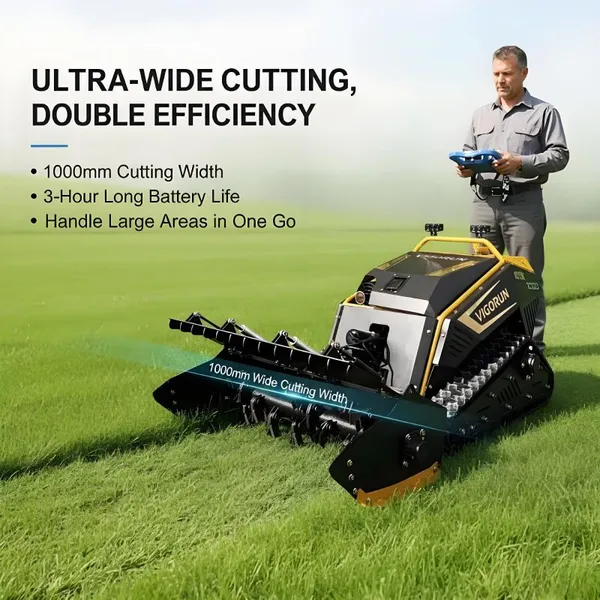
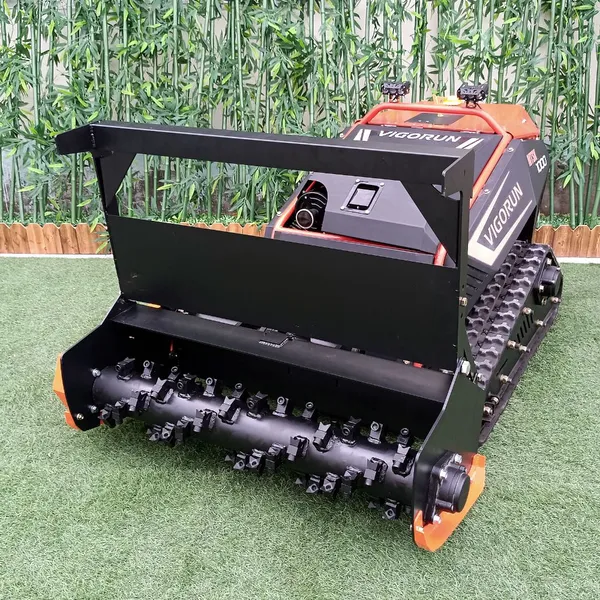
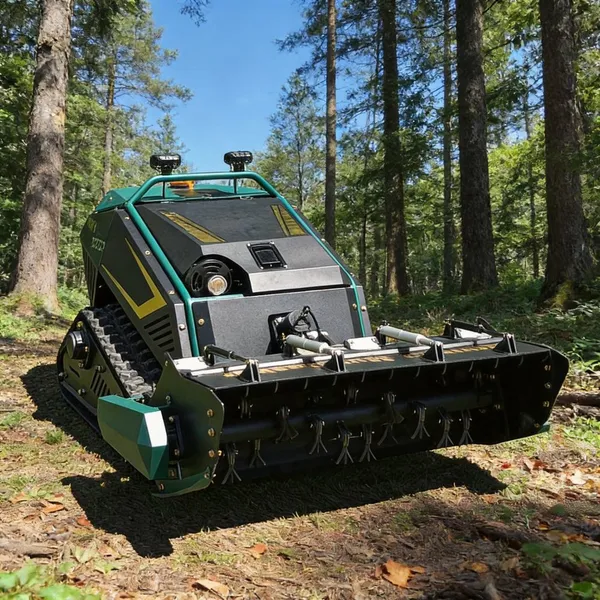
The Vigorun MTSK1000 remote control flail mower uses a heavy-duty flail head for exactly this class of work. Operators can swap between rotary and flail configurations on some chassis, giving one machine two cutting modes.
The Safety Systems: What Happens When Something Goes Wrong
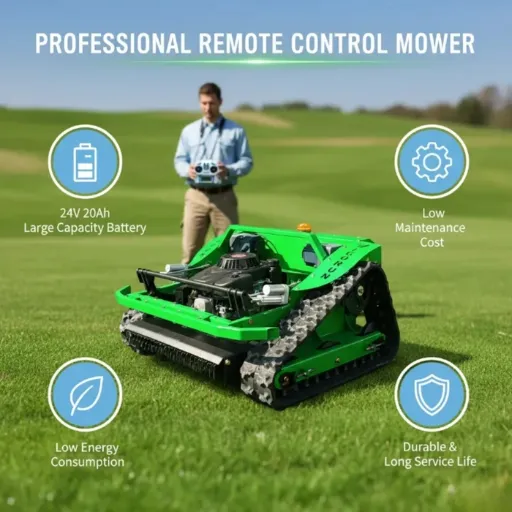
Safety is not an add-on. It is engineered into every control loop. A commercial remote control lawn mower includes four independent safety layers.
1. Emergency stop on transmitter and chassis
The transmitter carries a hardware E-stop button. Press it, and the receiver immediately cuts engine power and disengages the blade clutch. A second E-stop button on the chassis lets anyone near the machine stop it manually if the operator is unavailable.
2. Lost-signal failsafe
If the receiver loses the transmitter signal for more than a preset interval, usually 0.5 to 1.5 seconds, the failsafe triggers automatically. The engine drops to idle, the blades stop, and the tracks brake. The machine does not keep moving because the last command happened to be "forward."
3. Blade engagement lockout
Most systems require a two-step command to start the blades. The operator must first arm the blade circuit, then confirm engagement. This prevents accidental blade startup during transport or positioning.
4. Anti-rollover geometry
The chassis is built with a low center of gravity and a wide track stance. Fuel tanks, batteries, and the engine are mounted low in the frame. The goal is simple: keep the machine stable on side slopes and during direction changes on steep faces.
The Powerplant: Engine, Fuel, and Electrical Systems
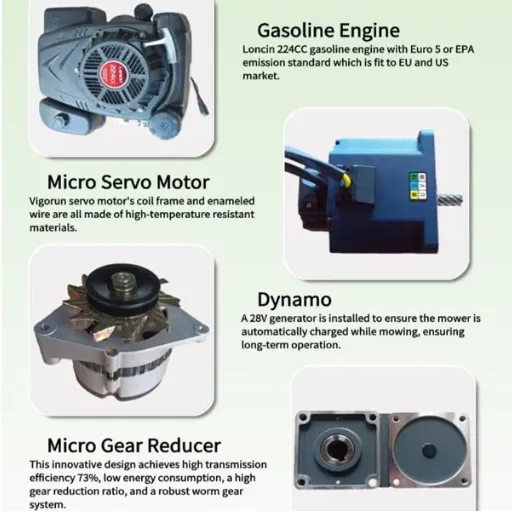
A remote control lawn mower needs enough power to drive tracks, spin blades, and climb slopes simultaneously. Most commercial units use gasoline engines in the 16–25 hp range.
Engine and emissions compliance
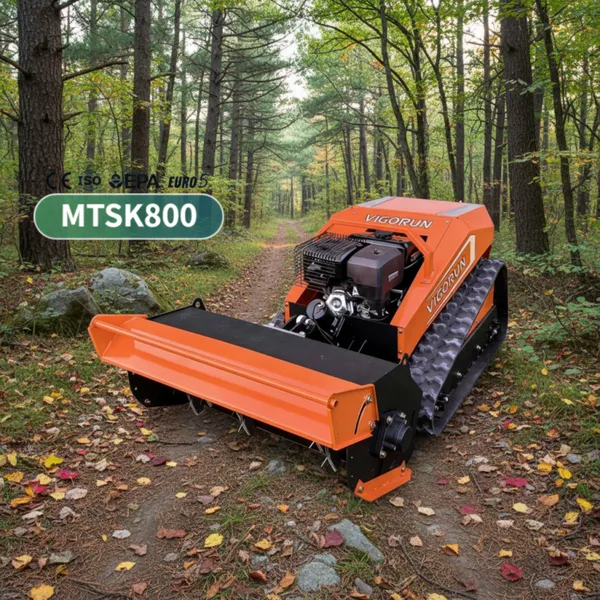
Vigorun's gasoline engines meet CE, EURO V, and U. S. EPA emission standards. Every unit ships with the full certification package, which matters for customs clearance and municipal procurement. Diesel options are available for markets and applications that require them.
The engine drives three systems through belts and pulleys:
Hydraulic pump for track drive
Blade clutch for cutting deck or flail head
Alternator for onboard electronics and battery charging
Electrical system
A 12V battery powers the receiver, controller board, solenoids, and any lights or sensors. The alternator recharges the battery during operation. Even if the engine stalls, the battery maintains receiver power long enough for the operator to restart or recover the machine.
How to Operate a Remote Control Lawn Mower: The Basic Sequence
Understanding how the machine works is different from running it safely. Here is the standard operating sequence most manufacturers recommend.
Pre-cut inspection. Walk the area. Remove large stones, wire, and debris. Identify drop-offs, stumps, and wet patches.
Position the operator. Stand uphill of the cutting path, with clear line of sight to the full work area.
Start the engine. Use the transmitter or chassis start switch. Let the engine reach operating temperature.
Test controls. Move forward, reverse, left, and right in a clear area. Verify blade engagement and E-stop function.
Begin cutting. Engage blades only after the chassis is stable. Mow in passes, overlapping slightly for full coverage.
Monitor signal strength. Watch for any stuttering or delayed response. Move closer if the terrain blocks the signal.
Shut down properly. Disengage blades, return to level ground, idle the engine, and turn off the ignition.
Mini-story: The skipped pre-cut walk
Diego Ortiz, a municipal maintenance supervisor in Chile, learned the value of step one the hard way. His crew started a retention-pond cut without walking the perimeter. Halfway through the second pass, the mower struck a buried concrete chunk from an old fence post. The blade bent, the clutch took damage, and the machine was out of service for four days while replacement parts shipped from Weifang.
The repair cost was small. The lost contract day was not. Now Diego's crew walks every slope before the machine starts. "Five minutes on foot saves five days of downtime," he said.
Remote Control Lawn Mower Maintenance: What Keeps It Working
A well-maintained commercial remote mower runs for years. Neglect shows up as radio failures, hydraulic leaks, and track derailments. The basics are simple.
Daily checks
Track tension and track lug condition
Engine oil level
Hydraulic fluid level
Blade condition and tightness
Battery voltage
Radio transmitter battery charge
Weekly or hourly-interval checks
Air filter cleaning or replacement
Hydraulic filter condition
Fuel filter and water separator
Grease points on blade spindles and track rollers
Receiver antenna connection
Seasonal service
Engine oil and filter change
Hydraulic oil and filter change
Spark plug inspection
Track replacement if lugs are worn
Controller firmware update if the manufacturer releases one
Vigorun ships every unit with an English-language manual, parts diagram, and whole-life parts support. The manual lists service intervals by operating hours, which is the most accurate way to schedule maintenance on a commercial machine.
Range, Terrain, and Real-World Limits
The advertised 200-meter range is a laboratory measurement under ideal conditions. Real-world range depends on:
Terrain folds. A hill between operator and machine blocks signal.
Vegetation density. Thick trees absorb 2.4 GHz signals.
Interference sources. Wi-Fi access points, microwave links, and other 2.4 GHz devices can reduce reliable range.
Battery voltage. A low transmitter battery produces a weaker signal.
In practice, most operators work within 50 to 100 meters. That distance is far enough for safety and close enough for reliable control.
Mini-story: The 180-meter solar farm row
Ines Bergman manages vegetation for a 40-hectare solar farm in northern Germany. Her operators often stand at the end of a panel row while the mower clears 150 meters down the line. They rarely use the full 200-meter rating, but the extra headroom matters. On windy days, when they position themselves farther from dust and flying clippings, the machine still responds instantly.
"We bought the range number on paper," Ines said. "We keep using it because the radio does not argue when we stand back."
How Remote Mowers Differ From Robot Mowers and Ride-Ons
Buyers sometimes confuse the three categories. Here is the distinction.
| Feature | Robot Mower | Remote Control Lawn Mower | Ride-On Mower |
|---|---|---|---|
| Operator position | None; autonomous | Off the machine, with transmitter | Seated on machine |
| Control | Boundary wire / GPS / sensors | Real-time radio commands | Manual steering |
| Best terrain | Flat lawns, defined boundaries | Slopes, rough terrain, hazardous areas | Flat to moderate slopes |
| Slope capability | Usually 15–25° | Up to 45° on commercial tracked units | Usually up to 15° |
| Safety model | Avoid obstacles | Keep operator away from danger | Protect operator with ROPS/seatbelt |
A robot mower is a convenience tool for flat lawns. A ride-on mower is a productivity tool for open ground. A remote control lawn mower is a safety tool for terrain that puts operators at risk.
Common Questions About How Remote Mowers Work
Can they work in rain?
Most commercial receivers and transmitters are weather-resistant, not waterproof. Light rain is fine. Heavy rain, standing water, and electrical storms increase risk and reduce traction. Most operators pause in bad weather.
What happens if the battery dies?
The onboard 12V battery is charged by the engine alternator. If it dies completely, the receiver loses power and the failsafe engages. The engine cannot start without battery power, so a dead battery stops work rather than creating a runaway machine.
How steep can they really climb?
A tracked commercial unit like the VTLM800 is rated to 45° on dry, firm grass. Wet or loose terrain reduces effective capability to roughly 35°. Always follow the manufacturer's guidance for your specific model.
Conclusion: The Technology Is Simpler Than It Looks
So, how does a remote control lawn mower work? Five systems cooperate: a 2.4 GHz radio links operator to machine, a hydrostatic drivetrain turns commands into track motion, a rotary or flail deck cuts the vegetation, safety electronics stop the machine if anything goes wrong, and a gasoline engine powers the entire system.
None of these systems is exotic. Each one comes from proven industrial technology. The innovation is packaging them into a machine that keeps the operator 200 meters away from the slope.
If you are evaluating a remote mower for your operation, the right question is not whether the technology works. It is whether the technology matches your terrain, your crew's training level, and your maintenance capacity.
At Vigorun, we build every remote control lawn mower in our Weifang factory, test every unit indoors and outdoors before shipment, and back every machine with a 1-year warranty plus whole-life parts support. If you want to see the technology in action, the next step is straightforward.
Contact the Vigorun sales team to request a spec sheet, book a virtual factory tour, or ask how a remote mower would handle your specific terrain.
Recently Posted
-
Steep Slope 600mm Tracked 200m Remote Control 45 Degree Brushless Electric Lawn Mower
August 10, 2026*Integrated Drive System with 73 Percent Efficiency: The VTLM600 remote control lawn mower features a fully integrated brushless m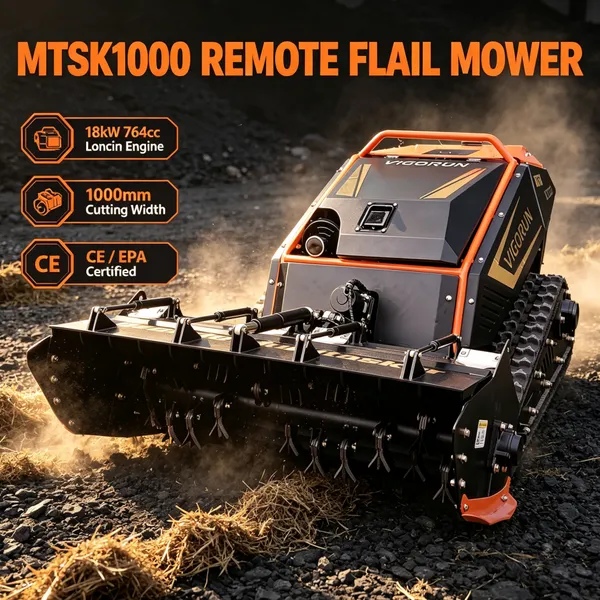 Read More
 -
Remote Controlled Pesticide Sprayer with 600L Tank 8.4m Boom for Agricultural Applications
August 10, 2026*Electric Start & 13kW Loncin Engine for Powerful Agricultural Spraying: Maximize field application efficiency with the SPRY60 Read More
 -
Self Propelled Agricultural Boom Sprayer with Adjustable Track for Modern Farming
August 10, 2026*Electric Start & 13kW Loncin Engine for Powerful Agricultural Spraying: Maximize field application efficiency with the SPRY60 Read More
 -
Automatic Remote Control Agricultural Spray Machine with 600L Chemical Tank and Boom System
August 10, 2026*Electric Start & 13kW Loncin Engine for Powerful Agricultural Spraying: Maximize field application efficiency with the SPRY60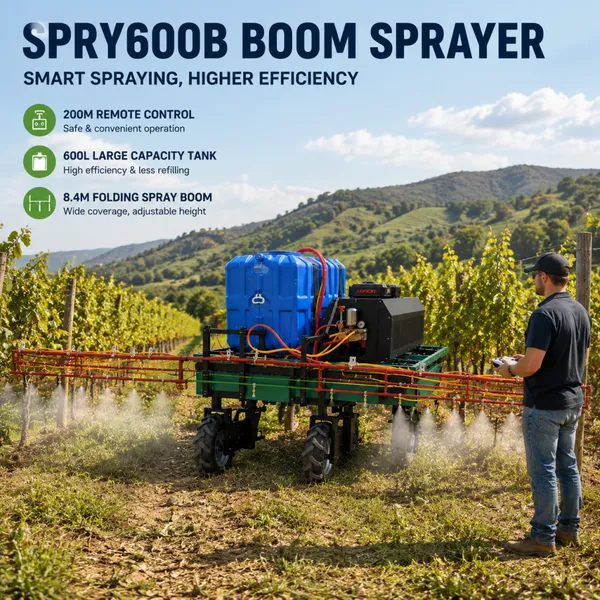 Read More

Contact Us
Recommended Products
-
 Vigorun Lawn Mower Robot, Industrial Dual 48V 1500W Motors MTSK1000 Mulcher Machine for Large LandscapesUS$ 7500.00 - 7700.00MOQ: 1 Set
 -
Farmland Orchards Battery Powered Mower Gasoline Golf Mower Robot Lawn Mower 3000m2 Vigorun Remote Control Grass MowerUS$ 2580 - 2700MOQ: 1 Unit
-
Vigorun MTSK800 Automatic Remote Control Grass Cutting Machine 48V 20Ah Battery Remote Flail MowerUS$ 2800 - 2900MOQ: 1 Set
-
Vigorun MTSK1000 Remote Control Mower 24hp Fail-Safe Slope Braking Remote Control Forest MulcherUS$ 8000 - 8200MOQ: 1 Set
-
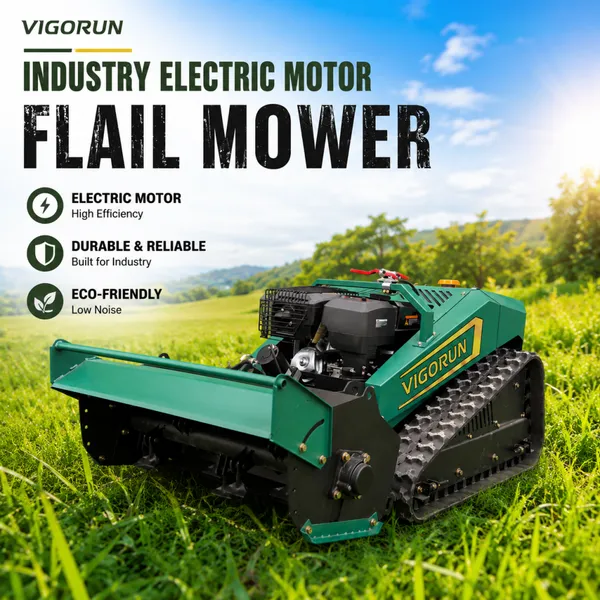
Industry Electric Motor Lawn Mower Flail Mower Atv Gasoline Hedge Trimmer Battery LawnmowerUS$ 2580 - 2900MOQ: 1 Unit
-
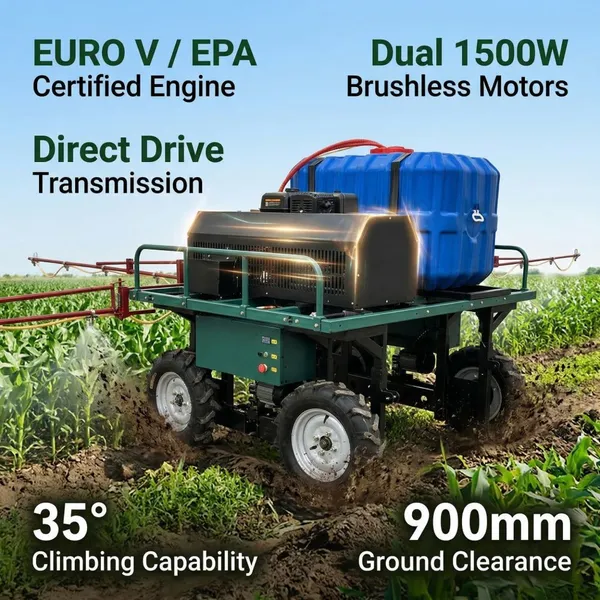
Vigorun Agricultural Tractor Sprayer Euro 5/EPA Electric Agricultural Sprayer 600l for VineyardsUS$ 2600 - 2700MOQ: 1 Set
-
Remote Control Tracked Hillside Mower 800mm Cutting Width 60 Degree Slope for Steep Terrain VegetationUS$ 2600 - 2700MOQ: 1 Set
-
Vigorun VTLM600 RC Lawn Mower Robot CE EPA Certified 45° Extreme Slope Mini Crawler Lawn MowerUS$ 1700 - 17900MOQ: 1 Set
-
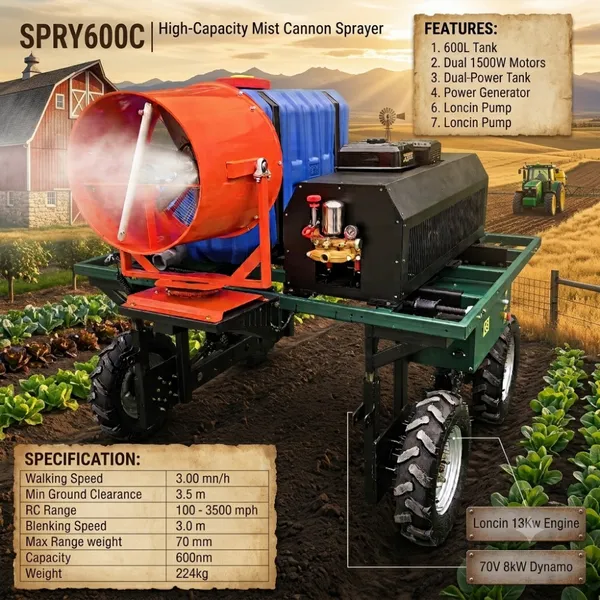
Remote Controlled High Efficiency Fog Cannon Spraying Machine 600L Tank for Agriculture and Dust ControlUS$ 2800 - 2900MOQ: 1 Set
-
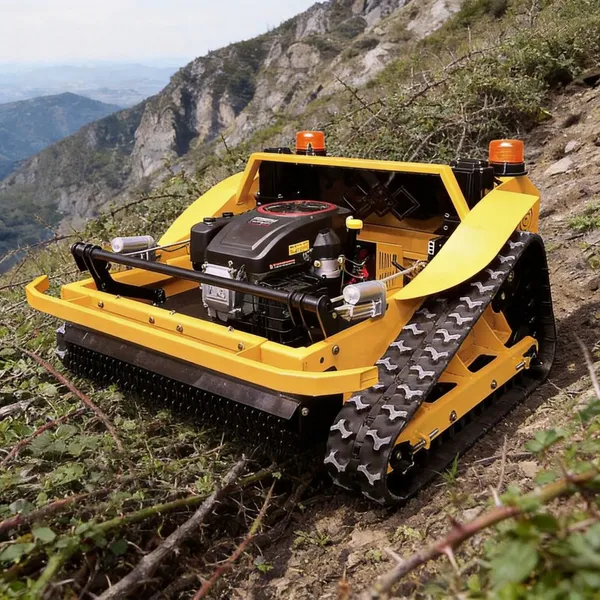
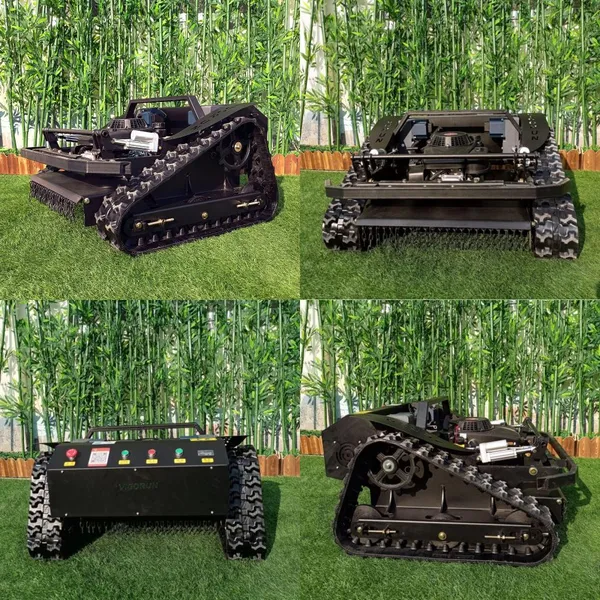
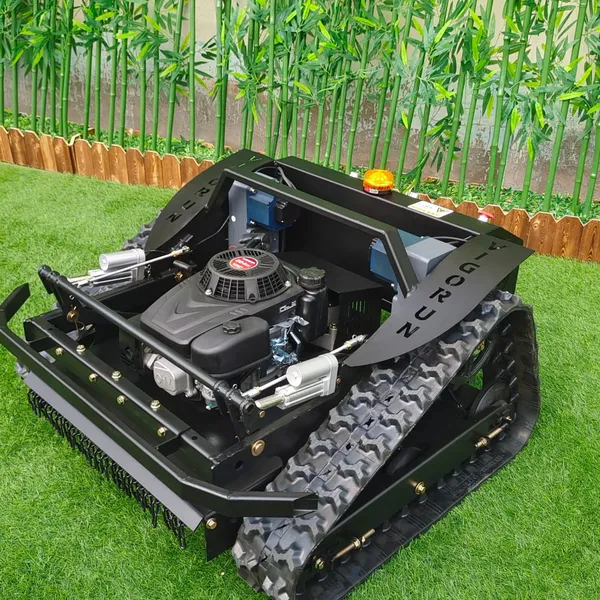
Vigorun Radio Control Mowing Euro 5/EPA Self-Propelled & Precise 6hp Remote Control Crawler MowerUS$ 1700 - 1790MOQ: 1 Set
-
Factory Manufacturer Vigorun MTSK1000 1000MM Commercial Branch Cutter Flail Mower rc Remote Petrol Lawnmower Mower Grass Cutter TractorUS$ 8000 - 8200MOQ: 1 Set
-
Vigorun VTW550 Remote Control Grass Cutter Tractor Robot Gas Lawn Mower Grass Cutter Small Electric Lawn Mower Vigorun Lawn MowerUS$ 1000 - 1250MOQ: 1 Set
-
Vigorun Tech Gasoline Remote Control Lawn Mower Self-Locking Slope Safety RC Mower Tiller for EmbankmentsUS$ 2800.00 - 2900.00MOQ: 1 Set
-
Mower Gasoline Grass Cutter Machine Remote Control 1000mm Cut 35 Degree Slope Flail Hammer for Overgrown LandUS$ 7500 - 7700MOQ: 1 Set
-
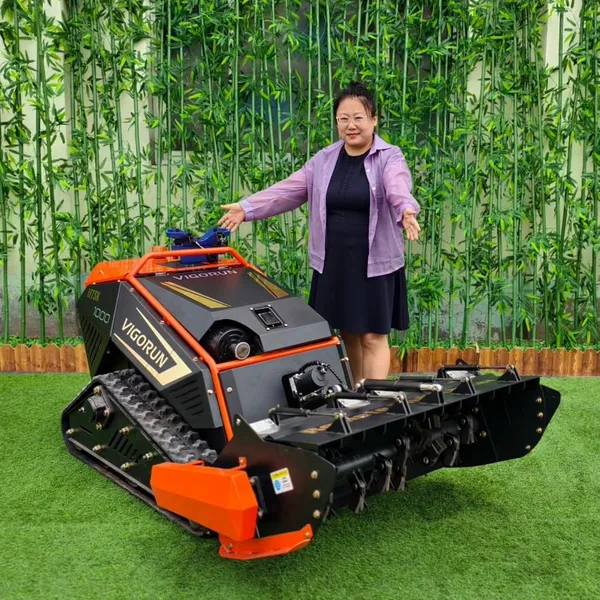
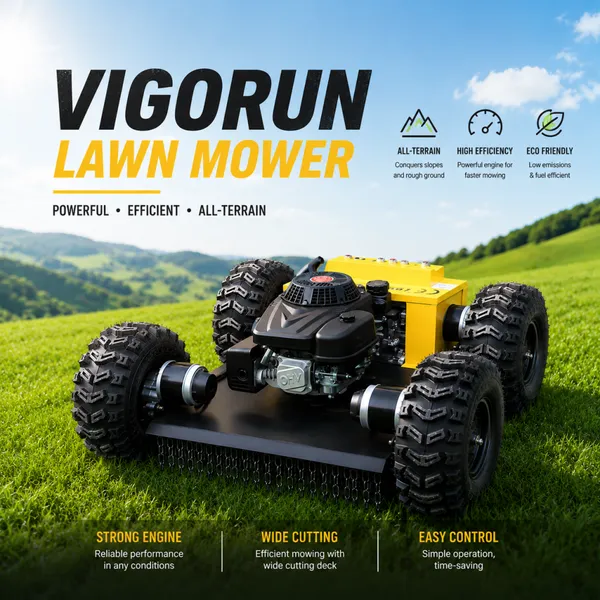
Vigorun VTLM800 Remote Control Electric Mower, Self-Locking Slope Safety Crawler Mower for Steep SlopesUS$ 2600.00 - 2700.00MOQ: 1 Set
-
Shrub and Brush Clearing MTSK800 MTSK1000 Flail Mower rc Remote Weeding Weeder MachineUS$ 2800 - 2900MOQ: 1 Set
-
RC Robot Lawn Mower Electric Remote Control Flail Grass Cutter Garden Cutting Machine MTSK1000US$ 8000 - 8200MOQ: 1 Set
-
Remote Manipulation Rubber Track Brush Cutter Industrial Flail Mower for Efficient Shrub ClearingUS$ 2000.00 - 2790.00MOQ: 1 Set
-
Vigorun MTSK1000 Rc Lawn Mower, Loncin 764CC Gasoline Engine Forestry Mulcher With Remote Control for ForestryUS$ 7500.00 - 7700.00MOQ: 1 Set
-
Vigorun VTC550 Zero Turn Electric Mower Quality Guaranteed Crawler Brush Cutter For Embankments & LeveesUS$ 1600 - 1690MOQ: 1 Set