
 Business License
Are Remote Control Lawn Mowers Worth It? A Factory-Direct ROI Breakdown
Antonio Moretti paid his grounds crew EUR 38,000 in overtime last season to hand-strim a 12-hectare orchard in Piedmont. The next spring he bought a tracked remote control lawn mower. By harvest, the overtime line had dropped to EUR 11,000, and the machine had already covered two-thirds of its invoice.
That's the question behind every search for "are remote control lawn mowers worth it." Buyers aren't asking for a definition. They want to know whether the unit price, the fuel, the maintenance, and the learning curve deliver a return that beats the status quo.
This article gives you a factory-direct answer. We'll compare real costs, real savings, and the safety economics that never show up on the purchase order. You'll see when a remote control lawn mower pays for itself, when it doesn't, and how to calculate the number for your own job.
Browse all Vigorun remote control lawn mowers to see factory-direct pricing and specs after you finish the math.
The Real Question: Worth It Compared to What?
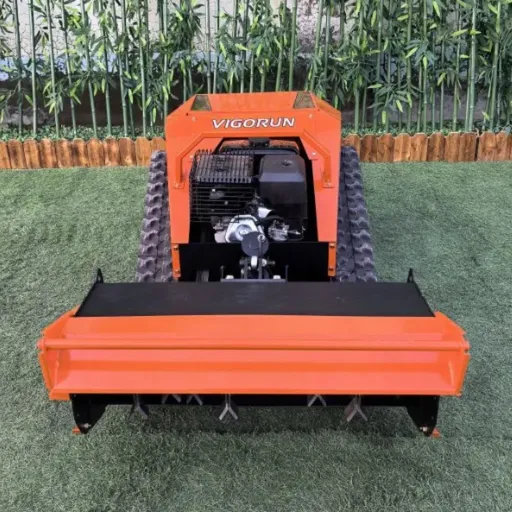
Most buyers start with sticker shock. A commercial remote control lawn mower runs roughly $4,000 to $12,000 FOB China, depending on engine size, track system, cutting width, and options. A ride-on zero-turn can be half that. A strimmer crew can be hired by the day. So the comparison matters.
The fair comparison is never machine versus machine. It is total cost of ownership versus total cost of the current method. That current method could be:
A ride-on mower plus an operator exposed to rollover risk
A two- or three-person hand crew with brush cutters and strimmers
Subcontracting slope work to a specialty contractor
Leaving steep areas unmanaged and accepting fire, weed, or compliance liability
Each baseline has a different labor rate, risk profile, and speed. A remote mower only makes sense when it displaces enough cost, risk, or lost revenue to justify the capital outlay.
Pro Tip: Distributors often position the ROI conversation around labor displacement. One operator with a tracked remote mower typically replaces two workers on steep terrain.
How the Math Works: A Simple ROI Framework
You don't need a spreadsheet wizard. The basic formula is:
Annual labor savings + annual safety-value savings + revenue gain − annual operating cost = net annual benefit
Divide the machine purchase price by the net annual benefit. That gives you the payback period in years.
Sample municipal contract
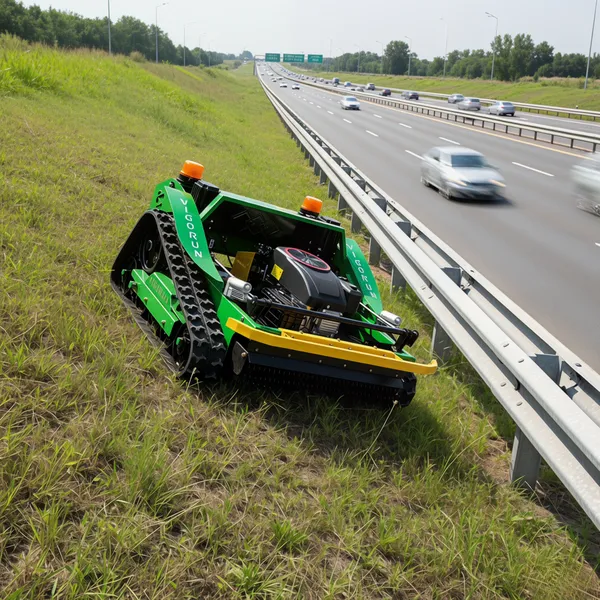
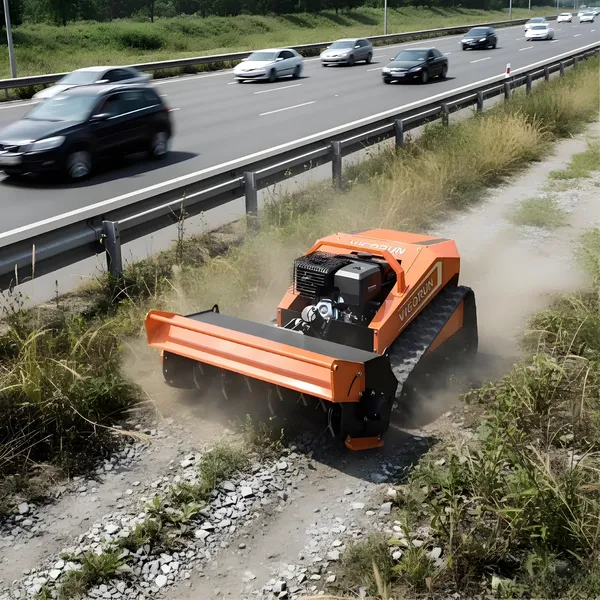
A German roadside maintenance crew spends 280 hours per season clearing a highway embankment with two workers and brush cutters. Loaded labor cost is EUR 55 per hour per worker. Annual labor spend: 280 × 2 × EUR 55 = EUR 30,800.
A tracked remote control lawn mower cuts the same embankment in 90 hours with one operator. The operator is paid EUR 45 per hour. Annual labor spend: 90 × EUR 45 = EUR 4,050. Labor savings: EUR 26,750 per year.
Add roughly EUR 800 per year for fuel, blades, and scheduled maintenance. Net annual benefit: EUR 25,950. If the machine costs EUR 9,500, the payback is 0.37 years, or about 4.4 months.
That's a typical steep-slope municipal application. Flat lawn applications show longer payback because the baseline labor cost is lower.
When payback stretches
If you're cutting a flat villa lawn that currently takes one groundskeeper two hours per week, the remote mower doesn't save much labor. In that case, the value is convenience and safety, not ROI. Payback might be three to five years, or never on pure labor math.
Where Remote Control Lawn Mowers Earn Their Value Fastest
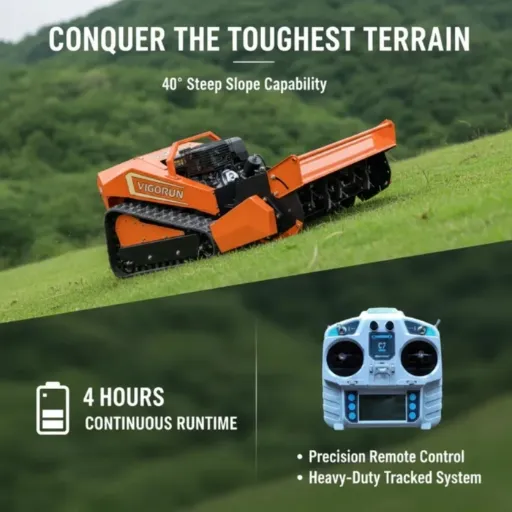
The highest returns cluster in four applications. If your job matches one of these, the answer to "are remote control lawn mowers worth it" is usually yes.
1. Steep slopes and embankments
Terrain above 20° is where ride-on mowers become dangerous and hand crews become slow. A tracked remote mower handles up to 45° on dry grass, keeps the operator off the slope entirely, and cuts at engine speed rather than human speed. The value here is labor compression plus liability reduction.
2. Solar farms and utility corridors
Large flat areas with perimeter slopes create a hybrid use case. One operator can clear panels rows and the surrounding bank without switching equipment. Revenue protection matters too: overgrown shading can reduce solar output. A remote mower becomes a maintenance insurance policy.
3. Orchards, vineyards, and terraced agriculture
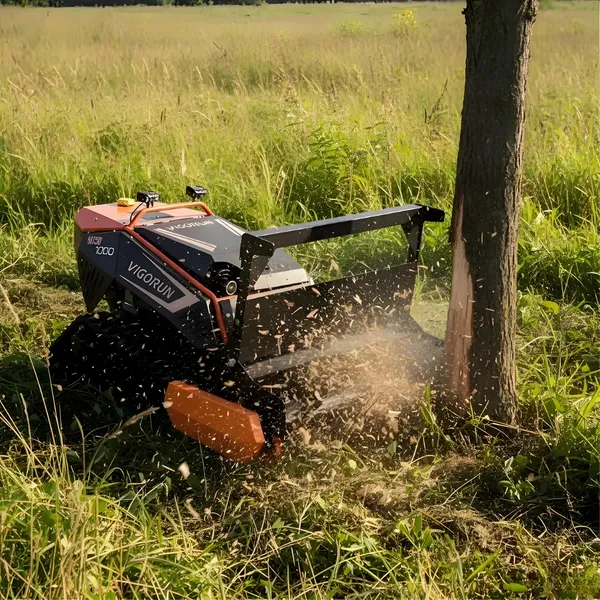
Row spacing and terrace edges make ride-on access difficult. A remote-controlled machine mows between trees, trims terrace walls, and protects root stock. The Vigorun VTLM800 rubber track slope mower is built for this exact combination of slope and row work.
4. Roadside, levee, and retention-pond maintenance
These contracts often include penalty clauses for missed cuts or safety incidents. A remote mower lets a smaller crew cover more kilometers per day, and the operator stays on safe ground away from traffic, water, or loose rock.
See how Vigorun manufactures and tests every machine before shipment to understand why these applications depend on factory-level build quality, not marketing specs.
The Hidden Value: Safety Economics
Safety savings do not appear on the dealer invoice, but they dominate the finance director's view. According to the U.S. Bureau of Labor Statistics, grounds maintenance work consistently ranks among the higher-incidence occupations for serious injuries. Slope rollovers, projectile debris, and heat exhaustion drive workers compensation premiums and lost-time costs.
A tracked remote control lawn mower keeps the operator up to 200 meters (656 feet) from the cutting zone. That distance eliminates:
Rollover risk to the operator
Direct projectile-debris exposure
Heat and exhaust exposure on long cuts
Vibration-related hand-arm injuries from hand-held brush cutters
For municipal and commercial landscaping fleets, a single avoided serious injury can repay the machine several times over. Insurance underwriters increasingly recognize remote operation as a risk control, and some brokers reduce premiums when fleets add remote slope equipment.
Mini-story: The one incident that changed the bid
Klaus Weber runs a 14-person landscaping firm near Stuttgart. In 2024, a worker fractured a wrist when a brush-cutter blade kicked back on a steep embankment. The direct cost was EUR 18,000 in medical and compensation. The indirect cost was a lost municipal bid because the firm's safety record no longer met the client's threshold.
In 2025, Klaus added a remote-controlled slope mower. His crew now clears the same embankment from the top of the slope. The direct labor saving is EUR 9,200 per year, but the bigger return is that he qualified for the next municipal tender. "The machine paid for itself in labor in year one," he said. "The contract I won because of it pays for year two and three."
Total Cost of Ownership: What Buyers Forget
The purchase price is only part of the equation. A realistic TCO for a commercial remote control lawn mower over five years includes:
| Cost Category | Typical Annual Range | Notes |
|---|---|---|
| Fuel | 400–400–1,200 | Depends on engine size and hours |
| Blades / flails | 150–150–600 | Rotary blades are cheaper; flails last longer per set but cost more |
| Track wear | 200–200–500 | Wet, rocky terrain accelerates wear |
| Scheduled maintenance | 300–300–700 | Oil, filters, hydraulics, radio check |
| Transport | 0–0–1,000 | Trailer or truck between sites |
| Operator training | One-time 200–200–500 | Often included with dealer purchase |
| Downtime / repairs | 200–200–800 | Varies by build quality and parts availability |
A machine built in a stable factory with whole-life parts support sits at the lower end of each range. A grey-import unit with no spare-parts pipeline sits at the high end, or becomes unusable after year two.
That's why factory-direct sourcing matters. Vigorun builds every unit in Weifang, Shandong, runs 100% indoor and outdoor field testing before shipment, and stocks parts for the operational life of the machine. A low purchase price from a trading company becomes expensive when the only replacement track supplier has disappeared.
When a Remote Control Lawn Mower Is NOT Worth It
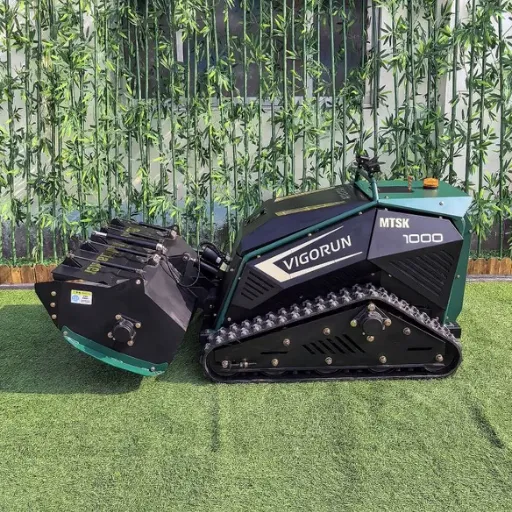
Honest advice cuts both ways. A remote mower isn't the right tool in every situation.
Flat, small lawns under 1,000 m². A robot mower or a quality push mower covers the area for less capital and less complexity. You won't generate enough labor savings to justify a tracked machine.
Occasional residential use. If you mow your own villa lawn twice a month and have no slopes, the convenience factor may still appeal, but the financial return is weak.
No operator training discipline. A remote mower is only safe when the operator follows basic protocols: line-of-sight operation, pre-cut walkthrough, emergency-stop familiarity. If your crew won't train, you're buying a liability, not an asset.
No service or parts access. Remote mowers aren't consumer appliances. They need periodic track tension adjustment, blade replacement, and hydraulic checks. If you can't source parts locally and the manufacturer has no export support, the TCO balloons.
Dealer Perspective: Are Remote Control Lawn Mowers Worth Stocking?
For distributors, the question flips. The issue is not whether one end-user saves labor. It is whether the product line moves units, holds margin, and builds recurring parts revenue.
Remote control lawn mowers are worth stocking when the distributor's market has:
Municipal roadside or solar-farm contracts
Commercial landscaping companies bidding on slope work
Orchard and vineyard regions with terraced terrain
Safety-conscious buyers moving away from ride-on exposure
Vigorun's distributor program supports this with OEM color and logo customization from MOQ 5 units, container-load optimization, and marketing asset packs. A dealer who brands the machine locally can typically command a 35–50% margin over landed cost while still undercutting premium Western brands by a wide gap.
Ask about OEM pricing and dealer margins if you are evaluating remote mowers as a product line rather than a one-off purchase.
How to Run the Numbers for Your Own Job
Use this four-step checklist before you decide.
Time the current method. Record how many hours your crew spends on the target terrain per month or season. Multiply by loaded labor cost.
Estimate remote mower hours. A tracked machine typically cuts 2–4 times faster than a hand crew on steep terrain, and 1.5–2 times faster than a ride-on on slopes above 20°.
Add annual operating cost. Use the TCO table above as a starting point.
Include risk value. Assign a conservative value to avoided injuries, insurance savings, or the ability to bid work you previously declined.
If your payback is under 18 months, the machine is an easy financial decision. If payback is 18–36 months, it becomes a strategic safety and capability investment. Beyond 36 months, the decision depends on non-financial factors like operator retention, contract eligibility, and terrain access.
Brand, Spec, and Support: The Multipliers That Decide Real Value
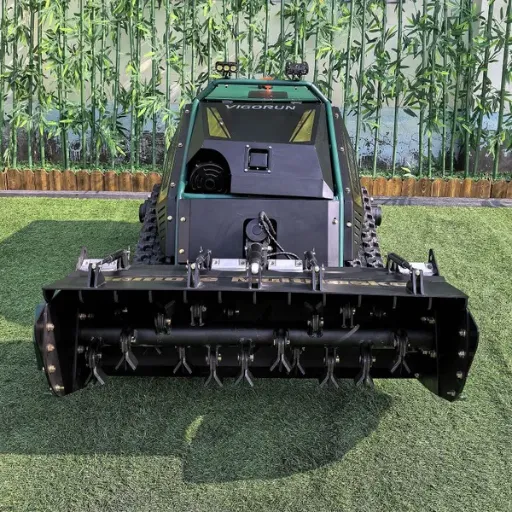
Two machines with the same purchase price can deliver completely different returns. The multipliers are:
Real slope rating. A 45° rating on dry grass, verified on factory test ramps, is different from a 45° claim on a marketing slide.
Certifications in hand. CE, EURO V, and EPA documentation lets distributors clear customs and resell into regulated markets without last-minute certification delays.
Radio reliability. A 200-meter industrial 2.4 GHz remote with lost-signal failsafe keeps the operator safe and productive.
Parts pipeline. Whole-life parts availability turns a five-year asset into a ten-year asset.
Vigorun manufactures in the Weifang machinery corridor, the same industrial region as Weichai Power and Caterpillar SEM. Every gasoline engine is CE / EURO V / EPA certified, and every unit ships with the full documentation package. That is the difference between a machine that holds value and one that becomes a parts-scarcity casualty.
Conclusion: Worth It When the Math and the Terrain Align
So, are remote control lawn mowers worth it? For buyers with slopes, solar farms, orchards, or roadside contracts, the answer is usually yes. A well-spec'd tracked machine pays back in under 18 months through labor savings, risk reduction, and new revenue. For flat, small, occasional-use lawns, the answer is usually no unless convenience is the primary value.
The key is matching the machine to the job, calculating the full five-year cost, and buying from a manufacturer that will still stock parts in year eight.
At Vigorun, we build every remote control lawn mower in our own Shandong factory, test every unit before shipment, and support every machine with a 1-year warranty plus whole-life parts. If your terrain justifies the investment, the machine will earn its keep.
Contact the Vigorun sales team to request a quote, compare models, or ask about distributor pricing for your region.
Recently Posted
-
Remote Control Lawn Mower for Steep Slopes: A Field Engineer's Guide
June 12, 2026Carlos Mendez watched the retention pond embankment from the cab of his pickup. The grass was knee-high, the grade was 38°, and th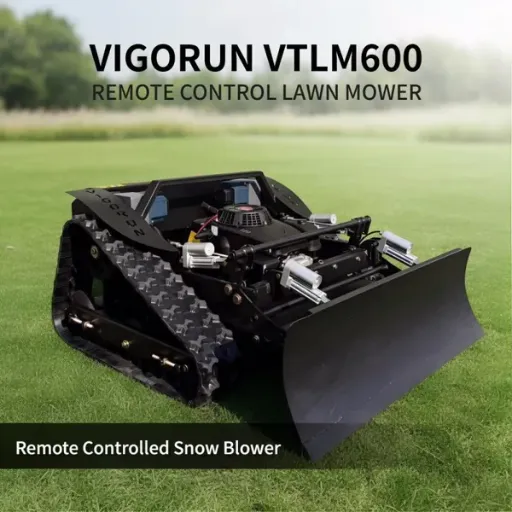 Read More
 -
How Does a Remote Control Lawn Mower Work? A Field Engineer's Breakdown
June 12, 2026Marcus Chen watched his first demonstration from 150 meters away. The operator held a boxy transmitter, thumbs on two joysticks, w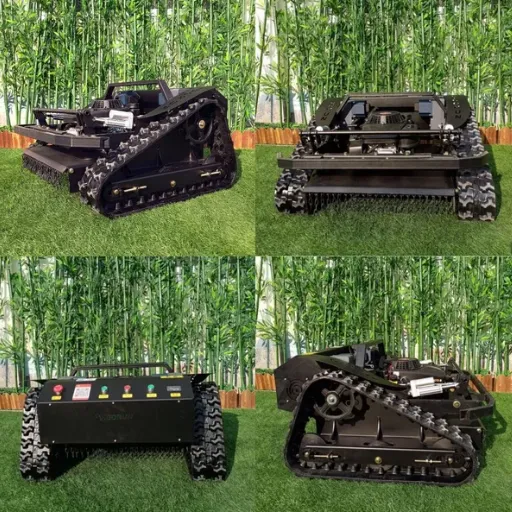 Read More
 -
Remote Control Lawn Mower Buyer's Guide: 7 Things to Check Before You Spend a Dollar
June 12, 2026Lars Hoffmann uncrated his new "slope mower" in March 2025 and drove it straight to the 30-degree embankment behind his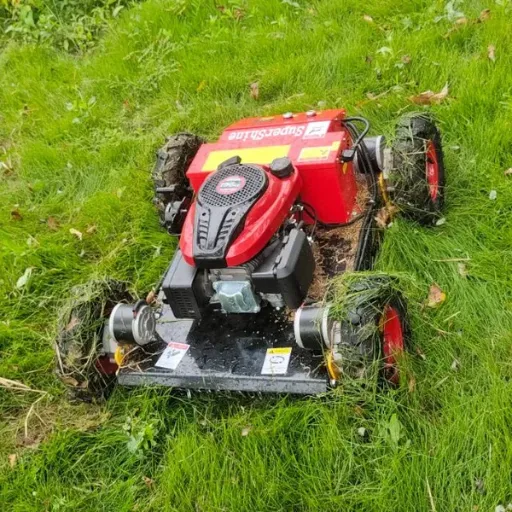 Read More
 -
Remote Control Lawn Mower vs Ride On: Which Machine Wins on Slopes, Safety, and ROI?
June 12, 2026Marcus Chen's crew had mowed the Oakhaven Estates retention pond twice a year since 2019 with a commercial zero-turn and two w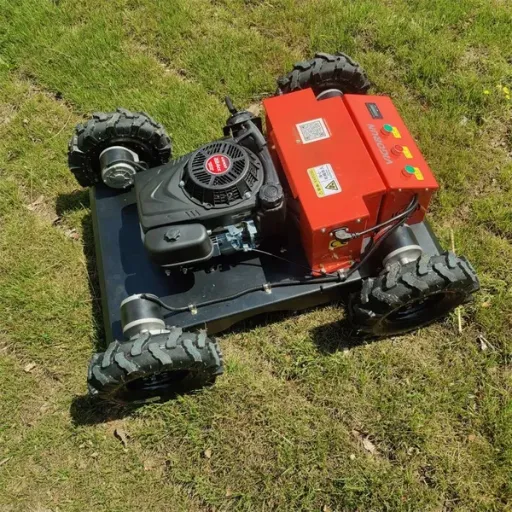 Read More

Contact Us
Recommended Products
-
 Vigorun Remote Control Electric Mower Self-Locking Slope Safety Crawler Mower for Lawn & GardenUS$ 2600 - 2700MOQ: 1 Set
 -
Vigorun RC Mower Remote Control Multi-Function Tool Carrier Remote-Controlled Electric MulcherUS$ 2800 - 2900MOQ: 1 Set
-
Vigorun Lawn Mowers Multi-Function Tool Carrier 1000mm Remote Control Forest Mulcher Flail MowerUS$ 8000 - 8200MOQ: 1 Set
-
Vigorun SPRY600 Tractor Sprayer Industrial 4-Stroke Agricultural Sprayers 600l for Soybean FieldsUS$ 2600 - 2700MOQ: 1 Set
-
Vigorun Grass Cutting Machine High-Speed (6 Km/h) Wheeled Lawn Mower for Tea & Coffee PlantationsUS$ 1000 - 1100MOQ: 1 Set
-
Vigorun Robot Brush Mower Euro 5/EPA Self-Locking Slope Safety Remote Control Track Lawn MowerUS$ 1700 - 17900MOQ: 1 Set
-
Vigorun Controlled Lawn Mower Anti-Rollback Security Lawn Mower Crawler for Slopes & HillsidesUS$ 2600 - 2700MOQ: 1 Set
-
Vigorun Robot Weed Cutter Quick-Change Attachment System Remote Controlled Motorcycle MulcherUS$ 2800 - 2900MOQ: 1 Set
-
Vigorun Remote Control Lawn Mower Quick-Change Attachment System Robot Tracked Forestry MulcherUS$ 8000 - 8200MOQ: 1 Set
-
Vigorun SPRY600 Boom Sprayer Electric Start Electric Sprayer Agricultural 600l for Cotton FieldsUS$ 2600 - 2700MOQ: 1 Set
-
Vigorun Brush Mower Euro 5/EPA Hazard-Free Operation Hightop Lawn Mower for Orchards & VineyardsUS$ 1000 - 1100MOQ: 1 Set
-
Vigorun Brush Cutter Robot High Transmission Efficiency 73% Crawler Lawn Mower for Steep SlopesUS$ 1700 - 17900MOQ: 1 Set
-
Vigorun Tractor Sprayer Agriculture Euro 5/EPA Agricultural Sprayers Self Starter for Wheat FieldsUS$ 2600 - 2700MOQ: 1 Set
-
Vigorun Grass Cutter Machine 16x Manual Efficiency Small Remote Control Lawn Mower for NurseriesUS$ 1000 - 1100MOQ: 1 Set
-
Vigorun RC Brush Cutter Euro 5/EPA Low Energy Consumption 6hp Crawler Remote Control Lawn MowerUS$ 1700 - 17900MOQ: 1 Set

-
Vigorun VTLM800 RC Mower Euro 5/EPA Remote Hazard Avoidance Robot Crawler Mower for Steep SlopesUS$ 2600 - 2700MOQ: 1 Set
-
Vigorun MTSK800 Automatic Grass Cutter Robot Euro 5/EPA User-Friendly Remote Control Mulcher RobotUS$ 2800 - 2900MOQ: 1 Set
-
Vigorun Lawn Mower Robot With Flail Mower/Hammer Flail/Forest Mulcher/Snow Blade Tracked MulcherUS$ 8000 - 8200MOQ: 1 Set
-
Tractor Sprayer, CE EPA Approved Gasoline Engine Gasoline Fst Power Spray Agriculture for Soybean Fields Vigorun SPRY600US$ 2600.00 - 2700.00MOQ: 1 Set
-
Vigorun SPRY600 Boom Sprayer, Remote Control Distance 200M Gasoline Engine Type Spraying Machine for Cotton FieldsUS$ 2600.00 - 2700.00MOQ: 1 Set