
 Business License

Remote Control Lawn Mower With Tracks: Why Wheels Fail Where Rubber Wins
A wheeled remote mower on a 35-degree levee after three days of rain is not a mowing machine. It is a sled with blades. The operator stands at the bottom of the embankment watching the unit slide sideways while the drive wheels spin uselessly against slick clay.
That is the moment most buyers discover why a remote control lawn mower with tracks is not an upgrade. It is a completely different category of equipment.
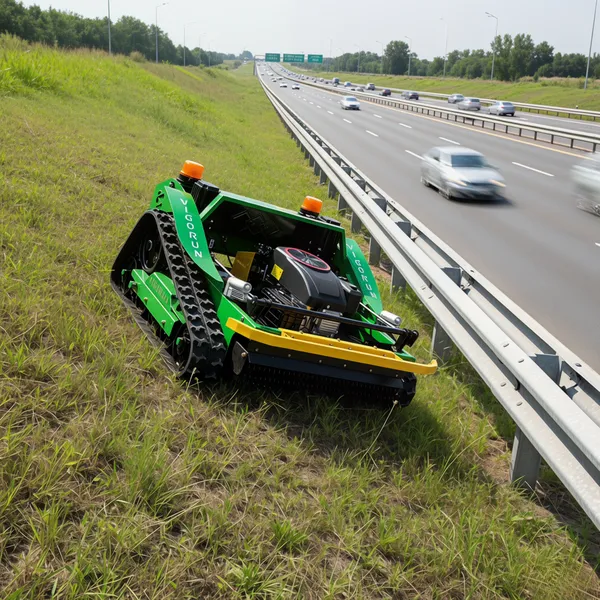
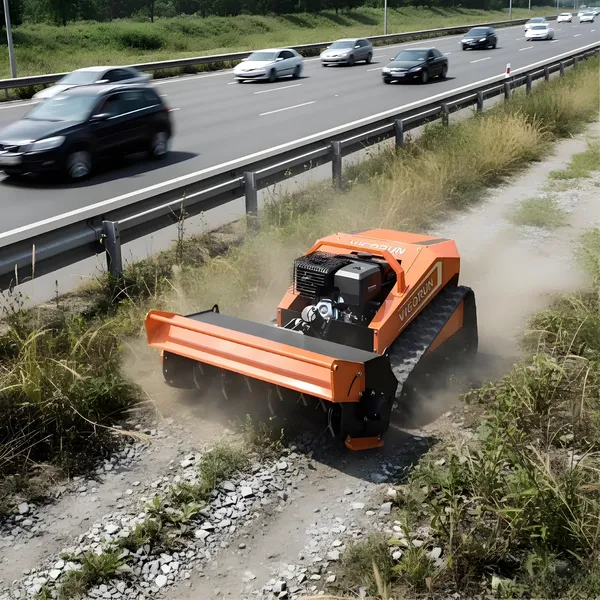
Tracked chassis outperforms wheeled designs on slopes above 25 degrees, in wet conditions, and on soft ground. The physics are simple but decisive. A rubber track distributes the machine's weight across a continuous contact patch instead of four narrow tire footprints. The result is more grip, lower ground pressure, and a center of gravity that stays planted when the surface underneath is not.
This guide explains exactly how tracked remote mowers work, where they dominate, and how to evaluate track quality before you buy. If you maintain levees, solar farm embankments, orchards on hillside terraces, or any terrain where traction is the limiting factor, the spec sheet starts with the track system.
Why a Remote Control Lawn Mower With Tracks Is Built for Slopes
The Physics of Track Traction
Slope mowing is a traction problem disguised as a cutting problem. A 120-kilogram machine on a 40-degree slope generates a lateral force equal to roughly 75 percent of its weight trying to pull it downhill.
Rubber tires with knobby tread can handle this on dry, firm grass up to about 25 degrees. Beyond that angle, the coefficient of friction between rubber and grass drops below the tangent of the slope, and the machine starts to drift.
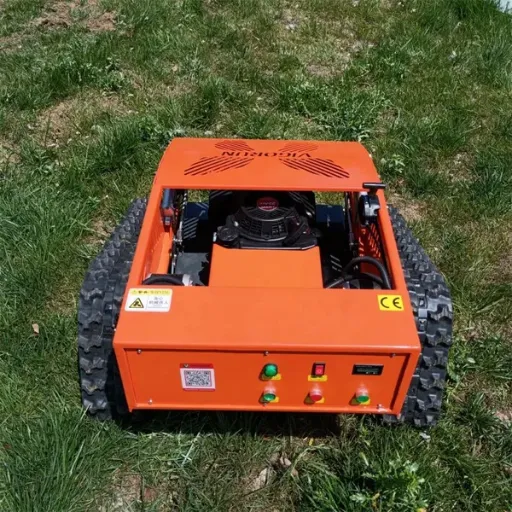
A remote control lawn mower with tracks solves this by increasing the contact area. A typical rubber track on a commercial slope mower measures 150 to 200 millimeters wide and wraps around a sprocket and idler system that keeps it under tension. The effective contact patch is ten to fifteen times larger than a single tire footprint. More rubber on the ground means more friction available to resist slide.
The track also acts as a continuous anchor. Each lug on the track tread bites into the surface independently. If one lug slips on a wet patch, the next ten lugs are still engaged. A tire loses grip all at once when its contact patch hydroplanes. A track loses grip gradually and predictably.
Center of Gravity and Chassis Stability
Track systems allow the chassis to sit lower than an equivalent wheeled design. The drive sprocket and idler wheels are compact. The engine and fuel tank can be mounted closer to the ground without ground-clearance penalties because the track frame rides above irregular terrain instead of straddling it.
A lower center of gravity means the machine can traverse side slopes without tipping. It also means the operator can mow downhill without the front end lifting.
Vigorun Tech's VTLM800 slope mower uses this geometry explicitly. The track frame is a boxed steel assembly with the engine bay positioned between the drive sprockets. The center of gravity sits barely above the track line.
Want to see how slope ratings translate to real terrain? Our guide on how steep a slope a remote control mower can climb breaks down the math behind safe operating angles and track geometry.
Track Construction: What Separates Commercial Grade from Consumer Toys
Rubber Compound and Cord Layers
Not all rubber tracks are equal. Consumer-grade tracked mowers often use single-layer rubber belts molded over a steel wire core. The rubber is a general-purpose compound designed for flat-ground traction.
On sharp aggregate, vineyard stakes, or construction debris, these tracks cut and tear within the first hundred hours.
Commercial remote control lawn mowers with tracks use multi-layer construction. The base layer is a steel cord matrix embedded in high-tensile rubber. The cord layer prevents stretching under load and gives the track its structural integrity.
Above that is a cushion layer that absorbs impact from rocks and roots. The outer tread layer uses a cut-and-chip-resistant compound formulated for abrasive terrain.
Vigorun Tech sources tracks with a continuous steel cord and a lug pattern designed for wet grass and clay. The compound resists the UV cracking that destroys outdoor equipment in sunny climates like Australia and Chile. For distributors ordering fleet units, track compound can be specified for regional conditions.
Track Width and Ground Pressure
Ground pressure is the machine's weight divided by the total contact area. A typical wheeled remote mower with four 200-millimeter-diameter tires generates ground pressure around 35 to 45 kilopascals. A tracked remote mower with 800 millimeters of track on the ground at 180 millimeters wide distributes the same weight at roughly 8 to 12 kilopascals.
Lower ground pressure matters on soft terrain. Wet levees after flood season, newly rebuilt embankments, and orchard floors after irrigation are all surfaces where a wheeled machine sinks and ruts. A track floats. The machine keeps moving, and the ground surface stays intact. For municipal contracts that include environmental protection clauses, this difference can determine whether the job meets spec.
Where Tracked Remote Mowers Dominate
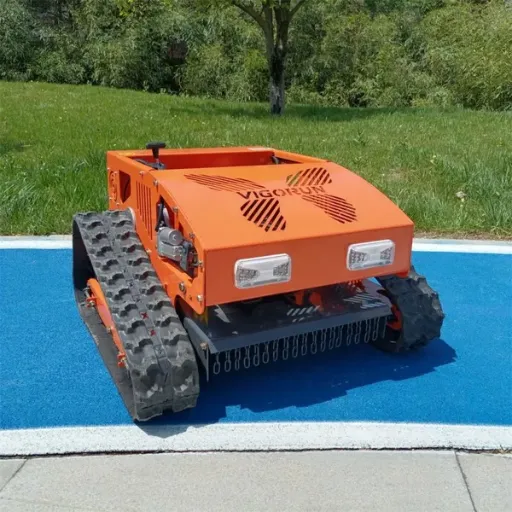
Levees and Flood-Control Embankments
Levee maintenance is the classic application for a remote control lawn mower with tracks. The surface is grass over clay. The slope is 30 to 45 degrees.
The clay is wet for weeks after every high-water event. Wheeled mowers leave ruts that concentrate runoff and weaken the embankment structure. Tracked mowers distribute the load and climb the face without digging in.
When the flood-control district outside Rotterdam replaced their wheeled slope fleet with tracked units in 2023, the change was immediate. Their previous wheeled machines had been restricted to the upper third of the levee face during the wet season. The tracked remote mowers maintained the full slope year-round. Rutting complaints from the water authority stopped entirely.
Solar Farm Vegetation Management
Solar panel arrays sit on graded terrain that channels water between rows. The ground is often a mix of compacted aggregate base and imported topsoil. After rain, the access lanes between panel rows turn soft.
A wheeled mower risks sinking into the mud and damaging underground conduit. A tracked remote mower with low ground pressure crosses the same lane without leaving a trace.
The slope under panels is usually gentle, 10 to 20 degrees, but the operator safety case is still strong. A 200-meter remote lets the operator stand outside the array while the mower works between energized rows. The track system adds the confidence that the machine will not slide into a panel support or inverter cabinet.
Orchards and Vineyard Terraces
Orchard and vineyard slopes are rarely uniform. A terrace may be 15 degrees at the top and 35 degrees on the cut face between levels. The soil is cultivated, irrigated, and often soft during the growing season. Tractor access is limited to the terrace bench. The cut face has to be mowed somehow.
A tracked remote mower handles the variable slope and soft soil without compacting the root zone. Vineyard operators in particular value the low ground pressure because compacted soil reduces drainage and root penetration. A remote control lawn mower with tracks can work between rows on hillsides where a tractor cannot safely operate.
Riverbanks and Dam Faces
Riverbank mowing combines slope, soft ground, and proximity to water. A wheeled machine that slips on a wet bank can end up in the river. A tracked machine with proper lug pattern climbs out of muddy sections instead of spinning in place. The operator stays on flat, stable ground with a line of sight to the machine.
Track Maintenance: What Fleet Managers Need to Know
Daily Inspection Points
Track tension is the most critical daily check. A loose track derails on side slopes and accelerates wear on the sprocket and idler. A track that is too tight overloads the bearings and reduces traction.
Most commercial tracked mowers have a tension indicator or a simple bolt-adjustment system that a crew member can check in thirty seconds.
Other daily checks include inspecting the tread lugs for tears, looking for cuts in the rubber that expose the steel cord, and clearing debris from the sprocket and idler wheels. A stone caught in the sprocket will chew the track drive holes within a few hours of operation.
Wear Life and Replacement Economics
A commercial rubber track on a remote slope mower typically lasts 800 to 1,500 hours depending on terrain abrasiveness. Sharp aggregate, crushed concrete, and rocky soil reduce life toward the lower end. Grass and turf push life toward the upper end.
Track replacement is a two-person job that takes 45 to 90 minutes on most commercial units. The machine does not need a workshop lift. The old track is loosened, the new track is fed over the sprocket and idler, and tension is reset. Spare tracks should be part of every fleet's parts inventory because a machine without tracks is not a slope mower. It is a stationary engine.
Sprocket and Idler Service
The sprocket and idler wheels wear in proportion to track use. A worn sprocket with rounded drive teeth will slip under load even if the track is new. Sprocket replacement intervals are typically two to three track changes. Idler bearings should be greased according to the service schedule and replaced if they show play or noise.
Factory-direct parts support matters here. A distributor or fleet operator who cannot get a replacement sprocket within days is looking at machine downtime measured in weeks. When evaluating a remote control tracked mower supplier, ask specifically about track, sprocket, and idler availability and lead time.
Comparing Track Systems: Vigorun Models
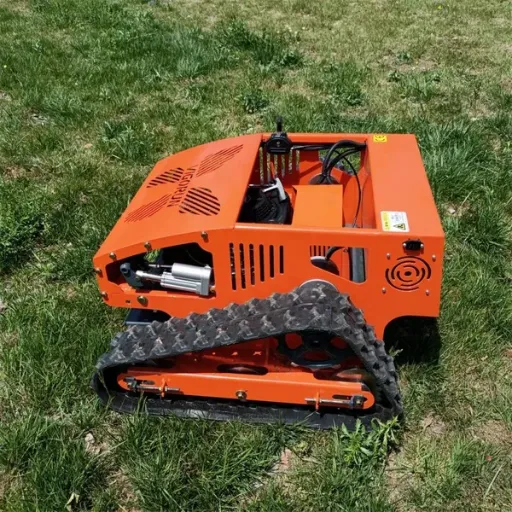
| Model | Track Width | Max Slope | Best Application | Track Feature |
|---|---|---|---|---|
| VTLM800 | 200 mm | 45° | Levee, dam face, riverbank | Wide stance, aggressive lug |
| MTSK800 | 180 mm | 40° | Solar farm, orchard, brush | Standard lug, versatile terrain |
| MTSK1000 | 180 mm | 40° | Heavy brush, commercial fleet | Reinforced cord, long wear life |
The VTLM800 carries the widest track and the steepest slope rating because it was designed specifically for slope work. The track frame is longer, the idler system is heavier, and the rubber compound is optimized for wet clay.
The MTSK series trades some slope capability for attachment versatility. Both run the same core track technology.
For distributors building mixed fleets, the choice depends on the end customer's terrain. A landscaping contractor doing municipal levees needs the VTLM800. An orchard service doing inter-row maintenance on 20-degree terraces can run the MTSK800 with equal confidence and more attachment options.
How to Evaluate Track Quality Before You Buy
Ask for the Track Specification Sheet
A legitimate manufacturer can provide a track specification sheet with the rubber compound, cord type, lug pattern, and recommended operating temperature range. If the supplier cannot produce this document, the tracks are likely generic aftermarket parts sourced from a trading company.
Request Video on Your Terrain Type
Marketing photos of a tracked mower on flat grass tell you nothing. Ask the supplier for video of the exact model operating on a slope equal to or steeper than yours, in conditions similar to yours. If the video shows the machine climbing a 45-degree clay face in the rain, you have useful information. If the video shows the machine on a manicured lawn, you do not.
Check Track Availability and Price
Replacement tracks are a consumable, not an accessory. Ask the supplier for the part number, price, and current stock level.
A track that costs $800 and ships in two days is a viable commercial component. A track that costs $300 but is out of stock with a six-week lead time is a liability. The total cost of ownership includes track price divided by track life, not just the purchase price.
Verify Frame and Sprocket Hardness
The track is only as good as the frame it rides on. Ask about the steel grade and heat treatment of the sprocket and idler wheels. A soft sprocket wears quickly and destroys new tracks. A hardened sprocket with proper tooth profile lasts multiple track changes. This is an engineering detail that separates factory-direct manufacturers from assembly-line trading companies.
Track vs. Wheel: The Honest Limitations
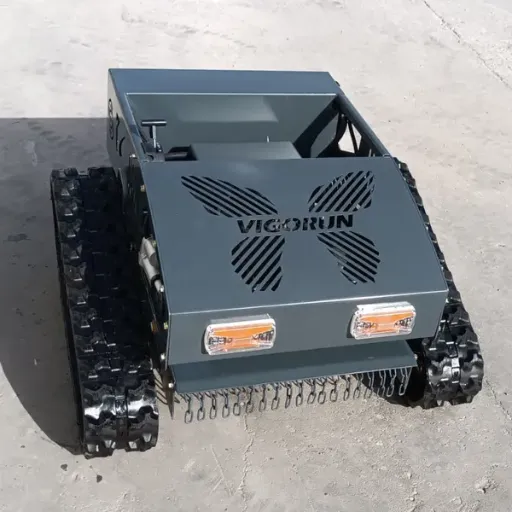
Tracks are not universally superior. On flat, firm ground, a wheeled remote mower is faster, simpler, and cheaper to maintain. Wheels handle higher speeds and tighter turns. The ride is smoother. Track systems add weight, complexity, and cost that are wasted on a villa lawn or a flat sports field.
The honest dividing line is around 25 degrees of slope and soft or irregular terrain. Below that threshold, wheels are the right choice. Above it, tracks are not optional. They are the minimum requirement for safe, productive operation.
Some buyers worry that tracks damage finished turf. On wet grass, a properly tensioned rubber track leaves less surface disturbance than a knobby tire because the pressure is distributed. On dry, manicured lawns, a wheeled machine is still the cleaner option. Match the chassis to the job.
Conclusion
A remote control lawn mower with tracks is defined by the ground it touches. The rubber track is not a styling choice or a marketing feature. It is the interface between machine and slope. The width of the track, the hardness of the rubber, the geometry of the lug, and the tension of the cord determine whether the mower climbs the embankment or slides to the bottom.
Buyers who get this right follow a simple checklist. They measure their slope. They test their soil softness.
They verify track specifications against the actual terrain. They confirm parts availability before purchase. Then they choose a machine built by a manufacturer who understands that the track system is the most important spec on the sheet.
If you are specifying equipment for slope work, levee maintenance, or hillside orchard care, start with the terrain. Then request a detailed track specification and factory-direct quote for a remote control lawn mower with tracks built to handle it.
Recently Posted
-
Remote Control Lawn Mower for Steep Slopes: A Field Engineer's Guide
June 12, 2026Carlos Mendez watched the retention pond embankment from the cab of his pickup. The grass was knee-high, the grade was 38°, and th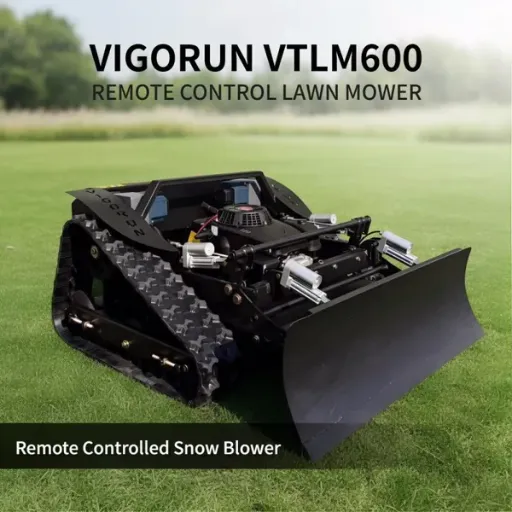 Read More
 -
How Does a Remote Control Lawn Mower Work? A Field Engineer's Breakdown
June 12, 2026Marcus Chen watched his first demonstration from 150 meters away. The operator held a boxy transmitter, thumbs on two joysticks, w Read More
 -
Are Remote Control Lawn Mowers Worth It? A Factory-Direct ROI Breakdown
June 12, 2026Antonio Moretti paid his grounds crew EUR 38,000 in overtime last season to hand-strim a 12-hectare orchard in Piedmont. The next Read More
 -
Remote Control Lawn Mower Buyer's Guide: 7 Things to Check Before You Spend a Dollar
June 12, 2026Lars Hoffmann uncrated his new "slope mower" in March 2025 and drove it straight to the 30-degree embankment behind his Read More

Contact Us
Recommended Products
-
 Vigorun Remote Control Electric Mower Self-Locking Slope Safety Crawler Mower for Lawn & GardenUS$ 2600 - 2700MOQ: 1 Set
 -
Vigorun RC Mower Remote Control Multi-Function Tool Carrier Remote-Controlled Electric MulcherUS$ 2800 - 2900MOQ: 1 Set
-
Vigorun Lawn Mowers Multi-Function Tool Carrier 1000mm Remote Control Forest Mulcher Flail MowerUS$ 8000 - 8200MOQ: 1 Set
-
Vigorun SPRY600 Tractor Sprayer Industrial 4-Stroke Agricultural Sprayers 600l for Soybean FieldsUS$ 2600 - 2700MOQ: 1 Set
-
Vigorun Grass Cutting Machine High-Speed (6 Km/h) Wheeled Lawn Mower for Tea & Coffee PlantationsUS$ 1000 - 1100MOQ: 1 Set
-
Vigorun Robot Brush Mower Euro 5/EPA Self-Locking Slope Safety Remote Control Track Lawn MowerUS$ 1700 - 17900MOQ: 1 Set
-
Vigorun Controlled Lawn Mower Anti-Rollback Security Lawn Mower Crawler for Slopes & HillsidesUS$ 2600 - 2700MOQ: 1 Set
-
Vigorun Robot Weed Cutter Quick-Change Attachment System Remote Controlled Motorcycle MulcherUS$ 2800 - 2900MOQ: 1 Set
-
Vigorun Remote Control Lawn Mower Quick-Change Attachment System Robot Tracked Forestry MulcherUS$ 8000 - 8200MOQ: 1 Set
-
Vigorun SPRY600 Boom Sprayer Electric Start Electric Sprayer Agricultural 600l for Cotton FieldsUS$ 2600 - 2700MOQ: 1 Set
-
Vigorun Brush Mower Euro 5/EPA Hazard-Free Operation Hightop Lawn Mower for Orchards & VineyardsUS$ 1000 - 1100MOQ: 1 Set
-
Vigorun Brush Cutter Robot High Transmission Efficiency 73% Crawler Lawn Mower for Steep SlopesUS$ 1700 - 17900MOQ: 1 Set
-
Vigorun Tractor Sprayer Agriculture Euro 5/EPA Agricultural Sprayers Self Starter for Wheat FieldsUS$ 2600 - 2700MOQ: 1 Set
-
Vigorun Grass Cutter Machine 16x Manual Efficiency Small Remote Control Lawn Mower for NurseriesUS$ 1000 - 1100MOQ: 1 Set
-
Vigorun RC Brush Cutter Euro 5/EPA Low Energy Consumption 6hp Crawler Remote Control Lawn MowerUS$ 1700 - 17900MOQ: 1 Set

-
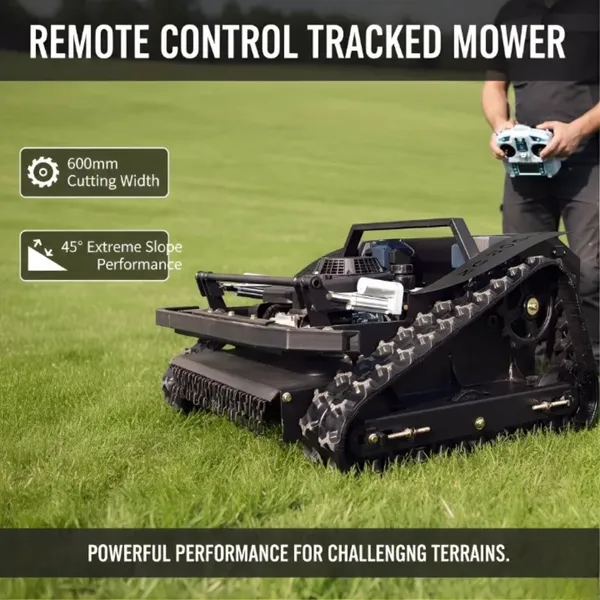
Vigorun VTLM800 RC Mower Euro 5/EPA Remote Hazard Avoidance Robot Crawler Mower for Steep SlopesUS$ 2600 - 2700MOQ: 1 Set
-
Vigorun MTSK800 Automatic Grass Cutter Robot Euro 5/EPA User-Friendly Remote Control Mulcher RobotUS$ 2800 - 2900MOQ: 1 Set
-
Vigorun Lawn Mower Robot With Flail Mower/Hammer Flail/Forest Mulcher/Snow Blade Tracked MulcherUS$ 8000 - 8200MOQ: 1 Set
-
Tractor Sprayer, CE EPA Approved Gasoline Engine Gasoline Fst Power Spray Agriculture for Soybean Fields Vigorun SPRY600US$ 2600.00 - 2700.00MOQ: 1 Set
-
Vigorun SPRY600 Boom Sprayer, Remote Control Distance 200M Gasoline Engine Type Spraying Machine for Cotton FieldsUS$ 2600.00 - 2700.00MOQ: 1 Set