
 Business License

Commercial Remote Control Lawn Mower: What Separates a Toy From a Work Machine
The difference between a remote control lawn mower for commercial use and a hobby-grade unit is not branding. It is physics, metallurgy, and radio engineering. A commercial remote mower that stalls on a 30-degree slope or loses signal at fifty meters is not a productivity tool. It is a liability.
Yet the market is flooded with machines that look identical on a web page. Both claim "heavy duty." Both show steel tracks and brushless motors. The price gap between them can still be three thousand dollars or more.
This guide breaks down exactly what defines a true commercial remote control lawn mower, who needs one, and how to evaluate specs without getting distracted by marketing language.
If you are a landscaping contractor bidding on municipal levee contracts, a solar farm operator managing vegetation under panels, or a distributor building a fleet for resale, the stakes are high enough that guessing is not an option. Here is what actually matters.
What "Commercial Grade" Actually Means for Remote Mowers
There is no universal standard that separates consumer from professional remote control lawn mowers. CE marking does not distinguish between hobby and industrial use. EPA certification applies to the engine, not the chassis duty cycle. That means buyers must read the spec sheet like an engineer, not a shopper.
A commercial remote mower is defined by four operational requirements:
Shift length: It must run a full eight-hour day without thermal shutdown or excessive wear.
Slope handling: It must maintain traction and cutting performance on slopes up to 45 degrees, the threshold where many levees, orchards, and solar farm embankments sit.
Signal stability: The radio control system must hold a stable signal through terrain, vegetation, and electromagnetic interference from nearby power lines.
Attachment versatility: The chassis and cutting deck must accept interchangeable attachments, because commercial terrain changes seasonally.
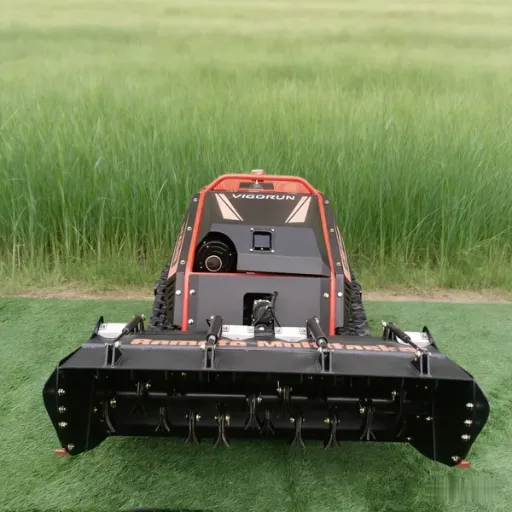
Vigorun Tech builds its commercial units on a boxed steel frame with independent track tensioners and a cooling shroud designed for continuous duty. The difference is visible in the weight. A true commercial remote control lawn mower starts around 120 kilograms dry. Anything under ninety kilograms is unlikely to carry the mass, cooling capacity, or track contact area needed for sustained commercial work.
| Feature | Consumer / Hobby Grade | Commercial Grade |
|---|---|---|
| Weight | 60–90 kg | 120 kg+ |
| Slope limit | 15–25 degrees | 35–45 degrees |
| Daily runtime | 1–2 hours | 6–8 hours |
| Engine duty | Intermittent | Continuous |
| Track system | Plastic or light steel | Rubber with steel cords |
| Attachment swap | Fixed deck only | Quick-lock multiple decks |
| Control range | 50–100 m open field | 200 m+ with failsafe |
| Typical lifespan | 200–400 hours | 1,500+ hours |
The Specs That Define a Commercial Remote Control Lawn Mower
Slope Rating and Track System
Slope capability is the single most abused spec in the industry. Many manufacturers list a "max slope" based on a static test with an empty machine on dry grass. That number is meaningless. A commercial remote mower must maintain full cutting traction while loaded with a flail or rotary deck, on wet grass, while turning.
Tracked chassis outperforms wheeled designs on slopes above 25 degrees because the contact patch is longer and the center of gravity stays lower. Rubber tracks with embedded steel cords also resist punctures from vineyard stakes and construction debris. For commercial remote control lawn mower applications on levees, dam faces, and solar embankments, a tracked system is not optional. It is the baseline.
Want to see how slope ratings translate to real terrain? Our guide on how to choose a remote control slope mower breaks down the math behind safe operating angles and track geometry.
Engine Power and Duty Cycle
Commercial work demands continuous horsepower, not peak bursts. A 7-horsepower engine rated for intermittent duty will overheat after ninety minutes of flail mowing in tall grass. For professional remote control lawn mower operations, look for engines rated at 9 to 16 horsepower with forced-air cooling and a minimum 500-hour service interval.
Gasoline engines remain the dominant choice for commercial remote mowers because of power-to-weight ratio and refueling speed. Diesel options exist for operators who need torque at low RPM or who face local fuel regulations. Battery-electric units are viable for noise-restricted zones like residential landscaping or university campuses, but runtime and recharge logistics must be planned into the work schedule.
Cutting Deck and Attachment Versatility
A commercial remote control lawn mower for business use cannot be single-purpose. In March the job is brush clearing with a flail head. By June it is grass maintenance with a rotary deck. In autumn it might be mulching fallen branches. The attachment interface must swap quickly and hold alignment under load.
Look for a three-point or quick-lock deck system with hydraulic height adjustment. Deck widths from 800 mm to 1000 mm cover most commercial applications without creating transport width issues.
A flail mower attachment with hammer blades handles woody brush up to 40 mm diameter. A rotary deck with swinging blades is better for finished turf. The ability to carry both on the same chassis turns one machine into a year-round revenue tool.
Control Range and Signal Reliability
A 200-meter open-field range figure sounds impressive until the mower drops behind a berm or under a canopy of solar panels. Commercial remote mowers need frequency-hopping 2.4 GHz systems with real-time signal strength feedback and a failsafe return-to-stop protocol. If signal is lost, the machine must stop blades and idle, not continue on a random vector.
Some professional remote control lawn mower models now offer optional relay stations or dual-antenna configurations for sites with complex topography. For municipal buyers managing multiple operators, a single remote that pairs to several machines reduces training cost and spare-part inventory.
Who Buys Commercial Remote Mowers?
Landscaping Contractors
Landscaping companies bidding on slope maintenance contracts face a labor problem. Sending crews with string trimmers onto 35-degree embankments is slow, expensive, and increasingly uninsured. A commercial remote mower lets a two-person crew clear what previously took six workers a full day.
When the team at Greenline Landscaping in Queensland added a tracked commercial remote control lawn mower to their fleet, they cut their levee maintenance labor hours by sixty percent. The operator stayed on flat ground with a line of sight to the machine. The mower handled the slope.
Their workers compensation exposure dropped overnight. They started winning bids that previously went to larger firms with specialized equipment.
Municipalities and Public Works
Cities and counties maintain drainage channels, dam spillways, and roadside verges that conventional ride-on mowers cannot access. A remote control lawn mower for commercial use by public works departments must meet procurement standards that private operators rarely face. That means documented CE or EPA certification, a warranty with local parts availability, and a purchase process that supports competitive bidding.
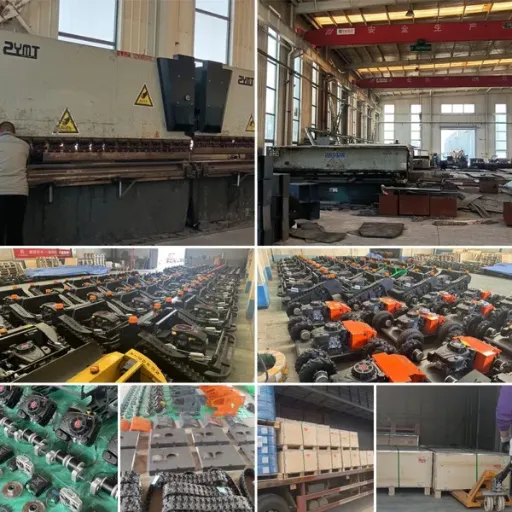
Factory-direct sourcing from a certified manufacturer like Vigorun Tech simplifies procurement because the documentation chain is transparent. There is no distributor markup hiding in the bid, and the certificate of origin is clean.
Solar Farms and Utility Maintenance
Solar panel arrays create narrow corridors with sloped ground underneath. String trimmers are impractical at scale. Ride-on mowers risk collision with panel supports. A compact commercial remote mower with a 800 mm deck threads between rows while cutting grass and light brush that would otherwise shade panels or create fire risk.
Utility vegetation managers also use remote mowers under power lines and around substation fencing where operator proximity is restricted by safety codes. A radio-controlled machine keeps personnel outside the arc-flash and fall zones.
Agricultural and Orchard Operations
Orchards with steep hillside plantings use commercial remote mowers for inter-row maintenance where tractor access is impossible. Vineyard operators in particular value the low ground pressure of rubber tracks, which reduces soil compaction near root zones. The same machine can carry a mulching head in autumn and a grass deck in spring, eliminating the need for separate equipment.
Safety and Compliance: The Non-Negotiables
CE, EPA, and EURO V Certification
A commercial remote control lawn mower operating on public land or under contract to a municipality must carry verifiable certification. CE marking covers electromagnetic compatibility, machinery safety, and noise limits for the European Economic Area. EPA certification and EURO V compliance apply to gasoline and diesel engines.
These are not decorative stickers. They are legal prerequisites for import, insurance, and site access.
Before purchase, request PDF copies of the certificates and cross-check the engine serial number range against the documentation. Some trading companies sell machines with photocopied or expired certificates. Factory-direct buyers can verify certification directly with the manufacturer. For Vigorun Tech machines, certificate verification is available through the certification documentation page.
Operator Training and Site Protocols
Even the safest machine is dangerous in untrained hands. Commercial remote mower operators should understand slope stability, blade engagement protocols, and emergency stop procedures before the first job. A simple pre-shift checklist includes verifying control battery charge, inspecting tracks for damage, checking blade bolts, and confirming the radio pairing.
Site protocols should define no-go zones, minimum operator distance, and hand signals when multiple crews work nearby. Some insurers now offer reduced premiums for landscaping contractors who document remote mower training and maintenance logs.
TCO and ROI: Why the Sticker Price Is Misleading
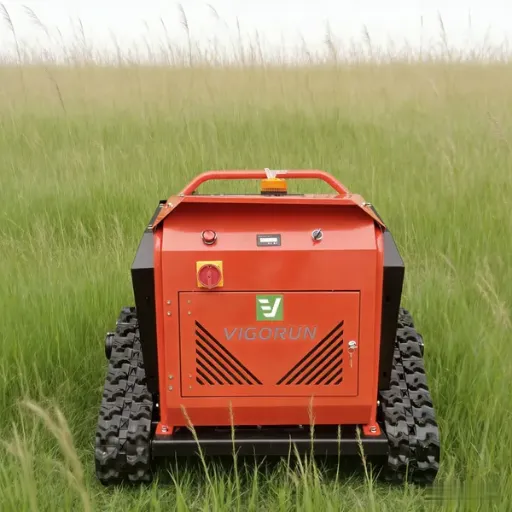
A commercial remote control lawn mower with a factory-direct price of $7,500 looks expensive next to a $3,500 hobby unit. The math changes when you calculate total cost of ownership over three years.
Marcus runs a three-person landscaping crew in South Wales. He bought a commercial-grade tracked remote mower for $7,200 FOB Shandong in early 2024. In eighteen months it logged 420 hours of slope mowing that previously required contract labor at forty-five pounds per hour. The machine paid for itself in under a year.
His maintenance cost to date has been two sets of flail blades, one track tensioner adjustment, and routine oil changes. Total spend under four hundred dollars.
By contrast, a competing contractor in the same region bought two cheaper wheeled units over the same period. The first suffered frame cracking at 180 hours. The second overheated repeatedly and required a replacement engine. Combined cost, including downtime and resale loss, exceeded nine thousand dollars.
For commercial remote mower buyers, the relevant metric is cost per hour of productive work, not the invoice amount. A machine that lasts 1,500 hours with minimal maintenance is cheaper than one that fails at 400 hours, even if the upfront price is double.
Ready to run the numbers for your fleet? Browse the Vigorun remote control lawn mower range to see factory-direct specifications and request a quote tailored to your commercial requirements.
Fleet Purchasing and OEM Customization
Distributors and rental companies do not buy one machine at a time. They buy ten, twenty, or fifty units with consistent paint, documentation, and spare-part packaging. A true commercial remote control lawn mower manufacturer supports fleet orders with volume pricing, custom branding, and consolidated shipping.
OEM customization extends beyond logos. Buyers can specify alternate radio frequencies for regions with spectrum restrictions, additional hydraulic outlets for third-party attachments, or cold-start packages for high-altitude deployment. Some commercial remote mower buyers request multilingual control panels or right-hand throttle configurations for specific operator pools.
Fleet warranties also differ from consumer terms. A commercial buyer should negotiate a parts-and-labor warranty measured in operating hours, not calendar months. A one-year warranty is meaningless if the machine runs eight hours a day.
How to Evaluate a Commercial Remote Mower Before You Buy
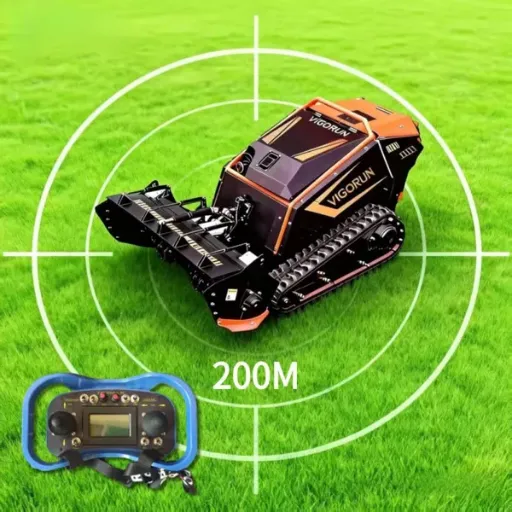
Start with a site audit, not a product catalog. Measure your steepest slope with a clinometer or phone app. Record the vegetation type, density, and maximum stem diameter.
Note any obstacles like rocks, fence posts, or overhead wires that affect access and radio performance. Only then match those requirements to a machine spec sheet.
Request a video of the exact model operating on a slope equal to or steeper than yours. Marketing photos are useless. A video with a timer running proves the machine can sustain work without overheating. If the seller refuses, that is a signal.
Verify spare-part availability before purchase. A commercial remote mower with no track replacements, blade stock, or engine parts is a disposable unit, not a commercial asset.
Ask for a parts list with lead times. Factory-direct manufacturers typically stock wear parts and ship within days. Trading companies often have no inventory at all.
Finally, confirm the control system frequency and output power are legal in your country. A 2.4 GHz system is widely accepted, but local regulations on transmitter power vary. Importing a machine with an illegal radio configuration creates customs delays and potential fines.
Conclusion
A commercial remote control lawn mower is not a larger version of a consumer toy. It is a purpose-built machine designed for continuous duty on difficult terrain, under regulatory scrutiny, with financial returns that justify the investment. The right unit reduces labor cost, eliminates slope-access risk, and opens bidding opportunities that manual crews cannot touch.
The buyers who get this right follow a simple process. They audit their sites honestly. They read spec sheets for duty cycle, track geometry, and signal architecture instead of glossy adjectives.
They verify certification, spare-part supply, and warranty terms in writing. Then they buy from a manufacturer who understands that a commercial remote mower is only as good as the support behind it.
If you are specifying equipment for a landscaping fleet, municipal procurement, or solar farm maintenance contract, start with the actual requirements. Then request a detailed specification sheet and factory-direct quote for a machine built to meet them.
Recently Posted
-
Steep Slope 600mm Tracked 200m Remote Control 45 Degree Brushless Electric Lawn Mower
August 10, 2026*Integrated Drive System with 73 Percent Efficiency: The VTLM600 remote control lawn mower features a fully integrated brushless m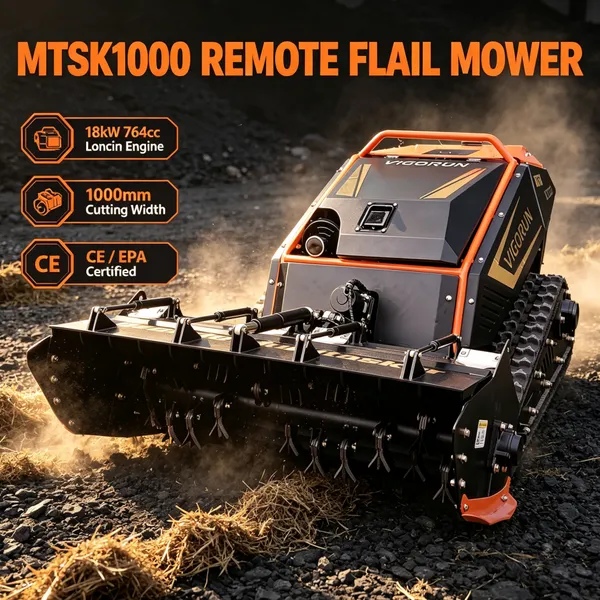 Read More
 -
Remote Controlled Pesticide Sprayer with 600L Tank 8.4m Boom for Agricultural Applications
August 10, 2026*Electric Start & 13kW Loncin Engine for Powerful Agricultural Spraying: Maximize field application efficiency with the SPRY60 Read More
 -
Self Propelled Agricultural Boom Sprayer with Adjustable Track for Modern Farming
August 10, 2026*Electric Start & 13kW Loncin Engine for Powerful Agricultural Spraying: Maximize field application efficiency with the SPRY60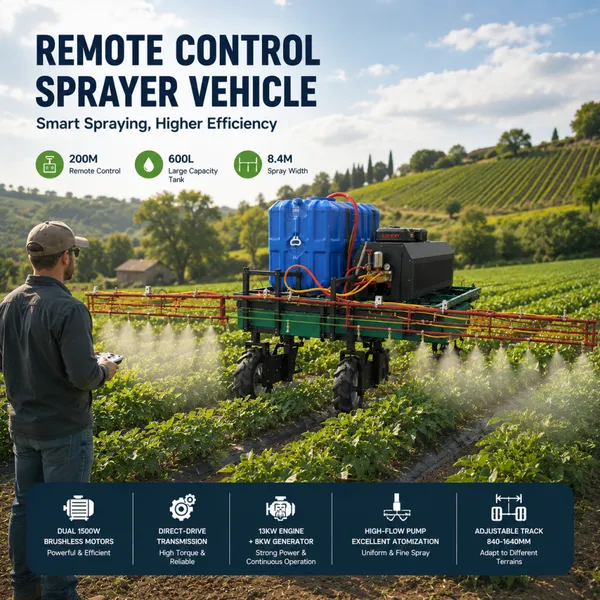 Read More
 -
Automatic Remote Control Agricultural Spray Machine with 600L Chemical Tank and Boom System
August 10, 2026*Electric Start & 13kW Loncin Engine for Powerful Agricultural Spraying: Maximize field application efficiency with the SPRY60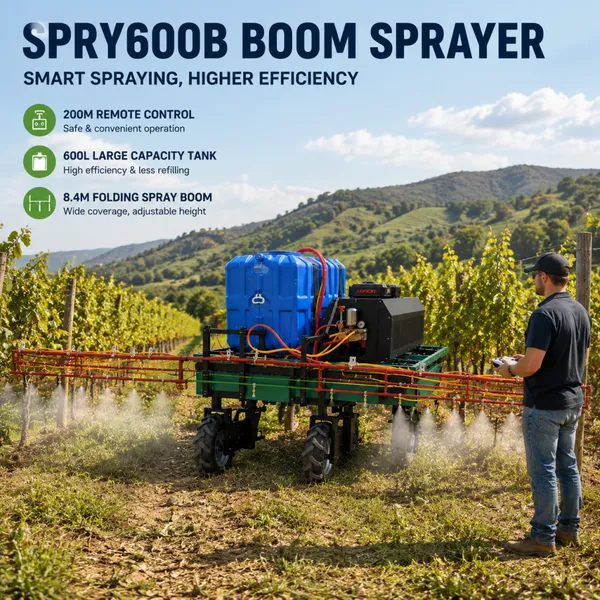 Read More

Contact Us
Recommended Products
-
 Vigorun Lawn Mower Robot, Industrial Dual 48V 1500W Motors MTSK1000 Mulcher Machine for Large LandscapesUS$ 7500.00 - 7700.00MOQ: 1 Set
 -
Farmland Orchards Battery Powered Mower Gasoline Golf Mower Robot Lawn Mower 3000m2 Vigorun Remote Control Grass MowerUS$ 2580 - 2700MOQ: 1 Unit
-
Vigorun MTSK800 Automatic Remote Control Grass Cutting Machine 48V 20Ah Battery Remote Flail MowerUS$ 2800 - 2900MOQ: 1 Set
-
Vigorun MTSK1000 Remote Control Mower 24hp Fail-Safe Slope Braking Remote Control Forest MulcherUS$ 8000 - 8200MOQ: 1 Set
-
Industry Electric Motor Lawn Mower Flail Mower Atv Gasoline Hedge Trimmer Battery LawnmowerUS$ 2580 - 2900MOQ: 1 Unit
-
Vigorun Agricultural Tractor Sprayer Euro 5/EPA Electric Agricultural Sprayer 600l for VineyardsUS$ 2600 - 2700MOQ: 1 Set
-
Remote Control Tracked Hillside Mower 800mm Cutting Width 60 Degree Slope for Steep Terrain VegetationUS$ 2600 - 2700MOQ: 1 Set
-
Vigorun VTLM600 RC Lawn Mower Robot CE EPA Certified 45° Extreme Slope Mini Crawler Lawn MowerUS$ 1700 - 17900MOQ: 1 Set
-
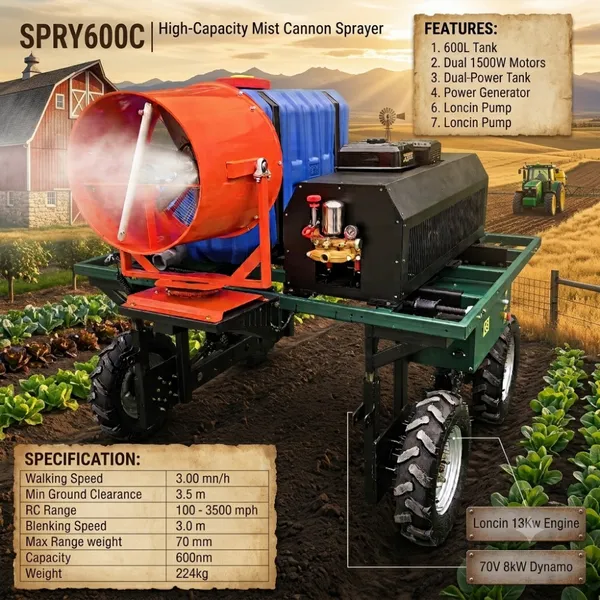
Remote Controlled High Efficiency Fog Cannon Spraying Machine 600L Tank for Agriculture and Dust ControlUS$ 2800 - 2900MOQ: 1 Set
-
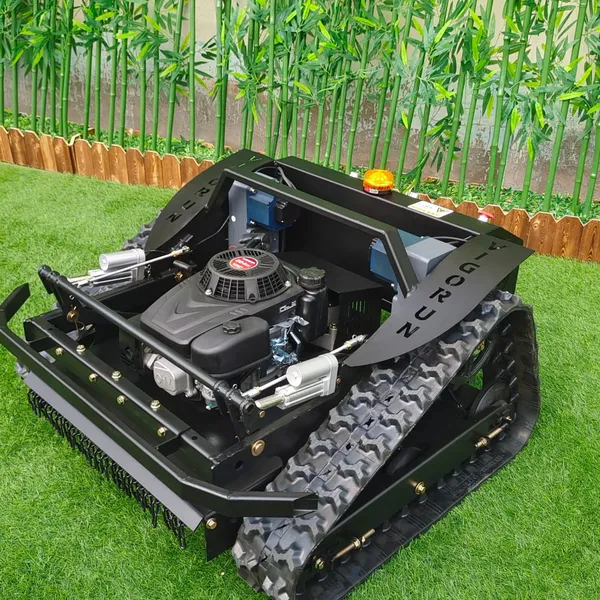
Vigorun Radio Control Mowing Euro 5/EPA Self-Propelled & Precise 6hp Remote Control Crawler MowerUS$ 1700 - 1790MOQ: 1 Set
-
Factory Manufacturer Vigorun MTSK1000 1000MM Commercial Branch Cutter Flail Mower rc Remote Petrol Lawnmower Mower Grass Cutter TractorUS$ 8000 - 8200MOQ: 1 Set
-
Vigorun VTW550 Remote Control Grass Cutter Tractor Robot Gas Lawn Mower Grass Cutter Small Electric Lawn Mower Vigorun Lawn MowerUS$ 1000 - 1250MOQ: 1 Set
-
Vigorun Tech Gasoline Remote Control Lawn Mower Self-Locking Slope Safety RC Mower Tiller for EmbankmentsUS$ 2800.00 - 2900.00MOQ: 1 Set
-
Mower Gasoline Grass Cutter Machine Remote Control 1000mm Cut 35 Degree Slope Flail Hammer for Overgrown LandUS$ 7500 - 7700MOQ: 1 Set
-
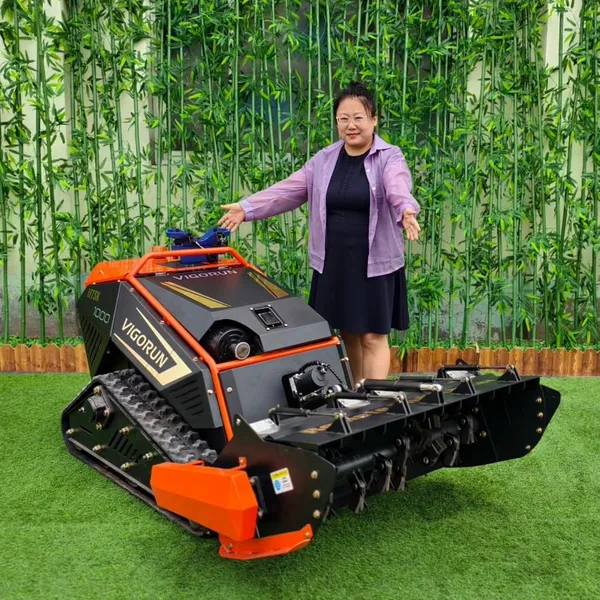
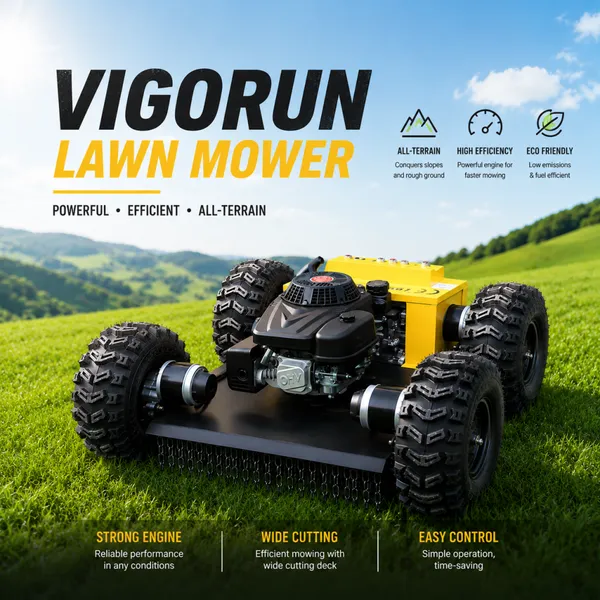
Vigorun VTLM800 Remote Control Electric Mower, Self-Locking Slope Safety Crawler Mower for Steep SlopesUS$ 2600.00 - 2700.00MOQ: 1 Set
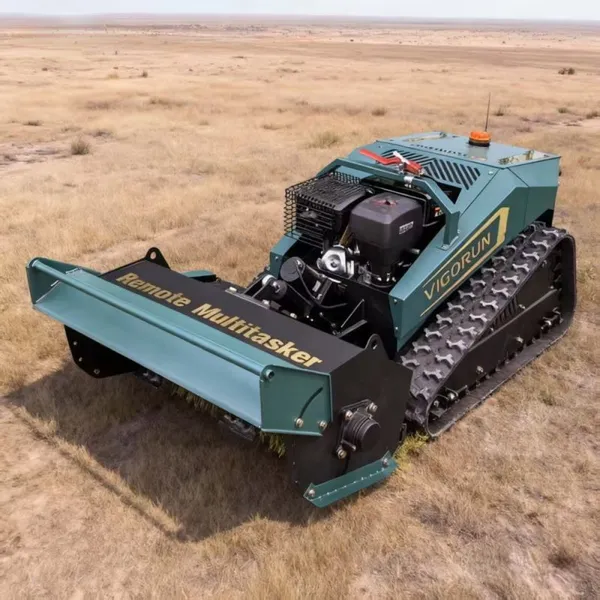
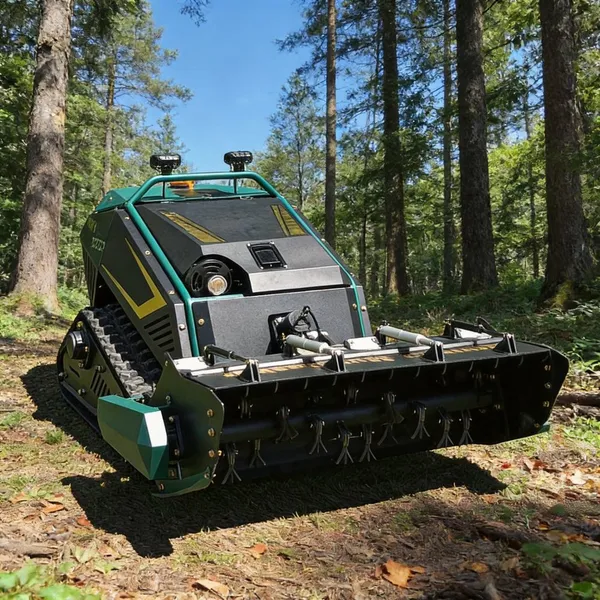
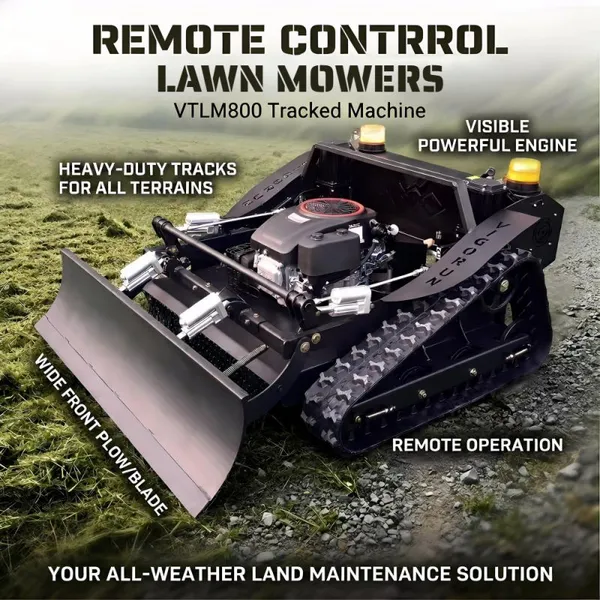
-
Shrub and Brush Clearing MTSK800 MTSK1000 Flail Mower rc Remote Weeding Weeder MachineUS$ 2800 - 2900MOQ: 1 Set
-
RC Robot Lawn Mower Electric Remote Control Flail Grass Cutter Garden Cutting Machine MTSK1000US$ 8000 - 8200MOQ: 1 Set
-
Remote Manipulation Rubber Track Brush Cutter Industrial Flail Mower for Efficient Shrub ClearingUS$ 2000.00 - 2790.00MOQ: 1 Set
-
Vigorun MTSK1000 Rc Lawn Mower, Loncin 764CC Gasoline Engine Forestry Mulcher With Remote Control for ForestryUS$ 7500.00 - 7700.00MOQ: 1 Set
-
Vigorun VTC550 Zero Turn Electric Mower Quality Guaranteed Crawler Brush Cutter For Embankments & LeveesUS$ 1600 - 1690MOQ: 1 Set