
 Business License

Tracked Slope Mower: Why Rubber Tracks Beat Wheels on Steep Terrain
In March 2024, a landscaping contractor named Derek bid a municipal contract to maintain the embankments along a reservoir in Tennessee. He already owned a zero-turn with a reputation for "hill stability." On the first wet morning, it slid sideways at 22 degrees and put a 12-inch gash in the turf before the operator could recover. Derek lost the contract, paid for sod repair, and spent the next month researching one question: why do tracks outperform wheels when the grade gets serious?
If you're buying equipment for slopes above 25 degrees, the answer changes everything about how you spec a machine. A tracked slope mower distributes weight across a continuous rubber footprint, grips wet clay, and climbs grades that would roll a wheeled chassis. This guide explains how rubber-track technology works, what separates a real slope-rated track system from a marketing badge, and how to choose a tracked slope mower that matches your terrain.
We build remote-controlled mowers and tracked carriers in Weifang, Shandong. Our VTLM800 and MTSK-series machines climb up to 45 degrees on dry grass, and every unit clears 100 percent indoor and outdoor field testing before it ships. The slope ratings we publish are numbers we verify on our own test ramps.
Why Slope Mowing Demands Tracks, Not Wheels
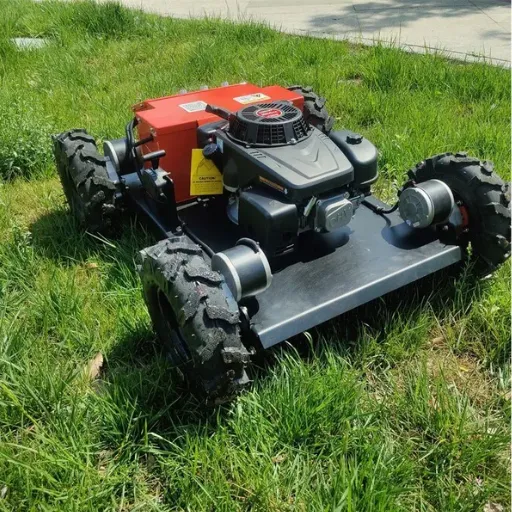
Wheels work fine on flat ground and gentle grades. Once the slope exceeds 20 degrees, three physics problems show up fast.
Traction collapses on wet grass. A wheeled mower has four small contact patches. When dew, rain, or irrigation soaks the turf, those patches hydroplane. Rubber tracks spread the same machine weight across 1,200 to 1,500 millimeters of continuous contact surface. The result is grip on wet grass that wheels simply cannot match.
Ground pressure sinks the machine on soft soil. A ride-on mower or wheeled remote unit concentrates weight on four tires. On levees, riverbanks, or freshly watered estates, those tires sink and rut the surface. A tracked slope mower floats. The VTLM800, for example, runs tracks 200 millimeters wide and 1,200 millimeters long. That footprint keeps ground pressure low enough to cross soft clay without digging in.
Side-slope stability depends on stance width. A tall machine on narrow tires tips laterally when the grade shifts under it. Tracks lower the center of gravity and widen the effective stance. The same machine that feels tippy on 25 degrees with wheels feels planted at 40 degrees with tracks.
The takeaway is straightforward. If your job site includes wet embankments, clay levees, or grades above 25 degrees, a tracked slope mower is not an upgrade. It is the baseline safety spec.
How a Tracked Slope Mower Actually Works
A rubber-track undercarriage on a remote-controlled mower is not a toy-tank conversion. It is a purpose-built drivetrain with four critical engineering decisions.
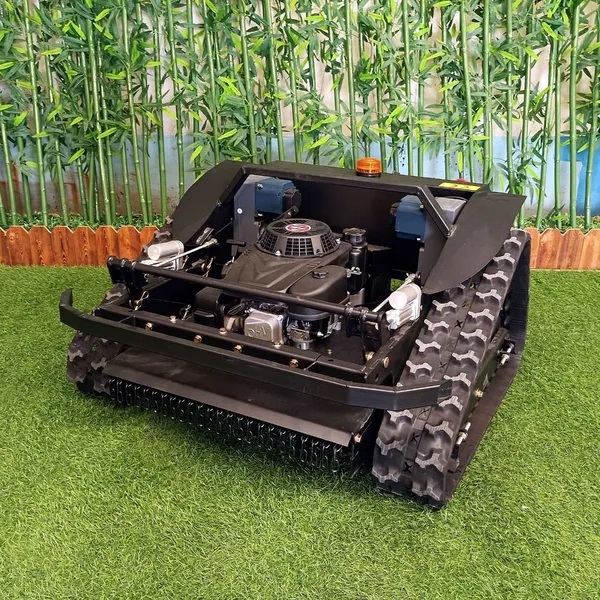
Track material and lug pattern. Commercial-grade rubber tracks use an embedded steel cable carcass for tensile strength, plus an aggressive lug pattern that bites into loose turf, mud, and gravel. Smooth or lightly treaded tracks slip on wet grass. Before you buy, ask for a close-up photo of the lug profile. If it looks like a lawn-tractor track, it will behave like one on a 35-degree face.
Drive sprocket and undercarriage geometry. The drive sprocket engages the track from inside the loop, transferring engine torque to the ground. On a well-built tracked slope mower, the sprocket is shielded from debris, and the undercarriage uses sealed idlers that don't require daily greasing. Cheap conversions use exposed bicycle-style sprockets that clog with grass and wear out in a season.
Hydrostatic transmission matched to track load. Tracks add rolling resistance. A transmission sized for wheeled duty will overheat and slip when it meets track drag. Professional machines use hydrostatic pumps and motors rated for the combined load of the slope angle plus track friction. The VTLM800 pairs a 22-horsepower EURO V engine with a hydrostatic system sized specifically for its rubber-track chassis.
Slope-rated sump and fuel system. Here's the detail most buyers miss. A standard lawn-mower engine uses a flat oil sump. Tilt that sump to 35 degrees for more than a few seconds, and the oil pickup starves. A true slope-rated engine modifies the sump, the pickup tube, and sometimes the baffle to maintain lubrication at angle. The same logic applies to fuel caps and tank vents. If the manufacturer cannot explain the sump modification, the "slope rating" is marketing, not engineering.
Want to see the exact track geometry and sump spec? View the VTLM800 rubber track slope mower for full dimensions and certification details.
Tracked vs. Wheeled: The Real-World Difference on Steep Ground
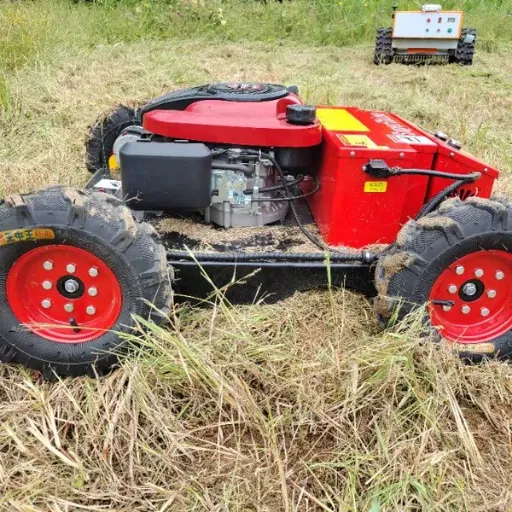
Specifications tell part of the story. Job-site behavior tells the rest. Here's how the two systems compare on the terrain that matters.
| Factor | Tracked Slope Mower | Wheeled Mower |
|---|---|---|
| Max safe slope | 40-45 degrees | 15-22 degrees |
| Wet grass traction | High, continuous footprint | Low, patches hydroplane |
| Ground pressure | Low, floats on soft soil | High, sinks and ruts |
| Side-slope stability | Wide stance, low center of gravity | Narrow, tippy on grades |
| Wet-weather productivity | Returns to work quickly | Often sits idle after rain |
| Wear on hard surfaces | Faster track wear | Standard tire life |
When Marcus, a commercial landscaper in Queensland, switched from a wheeled remote unit to the VTLM800 tracked chassis, he noticed the difference on the first dewy morning. His old machine would spin its wheels for three or four seconds before finding grip on a 30-degree dam face. The tracked unit engaged immediately. Those three seconds matter because every slip erodes the operator's confidence. A hesitant operator mows slower, bills fewer acres per hour, and eventually starts turning down slope contracts.
The productivity gap widens in wet weather. Wheeled machines often sit idle after rain because the risk of sliding is too high. A tracked slope mower with aggressive lugs and low ground pressure can return to work hours earlier, which means more billable days per season.
There's one honest trade-off. Tracks wear faster than tires on hard, abrasive surfaces like crushed-stone driveways or asphalt paths. If your job is 90 percent flat pavement and 10 percent slope, tracks are overkill. But if your job is 90 percent slope and 10 percent flat transport, the safety and productivity gains outweigh the track replacement cost by a wide margin.
What to Look for When Buying a Tracked Slope Mower
Not every machine marketed as a "tracked slope mower" is built for commercial-grade slope work. Use this checklist before you request a quote.
1. Verify the slope rating is sustained, not peak.
Peak ratings are measured in a controlled approach on dry turf. Sustained ratings reflect what the machine can handle across a full mowing pattern, including turns and reverse maneuvers. Ask the manufacturer directly: "Is that number sustained or peak?" If they hesitate, assume peak.
2. Check track dimensions and ground pressure.
Request track width, track length on ground, and machine weight. Divide weight by contact area to estimate ground pressure. Lower is better for soft terrain. The VTLM800 runs 200-millimeter-wide tracks with a 1,200-millimeter ground contact length, giving it a low enough ground pressure to cross saturated levees without rutting.
3. Confirm the engine is slope-rated and certified.
Ask about sump modification, oil-pickup design, and whether the engine carries CE, EURO V, and EPA certification. Without those certifications, a distributor cannot clear customs in regulated markets, and an end-user may face emission-compliance issues.
4. Test the remote range and failsafe.
A 200-meter wireless range is the industry standard for professional remote control lawn mowers with tracks. More important than range is the failsafe behavior. If signal is lost, the blade must stop and the chassis must brake. Test this before you buy.
5. Ask about parts and track replacement cost.
Tracks are wear items. A realistic track life on slope terrain is 800 to 1,200 hours, depending on surface abrasiveness. Ask the manufacturer for track replacement price, availability, and whether the idlers and sprockets are stocked. A tracked slope mower without available tracks becomes an expensive lawn ornament in year three.
6. Request pre-delivery testing proof.
Every Vigorun unit clears both indoor bench tests and outdoor slope tests before shipment. Ask your supplier for the same. A factory that cannot show you a test report for your specific unit is a factory that doesn't test.
Five Jobs a Tracked Slope Mower Handles Best
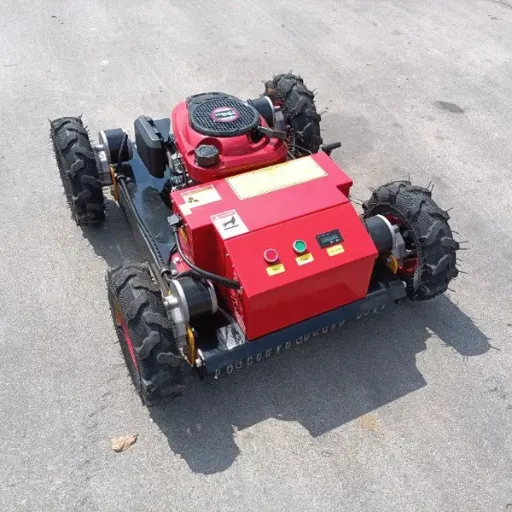
Certain applications are almost impossible without tracks. Here are the five where a rubber track slope mower pays for itself fastest.
1. Levees and flood-control embankments
These structures combine steep faces (30 to 45 degrees), wet clay soil, and zero tolerance for rutting. Wheels sink and slip. Tracks grip and float. The VTLM800 was designed specifically for this combination.
2. Riverbanks and reservoir margins
Vegetation near water is always heavier, always wetter, and always on unstable soil. A tracked slope mower keeps the operator 200 meters back from the waterline while the machine handles the grade.
3. Solar farm vegetation management
Solar arrays sit on rolling terrain with 10- to 30-degree grades between panel rows. The ground is often compacted gravel and soil mix that becomes slick after rain. Tracks handle the transition from gravel to turf without slipping.
4. Orchard and vineyard terraces
Terraced hillsides have short, steep faces between flat rows. A wheeled machine struggles with the transition. Tracks climb the face, mow the terrace edge, and traverse the flat row without drama.
5. Highway and roadside embankments
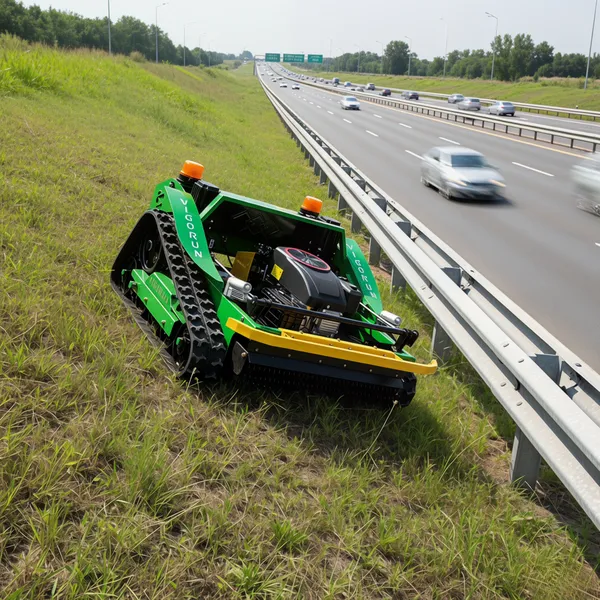
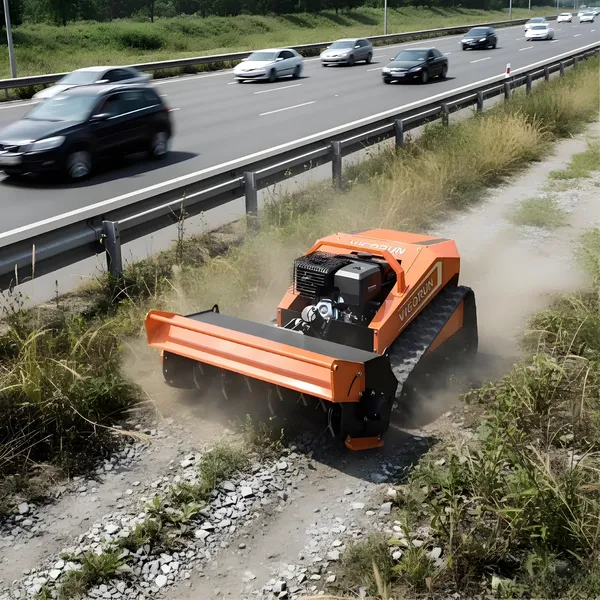
State DOT crews and municipal contractors face some of the steepest maintained grades in landscaping. Wet clay, diesel runoff, and unpredictable debris make wheels a liability. Tracks turn a four-person hand-crew job into a one-operator remote job.
For contractors who need a multi-attachment platform, the MTSK800 remote-controlled flail mower also runs on a rubber-track chassis and accepts flail heads, sprayers, and transport beds.
Maintenance: What Tracks Cost You vs. What They Save
Track maintenance is the most common objection buyers raise. Let's address it with real numbers.
Track replacement cost. A commercial rubber track for a remote mower typically costs 400 to 700 dollars per set, depending on width and lug pattern. At 1,000 hours of average slope life, that is 40 to 70 cents per operating hour. Compare that to the labor cost of a two-person hand crew, which runs 40 to 80 dollars per hour in most markets. The track cost is tiny next to labor savings.
Daily maintenance. Tracks require tension checks every 10 hours of operation and periodic undercarriage cleaning. Most operators spend five minutes per day on track inspection. That's less time than it takes to fuel and blade-check a conventional ride-on.
What tracks save. The real savings are in workers' compensation, insurance, and contract liability. A single rollover incident on a steep slope can cost a landscaping firm six figures in medical, legal, and premium increases. A tracked slope mower with a 200-meter remote keeps the operator off the slope entirely. The track cost is insurance, not expense.
Parts strategy. Buy your machine from a manufacturer that stocks track idlers, sprockets, and tensioners. Vigorun's production process includes whole-life parts planning, and we air-freight wear parts to distributors worldwide. A track system without parts support is a liability, no matter how good the initial spec.
The Bottom Line on Choosing a Tracked Slope Mower
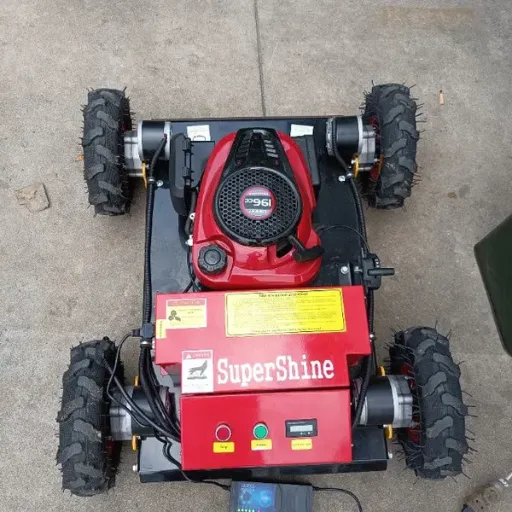
If your terrain includes grades above 25 degrees, wet soil, or soft embankments, wheels are a compromise you cannot afford. A tracked slope mower gives you the traction, stability, and low ground pressure to work safely and productively where wheeled machines fail.
The key is buying a machine with real engineering behind the track system: aggressive lugs, a slope-rated engine sump, hydrostatic transmission sized for track load, and a manufacturer who stocks the wear parts you will need in year three. Verify the slope rating. Check the certifications. Ask for pre-delivery test proof. And never let a supplier treat "track" as a cosmetic upgrade instead of a core safety system.
Vigorun builds the VTLM800 and MTSK-series tracked slope mowers in our Weifang facility, with 22-horsepower EURO V / EPA-certified engines, 200-meter wireless control, and 45-degree slope ratings verified on every unit before shipment. Distributors get OEM color, logo, and packaging from MOQ 5 units, with a 1-year warranty and lifetime parts support.
Ready to spec a tracked slope mower for your fleet or job site? Request a dealer quote, FOB Shandong pricing, full CE / EURO V / EPA documentation, and a container loading diagram within 24 hours.
Recently Posted
-
Remote Control Lawn Mower for Steep Slopes: A Field Engineer's Guide
June 12, 2026Carlos Mendez watched the retention pond embankment from the cab of his pickup. The grass was knee-high, the grade was 38°, and th Read More
 -
How Does a Remote Control Lawn Mower Work? A Field Engineer's Breakdown
June 12, 2026Marcus Chen watched his first demonstration from 150 meters away. The operator held a boxy transmitter, thumbs on two joysticks, w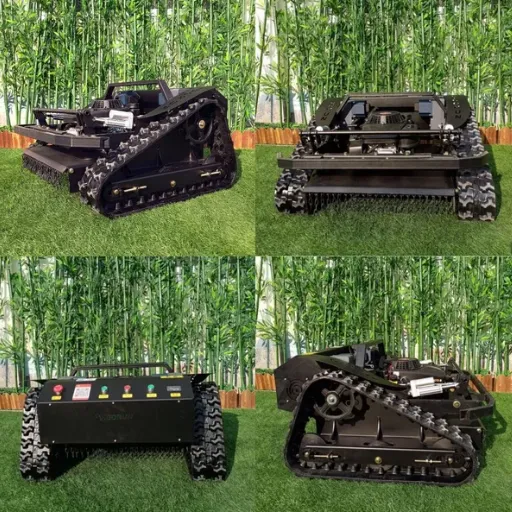 Read More
 -
Are Remote Control Lawn Mowers Worth It? A Factory-Direct ROI Breakdown
June 12, 2026Antonio Moretti paid his grounds crew EUR 38,000 in overtime last season to hand-strim a 12-hectare orchard in Piedmont. The next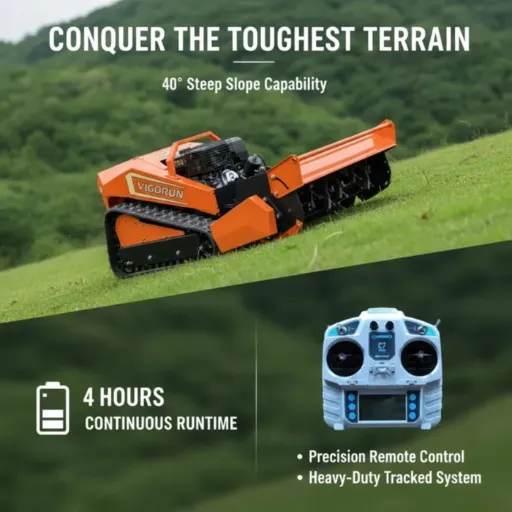 Read More
 -
Remote Control Lawn Mower Buyer's Guide: 7 Things to Check Before You Spend a Dollar
June 12, 2026Lars Hoffmann uncrated his new "slope mower" in March 2025 and drove it straight to the 30-degree embankment behind his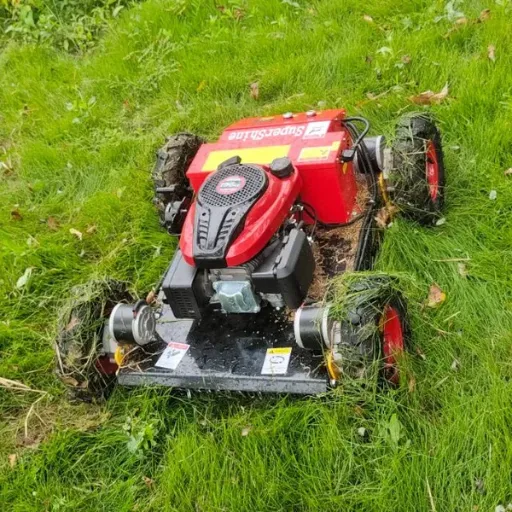 Read More

Contact Us
Recommended Products
-
 Vigorun Remote Control Electric Mower Self-Locking Slope Safety Crawler Mower for Lawn & GardenUS$ 2600 - 2700MOQ: 1 Set
 -
Vigorun RC Mower Remote Control Multi-Function Tool Carrier Remote-Controlled Electric MulcherUS$ 2800 - 2900MOQ: 1 Set
-
Vigorun Lawn Mowers Multi-Function Tool Carrier 1000mm Remote Control Forest Mulcher Flail MowerUS$ 8000 - 8200MOQ: 1 Set
-
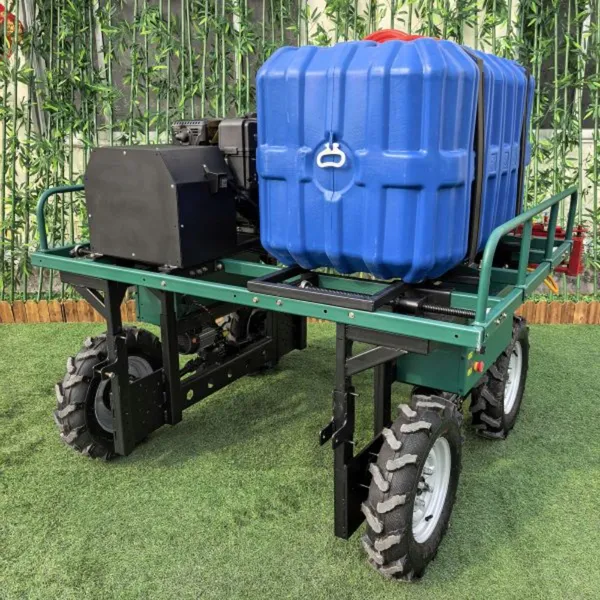
Vigorun SPRY600 Tractor Sprayer Industrial 4-Stroke Agricultural Sprayers 600l for Soybean FieldsUS$ 2600 - 2700MOQ: 1 Set
-
Vigorun Grass Cutting Machine High-Speed (6 Km/h) Wheeled Lawn Mower for Tea & Coffee PlantationsUS$ 1000 - 1100MOQ: 1 Set
-
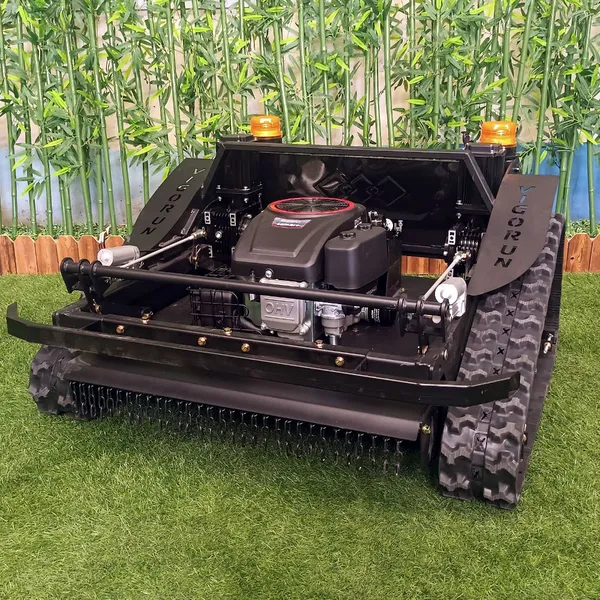
Vigorun Robot Brush Mower Euro 5/EPA Self-Locking Slope Safety Remote Control Track Lawn MowerUS$ 1700 - 17900MOQ: 1 Set
-
Vigorun Controlled Lawn Mower Anti-Rollback Security Lawn Mower Crawler for Slopes & HillsidesUS$ 2600 - 2700MOQ: 1 Set
-
Vigorun Robot Weed Cutter Quick-Change Attachment System Remote Controlled Motorcycle MulcherUS$ 2800 - 2900MOQ: 1 Set
-
Vigorun Remote Control Lawn Mower Quick-Change Attachment System Robot Tracked Forestry MulcherUS$ 8000 - 8200MOQ: 1 Set
-
Vigorun SPRY600 Boom Sprayer Electric Start Electric Sprayer Agricultural 600l for Cotton FieldsUS$ 2600 - 2700MOQ: 1 Set
-
Vigorun Brush Mower Euro 5/EPA Hazard-Free Operation Hightop Lawn Mower for Orchards & VineyardsUS$ 1000 - 1100MOQ: 1 Set
-
Vigorun Brush Cutter Robot High Transmission Efficiency 73% Crawler Lawn Mower for Steep SlopesUS$ 1700 - 17900MOQ: 1 Set
-
Vigorun Tractor Sprayer Agriculture Euro 5/EPA Agricultural Sprayers Self Starter for Wheat FieldsUS$ 2600 - 2700MOQ: 1 Set
-
Vigorun Grass Cutter Machine 16x Manual Efficiency Small Remote Control Lawn Mower for NurseriesUS$ 1000 - 1100MOQ: 1 Set
-
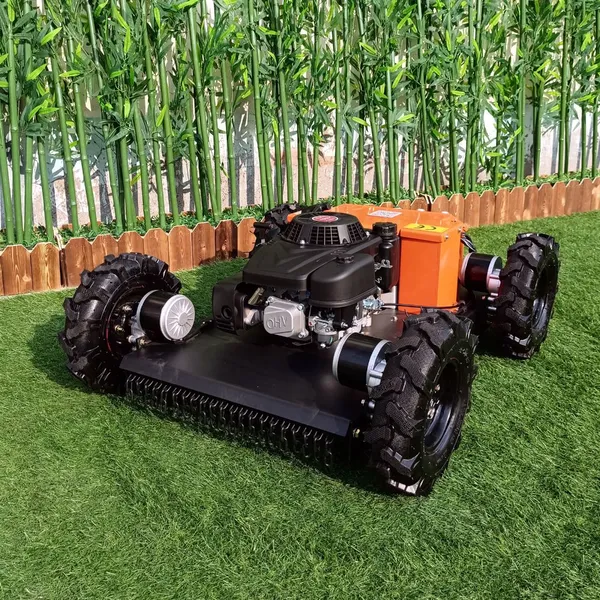
Vigorun RC Brush Cutter Euro 5/EPA Low Energy Consumption 6hp Crawler Remote Control Lawn MowerUS$ 1700 - 17900MOQ: 1 Set

-
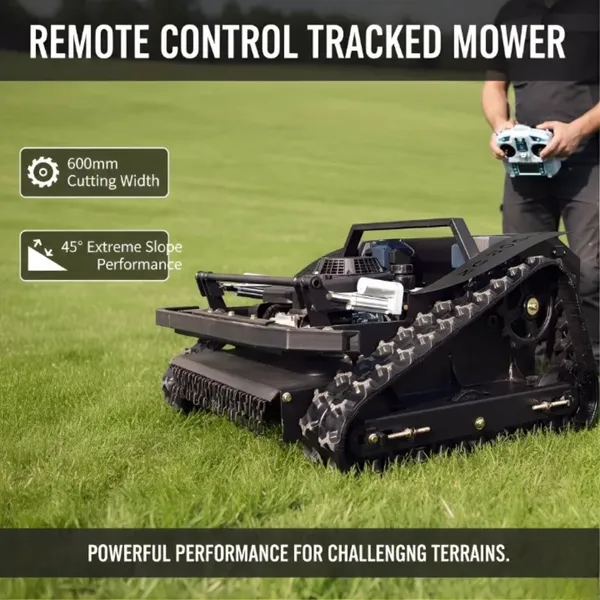
Vigorun VTLM800 RC Mower Euro 5/EPA Remote Hazard Avoidance Robot Crawler Mower for Steep SlopesUS$ 2600 - 2700MOQ: 1 Set
-
Vigorun MTSK800 Automatic Grass Cutter Robot Euro 5/EPA User-Friendly Remote Control Mulcher RobotUS$ 2800 - 2900MOQ: 1 Set
-
Vigorun Lawn Mower Robot With Flail Mower/Hammer Flail/Forest Mulcher/Snow Blade Tracked MulcherUS$ 8000 - 8200MOQ: 1 Set
-
Tractor Sprayer, CE EPA Approved Gasoline Engine Gasoline Fst Power Spray Agriculture for Soybean Fields Vigorun SPRY600US$ 2600.00 - 2700.00MOQ: 1 Set
-
Vigorun SPRY600 Boom Sprayer, Remote Control Distance 200M Gasoline Engine Type Spraying Machine for Cotton FieldsUS$ 2600.00 - 2700.00MOQ: 1 Set