
 Business License

Remote Controlled Slope Mower: A Complete Buyer's Guide for Steep Terrain
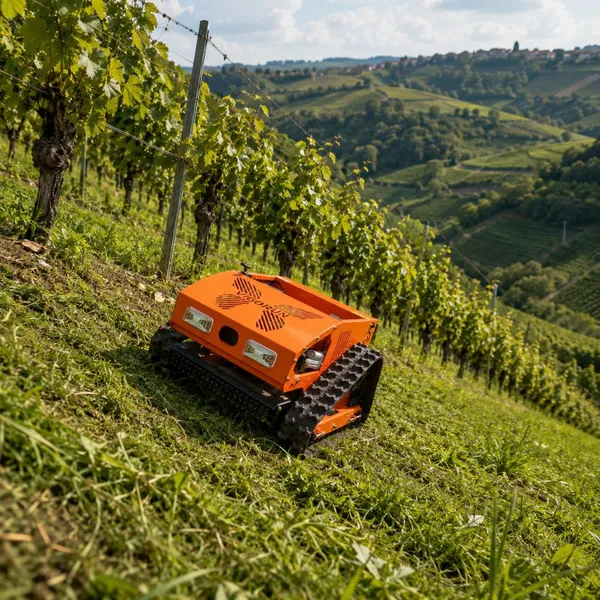
If you've ever watched a municipal crew send a ride-on mower down a 30° embankment and held your breath, you already know why remote controlled slope mowers exist. Every year, conventional ride-on machines roll over on slopes they were never designed to handle, and every one of those incidents was preventable with the right equipment.
The question most buyers face isn't whether they need a remote controlled slope mower. It's how to choose one that actually performs at the angles advertised, holds up in year three, and doesn't strand you when a track or blade needs replacing. This guide walks through what a slope rating really means, why tracked chassis beat wheeled alternatives on wet terrain, and how to match a remote control slope mower to your actual job site, not the manufacturer's marketing reel.
We build remote-controlled mowers and tools carriers at our Weifang, Shandong facility and ship them to operators in 140+ countries. Every Vigorun unit clears 100% indoor and outdoor field testing before it leaves the line. The slope numbers we publish are numbers we'll back up on your embankment, your levee, or your orchard terrace.
Ready to see which model fits your slope? Browse the Vigorun remote mower lineup and request a spec sheet with slope ratings for every chassis we build.
What "Slope Rating" Actually Measures, and Where Marketing Overpromises
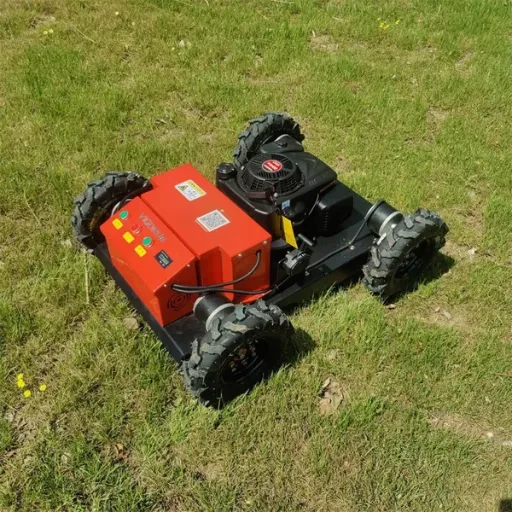
When a manufacturer publishes a slope rating, they're describing the maximum angle at which the machine maintains four things at once: traction, stability, engine lubrication, and cutting integrity. The rating assumes dry conditions, healthy turf or short brush, and a competent operator standing in a safe position. Wet grass, loose soil, tall woody growth, or a rookie operator can all reduce real-world capability by 5° to 10°.
A 45° slope rating sounds impressive on a spec sheet. But the number alone doesn't tell you whether that rating is sustained across a full mowing pattern or measured on a single controlled approach. The two answers are very different. A machine that can climb a 45° ramp in one direction may slide sideways when asked to hold that angle while turning, reversing, or cutting through thick brush.
The honest answer: most professional remote control slope mowers are rated for 40° to 55° under ideal conditions. The slope you can mow productively, overlap, discharge, and speed all working in your favor, is usually 5° to 10° lower than the peak number on the brochure.
Pro tip: When a supplier markets a "60° slope" capability, ask whether that number is peak or sustained. Ask for track width, center-of-gravity height, and engine sump modification details. A real manufacturer will have those numbers ready. A trading company will pivot to "it's very powerful" and change the subject.
Tracked vs. Wheeled: The Chassis Difference That Determines Safety
Two remote controlled slope mowers can have the same engine, the same cutting deck, and the same advertised slope rating, and one of them will slide off a 35° hill while the other holds line cleanly. The difference is almost always in the chassis geometry and drive system.
Why Tracks Beat Wheels on Steep, Soft Terrain
A wheeled chassis concentrates the machine's entire weight on four small contact patches. On firm, dry ground, that works fine. On wet grass, soft clay, or a recently rebuilt levee face, those four patches sink, slip, and lose grip. A wheeled machine at 35° on damp turf is a machine one wrong move away from a sideways slide.
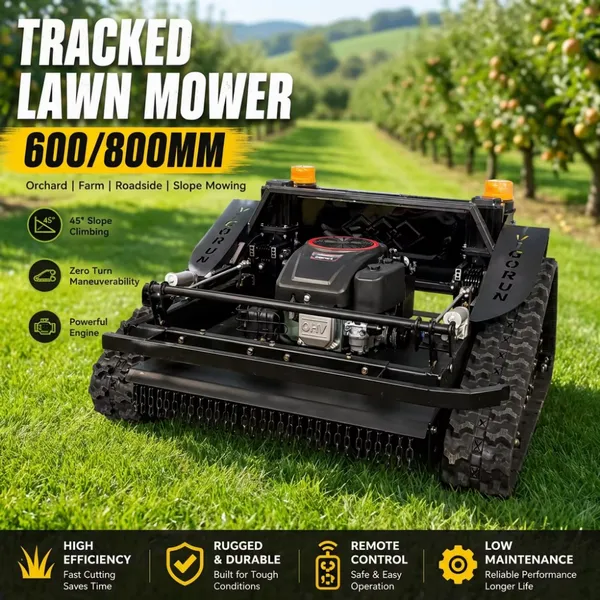
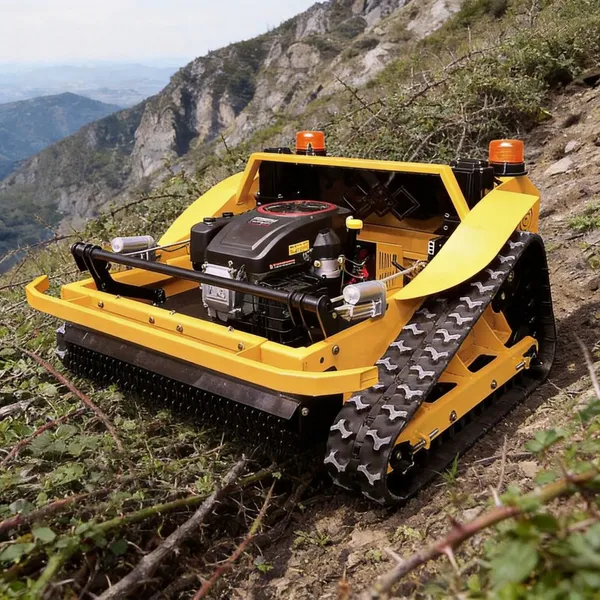
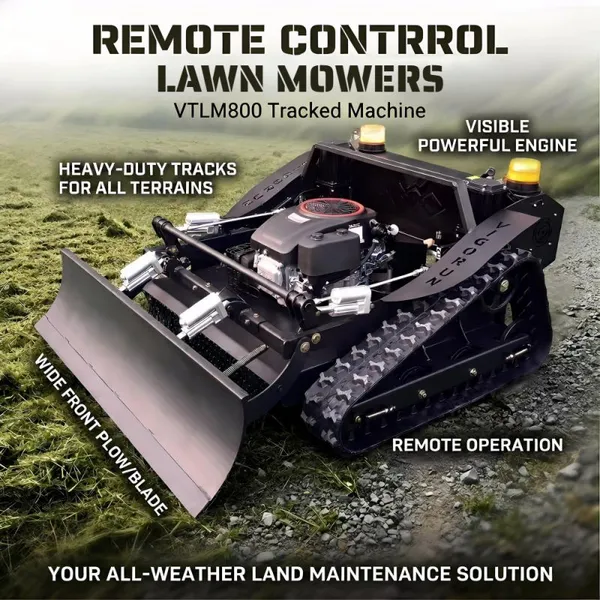
A tracked chassis distributes that same weight across a continuous rubber footprint. The VTLM800 uses a rubber track 200 mm wide by 1,200 mm long, with an aggressive lug profile designed for moist clay and uneven embankment surfaces. That geometry is why it holds 45° where lighter wheeled machines start drifting at 30° or 35°.
Three Chassis Variables to Verify Before You Buy
Track width vs. height of center of gravity, the wider the stance relative to how tall the machine sits, the more side-slope it can handle without tipping
Track length and ground pressure, longer tracks distribute weight over a bigger footprint, which matters on soft soil or wet turf
Track tread pattern and compound, aggressive lug profiles bite into loose surfaces; smooth tracks or hard rubber compounds slip on wet grass
Marcus, a municipal maintenance supervisor in Bavaria, learned this the hard way. His team bought a wheeled remote mower rated to 40° for a highway embankment contract. On dry days, it performed adequately.
After the first autumn rain, the same machine couldn't hold a 30° face without slipping. Six months later, his fleet replaced the wheeled unit with a Vigorun VTLM800 tracked chassis. The tracked unit held line on the same wet slope at 40° with no drift. The difference wasn't engine power, it was footprint geometry and ground pressure.
Vigorun Remote Controlled Slope Mower Models Compared
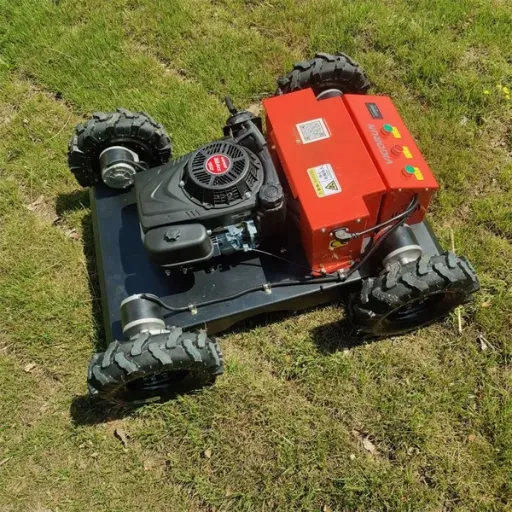
Here's where each Vigorun model sits on the slope-rating spectrum, with the real-world applications that match each chassis.
| Model | Max Slope | Drive | Engine | Best For |
|---|---|---|---|---|
| VTLM800 | 45° | Rubber track | 22 hp EURO V / EPA | Levee, riverbank, dam, steep embankment |
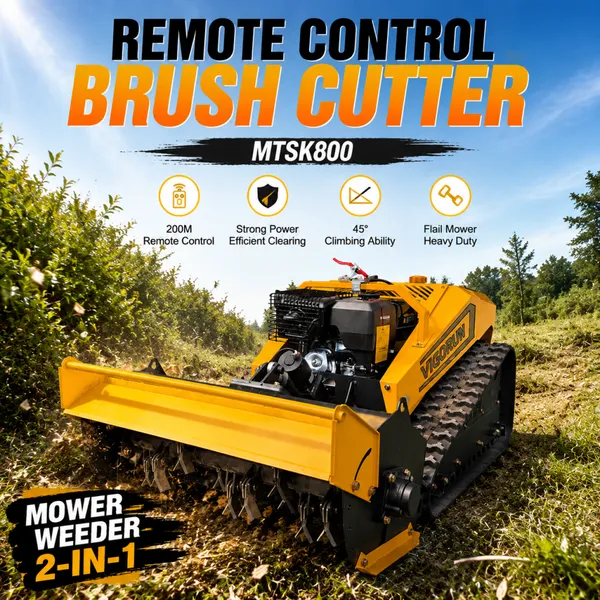
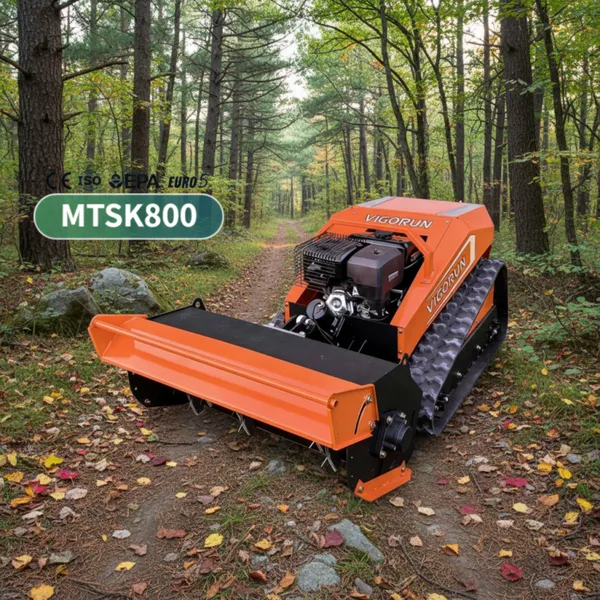
| MTSK800 | 40° | Rubber track | 22 hp EURO V / EPA | Solar farm, orchard, estate, brush |
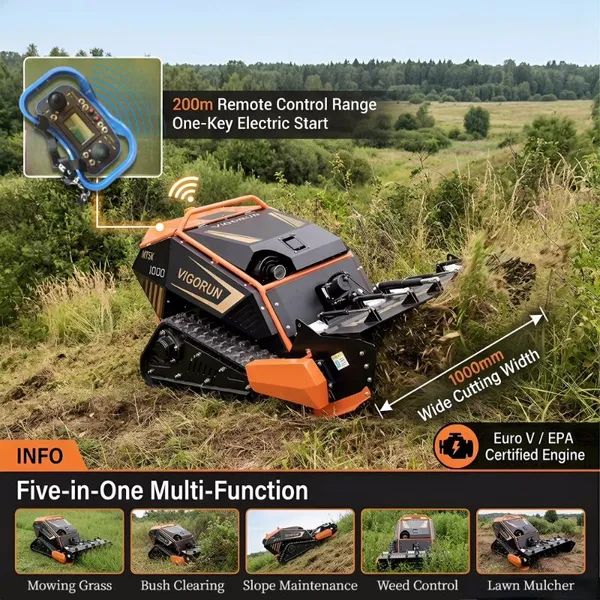
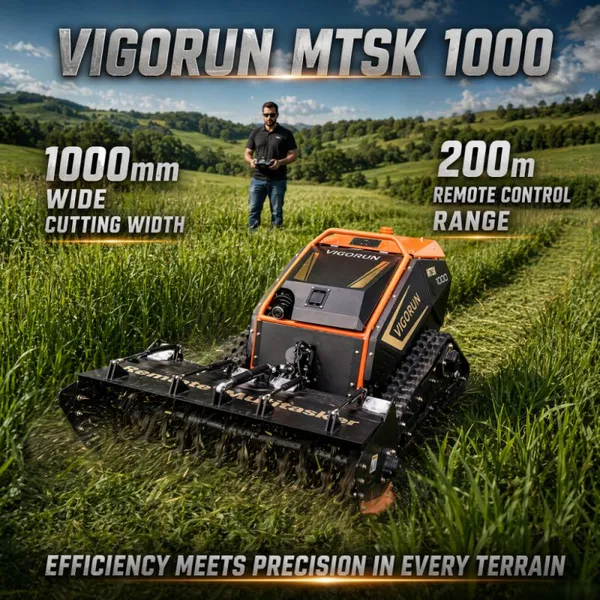
| MTSK1000 | 40° | Rubber track | 22 hp EURO V / EPA | Heavy brush, commercial maintenance, vineyard |
The VTLM800 carries the steepest rating because its chassis was designed specifically for slope work. It features a lower center of gravity, a wider track stance, and a sump-modified engine that holds oil pressure at sustained angle. If your job involves levees, flood-control embankments, or dam faces where wet ground and steep grades converge, the VTLM800 is the purpose-built answer.
The MTSK800 and MTSK1000 trade a few degrees of peak slope capability for platform versatility. Both accept additional attachments, flail head, hammer mulcher, snow plow, which makes them the better total-cost-of-ownership choice for municipal fleets that need one chassis to handle multiple seasons. The MTSK1000 adds heavier-duty brush-cutting capacity for commercial maintenance crews clearing woody overgrowth.
All three models ship with full CE / EURO V / EPA certification documentation, a 1-year warranty, and lifetime parts support from factory stock.
Request a quote on the VTLM800 rubber track slope mower, FOB Shandong pricing, full certification package, and container loading diagram included.
Five Real-World Jobs That Demand a Remote Controlled Slope Mower
Not every slope justifies a remote controlled machine. But when the grade, the terrain, or the liability crosses a threshold, a remote control slope mower shifts from nice-to-have to essential. Here are five applications where the safety and productivity gains are immediate.
1. Highway and Roadside Embankments (15-35°)
Most highway maintenance work falls in this range. The hazard isn't just the slope, it's the traffic passing three meters away while an operator tries to hold a push mower on a wet face. A remote controlled slope mower keeps the operator at the roadside barrier or on the shoulder, 200 meters from the machine and safely away from passing vehicles.
2. Levees and Flood-Control Embankments (30-45°)
This is the toughest combination in slope mowing. Wet grass, soft soil, and consistent steep faces punish any machine that isn't purpose-built. The VTLM800's rubber-track stance and slope-rated sump engine were designed for this exact application. Its 45° rating means no crew member ever has to walk a hand-mower across a wet embankment again.
3. Solar Farm Vegetation Management (10-30°)
Solar arrays sit on gentle slopes, but the operator-safety case is different. Workers shouldn't be near energized panels and inverters with conventional mowing equipment. The MTSK800 with a flail head clears between-array rows safely from a 200-meter operator position, with zero risk of electrical contact or panel damage.
4. Orchard and Vineyard Terraces (20-40°)
Orchard and vineyard terraces are usually 20-35° with occasional steeper faces on hillside plantings. The MTSK1000 with a flail head handles dense weed and groundcover under fruit trees and grape vines, including woody growth that chokes a rotary deck. Between-row clearance without trunk damage is exactly what the flail head was built for.
5. Estate, Golf, and Private Acreage (15-40°)
For estates with rolling terrain, steep faces around ponds, drainage channels, and natural features, a remote controlled slope mower eliminates the need to send ground staff onto hazardous grades. One operator controls the cut from a safe position while the machine handles the slope.
Slope Capability Is Not the Same as Slope Productivity
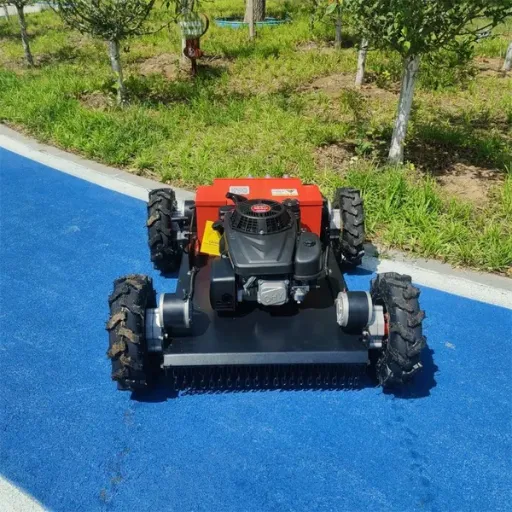
Even when a remote controlled slope mower can climb a grade, it may not mow that grade productively. Three things change as the slope steepens, and smart operators plan for all of them.
Effective cutting width drops. The machine has to overlap more passes for a clean finish on steep ground. A deck that covers 800 mm on flat ground may effectively clear only 600 mm per pass on a 40° face.
Discharge pattern shifts. Clippings throw downslope, which can redeposit on the cut area and require a second pass.
Operating speed drops. To maintain stability and clean cutting on a 45° face, you'll slow down 30-40% from flat-ground speed.
In real terms, a job that takes one hour on a flat lawn might take 90 minutes on a 35° slope and 2 to 2.5 hours on a 45° face. Plan your routes, your shift schedules, and your job pricing accordingly. This is exactly the kind of detail dealers should walk customers through during a demo, and it's why experienced slope-mowing contractors charge a premium for steep-grade work.
What to Check Before You Buy a Remote Controlled Slope Mower
A slope rating on a web page doesn't capture several factors that determine whether you'll be satisfied with the machine in year three. Here's the checklist our distributors use when evaluating slope mowers for their own customers.
Is the slope rating sustained or peak?
Peak ratings are for promotional videos. Sustained ratings are for actual work. Ask the manufacturer to specify which number they're publishing.
What's the chassis geometry?
Request track width, track length, and center-of-gravity height. These numbers don't lie, and they tell you more about real-world slope performance than any marketing claim.
What's the engine type and certification?
Slope-rated sump modification matters, especially for the steepest models. Verify that the engine carries CE, EURO V, and EPA certification for your target market.
Has the unit been field-tested on terrain like yours?
Vigorun's QC team tests every unit on test ramps that mirror real customer terrain, wet clay, dry turf, and uneven embankment surfaces. A factory that can't describe its testing protocol is a factory that isn't testing.
What does the warranty cover on slope-induced wear?
Tracks, undercarriage, and clutch take the most abuse on slope work. Make sure the warranty and parts program cover the components that actually wear.
Can you get parts in your country?
A slope mower without parts is dead weight on a fleet. Verify that the manufacturer stocks consumables and can ship them to your location with reasonable lead time.
Vigorun ships every mower with full CE / EURO V / EPA documentation, holds parts inventory for the full lifecycle of each model, and provides a 1-year warranty plus lifetime parts support. We know slope work eats consumables, and we plan our parts inventory accordingly.
Operating Safely on Steep Ground
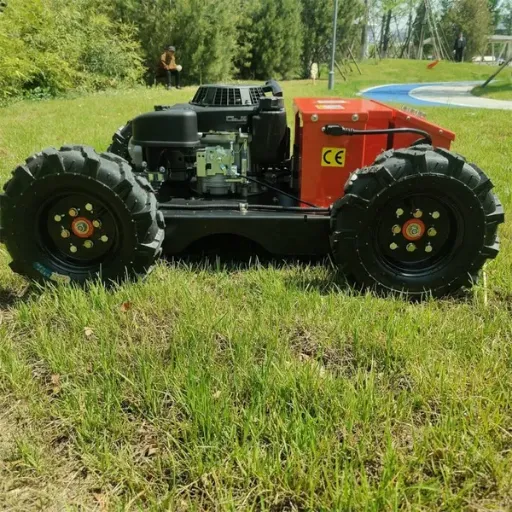
A remote controlled slope mower removes the operator from the danger zone, but only if the operator follows safe practices. Here are the field rules our engineering team recommends for any slope work above 25°.
Walk the perimeter before you mow. Identify soft spots, erosion channels, rocks, and drop-offs that could catch a track or destabilize the chassis. Position yourself uphill of the cut path whenever possible, it's easier to read terrain from above, and you maintain better line-of-sight to the machine.
Verify track tension and fuel cap orientation before starting any slope session. Engage the blade only after the chassis is stable and the transmitter shows full signal strength. On wet grass or loose soil, reduce your slope target by 10° from the dry rating. A 45° rated machine is a 35° machine on wet clay, and that's still steeper than any ride-on can safely attempt.
The 200-meter wireless remote isn't just a convenience feature. It's the safety margin that keeps the operator away from rollover zones, flying debris, and exhaust exposure. Use that distance. There's no reason to stand closer than necessary to a machine working on a dangerous grade.
Interested in OEM branding for your dealer channel? Our OEM customization program offers custom color, logo, and packaging from MOQ 5 units, full CE / EURO V / EPA documentation issued in your company name.
When a Remote Controlled Slope Mower Pays for Itself
For commercial landscaping contractors and municipal maintenance departments, the financial case is straightforward. A single remote controlled slope mower replaces the labor cost of two workers on steep-slope jobs within 14 to 18 months on most contracts. The calculation improves when you factor in reduced workers' compensation exposure, lower insurance liability, and the ability to bid jobs that were previously too dangerous to pursue.
For distributors and dealers, the margin case is equally clear. Remote controlled slope mowers sit at the intersection of two growing trends: stricter workplace safety regulation and increasing labor shortages in grounds maintenance. Municipalities that once sent four-person hand-crews to clear embankments are now required by safety policy to mechanize that work. A dealer who can supply a CE-certified, factory-direct tracked slope mower at competitive pricing is a dealer who wins those municipal RFPs.
Ready to Match a Slope Mower to Your Terrain?
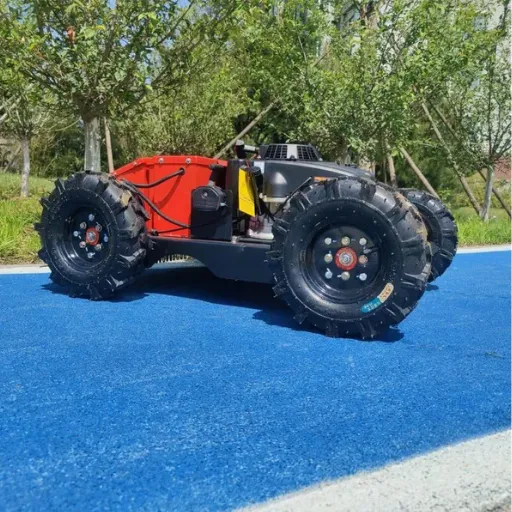
If your team is still walking a hand-crew across 35° embankments, or worse, sending someone up on a ride-on that wasn't designed for the angle, it's time to change the math. A 200-meter remote, a 45° slope rating, and a tracked chassis that holds line on wet clay are not luxury features for commercial slope work. They're the baseline for safe, productive terrain maintenance.
Talk to our team about which Vigorun model fits your slope profile, and we'll come back with a terrain-specific quote. That means FOB Shandong pricing, full CE / EURO V / EPA documentation, a container loading diagram, and a clear parts-support plan so you know exactly what's landing at your port and how to keep it running in year three.
Request a quote for the VTLM800 or MTSK800, no obligation, 24-hour response, 1-year warranty plus lifetime parts support.
Or contact our sales team directly to discuss your terrain, your volume requirements, and whether standard spec or OEM branding is the right fit for your market.
Recently Posted
-
Steep Slope 600mm Tracked 200m Remote Control 45 Degree Brushless Electric Lawn Mower
August 10, 2026*Integrated Drive System with 73 Percent Efficiency: The VTLM600 remote control lawn mower features a fully integrated brushless m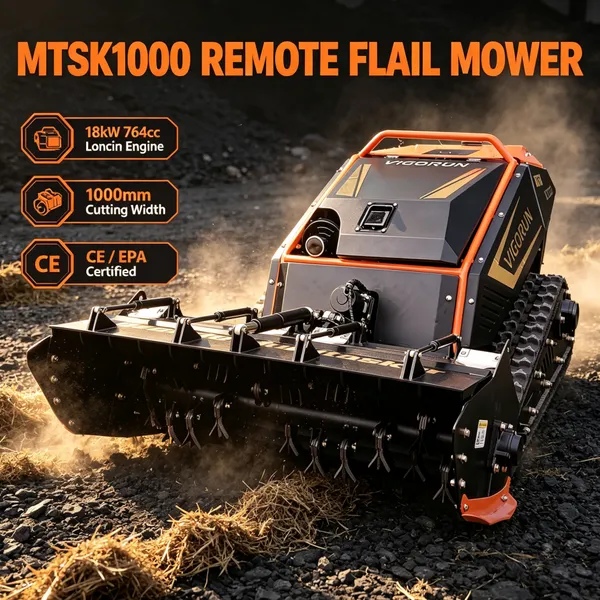 Read More
 -
Remote Controlled Pesticide Sprayer with 600L Tank 8.4m Boom for Agricultural Applications
August 10, 2026*Electric Start & 13kW Loncin Engine for Powerful Agricultural Spraying: Maximize field application efficiency with the SPRY60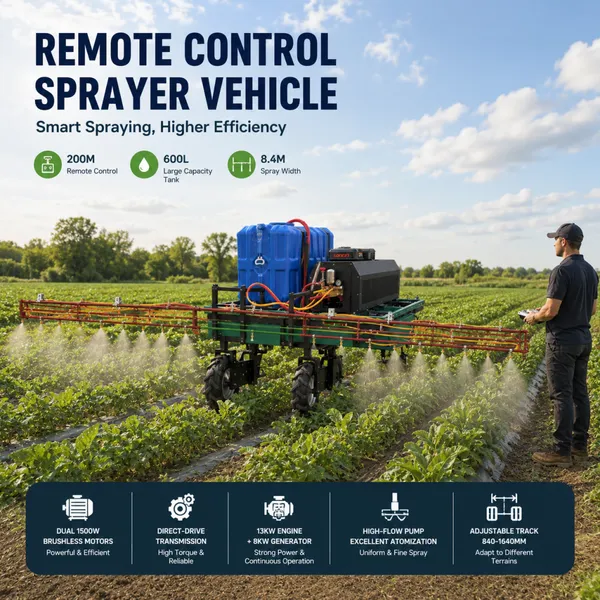 Read More
 -
Self Propelled Agricultural Boom Sprayer with Adjustable Track for Modern Farming
August 10, 2026*Electric Start & 13kW Loncin Engine for Powerful Agricultural Spraying: Maximize field application efficiency with the SPRY60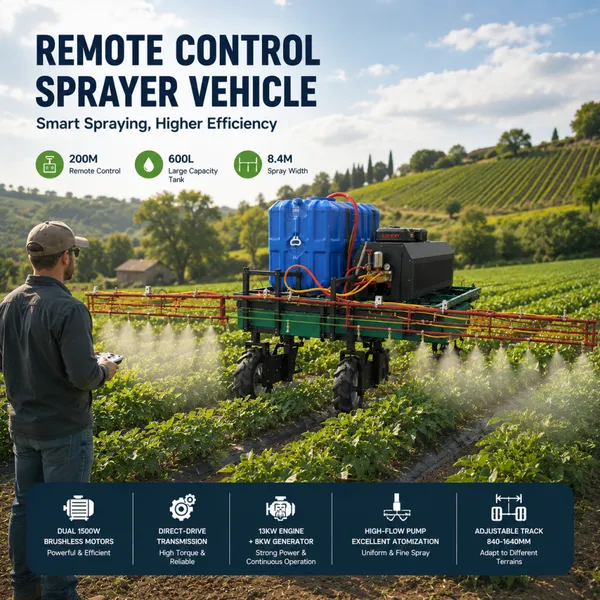 Read More
 -
Automatic Remote Control Agricultural Spray Machine with 600L Chemical Tank and Boom System
August 10, 2026*Electric Start & 13kW Loncin Engine for Powerful Agricultural Spraying: Maximize field application efficiency with the SPRY60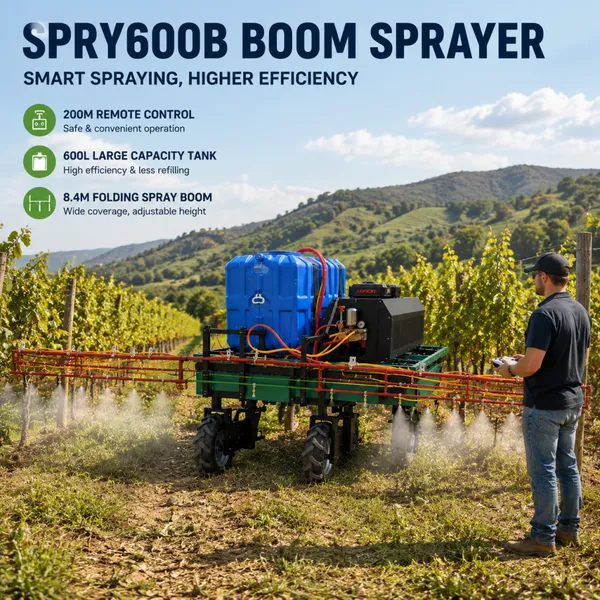 Read More

Contact Us
Recommended Products
-
 Vigorun Lawn Mower Robot, Industrial Dual 48V 1500W Motors MTSK1000 Mulcher Machine for Large LandscapesUS$ 7500.00 - 7700.00MOQ: 1 Set
 -
Farmland Orchards Battery Powered Mower Gasoline Golf Mower Robot Lawn Mower 3000m2 Vigorun Remote Control Grass MowerUS$ 2580 - 2700MOQ: 1 Unit
-
Vigorun MTSK800 Automatic Remote Control Grass Cutting Machine 48V 20Ah Battery Remote Flail MowerUS$ 2800 - 2900MOQ: 1 Set
-
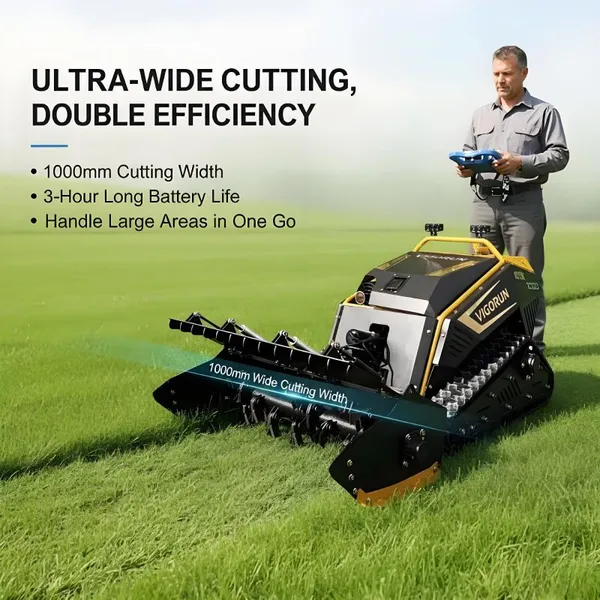
Vigorun MTSK1000 Remote Control Mower 24hp Fail-Safe Slope Braking Remote Control Forest MulcherUS$ 8000 - 8200MOQ: 1 Set
-
Industry Electric Motor Lawn Mower Flail Mower Atv Gasoline Hedge Trimmer Battery LawnmowerUS$ 2580 - 2900MOQ: 1 Unit
-
Vigorun Agricultural Tractor Sprayer Euro 5/EPA Electric Agricultural Sprayer 600l for VineyardsUS$ 2600 - 2700MOQ: 1 Set
-
Remote Control Tracked Hillside Mower 800mm Cutting Width 60 Degree Slope for Steep Terrain VegetationUS$ 2600 - 2700MOQ: 1 Set
-
Vigorun VTLM600 RC Lawn Mower Robot CE EPA Certified 45° Extreme Slope Mini Crawler Lawn MowerUS$ 1700 - 17900MOQ: 1 Set
-
Remote Controlled High Efficiency Fog Cannon Spraying Machine 600L Tank for Agriculture and Dust ControlUS$ 2800 - 2900MOQ: 1 Set
-
Vigorun Radio Control Mowing Euro 5/EPA Self-Propelled & Precise 6hp Remote Control Crawler MowerUS$ 1700 - 1790MOQ: 1 Set
-
Factory Manufacturer Vigorun MTSK1000 1000MM Commercial Branch Cutter Flail Mower rc Remote Petrol Lawnmower Mower Grass Cutter TractorUS$ 8000 - 8200MOQ: 1 Set
-
Vigorun VTW550 Remote Control Grass Cutter Tractor Robot Gas Lawn Mower Grass Cutter Small Electric Lawn Mower Vigorun Lawn MowerUS$ 1000 - 1250MOQ: 1 Set
-
Vigorun Tech Gasoline Remote Control Lawn Mower Self-Locking Slope Safety RC Mower Tiller for EmbankmentsUS$ 2800.00 - 2900.00MOQ: 1 Set
-
Mower Gasoline Grass Cutter Machine Remote Control 1000mm Cut 35 Degree Slope Flail Hammer for Overgrown LandUS$ 7500 - 7700MOQ: 1 Set
-
Vigorun VTLM800 Remote Control Electric Mower, Self-Locking Slope Safety Crawler Mower for Steep SlopesUS$ 2600.00 - 2700.00MOQ: 1 Set
-
Shrub and Brush Clearing MTSK800 MTSK1000 Flail Mower rc Remote Weeding Weeder MachineUS$ 2800 - 2900MOQ: 1 Set
-
RC Robot Lawn Mower Electric Remote Control Flail Grass Cutter Garden Cutting Machine MTSK1000US$ 8000 - 8200MOQ: 1 Set
-
Remote Manipulation Rubber Track Brush Cutter Industrial Flail Mower for Efficient Shrub ClearingUS$ 2000.00 - 2790.00MOQ: 1 Set
-
Vigorun MTSK1000 Rc Lawn Mower, Loncin 764CC Gasoline Engine Forestry Mulcher With Remote Control for ForestryUS$ 7500.00 - 7700.00MOQ: 1 Set
-
Vigorun VTC550 Zero Turn Electric Mower Quality Guaranteed Crawler Brush Cutter For Embankments & LeveesUS$ 1600 - 1690MOQ: 1 Set