
 Business License

Remote Control Lawn Mower vs Ride On: Which Machine Wins on Slopes, Safety, and ROI?
Marcus Chen's crew had mowed the Oakhaven Estates retention pond twice a year since 2019 with a commercial zero-turn and two walk-behind brush cutters. Last spring, the zero-turn slid sideways on a 28-degree grade, snapped a deck spindle, and put his operator in the ER with a compressed vertebra. The workers comp claim cost $18,000. The lost contract cost $47,000. And the next morning, Marcus typed "remote control lawn mower vs ride on" into his browser because he never wanted to make that phone call again.
If you are comparing a remote control lawn mower vs ride on equipment for your job site, you already know the short answer: ride-on mowers rule flat ground, and remote control mowers own everything with a grade. But the real decision is not about brand loyalty or novelty. It is about slope angle, operator safety, labor math, and total cost of ownership. This guide breaks down seven factors that separate the two machine types so you can buy once and buy right.
Want to see which Vigorun models are built for the slopes your ride-on cannot touch? Browse the Vigorun remote control lawn mower range and compare tracked chassis specs side by side.
Slope Capability: Where the Comparison Ends Before It Starts
A commercial zero-turn or garden tractor is rated for slopes up to about 15 degrees under ideal conditions. A high-end ride-on with a low center of gravity might push 20 degrees on dry turf if the operator is experienced and lucky. Beyond that, physics wins. The rear-weight bias, small footprint, and seated operator position make rollover a statistical certainty over time.
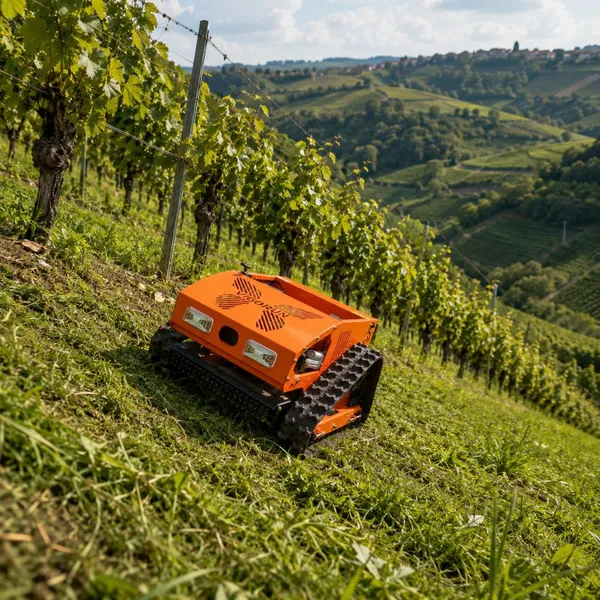
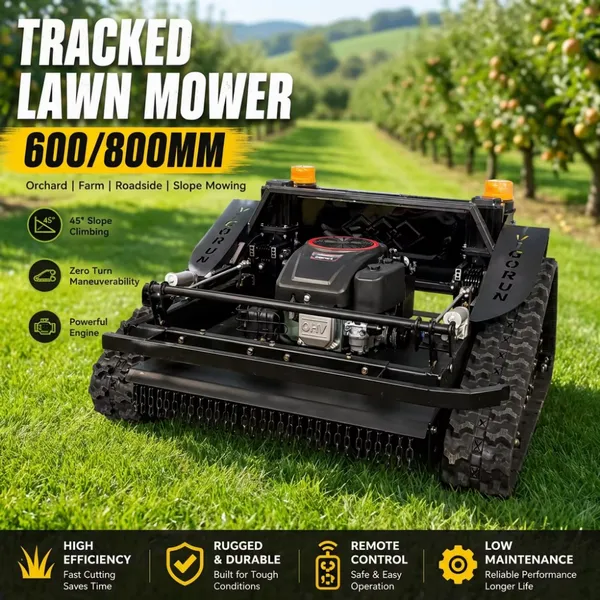
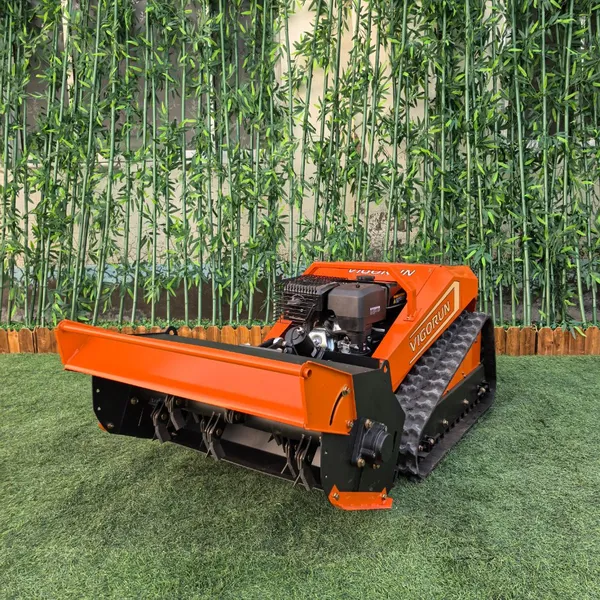
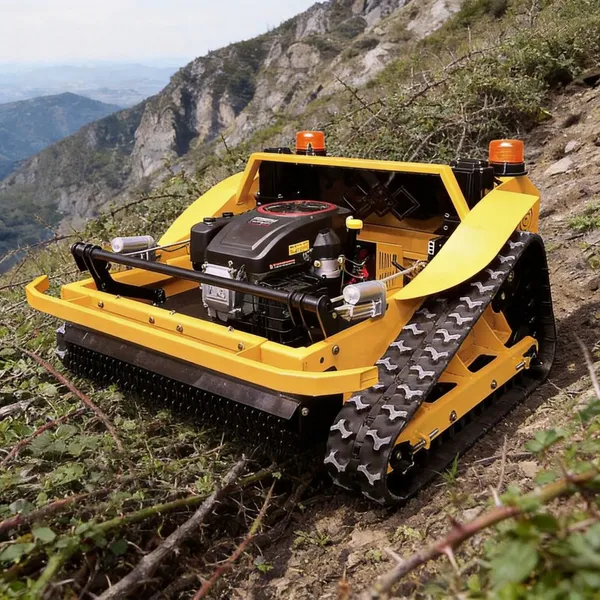
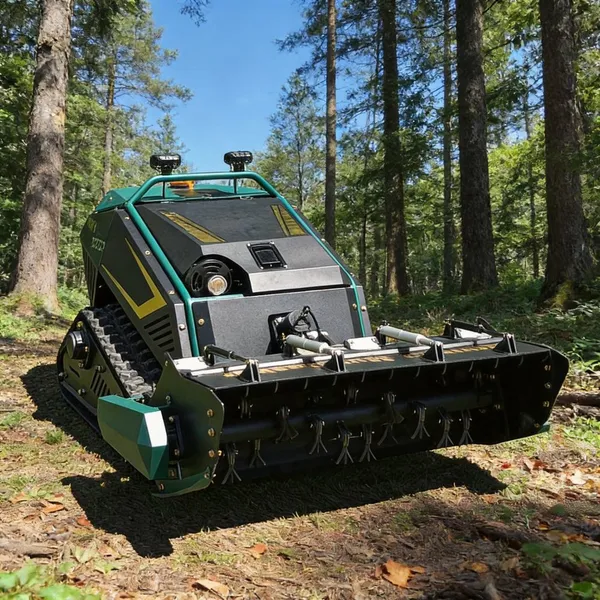
A commercial remote control lawn mower with a tracked chassis is rated to climb up to 45 degrees on dry, firm grass. The operator is not on the machine. The low-profile rubber tracks distribute weight across a wider footprint than any ride-on tire. The center of gravity sits inches above the ground, not at seat height. When a tracked remote mower tips or bounces on a grade, the only thing at risk is steel, not a human spine.
The numbers are not close. If your property includes highway embankments, retention ponds, levees, riverbanks, or orchard terraces, a remote control mower vs ride on comparison ends at the slope chart. One machine can work the terrain. The other cannot.
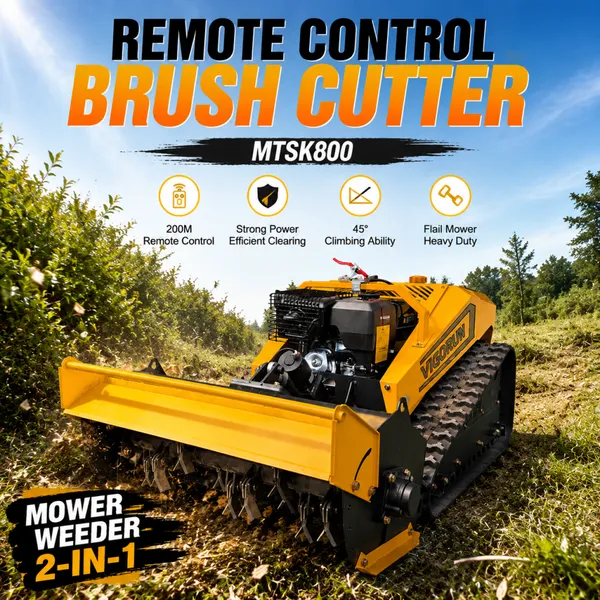
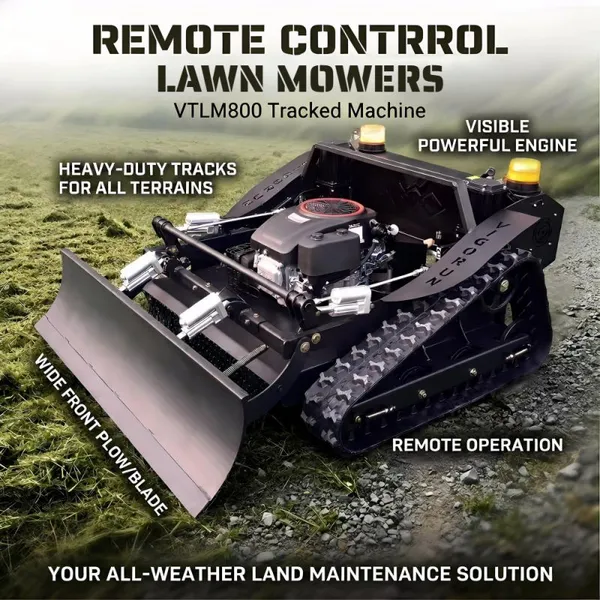
Slope mower vs ride on for hills is not a style choice. It is a capability boundary. The Vigorun VTLM800, for example, is a rubber-track slope mower built specifically for terrain that would eject a seated operator. If your job list includes anything steeper than a residential lawn, the ride-on stays on the trailer.
Operator Safety: Distance Is the Only Guarantee
OSHA statistics for landscaping and grounds maintenance consistently rank mower rollover and thrown-object strikes among the top causes of serious injury. A ride-on mower places the operator directly in the hazard zone. The seat is the target. The steering wheel is the target. The foot deck is the target.
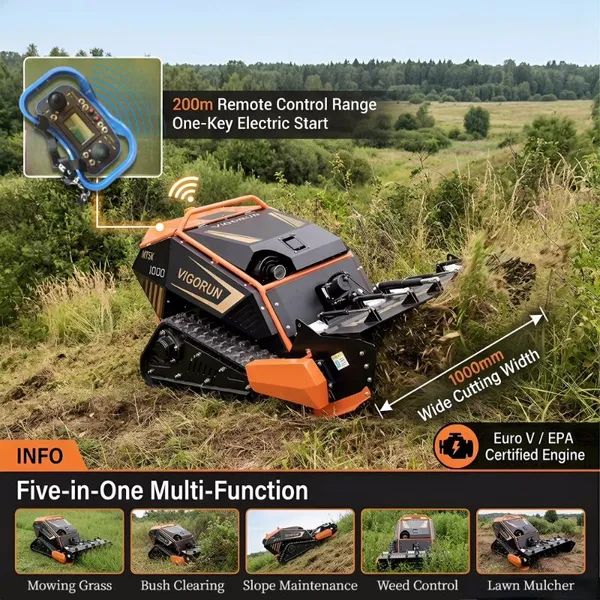
A remote-controlled mower removes the operator from the machine entirely. The Vigorun industrial remote operates at up to 200 meters in line-of-sight conditions. The operator stands on flat, stable ground while the tracked mower handles the grade. There is no rollover risk because there is no operator to roll. There is no debris strike risk because the operator is behind the line of fire, not above it.
The safety advantage compounds on wet grass, loose soil, and irregular terrain. A ride-on operator must make a split-second judgment about whether a slope is too slick after rain. A remote operator simply drives the machine from a safe distance and lets the rubber tracks do the gripping. The decision is mechanical, not medical.
Municipal maintenance departments have begun factoring this into bids. A city crew that once sent four workers with string trimmers down a levee now sends one operator with a remote-controlled mower and a spotter. The labor savings are real, but the workers comp and liability savings are often larger.
Productivity and Labor Cost: The Crew Math Changes
Productivity comparisons depend on terrain. On flat, open grass, a wide-deck ride-on will cover more acres per hour than a remote control slope mower. If you are mowing a football field or a polo ground with no grade, the ride-on is faster and cheaper per acre. No one argues that.
On slopes, the math inverts. A ride-on cannot operate safely on grades above 15 degrees. That means the crew switches to string trimmers, walk-behind brush cutters, or hand crews. A four-person team might spend six hours clearing a steep embankment that a single operator with a remote mower could finish in two.
The RC mower vs zero turn for hills debate is really a debate about labor multiplication. A remote mower does not just replace a ride-on. It replaces an entire crew on terrain where the ride-on is legally and physically sidelined. For commercial landscaping firms bidding on highway contracts, solar farm vegetation management, or golf course rough, the ability to quote one operator instead of four changes the profit margin entirely.
Derek Hahn runs a vegetation management crew in Tennessee that services retention ponds for a county drainage district. Before switching to a remote control mower, his crew of three spent two full days per pond with brush cutters and rakes. After adding a tracked remote mower to the fleet, one operator finishes the same pond in four hours. The other two crew members handle flat ground with the ride-on fleet. Productivity per labor hour more than doubled on the slope work.
Upfront Cost vs Total Cost of Ownership
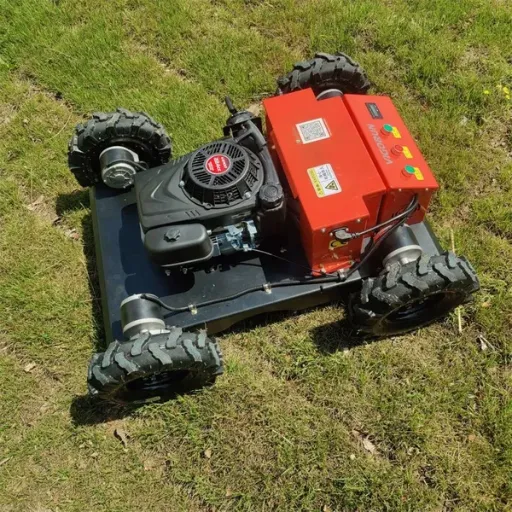
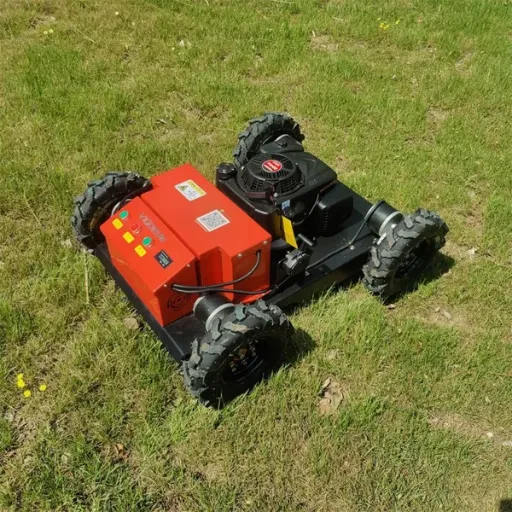
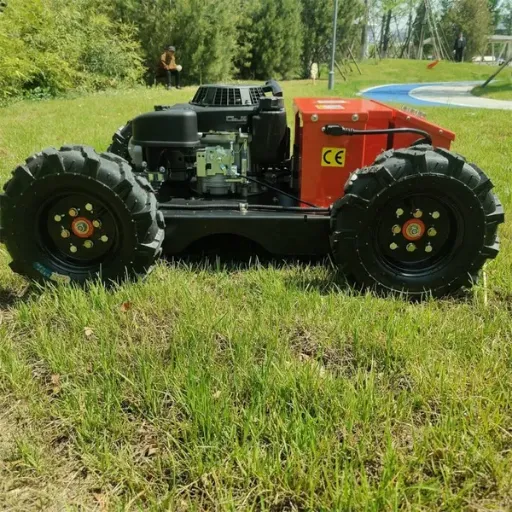
A commercial zero-turn mower for flat-ground landscaping runs roughly $8,000 to $15,000 depending on deck size and engine class. A commercial remote control lawn mower with a tracked chassis and flail or rotary cutting system runs roughly $3,000 to $8,000 FOB factory for a standard gasoline configuration. The price gap surprises buyers who expect remote technology to cost more.
But upfront price is not the number that matters. Total cost of ownership includes fuel, maintenance, labor, insurance, and injury liability. A ride-on that cannot access 40% of your job sites is not saving money. It is forcing you to maintain a second workflow for the terrain it cannot handle.
When you compare a remote control lawn mower vs ride on equipment over a three-year horizon, factor in the following:
Labor cost per slope hour: One operator at $35/hour vs four at $35/hour.
Workers comp exposure: Ride-on rollover claims average $35,000 to $65,000.
Equipment redundancy: Maintaining brush cutters, walk-behinds, and hand tools for terrain the ride-on cannot touch.
Contract eligibility: Some municipal and solar-farm RFPs now require remote or slope-rated equipment for steep grades.
A remote mower often pays back its purchase price in the first season through labor savings and contract access alone. The ride-on remains valuable for flat ground, but it is not a substitute. It is a complementary machine in a fleet that now needs both.
Terrain Access and Application Fit
Ride-on mowers excel at large, flat, manicured areas. Golf course fairways, sports fields, estate lawns, and municipal parks with gentle grades are ideal territory. The operator comfort, speed, and cutting width make them efficient and profitable on this terrain.
Remote control mowers excel where ride-ons cannot go. The application list includes:
Highway embankments and medians with 30-degree grades
Retention pond and levee maintenance
Riverbank and shoreline vegetation control
Solar farm vegetation management between panel rows
Orchard and vineyard terrace mowing
Ski resort slope maintenance and firebreak clearing
Rail right-of-way and utility corridor access
The commercial remote control lawn mower is not a lawn ornament. It is a specialty machine for specialty terrain. A landscaping firm that owns only ride-ons must decline or subcontract slope work. A firm that owns a remote mower can bid that work directly, often at premium rates because fewer competitors have the equipment.
When a Ride-On Still Makes Sense
This is not an argument to scrap your zero-turn fleet. Ride-on mowers are the right tool for a huge percentage of commercial and residential ground. They cut faster on flat turf. They are familiar to every operator. Parts and service networks are universal. And for jobs under 15 degrees, they are the most cost-effective choice.
The smart fleet strategy is not remote control mower vs ride on as an either-or decision. It is both. Use the ride-on for flat ground, sports turf, and open parks. Use the remote mower for slopes, embankments, retention ponds, and any terrain where a seated operator would be at risk.
If 80% of your job sites are flat lawns and 20% are steep grades, you do not need ten remote mowers. You need one or two remote mowers and a ride-on fleet for the bulk of the work. The remote machines earn their keep on the 20% of terrain that generates the highest labor cost and the greatest safety exposure.
Making the Switch: What Buyers Actually Need to Know
If you are moving from a ride-only fleet to a mixed fleet with remote control slope mowers, the transition is simpler than most buyers expect. Modern commercial remote mowers use standard gasoline engines, familiar hydrostatic drivetrains, and cutting decks that service like any rotary or flail system. The only new skill is the remote transmitter, and most operators are comfortable with it within a single afternoon.
Before you buy, verify three things:
Certifications: Make sure the engine carries CE, EURO V, and U.S. EPA compliance documentation. Without these, customs clearance and municipal bidding can stall. See Vigorun's CE and EPA certification documentation for an example of complete export paperwork.
Slope rating proof: Ask for video of the exact model climbing a 45-degree test ramp. Marketing brochures are easy. Factory test footage is harder to fake.
Parts and warranty: A one-year warranty is standard. Whole-life parts availability is what separates a real manufacturer from a trading company that disappears after the container ships.
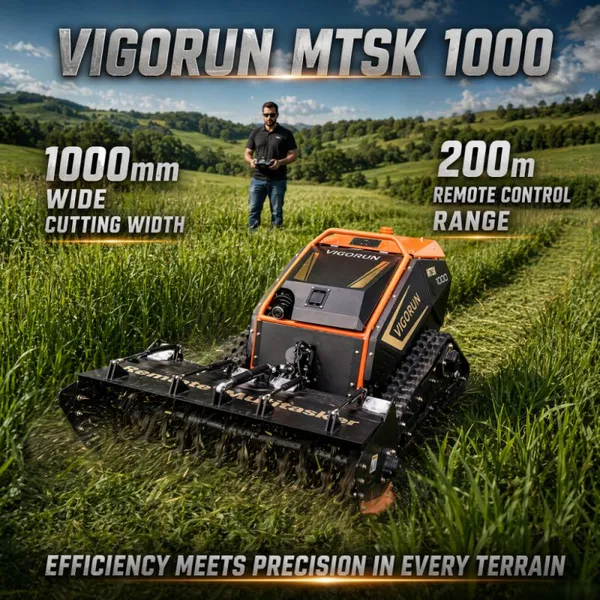
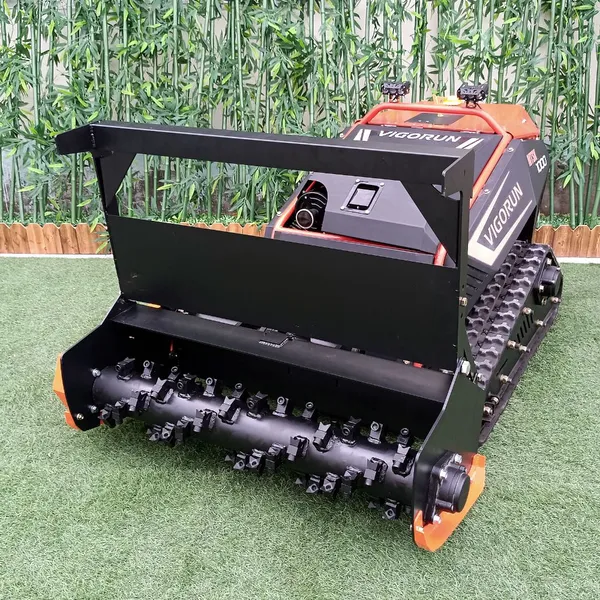
Anna Kovacs runs procurement for a Hungarian landscaping cooperative that services highway embankments along the M7 corridor. Her team already owned ride-ons for rest-area turf. When the state added steep slope maintenance to the contract, she needed a machine that could handle 35-degree grades without putting an operator at risk. After evaluating options, she added a Vigorun MTSK1000 remote control flail mower to the fleet. The machine arrived fully tested, cleared customs with the included CE and EPA documentation, and was cutting the first embankment within 48 hours of uncrating. Her cooperative now bids slope work they previously had to subcontract.
Ready to add slope capability to your fleet? Contact the Vigorun sales team to request a detailed quote, spec sheet, and factory test video for the models that match your terrain.
Conclusion: Match the Machine to the Terrain, Not the Marketing
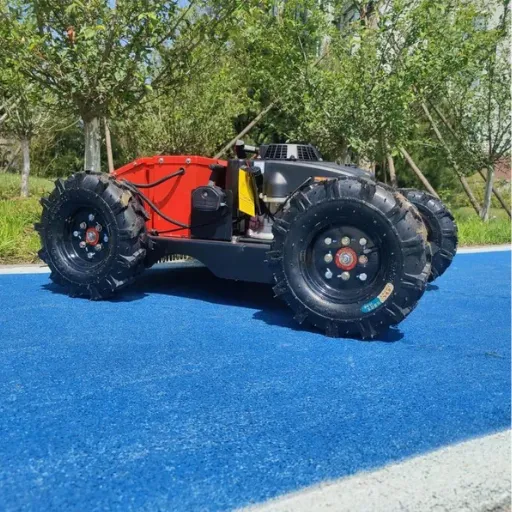
A remote control lawn mower vs ride on comparison only feels complicated because buyers want one machine to do everything. That machine does not exist. Ride-ons dominate flat ground. Remote control mowers dominate slopes. The question is not which is better. It is which terrain generates the most cost, risk, and lost revenue in your current operation.
If your job sites are flat, keep the ride-on. If your contracts include embankments, levees, retention ponds, solar farms, or orchard terraces, a remote-controlled mower is not an upgrade. It is a requirement. The safety gap is too wide, the labor gap is too large, and the contract eligibility gap is too expensive to ignore.
The right fleet mix is both. Let the ride-on handle the easy ground. Let the remote mower handle the dangerous ground. Your operators, your insurance broker, and your profit margin will all prefer that split.
Want a side-by-side spec comparison for your specific job sites? Request a detailed quote and spec sheet from the Vigorun team and get FOB Shandong pricing within 24 hours.
Recently Posted
-
Steep Slope 600mm Tracked 200m Remote Control 45 Degree Brushless Electric Lawn Mower
August 10, 2026*Integrated Drive System with 73 Percent Efficiency: The VTLM600 remote control lawn mower features a fully integrated brushless m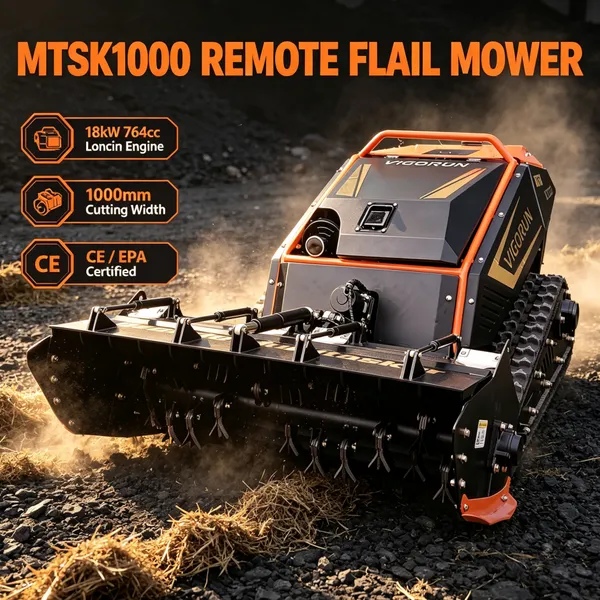 Read More
 -
Remote Controlled Pesticide Sprayer with 600L Tank 8.4m Boom for Agricultural Applications
August 10, 2026*Electric Start & 13kW Loncin Engine for Powerful Agricultural Spraying: Maximize field application efficiency with the SPRY60 Read More
 -
Self Propelled Agricultural Boom Sprayer with Adjustable Track for Modern Farming
August 10, 2026*Electric Start & 13kW Loncin Engine for Powerful Agricultural Spraying: Maximize field application efficiency with the SPRY60 Read More
 -
Automatic Remote Control Agricultural Spray Machine with 600L Chemical Tank and Boom System
August 10, 2026*Electric Start & 13kW Loncin Engine for Powerful Agricultural Spraying: Maximize field application efficiency with the SPRY60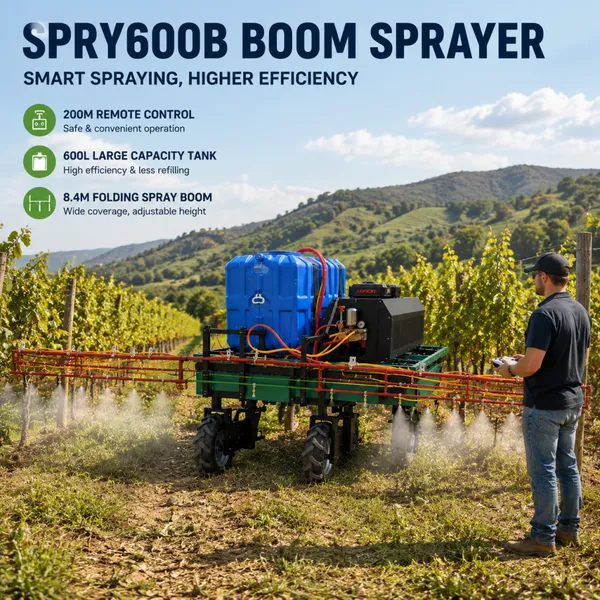 Read More

Contact Us
Recommended Products
-
 Vigorun Lawn Mower Robot, Industrial Dual 48V 1500W Motors MTSK1000 Mulcher Machine for Large LandscapesUS$ 7500.00 - 7700.00MOQ: 1 Set
 -
Farmland Orchards Battery Powered Mower Gasoline Golf Mower Robot Lawn Mower 3000m2 Vigorun Remote Control Grass MowerUS$ 2580 - 2700MOQ: 1 Unit
-
Vigorun MTSK800 Automatic Remote Control Grass Cutting Machine 48V 20Ah Battery Remote Flail MowerUS$ 2800 - 2900MOQ: 1 Set
-
Vigorun MTSK1000 Remote Control Mower 24hp Fail-Safe Slope Braking Remote Control Forest MulcherUS$ 8000 - 8200MOQ: 1 Set
-
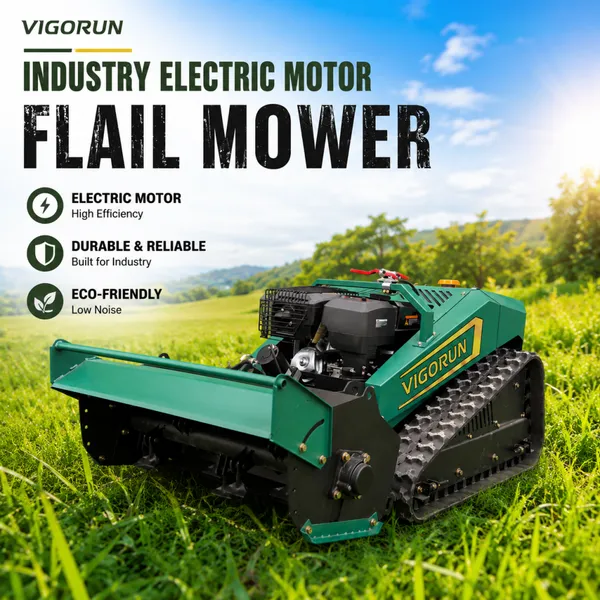
Industry Electric Motor Lawn Mower Flail Mower Atv Gasoline Hedge Trimmer Battery LawnmowerUS$ 2580 - 2900MOQ: 1 Unit
-
Vigorun Agricultural Tractor Sprayer Euro 5/EPA Electric Agricultural Sprayer 600l for VineyardsUS$ 2600 - 2700MOQ: 1 Set
-
Remote Control Tracked Hillside Mower 800mm Cutting Width 60 Degree Slope for Steep Terrain VegetationUS$ 2600 - 2700MOQ: 1 Set
-
Vigorun VTLM600 RC Lawn Mower Robot CE EPA Certified 45° Extreme Slope Mini Crawler Lawn MowerUS$ 1700 - 17900MOQ: 1 Set
-
Remote Controlled High Efficiency Fog Cannon Spraying Machine 600L Tank for Agriculture and Dust ControlUS$ 2800 - 2900MOQ: 1 Set
-
Vigorun Radio Control Mowing Euro 5/EPA Self-Propelled & Precise 6hp Remote Control Crawler MowerUS$ 1700 - 1790MOQ: 1 Set
-
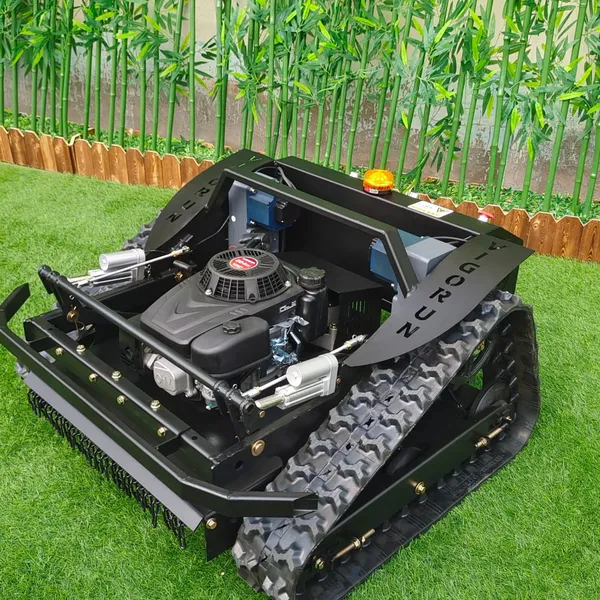
Factory Manufacturer Vigorun MTSK1000 1000MM Commercial Branch Cutter Flail Mower rc Remote Petrol Lawnmower Mower Grass Cutter TractorUS$ 8000 - 8200MOQ: 1 Set
-
Vigorun VTW550 Remote Control Grass Cutter Tractor Robot Gas Lawn Mower Grass Cutter Small Electric Lawn Mower Vigorun Lawn MowerUS$ 1000 - 1250MOQ: 1 Set
-
Vigorun Tech Gasoline Remote Control Lawn Mower Self-Locking Slope Safety RC Mower Tiller for EmbankmentsUS$ 2800.00 - 2900.00MOQ: 1 Set
-
Mower Gasoline Grass Cutter Machine Remote Control 1000mm Cut 35 Degree Slope Flail Hammer for Overgrown LandUS$ 7500 - 7700MOQ: 1 Set
-
Vigorun VTLM800 Remote Control Electric Mower, Self-Locking Slope Safety Crawler Mower for Steep SlopesUS$ 2600.00 - 2700.00MOQ: 1 Set
-
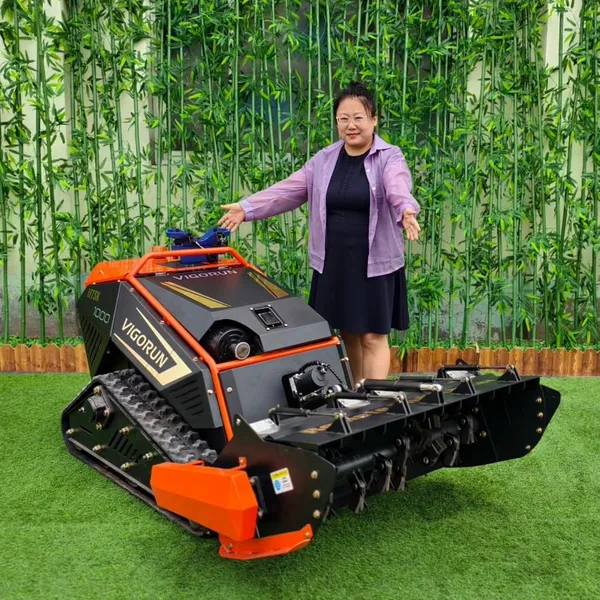
Shrub and Brush Clearing MTSK800 MTSK1000 Flail Mower rc Remote Weeding Weeder MachineUS$ 2800 - 2900MOQ: 1 Set
-
RC Robot Lawn Mower Electric Remote Control Flail Grass Cutter Garden Cutting Machine MTSK1000US$ 8000 - 8200MOQ: 1 Set
-
Remote Manipulation Rubber Track Brush Cutter Industrial Flail Mower for Efficient Shrub ClearingUS$ 2000.00 - 2790.00MOQ: 1 Set
-
Vigorun MTSK1000 Rc Lawn Mower, Loncin 764CC Gasoline Engine Forestry Mulcher With Remote Control for ForestryUS$ 7500.00 - 7700.00MOQ: 1 Set
-
Vigorun VTC550 Zero Turn Electric Mower Quality Guaranteed Crawler Brush Cutter For Embankments & LeveesUS$ 1600 - 1690MOQ: 1 Set