
 Business License

Vegetation Management Equipment: How Remote-Controlled Machines Clear Overgrown Terrain Safely
In March 2024, a solar farm maintenance crew in Arizona spent three days clearing invasive tumbleweed from beneath a 40-acre array. The crew used walk-behind brush cutters, string trimmers, and a compact tractor with a rotary deck. By day two, two operators had called in sick with heat exhaustion, a tractor had torn a racking cable on a tight turn, and the project was already four days behind schedule.
The problem was not the crew. It was the vegetation management equipment. The machines were built for lawns, not for commercial vegetation control. They lacked the slope capability for the array's graded terrain, the cutting power for woody regrowth, and the operator safety distance for work beneath energized panels.
Vegetation management equipment covers a wider category than most buyers realize. It includes mowers, brush cutters, mulchers, sprayers, and specialized tools for clearing grass, brush, saplings, and invasive species across utility corridors, solar farms, highways, rail lines, orchards, and industrial sites. This article explains what the category includes, why traditional equipment falls short on modern job sites, and how remote-controlled machines are becoming the standard for terrain that puts operators at risk.
Looking for vegetation management equipment that handles steep slopes and heavy brush? Browse the Vigorun remote mower lineup and compare slope ratings for your application.
What Counts as Vegetation Management Equipment?
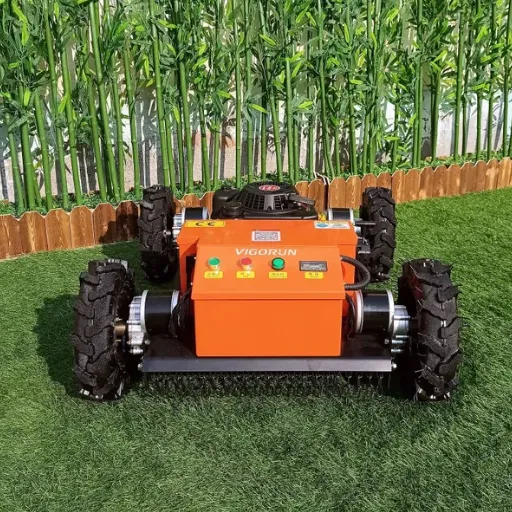
Vegetation management equipment is any machine designed to control, reduce, or remove plant growth in managed corridors, facilities, or landscapes. The category is broader than lawn mowing. It includes equipment that cuts grass, mulches brush, sprays herbicide, and clears woody regrowth across acres of uneven terrain.
Rotary Mowers
Best for: Grass, weeds, and light groundcover
Terrain fit: Flat to gently rolling ground
Limitations: Struggle with brush thicker than 20 millimeters and slopes above 15 degrees
Flail Mowers and Brush Cutters
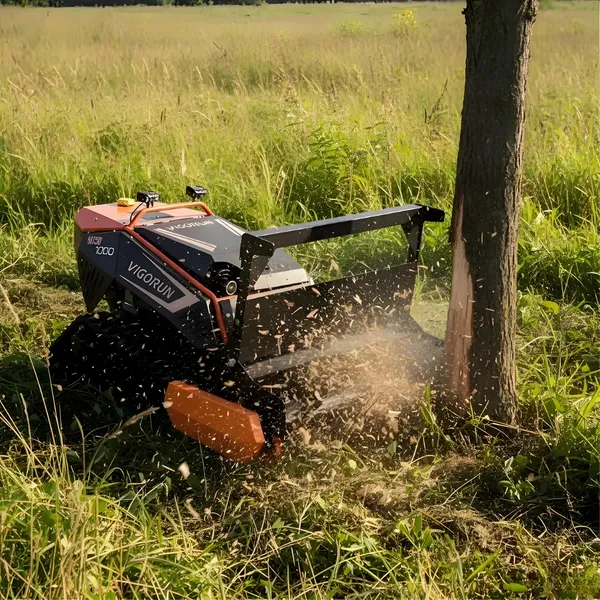
Best for: Woody brush, saplings, and overgrown rights-of-way
Terrain fit: Flat to moderate slopes with experienced operators
Limitations: Walk-behind units expose operators to fatigue, debris, and kickback
Tractor-Mounted Mulchers
Best for: Wide corridors with heavy brush and dense regrowth
Terrain fit: Firm, relatively flat ground
Limitations: High capital cost, large footprint, limited slope access
Remote-Controlled Slope Mowers
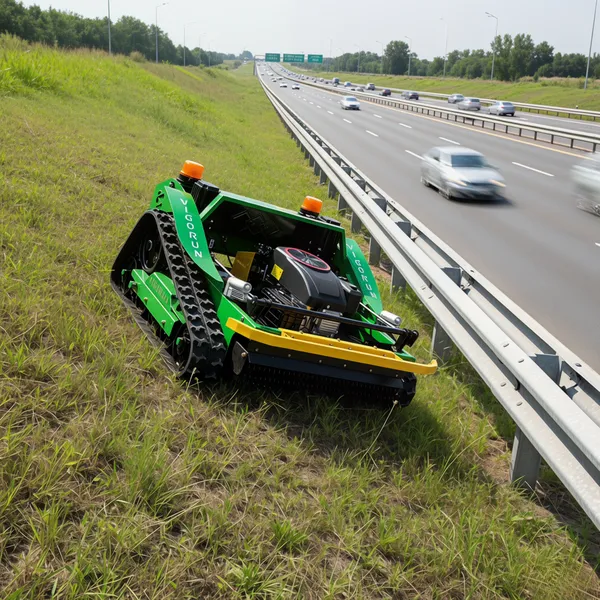
Best for: Steep embankments, corridors beneath solar arrays, utility rights-of-way, and hazardous terrain
Terrain fit: Up to 45 degrees on dry grass, 35 degrees on wet or loose terrain
Limitations: Requires line-of-sight operation and trained operators
Remote-Controlled Sprayers
Best for: Herbicide application, orchard spraying, and targeted vegetation control
Terrain fit: Sloped orchards, vineyards, and corridors where manual spraying is slow or dangerous
Limitations: Chemical handling regulations and calibration requirements
The right vegetation management equipment depends on the vegetation type, the slope, the access constraints, and the safety risks of the job site. Most commercial operations need two or more categories to cover a full season of work.
Need help matching equipment to your vegetation type? Read our guide on how to choose a slope mower for terrain-specific selection advice.
Why Traditional Vegetation Management Equipment Falls Short
Traditional equipment was designed for lawns, parks, and agricultural fields. Modern vegetation management happens on solar farm terraces, pipeline embankments, transmission corridors, and rail cuttings. The gap between where machines are used and what they were built for creates three recurring problems.
Slope Limits
Ride-on rotary mowers top out at 15 to 20 degrees. Walk-behind brush cutters reach 20 to 25 degrees with experienced operators. Much of the terrain that needs vegetation management exceeds both limits. A solar farm array on a graded hillside, a highway embankment, or a levee face routinely runs 25 to 35 degrees. That leaves crews with two bad options: send unsafe equipment onto the slope, or clear the area with hand tools.
Operator Exposure
Brush cutting, mulching, and slope mowing are among the most injury-prone tasks in grounds maintenance. The Bureau of Labor Statistics records above-average injury rates for landscaping workers, with brush cutter kickback, heat exhaustion, and rollover incidents accounting for the majority of serious cases. Every time an operator walks a brush cutter across rough ground or rides a mower on a side slope, the risk compounds.
Production Bottlenecks
Hand crews clear one-half to one acre per day on steep or rough terrain. A single operator with the right remote-controlled machine clears three to five acres on the same terrain. For vegetation management contractors bidding by the acre or the mile, that production gap is the difference between winning and losing a contract.
In 2023, a vegetation management contractor named David Okonkwo lost a municipal contract because his crew of four could not finish a 12-mile utility corridor clearing on schedule. His competitors completed the same scope with two remote operators. David replaced two of his walk-behind units with tracked remote mowers the following season. His production rate on steep corridor work tripled, and he won three state contracts in the next bidding cycle.
Remote Control Vegetation Management: How the Technology Works
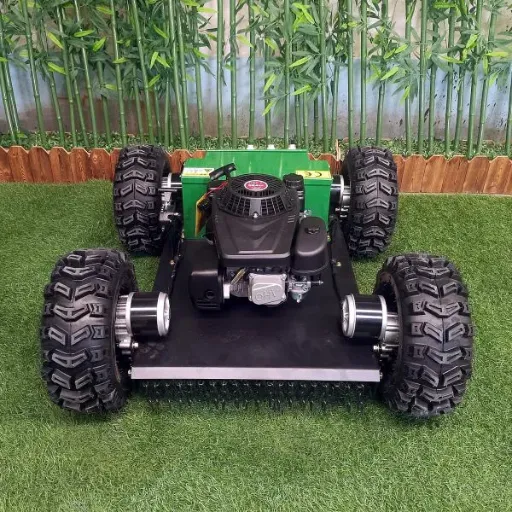
Remote control vegetation management is not about replacing every machine in a fleet. It is about putting the right machine on the terrain where traditional equipment fails. A tracked remote mower combines three technologies that change the safety and production equation.
Tracked Chassis for Slope Stability
Rubber tracks distribute weight across a larger footprint than wheels. A low center of gravity and hydrostatic transmission let the machine climb, hold, and cut on slopes up to 45 degrees. The same chassis that climbs a levee face can cross soft soil, wet grass, and ballast without sinking or sliding.
200-Meter Wireless Control
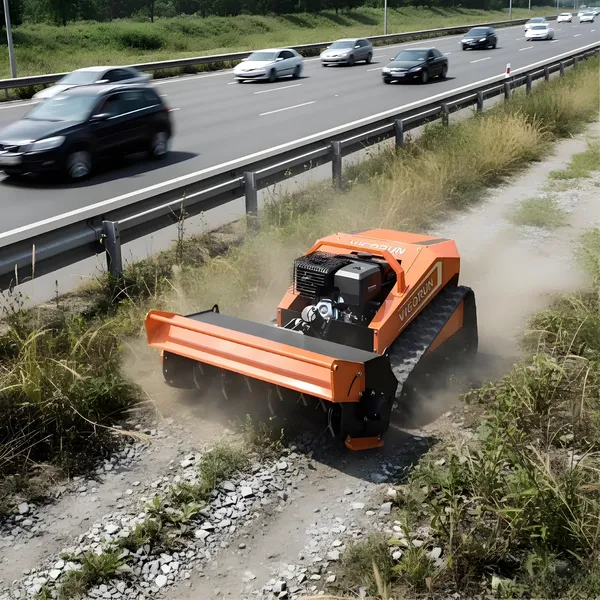
An industrial 2.4 GHz remote lets the operator stand up to 200 meters away from the cutting path. That distance removes the operator from rollover zones, flying debris, exhaust, and noise. It also allows vegetation management beneath solar panels, near energized equipment, and along traffic corridors where human operators cannot safely work.
Interchangeable Cutting Heads
The same tracked chassis can run a rotary deck for grass, a flail head for woody brush, or a sprayer attachment for herbicide application. One platform replaces multiple dedicated machines, reducing fleet cost and parts inventory.
| Factor | Walk-Behind Brush Cutter | Tractor-Mounted Mulcher | Tracked Remote Mower |
|---|---|---|---|
| Max slope (dry) | 20-25 degrees | 10-15 degrees | 45 degrees |
| Operator position | On the slope | On the machine | 200 m away |
| Crew size typical | 1-2 people | 1 person | 1 person |
| Debris exposure | Direct | Direct | None |
| Daily production | 0.5-1 acre | 2-4 acres | 3-5 acres |
| Best vegetation | Light brush, grass | Heavy brush, dense regrowth | Grass to woody brush |
| Capital cost | 3,000−3,000−8,000 | 25,000−25,000−80,000 | 15,000−15,000−35,000 |
For vegetation management contractors, the critical insight is that remote control does not just improve safety. It unlocks terrain and contract types that were previously unprofitable or impossible to bid.
Key Applications for Modern Vegetation Management Equipment
Vegetation management equipment serves distinct job sites, each with its own combination of slope, vegetation density, access constraints, and regulatory requirements.
Solar Farm Vegetation Management
Solar arrays sit on graded land that often includes slopes and tight rows. Grass and weeds beneath panels must be controlled to prevent shading and fire risk. Traditional ride-on mowers cannot fit between panel rows, and hand crews are slow across large sites. A remote-controlled mower with a compact footprint and slope capability clears between rows while the operator stands outside the array.
Utility and Pipeline Rights-of-Way
Electrical transmission corridors and pipeline paths run for dozens of miles across variable terrain. Vegetation must be kept low enough to prevent contact with conductors or interference with pipeline inspection. Remote mowers handle slope transitions, wet corridors, and long distances with one operator covering what used to require a three-person crew.
Highway and Roadside Corridors
Embankments, medians, drainage channels, and overpass slopes present some of the steepest maintained terrain in municipal work. Remote mowers keep operators off the slope and away from traffic while handling angles that no ride-on machine can attempt safely.
Rail Corridors
Rail rights-of-way include ballast shoulders, embankments, cuttings, and bridge approaches. Vegetation control is required to maintain signal sightlines and prevent track obstruction. A remote mower works the embankment face while the operator stands clear of passing trains.
Orchards and Vineyards
Terraced slopes and between-row groundcover require frequent cutting and spraying. Remote-controlled equipment mows between trees or vines without damaging trunks, and sprayer attachments apply herbicide or nutrients on terrain where manual spraying is exhausting.
In 2024, a solar farm maintenance manager named Elena Vasquez managed vegetation control across 320 acres of panels outside Fresno, California. Her previous contractor used string trimmers and a compact tractor, taking six weeks per cycle. After switching to a tracked remote mower, the same cycle took two weeks. The panels stayed cleaner, fire-risk vegetation was controlled earlier in the season, and her annual vegetation management budget dropped by 28 percent.
Specs to Demand in Vegetation Management Equipment
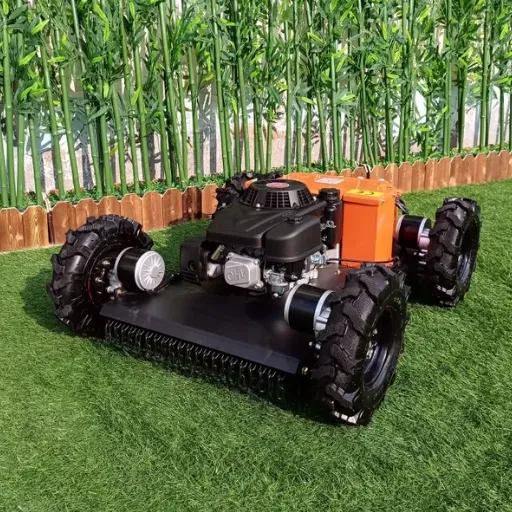
Not every machine marketed for vegetation management can handle commercial job sites. Five specs separate professional-grade equipment from landscape tools that will fail on the first contract.
1. Slope Rating Verified on Test Ramps
Any supplier can write "steep slope capable" on a brochure. Demand a degree rating verified on actual test ramps. The Vigorun VTLM800 is rated to 45 degrees on dry, firm grass, with testing conducted on dedicated outdoor slopes at the Weifang facility. If a manufacturer will not name the angle or show the test protocol, the spec is not real.
2. Track Design for the Terrain
Rubber tracks outperform wheels on wet grass, loose soil, and side slopes. Look for a low center of gravity, wide track footprint, and hydrostatic transmission. Wheels lose grip on dew-covered solar farm terraces where tracks bite through.
3. Engine Certification for Your Market
Vegetation management equipment crosses regulatory boundaries. Gasoline engines must carry CE certification for European import, EPA compliance for North American resale, and EURO V documentation for customs clearance in regulated markets. Vigorun ships the full documentation package with every container so your broker clears customs without delays.
4. Cutting System Versatility
Grass on solar farms requires a rotary deck. Woody brush on pipeline rights-of-way requires a flail head. The MTSK1000 remote flail mower handles saplings and woody regrowth up to 25 millimeters thick on the same tracked chassis as the rotary mower.
5. Sprayer Compatibility for Integrated Control
Some vegetation management programs combine mechanical cutting with herbicide application. The Vigorun sprayer range attaches to the same remote-controlled platform, letting one machine mow and spray on terraced orchards, vineyards, and utility corridors.
The Business Case for Remote-Controlled Vegetation Management
The purchase price of vegetation management equipment is only part of the decision. Commercial buyers should look at total cost of ownership, labor reduction, contract eligibility, and risk exposure.
Labor Cost Reduction
A three-person hand crew on steep or hazardous terrain costs more than three salaries. Add workers' compensation insurance, safety gear, vehicle transport, and supervisory time. One remote operator replaces that crew on the steepest work, typically recovering the capital investment in 14 to 18 months through labor savings alone.
Contract Eligibility
State transportation departments, utility companies, and solar farm operators increasingly score bids on safety methodology. Contractors who can demonstrate zero-operator-slope practices score higher on safety criteria and win more work. Remote vegetation management equipment becomes a bidding advantage, not just a field tool.
Risk and Insurance
OSHA data shows that slope work, brush cutter kickback, and heat exposure account for a disproportionate share of injuries in vegetation management. Remote operation removes the operator from the slope, the brush, and the machinery, reducing injury exposure and workers' compensation claims.
Fleet Utilization
One tracked remote platform with interchangeable attachments replaces a rotary mower, a brush cutter, and in some cases a sprayer. That consolidation reduces capital outlay, training complexity, and spare-parts inventory.
How to Choose Vegetation Management Equipment for Your Operation
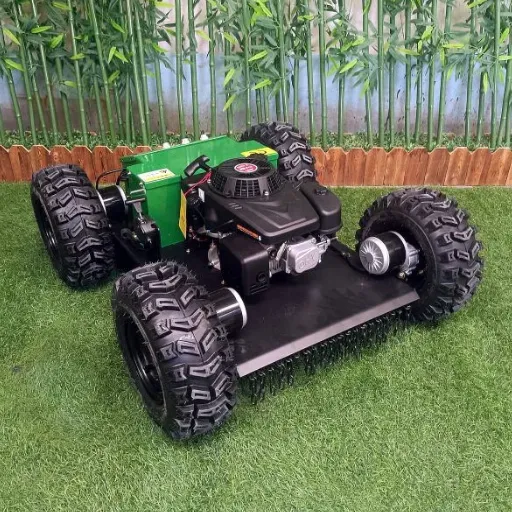
Selecting the right vegetation management equipment means matching the machine to your worst job site, not your average one.
Step 1: Map Your Terrain and Slopes
Walk every site your crew maintains. Measure or estimate the steepest slope angle. If any job exceeds 25 degrees, traditional mowers and walk-behind units are liabilities. That single measurement makes the remote-control decision for you.
Step 2: Identify Your Vegetation Types
Grass-only sites need a rotary deck. Mixed grass-and-brush sites need a flail head. Sites with herbicide programs need sprayer compatibility. If you manage all three, spec a platform with interchangeable attachments rather than buying three dedicated machines.
Step 3: Calculate Production Requirements
Divide your total annual acreage or linear mileage by your available crew days. If steep terrain is slowing production below your contract requirements, a remote mower pays for itself on throughput alone.
Step 4: Verify Certification for Your Markets
If you sell into or operate in the EU, USA, Canada, or Australia, demand CE, EPA, and EURO V documentation with the quote. Do not wait for customs to hold your container because paperwork is incomplete.
Step 5: Evaluate the Supplier
Vegetation management equipment takes abuse. You need a supplier who stocks spare parts, answers technical questions, and ships replacement components by air freight when a track breaks mid-season. Ask about warranty terms, parts availability, and after-sales support before comparing prices.
Vigorun builds every unit in a Weifang facility with a dedicated quality control team and 100 percent indoor and outdoor field testing before shipment. Distributors get OEM color, logo, and packaging options starting at 5 units, with whole-life parts support on every machine sold.
Conclusion
Vegetation management equipment is evolving from lawn mowers and string trimmers to tracked remote machines that keep operators safely away from the steepest, most hazardous terrain. The contractors and maintenance managers who win bids in 2026 will be the ones who match the right machine to the job site instead of forcing crews to adapt to equipment that was never meant for the slope.
A tracked remote mower with a 200-meter wireless range, 45-degree slope rating, and interchangeable cutting heads transforms vegetation management from a labor-heavy, injury-prone operation into a one-person, production-efficient job. The safety benefit is immediate. The production benefit shows up in the first season. And the bidding advantage compounds across every contract that competitors cannot safely handle.
If your current vegetation management equipment cannot clear your steepest solar farm terrace, pipeline embankment, or utility corridor without putting an operator at risk, it is not saving money. It is limiting your business.
Ready to spec vegetation management equipment that climbs 45-degree slopes while your operator stands safely on flat ground? Request a quote for FOB Shandong pricing, or ask about OEM branding for your distributor catalog. We will send spec sheets, container-loading diagrams, and certification documentation within 24 hours.
Recently Posted
-
Vigorun Remove Control Lawn Mower Euro 5/EPA Safe Braking Mechanism 12hp Tall Grass Mower Mulcher
June 8, 2026*High-Torque RV063 Reducer for Superior Slope Safety: Conquer rough terrain with our MTSK800 professional gasoline lawn mower, fea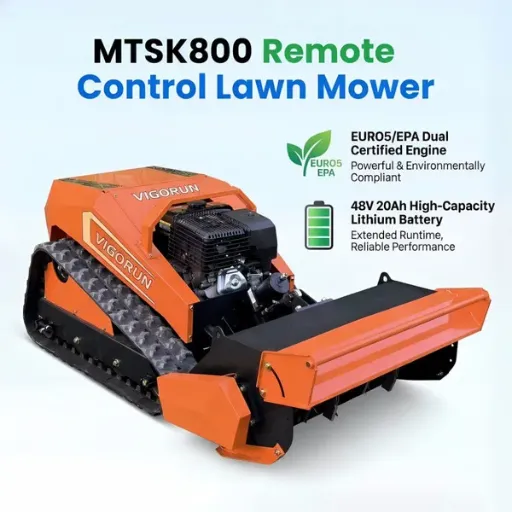 Read More
 -
Vigorun Lawn Mower High-Torque RV063 Reducer Reverse Mulcher for Rubber & Palm Oil Plantations
June 8, 2026*Heavy-Duty Hazard-Free Mulching with 18kW Twin-Cylinder Power: Maximize land clearing efficiency with our MTSK1000 lawn mulcher,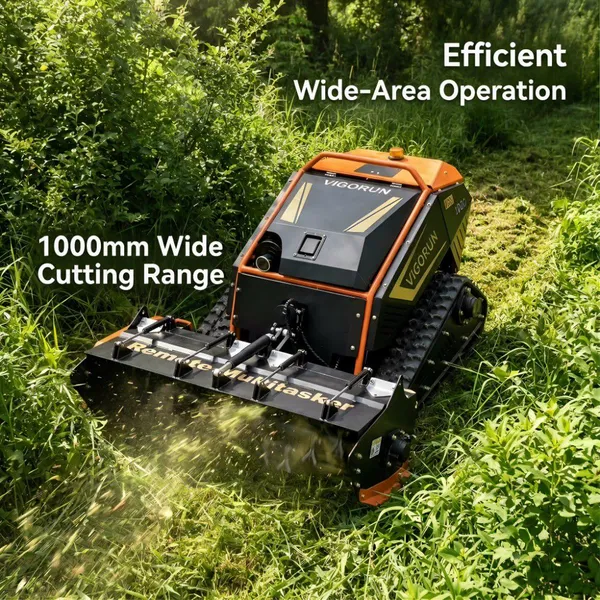 Read More
 -
Commercial Brush Mower: What Separates a Fleet-Grade Machine From a Hobby Toy
June 8, 2026In March 2024, a commercial landscaping contractor named Derek Hahn won a $340,000 annual contract to clear vegetation along 28 mi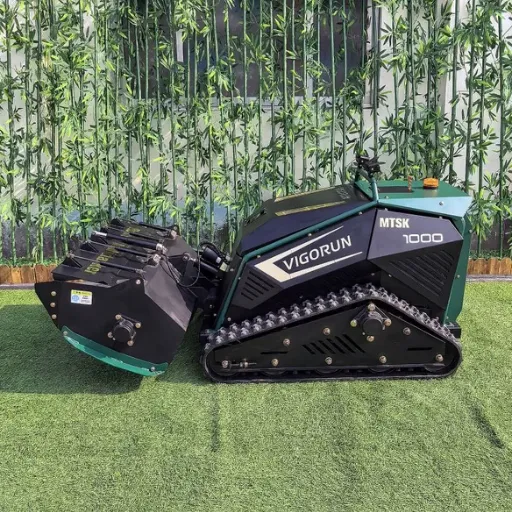 Read More
 -
Remote Controlled Brush Cutter: How Tracked Machines Clear Heavy Vegetation Without Putting an Opera
June 8, 2026In June 2024, a vegetation management crew in Oregon was clearing a 32-degree highway embankment when a walk-behind brush cutter k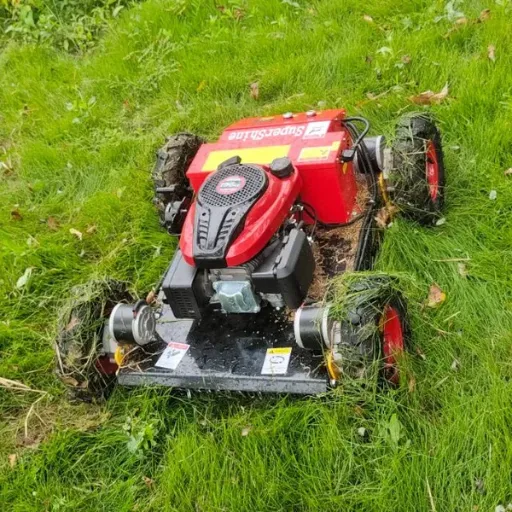 Read More

Contact Us
Recommended Products
-
 Vigorun Remote Control Electric Mower Self-Locking Slope Safety Crawler Mower for Lawn & GardenUS$ 2600 - 2700MOQ: 1 Set
 -
Vigorun RC Mower Remote Control Multi-Function Tool Carrier Remote-Controlled Electric MulcherUS$ 2800 - 2900MOQ: 1 Set
-
Vigorun Lawn Mowers Multi-Function Tool Carrier 1000mm Remote Control Forest Mulcher Flail MowerUS$ 8000 - 8200MOQ: 1 Set
-
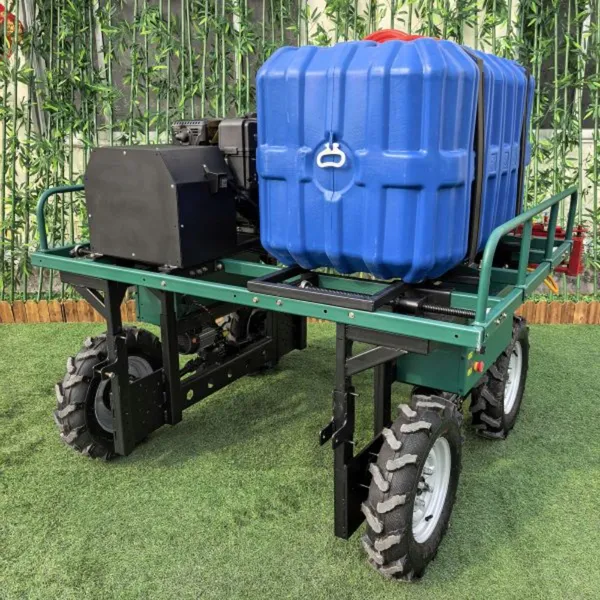
Vigorun SPRY600 Tractor Sprayer Industrial 4-Stroke Agricultural Sprayers 600l for Soybean FieldsUS$ 2600 - 2700MOQ: 1 Set
-
Vigorun Grass Cutting Machine High-Speed (6 Km/h) Wheeled Lawn Mower for Tea & Coffee PlantationsUS$ 1000 - 1100MOQ: 1 Set
-
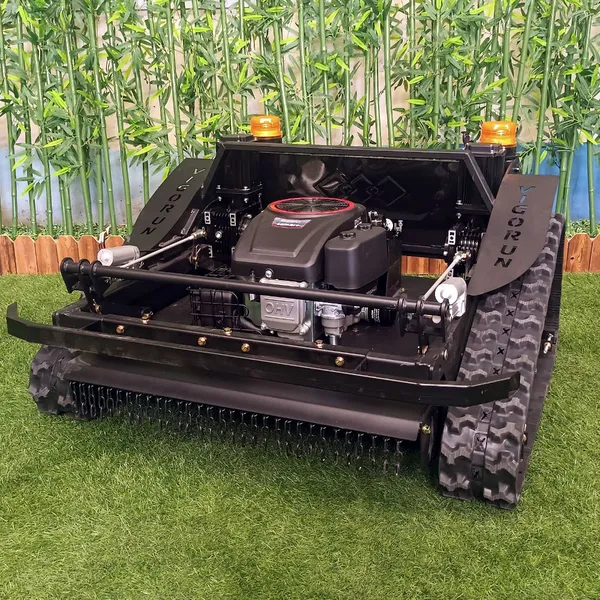
Vigorun Robot Brush Mower Euro 5/EPA Self-Locking Slope Safety Remote Control Track Lawn MowerUS$ 1700 - 17900MOQ: 1 Set
-
Vigorun Controlled Lawn Mower Anti-Rollback Security Lawn Mower Crawler for Slopes & HillsidesUS$ 2600 - 2700MOQ: 1 Set
-
Vigorun Robot Weed Cutter Quick-Change Attachment System Remote Controlled Motorcycle MulcherUS$ 2800 - 2900MOQ: 1 Set
-
Vigorun Remote Control Lawn Mower Quick-Change Attachment System Robot Tracked Forestry MulcherUS$ 8000 - 8200MOQ: 1 Set
-
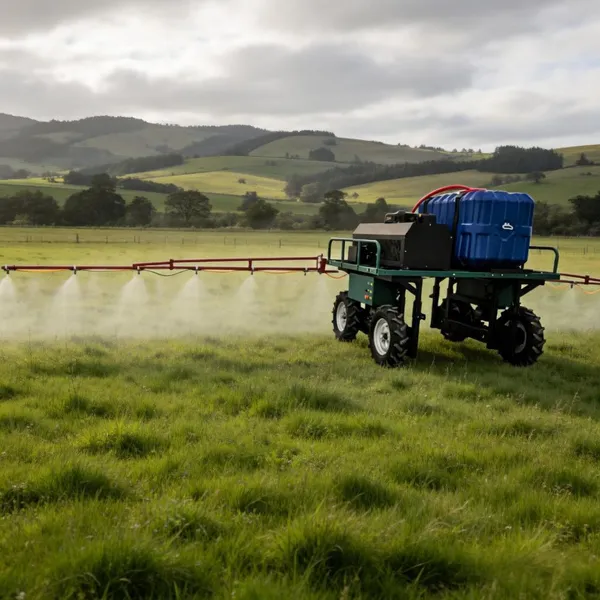
Vigorun SPRY600 Boom Sprayer Electric Start Electric Sprayer Agricultural 600l for Cotton FieldsUS$ 2600 - 2700MOQ: 1 Set
-
Vigorun Brush Mower Euro 5/EPA Hazard-Free Operation Hightop Lawn Mower for Orchards & VineyardsUS$ 1000 - 1100MOQ: 1 Set
-
Vigorun Brush Cutter Robot High Transmission Efficiency 73% Crawler Lawn Mower for Steep SlopesUS$ 1700 - 17900MOQ: 1 Set
-
Vigorun Tractor Sprayer Agriculture Euro 5/EPA Agricultural Sprayers Self Starter for Wheat FieldsUS$ 2600 - 2700MOQ: 1 Set
-
Vigorun Grass Cutter Machine 16x Manual Efficiency Small Remote Control Lawn Mower for NurseriesUS$ 1000 - 1100MOQ: 1 Set
-
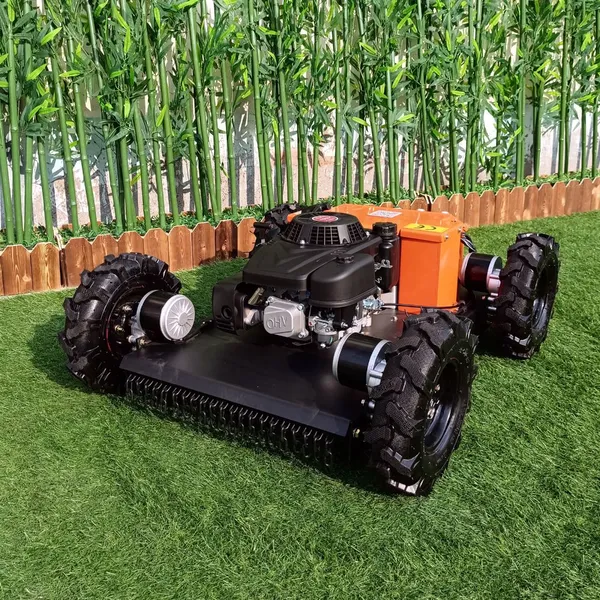
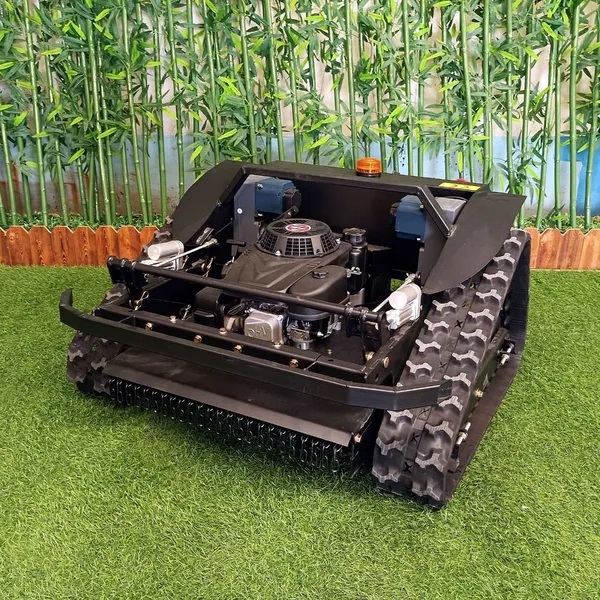
Vigorun RC Brush Cutter Euro 5/EPA Low Energy Consumption 6hp Crawler Remote Control Lawn MowerUS$ 1700 - 17900MOQ: 1 Set
-
Vigorun VTLM800 RC Mower Euro 5/EPA Remote Hazard Avoidance Robot Crawler Mower for Steep SlopesUS$ 2600 - 2700MOQ: 1 Set
-
Vigorun MTSK800 Automatic Grass Cutter Robot Euro 5/EPA User-Friendly Remote Control Mulcher RobotUS$ 2800 - 2900MOQ: 1 Set
-
Vigorun Lawn Mower Robot With Flail Mower/Hammer Flail/Forest Mulcher/Snow Blade Tracked MulcherUS$ 8000 - 8200MOQ: 1 Set
-
Tractor Sprayer, CE EPA Approved Gasoline Engine Gasoline Fst Power Spray Agriculture for Soybean Fields Vigorun SPRY600US$ 2600.00 - 2700.00MOQ: 1 Set
-
Vigorun SPRY600 Boom Sprayer, Remote Control Distance 200M Gasoline Engine Type Spraying Machine for Cotton FieldsUS$ 2600.00 - 2700.00MOQ: 1 Set