
 Business License
Steep Slope Mowing Equipment: How to Mow 35° to 45° Terrain Without Putting an Operator at Risk
In July 2023, a landscaping crew in North Carolina sent a zero-turn mower down a 28-degree dam embankment to clear grass before an inspection. The machine slid on damp turf, rolled 60 feet, and sank in two feet of water. The operator escaped with bruises. The mower was a total loss. The crew missed the inspection deadline and lost the municipal contract.
The embankment was not unusually steep. Dams, levees, highway cuts, and solar farm terraces routinely run between 25 and 35 degrees. Some slope mowing jobs push past 40 degrees. Traditional mowers were never designed for those angles. Ride-on units top out near 15 degrees. Walk-behind brush cutters reach 25 degrees with an experienced operator and solid footing. Beyond that, steep slope mowing equipment is not optional. It is the only way to cut the grass without risking the operator.
This article explains what steep slope mowing equipment actually means, how slope ratings are measured, what separates real capability from marketing claims, and why a tracked remote mower has become the standard for terrain that no conventional machine can safely handle. You will see real specs, real applications, and a clear framework for choosing equipment that matches your steepest slopes.
Need steep slope mowing equipment that keeps the operator on flat ground? Browse the Vigorun remote mower lineup and compare slope ratings side by side.
What Counts as Steep Slope Mowing Equipment?
Steep slope mowing equipment is any machine purpose-built or rated to cut grass, brush, or vegetation on grades that exceed the safe limits of standard mowers. Most industry safety guidelines treat slopes above 15 degrees as hazardous for ride-on equipment. Slopes above 25 degrees are generally beyond walk-behind machines. True steep slope work starts where conventional equipment stops.
Ride-On Rotary Mowers
Best for: Flat lawns, parks, and gently rolling turf
Slope limit: 15 degrees on dry grass
Risk: Rollover, side-slide, and operator ejection on steeper grades
Walk-Behind Brush Cutters
Best for: Ditches, confined spaces, and detail work
Slope limit: 20 to 25 degrees with experienced operator
Risk: Operator fatigue, heat stress, kickback, and loss of footing
Tractor-Mounted Flail Mowers
Best for: Wide, flat agricultural or roadside corridors
Slope limit: 10 to 15 degrees depending on tractor stability
Risk: High center of gravity, rollover on moderate grades
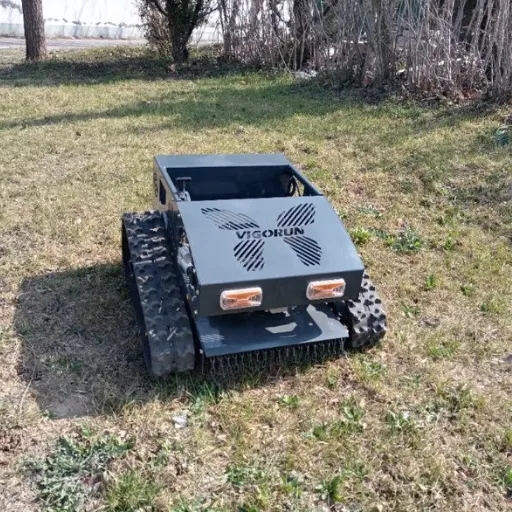
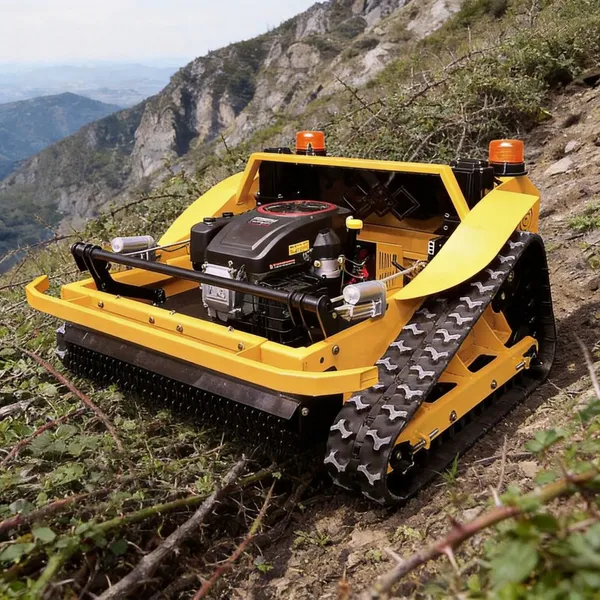
Remote-Controlled Slope Mowers
Best for: Embankments, levees, dams, solar farm terraces, and hazardous hills
Slope limit: Up to 45 degrees on dry, firm grass; 35 degrees on wet or loose terrain
Risk: Requires line-of-sight operation and trained operator
Most commercial landscapers and municipal crews own the first three categories. Few have invested in remote-controlled machines, even though a tracked remote mower is the only category actually designed for sustained steep slope mowing.
Want help matching slope angle to equipment? Read our guide on how to choose a slope mower for terrain-specific selection criteria.
Why Slope Angle Matters More Than Horsepower
On flat ground, cutting performance is about blade speed, deck width, and engine power. On steep slopes, those factors become secondary. The machine must first hold the grade without sliding, tipping, or losing oil pressure to the engine. If it cannot do that, horsepower becomes irrelevant.
A slope rating measures four things simultaneously:
Traction
The tracks or tires must maintain grip while the machine is tilted. Rubber tracks with aggressive lug patterns outperform wheels on wet grass, clay, and loose soil because they distribute weight over a larger contact area.
Stability
The chassis must resist tipping sideways or rolling end-over-end. Track width, track length, and center-of-gravity height determine stability. A wider stance and lower profile handle steeper side slopes.
Lubrication
A standard engine sump can starve for oil on a sustained steep climb. Slope-rated engines or sump modifications ensure oil reaches critical components at angle. Without that modification, a 45-degree climb can destroy an otherwise strong engine.
Cutting Integrity
The deck must stay close enough to the ground to cut evenly, even when the machine is tilted. Deck linkage, blade geometry, and anti-scalp rollers all affect how clean the cut looks on a steep face.
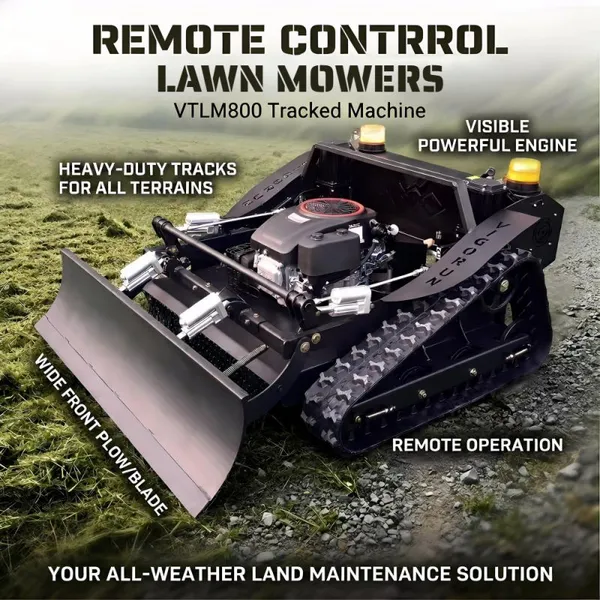
The Vigorun VTLM800 is rated to 45 degrees because every one of those factors was engineered into the chassis and engine package. The rating is verified on dedicated outdoor test ramps at the Weifang facility, not calculated from component specs.
Remote-Controlled Slope Mowers vs. Traditional Steep Slope Equipment
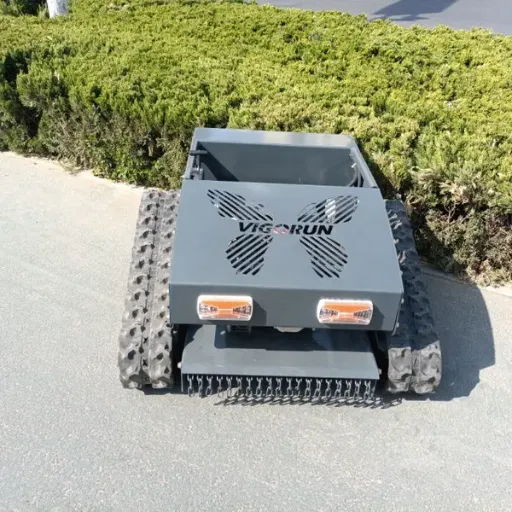
The central difference between remote-controlled steep slope mowing equipment and traditional methods is distance. A remote operator stands up to 200 meters away from the cutting path, completely off the slope and away from rollover and debris zones.
| Factor | Ride-On Mower | Walk-Behind Cutter | Tracked Remote Mower |
|---|---|---|---|
| Max slope (dry) | 15 degrees | 20-25 degrees | 45 degrees |
| Operator position | On the machine | On the slope | 200 m away |
| Crew size typical | 2-4 people | 1-2 people | 1 person |
| Rollover risk | High | Medium | Zero (operator off machine) |
| Debris exposure | Direct | Direct | None |
| Daily production (steep slope) | 0.5-1 acre | 0.3-0.8 acre | 2-4 acres |
| Capital cost | 8,000−8,000−25,000 | 3,000−3,000−8,000 | 15,000−15,000−35,000 |
The production numbers matter as much as the safety numbers. A single remote operator does not tire on the steepest section of the cut. The machine does not need shade breaks. And the operator can position on safe, flat ground while the chassis works a 35-degree face.
For commercial landscapers and municipal contractors, that production edge usually recovers the capital investment in 14 to 18 months through labor savings alone. The operator safety benefit is immediate and cumulative.
Key Specs to Demand in Steep Slope Mowing Equipment
When you spec steep slope mowing equipment, five numbers separate real capability from brochure claims.
1. Slope Rating With Proof
Any manufacturer can advertise "steep slope capable." Demand a specific degree rating and ask how it was verified. The Vigorun VTLM800 is rated to 45 degrees on dry, firm grass, with testing conducted on outdoor test ramps at the Weifang facility. If the supplier cannot name the angle or describe the test protocol, the spec is marketing, not engineering.
2. Track Width and Tread Pattern
Rubber tracks outperform wheels on steep, wet, or uneven terrain. Look for track width of 180 millimeters or more, aggressive lug tread, and a hydrostatic transmission that maintains torque across the grade. Smooth or narrow tracks slip on damp grass where wide lug tracks bite.
3. Engine Slope Rating and Certification
The engine must maintain oil pressure at the advertised slope angle. It must also carry CE certification for European markets, EPA compliance for North American resale, and EURO V documentation for regulated customs clearance. Vigorun ships the full documentation package with every container.
4. Remote Range and Failsafes
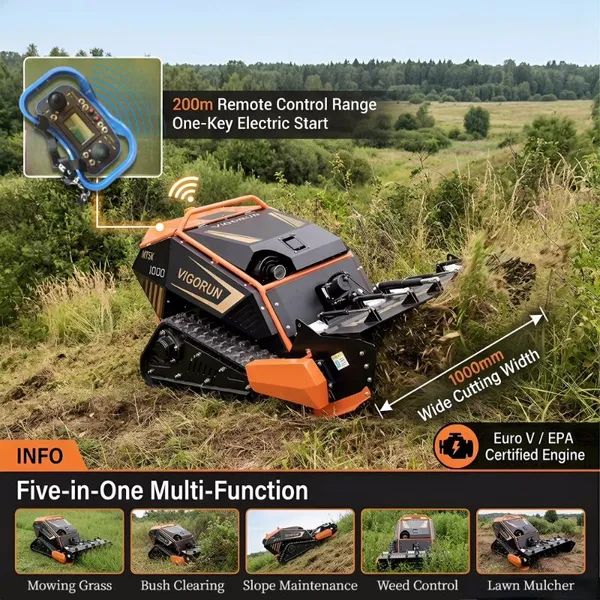
A 200-meter control range covers most steep slope jobs in line-of-sight. More important than range is the failsafe: if signal drops, the blade stops and the chassis halts automatically. Verify hardware emergency stops on both the transmitter and the chassis.
5. Cutting System Versatility
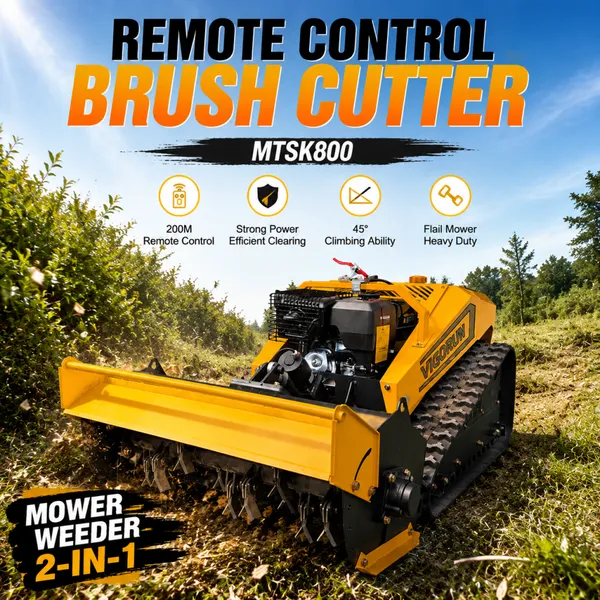
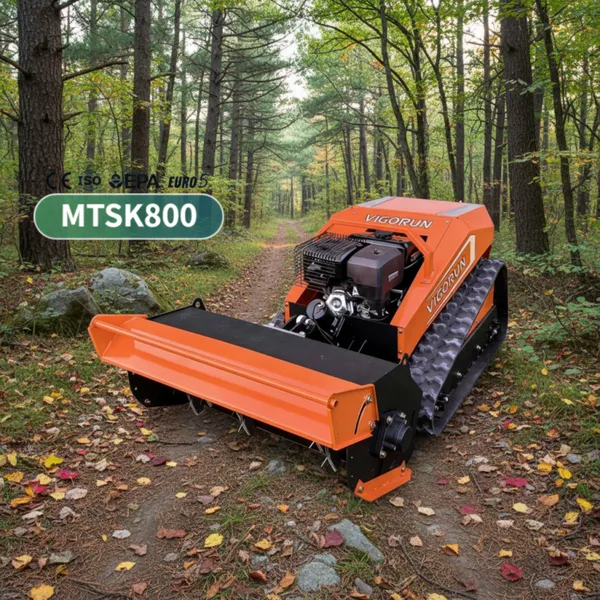
Grass on a dam face needs a rotary deck. Woody brush on a neglected hillside needs a flail head. The MTSK800 remote flail mower runs the same tracked chassis with a flail attachment, giving one platform two jobs.
Real-World Applications: Dams, Levees, Solar Farms, and Hillsides
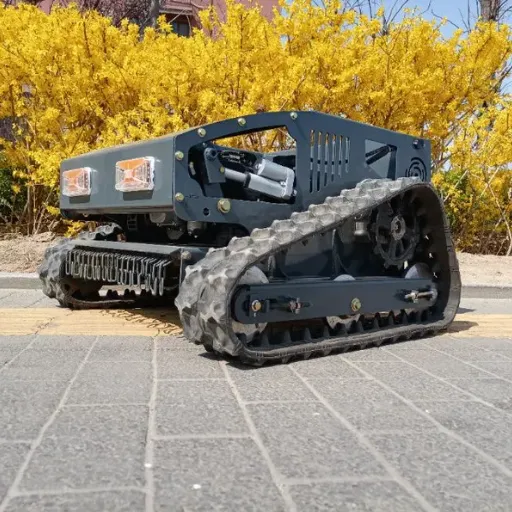
Steep slope mowing equipment faces distinct challenges depending on where it works. Each application demands a specific combination of slope capability, track design, and operator safety distance.
Dam and Levee Embankments
Dam faces are often graded between 25 and 35 degrees to maximize water capacity and structural stability. The grass must be kept short for inspection access and to prevent tree regrowth. Wet clay, erosion channels, and steep side slopes make these sites impossible for ride-on mowers. Remote-controlled machines climb the full face and let the operator stand at the crest or toe of the dam.
Highway and Roadside Cuts
Highway embankments and median slopes are often the most visible steep-slope work in a municipality. Operators on ride-on machines work inches from traffic with limited escape routes. A remote mower keeps the operator on the safe side of the barrier while the machine handles the slope.
Solar Farm Terraces
Solar arrays are frequently installed on graded hillsides with terraces that run 15 to 30 degrees. Vegetation beneath panels must be controlled to prevent shading and fire risk. Remote mowers fit between panel rows and handle the terrace slopes without damaging racking or cables.
Orchard and Vineyard Terraces
Fruit and wine operations on hillside land use terraces that can exceed 25 degrees. Grass and groundcover between rows must be controlled without damaging trunks or vines. A tracked remote mower climbs the terrace face while the operator stands on the access path.
In 2024, a municipal grounds supervisor named James Carver took over maintenance of a 90-year-old dam in Pennsylvania. The downstream face was 32 degrees, covered in thick fescue, and too steep for the town's existing mower fleet. Previous crews had used string trimmers, taking two weeks per cut and sending three workers onto the slope at a time.
James spec'd a tracked remote mower with a 45-degree rating. The first cut took two days. The crew expanded the program to include two additional dams and a levee, all with one operator per site. The town's risk manager noted a 40 percent reduction in workers' compensation exposure for slope work.
The Hidden Costs of the Wrong Steep Slope Equipment
The sticker price of steep slope mowing equipment is only the starting number. Using the wrong machine on steep terrain generates hidden costs that compound across a season.
Labor Multiplication
A three-person string-trimmer crew on a steep dam face costs more than three salaries. Add workers' compensation, safety gear, vehicle transport, and supervisory oversight. Replacing that crew with one remote operator eliminates two salaries and all the associated overhead.
Injury and Liability
OSHA landscaping injury data shows that slope work accounts for a disproportionate share of serious incidents. Every injury triggers a claim, a potential lawsuit, and a safety review that can affect contract eligibility. Remote operation removes the operator from the slope entirely, cutting exposure to near zero.
Equipment Damage
Rollovers destroy mowers. A single ride-on unit lost down an embankment costs $15,000 to $30,000 to replace, plus environmental cleanup if fuel leaks into a waterway. Remote mowers carry low centers of gravity and lost-signal failsafes that reduce catastrophic damage.
Missed Contracts
Municipalities and utilities increasingly score bids on safety plans. Contractors with zero-operator-slope methodology win more work. Steep slope mowing equipment that keeps the operator off the slope is a competitive advantage, not just a capital purchase.
How to Choose Steep Slope Mowing Equipment for Your Crew
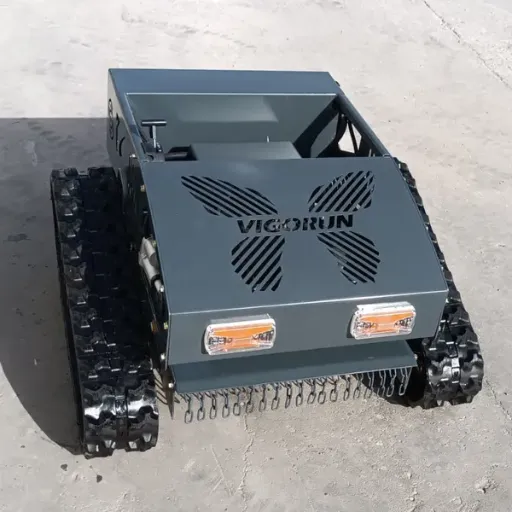
Selecting the right steep slope mowing equipment means matching the machine to your worst slope, not your average one.
Step 1: Measure Your Steepest Slope
Walk every embankment, terrace, hillside, and dam face your crew maintains. Use a clinometer app, an inclinometer, or a simple slope survey. If anything exceeds 25 degrees, a ride-on or walk-behind machine is a liability. That measurement alone tells you whether remote control is optional or mandatory.
Step 2: Identify the Surface Conditions
Dry turf, wet clay, loose soil, and ballast all affect traction. Tracks handle wet and loose surfaces better than wheels. If your slopes are frequently damp, spec aggressive lug tread and a hydrostatic transmission.
Step 3: Match the Cutting Head to the Vegetation
Grass-only slopes need a rotary deck. Slopes with woody brush or sapling regrowth need a flail head. If you maintain both, choose a platform with interchangeable attachments instead of buying two dedicated machines.
Step 4: Verify Certification for Your Market
If you operate in or sell into the EU, USA, Canada, or Australia, demand CE, EPA, and EURO V documentation with the quote. Customs clearance failures are expensive and avoidable.
Step 5: Evaluate the Supplier
Steep slope mowing equipment takes abuse. You need a supplier who stocks tracks, sprockets, blades, and engine parts, and who can ship by air freight when something breaks mid-season. Ask about warranty terms, parts availability, and after-sales support before comparing prices.
Vigorun builds every unit in a Weifang facility with a dedicated quality control team and 100 percent indoor and outdoor field testing before shipment. Distributors get OEM color, logo, and packaging options starting at 5 units, with whole-life parts support on every machine sold.
Conclusion
Steep slope mowing equipment is not about bigger engines or wider decks. It is about keeping the operator off the slope while a tracked, slope-rated machine handles the cut. The crews who win municipal, utility, and solar contracts in 2026 will not be the ones with the most laborers. They will be the ones who refuse to send operators onto terrain that conventional equipment cannot handle safely.
A tracked remote mower with a 200-meter wireless range, 45-degree slope rating, and CE and EPA-certified engine transforms steep slope work from a dangerous, labor-heavy chore into a one-person, production-efficient operation. The safety benefits are immediate. The cost benefits show up in the first season. And the bidding advantage compounds across every steep site you pursue.
If your current steep slope mowing equipment cannot handle your steepest embankment without putting an operator at risk, it is not equipment. It is a liability.
Ready to spec steep slope mowing equipment that climbs 45-degree hills while your operator stands safely on flat ground? Request a quote for FOB Shandong pricing, or ask about OEM branding for your distributor catalog. We will send spec sheets, container-loading diagrams, and certification documentation within 24 hours.
Recently Posted
-
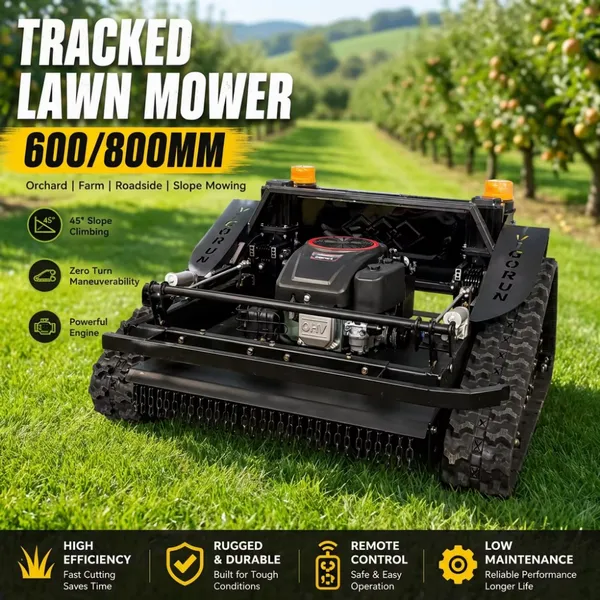
Steep Slope 600mm Tracked 200m Remote Control 45 Degree Brushless Electric Lawn Mower
August 10, 2026*Integrated Drive System with 73 Percent Efficiency: The VTLM600 remote control lawn mower features a fully integrated brushless m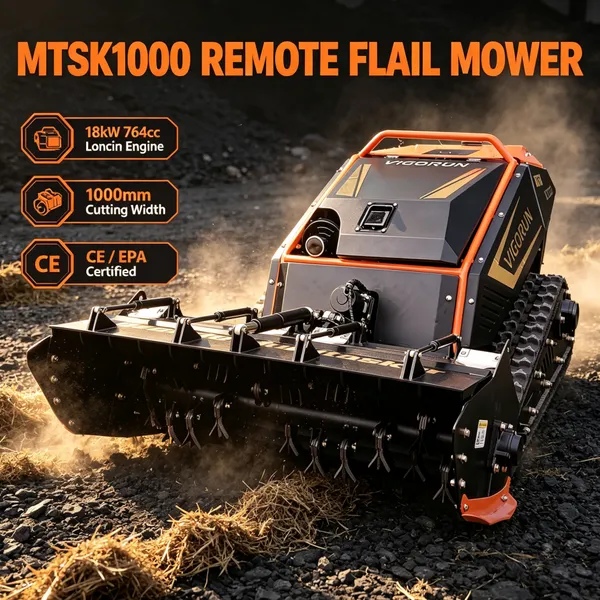 Read More
 -
Remote Controlled Pesticide Sprayer with 600L Tank 8.4m Boom for Agricultural Applications
August 10, 2026*Electric Start & 13kW Loncin Engine for Powerful Agricultural Spraying: Maximize field application efficiency with the SPRY60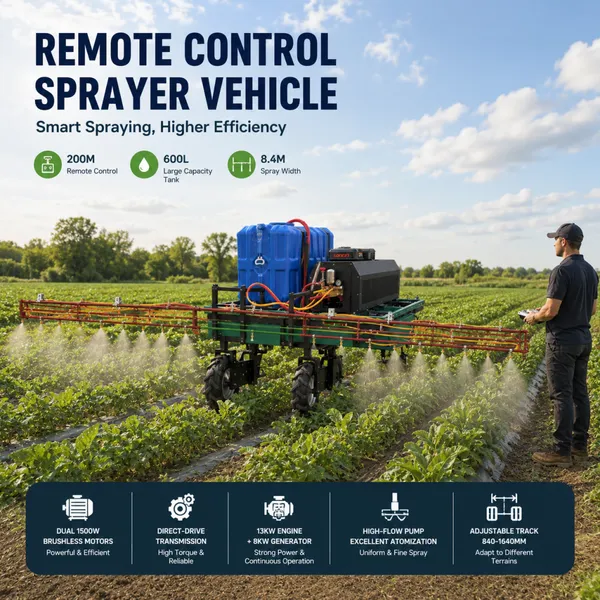 Read More
 -
Self Propelled Agricultural Boom Sprayer with Adjustable Track for Modern Farming
August 10, 2026*Electric Start & 13kW Loncin Engine for Powerful Agricultural Spraying: Maximize field application efficiency with the SPRY60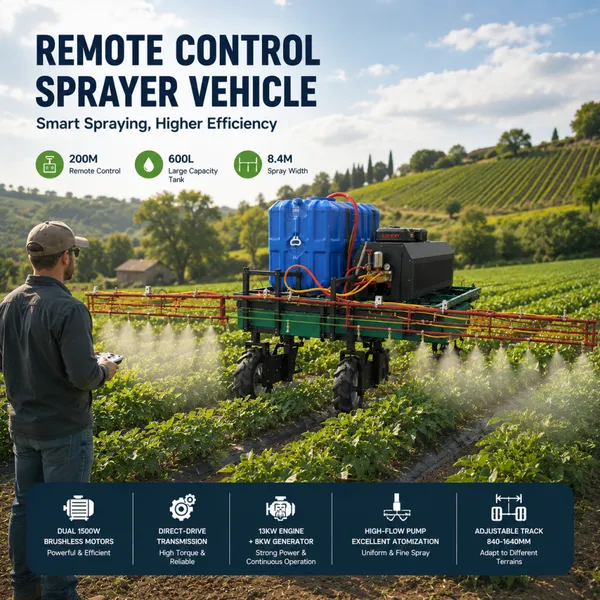 Read More
 -
Automatic Remote Control Agricultural Spray Machine with 600L Chemical Tank and Boom System
August 10, 2026*Electric Start & 13kW Loncin Engine for Powerful Agricultural Spraying: Maximize field application efficiency with the SPRY60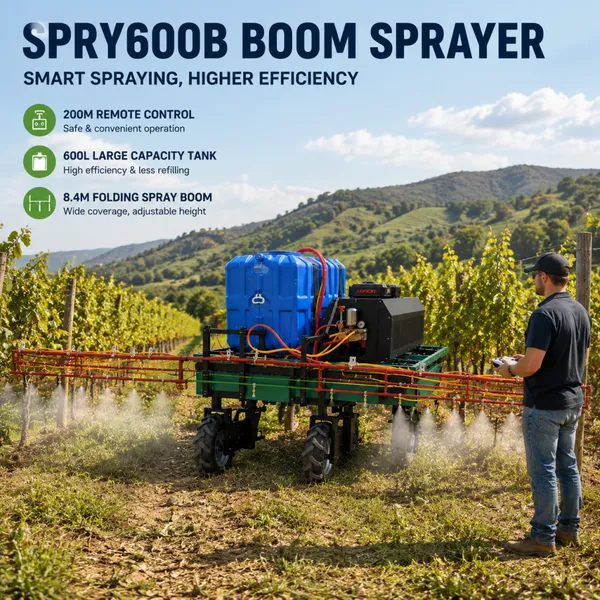 Read More

Contact Us
Recommended Products
-
 Vigorun Lawn Mower Robot, Industrial Dual 48V 1500W Motors MTSK1000 Mulcher Machine for Large LandscapesUS$ 7500.00 - 7700.00MOQ: 1 Set
 -
Farmland Orchards Battery Powered Mower Gasoline Golf Mower Robot Lawn Mower 3000m2 Vigorun Remote Control Grass MowerUS$ 2580 - 2700MOQ: 1 Unit
-
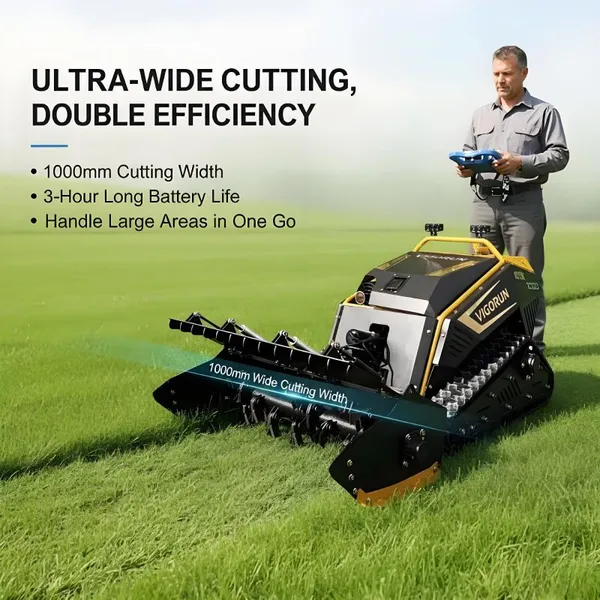
Vigorun MTSK800 Automatic Remote Control Grass Cutting Machine 48V 20Ah Battery Remote Flail MowerUS$ 2800 - 2900MOQ: 1 Set
-
Vigorun MTSK1000 Remote Control Mower 24hp Fail-Safe Slope Braking Remote Control Forest MulcherUS$ 8000 - 8200MOQ: 1 Set
-
Industry Electric Motor Lawn Mower Flail Mower Atv Gasoline Hedge Trimmer Battery LawnmowerUS$ 2580 - 2900MOQ: 1 Unit
-
Vigorun Agricultural Tractor Sprayer Euro 5/EPA Electric Agricultural Sprayer 600l for VineyardsUS$ 2600 - 2700MOQ: 1 Set
-
Remote Control Tracked Hillside Mower 800mm Cutting Width 60 Degree Slope for Steep Terrain VegetationUS$ 2600 - 2700MOQ: 1 Set
-
Vigorun VTLM600 RC Lawn Mower Robot CE EPA Certified 45° Extreme Slope Mini Crawler Lawn MowerUS$ 1700 - 17900MOQ: 1 Set
-
Remote Controlled High Efficiency Fog Cannon Spraying Machine 600L Tank for Agriculture and Dust ControlUS$ 2800 - 2900MOQ: 1 Set
-
Vigorun Radio Control Mowing Euro 5/EPA Self-Propelled & Precise 6hp Remote Control Crawler MowerUS$ 1700 - 1790MOQ: 1 Set
-
Factory Manufacturer Vigorun MTSK1000 1000MM Commercial Branch Cutter Flail Mower rc Remote Petrol Lawnmower Mower Grass Cutter TractorUS$ 8000 - 8200MOQ: 1 Set
-
Vigorun VTW550 Remote Control Grass Cutter Tractor Robot Gas Lawn Mower Grass Cutter Small Electric Lawn Mower Vigorun Lawn MowerUS$ 1000 - 1250MOQ: 1 Set
-
Vigorun Tech Gasoline Remote Control Lawn Mower Self-Locking Slope Safety RC Mower Tiller for EmbankmentsUS$ 2800.00 - 2900.00MOQ: 1 Set
-
Mower Gasoline Grass Cutter Machine Remote Control 1000mm Cut 35 Degree Slope Flail Hammer for Overgrown LandUS$ 7500 - 7700MOQ: 1 Set
-
Vigorun VTLM800 Remote Control Electric Mower, Self-Locking Slope Safety Crawler Mower for Steep SlopesUS$ 2600.00 - 2700.00MOQ: 1 Set
-
Shrub and Brush Clearing MTSK800 MTSK1000 Flail Mower rc Remote Weeding Weeder MachineUS$ 2800 - 2900MOQ: 1 Set
-
RC Robot Lawn Mower Electric Remote Control Flail Grass Cutter Garden Cutting Machine MTSK1000US$ 8000 - 8200MOQ: 1 Set
-
Remote Manipulation Rubber Track Brush Cutter Industrial Flail Mower for Efficient Shrub ClearingUS$ 2000.00 - 2790.00MOQ: 1 Set
-
Vigorun MTSK1000 Rc Lawn Mower, Loncin 764CC Gasoline Engine Forestry Mulcher With Remote Control for ForestryUS$ 7500.00 - 7700.00MOQ: 1 Set
-
Vigorun VTC550 Zero Turn Electric Mower Quality Guaranteed Crawler Brush Cutter For Embankments & LeveesUS$ 1600 - 1690MOQ: 1 Set