
 Business License

Remote Controlled Brush Cutter: How Tracked Machines Clear Heavy Vegetation Without Putting an Opera
In June 2024, a vegetation management crew in Oregon was clearing a 32-degree highway embankment when a walk-behind brush cutter kicked back on a hidden root. The operator, a 34-year-old named Kenji Okonkwo with eight years of experience, suffered a broken wrist and a concussion. The crew finished only one-third of the planned cut that day. The state contract they were working required completion within 48 hours. They missed it.
Brush cutting is among the most injury-prone tasks in grounds maintenance. Add a slope, and the risk multiplies. A remote controlled brush cutter removes the operator from the danger zone entirely --- letting a single person stand on flat ground while a tracked machine handles the heavy vegetation on the hill.
This article explains what a remote controlled brush cutter actually is, why traditional hand-held and walk-behind machines fail on serious brush, and what specifications separate a commercial-grade unit from a hobby toy. You will see real applications, a comparison of cutting-head types, and a framework for choosing the right machine for your vegetation density and terrain.
Need a remote controlled brush cutter that handles slopes and heavy brush? Browse the Vigorun remote mower lineup and compare flail and rotary configurations.
What Is a Remote Controlled Brush Cutter?
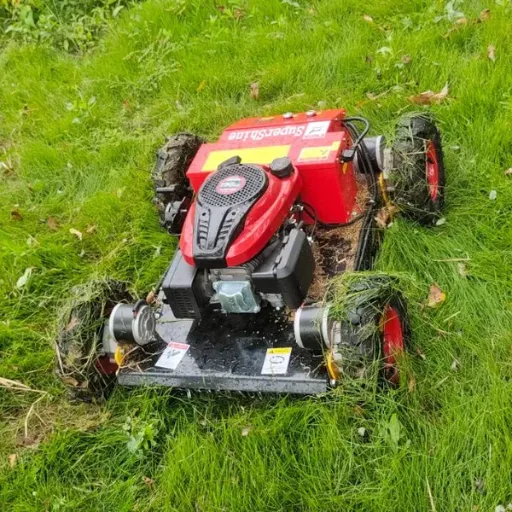
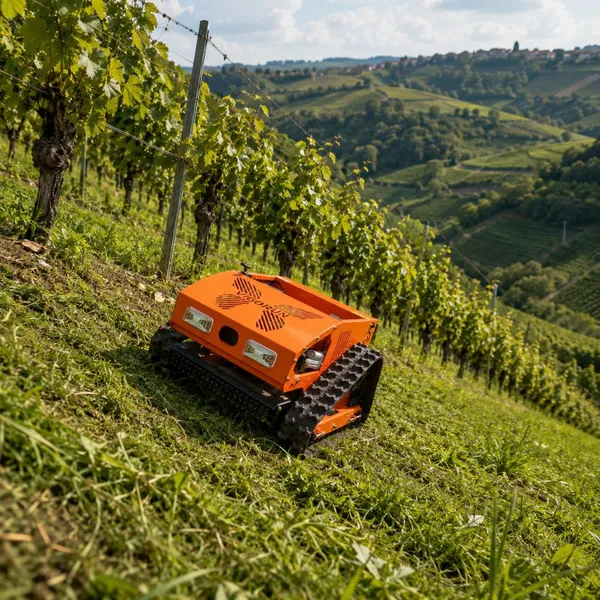
A remote controlled brush cutter is a tracked or wheeled machine with a flail or rotary cutting head, operated by wireless remote from a distance of up to 200 meters. It is built to clear grass, weeds, woody brush, and saplings on terrain that is too steep, too rough, or too hazardous for a human operator to walk.
The category sits above lawn mowers and below dedicated forestry mulchers in both power and cost. A commercial remote controlled brush cutter typically carries:
A flail head with hardened Y-blades or hammer blades for woody brush up to 25 millimeters thick
A tracked chassis with rubber tracks 180 millimeters wide or more, rated for slopes up to 45 degrees
A gasoline engine of 20 to 25 horsepower, with CE / EURO V / EPA certification
A 2.4 GHz industrial remote with hardware emergency stops and lost-signal failsafes
Ground clearance of 100 millimeters or more to ride over roots and rocks
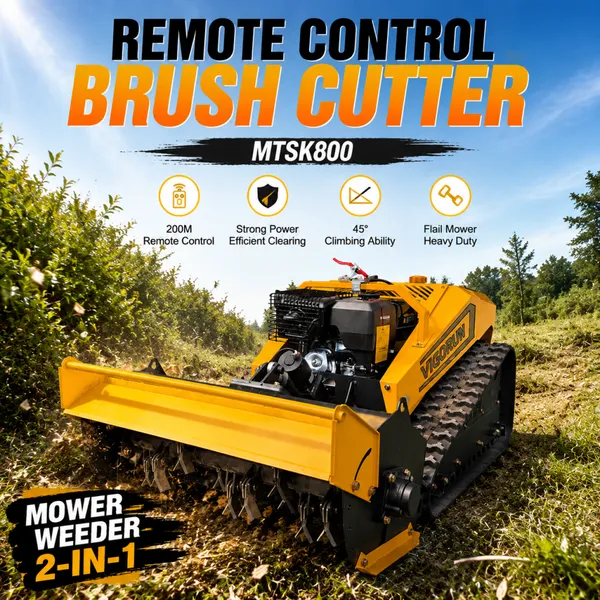
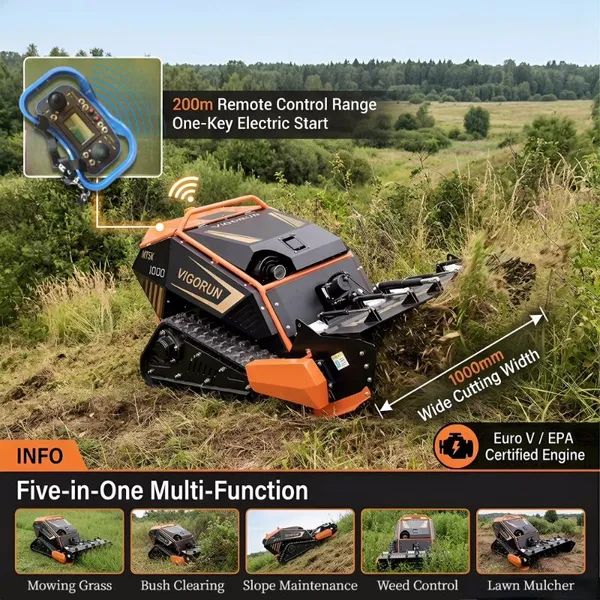
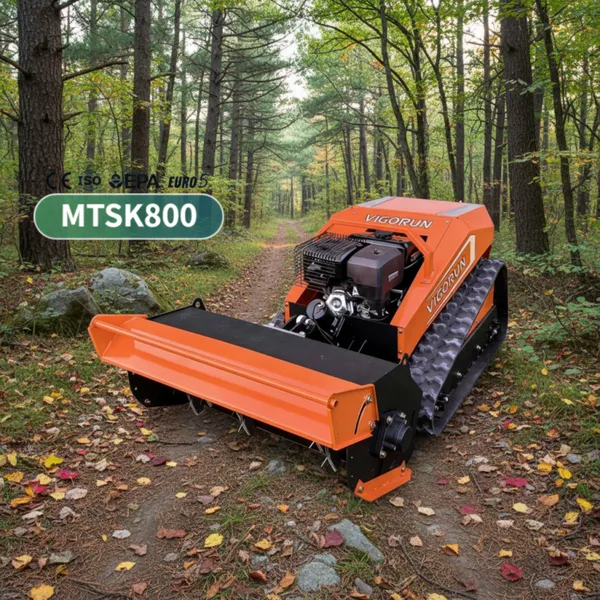
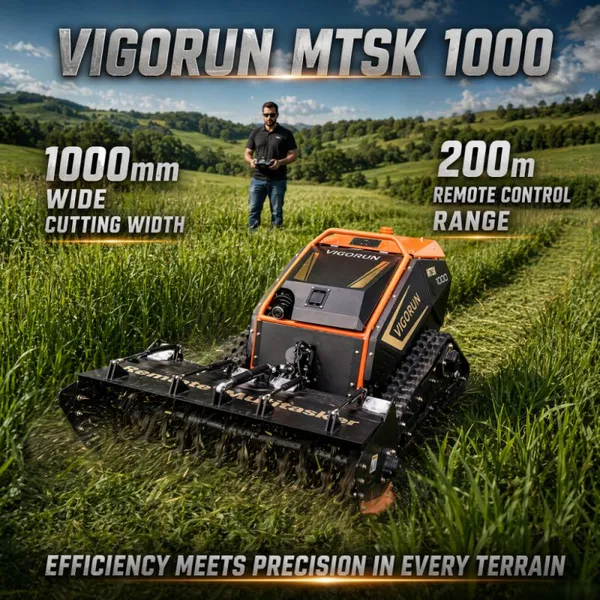
The Vigorun MTSK800 and MTSK1000 are examples of this category. Both use the same tracked remote chassis with interchangeable flail and rotary heads. The MTSK800 handles mid-class brush cutting with a patent-pending design filed in 2026. The MTSK1000 carries a wider, heavier flail head for dense regrowth and commercial corridor work.
Want to see the full flail mower range? View the MTSK800 remote controlled flail mower and the MTSK1000 heavy-duty flail mower side by side.
Why Hand-Held and Walk-Behind Brush Cutters Fall Short
Traditional brush cutters fall into two categories, and both have hard limits when the terrain gets serious.
Hand-Held String Trimmers and Brush Cutters
Best for: Light grass, fence lines, and detail work
Limitations: Operator fatigue limits run time to 20-30 minutes; kickback on woody stems causes acute injuries; slope work above 15 degrees is unsafe
Vegetation limit: Grass and soft weeds; woody brush stalls the head or snaps the line
Walk-Behind Brush Cutters
Best for: Flat or gently rolling ground with moderate brush
Limitations: The operator's arms become the suspension; every root hit transmits through the handle; slopes above 20 degrees risk loss of footing and machine roll-back
Vegetation limit: Brush up to 15 millimeters thick on favorable ground
The Bureau of Labor Statistics records that landscaping workers suffer injury rates well above the national average. Brush cutter kickback, operator falls on slopes, and repetitive-stress injuries from vibration account for the majority of serious cases.
On steep or uneven terrain, both categories force a choice: send an operator into a hazardous zone, or leave the brush uncut. A remote controlled brush cutter eliminates that choice. The operator stands on flat, stable ground. The machine handles the slope and the brush.
Remote Controlled Brush Cutters vs. Traditional Methods
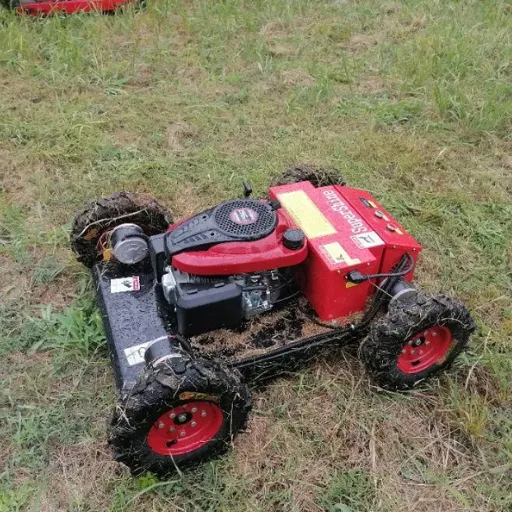
The central difference is distance. A remote operator stands up to 200 meters away from the cutting path, completely outside the kickback, rollover, and debris zones.
| Factor | Hand-Held Cutter | Walk-Behind Cutter | Remote Controlled Brush Cutter |
|---|---|---|---|
| Max slope | 10-15 degrees | 15-20 degrees | 45 degrees |
| Operator position | On the slope | On the slope | 200 m away |
| Crew size typical | 2-3 people | 1-2 people | 1 person |
| Woody brush capacity | Up to 10 mm | Up to 15 mm | Up to 25 mm |
| Daily production (steep brush) | 0.2-0.5 acre | 0.3-0.8 acre | 2-4 acres |
| Kickback / debris exposure | Direct | Direct | None |
| Capital cost | 300−300−800 | 3,000−3,000−8,000 | 15,000−15,000−35,000 |
The production numbers matter as much as the safety numbers. A single remote operator does not tire from vibration or lose footing on a slope. The machine does not need shade breaks. And the flail head mulches woody brush into fine residue that decomposes faster than the ragged stubs left by rotary blades.
For commercial contractors and municipal fleets, the labor savings typically recover the capital investment in 14 to 18 months. The safety benefit is immediate.
What the Best Remote Controlled Brush Cutter Must Deliver
Not every tracked machine with a cutting head can handle commercial brush. Five capabilities separate real equipment from marketing claims.
1. A True Flail Head, Not a Rotary Deck
A rotary deck spins two or three blades horizontally. It cuts grass cleanly but struggles with woody stems, which bend rather than sever under a rotary blade. A flail head uses dozens of small Y-blades or hammer blades mounted on a rotating drum. Each blade strikes the vegetation independently, mulching woody brush, saplings, and dense regrowth up to 25 millimeters thick. For brush cutting, the flail head is not optional. It is the defining feature.
2. Track Width and Tread for Rough Ground
Rubber tracks outperform wheels on slopes, wet ground, and uneven terrain. Look for track width of 180 millimeters or more, with aggressive lug tread that bites into loose soil and climbs over roots without slipping. Smooth or narrow tracks offer no advantage over wheels.
3. Engine Slope Rating and Certification
Standard lawn mower engines lose oil pressure on sustained slopes. A slope-rated engine maintains lubrication at angles up to 45 degrees. It must also carry CE certification for European markets, EPA compliance for North American resale, and EURO V documentation for regulated customs clearance. Vigorun ships the full documentation package with every container.
4. Remote Failsafes, Not Just Range
A 200-meter control range covers most commercial jobs. More important than range is the failsafe: if signal drops, the blade stops and the chassis halts automatically. Verify hardware emergency stops on both the transmitter and the chassis. A software shutdown is not enough on a slope.
5. Interchangeable Attachments for Year-Round Use
The best remote controlled brush cutter runs on a platform that accepts multiple work heads. The same tracked chassis that carries a flail head in summer can run a rotary deck for grass, a snow plow for winter corridors, or a sprayer for orchard work. One platform replaces multiple dedicated machines.
The Vigorun MultiTasker attachments range includes flail heads, hammer mulchers, snow plows, and brushes that fit the same remote-controlled chassis.
Key Applications for Remote Controlled Brush Cutters
Remote controlled brush cutters serve distinct job sites, each with its own combination of slope, vegetation density, and safety constraints.
Highway and Roadside Embankments
State transportation departments require vegetation control on embankments and medians that often exceed 25 degrees. Hand crews with string trimmers are slow and dangerous. Ride-on mowers cannot handle the slope. A remote controlled brush cutter clears the face while the operator stands on the shoulder or the access road, well clear of traffic.
Solar Farm Vegetation Management
Solar arrays sit on graded land with terraces and tight between-row spacing. Grass and brush beneath panels must be controlled to prevent shading and fire risk. A compact tracked remote mower with a flail head fits between panel rows and handles the terrace slopes without damaging racking or cables.
Pipeline and Utility Rights-of-Way
Pipeline corridors run for dozens of miles across variable terrain. Vegetation must be kept low enough to prevent root interference with pipe coating and to allow aerial inspection. Remote brush cutters handle slope transitions, wet corridors, and woody regrowth that would stall a rotary mower.
Orchard and Vineyard Terraces
Fruit and wine operations on hillside land use terraces that can exceed 25 degrees. Groundcover between rows must be controlled without damaging trunks or vines. A tracked remote brush cutter mulches the vegetation while the operator stands on the access path.
Dam and Levee Embankments
Dam faces are often graded between 25 and 35 degrees for structural stability. The grass and brush must be kept short for inspection access. Wet clay, erosion channels, and steep side slopes make these sites impossible for walk-behind equipment. A remote machine climbs the full face and lets the operator stand at the crest or toe.
In 2024, a municipal vegetation supervisor named Sarah Brennan took over maintenance of three dam faces and a 14-mile transmission corridor in Colorado. Her previous contractor used walk-behind brush cutters, sending two-person crews onto slopes above 25 degrees. The work took 18 days per cycle, and the crew had recorded three lost-time injuries in two years.
Sarah replaced the walk-behind fleet with two tracked remote brush cutters. The same cycle now takes seven days. One operator handles each machine from flat ground. Her workers' compensation exposure for slope work dropped to near zero, and the city expanded the contract to include two additional corridors.
Specs to Demand in a Remote Controlled Brush Cutter
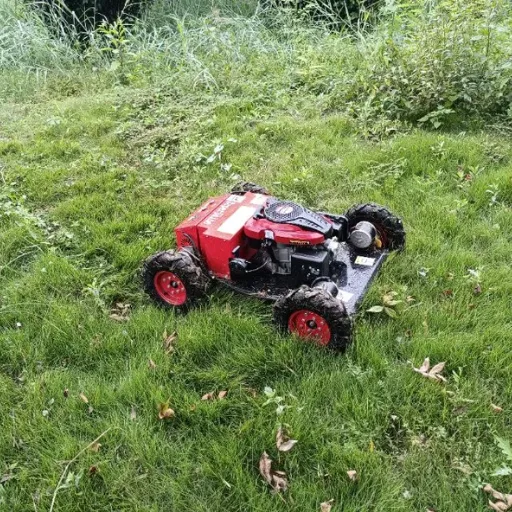
When you spec equipment for commercial brush clearing, five numbers separate capability from brochure claims.
1. Slope Rating With Proof
Demand a specific degree rating and ask how it was verified. The Vigorun MTSK800 and MTSK1000 are rated to 45 degrees on dry, firm ground, with testing conducted on outdoor test ramps at the Weifang facility. If the supplier cannot name the angle or describe the test protocol, the spec is marketing, not engineering.
2. Cutting Head Specifications
Ask for blade type, drum speed, and maximum brush diameter. Y-blades slice cleanly through grass and light brush. Hammer blades pulverize woody stems and dense regrowth. The MTSK1000 flail head handles material up to 25 millimeters thick --- the thickness of a sapling trunk.
3. Track Width and Ground Pressure
Wide tracks distribute weight and prevent sinking on soft ground. Narrow tracks or wheeled chassis concentrate weight on small contact patches and slip on wet grass. Ask for track dimensions and compare them across suppliers.
4. Engine Certification Package
For resale into regulated markets, demand CE, EPA, and EURO V documentation with the quote. Customs clearance failures are expensive and avoidable. Vigorun includes the full certification package with every shipment.
5. Parts Availability and Warranty
Brush cutting consumes blades, belts, and drive components faster than lawn mowing. You need a supplier who stocks wear parts and can ship by air freight when something breaks mid-season. Ask about warranty terms, parts availability, and after-sales support before comparing prices.
How to Choose a Remote Controlled Brush Cutter for Your Operation
Selecting the right machine means matching the cutting head and chassis to your worst job site, not your average one.
Step 1: Measure Your Vegetation
Walk your toughest sites and sample the brush. Use calipers or a ruler to measure stem diameter. If anything exceeds 15 millimeters, a rotary deck will struggle. That measurement alone tells you whether you need a flail head.
Step 2: Measure Your Steepest Slope
Use a clinometer app or slope survey to find the maximum grade. If anything exceeds 20 degrees, a walk-behind machine is a liability. Above 25 degrees, remote control is mandatory for safe commercial operation.
Step 3: Identify Surface Conditions
Dry turf, wet clay, loose soil, and rock outcroppings all affect traction. Tracks handle wet and loose surfaces better than wheels. If your sites are frequently damp, spec aggressive lug tread and a hydrostatic transmission.
Step 4: Verify Attachment Compatibility
If your operation cuts brush in summer and clears snow in winter, choose a platform with interchangeable attachments. Buying a dedicated machine for each season multiplies capital cost and parts inventory.
Step 5: Evaluate the Supplier
Remote controlled brush cutters take abuse. You need a manufacturer --- not a trading company --- who stocks tracks, sprockets, blades, and engine parts, and who can support your fleet across multiple seasons. Ask about warranty terms, parts availability, and after-sales support before comparing prices.
Vigorun builds every unit in a Weifang facility with a dedicated quality control team and 100 percent indoor and outdoor field testing before shipment. Distributors get OEM color, logo, and packaging options starting at 5 units, with whole-life parts support on every machine sold.
Conclusion
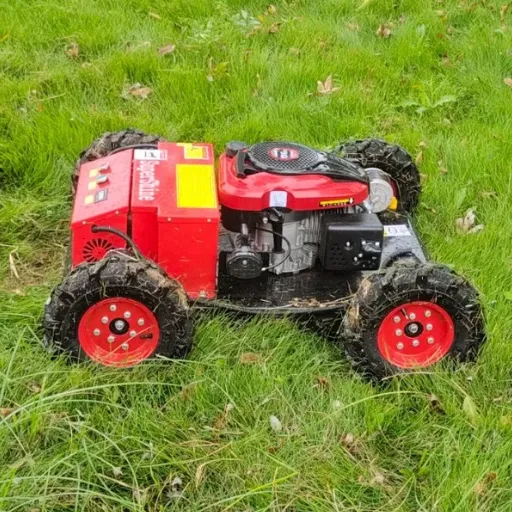
A remote controlled brush cutter is not a lawn mower with a bigger engine. It is a fundamentally different category of machine --- one that keeps the operator off the slope while a tracked, flail-equipped chassis handles vegetation that would stall or damage traditional equipment.
The crews and contractors who win municipal, utility, and solar contracts in 2026 will not be the ones with the most laborers. They will be the ones who refuse to send operators onto steep, rough terrain with hand-held or walk-behind machines that were never designed for the job.
A tracked remote brush cutter with a 200-meter wireless range, 45-degree slope rating, flail head rated to 25-millimeter brush, and CE / EPA-certified engine transforms slope vegetation management from a dangerous, labor-heavy operation into a one-person, production-efficient job. The safety benefit is immediate. The production benefit shows up in the first season. And the bidding advantage compounds across every contract that competitors cannot safely handle.
If your current brush cutting equipment cannot clear your steepest embankment or densest regrowth without putting an operator at risk, it is not saving money. It is limiting your business.
Ready to spec a remote controlled brush cutter that climbs 45-degree slopes and mulches woody brush while your operator stands safely on flat ground? Request a quote for FOB Shandong pricing, or ask about OEM branding for your distributor catalog. We will send spec sheets, container-loading diagrams, and certification documentation within 24 hours.
Recently Posted
-
Vigorun VTLM600 RC Lawn Mower Robot CE EPA Certified 600mm Cutting Width Mini Crawler Lawn Mower
August 11, 2026*High Reduction Worm Gear System for Superior Slope Performance: Conquer mountainsides and steep terrain up to 45° with our VTLM600 electric grass cutting machine, featuring an integrated brushless motor and gearbox delivering 73% high transmission efficiency. This high reduction worm gear system provides exceptional durability and longevity while ensuring reliable operation on challenging inclines.*Precision Servo Control foRead More -
Vigorun VTW550-90 4WD Petrol Remote Mower CE/EPA Certified for Farm & Orchard Vegetation Clearing
August 11, 2026*Hazard-Free Remote Operation for Wildlife Safety: Protect personnel from snakes, spiders, and insects with our VTW550 self-driving lawn mower, engineered for complete remote control operation. This Euro5/EPA-certified lawnmower eliminates staff exposure to hazardous wildlife environments while delivering professional results across residential and commercial landscapes.*High-Speed 6km/h Efficiency for Maximum Productivity: ARead More -
Vigorun VTC550-90 Robot Grass Mower CE/EPA Certified 550mm Cut Petrol Mower for All-Terrain Land Mai
August 11, 2026*Safe Remote Operation for Wildlife Hazard Environments: Protect personnel from snakes, spiders, and insects with our VTC550 grass cutter, designed for complete remote control operation. This electric lawn mower eliminates the need for staff to work in hazardous wildlife areas while delivering professional results across residential and commercial properties.*16x Faster Than Hand Cutting for Maximum Efficiency: Achieve exceptRead More -
Remote Control Tracked 800mm 60 Degree Max Slope Grass Lawn Cutting Mower
August 11, 2026*Maximum Slope for Military Base Maintenance: The Vigorun VTLM800 delivers verified 60-degree climbing for defense installations where perimeter security zones, training embankments, and ammunition buffer areas require vegetation control on terrain no ride-on equipment can safely access.*Remote Operation Eliminates Personnel Risk: Military bases feature steep berms, fortified perimeters, and screening slopes concealing hazardRead More

Contact Us
Recommended Products
-
 Vigorun Lawn Mower Robot, Industrial Dual 48V 1500W Motors MTSK1000 Mulcher Machine for Large LandscapesUS$ 7500.00 - 7700.00MOQ: 1 Set
 -
Farmland Orchards Battery Powered Mower Gasoline Golf Mower Robot Lawn Mower 3000m2 Vigorun Remote Control Grass MowerUS$ 2580 - 2700MOQ: 1 Unit
-
Vigorun MTSK800 Automatic Remote Control Grass Cutting Machine 48V 20Ah Battery Remote Flail MowerUS$ 2800 - 2900MOQ: 1 Set
-
Vigorun MTSK1000 Remote Control Mower 24hp Fail-Safe Slope Braking Remote Control Forest MulcherUS$ 8000 - 8200MOQ: 1 Set
-
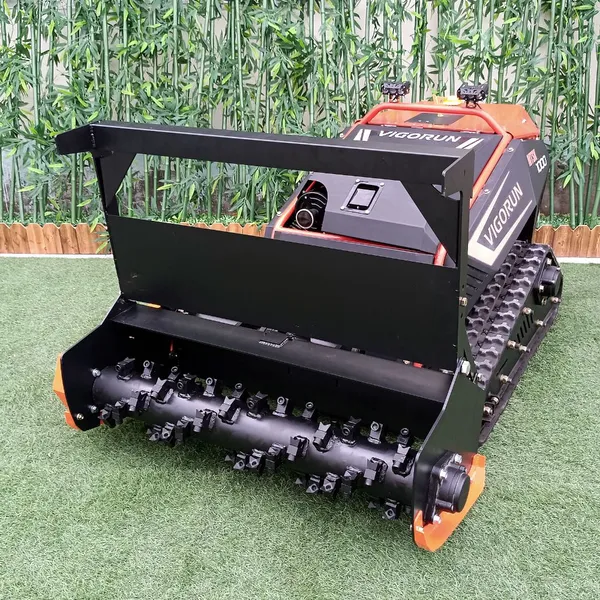
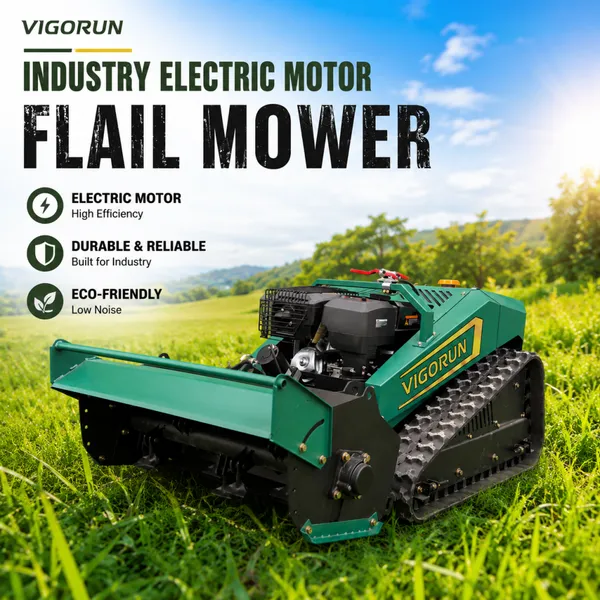
Industry Electric Motor Lawn Mower Flail Mower Atv Gasoline Hedge Trimmer Battery LawnmowerUS$ 2580 - 2900MOQ: 1 Unit
-
Vigorun Agricultural Tractor Sprayer Euro 5/EPA Electric Agricultural Sprayer 600l for VineyardsUS$ 2600 - 2700MOQ: 1 Set
-
Remote Control Tracked Hillside Mower 800mm Cutting Width 60 Degree Slope for Steep Terrain VegetationUS$ 2600 - 2700MOQ: 1 Set
-
Vigorun VTLM600 RC Lawn Mower Robot CE EPA Certified 45° Extreme Slope Mini Crawler Lawn MowerUS$ 1700 - 17900MOQ: 1 Set
-
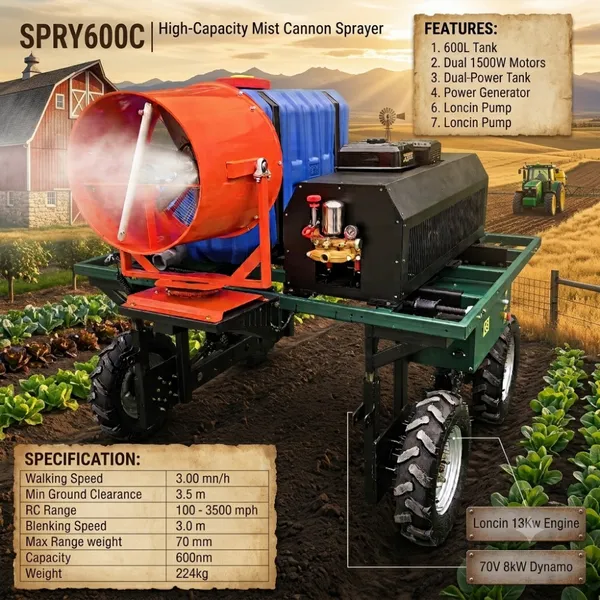
Remote Controlled High Efficiency Fog Cannon Spraying Machine 600L Tank for Agriculture and Dust ControlUS$ 2800 - 2900MOQ: 1 Set
-
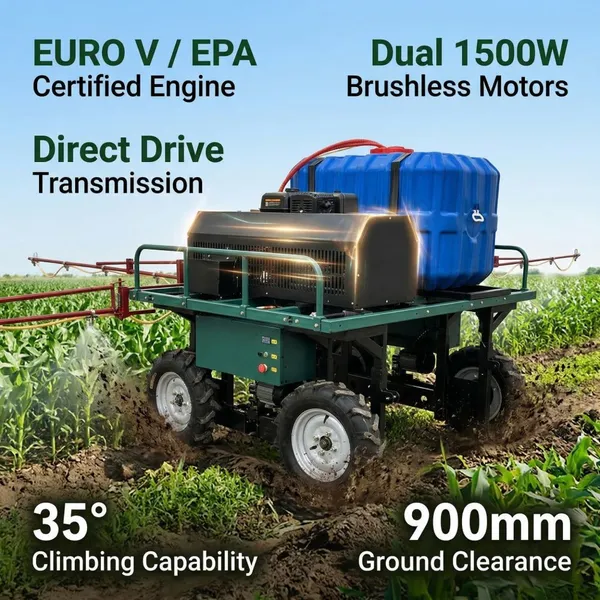
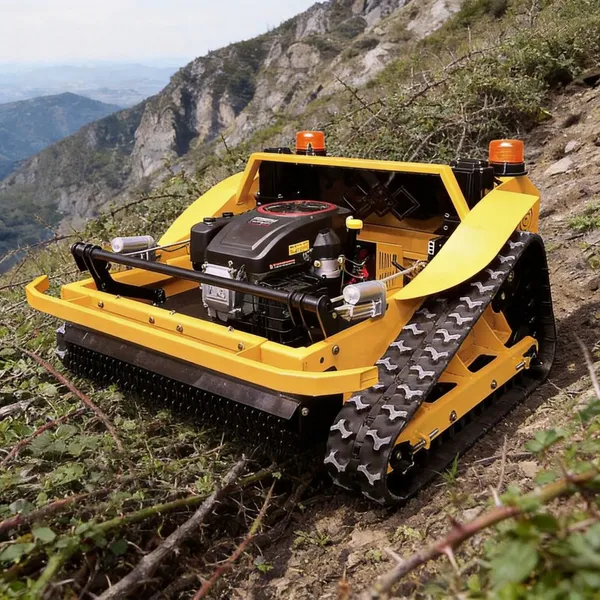
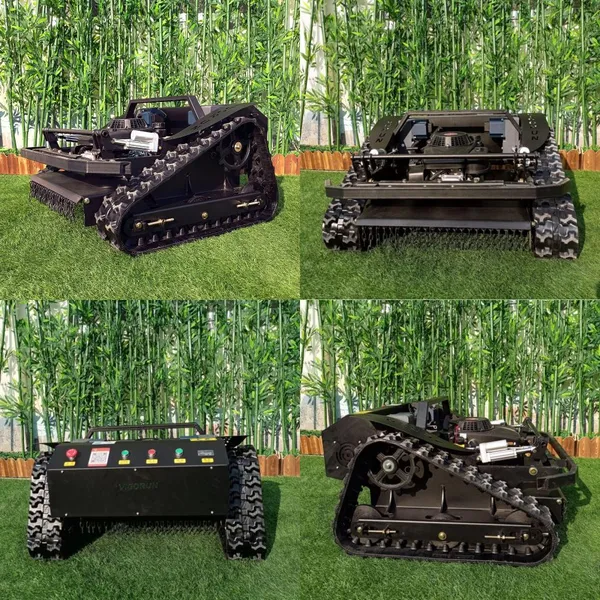
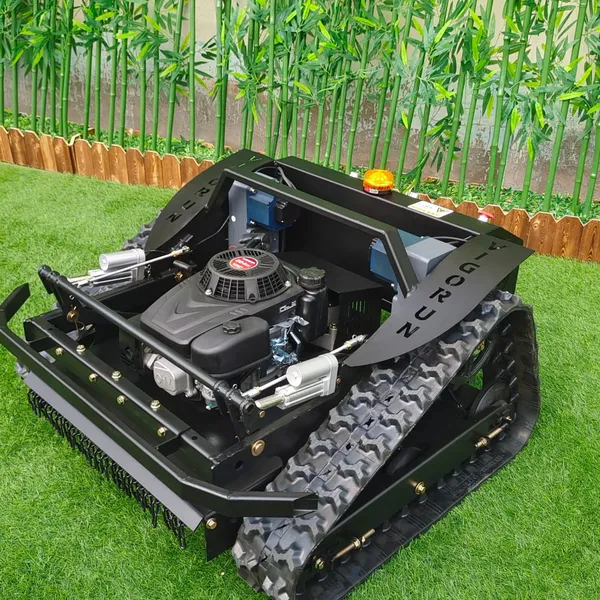
Vigorun Radio Control Mowing Euro 5/EPA Self-Propelled & Precise 6hp Remote Control Crawler MowerUS$ 1700 - 1790MOQ: 1 Set
-
Factory Manufacturer Vigorun MTSK1000 1000MM Commercial Branch Cutter Flail Mower rc Remote Petrol Lawnmower Mower Grass Cutter TractorUS$ 8000 - 8200MOQ: 1 Set
-
Vigorun VTW550 Remote Control Grass Cutter Tractor Robot Gas Lawn Mower Grass Cutter Small Electric Lawn Mower Vigorun Lawn MowerUS$ 1000 - 1250MOQ: 1 Set
-
Vigorun Tech Gasoline Remote Control Lawn Mower Self-Locking Slope Safety RC Mower Tiller for EmbankmentsUS$ 2800.00 - 2900.00MOQ: 1 Set
-
Mower Gasoline Grass Cutter Machine Remote Control 1000mm Cut 35 Degree Slope Flail Hammer for Overgrown LandUS$ 7500 - 7700MOQ: 1 Set
-
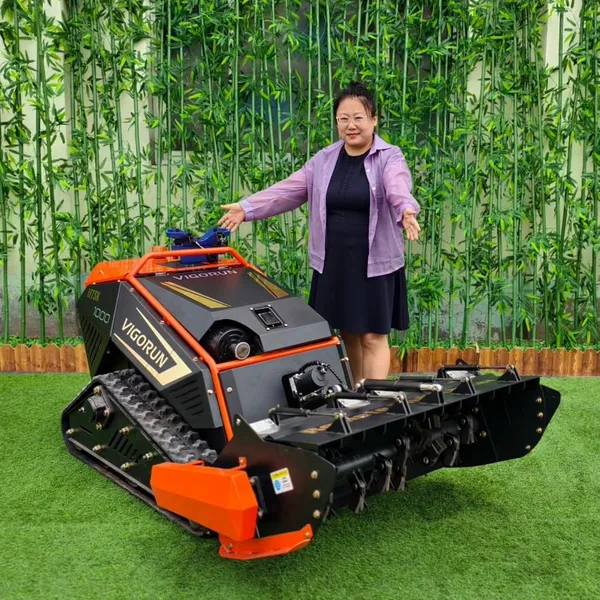
Vigorun VTLM800 Remote Control Electric Mower, Self-Locking Slope Safety Crawler Mower for Steep SlopesUS$ 2600.00 - 2700.00MOQ: 1 Set
-
Shrub and Brush Clearing MTSK800 MTSK1000 Flail Mower rc Remote Weeding Weeder MachineUS$ 2800 - 2900MOQ: 1 Set
-
RC Robot Lawn Mower Electric Remote Control Flail Grass Cutter Garden Cutting Machine MTSK1000US$ 8000 - 8200MOQ: 1 Set
-
Remote Manipulation Rubber Track Brush Cutter Industrial Flail Mower for Efficient Shrub ClearingUS$ 2000.00 - 2790.00MOQ: 1 Set
-
Vigorun MTSK1000 Rc Lawn Mower, Loncin 764CC Gasoline Engine Forestry Mulcher With Remote Control for ForestryUS$ 7500.00 - 7700.00MOQ: 1 Set
-
Vigorun VTC550 Zero Turn Electric Mower Quality Guaranteed Crawler Brush Cutter For Embankments & LeveesUS$ 1600 - 1690MOQ: 1 Set