
 Business License

Remote Control Lawn Mower: Safety, Specs & Slope Guide
In 2019, a municipal landscaping crew in Oregon watched their zero-turn slide backward down a 30° embankment. The operator walked away. The machine did not. That same embankment is now cleared weekly by a single operator standing 200 meters (656 feet) away with a handheld remote.
If you maintain slopes, riverbanks, orchards, or roadside verges, you have probably faced the same choice. Send a ride-on machine onto terrain it was never designed for, or pay a four-person hand crew for a job that takes all morning. A remote control lawn mower removes that choice entirely. The operator stays on level ground while the machine handles the grade.
In this guide, you will learn exactly what a remote control lawn mower is, how the wireless control system works, and which specifications matter when you are comparing models for commercial, municipal, or agricultural use. We will also explain why a tracked chassis outperforms wheeled alternatives on wet grass and steep slopes, and how factory-direct manufacturing affects both unit cost and long-term parts availability.
At Vigorun Tech, we design and build every chassis in our Weifang, Shandong facility. Our machines are already deployed across approximately 140 countries, and every unit clears 100% indoor and outdoor field testing before it leaves the line.
What Is a Remote Control Lawn Mower?
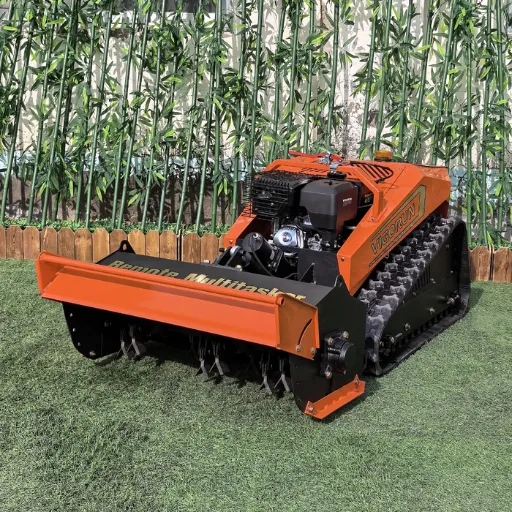
A remote control lawn mower is a commercial-grade cutting machine operated by wireless transmitter rather than by a seated driver. The operator holds a handheld radio remote and controls throttle, steering, blade engagement, and travel direction from a safe distance, typically up to 200 meters (656 feet) in line-of-sight conditions.
Unlike robot mowers, which follow buried boundary wires and handle small, flat lawns autonomously, a remote-controlled mower is built for rough terrain, steep slopes, and heavy vegetation. It is not a consumer toy. The chassis is usually tracked, the engine is gasoline-powered and commercially rated, and the cutting deck or flail head is sized for professional grounds maintenance.
The key distinction is operator location. On a ride-on mower, the driver sits on the machine. On a remote control lawn mower, the operator stands safely away from rollover zones, flying debris, and exhaust. For municipalities, landscaping contractors, and orchard owners, that distance is the difference between a routine job and a workers compensation claim.
How Does a Remote Control Lawn Mower Work?
The control system is straightforward but engineered for industrial reliability. A 2.4 GHz industrial radio transmitter sends signals to a receiver mounted on the mower chassis. The receiver relays commands to the hydrostatic drive system, which controls forward, reverse, left, and right travel. A separate channel engages and disengages the cutting blade or flail head.
Safety features are hardwired, not software-dependent. Every Vigorun remote control lawn mower includes:
Emergency stop (E-stop) on both the transmitter and the chassis
Lost-signal failsafe: blade and motion stop automatically if the radio link drops
Low-battery indicator on the transmitter to prevent mid-operation shutdown
Anti-rollover geometry: a low center-of-gravity chassis designed for side-slope stability
The gasoline engine powers both the tracks and the cutting attachment through a mechanical or hydrostatic transmission. Forward and reverse blade engagement lets the operator mow uphill or downhill on demand, which is critical when a slope is too steep to turn around safely. Fuel tank orientation is designed for sustained operation on side slopes without starvation or spillage.
Safety Note: Always maintain line-of-sight between the operator and the machine. Obstacles, terrain folds, or vegetation can block the 2.4 GHz signal. Walk the perimeter once before mowing, and position yourself uphill of the cut path whenever possible.
Want to see how the control system works in practice? Browse our full remote control lawn mower lineup to compare transmitter ranges, engine specs, and track configurations.
Slope Safety: Why Remote Control Beats Ride-On
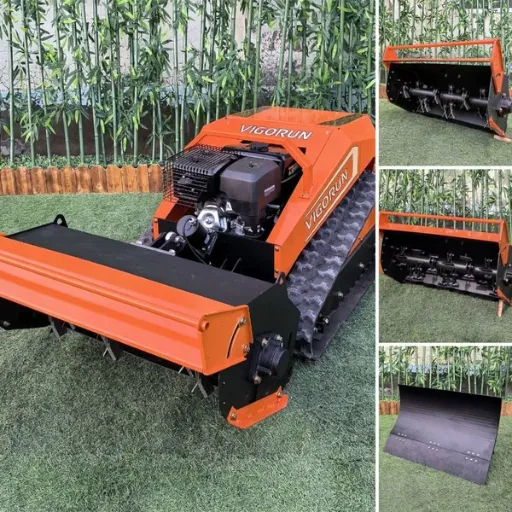
According to the U.S. Occupational Safety and Health Administration (OSHA), rollover incidents are among the leading causes of serious injury and death in the landscaping and grounds-care industry. Most ride-on mowers have a maximum safe slope rating of approximately 15°. On grades steeper than that, the center of gravity shifts, braking effectiveness drops, and a backward slide becomes a real possibility.
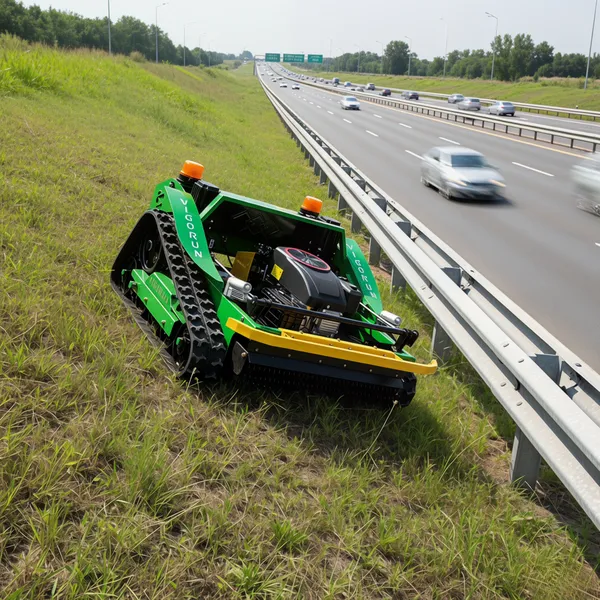
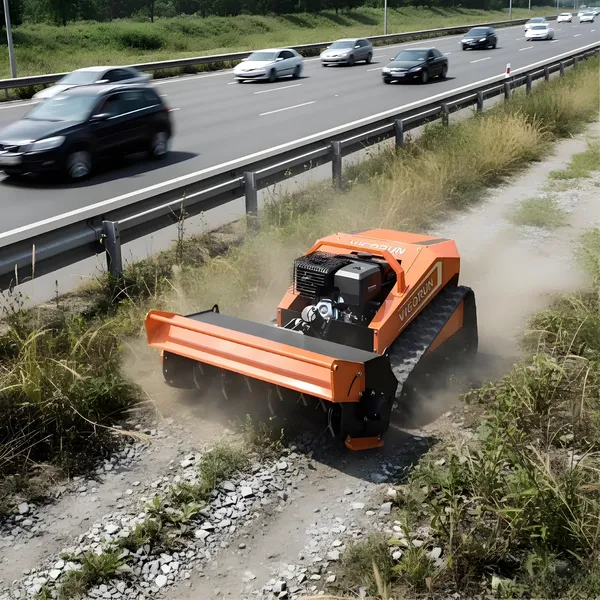
A commercial remote control lawn mower changes the risk equation completely. The operator is never on the slope. There is no rollover risk because there is no operator to roll. There is no projectile-debris hazard to the driver because the driver is 200 meters away. Heat exhaustion, which hospitalizes dozens of grounds workers every summer, is eliminated because the operator works from shade or shelter.
In practical terms, this means one person can clear terrain that previously required a four-person hand crew or specialized ride-on equipment with outriggers. The labor cost drops. The job gets done faster. And the safety record improves, which matters for municipal contract renewals and commercial insurance premiums.
When Javier Ortega took over maintenance at his family's vineyard in Colchagua, Chile, he inherited a 28° hillside between rows of Cabernet Sauvignon. His father's crew had always cleared it with string trimmers, a job that took three workers most of a day and left at least one person with back strain every season. In March 2024, Javier replaced the hand crew with a tracked remote mower. One operator now finishes the block in under two hours, standing at the top of the row with the transmitter. The workers handle trellising and pruning instead, and the vineyard has not had a slope-related injury since.
Tracked Chassis vs. Wheeled RC Mowers
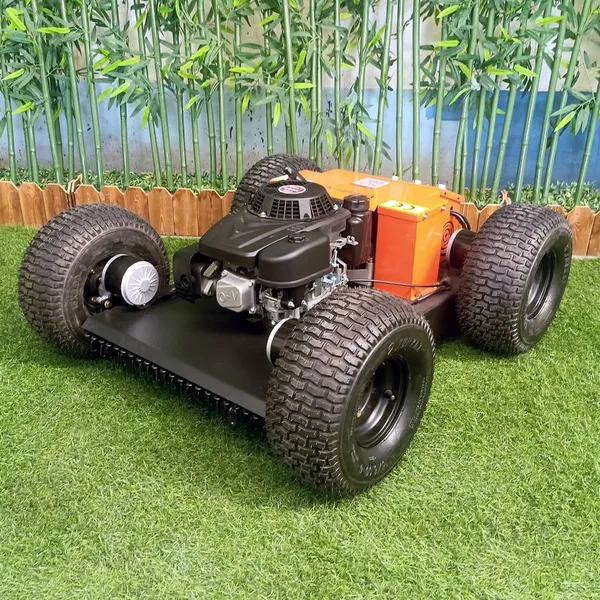
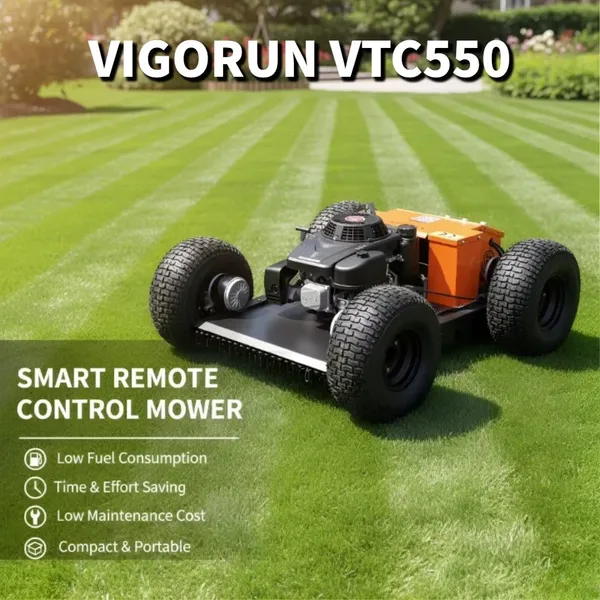
Not every remote control lawn mower is built for steep terrain. Wheeled RC mowers exist, and they work well on flat or gently rolling ground. But once the grade exceeds 20° or the surface is wet, wheels lose traction and the machine slides sideways or slips backward.
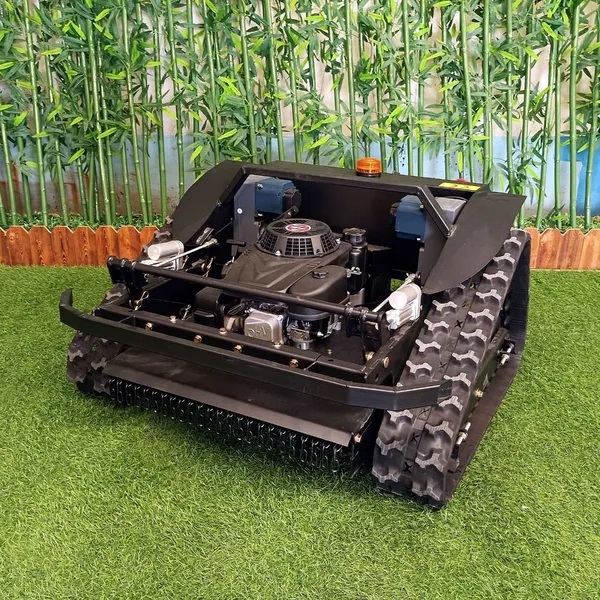
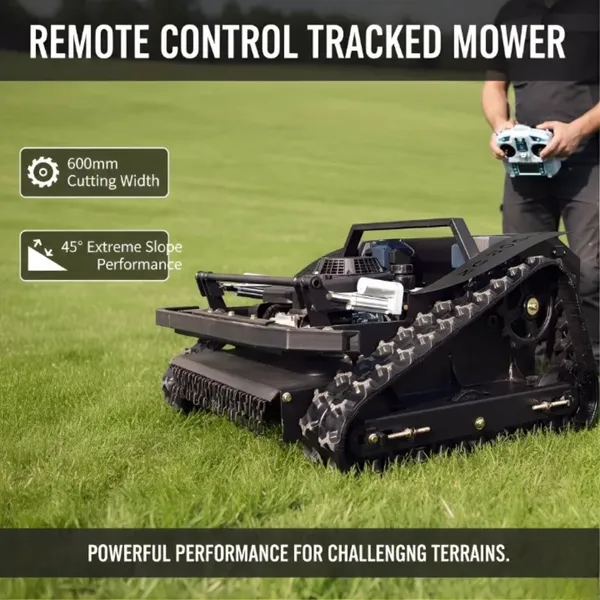
Rubber tracks solve that problem. A tracked chassis distributes weight across a longer contact patch, which increases grip on grass, mud, loose soil, and damp clay. The low center of gravity common to tracked designs also improves stability on side slopes. At Vigorun, our slope-rated remote mowers use a rubber-track undercarriage rated to climb up to 45° on dry, firm grass. We recommend staying under 35° on wet or loose terrain.
Tracks also reduce ground pressure, which matters on soft turf, levee embankments, and irrigated orchards where deep ruts damage the soil structure. For retention ponds, riverbanks, and solar farm verges, a tracked remote control lawn mower is usually the only machine that can both access the grade and finish the cut without leaving compaction damage.
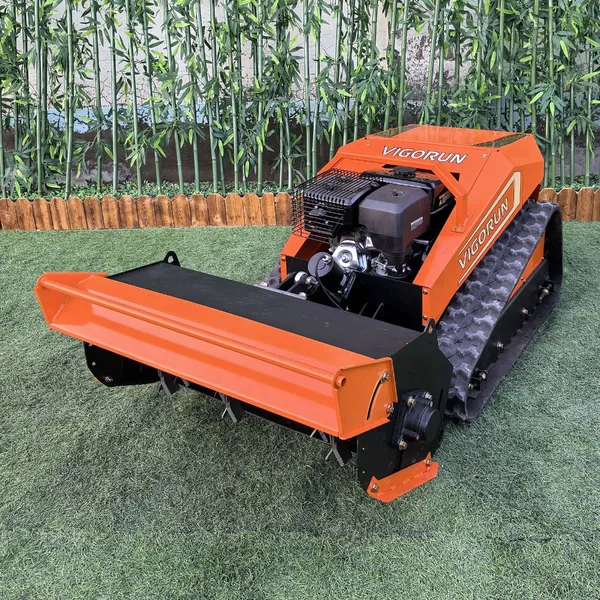
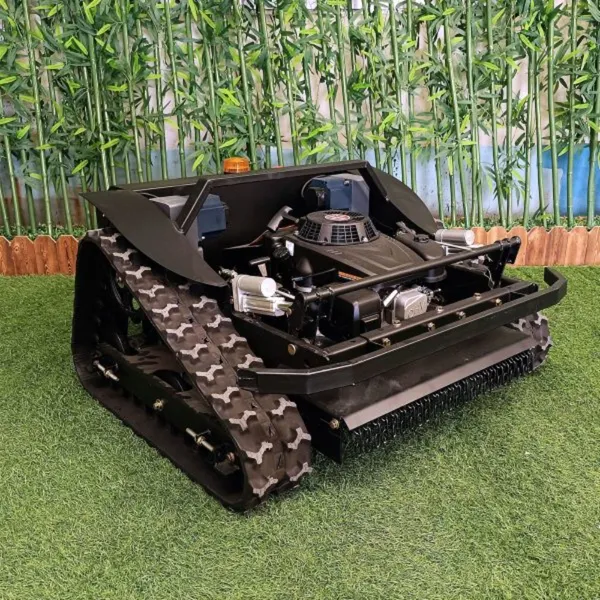
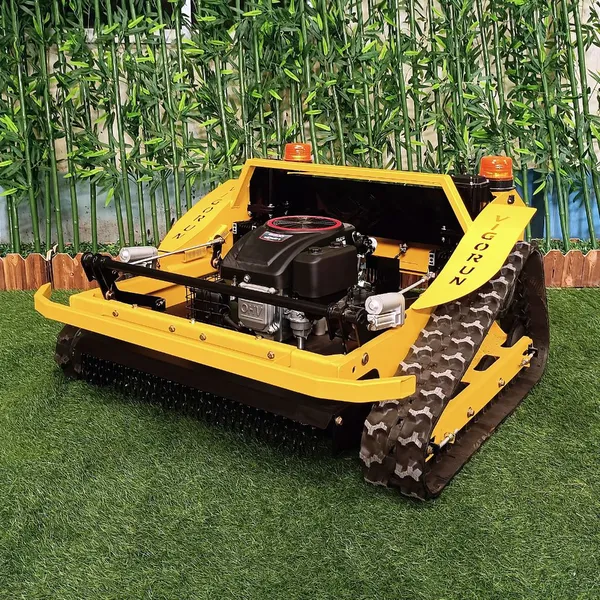
The Vigorun VTLM800 is our rubber-track slope mower, purpose-built for exactly those conditions. It pairs a 22-hp EURO V / EPA-compliant gasoline engine with a 200-meter wireless remote and a hydrostatic transmission for precise speed control across the full slope range.
Who Should Buy a Remote Control Lawn Mower?
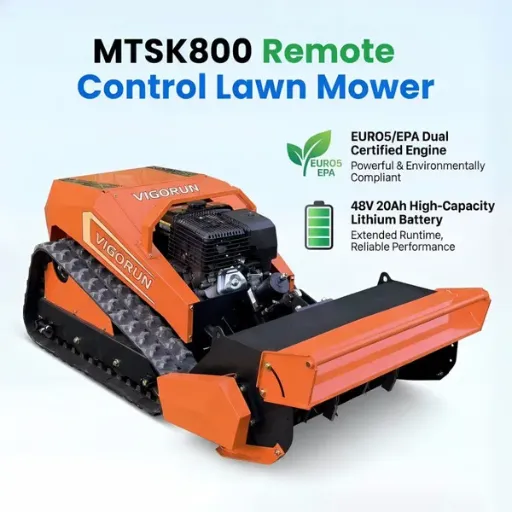
Remote-controlled mowers are not for every lawn. They are professional machines designed for terrain or vegetation that makes conventional mowing dangerous, slow, or expensive. The buyers who get the strongest return fall into five main groups.
Municipal and roadside maintenance teams use remote mowers to clear highway embankments, median strips, retention ponds, and levees. A single operator replaces a four-person hand crew, and the municipality reduces its exposure to workers compensation claims and OSHA violations.
Commercial landscaping and grounds-care contractors bid steep-slope and solar-farm contracts they previously declined. A tracked remote mower also adds a premium service line that commands higher hourly billing, because few competitors own the equipment to handle 35°+ grades safely.
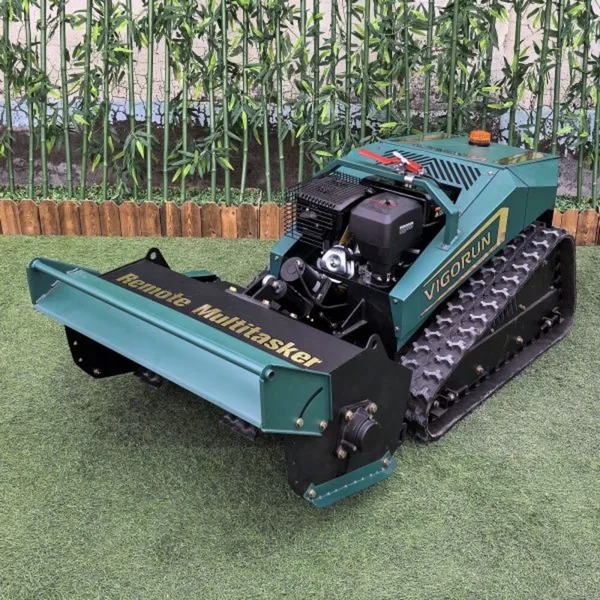
Orchard and vineyard owners mow between rows without damaging trunks or compacting root zones. On terraced hillsides, the machine trims weeds while the operator walks the terrace above. Some owners also use a MultiTasker platform with a transport bed to haul fruit, tools, and materials on the same chassis.
Estate, villa, and sports-field owners maintain large private lawns with slope features, football pitches, polo grounds, and golf rough. The machine operates quietly enough for residential use and eliminates the need for a crew on the property.
International distributors and OEM partners source remote control lawn mowers from the factory, brand them with their own logo and color scheme, and resell into their home markets. The demand for slope-safe mowing equipment is growing across Europe, North America, Oceania, and South America, and distributor margins on commercial-grade machines are typically stronger than on consumer lawn tractors.
Ready to test the difference? Explore the Vigorun VTLM800 rubber track slope mower and see how a 45° slope rating fits your application.
What to Look for When Buying a Remote-Controlled Mower
Buying a remote control lawn mower for commercial or municipal use means looking past marketing claims at the specifications that determine performance, compliance, and total cost of ownership. Here are the numbers that matter.
Slope rating: Ask for the maximum slope angle in degrees, not vague phrases like "steep grade." A true commercial slope mower should be rated to at least 35°, with 45° on dry grass as the upper limit. Request proof, such as factory test-ramp footage or third-party assessment.
Engine and emissions: Gasoline engines should carry EURO V and EPA certification for resale into regulated markets. If you are a distributor in California or any CARB-aligned state, EPA compliance is not optional. The documentation package should travel with every container.
Control range: 200 meters (656 feet) is the industry benchmark for line-of-sight operation. Shorter ranges force the operator to stay close to the slope, which partially defeats the safety advantage.
Cutting width and height adjustment: Match the deck width to your application. Narrow decks fit between orchard rows. Wider decks cover open ground faster. Adjustable cutting height lets you adapt to grass condition and seasonal growth.
Attachment compatibility: Some chassis support only rotary decks. Others accept flail heads, sprayers, and transport beds. If you need multi-season utility, spec an attachment-ready platform from the start.
Warranty and parts support: A 1-year manufacturer warranty is standard for commercial equipment. Whole-life parts support is not. Confirm that the factory stocks replacement tracks, blades, drivetrain components, and engine parts, and that they can ship internationally within a reasonable window.
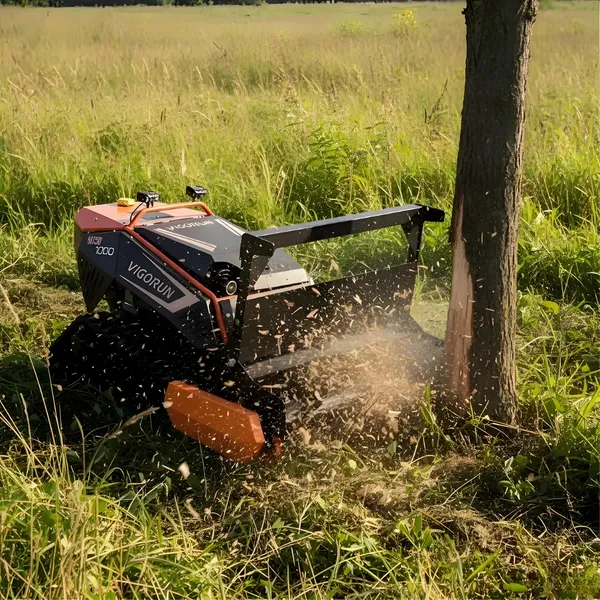
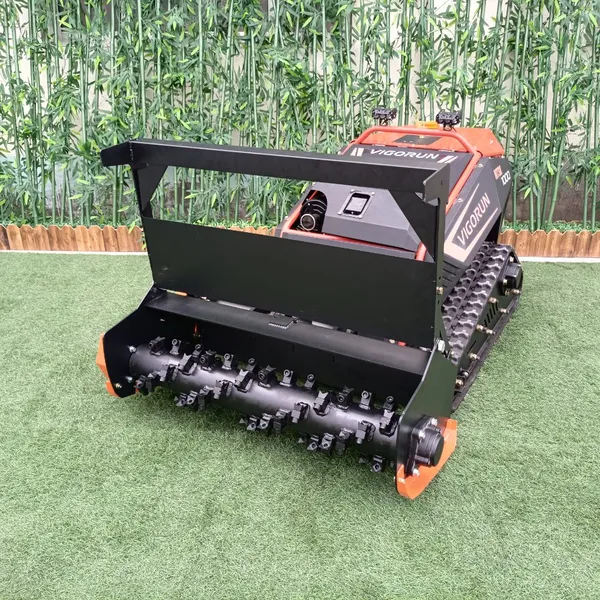
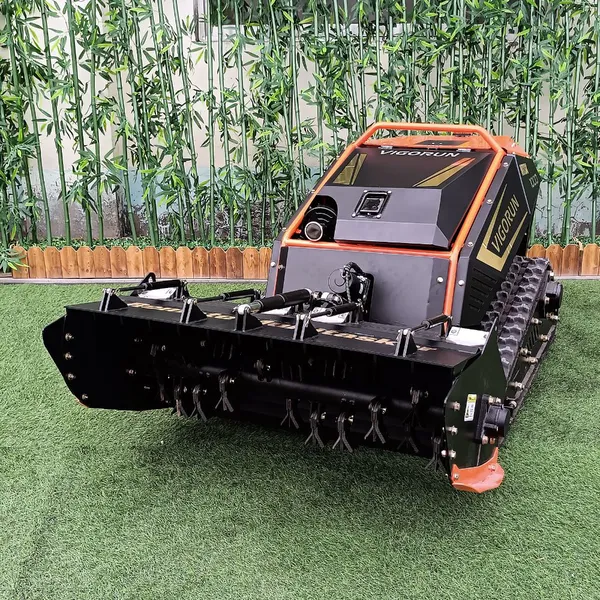
The Vigorun MTSK800 is our patent-pending remote-controlled flail mower, built for heavy brush, saplings, and overgrown vegetation on slopes up to 45°. It ships with a full CE / EURO / EPA documentation package and clears the same 100% indoor and outdoor field testing as every unit we build.
Factory-Direct Manufacturing and OEM Options
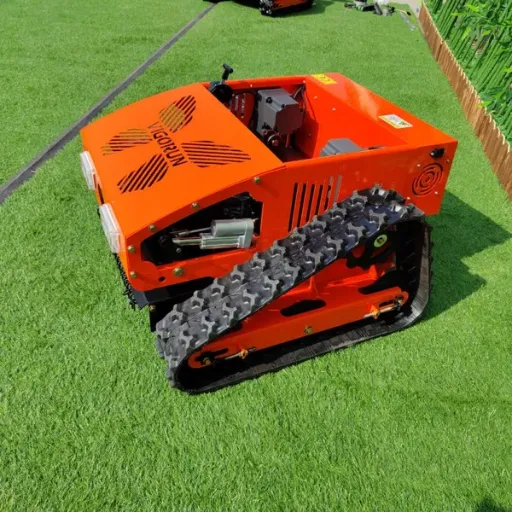
Most buyers do not realize how much of the remote mower market is resold by trading companies rather than built by manufacturers. A trading company buys from an anonymous factory, adds markup, and ships the unit. When a part fails 18 months later, the trading company has moved on to a different product line.
Vigorun Tech is the manufacturer. Our facility in Weifang, Shandong Province sits in the same machinery corridor as Weichai Power and Caterpillar SEM. We produce approximately 200 lawn mowers per month on our own line, with in-house R&D, a dedicated QC department, and 15+ years of shop-floor experience.
Every remote control lawn mower clears indoor bench testing and outdoor field testing before it ships. Engine run-in, hydraulic pressure checks, electrical continuity tests, and live-slope runs on our own test ramps are mandatory, not spot-checked. The result is a machine that arrives ready to run on day one.
For distributors, we offer OEM customization as a standard service. Custom color, logo decals, packaging, and branded documentation are available from MOQ 5 units. You build your brand on a chassis already proven in 140+ countries, backed by a 1-year warranty and lifetime parts support.
If you want to see the production process before committing, learn about our factory and QC process or explore OEM customization options for your market.
Conclusion
A remote control lawn mower is not a luxury upgrade for a flat suburban lawn. It is a commercial tool that keeps operators off dangerous slopes, replaces multi-person hand crews with a single worker, and opens terrain that conventional ride-on machines cannot safely attempt.
The key takeaways are simple:
Distance equals safety. A 200-meter wireless remote removes the operator from rollover zones, flying debris, and heat exposure.
Tracks beat wheels on slopes. A rubber-track chassis rated to 45° maintains traction where wheeled machines slide.
Certifications matter. CE, EURO V, and EPA compliance let distributors clear customs and resell into regulated markets without surprises.
Factory-direct matters more. Buying from the actual manufacturer means stable supply, proven QC, and parts support that outlasts the warranty.
Whether you are a municipality clearing levees, a contractor bidding solar-farm work, an orchard owner trimming between rows, or a distributor building your own brand, the right remote-controlled mower changes how you approach steep-ground maintenance.
Request a Dealer Quote → Get FOB Shandong pricing, container-loading diagrams, and OEM terms within 24 hours. If you are an end-user, ask about single-unit pricing and spec sheets for the VTLM800 or MTSK800.
Recently Posted
-
Commercial Remote Control Lawn Mower: What Separates a Toy From a Work Machine
June 3, 2026The difference between a remote control lawn mower for commercial use and a hobby-grade unit is not branding. It is physics, metal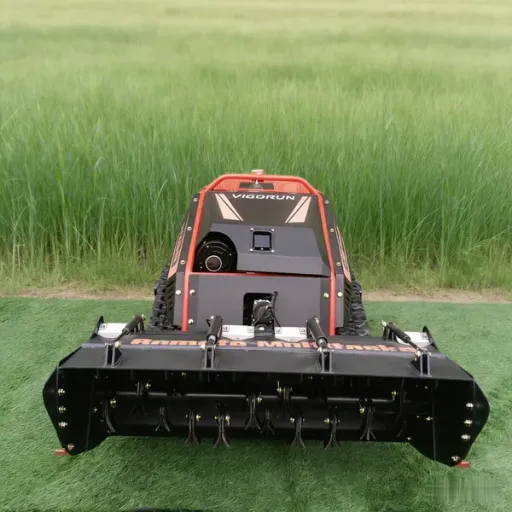 Read More
 -
Remote Control Lawn Mower Price: What You'll Actually Pay in 2026
June 3, 2026The price gap between the cheapest and most expensive remote control lawn mower on the market is wider than most buyers expect. On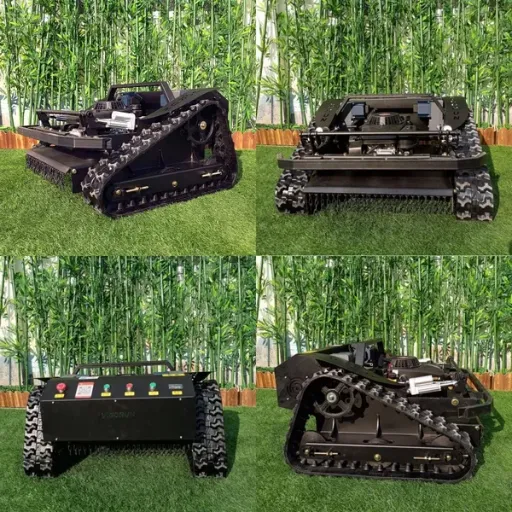 Read More
 -
Remote Control Lawn Mower for Sale: Factory-Direct Pricing and Specs
June 3, 2026In March 2025, a landscaping contractor in Florida searched "remote control lawn mower for sale" and found three promisi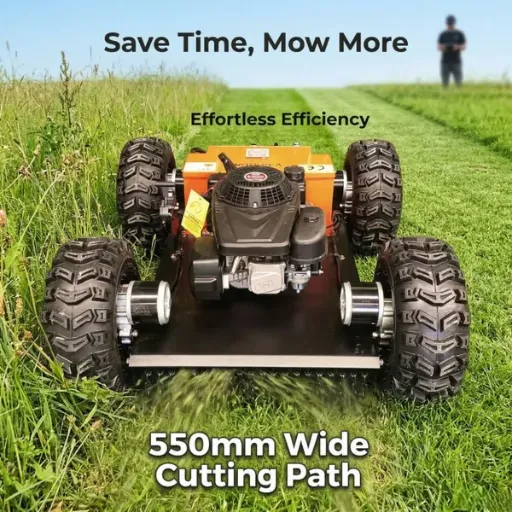 Read More
 -
Best Remote Control Lawn Mower: 2026 Buyer's Guide
June 3, 2026In 2023, a commercial landscaping contractor in Texas bought what he thought was the best remote control lawn mower on the market.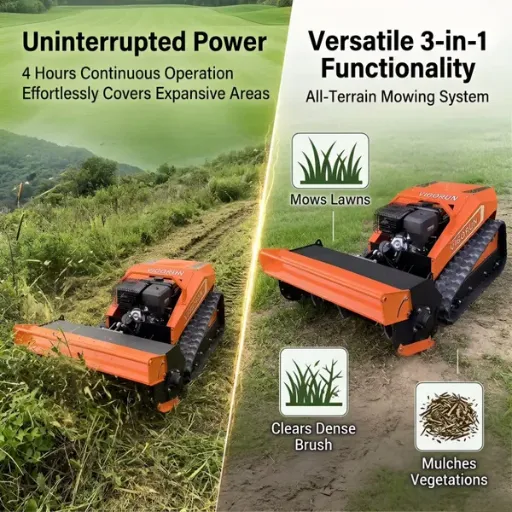 Read More

Contact Us
Recommended Products
-
 Vigorun Remote Control Electric Mower Self-Locking Slope Safety Crawler Mower for Lawn & GardenUS$ 2600 - 2700MOQ: 1 Set
 -
Vigorun RC Mower Remote Control Multi-Function Tool Carrier Remote-Controlled Electric MulcherUS$ 2800 - 2900MOQ: 1 Set
-
Vigorun Lawn Mowers Multi-Function Tool Carrier 1000mm Remote Control Forest Mulcher Flail MowerUS$ 8000 - 8200MOQ: 1 Set
-
Vigorun SPRY600 Tractor Sprayer Industrial 4-Stroke Agricultural Sprayers 600l for Soybean FieldsUS$ 2600 - 2700MOQ: 1 Set
-
Vigorun Grass Cutting Machine High-Speed (6 Km/h) Wheeled Lawn Mower for Tea & Coffee PlantationsUS$ 1000 - 1100MOQ: 1 Set
-
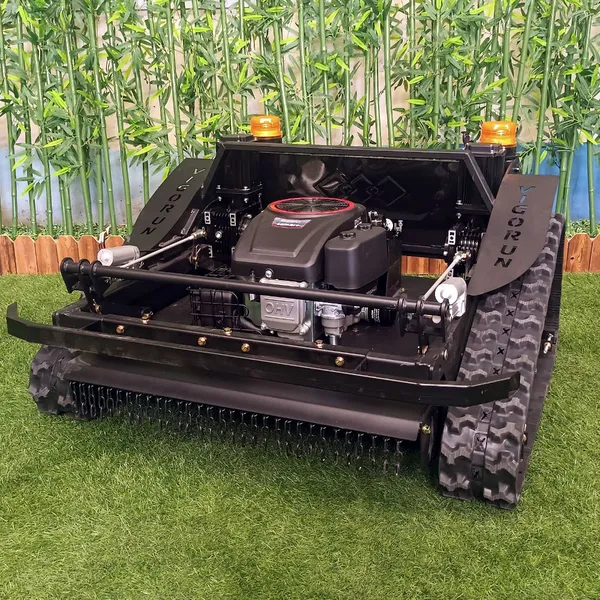
Vigorun Robot Brush Mower Euro 5/EPA Self-Locking Slope Safety Remote Control Track Lawn MowerUS$ 1700 - 17900MOQ: 1 Set
-
Vigorun Controlled Lawn Mower Anti-Rollback Security Lawn Mower Crawler for Slopes & HillsidesUS$ 2600 - 2700MOQ: 1 Set
-
Vigorun Robot Weed Cutter Quick-Change Attachment System Remote Controlled Motorcycle MulcherUS$ 2800 - 2900MOQ: 1 Set
-
Vigorun Remote Control Lawn Mower Quick-Change Attachment System Robot Tracked Forestry MulcherUS$ 8000 - 8200MOQ: 1 Set
-
Vigorun SPRY600 Boom Sprayer Electric Start Electric Sprayer Agricultural 600l for Cotton FieldsUS$ 2600 - 2700MOQ: 1 Set
-
Vigorun Brush Mower Euro 5/EPA Hazard-Free Operation Hightop Lawn Mower for Orchards & VineyardsUS$ 1000 - 1100MOQ: 1 Set
-
Vigorun Brush Cutter Robot High Transmission Efficiency 73% Crawler Lawn Mower for Steep SlopesUS$ 1700 - 17900MOQ: 1 Set
-
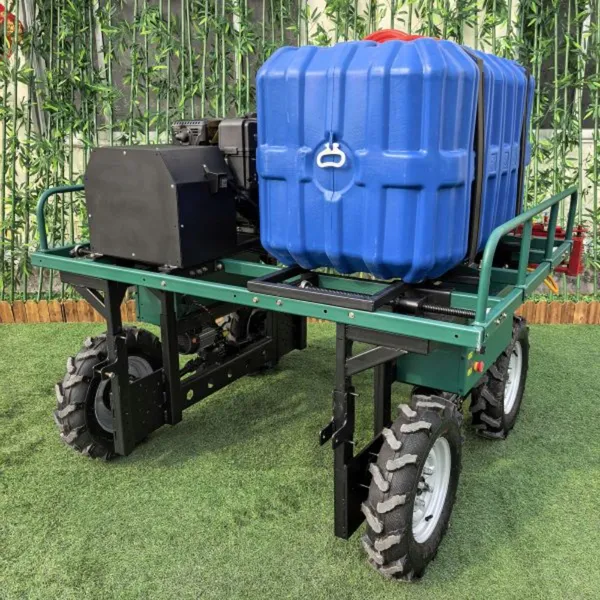
Vigorun Tractor Sprayer Agriculture Euro 5/EPA Agricultural Sprayers Self Starter for Wheat FieldsUS$ 2600 - 2700MOQ: 1 Set
-
Vigorun Grass Cutter Machine 16x Manual Efficiency Small Remote Control Lawn Mower for NurseriesUS$ 1000 - 1100MOQ: 1 Set
-
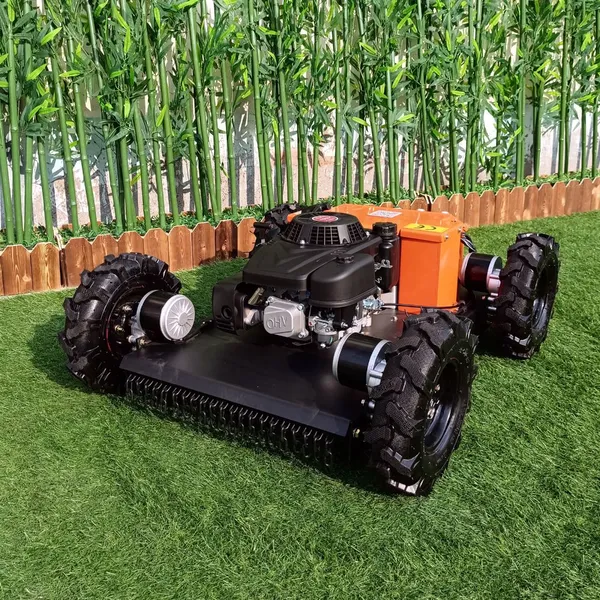
Vigorun RC Brush Cutter Euro 5/EPA Low Energy Consumption 6hp Crawler Remote Control Lawn MowerUS$ 1700 - 17900MOQ: 1 Set

-
Vigorun VTLM800 RC Mower Euro 5/EPA Remote Hazard Avoidance Robot Crawler Mower for Steep SlopesUS$ 2600 - 2700MOQ: 1 Set
-
Vigorun MTSK800 Automatic Grass Cutter Robot Euro 5/EPA User-Friendly Remote Control Mulcher RobotUS$ 2800 - 2900MOQ: 1 Set
-
Vigorun Lawn Mower Robot With Flail Mower/Hammer Flail/Forest Mulcher/Snow Blade Tracked MulcherUS$ 8000 - 8200MOQ: 1 Set
-
Tractor Sprayer, CE EPA Approved Gasoline Engine Gasoline Fst Power Spray Agriculture for Soybean Fields Vigorun SPRY600US$ 2600.00 - 2700.00MOQ: 1 Set
-
Vigorun SPRY600 Boom Sprayer, Remote Control Distance 200M Gasoline Engine Type Spraying Machine for Cotton FieldsUS$ 2600.00 - 2700.00MOQ: 1 Set