
 Business License

What Is a Flail Mower? A Complete Guide for Slope Maintenance and Brush Clearance
Javier watched his crew's rotary mower throw a 25 mm rock through a roadside sign last spring. The blade had hit a hidden stone in the tall grass, and the resulting projectile cracked the plexiglass clean through. That afternoon, he started asking a different question. Not "which mower is cheapest?" but "what is a flail mower, and would it have prevented that?"
If you maintain roadsides, orchards, riverbanks, or any terrain where grass gives way to brush, you've probably faced the same choice. A flail mower is a cutting machine that uses hinged metal blades, called flails, mounted on a rotating drum to pulverize vegetation rather than slice it. The flails pivot outward by centrifugal force, strike the material, and fold back when they hit something solid. The result is a cleaner cut, less debris throw, and the ability to handle woody growth that would wreck a rotary deck.
This guide explains exactly how a flail mower works, when it beats a rotary mower, and why commercial operators on slopes are switching to remote-controlled flail mowers built on tracked chassis. By the end, you'll know whether a flail head belongs on your next machine, and what specs to demand when you buy one.
What Is a Flail Mower?
A flail mower is a vegetation-clearing machine that uses multiple small blades, or flails, attached by hinges to a horizontal drum. As the drum spins, centrifugal force holds the flails outward. They strike grass, weeds, and brush in a shredding motion that mulches the material rather than lifting and throwing it.
The hinged mounting is the critical difference. When a flail hits a rock, a stump, or a fence post, it simply folds back and passes over the obstacle. A rotary mower blade, by contrast, is rigid. It either shatters on impact, bends, or throws the object with lethal force.
Pro tip: The shredding action also leaves a finer mulch layer on the ground. This decomposes faster, returns nutrients to the soil, and reduces the need for post-mow cleanup.
Flail mowers come in several configurations:
Standard flail mowers: Mounted on tractors or three-point hitches for flat or gently rolling ground
Heavy-duty flail mowers: Built with reinforced drums and thicker flails for woody brush and saplings up to 25 mm thick
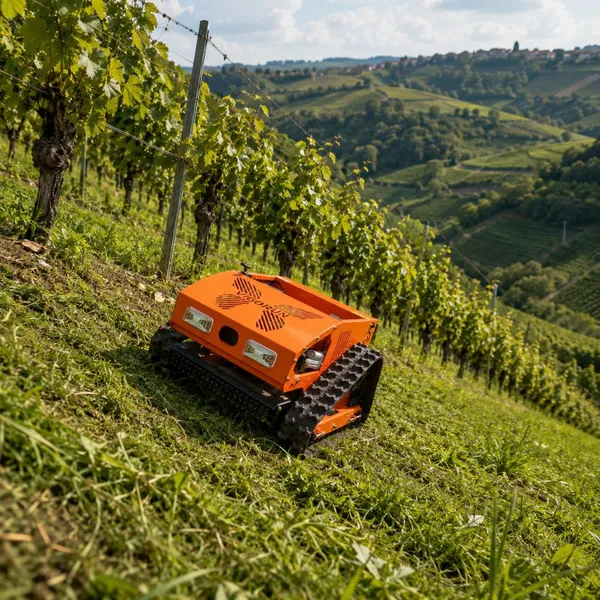
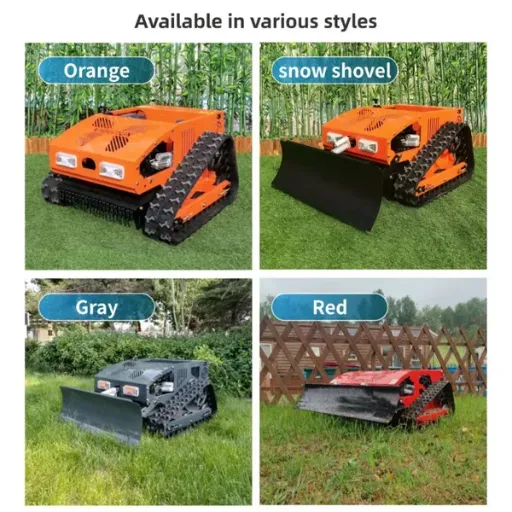
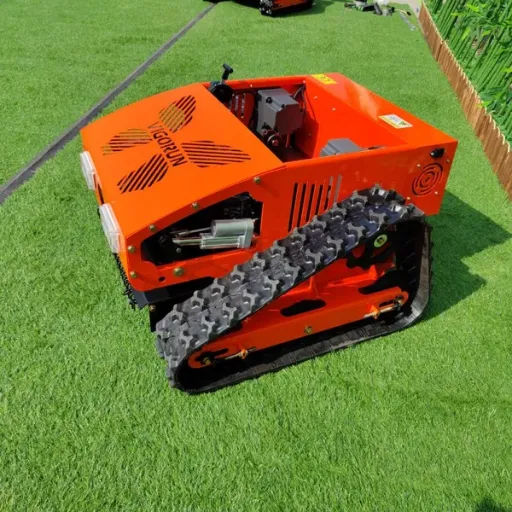
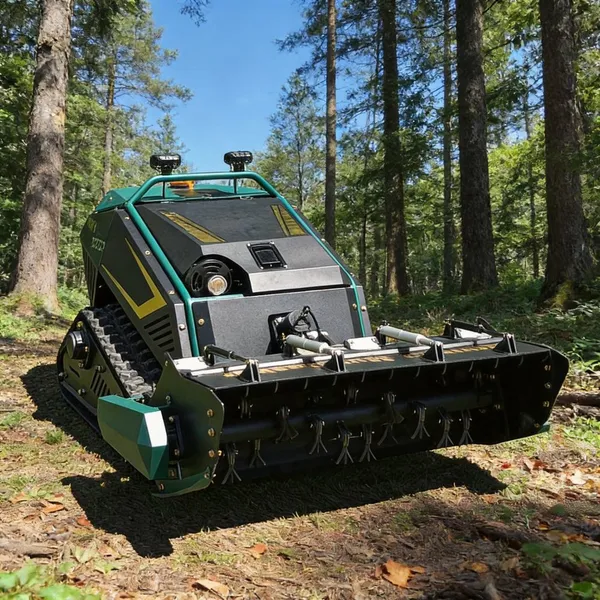
Remote-controlled flail mowers: Self-propelled tracked machines operated by wireless remote, designed for slopes and hazardous terrain
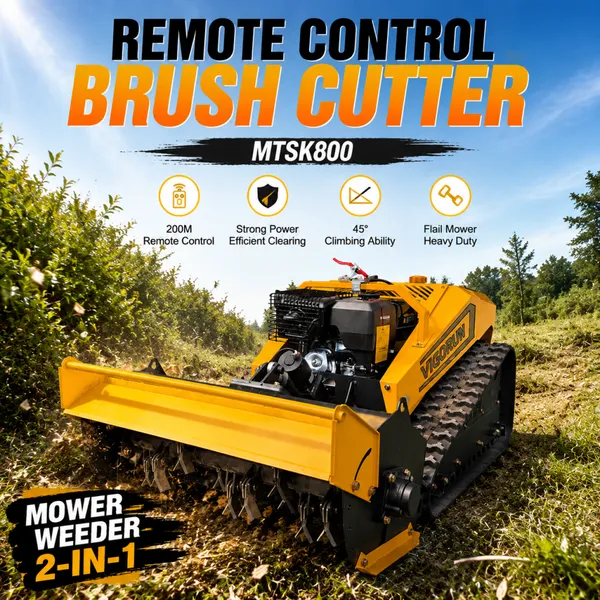
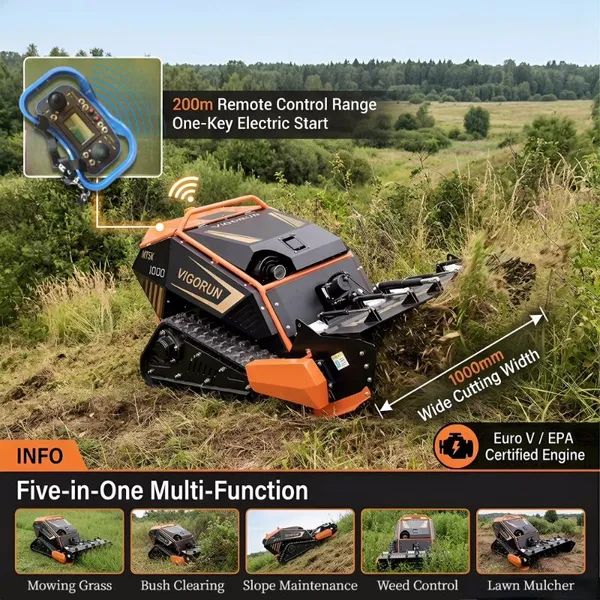
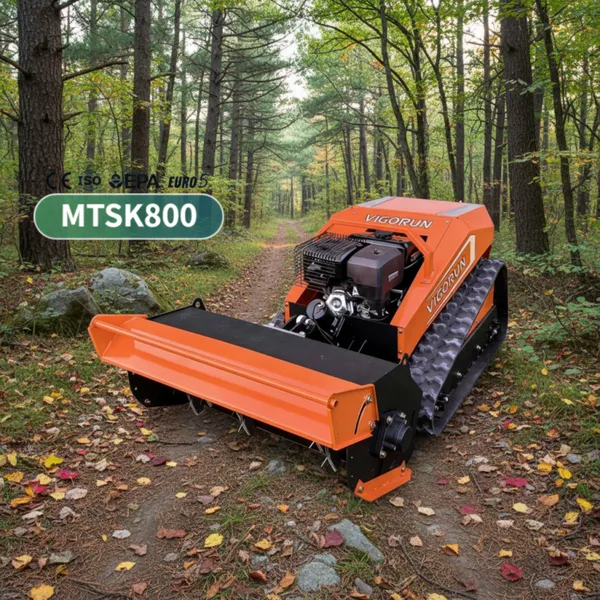
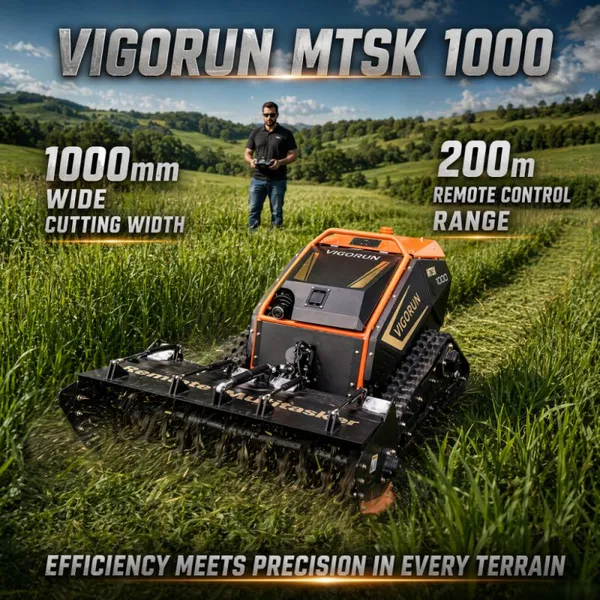
At Vigorun, we build remote-controlled flail mowers in our Weifang, Shandong facility. The MTSK1000 is our heavy-duty flagship, and the MTSK800 is our patent-pending mid-class model. Both use flail heads engineered for commercial slope work.
How Does a Flail Mower Work?
Understanding the mechanics helps you choose the right machine and avoid expensive mistakes. A flail mower operates through three core systems: the drum, the flails, and the housing.
The Drum
The drum is a horizontal steel cylinder driven by the engine via a belt or direct-drive system. Drum speed typically ranges from 1,500 to 3,000 RPM depending on the model and application. Higher RPM produces a finer mulch but demands more horsepower. Lower RPM with a heavier drum generates the torque needed for dense brush.
The Flails
Flails are small, hardened steel blades or hammers, usually 100-200 mm in length. They attach to the drum through hinge brackets or chains. Common flail types include:
Y-shaped flails: Best for grass and light weeds; produce a clean, even cut
Hammer flails: Heavier, blunt-tipped blades for woody brush and saplings
Chain flails: Used in extreme brush conditions where flexibility matters most
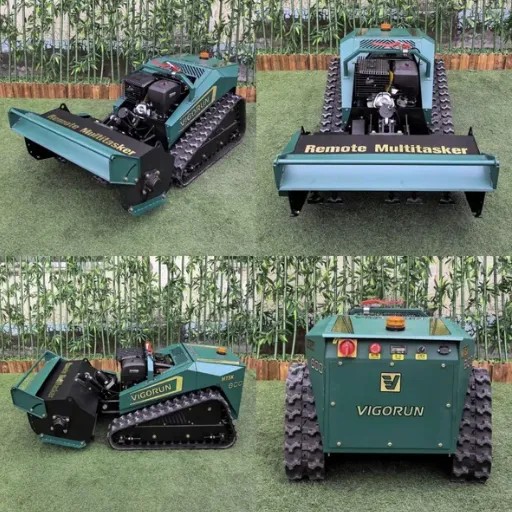
The flails on a commercial remote-controlled flail mower like the MTSK1000 are replaceable individually. If one wears or breaks, you unbolt it and install a new one without removing the entire drum.
The Housing
The housing encloses the drum and directs cut material downward. A curved rear roller or skid plate controls cutting height and helps the machine follow ground contours. On slope mowers, the housing is reinforced to withstand side-loads and impacts from uneven terrain.
Want to see the difference in person? Browse the full Vigorun remote mower range to compare flail and rotary configurations side by side.
Flail Mower vs Rotary Mower: What's the Difference?
Most operators start with a rotary mower. It's the default choice for flat lawns and light grass. But the two technologies diverge sharply once terrain, brush, or safety enter the equation.
| Factor | Flail Mower | Rotary Mower |
|---|---|---|
| Cutting action | Shreds and mulches | Lifts and slices |
| Debris throw | Minimal, mulch drops straight down | High, throws rocks and sticks laterally |
| Obstacle resistance | Flails fold back on impact | Blades bend, shatter, or stop the spindle |
| Brush capability | Handles woody growth up to 25 mm | Clogs or stalls on thick stems |
| Cut quality on rough ground | Follows contours well | Scalps high spots, misses low spots |
| Maintenance | Individual flail replacement | Full blade or spindle replacement |
| Slope safety | Safer, less projectile debris | Dangerous, debris throw increases with angle |
The debris difference is what changed Javier's mind after the roadside sign incident. Rotary blades spin at tip speeds exceeding 80 m/s. They create a vacuum that lifts grass before cutting it, and that same vacuum launches any solid object hiding in the turf. Flail mowers, by contrast, rely on impact shredding. The housing keeps most material inside the deck until it is small enough to fall straight down.
For municipal crews working near traffic, for orchard owners mowing near fruit trees, and for slope operators working above roads or waterways, that reduction in projectile risk is not a minor feature. It is the difference between a routine job and a liability claim.
When to Use a Flail Mower
A flail mower is not the right tool for every job. On a flat, manicured lawn with no obstacles, a rotary deck is faster, simpler, and cheaper. But there are five situations where a flail mower is the only professional choice.
1. Heavy Brush and Overgrown Vegetation
When grass turns to brush, think blackberry thickets, young saplings, dense weeds, a rotary blade lifts and tangles rather than cuts. The flail's shredding action pulls material into the drum and pulverizes it. A heavy-duty flail mower can clear brush up to 25 mm thick without stalling.
2. Rough or Uneven Terrain
Rotary decks need relatively flat ground to maintain an even cutting height. On rutted fields, terraced orchards, or eroded embankments, the rigid deck scalps high spots and leaves low spots uncut. A flail mower's rear roller and flexible flail assembly follow ground contours more closely, leaving a more uniform finish on imperfect terrain.
3. Areas with Hidden Debris
Construction sites, abandoned lots, and roadside verges hide rocks, metal, and broken fence wire. A flail mower absorbs these impacts. The flails bounce back, the drum keeps spinning, and the operator keeps working. With a rotary mower, the same impact means downtime, blade replacement, and possibly a bent spindle.
4. Slopes and Embankments
This is where the flail mower's safety advantage compounds. On a slope, a rotary blade not only throws debris farther, it throws it downhill, directly into the danger zone where operators or traffic sit. A flail mower's enclosed housing and downward discharge keep debris on the slope. When you combine that with a remote-controlled tracked chassis, the operator stands 200 meters away from the slope entirely.
5. Mulching and Ground Clearance
If your goal is to clear vegetation and leave organic mulch behind, a flail mower is purpose-built for the job. The shredded material decomposes quickly, suppresses regrowth, and eliminates the need to haul off clippings. Rotary mowers leave long clippings that smother grass underneath and require raking or blowing.
Flail Mowers on Slopes: Why Tracks Matter

A flail head solves the cutting problem on rough terrain. It does not solve the traction or stability problem. That is where the chassis becomes the deciding factor.
When Marcos, a landscaping contractor in Chile, first switched to a flail mower for his vineyard terraces, he mounted it on a wheeled tractor. The cut quality was excellent, but the tractor slid on the 30° faces after every rain. He was still sending operators onto dangerous ground, just with a better cutting head.
The real breakthrough came when he moved the flail head onto a tracked remote-controlled chassis. The rubber tracks distributed weight over a larger footprint, the low center of gravity kept the machine stable, and the 200-meter wireless remote meant his operator stood on the terrace road while the machine handled the slope face.
If you are evaluating a flail mower for slope work, look at the chassis, not just the drum:
Track width and length: Wider, longer tracks reduce ground pressure and improve side-slope stability
Center of gravity height: A lower machine handles steeper angles without tipping
Engine sump modification: Standard engines starve for oil on sustained side slopes; slope-rated machines use modified sumps
Remote control range: A 200-meter range lets the operator choose the safest vantage point
The Vigorun MTSK1000 pairs a heavy-duty flail head with a rubber-track chassis rated for slopes up to 40°. The MTSK800 offers the same flail capability on a platform designed for versatility across orchards, estates, and commercial contracts.
Remote Control Flail Mowers: The Professional Standard
The combination of a flail head and a remote-controlled tracked chassis has become the standard for commercial slope maintenance in Europe, Australia, and South America. Here's why the pairing works.
Safety through distance: The operator never sets foot on the slope. A 200-meter wireless remote eliminates rollover risk, projectile injuries, and heat exhaustion on long embankment runs.
Cutting integrity at angle: A flail drum maintains its cutting action even when the chassis is tilted. Rotary decks lose their vacuum and discharge pattern on steep slopes, leaving uneven cuts and clumped clippings.
Attachment flexibility: Many remote-controlled platforms, including the Vigorun MultiTasker series, accept interchangeable heads. You can run a flail head for spring brush clearance, swap to a rotary deck for summer grass, and add a snow plow for winter, all on the same chassis.
Reduced labor cost: One operator with a remote-controlled flail mower replaces the two- or three-person crews that hand crews or tractor-mounted mowers require on steep ground.
For distributors, the remote control flail mower category represents a high-margin, high-retention product line. End-users who buy one for slope safety typically return for attachments, spare flail sets, and additional machines as they expand their service territory.
Choosing the Right Flail Mower
Whether you are buying for a municipal fleet, a commercial landscaping business, or an orchard operation, these are the specs that separate a professional flail mower from an underbuilt machine.
Cutting Width
Standard remote-controlled flail mowers range from 800 mm to 1,000 mm. Wider decks cover more ground per pass but require more horsepower and add weight. An 800 mm deck like the one on the MTSK800 strikes the best balance for mixed terrain and transportability.
Engine Power
For an 800-1,000 mm flail head cutting heavy brush, you need at least 20 hp. The MTSK800 runs a 22 hp EURO V / EPA-certified gasoline engine. The MTSK1000 scales up for sustained heavy-brush work. Anything under 18 hp will stall in dense growth.
Flail Type and Availability
Ask whether the manufacturer stocks replacement flails and whether they offer both Y-flails and hammer flails for the same drum. A machine that ships with only one flail type limits your application range.
Track vs. Wheel Configuration
For slopes above 20°, tracks are not optional. Wheels concentrate weight, slip on wet grass, and create ruts on soft soil. Tracks distribute load and maintain grip on clay, wet turf, and loose embankment material.
Certifications
If you are a distributor or fleet buyer, verify that the engine carries CE, EURO V, and EPA documentation. Without these, your container sits in customs or your end-user cannot legally operate the machine in regulated markets.
Parts and Warranty
Flail mowers are consumable machines. Flails wear, drums fatigue, and rollers need replacement. A 1-year warranty is the minimum standard. More important is whether the manufacturer stocks parts for the operational life of the machine, not just the first two seasons.
Need a spec-by-spec comparison? See the Vigorun flail mower attachment options for detailed drum specs, flail types, and replacement part numbers.
Maintenance Basics: Keeping Your Flail Mower Productive
A flail mower is simpler to maintain than a rotary deck in some ways and more demanding in others. The key difference is that wear is distributed across many small parts instead of concentrated on one large blade.
Daily checks:
Inspect flails for cracks or excessive wear; replace any that are damaged
Check drum bearings for heat or noise after operation
Verify that the rear roller or skid plate moves freely
Clean debris from the housing to prevent corrosion
Seasonal service:
Replace all flails at once if wear exceeds 25% of original length
Grease bearings and pivot points
Inspect the drive belt for cracking or glazing
Check track tension and undercarriage components on tracked models
Storage:
Store with the drum off the ground to relieve bearing load
Coat flails with light oil if storing in humid conditions
Drain or stabilize fuel for gasoline engines
The advantage of a remote-controlled flail mower is that most of these checks happen on flat ground. The operator drives the machine to the maintenance pad, shuts it down, and works safely without crouching on a slope.
Conclusion: Is a Flail Mower Right for Your Operation?
A flail mower is the right tool when your job involves brush, debris, slopes, or any combination of the three. It shreds where a rotary mower slices. It absorbs impacts that would destroy a rigid blade. And when mounted on a tracked, remote-controlled chassis, it keeps your operator off the danger zone entirely.
Here are the key points to remember:
Flail mowers use hinged blades on a rotating drum to shred vegetation into mulch
They produce less projectile debris than rotary mowers, making them safer near roads, buildings, and people
They handle woody brush and saplings up to 25 mm that would stall or damage a rotary deck
On slopes, the combination of a flail head and tracked chassis is the safest professional configuration
Remote control keeps the operator 200 meters away from rollover zones, flying debris, and exhaust
If your crew is still clearing brush with rotary decks or sending operators onto steep slopes with tractor-mounted equipment, the switch to a remote-controlled flail mower is not an upgrade. It is a correction of a mismatch between the tool and the terrain.
Request a quote on the Vigorun MTSK800 or MTSK1000, FOB Shandong pricing, full CE / EURO V / EPA documentation, and a container loading diagram included. 1-year warranty plus lifetime parts support.
Recently Posted
-
Vigorun VTLM600 RC Lawn Mower Robot CE EPA Certified 600mm Cutting Width Mini Crawler Lawn Mower
August 12, 2026*High Reduction Worm Gear System for Superior Slope Performance: Conquer mountainsides and steep terrain up to 45° with our VTLM600 electric grass cutting machine, featuring an integrated brushless motor and gearbox delivering 73% high transmission efficiency. This high reduction worm gear system provides exceptional durability and longevity while ensuring reliable operation on challenging inclines.*Precision Servo Control foRead More -
Vigorun VTW550-90 4WD Petrol Remote Mower CE/EPA Certified for Farm & Orchard Vegetation Clearing
August 12, 2026*Hazard-Free Remote Operation for Wildlife Safety: Protect personnel from snakes, spiders, and insects with our VTW550 self-driving lawn mower, engineered for complete remote control operation. This Euro5/EPA-certified lawnmower eliminates staff exposure to hazardous wildlife environments while delivering professional results across residential and commercial landscapes.*High-Speed 6km/h Efficiency for Maximum Productivity: ARead More -
Vigorun VTC550-90 Robot Grass Mower CE/EPA Certified 550mm Cut Petrol Mower for All-Terrain Land Mai
August 12, 2026*Safe Remote Operation for Wildlife Hazard Environments: Protect personnel from snakes, spiders, and insects with our VTC550 grass cutter, designed for complete remote control operation. This electric lawn mower eliminates the need for staff to work in hazardous wildlife areas while delivering professional results across residential and commercial properties.*16x Faster Than Hand Cutting for Maximum Efficiency: Achieve exceptRead More -
Remote Control Tracked 800mm 60 Degree Max Slope Grass Lawn Cutting Mower
August 12, 2026*Maximum Slope for Military Base Maintenance: The Vigorun VTLM800 delivers verified 60-degree climbing for defense installations where perimeter security zones, training embankments, and ammunition buffer areas require vegetation control on terrain no ride-on equipment can safely access.*Remote Operation Eliminates Personnel Risk: Military bases feature steep berms, fortified perimeters, and screening slopes concealing hazardRead More

Contact Us
Recommended Products
-
 Vigorun Lawn Mower Robot, Industrial Dual 48V 1500W Motors MTSK1000 Mulcher Machine for Large LandscapesUS$ 7500.00 - 7700.00MOQ: 1 Set
 -
Farmland Orchards Battery Powered Mower Gasoline Golf Mower Robot Lawn Mower 3000m2 Vigorun Remote Control Grass MowerUS$ 2580 - 2700MOQ: 1 Unit
-
Vigorun MTSK800 Automatic Remote Control Grass Cutting Machine 48V 20Ah Battery Remote Flail MowerUS$ 2800 - 2900MOQ: 1 Set
-
Vigorun MTSK1000 Remote Control Mower 24hp Fail-Safe Slope Braking Remote Control Forest MulcherUS$ 8000 - 8200MOQ: 1 Set
-
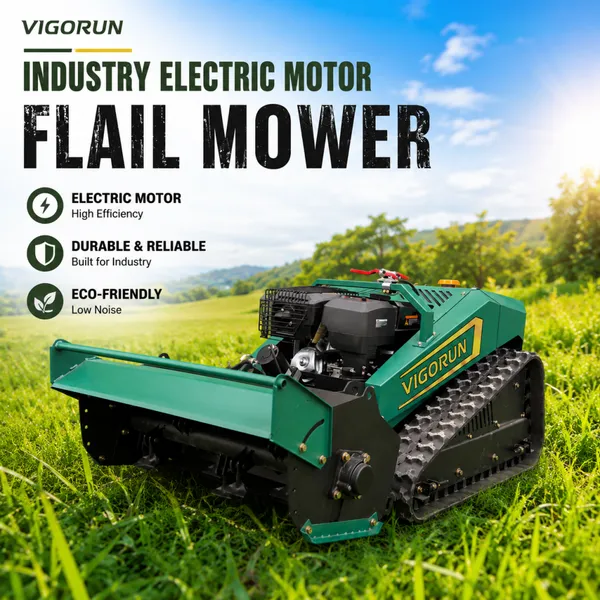
Industry Electric Motor Lawn Mower Flail Mower Atv Gasoline Hedge Trimmer Battery LawnmowerUS$ 2580 - 2900MOQ: 1 Unit
-
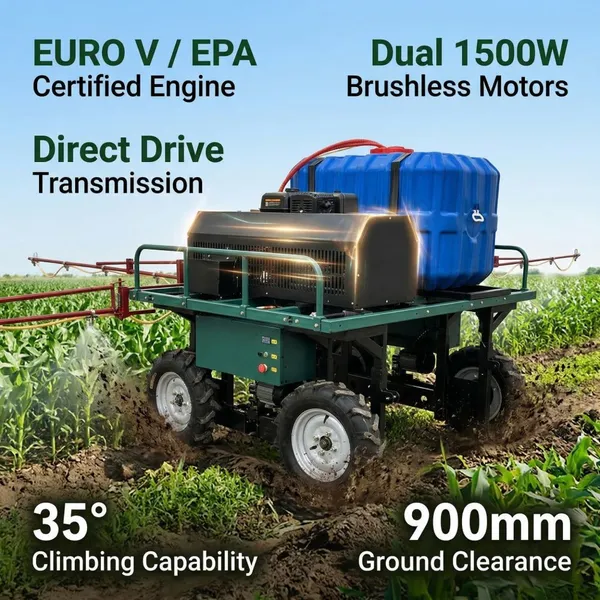
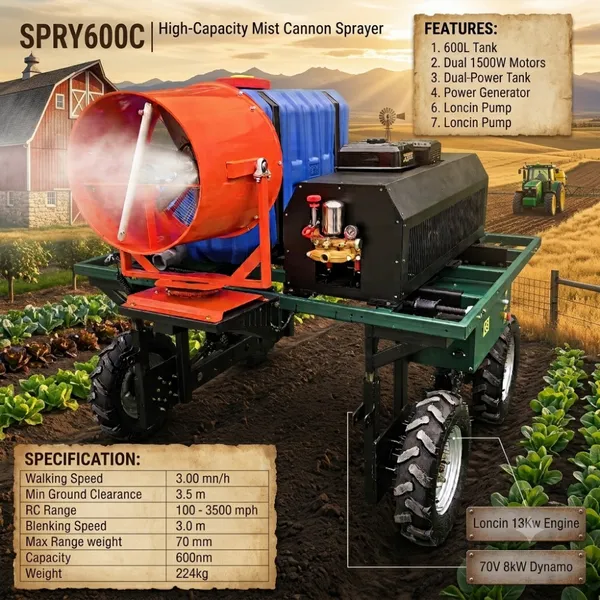
Vigorun Agricultural Tractor Sprayer Euro 5/EPA Electric Agricultural Sprayer 600l for VineyardsUS$ 2600 - 2700MOQ: 1 Set
-
Remote Control Tracked Hillside Mower 800mm Cutting Width 60 Degree Slope for Steep Terrain VegetationUS$ 2600 - 2700MOQ: 1 Set
-
Vigorun VTLM600 RC Lawn Mower Robot CE EPA Certified 45° Extreme Slope Mini Crawler Lawn MowerUS$ 1700 - 17900MOQ: 1 Set
-
Remote Controlled High Efficiency Fog Cannon Spraying Machine 600L Tank for Agriculture and Dust ControlUS$ 2800 - 2900MOQ: 1 Set
-
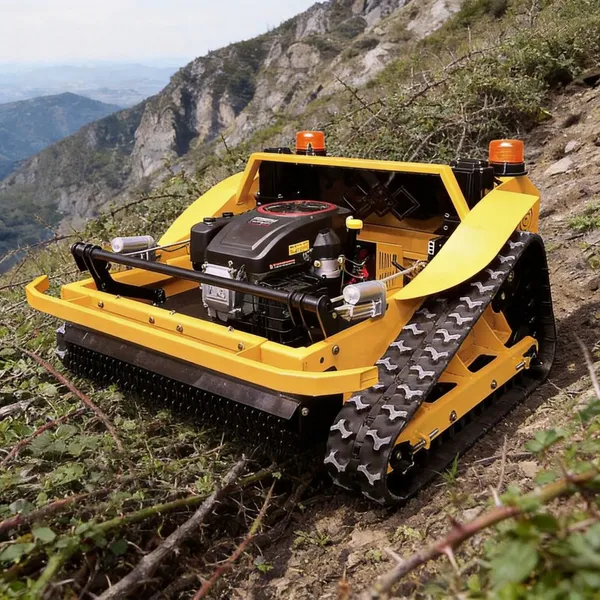
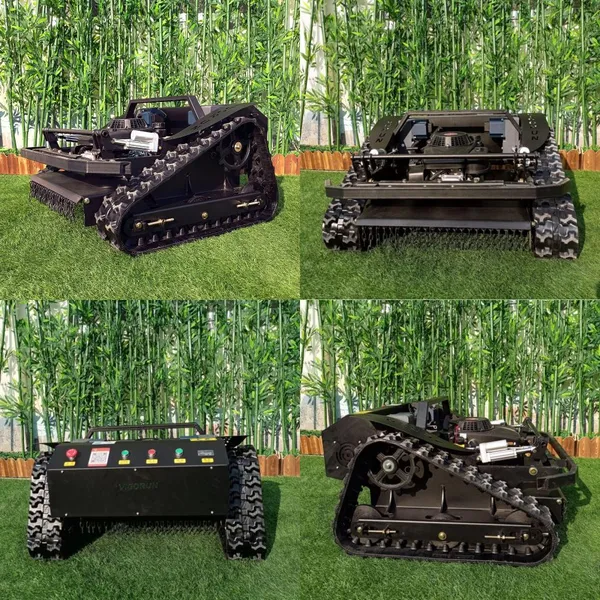
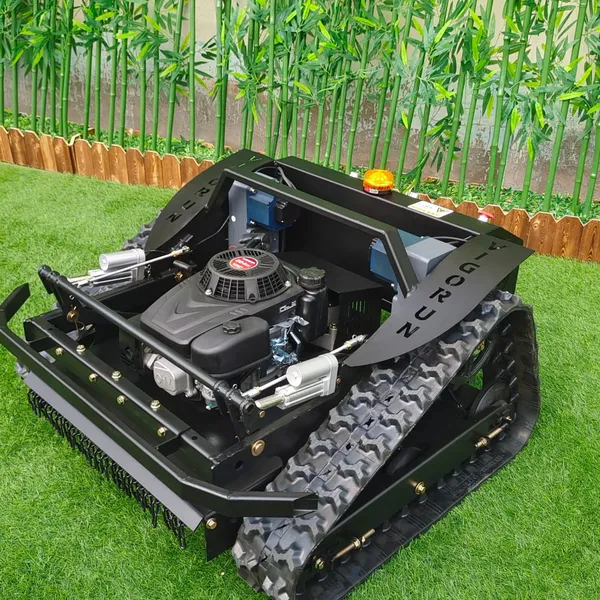
Vigorun Radio Control Mowing Euro 5/EPA Self-Propelled & Precise 6hp Remote Control Crawler MowerUS$ 1700 - 1790MOQ: 1 Set
-
Factory Manufacturer Vigorun MTSK1000 1000MM Commercial Branch Cutter Flail Mower rc Remote Petrol Lawnmower Mower Grass Cutter TractorUS$ 8000 - 8200MOQ: 1 Set
-
Vigorun VTW550 Remote Control Grass Cutter Tractor Robot Gas Lawn Mower Grass Cutter Small Electric Lawn Mower Vigorun Lawn MowerUS$ 1000 - 1250MOQ: 1 Set
-
Vigorun Tech Gasoline Remote Control Lawn Mower Self-Locking Slope Safety RC Mower Tiller for EmbankmentsUS$ 2800.00 - 2900.00MOQ: 1 Set
-
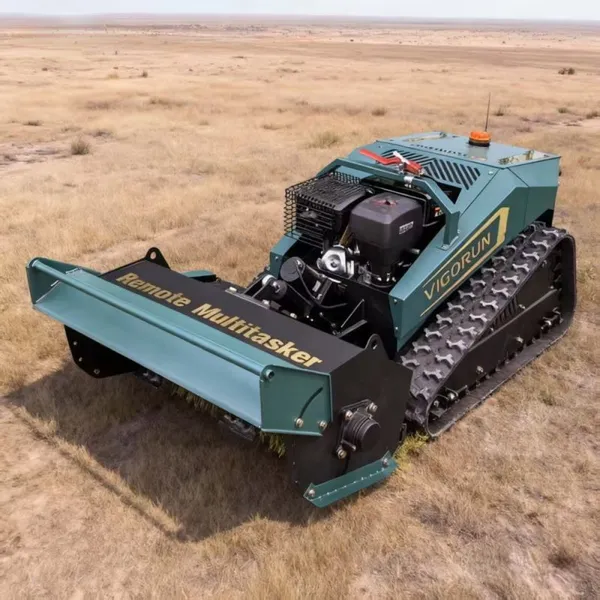
Mower Gasoline Grass Cutter Machine Remote Control 1000mm Cut 35 Degree Slope Flail Hammer for Overgrown LandUS$ 7500 - 7700MOQ: 1 Set
-
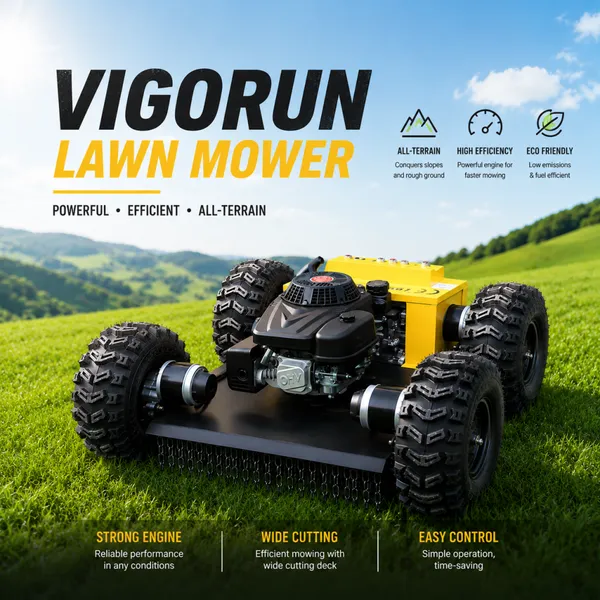
Vigorun VTLM800 Remote Control Electric Mower, Self-Locking Slope Safety Crawler Mower for Steep SlopesUS$ 2600.00 - 2700.00MOQ: 1 Set

-
Shrub and Brush Clearing MTSK800 MTSK1000 Flail Mower rc Remote Weeding Weeder MachineUS$ 2800 - 2900MOQ: 1 Set
-
RC Robot Lawn Mower Electric Remote Control Flail Grass Cutter Garden Cutting Machine MTSK1000US$ 8000 - 8200MOQ: 1 Set
-
Remote Manipulation Rubber Track Brush Cutter Industrial Flail Mower for Efficient Shrub ClearingUS$ 2000.00 - 2790.00MOQ: 1 Set
-
Vigorun MTSK1000 Rc Lawn Mower, Loncin 764CC Gasoline Engine Forestry Mulcher With Remote Control for ForestryUS$ 7500.00 - 7700.00MOQ: 1 Set
-
Vigorun VTC550 Zero Turn Electric Mower Quality Guaranteed Crawler Brush Cutter For Embankments & LeveesUS$ 1600 - 1690MOQ: 1 Set