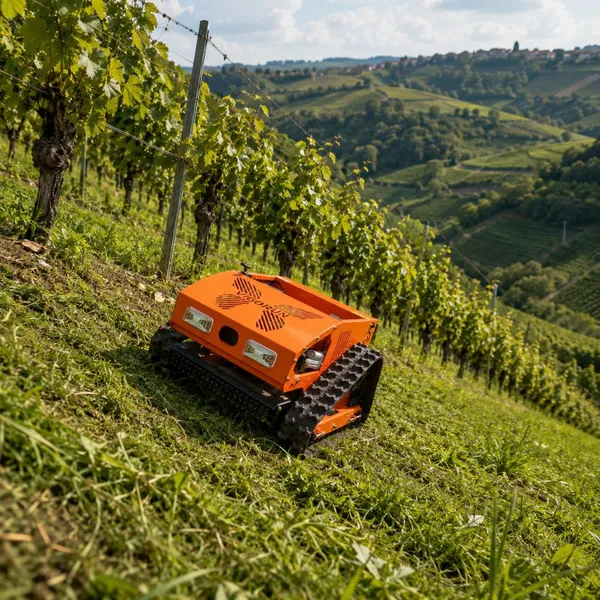

 Business License
Best Remote Control Lawn Mower: 2026 Buyer's Guide
In 2023, a commercial landscaping contractor in Texas bought what he thought was the best remote control lawn mower on the market. It had a slick website, a celebrity endorsement, and a price tag that seemed too good to be true. Six months later, the machine sat in his shop with a stripped drivetrain, and the supplier had stopped answering emails. The slope contract he bought it for went to a competitor with a tracked machine from an actual manufacturer.
If you are researching the best remote control lawn mower for your municipality, landscaping business, orchard, or dealership, you have probably noticed the same problem. The market is flooded with hobby-grade electric toys masquerading as commercial equipment, trading companies reselling anonymous factory product, and marketing specs that fall apart on the first 30° slope. Separating real machines from pretenders requires looking at five specific technical criteria that most buyers miss.
In this guide, we will compare tracked versus wheeled chassis, gasoline versus electric power, and rotary versus flail cutting heads. We will also break down the five specifications that determine whether a remote mower survives its first season or becomes an expensive shop ornament. By the end, you will know exactly what the best remote control lawn mower looks like for your specific terrain, application, and budget.
At Vigorun Tech, we manufacture approximately 200 remote mowers per month in our Weifang, Shandong facility. We have seen which designs hold up on 45° slopes and which ones get returned in the first 90 days. This guide is built from that shop-floor perspective.
What Makes a Remote Control Lawn Mower "Best"?
The word "best" depends entirely on the job. A machine that excels on a flat villa lawn will fail on a 35° riverbank. A mower built for orchard rows will be too narrow for open highway verges. Before comparing models, define your primary terrain, vegetation type, and whether you need multi-season attachments.
For commercial and municipal buyers, the best remote control lawn mower generally shares four traits:
Tracked chassis rated to at least 35° on dry grass, with 45° as the upper limit
Gasoline engine with commercial power output, EURO V / EPA emission compliance, and accessible parts
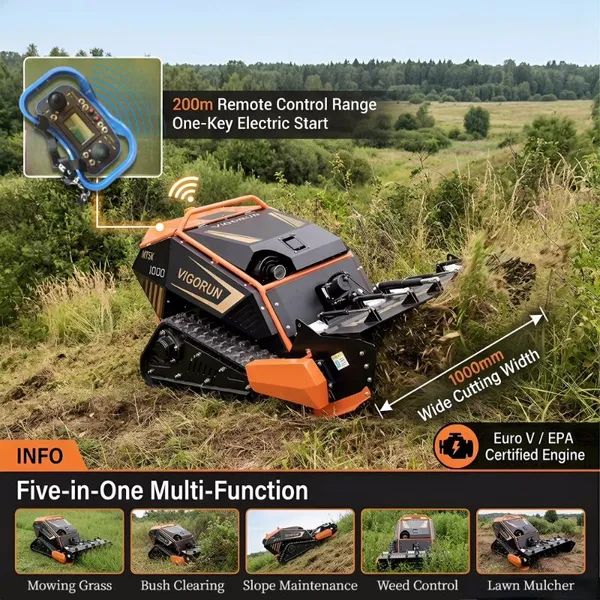
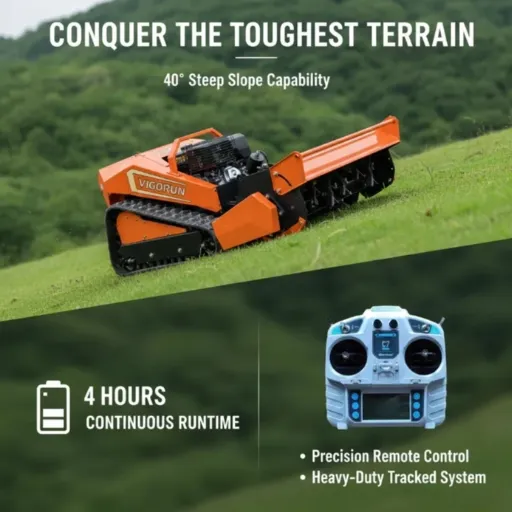
Industrial radio control with 200-meter range, emergency stop, and lost-signal failsafe
Factory-direct support including warranty, parts availability, and technical documentation
Hobby-grade electric machines fail on three of those four points. They use wheeled chassis, small electric motors, and consumer radio gear. They are fine for flat suburban lawns. They are not fine for slopes, brush, or commercial duty cycles.
Tracked vs. Wheeled: Which Chassis Handles Real Slopes?
Wheeled remote mowers cost less and work adequately on flat or gently rolling turf. Once the grade exceeds 20° or the surface is damp, wheels lose grip. The machine slides sideways, spins in place, or slips backward. On clay, wet grass, or loose soil, a wheeled chassis is essentially unusable.
Rubber tracks change the physics. A tracked chassis distributes the machine's weight across a longer ground contact patch, which increases traction and reduces ground pressure. The low center of gravity common to tracked designs also improves side-slope stability. For commercial slope work, a tracked remote control lawn mower is the only category worth considering.
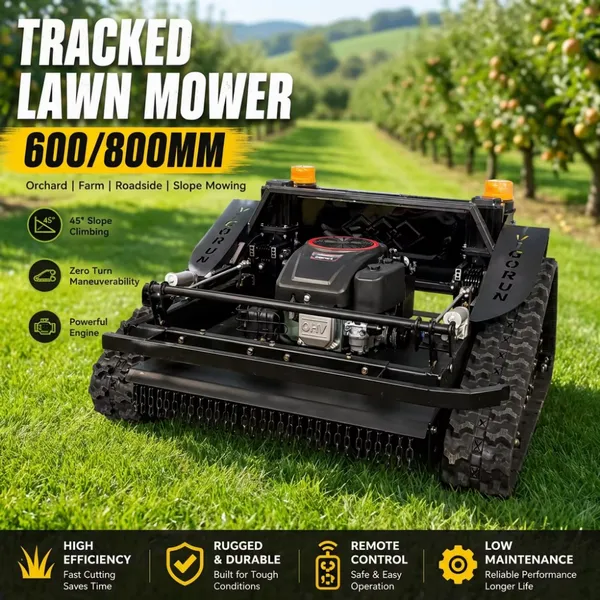
The best tracked machines climb up to 45° on dry, firm grass. Reputable manufacturers recommend staying under 35° on wet or loose terrain. Any spec sheet that claims higher without test-ramp footage or third-party verification should be treated with skepticism.
Tracks also reduce soil compaction, which matters for orchards, golf courses, and levee embankments where deep ruts damage the surface structure. If your job site includes retention ponds, riverbanks, solar farm verges, or terraced vineyards, tracks are not optional. They are the baseline.
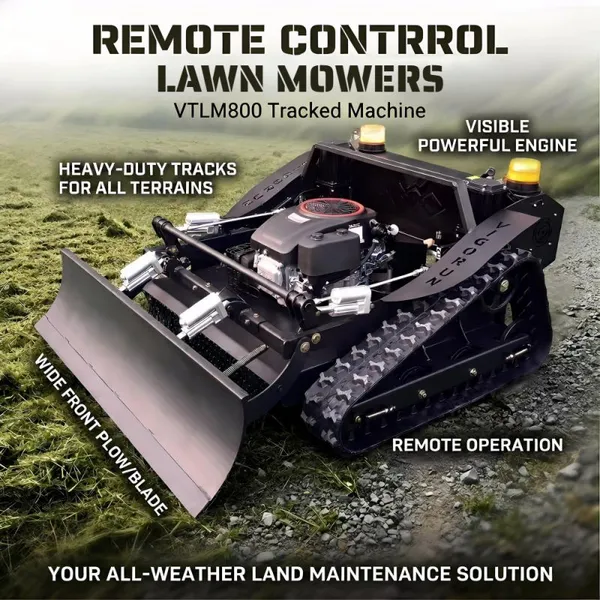
The Vigorun VTLM800 is a rubber-track slope mower purpose-built for exactly these conditions, with a 22-hp gasoline engine and a 200-meter wireless remote.
Gasoline vs. Electric vs. Diesel Engines
Remote mowers come in three power types, and the differences are stark.
Gasoline engines dominate the commercial remote control lawn mower market for good reason. They deliver the torque needed for heavy brush and thick grass, run for hours without recharging, and are serviced by qualified technicians in virtually every country. The best gasoline engines carry EURO V and EPA certification, which lets distributors clear customs in regulated markets without emission paperwork surprises.
Electric motors are quieter and require less maintenance, but they lack the sustained torque for commercial brush cutting. Battery life limits runtime to 1-3 hours, and replacement battery packs are expensive and hard to source outside major markets. Electric RC mowers work for flat, light-duty residential lawns. They do not work for steep slopes, thick vegetation, or 8-hour municipal shifts.
Diesel engines offer torque and longevity, but they add weight, cost, and emission complexity. In the European Union, diesel compliance is tightening rapidly. For most buyers, a gasoline engine hits the right balance of power, weight, parts availability, and regulatory clearance.
When evaluating the best remote control lawn mower for your fleet, check the engine brand, emission certification, and parts network before you check the price. A cheap engine with no EPA compliance is an expensive problem the first time a customs broker rejects your container.
Rotary Deck vs. Flail Head: Match the Cutter to the Job
The cutting attachment matters as much as the chassis. Rotary decks and flail heads serve different vegetation types, and buying the wrong one turns a capable machine into an underperformer.
Rotary decks spin rigid blades horizontally and are ideal for grass, weeds, and light brush on flat to moderate slopes. They cut cleanly at speed and handle weekly mowing cycles well. Most standard remote control lawn mowers ship with a rotary deck because it covers the widest range of common grounds-care tasks.
Flail heads use hinged blades or chains mounted on a rotating drum. They shred woody brush, saplings up to 25 mm thick, and overgrown vegetation that would stall a rotary blade. Flail mowers are slower than rotary decks, but they cut material that rotary decks cannot touch. For right-of-way maintenance, firebreak clearing, and orchard brush control, a flail head is essential.
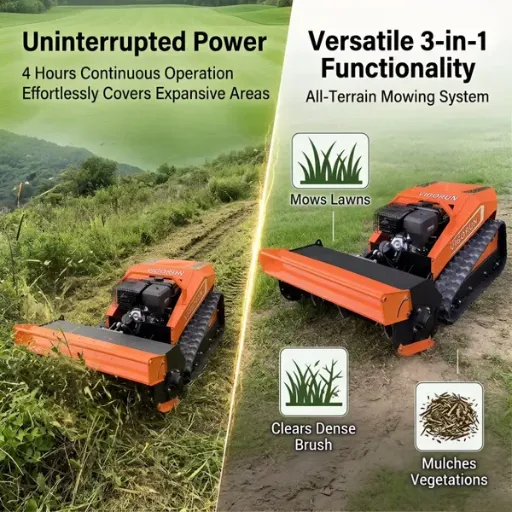
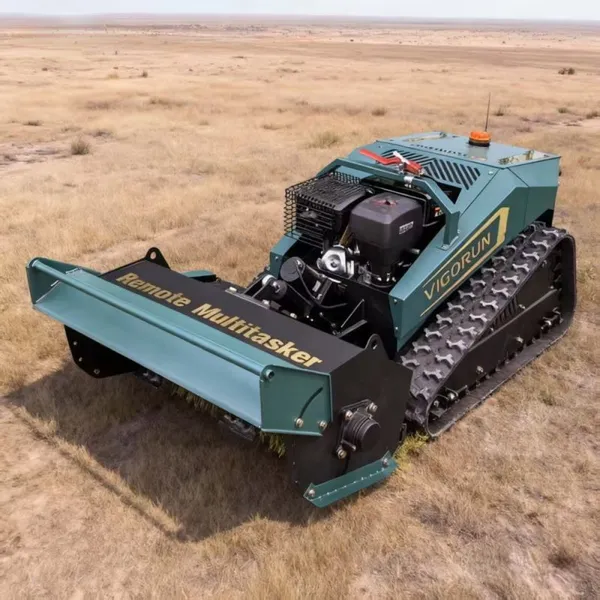
The best remote control lawn mower platform supports both. The Vigorun MultiTasker chassis accepts rotary decks, flail heads, sprayers, and transport beds on the same base unit. One machine mows in spring, flails in summer, and sprays in autumn. For distributors, that versatility means a single SKU serves multiple customer segments.
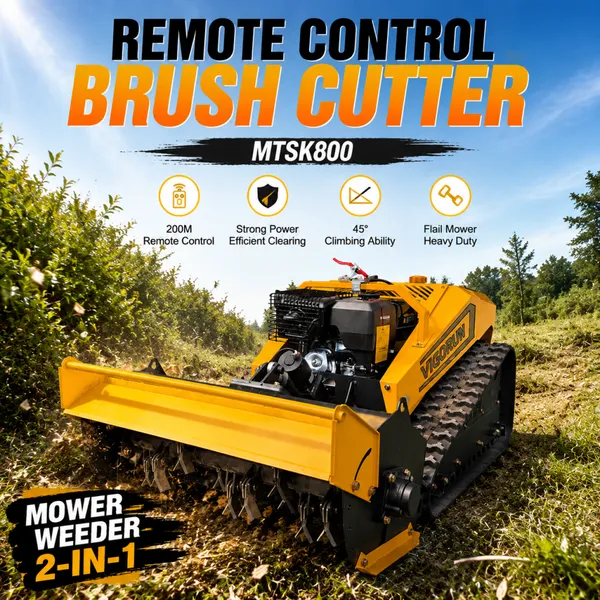
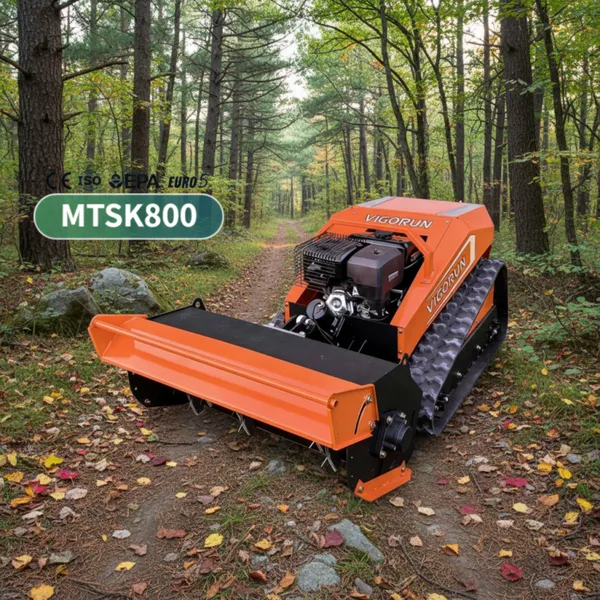
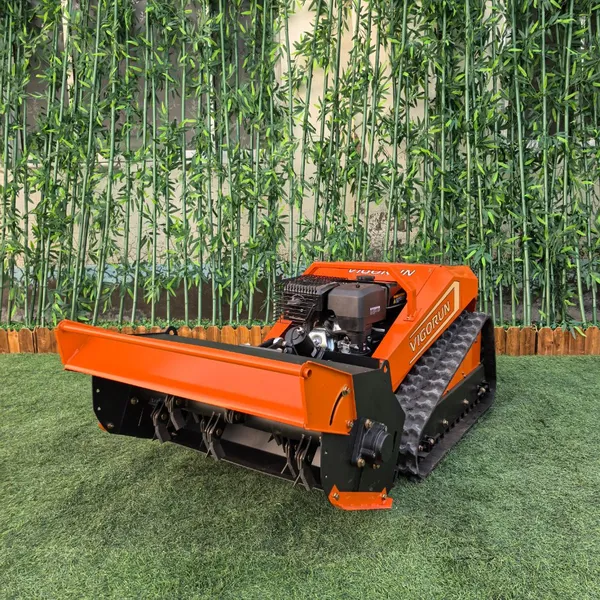
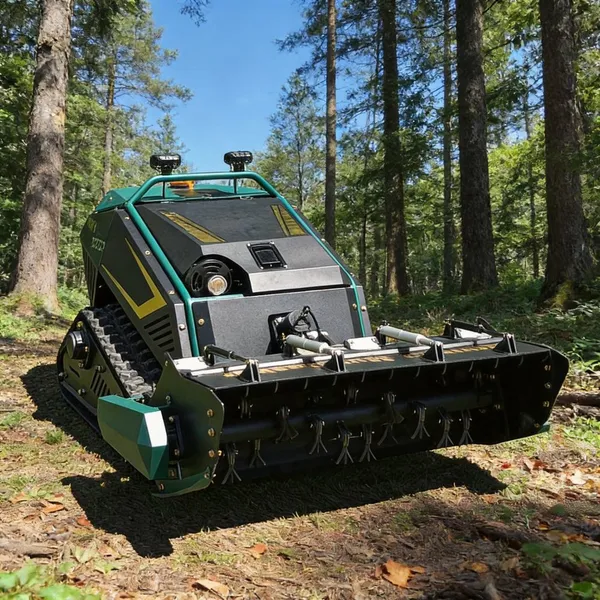
The Vigorun MTSK800 is our patent-pending remote-controlled flail mower, built for heavy brush and slopes up to 45°. It pairs a commercial flail head with the same tracked chassis and wireless control system as our slope mower lineup.
Want to compare cutting options for your application? Browse the full Vigorun remote mower lineup to see rotary, flail, and attachment-ready configurations.
The 5 Specifications That Separate Professional from Hobby-Grade
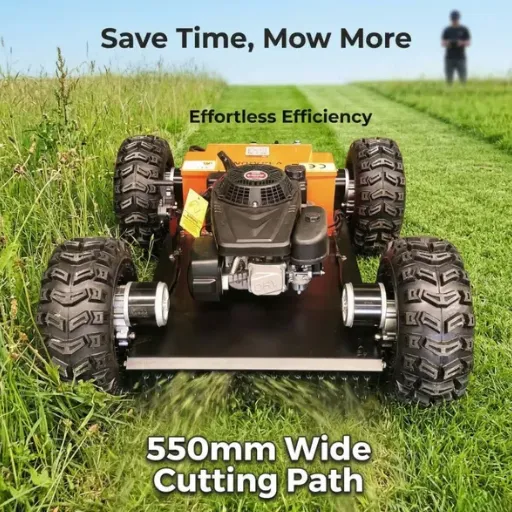
Marketing copy can hide weak engineering. These five specifications reveal whether a remote control lawn mower is built for commercial slopes or weekend lawns.
1. Slope rating with proof
Ask for the maximum angle in degrees, not adjectives. The best machines rate 35° to 45° on dry grass, with a clear recommendation to reduce that on wet terrain. Request factory test-ramp video or third-party slope assessment. If the seller cannot provide proof, the number is a guess.
2. Control range and failsafe logic
200 meters (656 feet) is the commercial benchmark for line-of-sight operation. Shorter ranges force the operator to stay near the slope, which partially defeats the safety purpose. Equally important is the failsafe system. If the radio signal drops, the blade must stop and the machine must halt. This should be hardware-controlled, not software-dependent.
3. Emission certification and documentation
CE certification covers European mechanical safety. EURO V and EPA certification covers engine emissions for the EU and U.S. markets. The best manufacturers ship the full documentation package with every container. Distributors in regulated markets should treat uncertified engines as unsellable.
4. Track width and ground pressure
Narrow tracks fit between orchard rows and vineyard trellises. Wide tracks distribute weight for soft turf and levee embankments. Ask for the track width in millimeters or inches, and ask how many square centimeters of ground contact the machine has. Lower ground pressure means less compaction and better flotation on wet ground.
5. Warranty terms and parts availability
A 1-year manufacturer warranty is standard for commercial equipment. Whole-life parts support is not. Confirm that the factory stocks wear parts, drivetrain components, and engine spares, and that they can ship internationally. If the seller is a trading company rather than the manufacturer, parts availability usually disappears within 18 months.
Who Makes the Best Remote Control Lawn Mowers?
The market splits into four categories, and only two of them are worth your time.
Premium Western brands like SPIDER Mowers, Green Climber, and RC Mowers USA build excellent machines. They also charge premium prices, rarely offer OEM customization at low volume, and often source components from the same Asian supply chain anyway. For buyers who need a single unit and have an unlimited budget, these are solid choices.
Factory-direct Chinese manufacturers like Vigorun Tech offer the same tracked chassis, commercial engines, and CE / EPA certifications at significantly lower unit cost. The difference is not engineering quality. It is distribution markup. We build approximately 200 mowers per month in our own Weifang facility, with in-house R&D, dedicated QC, and 100% indoor and outdoor field testing on every unit.
Trading companies resell anonymous factory product with slick branding. They cannot control quality, guarantee parts, or honor warranties 24 months later. Most Alibaba listings for remote mowers fall into this category.
Hobby-grade electric brands target consumers with YouTube-friendly designs and small electric motors. They are not built for commercial slopes, brush, or daily duty cycles.
For most municipalities, contractors, orchard owners, and distributors, the best remote control lawn mower comes from a factory-direct manufacturer with proven certification, real slope testing, and a parts program that outlasts the warranty.
When Klaus Weber started importing outdoor power equipment into Bavaria in 2021, he tested three remote mower suppliers. The first was a trading company whose units arrived with mismatched track bolts and no EPA paperwork. The second was a premium Western brand with excellent quality but no OEM option under 50 units. The third was a factory-direct manufacturer with CE and EPA certification, custom color and logo from MOQ 5, and a QC team that sent test-ramp video of his exact serial number before shipment. Klaus chose the third. In 2025, his dealer network covers southern Germany, and his return rate is under 2%.
Price vs. Total Cost of Ownership
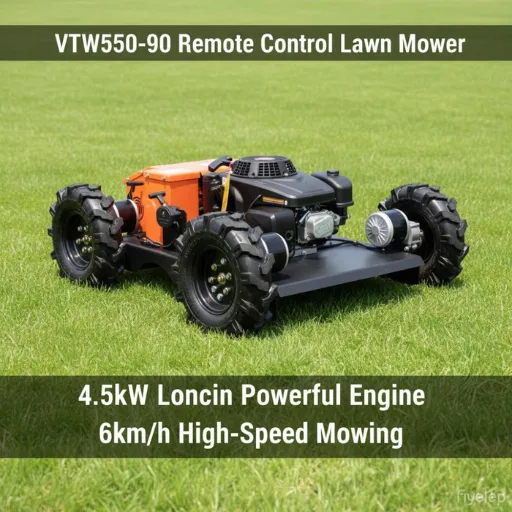
The purchase price is only the first line item. The best remote control lawn mower is the one with the lowest total cost of ownership over a 5-year operational life.
Consider these hidden costs:
Parts and shipping: A cheap machine with no parts support becomes a paperweight when the first track fails. Factory-direct manufacturers with stocked parts catalogs and international shipping keep downtime measured in days, not months.
Labor replacement: One remote operator replaces a four-person hand crew on steep slopes. At commercial labor rates, that replacement typically pays for the machine within 12 to 18 months.
Insurance and liability: Municipalities and commercial contractors who switch to remote mowing often see reductions in workers compensation premiums and OSHA exposure. The operator is never on the slope.
Downtime and resale: A machine with 100% pre-delivery field testing arrives ready to run. A machine from a trading company may need immediate shop time. Resale value also favors machines from known manufacturers with documented service history.
For distributors, the math is even clearer. Factory-direct unit pricing leaves margin for dealer markup, while OEM customization lets you build a brand that commands premium positioning in your home market.
Ready to see how factory-direct pricing fits your budget? Explore OEM customization and dealer pricing for your region.
Conclusion
The best remote control lawn mower is not the most expensive one, and it is certainly not the cheapest. It is the machine that matches your terrain, carries the certifications your market requires, and comes from a manufacturer who will still answer the phone when you need parts in year three.
The key takeaways are straightforward:
Tracks beat wheels on any slope above 20°. Rubber-track chassis with a 35° to 45° rating is the commercial baseline.
Gasoline engines dominate commercial work. Electric is fine for flat lawns. Diesel adds cost and compliance complexity.
Match the cutter to the vegetation. Rotary for grass, flail for brush, and a multi-attachment platform if you need both.
Certifications are not optional. CE, EURO V, and EPA documentation should ship with every container.
Factory-direct beats trading-company every time. Buy from the actual manufacturer, or pay the markup and gamble on parts support.
Whether you are a municipality clearing levees, a contractor bidding solar-farm maintenance, an orchard owner trimming between rows, or a distributor building your own brand, the right machine changes your safety record, your labor cost, and your bottom line.
Request a Dealer Quote → Get FOB Shandong pricing, container-loading diagrams, and OEM terms within 24 hours. Ask about spec sheets for the VTLM800 slope mower and the MTSK800 flail mower.
Recently Posted
-
Steep Slope 600mm Tracked 200m Remote Control 45 Degree Brushless Electric Lawn Mower
August 10, 2026*Integrated Drive System with 73 Percent Efficiency: The VTLM600 remote control lawn mower features a fully integrated brushless m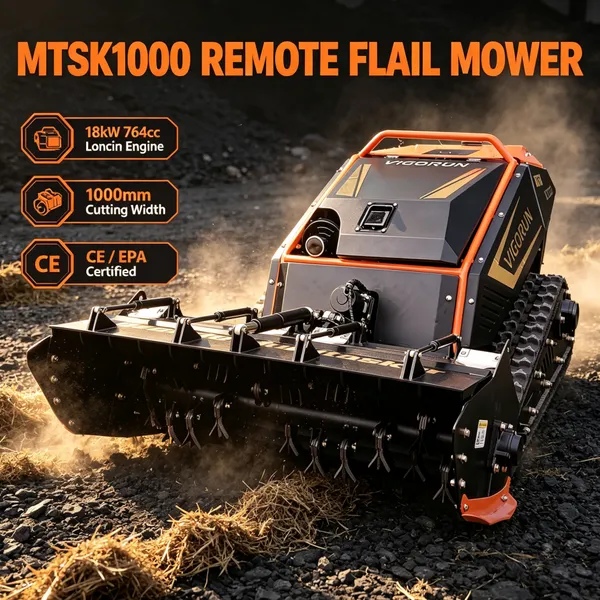 Read More
 -
Remote Controlled Pesticide Sprayer with 600L Tank 8.4m Boom for Agricultural Applications
August 10, 2026*Electric Start & 13kW Loncin Engine for Powerful Agricultural Spraying: Maximize field application efficiency with the SPRY60 Read More
 -
Self Propelled Agricultural Boom Sprayer with Adjustable Track for Modern Farming
August 10, 2026*Electric Start & 13kW Loncin Engine for Powerful Agricultural Spraying: Maximize field application efficiency with the SPRY60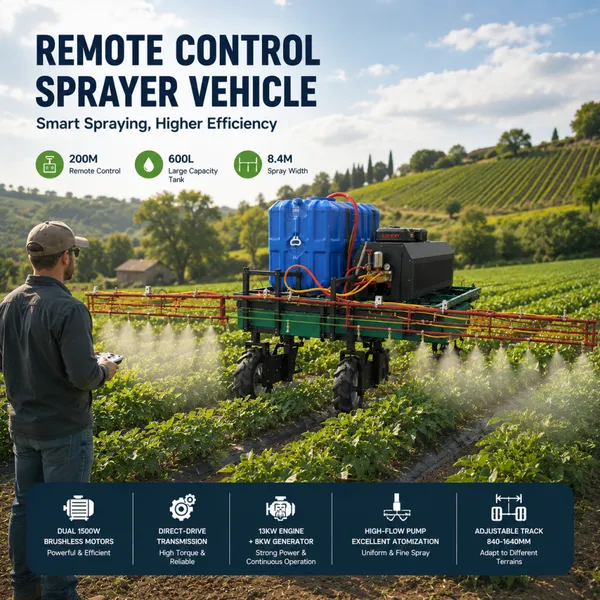 Read More
 -
Automatic Remote Control Agricultural Spray Machine with 600L Chemical Tank and Boom System
August 10, 2026*Electric Start & 13kW Loncin Engine for Powerful Agricultural Spraying: Maximize field application efficiency with the SPRY60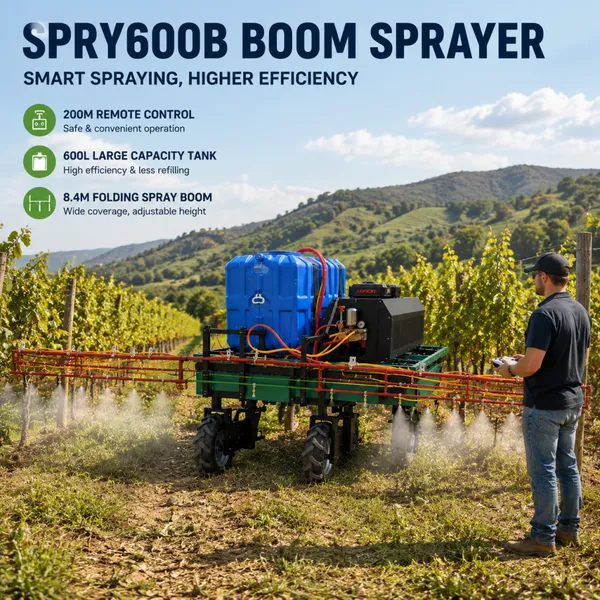 Read More

Contact Us
Recommended Products
-
 Vigorun Lawn Mower Robot, Industrial Dual 48V 1500W Motors MTSK1000 Mulcher Machine for Large LandscapesUS$ 7500.00 - 7700.00MOQ: 1 Set
 -
Farmland Orchards Battery Powered Mower Gasoline Golf Mower Robot Lawn Mower 3000m2 Vigorun Remote Control Grass MowerUS$ 2580 - 2700MOQ: 1 Unit
-
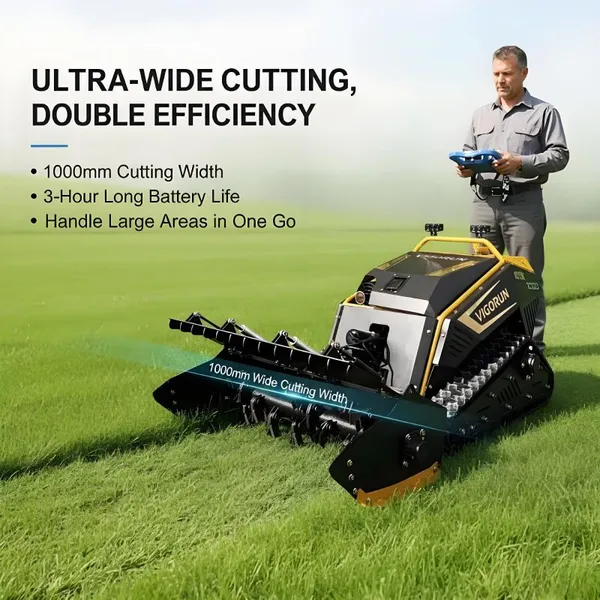
Vigorun MTSK800 Automatic Remote Control Grass Cutting Machine 48V 20Ah Battery Remote Flail MowerUS$ 2800 - 2900MOQ: 1 Set
-
Vigorun MTSK1000 Remote Control Mower 24hp Fail-Safe Slope Braking Remote Control Forest MulcherUS$ 8000 - 8200MOQ: 1 Set
-
Industry Electric Motor Lawn Mower Flail Mower Atv Gasoline Hedge Trimmer Battery LawnmowerUS$ 2580 - 2900MOQ: 1 Unit
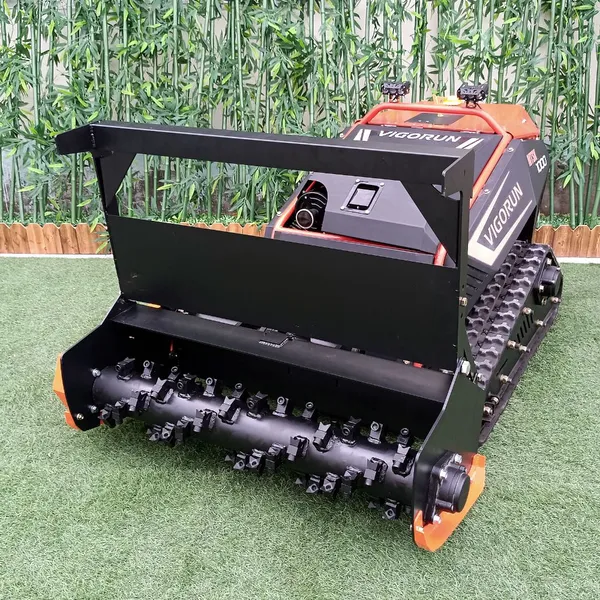
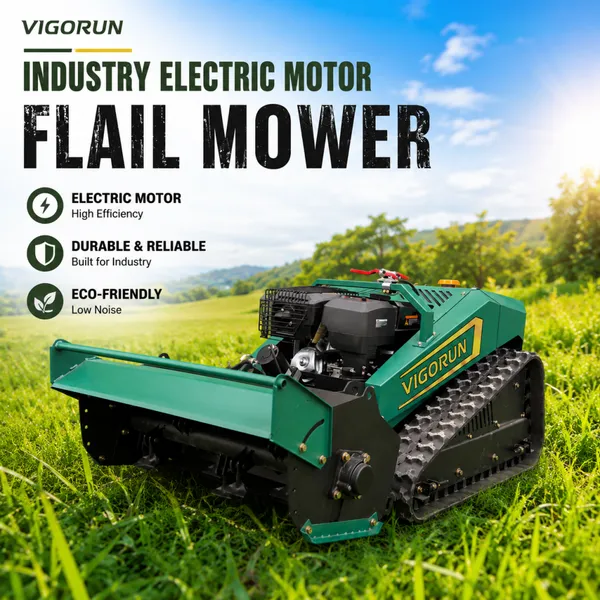
-
Vigorun Agricultural Tractor Sprayer Euro 5/EPA Electric Agricultural Sprayer 600l for VineyardsUS$ 2600 - 2700MOQ: 1 Set
-
Remote Control Tracked Hillside Mower 800mm Cutting Width 60 Degree Slope for Steep Terrain VegetationUS$ 2600 - 2700MOQ: 1 Set
-
Vigorun VTLM600 RC Lawn Mower Robot CE EPA Certified 45° Extreme Slope Mini Crawler Lawn MowerUS$ 1700 - 17900MOQ: 1 Set
-
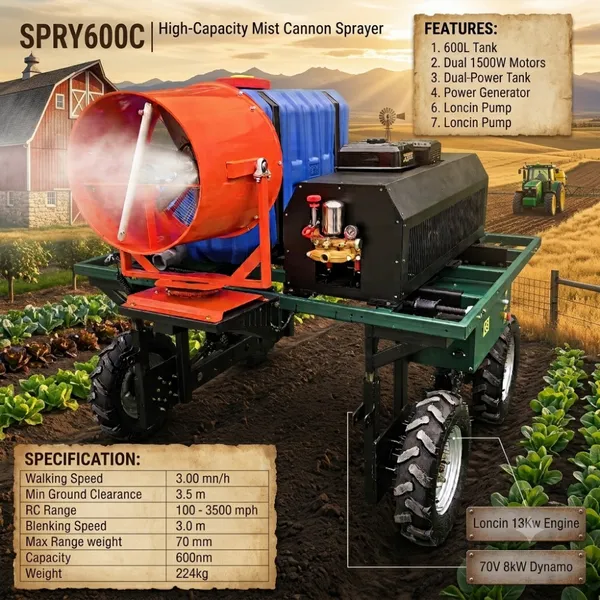
Remote Controlled High Efficiency Fog Cannon Spraying Machine 600L Tank for Agriculture and Dust ControlUS$ 2800 - 2900MOQ: 1 Set
-
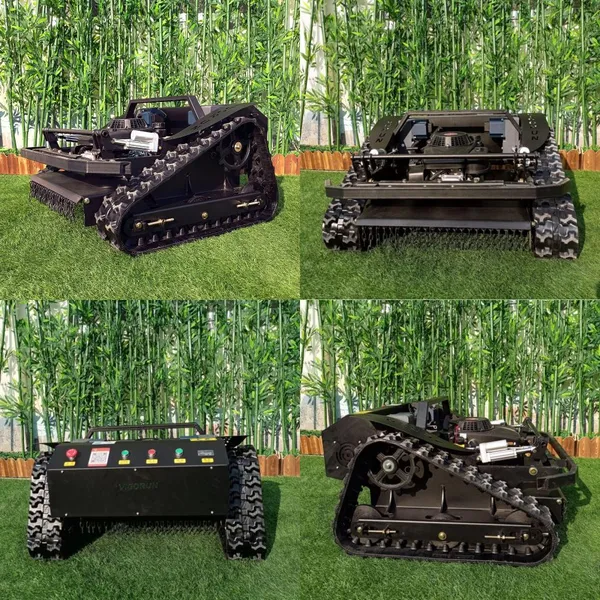
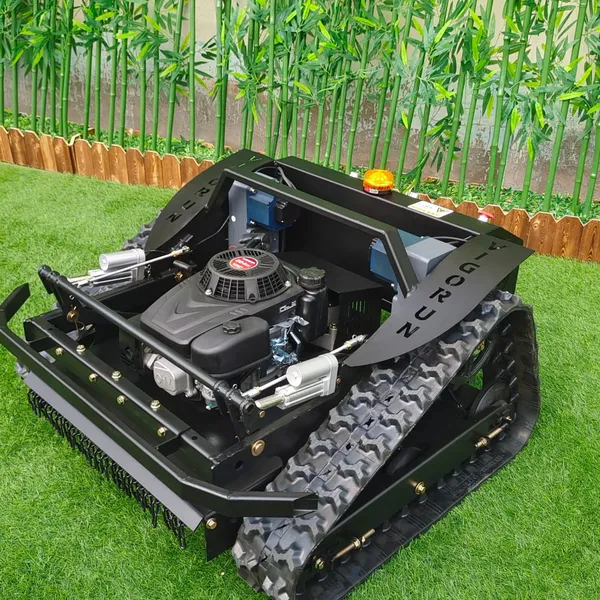
Vigorun Radio Control Mowing Euro 5/EPA Self-Propelled & Precise 6hp Remote Control Crawler MowerUS$ 1700 - 1790MOQ: 1 Set
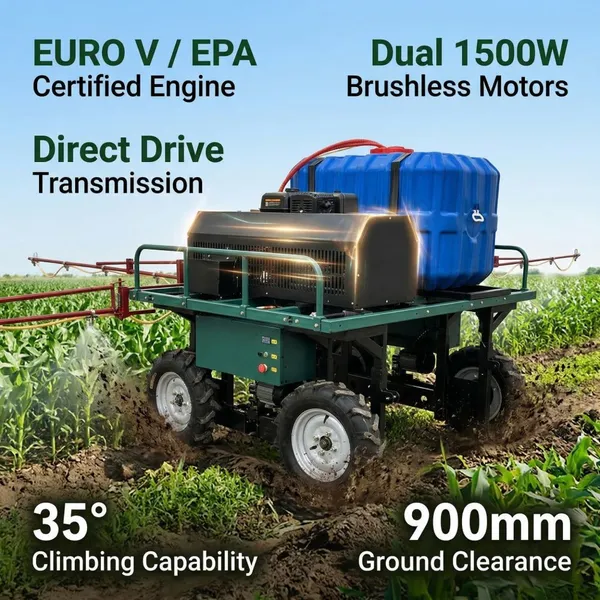
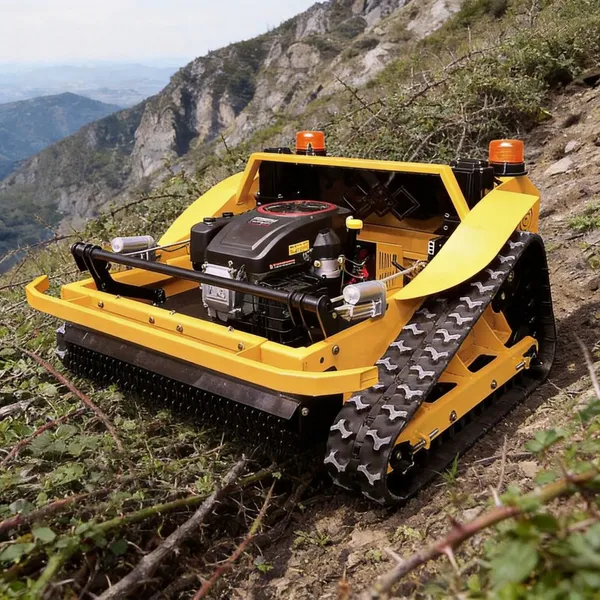
-
Factory Manufacturer Vigorun MTSK1000 1000MM Commercial Branch Cutter Flail Mower rc Remote Petrol Lawnmower Mower Grass Cutter TractorUS$ 8000 - 8200MOQ: 1 Set
-
Vigorun VTW550 Remote Control Grass Cutter Tractor Robot Gas Lawn Mower Grass Cutter Small Electric Lawn Mower Vigorun Lawn MowerUS$ 1000 - 1250MOQ: 1 Set
-
Vigorun Tech Gasoline Remote Control Lawn Mower Self-Locking Slope Safety RC Mower Tiller for EmbankmentsUS$ 2800.00 - 2900.00MOQ: 1 Set
-
Mower Gasoline Grass Cutter Machine Remote Control 1000mm Cut 35 Degree Slope Flail Hammer for Overgrown LandUS$ 7500 - 7700MOQ: 1 Set
-
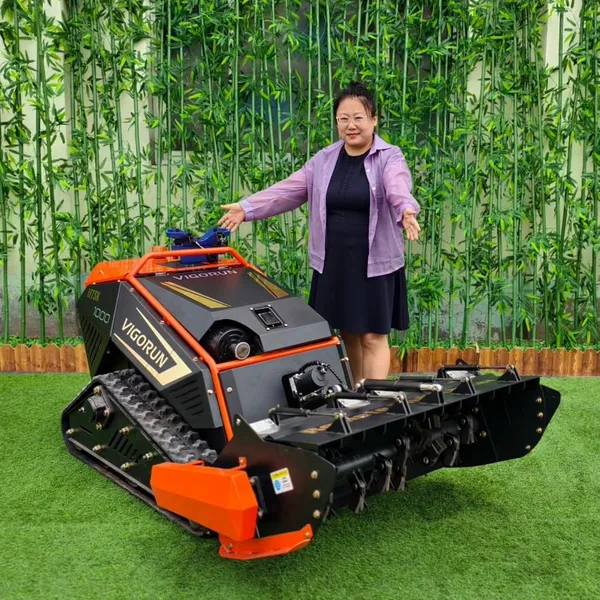
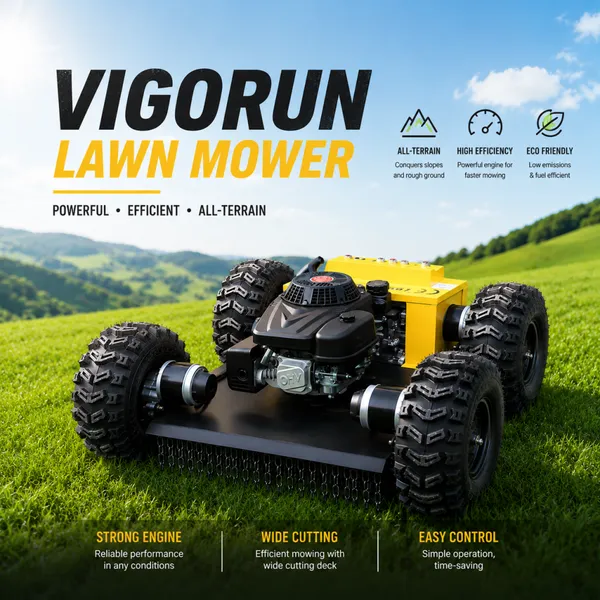
Vigorun VTLM800 Remote Control Electric Mower, Self-Locking Slope Safety Crawler Mower for Steep SlopesUS$ 2600.00 - 2700.00MOQ: 1 Set
-
Shrub and Brush Clearing MTSK800 MTSK1000 Flail Mower rc Remote Weeding Weeder MachineUS$ 2800 - 2900MOQ: 1 Set
-
RC Robot Lawn Mower Electric Remote Control Flail Grass Cutter Garden Cutting Machine MTSK1000US$ 8000 - 8200MOQ: 1 Set
-
Remote Manipulation Rubber Track Brush Cutter Industrial Flail Mower for Efficient Shrub ClearingUS$ 2000.00 - 2790.00MOQ: 1 Set
-
Vigorun MTSK1000 Rc Lawn Mower, Loncin 764CC Gasoline Engine Forestry Mulcher With Remote Control for ForestryUS$ 7500.00 - 7700.00MOQ: 1 Set
-
Vigorun VTC550 Zero Turn Electric Mower Quality Guaranteed Crawler Brush Cutter For Embankments & LeveesUS$ 1600 - 1690MOQ: 1 Set