
 Business License

Flail Mower vs Rotary Mower: Cutting Head Guide for Slope Work
Carlos stood at the edge of a vineyard terrace in Chile's Colchagua Valley and watched his new remote-controlled slope mower stall for the fourth time that morning. The rotary deck had hit a fist-sized stone buried in the terrace edge, bent a blade, and sent a shock through the drivetrain that tripped the overload clutch. He had 12 hectares of sloped vineyard rows to clear before the harvest crew arrived in three weeks. The machine he bought to save labor was now costing him a day of downtime every time the brush thickened past grass height.
The problem was not the chassis. The problem was the cutting head.
In any flail mower vs rotary mower comparison for slope mowing, brush clearing, or commercial terrain maintenance, the cutting head determines whether your operator finishes the job in one pass or spends the afternoon replacing blades on a hot hillside. This guide explains how each system works, where each one wins, and how to match the head to the ground you actually cut. We build both flail and rotary remote mowers in our Weifang, Shandong facility, and every unit clears 100% indoor and outdoor field testing before it ships. The guidance below comes from the same test ramps your machine will climb.
Want to see the flail head in action before you read on? Explore the MTSK1000 remote control flail mower specs and cutting-width options →
Flail Mower vs Rotary Mower: How the Flail Head Works
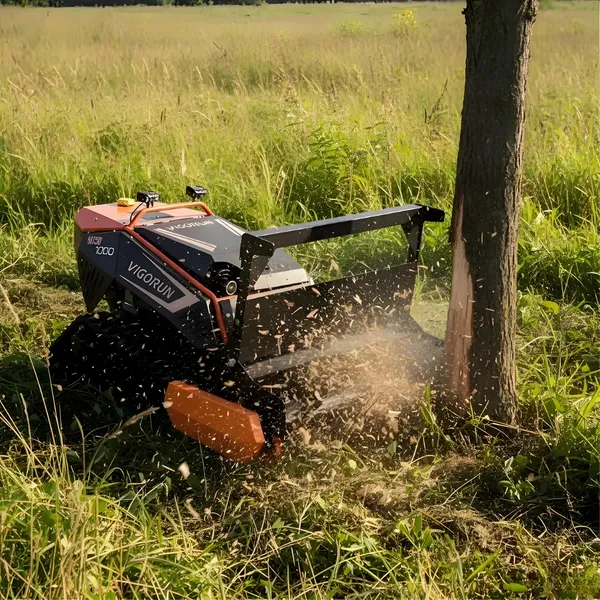
A flail mower uses dozens of small, hinged blades, called flails, mounted on a horizontal drum. Each flail swings freely on its own pivot. When the drum spins, centrifugal force holds the flails outward, and they strike vegetation with a chopping, mulching action. Because each flail moves independently, hitting a rock or hard object does not stop the drum. The flail simply pivots back and continues.
This matters on slopes for three reasons. First, debris tolerance: a flail head absorbs impacts at the individual flail pivot, with no torque spike to the drivetrain. On a 35° face, that means the chassis keeps its line instead of recovering from a sudden stall. Second, mulch distribution: the flail discharges clippings evenly around the drum, and the short mulch settles into the turf rather than sliding downhill in a concentrated stream. Third, brush penetration: the chopping action cuts woody stems and saplings up to 25-40 mm (1-1.6 in) thick, vegetation that would stop or damage a rotary blade.
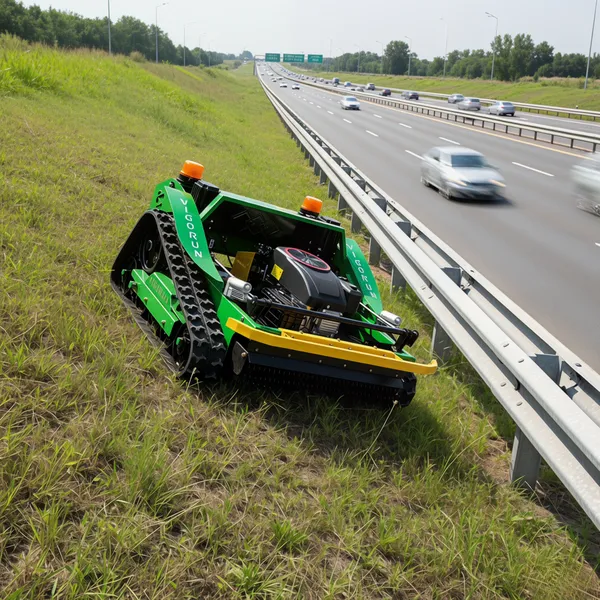
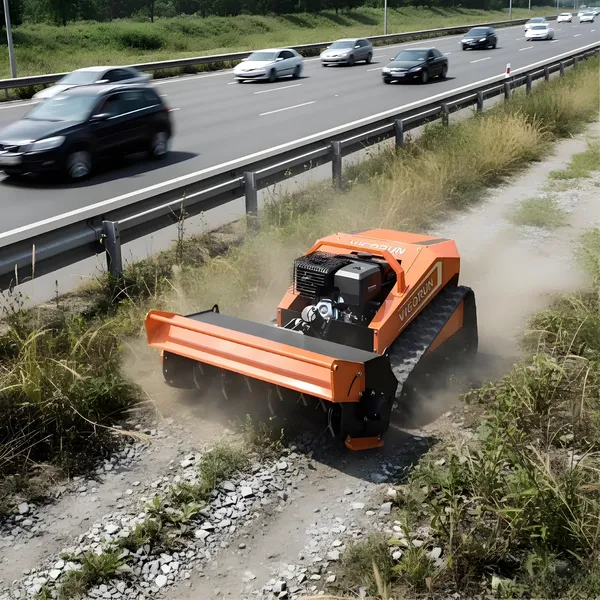
The MTSK800 remote controlled flail mower and the MTSK1000 remote control flail mower both run flail heads engineered for slopes up to 45°. The drum housing sits close to the ground, contouring to uneven terrain better than a rigid rotary deck.
Flail Mower vs Rotary Mower: How the Rotary Deck Works
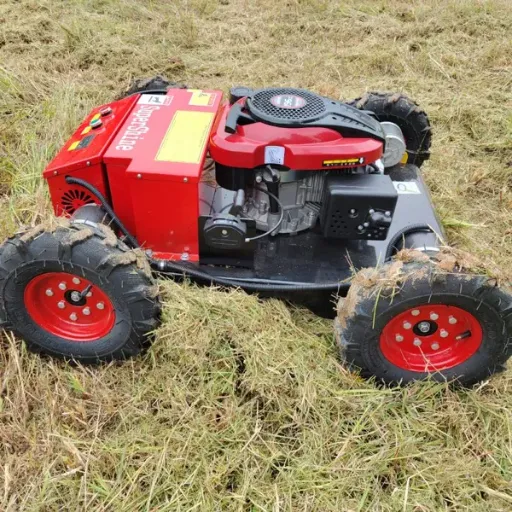
A rotary mower spins one to three horizontal blades at high speed, typically 2,800-3,200 RPM, creating a vacuum that pulls grass upright before the blade slices it. The blade is a rigid steel bar or winged disk. On flat or gently rolling turf, this design produces a clean, even finish that sports-field managers and estate clients expect.
The rotary deck is also lighter and simpler, which matters for transport and ground speed. On flat ground with no hidden debris, maintenance is predictable: sharpen or swap blades on a regular schedule, and the deck runs for years.
However, the rotary advantage shrinks quickly as the ground tilts. Above 25°, the concentrated discharge stream creates visible windrows that slide downhill. Above 30°, the risk of blade strike on uneven ground rises. And when the "grass" includes woody stems, rocks, or concrete fragments, which it often does on embankments and roadside verges, the rigid blade takes the full impact. The blade bends, the spindle breaks, or the slip clutch trips. On a slope, any of those outcomes means the operator walks down to recover the machine.
The VTLM800 rubber track slope mower can be configured with a rotary deck for grass-maintenance jobs on moderate slopes. It excels on villa lawns, solar-farm inter-row grass, and football pitches where finish quality matters.
Flail Mower vs Rotary Mower: Side-by-Side Comparison
| Feature | Flail Mower | Rotary Mower |
|---|---|---|
| Cutting mechanism | Hinged flails on a spinning drum | Rigid horizontal blade(s) |
| Best terrain | Steep slopes, brush, woody growth, rough ground | Flat to gentle slopes, grass, turf, finish work |
| Max vegetation thickness | 25-40 mm (1-1.6 in) saplings and woody brush | 10-20 mm (0.4-0.8 in) grass and light weeds |
| Debris tolerance | High; flails pivot on impact | Low; blades bend or spindles break |
| Slope discharge | Even mulch distribution, minimal windrows | Concentrated downhill stream, windrow risk |
| Ground contouring | Drum follows ground contour closely | Deck rides on skid shoes, less contour hugging |
| Maintenance interval | Flail replacement every 80-120 hours | Blade sharpening every 25-40 hours |
| Replacement cost per wear item | Lower (individual flails) | Higher (full blade assemblies, spindles) |
| Finish quality on turf | Good, slightly less manicured than rotary | Excellent, clean cut on flat ground |
| Noise level | Moderate, chopping action | Higher, vacuum plus blade whistle |
| Weight | Heavier (drum plus housing) | Lighter (simple deck) |
Pro Tip: If your contract specifies "no visible clipping windrows" or "mulch-style finish," specify a flail head. The discharge pattern on slopes is not a minor difference; it is the difference between one pass and three.
When a Flail Mower Is the Only Safe Choice
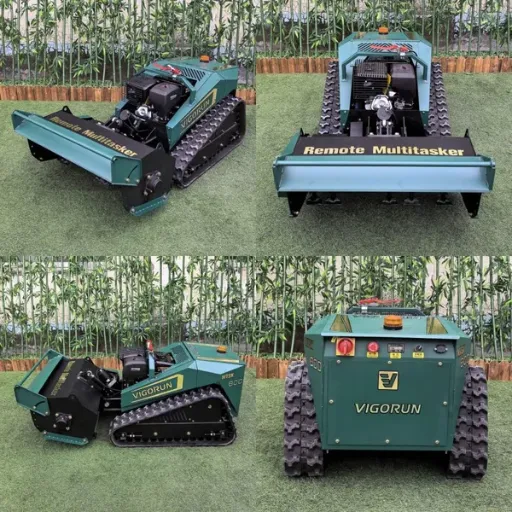
Choose a flail head when your job site includes woody brush, saplings, overgrown weeds, rocky or debris-strewn ground, slopes steeper than 25°, or contracts that require mulch-style discharge with no windrows.
In early 2025, a municipal maintenance crew in southern Poland took over a levee-maintenance contract along the Vistula River. The site included 6 kilometers of flood-control embankment with slopes between 30° and 40°, mixed grass, thistle thickets, and broken concrete from old reinforcement pylons. Their first season, they ran a rotary-deck remote mower. By May, they had replaced 9 blade spindles, spent three days re-cutting windrows after rain, and received a warning from the water authority about clippings washing into the drainage channel.
Season two, they switched to a flail-equipped machine. The same operator, same terrain, same contract. The flails shredded the thistle without damage, the mulch stayed on the slope, and they finished the 6-kilometer circuit in half the time because they were not stopping to replace blades. The water authority passed them on the first inspection. The difference was not operator skill. It was cutting physics.
For distributors, the flail head is the easier sell to commercial brush-clearing and municipal contractors. The total cost of ownership advantage shows up in the first season, and it is a story your dealers can tell with real numbers.
When a Rotary Mower Still Wins
A rotary deck wins on flat or gently rolling turf where finish quality matters more than brush penetration. Football pitches, golf course roughs, villa lawns, and solar-farm inter-row grass are all rotary territory. The clean, even cut and faster ground speed produce the manicured look that estate clients and sports-field managers demand.
Rotary decks are also lighter, which matters if you transport the machine frequently between sites or load it into a small truck. And on flat ground with no hidden debris, maintenance cost is predictable. Sharpen or swap blades on a regular schedule, and the deck will run for years.
However, on slopes, the rotary advantage shrinks quickly. Above 25°, the discharge pattern becomes a liability. Above 30°, the risk of blade strike on uneven ground rises. And if your grass job includes any woody growth, which it often does on embankments, orchards, and roadsides, the rotary deck is the wrong tool.
Ready to see which head fits your terrain? Request a quote for a flail or rotary remote mower, no obligation, FOB Shandong pricing within 24 hours.
Slope Safety: Why the Cutting Head Changes Everything

The cutting head on a remote slope mower affects more than grass height. It changes how the machine behaves on unstable ground, how debris moves, and how much time the operator spends near the hazard zone.
A rotary blade that hits a buried rock stops instantly, transferring impact torque back through the drivetrain. On a 35° slope, that jolt can shift the machine's balance. A flail head absorbs the same impact at the individual flail pivot, with no torque spike to the drivetrain. The chassis keeps its line. The operator, standing 200 meters (656 feet) away, does not have to recover from a surprise stall or slide.
Debris ejection is the other safety factor. Rotary decks can throw stones, wire, and hard fragments 15-20 meters (50-65 feet) in a concentrated arc. On a slope, that arc points downhill, potentially toward roads, paths, or structures below the cut line. Flail mowers mulch debris rather than throwing it, and the ejection radius is shorter and more diffuse. For roadside and levee work where liability matters, that is not a minor detail.
The Vigorun mower category includes both flail and rotary configurations, all tested on our internal 45° test ramp. Whether your operator is clearing an Australian solar farm or a German vineyard terrace, the right head keeps them farther from the hazard.
Cost, Maintenance, and Total Cost of Ownership
In any flail mower vs rotary mower comparison, the flail head typically costs 10-20% more upfront than a comparable rotary deck. The gap closes fast in real use.
Rotary mower maintenance (commercial slope use):
Blade sharpening or replacement: every 25-40 hours
Spindle replacement: every 100-200 hours (sooner on rocky terrain)
Deck belt replacement: every 150-250 hours
Skid shoe and baffle wear: ongoing
Flail mower maintenance (commercial slope use):
Flail inspection: every 40 hours
Individual flail replacement: every 80-120 hours (replace only the damaged ones)
Drum bearing service: every 200-300 hours
Housing liner check: every 300 hours
On brush-heavy slopes, a rotary deck can consume 800−800−1,200 per year in blades, spindles, and downtime. A flail head on the same terrain typically runs 300−300−500 per year in individual flail replacements, with less downtime because you rarely replace the full set at once. Over a three-year commercial contract, the flail head's lower wear cost usually pays back the initial price difference.
For distributors quoting fleet packages, the total cost of ownership story is a strong close. Most buyers look at the invoice price, not the cost per hectare over the machine's life. A distributor who walks in with a three-year total cost of ownership worksheet wins the serious accounts.
One Chassis, Two Heads: The Platform Advantage

Not every remote mower chassis handles both heads equally well. The flail head is heavier and demands more torque from the drivetrain, especially in dense brush. A chassis designed only for light rotary work will bog down, overheat the hydraulics, and shorten engine life if you bolt on a flail head that is too large for its power band.
The Vigorun MultiTasker platform solves this by designing the chassis around the highest-torque attachment, the flail head, and then optimizing the rotary deck to run efficiently on the same drivetrain. The MultiTasker attachments include flail heads, hammer mulchers, rotary decks, snow plows, and brushes, all engineered for a common power curve. One chassis, multiple jobs.
In 2025, a distributor in Perth, Australia, built a demo fleet around exactly that principle. They stocked two MultiTasker core units: one ran the flail head for brush contracts on highway embankments, and the other ran the rotary deck for sports-field maintenance. When a municipal client needed both services, they swapped heads in 20 minutes and ran the same chassis across both contracts. The distributor's margin on that single chassis was double what they would have earned selling two dedicated machines, and the client saw lower upfront cost.
If you are buying for a single application, match the head to the terrain. If you are buying for a fleet or a dealer line, consider a platform that handles both without compromise.
Conclusion: Match the Head to the Ground, Not the Invoice
The flail mower vs rotary mower debate is not about which technology is superior. It is about which one fits the ground under the machine.
Flail wins on steep slopes, brush, debris, and anywhere mulch distribution matters.
Rotary wins on flat turf, finish work, and jobs where speed and weight matter more than brush penetration.
On slopes above 25°, the flail head's safety and discharge advantages usually outweigh any upfront savings from a rotary deck.
Before you request a quote, walk your actual job site. Count the saplings. Check for rocks. Measure the steepest face. Then specify the head that handles what you found, not the head that costs less on the invoice.
Vigorun builds flail and rotary remote mowers on rubber-track chassis rated to 45°, with CE / EURO V / EPA-certified engines and OEM customization available from MOQ 5 units. Every unit is field-tested before shipment, and every unit ships with a 1-year warranty plus whole-life parts support.
Request a quote on the MTSK1000, MTSK800, or VTLM800, FOB Shandong pricing, full certification package, and container loading diagram included →
Recently Posted
-
How to Cut Tall Grass: A Complete Guide to Safe, Effective Clearance
May 29, 2026In July 2024, a landscaping crew in Brisbane took on what looked like a routine estate clearance. The grass had grown to knee heig Read More
 -
Vigorun Grass Cutter Machine 16x Manual Efficiency Small Remote Control Lawn Mower for Nurseries
May 29, 2026*Hazard-Free Remote Operation for Wildlife Safety: Protect personnel from snakes, spiders, and insects with our VTW550 self-drivin Read More
 -
Vigorun VTC550 Maquina De Cortar Pasto 16x Manual Efficiency Mini Gas Lawn Mower for Lawn & Garden
May 29, 2026*Safe Remote Operation for Wildlife Hazard Environments: Protect personnel from snakes, spiders, and insects with our VTC550 grass Read More
 -
Flail Mower Uses: 7 Jobs a Remote Control Flail Mower Handles Best
May 29, 2026Last spring, a four-person municipal crew in Bavaria spent three days clearing a 35-degree embankment beside a federal highway wit Read More

Contact Us
Recommended Products
-
 Vigorun Remote Control Electric Mower Self-Locking Slope Safety Crawler Mower for Lawn & GardenUS$ 2600 - 2700MOQ: 1 Set
 -
Vigorun RC Mower Remote Control Multi-Function Tool Carrier Remote-Controlled Electric MulcherUS$ 2800 - 2900MOQ: 1 Set
-
Vigorun Lawn Mowers Multi-Function Tool Carrier 1000mm Remote Control Forest Mulcher Flail MowerUS$ 8000 - 8200MOQ: 1 Set
-
Vigorun SPRY600 Tractor Sprayer Industrial 4-Stroke Agricultural Sprayers 600l for Soybean FieldsUS$ 2600 - 2700MOQ: 1 Set
-
Vigorun Grass Cutting Machine High-Speed (6 Km/h) Wheeled Lawn Mower for Tea & Coffee PlantationsUS$ 1000 - 1100MOQ: 1 Set
-
Vigorun Robot Brush Mower Euro 5/EPA Self-Locking Slope Safety Remote Control Track Lawn MowerUS$ 1700 - 17900MOQ: 1 Set
-
Vigorun Controlled Lawn Mower Anti-Rollback Security Lawn Mower Crawler for Slopes & HillsidesUS$ 2600 - 2700MOQ: 1 Set
-
Vigorun Robot Weed Cutter Quick-Change Attachment System Remote Controlled Motorcycle MulcherUS$ 2800 - 2900MOQ: 1 Set
-
Vigorun Remote Control Lawn Mower Quick-Change Attachment System Robot Tracked Forestry MulcherUS$ 8000 - 8200MOQ: 1 Set
-
Vigorun SPRY600 Boom Sprayer Electric Start Electric Sprayer Agricultural 600l for Cotton FieldsUS$ 2600 - 2700MOQ: 1 Set
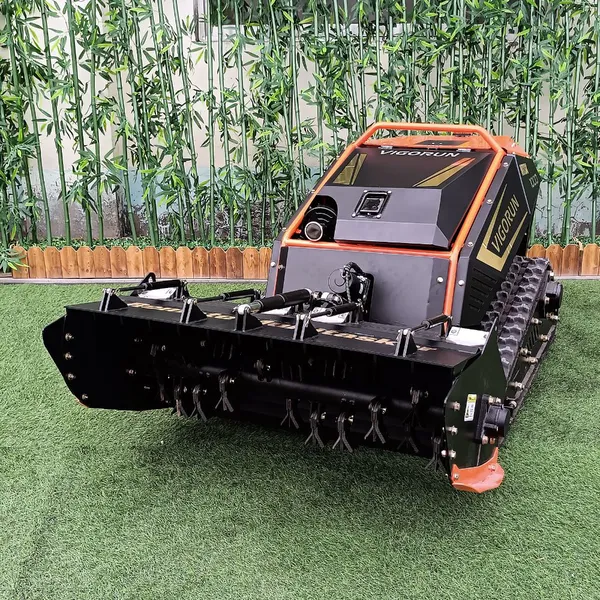
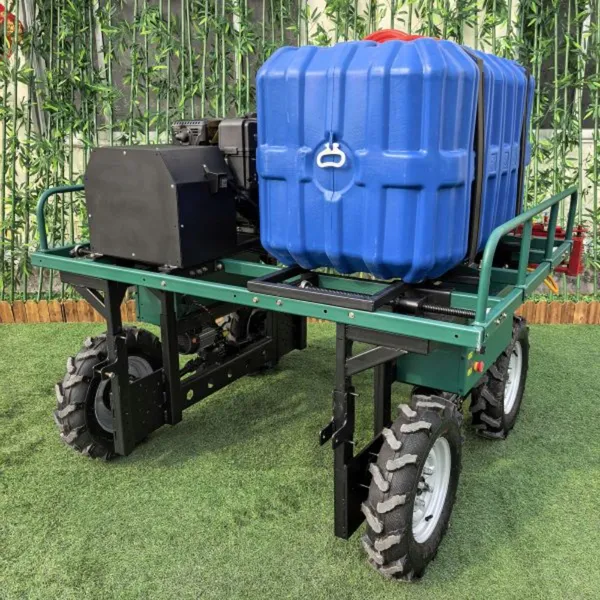
-
Vigorun Brush Mower Euro 5/EPA Hazard-Free Operation Hightop Lawn Mower for Orchards & VineyardsUS$ 1000 - 1100MOQ: 1 Set
-
Vigorun Brush Cutter Robot High Transmission Efficiency 73% Crawler Lawn Mower for Steep SlopesUS$ 1700 - 17900MOQ: 1 Set
-
Vigorun Tractor Sprayer Agriculture Euro 5/EPA Agricultural Sprayers Self Starter for Wheat FieldsUS$ 2600 - 2700MOQ: 1 Set
-
Vigorun Grass Cutter Machine 16x Manual Efficiency Small Remote Control Lawn Mower for NurseriesUS$ 1000 - 1100MOQ: 1 Set
-
Vigorun RC Brush Cutter Euro 5/EPA Low Energy Consumption 6hp Crawler Remote Control Lawn MowerUS$ 1700 - 17900MOQ: 1 Set
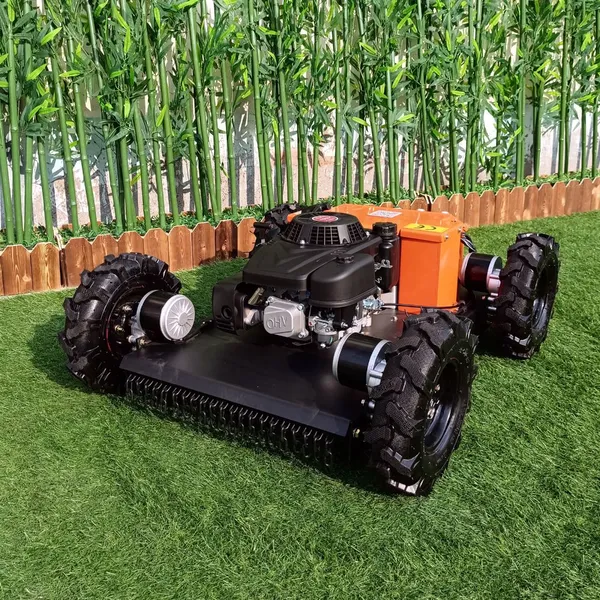
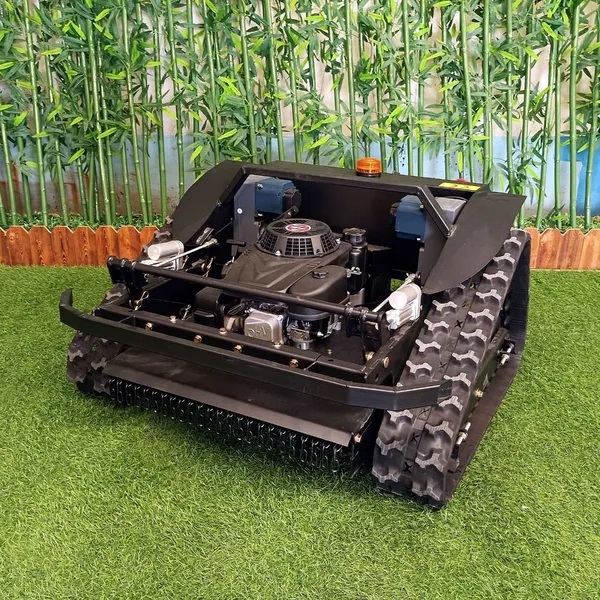

-
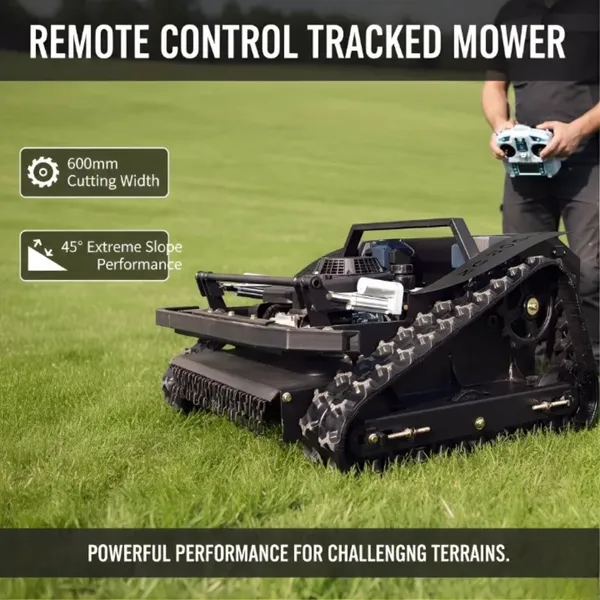
Vigorun VTLM800 RC Mower Euro 5/EPA Remote Hazard Avoidance Robot Crawler Mower for Steep SlopesUS$ 2600 - 2700MOQ: 1 Set
-
Vigorun MTSK800 Automatic Grass Cutter Robot Euro 5/EPA User-Friendly Remote Control Mulcher RobotUS$ 2800 - 2900MOQ: 1 Set
-
Vigorun Lawn Mower Robot With Flail Mower/Hammer Flail/Forest Mulcher/Snow Blade Tracked MulcherUS$ 8000 - 8200MOQ: 1 Set
-
Tractor Sprayer, CE EPA Approved Gasoline Engine Gasoline Fst Power Spray Agriculture for Soybean Fields Vigorun SPRY600US$ 2600.00 - 2700.00MOQ: 1 Set
-
Vigorun SPRY600 Boom Sprayer, Remote Control Distance 200M Gasoline Engine Type Spraying Machine for Cotton FieldsUS$ 2600.00 - 2700.00MOQ: 1 Set