
 Business License

Flail Mower Uses: 7 Jobs a Remote Control Flail Mower Handles Best
Last spring, a four-person municipal crew in Bavaria spent three days clearing a 35-degree embankment beside a federal highway with hand tools and a ride-on brush cutter. On day two, the brush cutter slid sideways on wet grass. The operator walked away with bruised ribs and a destroyed machine. The city stopped the job, paid the medical claim, and still had 800 meters of overgrowth to clear.
You already know that slope mowing is dangerous. You also know that a rotary deck works fine on flat grass but quits when the vegetation gets woody, the slope gets steep, or the saplings get thick. That is exactly where flail mower uses begin and rotary decks end.
This article covers seven proven applications for a remote control flail mower. You will learn what a flail mower is built to cut, where it outperforms a rotary deck, and how a tracked, remote-controlled unit keeps your operator 200 meters away from the danger zone. Whether you run a municipal fleet, bid commercial landscaping contracts, or manage orchard rows, the right flail head changes what jobs you can take on profitably.
What Is a Flail Mower and How Does It Work?
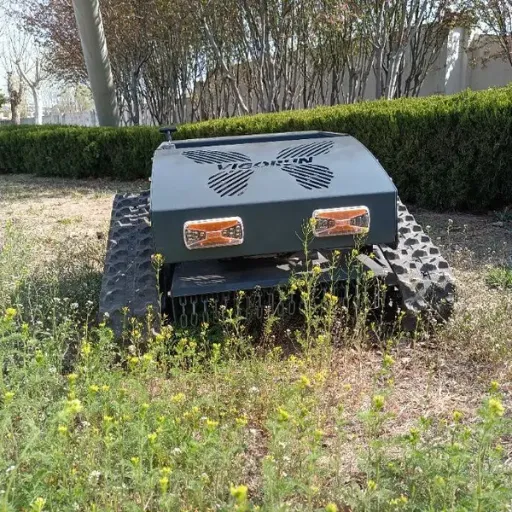
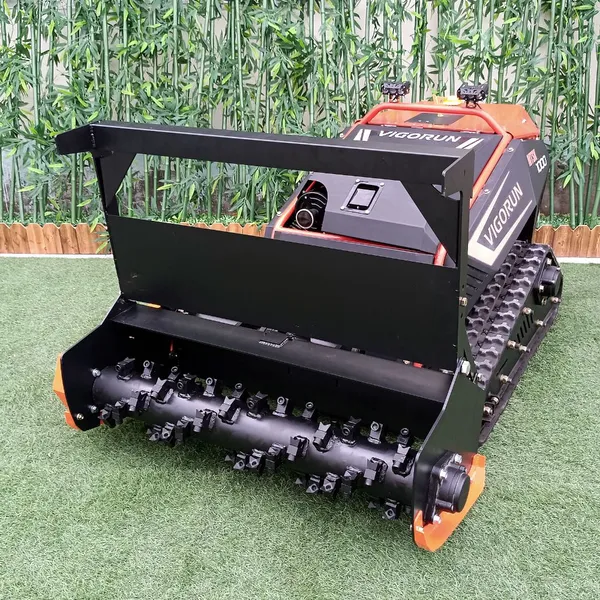
A flail mower uses a horizontal rotor fitted with dozens of small, hinged blades called flails. Each flail swings freely on its own pivot. When the rotor spins, centrifugal force drives the flails outward. They strike vegetation in a shredding motion rather than the slicing motion of a rotary blade.
This design matters for three reasons.
First, the flails recoil when they hit something hard. A rotary blade chips, bends, or throws debris at high speed. A flail bounces back, which protects the rotor and reduces projectile risk. Second, because the cutting edge is small and replaceable, you change individual flails instead of an entire bent blade. Third, the shredded output is finer and more evenly distributed, which makes flail mowers useful for mulching and ground-clearing jobs where you want organic material to decompose quickly.
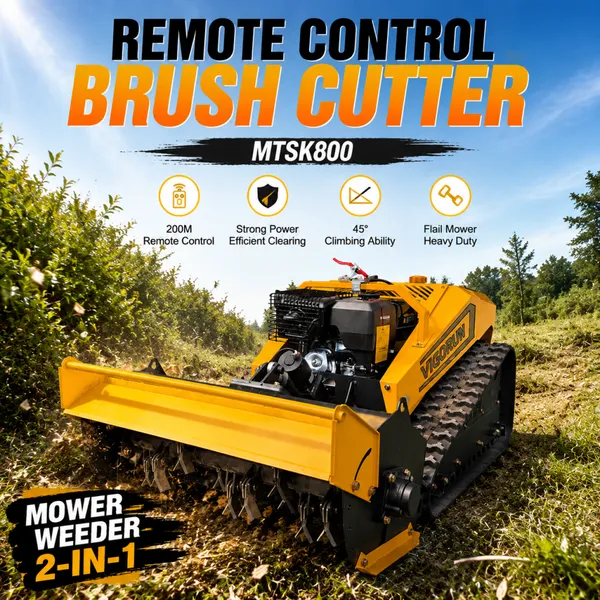
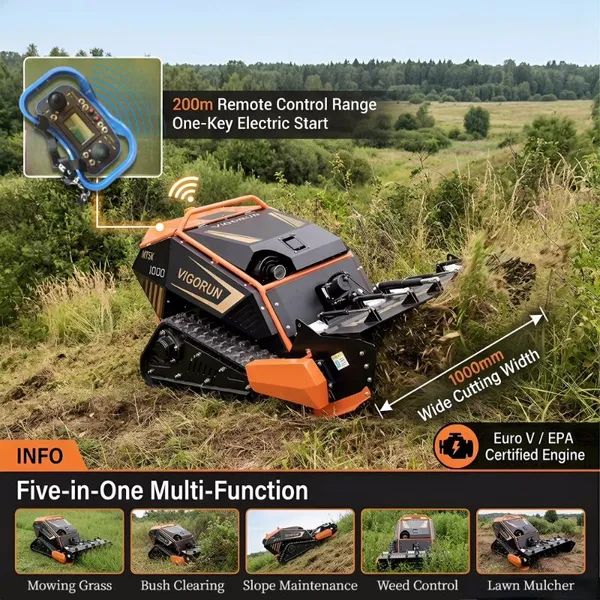
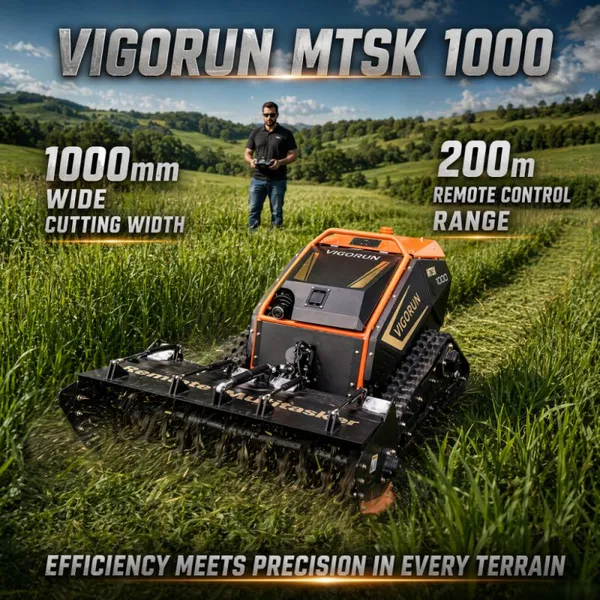
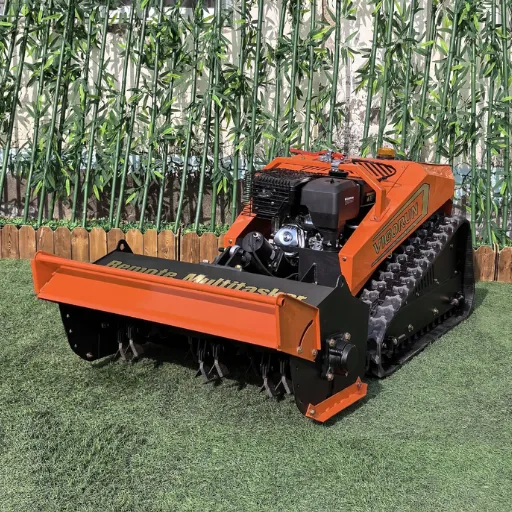
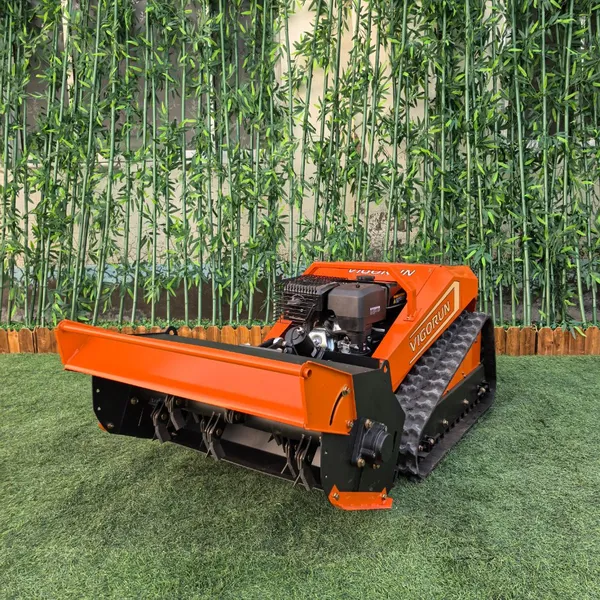
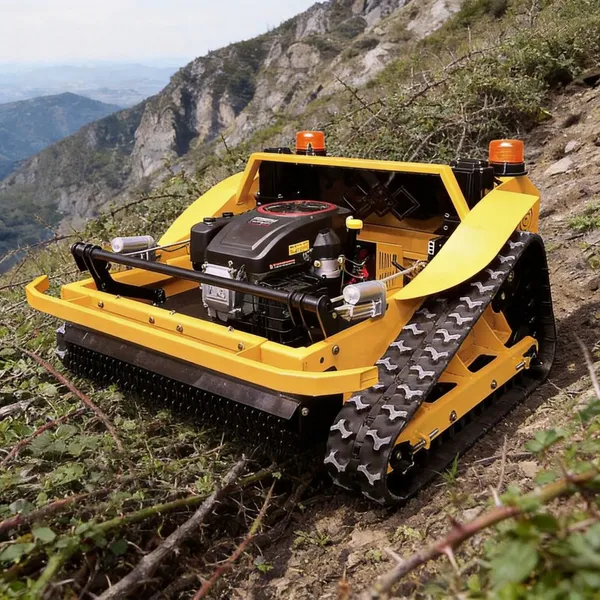
On a remote control flail mower like the MTSK1000, the flail head mounts to a rubber-track chassis rated for 45-degree slopes. The operator stands on flat ground with a 2.4 GHz industrial remote while the machine handles the cut. The same flail head can also mount to the Vigorun MultiTasker platform if you already own the core chassis and want to swap between rotary mowing, flail cutting, and spraying.
Clearing Heavy Brush and Overgrown Vegetation
The most common of all flail mower uses is heavy brush clearance. When grass turns to waist-high weeds, when blackberries tangle across a field edge, or when an abandoned lot grows into a thicket, a rotary deck clogs, stalls, or breaks.
A commercial flail mower does not stall on thick stems. The flails shred material progressively. Stalks that would wrap around a rotary spindle get pulverized into mulch. A flail head on a remote-controlled chassis can clear terrain that has not been touched in two or three seasons, turning overgrown lots back into manageable ground.
Want to see how a flail head handles real overgrowth? Explore the MTSK1000 remote control flail mower and compare rotor specs, flail types, and cutting width for your application.
Slope Mowing on Riverbanks and Embankments
Riverbanks, levees, retention ponds, and highway embankments share two traits: they are steep, and the vegetation on them is rarely just grass. After a season of rain, these slopes grow brush, thistle, and woody shoots that a string trimmer cannot touch and a ride-on mower cannot safely climb.
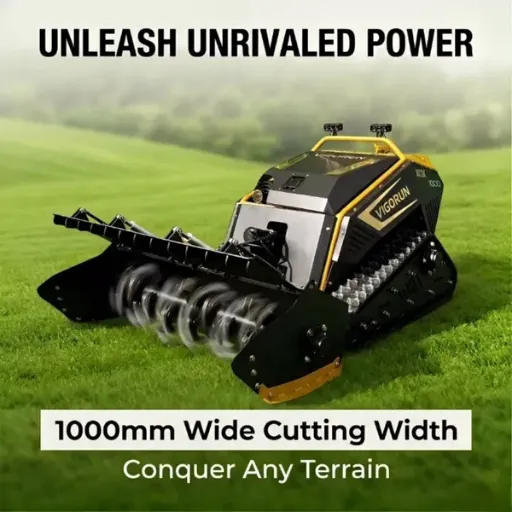
A flail mower for slopes solves both problems at once. The tracked chassis climbs grades up to 45 degrees on dry grass, and the flail head shreds mixed vegetation without clogging. Because the operator controls the machine from up to 200 meters away, there is no rollover risk, no flying debris hitting the driver, and no heat exhaustion on a July afternoon.
In the Bavaria case mentioned earlier, the municipality eventually replaced the damaged ride-on with a tracked remote control flail mower. One operator now clears the same 800-meter stretch in a single day. The crew stays on the shoulder. The machine handles the slope. The city eliminated hand-crew labor and avoided a second injury claim.
For crews that maintain levees, drainage channels, or roadside embankments, the question is not whether a flail mower can do the job. It is whether you can afford to keep sending operators onto the slope without one.
Orchard and Vineyard Row Maintenance
Orchard and vineyard rows create a specific challenge. You need to cut grass and weeds between trees or vines without damaging trunks, irrigation lines, or support posts. A rotary deck throws debris at high speed, which scars bark and damages fruit. The wide swing radius also makes it hard to maneuver close to trunks.
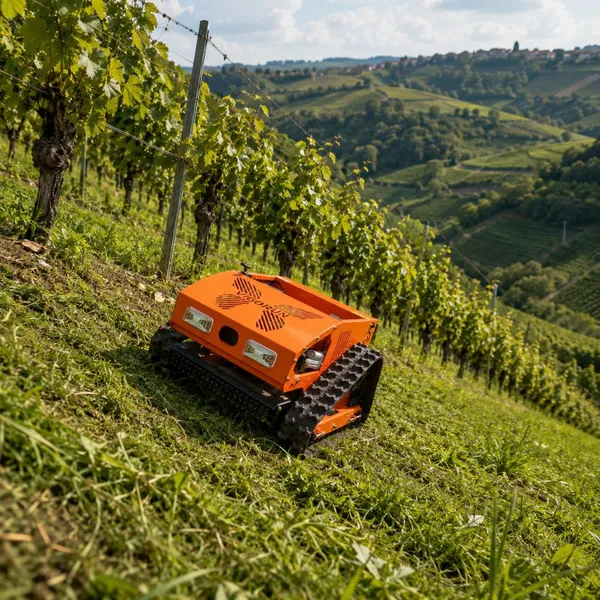
A remote control flail mower handles this differently. The flails shred material close to the ground with minimal lateral throw. Because the chassis is controlled remotely, the operator can walk behind the machine and guide it within centimeters of a tree trunk without risking the machine or the crop. On sloped vineyards in Chile and terraced orchards in Southeast Asia, growers use tracked flail mowers to maintain row floors that would be impossible to cut with a tractor-mounted deck.
Pedro Mendez manages a 40-hectare apple orchard near Curico, Chile. His terraces slope at 25 to 30 degrees. Before switching to a remote-controlled unit, he employed two workers with brush cutters for three days every two weeks during growing season. After mounting a flail head to a tracked remote chassis, one operator finishes the entire orchard in five hours. The labor cost dropped by 65 percent. The trees show no bark damage. And his operator no longer carries a 12-kilometer brush cutter up and down terraces in 30-degree heat.
If you manage rows on sloped ground, a flail mower is not just a cutting tool. It is a labor-replacement strategy.
Cutting Woody Saplings and Small-Diameter Brush

At some point, vegetation stops being "weeds" and starts being "wood." Saplings up to 25 millimeters in diameter, hedge trimmings, and small brush clusters require more force than a rotary blade can deliver repeatedly without damage.
Flail mower uses extend into this territory because the hinged flails deliver repeated impact strikes. A single flail may not sever a 20-millimeter sapling on the first hit, but the next flail on the spinning rotor does. The result is that a flail head on a remote-controlled chassis can clear young trees, brush clusters, and fence-line overgrowth that would destroy a standard lawn mower deck.
This matters for fire-prevention crews, utility right-of-way teams, and estate managers who need to keep fence lines and field borders clear. The alternative is often a dedicated brush cutter or a small excavator with a mulching head, both of which cost more to operate and still require a seated operator in the danger zone.
Ready to replace your hand crew on brush-clearing jobs? Request a dealer quote for the MTSK1000 or MTSK800 remote control flail mower and get FOB Shandong pricing within 24 hours.
Mulching and Ground-Clearing for Fire Prevention
Fire mitigation crews need ground cover reduced to a level where embers cannot sustain a flame. A rotary deck cuts grass and leaves it in windrows or clumps. A flail mower shreds material into fine pieces that settle closer to the soil and decompose faster.
This makes flail mowers the preferred choice for firebreak maintenance, ski-slope summer clearing, and solar-farm vegetation management. Solar installations often sit on land that is graded but not flat. Between panel rows, brush grows quickly and creates both fire risk and shading losses. A tracked remote control flail mower can clear these corridors without an operator ever walking between electrified equipment.
The fine mulch left behind also suppresses new weed growth for several weeks longer than a rotary cut, which reduces the number of passes needed per season. For municipal contracts and commercial vegetation management companies, fewer passes mean lower fuel cost, less operator time, and better margins on fixed-price bids.
Municipal and Commercial Vegetation Management
Municipalities, highway departments, and commercial landscaping companies face a common constraint: they must clear large areas on tight schedules with limited crew size. Hand crews are slow and create injury exposure. Ride-on mowers cannot handle steep grades or heavy brush. Dedicated mulchers are expensive and require specialized operators.
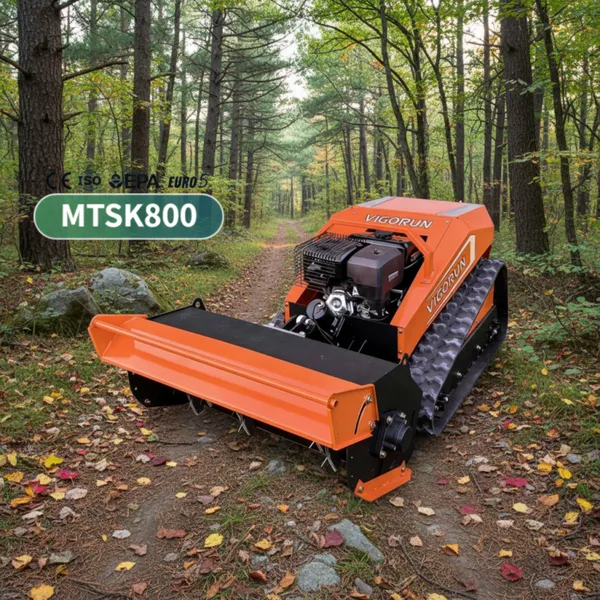
A commercial flail mower on a remote-controlled chassis fills this gap. One operator can clear mixed terrain that would otherwise require a four-person crew or multiple specialized machines. The tracked chassis handles slopes, wet grass, and uneven ground. The flail head cuts grass, weeds, brush, and small saplings in the same pass. And because the unit ships with CE, EURO V, and EPA certification documentation, procurement departments in the European Union, North America, and Australia can add it to fleet contracts without compliance questions.
According to OSHA data on landscaping and groundskeeping injuries, slope-related incidents and struck-by-object events rank among the top causes of lost-time accidents in grounds maintenance. A 200-meter remote control removes the operator from both hazard categories simultaneously.
When to Choose a Flail Mower Over a Rotary Deck
Not every job needs a flail head. If you are cutting flat, maintained grass on a villa lawn or a football pitch, a rotary deck is faster and leaves a cleaner finish. But when the terrain or vegetation crosses certain thresholds, the flail mower becomes the correct tool.
Choose a flail mower when:
The vegetation is mixed or woody. Grass, weeds, brush, and saplings in the same area will stall or damage a rotary blade.
The slope exceeds 15 degrees. Ride-on mowers lose traction and create rollover risk. A tracked remote control flail mower climbs to 45 degrees while the operator stays on flat ground.
You need to mulch, not just cut. Firebreaks, solar farms, and land-clearing jobs benefit from the fine shred a flail head produces.
Operator safety is non-negotiable. Embankments, riverbanks, retention ponds, and highway medians are dangerous to mow with seated operators.
You want one machine for multiple seasons. A MultiTasker chassis with a flail head attachment clears brush in autumn, then swaps to a rotary deck for summer grass or a sprayer for orchard applications.
Distributors and fleet buyers should also consider total cost of ownership. A rotary deck that hits a hidden rock or a thick sapling requires blade replacement, spindle repair, or deck welding. A flail mower loses one small flail, which costs a few dollars and takes minutes to change. Over a multi-season municipal contract, that maintenance difference adds up.
Conclusion
Flail mower uses go far beyond cutting grass. A remote control flail mower clears heavy brush, climbs steep embankments, maintains orchard rows, shreds woody saplings, creates firebreak mulch, and replaces multi-person crews on dangerous terrain. The flail head's shredding action handles vegetation that would destroy a rotary deck, while the tracked, remote-controlled chassis keeps the operator safely away from rollover zones and flying debris.
If your jobs involve slopes, brush, or mixed vegetation, the question is not whether you need a flail mower. It is whether you want your operator on the machine or 200 meters away from it.
Request Your Dealer Quote Today, get FOB Shandong pricing, container-loading diagrams, and OEM customization options for the MTSK1000 or MTSK800 remote control flail mower. Whether you need one unit for your own fleet or a container load for resale, our Weifang factory ships CE, EURO V, and EPA-certified machines to 140-plus countries with a one-year warranty and whole-life parts support.
Recently Posted
-
Steep Slope 600mm Tracked 200m Remote Control 45 Degree Brushless Electric Lawn Mower
August 10, 2026*Integrated Drive System with 73 Percent Efficiency: The VTLM600 remote control lawn mower features a fully integrated brushless m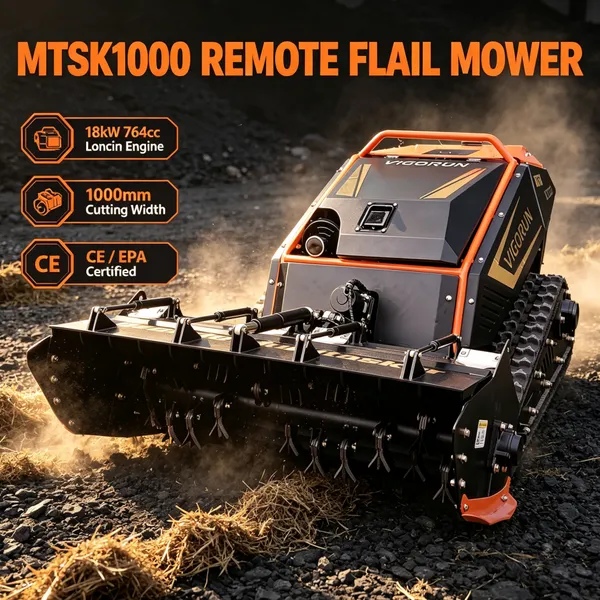 Read More
 -
Remote Controlled Pesticide Sprayer with 600L Tank 8.4m Boom for Agricultural Applications
August 10, 2026*Electric Start & 13kW Loncin Engine for Powerful Agricultural Spraying: Maximize field application efficiency with the SPRY60 Read More
 -
Self Propelled Agricultural Boom Sprayer with Adjustable Track for Modern Farming
August 10, 2026*Electric Start & 13kW Loncin Engine for Powerful Agricultural Spraying: Maximize field application efficiency with the SPRY60 Read More
 -
Automatic Remote Control Agricultural Spray Machine with 600L Chemical Tank and Boom System
August 10, 2026*Electric Start & 13kW Loncin Engine for Powerful Agricultural Spraying: Maximize field application efficiency with the SPRY60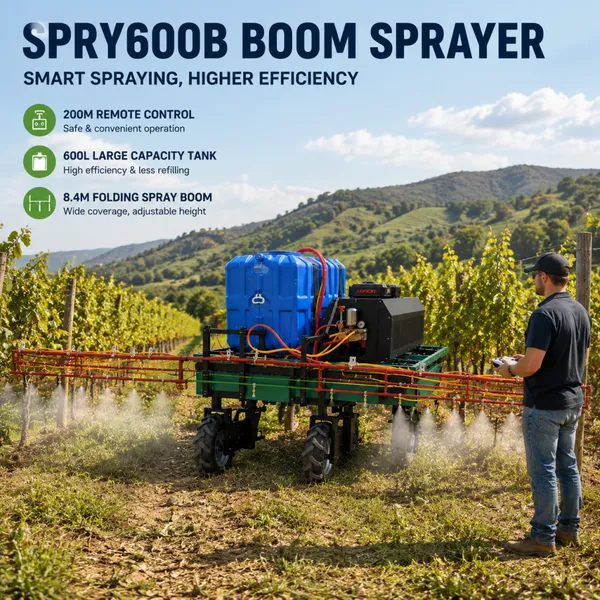 Read More

Contact Us
Recommended Products
-
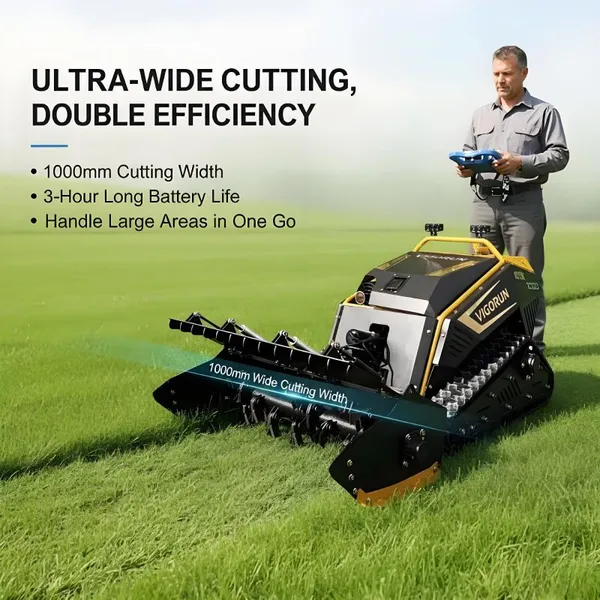
 Vigorun Lawn Mower Robot, Industrial Dual 48V 1500W Motors MTSK1000 Mulcher Machine for Large LandscapesUS$ 7500.00 - 7700.00MOQ: 1 Set
 -
Farmland Orchards Battery Powered Mower Gasoline Golf Mower Robot Lawn Mower 3000m2 Vigorun Remote Control Grass MowerUS$ 2580 - 2700MOQ: 1 Unit
-
Vigorun MTSK800 Automatic Remote Control Grass Cutting Machine 48V 20Ah Battery Remote Flail MowerUS$ 2800 - 2900MOQ: 1 Set
-
Vigorun MTSK1000 Remote Control Mower 24hp Fail-Safe Slope Braking Remote Control Forest MulcherUS$ 8000 - 8200MOQ: 1 Set
-
Industry Electric Motor Lawn Mower Flail Mower Atv Gasoline Hedge Trimmer Battery LawnmowerUS$ 2580 - 2900MOQ: 1 Unit
-
Vigorun Agricultural Tractor Sprayer Euro 5/EPA Electric Agricultural Sprayer 600l for VineyardsUS$ 2600 - 2700MOQ: 1 Set
-
Remote Control Tracked Hillside Mower 800mm Cutting Width 60 Degree Slope for Steep Terrain VegetationUS$ 2600 - 2700MOQ: 1 Set
-
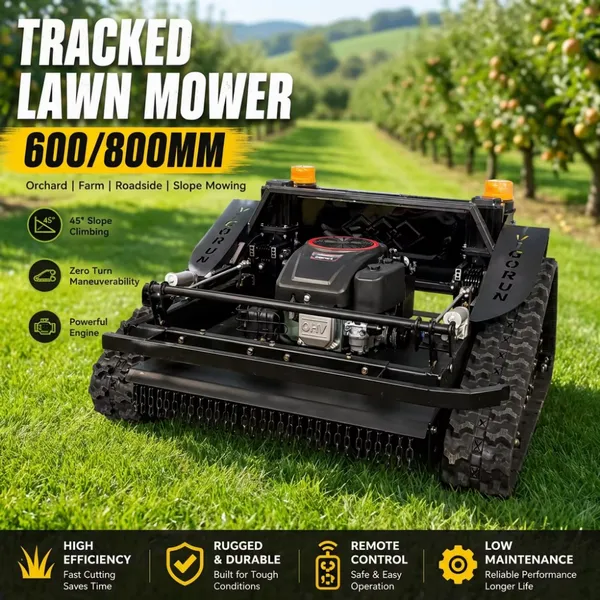
Vigorun VTLM600 RC Lawn Mower Robot CE EPA Certified 45° Extreme Slope Mini Crawler Lawn MowerUS$ 1700 - 17900MOQ: 1 Set
-
Remote Controlled High Efficiency Fog Cannon Spraying Machine 600L Tank for Agriculture and Dust ControlUS$ 2800 - 2900MOQ: 1 Set
-
Vigorun Radio Control Mowing Euro 5/EPA Self-Propelled & Precise 6hp Remote Control Crawler MowerUS$ 1700 - 1790MOQ: 1 Set
-
Factory Manufacturer Vigorun MTSK1000 1000MM Commercial Branch Cutter Flail Mower rc Remote Petrol Lawnmower Mower Grass Cutter TractorUS$ 8000 - 8200MOQ: 1 Set
-
Vigorun VTW550 Remote Control Grass Cutter Tractor Robot Gas Lawn Mower Grass Cutter Small Electric Lawn Mower Vigorun Lawn MowerUS$ 1000 - 1250MOQ: 1 Set
-
Vigorun Tech Gasoline Remote Control Lawn Mower Self-Locking Slope Safety RC Mower Tiller for EmbankmentsUS$ 2800.00 - 2900.00MOQ: 1 Set
-
Mower Gasoline Grass Cutter Machine Remote Control 1000mm Cut 35 Degree Slope Flail Hammer for Overgrown LandUS$ 7500 - 7700MOQ: 1 Set
-
Vigorun VTLM800 Remote Control Electric Mower, Self-Locking Slope Safety Crawler Mower for Steep SlopesUS$ 2600.00 - 2700.00MOQ: 1 Set

-
Shrub and Brush Clearing MTSK800 MTSK1000 Flail Mower rc Remote Weeding Weeder MachineUS$ 2800 - 2900MOQ: 1 Set
-
RC Robot Lawn Mower Electric Remote Control Flail Grass Cutter Garden Cutting Machine MTSK1000US$ 8000 - 8200MOQ: 1 Set
-
Remote Manipulation Rubber Track Brush Cutter Industrial Flail Mower for Efficient Shrub ClearingUS$ 2000.00 - 2790.00MOQ: 1 Set
-
Vigorun MTSK1000 Rc Lawn Mower, Loncin 764CC Gasoline Engine Forestry Mulcher With Remote Control for ForestryUS$ 7500.00 - 7700.00MOQ: 1 Set
-
Vigorun VTC550 Zero Turn Electric Mower Quality Guaranteed Crawler Brush Cutter For Embankments & LeveesUS$ 1600 - 1690MOQ: 1 Set