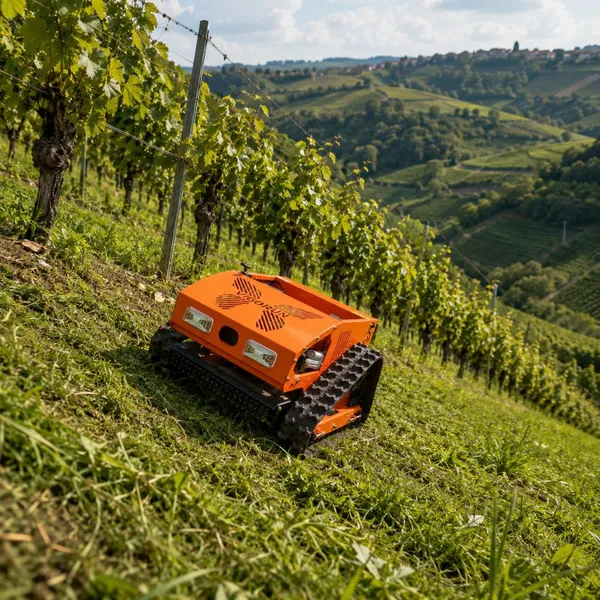

 Business License

How to Cut Tall Grass: A Complete Guide to Safe, Effective Clearance
In July 2024, a landscaping crew in Brisbane took on what looked like a routine estate clearance. The grass had grown to knee height after three weeks of rain. The operator lowered the deck on a standard zero-turn ride-on and drove straight in. The blades bogged down within six meters. The engine stalled. And when the operator reversed to dislodge the clog, the rear wheels slid on wet clippings and the machine tipped sideways into a drainage ditch. The operator fractured a wrist. The client canceled the contract. All of it happened because nobody assessed how to cut tall grass safely before starting the engine.
You have probably faced a similar situation. A field, a roadside, a sloped estate, or an orchard row where the grass is too tall for a standard mower and too thick for a string trimmer. The question is not simply whether you can cut it. The question is how to cut tall grass without damaging your equipment, injuring your operator, or losing the job.
This guide covers the complete process. You will learn how to assess the site, choose the right equipment, cut in safe stages, and maintain your machine afterward. We will also cover the specific situations where a remote control lawn mower is the only safe choice and how to make that upgrade pay for itself.
Assess the Site Before You Start the Blades
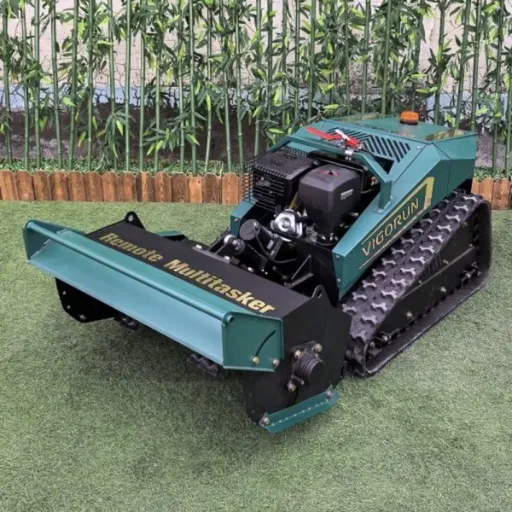
Every tall grass job starts with a walk-through. Tall grass hides hazards that short grass does not. Rocks, tree stumps, old fencing wire, irrigation heads, and drainage grates all disappear beneath growth that can reach waist height or more.
Walk the perimeter first. Mark obstacles with temporary flags or spray paint. Look for slopes, even gentle ones, because a 15-degree grade that feels safe on foot becomes dangerous when a ride-on mower loses traction on wet clippings. Check for ground softness after rain. A machine that sinks into sodden soil is a machine that needs to be winched out.
Measure the grass height and density. Grass below 150 millimeters (6 inches) is standard mowing territory. Between 150 and 300 millimeters, you need to raise the deck and cut in multiple passes. Above 300 millimeters, you are often dealing with mixed vegetation that includes weeds, brush, and woody stems. That changes the equipment choice entirely.
Want to see which mower handles your specific terrain? Browse the full Vigorun remote control lawn mower range and compare slope ratings, cutting widths, and engine specs for tall grass and brush applications.
Choose Equipment That Matches the Job
Not every machine can cut tall grass. Sending a standard rotary lawn mower into 300-millimeter growth is like asking a sedan to tow a trailer. It might move a few meters, but something will break.
For grass between 100 and 200 millimeters, a commercial rotary mower with a high-lift blade and a deck height set to 75 millimeters or above can handle a first pass. Cut at the highest setting, then lower the deck for a second pass. This staged approach reduces engine load and prevents clogging.
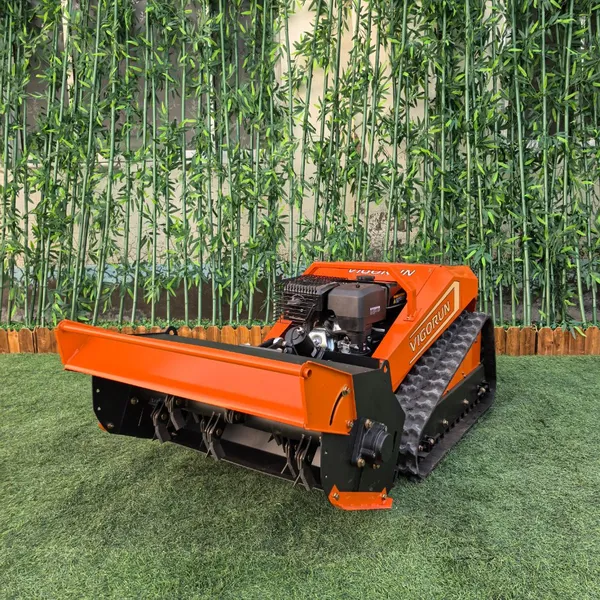
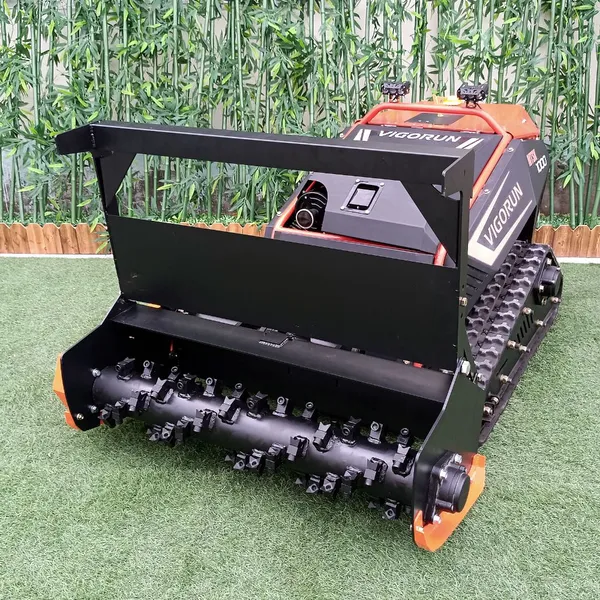
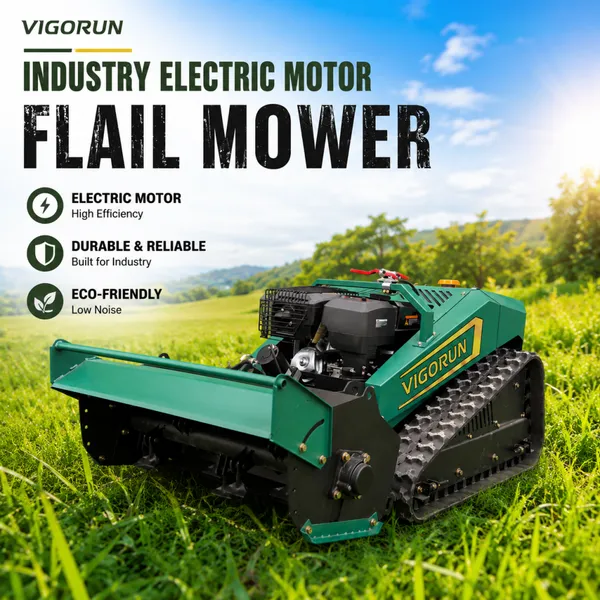
For grass above 200 millimeters or mixed with weeds and light brush, you need more power and a different cutting mechanism. Brush cutters, walk-behind field mowers, and flail mowers are built for this. A flail mower uses hinged blades on a spinning rotor to shred thick vegetation without the clogging or blade damage that ruins a rotary deck.
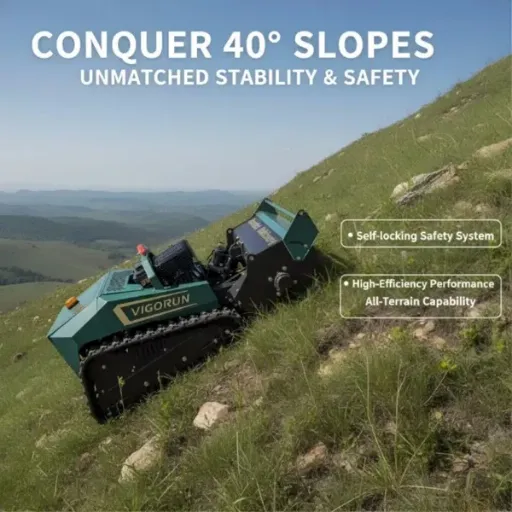
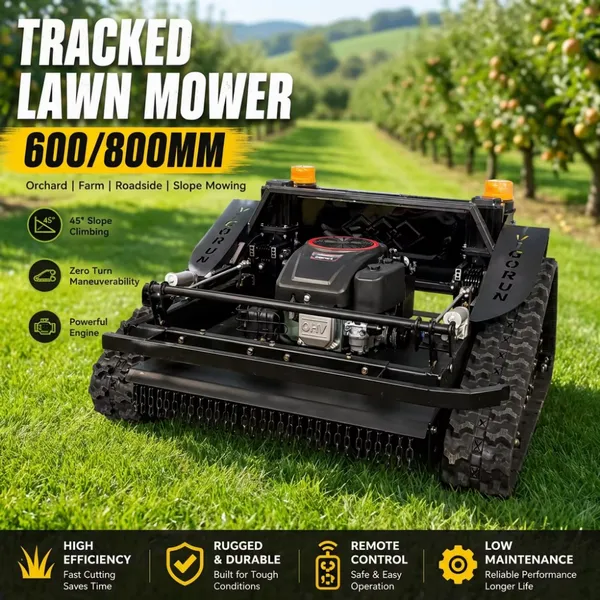
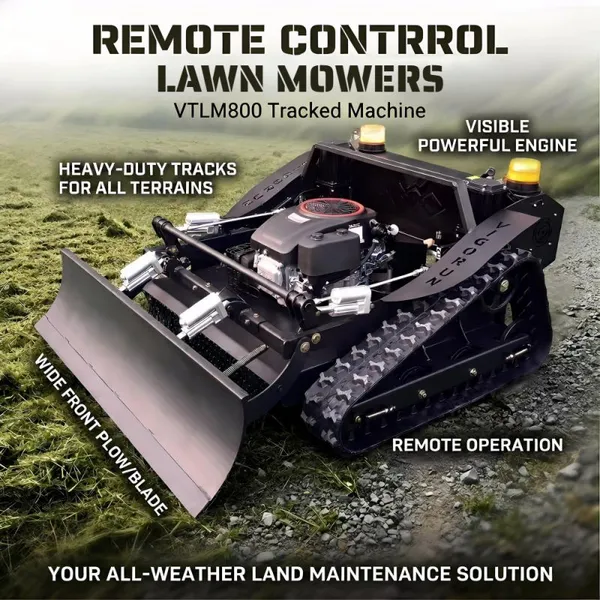
For slopes above 20 degrees, the equation changes completely. A ride-on mower is unsafe. A walk-behind brush cutter is exhausting and still puts the operator on the slope. A remote control lawn mower with a tracked chassis keeps the operator on flat ground while the machine climbs grades up to 45 degrees. The Vigorun VTLM800, for example, pairs a rubber-track undercarriage with a 200-meter wireless remote. The operator stands safely away while the tracked chassis handles the slope and the cutting deck handles the tall grass.
| Equipment Type | Best For Tall Grass Height | Slope Limit | Operator Position |
|---|---|---|---|
| Standard rotary mower | Up to 150 mm | Flat to 10° | Seated or standing behind |
| High-lift commercial rotary | 150–200 mm | Flat to 15° | Seated or standing behind |
| Walk-behind brush cutter | 200–400 mm | Up to 20° | Walking on slope |
| Flail mower (tractor or remote) | 200 mm+ with brush | Up to 45° (remote) | Seated (tractor) or off slope (remote) |
| Remote control slope mower | 200 mm+ with mixed brush | Up to 45° | Off slope, up to 200 m away |
Maria Santos runs a commercial landscaping business in Portugal. Last spring she bid a riverbank maintenance contract that included 800 meters of 30-degree embankment covered in grass up to 400 millimeters high. Her crew tried walk-behind brush cutters for one day. Two operators called in sick with heat exhaustion the next morning. She rented a remote-controlled slope mower for the following week. One operator cleared the full 800 meters in three days from the top of the bank. She bought her own unit two months later and has since bid three additional slope contracts she would have declined before.
How to Cut Tall Grass in Stages
The biggest mistake operators make is trying to cut tall grass to finished height in a single pass. That stalls the engine, clogs the deck, and leaves clumps of wet cuttings that kill the grass underneath.
Follow this staged process instead.
Pass One: Cut the Top Third
Set the deck or cutting head to remove roughly the top third of the grass height. For 300-millimeter grass, set the deck to 200 millimeters. Move at a slower ground speed than you would for standard mowing. This reduces the volume of material entering the deck at once and gives the blades time to process the cuttings.
Pass Two: Lower to Target Height
After the first pass, raise the engine RPM and lower the deck to your target height. For most maintenance cuts, this is 50 to 75 millimeters. The second pass mulches the clippings from the first cut and produces an even finish.
Pass Three: Final Cleanup (If Needed)
On commercial or estate jobs where appearance matters, a third pass at the finished height with the discharge chute oriented away from beds and walkways gives a clean, professional result.
On slopes, always mow across the grade, not up and down. Mowing directly up or down a slope shifts weight distribution and increases rollover risk. On a remote-controlled unit, the operator simply steers the chassis across the face of the slope from a safe position above or beside the grade.
Safety Rules for Tall Grass and Slope Cutting
Tall grass jobs create hazards that standard mowing does not. According to the U. S. Occupational Safety and Health Administration, rollover incidents and struck-by-object injuries are the two leading causes of serious harm in landscaping and grounds maintenance. Tall grass makes both more likely because the operator cannot see the terrain and because dense vegetation increases blade resistance and debris ejection.
Protective Equipment
Every operator should wear safety glasses, hearing protection, steel-toed boots, and long pants. On slope work, add a hard hat and high-visibility vest. Gloves are essential for brush cutter and string trimmer work.
Slope Protocol
Never operate a ride-on mower on a slope steeper than 15 degrees. Most manufacturers list 10 to 15 degrees as the maximum safe grade for zero-turn and garden tractors. Beyond that, the center of gravity shifts, traction degrades, and the risk of sideways slide increases exponentially.
For slopes between 15 and 45 degrees, use equipment designed for the grade. A tracked remote control lawn mower maintains ground contact through rubber tracks and a low center of gravity. The operator never sets foot on the slope, which eliminates rollover risk entirely.
Debris Awareness
Tall grass hides rocks, bottles, and metal fragments. When a rotary blade strikes a hidden object, it can eject material at speeds over 200 kilometers per hour. This is why the 200-meter remote on the Vigorun VTLM800 matters. The operator is not in the debris path. The machine takes the impact. The operator stays safe.
Before each job, brief your crew on signal range, emergency stop location, and lost-signal behavior. Every Vigorun remote mower includes a hardware emergency stop on both the transmitter and the chassis. If signal is lost, the blade and motion stop automatically.
Handling Thick Brush and Overgrown Weeds
At some point, tall grass becomes something else. When stems turn woody, when blackberries tangle through the growth, or when saplings sprout between the weeds, you are no longer cutting grass. You are clearing brush.
A standard rotary deck cannot handle this. The stems wrap around the spindle. The blades dull within minutes. The engine overheats.
A flail mower is the right tool for mixed tall grass and brush. The hinged flails shred material progressively. They do not wrap. They do not chip on contact with wood. And because each flail is small and replaceable, maintenance costs are lower than replacing a full bent rotary blade.
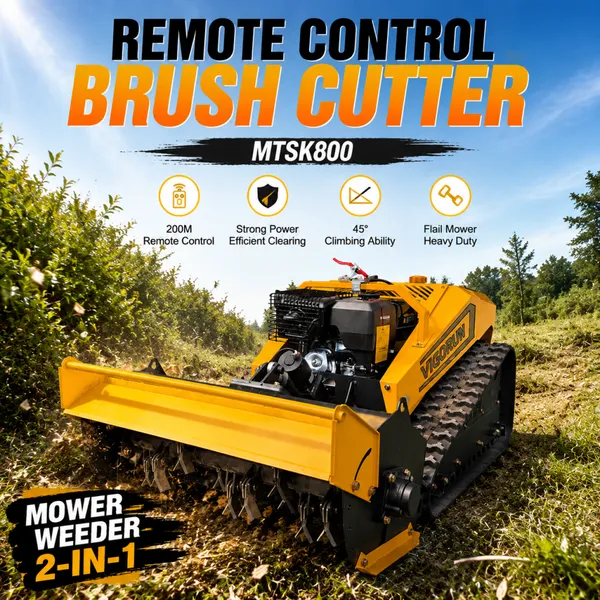
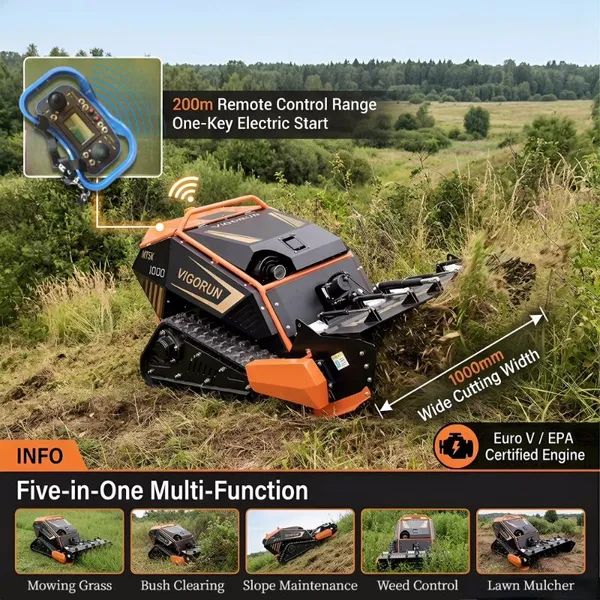
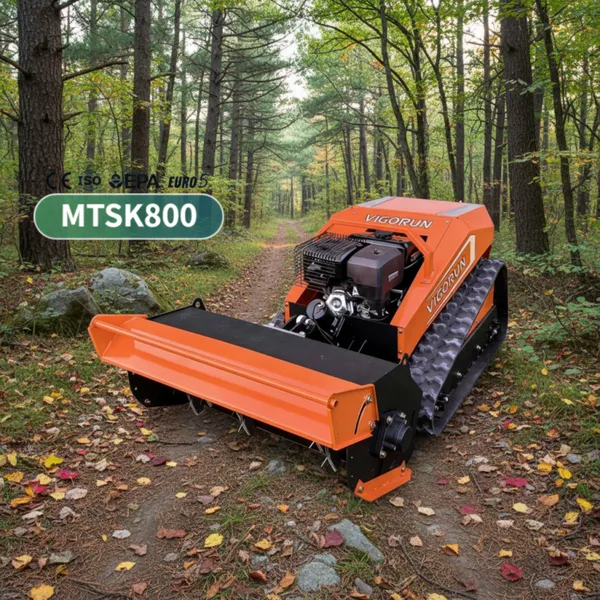
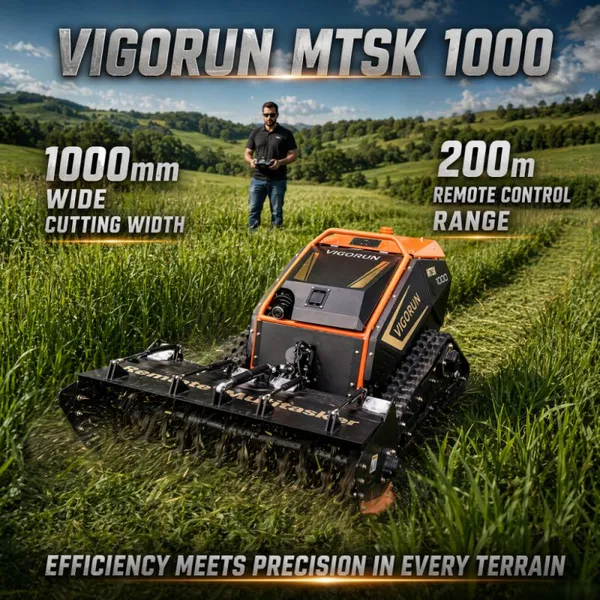
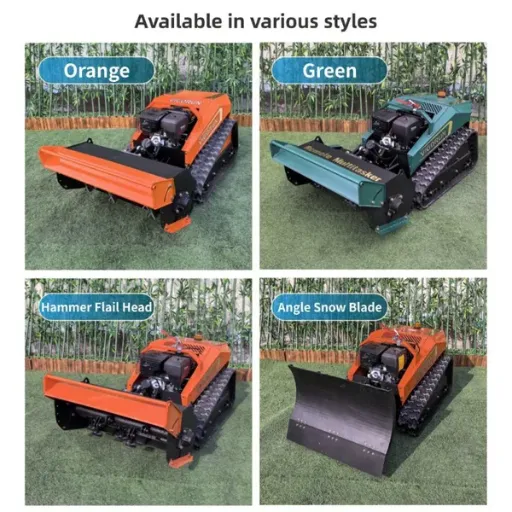
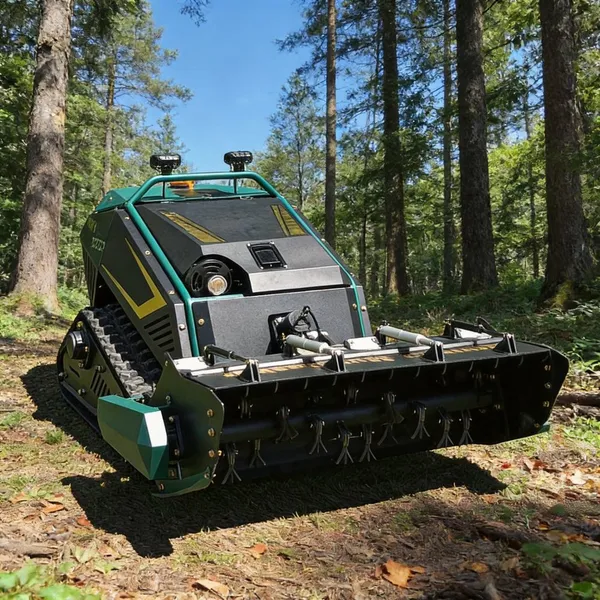
The Vigorun MTSK1000 remote control flail mower pairs a heavy-duty flail head with the same tracked chassis used for slope mowing. It cuts grass, weeds, and brush up to 25 millimeters in diameter in a single pass. For orchard rows, vineyard floors, and firebreak maintenance, this means one machine handles both the tall grass and the woody overgrowth that grows between cuts.
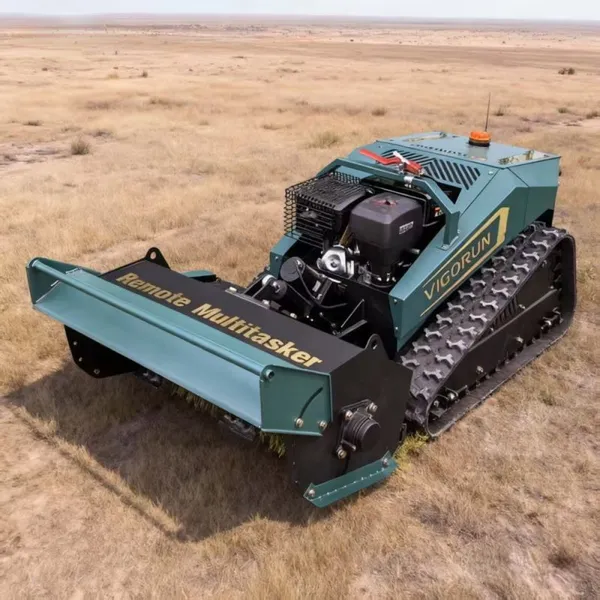
If your job site includes both flat areas and slopes, consider the Vigorun MultiTasker platform. The core chassis accepts interchangeable attachments. You can mount a rotary deck for standard lawn areas, a flail head for brush and tall grass, and a sprayer for weed control. One remote-controlled platform replaces three separate machines.
Post-Cut Cleanup and Equipment Care
Cutting tall grass is hard on equipment. The engine works harder. The blades dull faster. And the deck accumulates packed clippings that corrode metal and block discharge.
After every tall grass job, run through this checklist.
Clean the deck. Remove caked grass from the underside of the deck and from around the spindle. Wet grass starts to compost within hours and accelerates rust.
Sharpen or replace blades. Tall grass and hidden debris dull edges quickly. A dull blade tears grass instead of cutting it cleanly, which leaves a brown, ragged tip that looks unprofessional and invites disease.
Check air filters and cooling fins. Dust and pollen are thicker in tall grass. Clogged air filters reduce engine power and increase fuel consumption.
Inspect tracks or tires. On tracked machines, check track tension and look for stones wedged in the treads. On wheeled machines, check tire pressure and look for cuts or bulges from hidden hazards.
Grease pivot points. Tall grass cutting involves more vibration than standard mowing. Grease fittings on the deck lift, steering linkages, and attachment points prevent premature wear.
For remote-controlled units, also check the antenna housing, transmitter battery level, and emergency-stop function before storing the machine. A five-minute inspection after a tough job prevents a two-hour breakdown on the next one.
When to Upgrade from Manual to Remote-Controlled Equipment
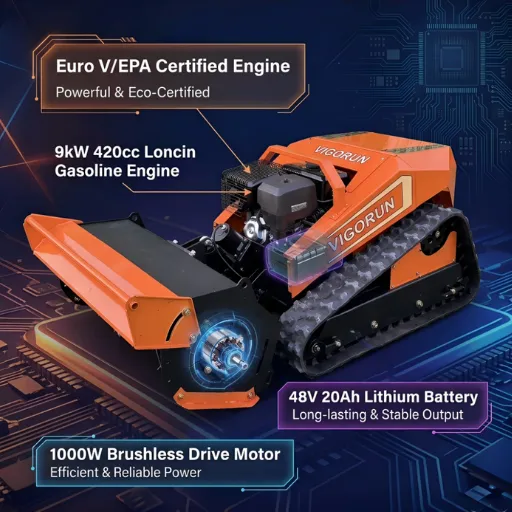
There is a point where manual cutting stops making economic sense. If your crew spends more than two days per month on slopes, brush, or overgrown lots, the labor cost alone justifies looking at mechanized alternatives.
Consider the real cost of manual tall grass and brush cutting. A four-person hand crew on a slope job costs labor, insurance, and equipment rental. Heat exhaustion, muscle strain, and minor injuries add sick days and workers compensation claims. And hand crews move slowly. A job that takes four people three days is a job that one operator with a remote control lawn mower can finish in one.
Hans Weber manages municipal grounds for a district in northern Germany. His team maintained roadside embankments with brush cutters for years. The labor cost ran to 18,000 euros per season. Injuries averaged two per year. After switching to a tracked remote mower, the same seasonal program costs 4,500 euros in fuel and operator time. The district has recorded zero slope injuries since the switch. The machine paid for itself in 14 months.
The upgrade decision is not about luxury. It is about replacing high-risk labor with equipment that works faster, safer, and at lower total cost. For commercial landscapers, municipalities, and estate managers, a remote-controlled slope mower turns dangerous, labor-intensive tall grass jobs into routine one-operator tasks.
Ready to see how a remote mower fits your tall grass and slope work? Request a dealer quote for the VTLM800 or MTSK1000 and get FOB Shandong pricing within 24 hours. Ask about OEM customization if you plan to add remote mowers to your dealer catalog.
Conclusion
Cutting tall grass is not complicated, but it is unforgiving. The wrong equipment stalls, clogs, or tips. The wrong technique damages turf and wastes labor. And the wrong safety approach puts operators in the hospital.
The solution is methodical preparation. Assess the site before you start. Match the equipment to the grass height, density, and slope. Cut in stages rather than forcing a single pass. Maintain your machine after every job. And when the terrain gets steep or the vegetation gets thick, use equipment that keeps your operator off the slope and away from the danger zone.
A remote control lawn mower is not the answer for every tall grass job. But when the grade exceeds 20 degrees, when the growth includes brush and saplings, or when operator safety is the primary concern, it becomes the only answer that makes sense.
Start with the site assessment. Choose the right machine. Cut in stages. And if your work regularly takes you to slopes, riverbanks, or overgrown lots, explore the Vigorun remote mower lineup and see how factory-direct equipment from Shandong can replace your most dangerous manual work with one operator, one remote, and zero compromise on safety.
Recently Posted
-
Steep Slope 600mm Tracked 200m Remote Control 45 Degree Brushless Electric Lawn Mower
August 10, 2026*Integrated Drive System with 73 Percent Efficiency: The VTLM600 remote control lawn mower features a fully integrated brushless m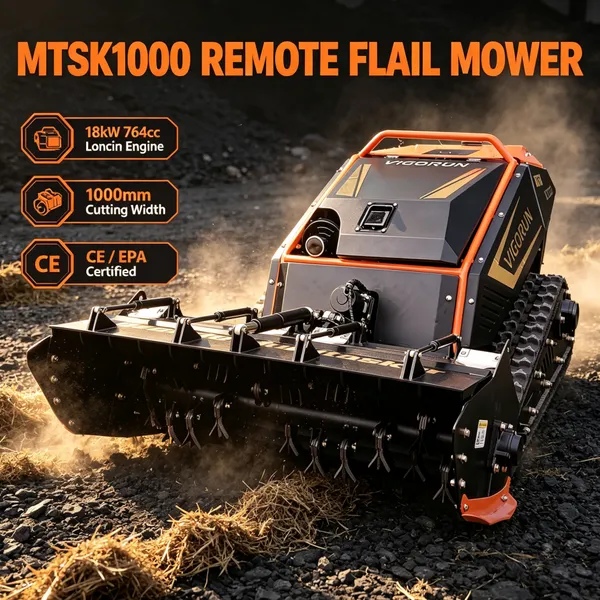 Read More
 -
Remote Controlled Pesticide Sprayer with 600L Tank 8.4m Boom for Agricultural Applications
August 10, 2026*Electric Start & 13kW Loncin Engine for Powerful Agricultural Spraying: Maximize field application efficiency with the SPRY60 Read More
 -
Self Propelled Agricultural Boom Sprayer with Adjustable Track for Modern Farming
August 10, 2026*Electric Start & 13kW Loncin Engine for Powerful Agricultural Spraying: Maximize field application efficiency with the SPRY60 Read More
 -
Automatic Remote Control Agricultural Spray Machine with 600L Chemical Tank and Boom System
August 10, 2026*Electric Start & 13kW Loncin Engine for Powerful Agricultural Spraying: Maximize field application efficiency with the SPRY60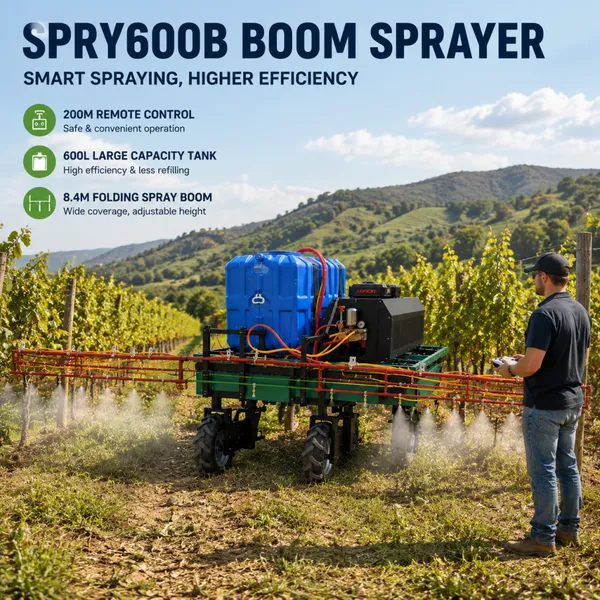 Read More

Contact Us
Recommended Products
-
 Vigorun Lawn Mower Robot, Industrial Dual 48V 1500W Motors MTSK1000 Mulcher Machine for Large LandscapesUS$ 7500.00 - 7700.00MOQ: 1 Set
 -
Farmland Orchards Battery Powered Mower Gasoline Golf Mower Robot Lawn Mower 3000m2 Vigorun Remote Control Grass MowerUS$ 2580 - 2700MOQ: 1 Unit
-
Vigorun MTSK800 Automatic Remote Control Grass Cutting Machine 48V 20Ah Battery Remote Flail MowerUS$ 2800 - 2900MOQ: 1 Set
-
Vigorun MTSK1000 Remote Control Mower 24hp Fail-Safe Slope Braking Remote Control Forest MulcherUS$ 8000 - 8200MOQ: 1 Set
-
Industry Electric Motor Lawn Mower Flail Mower Atv Gasoline Hedge Trimmer Battery LawnmowerUS$ 2580 - 2900MOQ: 1 Unit
-
Vigorun Agricultural Tractor Sprayer Euro 5/EPA Electric Agricultural Sprayer 600l for VineyardsUS$ 2600 - 2700MOQ: 1 Set
-
Remote Control Tracked Hillside Mower 800mm Cutting Width 60 Degree Slope for Steep Terrain VegetationUS$ 2600 - 2700MOQ: 1 Set
-
Vigorun VTLM600 RC Lawn Mower Robot CE EPA Certified 45° Extreme Slope Mini Crawler Lawn MowerUS$ 1700 - 17900MOQ: 1 Set
-
Remote Controlled High Efficiency Fog Cannon Spraying Machine 600L Tank for Agriculture and Dust ControlUS$ 2800 - 2900MOQ: 1 Set
-
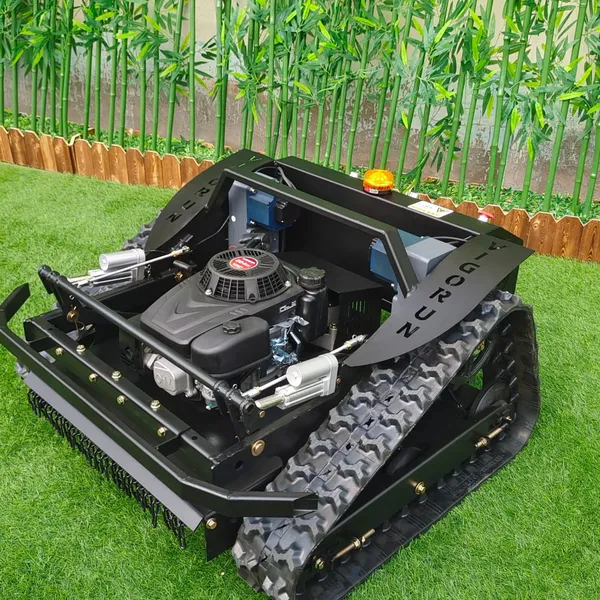
Vigorun Radio Control Mowing Euro 5/EPA Self-Propelled & Precise 6hp Remote Control Crawler MowerUS$ 1700 - 1790MOQ: 1 Set
-
Factory Manufacturer Vigorun MTSK1000 1000MM Commercial Branch Cutter Flail Mower rc Remote Petrol Lawnmower Mower Grass Cutter TractorUS$ 8000 - 8200MOQ: 1 Set
-
Vigorun VTW550 Remote Control Grass Cutter Tractor Robot Gas Lawn Mower Grass Cutter Small Electric Lawn Mower Vigorun Lawn MowerUS$ 1000 - 1250MOQ: 1 Set
-
Vigorun Tech Gasoline Remote Control Lawn Mower Self-Locking Slope Safety RC Mower Tiller for EmbankmentsUS$ 2800.00 - 2900.00MOQ: 1 Set
-
Mower Gasoline Grass Cutter Machine Remote Control 1000mm Cut 35 Degree Slope Flail Hammer for Overgrown LandUS$ 7500 - 7700MOQ: 1 Set
-
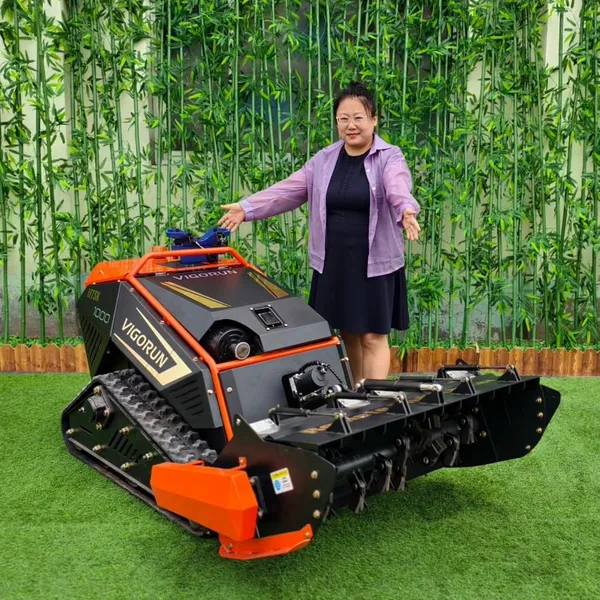
Vigorun VTLM800 Remote Control Electric Mower, Self-Locking Slope Safety Crawler Mower for Steep SlopesUS$ 2600.00 - 2700.00MOQ: 1 Set
-
Shrub and Brush Clearing MTSK800 MTSK1000 Flail Mower rc Remote Weeding Weeder MachineUS$ 2800 - 2900MOQ: 1 Set
-
RC Robot Lawn Mower Electric Remote Control Flail Grass Cutter Garden Cutting Machine MTSK1000US$ 8000 - 8200MOQ: 1 Set
-
Remote Manipulation Rubber Track Brush Cutter Industrial Flail Mower for Efficient Shrub ClearingUS$ 2000.00 - 2790.00MOQ: 1 Set
-
Vigorun MTSK1000 Rc Lawn Mower, Loncin 764CC Gasoline Engine Forestry Mulcher With Remote Control for ForestryUS$ 7500.00 - 7700.00MOQ: 1 Set
-
Vigorun VTC550 Zero Turn Electric Mower Quality Guaranteed Crawler Brush Cutter For Embankments & LeveesUS$ 1600 - 1690MOQ: 1 Set