
 Business License

Best Mower for Rough Terrain: A Buyer's Guide to Tracked Remote Mowers
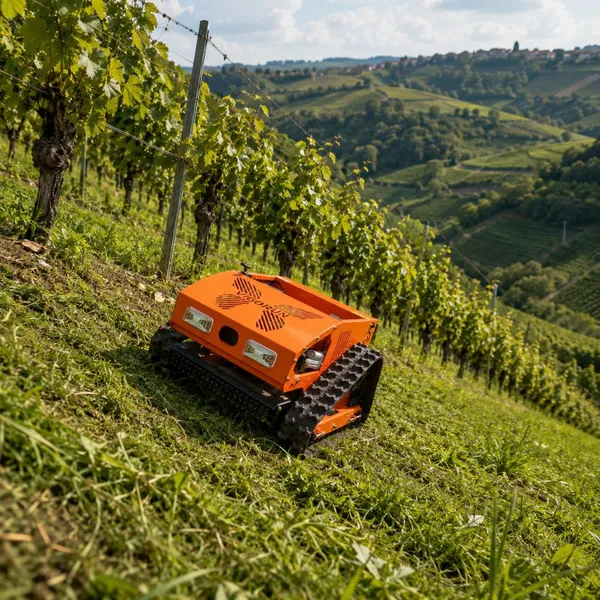
The rain had stopped three hours ago, but the clay embankment was still slick enough that the municipal crew in San Antonio sent two workers home with sprained ankles before lunch. They had tried a zero-turn on the 30° slope. They had tried a walk-behind brush cutter on the rocky shoulder. By 2:00 PM, the foreman was on the phone looking for the best mower for rough terrain — something that could handle wet clay, embedded stone, and a grade that no ride-on manufacturer would warranty.
If you've managed land with uneven ground, rocky outcrops, or slopes that turn treacherous after a storm, you already know the problem. The best mower for rough terrain is not the one with the biggest engine or the widest deck. It is the one that keeps the operator off the danger zone while the machine handles the traction, the angles, and the debris.
In this guide, you'll learn what separates a tracked remote mower from every other machine on uneven ground, how to evaluate slope ratings against real terrain conditions, and which Vigorun models are built specifically for the kind of rough ground that breaks lesser equipment. Whether you maintain levees, orchards, solar farms, or roadside embankments, you'll finish this article with a clear shortlist and a spec sheet you can compare line-by-line against any competitor.
We build remote-controlled mowers and tools carriers in Weifang, Shandong, and ship them to operators in 140+ countries. Every Vigorun unit passes 100% indoor and outdoor field testing before it leaves the line, so the rough-terrain numbers we publish are numbers we'll back up on your job site.
What Makes Terrain "Rough" for a Mower?
Rough terrain is not just steep. It is any combination of slope, surface, and vegetation that pushes a machine outside the conditions it was designed for. Before you can pick the best mower for rough terrain, you need to break your job site into three variables.
Slope angle is the first filter. A ride-on mower is typically limited to 15° before rollover risk becomes uninsurable. A commercial walk-behind might handle 20° on dry grass. But once you hit 30° or more — common on levees, riverbanks, and hillside orchards — only a tracked remote mower with a low center of gravity and a slope-rated engine belongs on the hill.
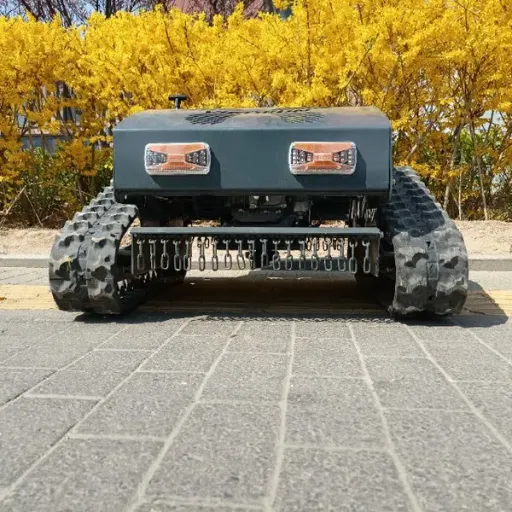
Surface condition is the second variable. Clay that turns slick after rain, gravel shoulders with embedded stone, and terraces with exposed rock all demand a rubber-track undercarriage. Wheels concentrate weight on small contact patches and slip on loose material. Tracks distribute that same weight over a longer footprint and bite into uneven ground.
Vegetation density is the third factor. Rough terrain rarely grows polite grass. It grows woody brush, thistle, saplings, and last season's weeds matted into a dense mat. A rotary deck clears grass. A flail head clears brush up to 25 mm thick. If your rough terrain includes saplings and overgrown fence lines, the cutting attachment matters as much as the chassis.
Pro Tip: Walk your terrain with a smartphone inclinometer before you spec any machine. Measure the steepest sustained slope, not just the peak angle at one corner. The sustained angle is what determines whether your mower can work a full pattern or just make passes at the edge.
When Marcus took over the maintenance contract for a drainage district outside Houston in March 2026, he assumed his existing zero-turn fleet would handle the new levee work. The first rainstorm proved otherwise. His crew spent six hours clearing a 400-meter embankment with string trimmers because none of his ride-ons could grip the wet clay without sliding sideways. Two months later, he added a Vigorun VTLM800 to the fleet. The same 400-meter section now takes 45 minutes, and his operator stands on the road 200 meters away while the tracked chassis handles the 35° face.
Why Tracks Beat Wheels on Rough Terrain
The physics are straightforward, but most buyers still default to wheeled mowers because that is what they have always used. On rough terrain, tracks outperform wheels in three measurable ways.
Ground pressure determines whether a machine floats over soft soil or sinks and spins. A wheeled mower concentrates its full weight on four small tire patches. A tracked mower distributes that weight across the entire track footprint. On wet clay or loose embankment fill, the difference between sinking and gripping is often the difference between a finished job and a stuck machine.
Traction on uneven surfaces comes from continuous contact. A wheel rises and falls over every rock and rut, losing grip at the top of each bounce. A track maintains contact across the full length of the undercarriage, so the drive sprocket always has something to push against. On rocky orchard terraces or riprap-lined levees, that continuous contact is what keeps the machine moving forward instead of hopping sideways.
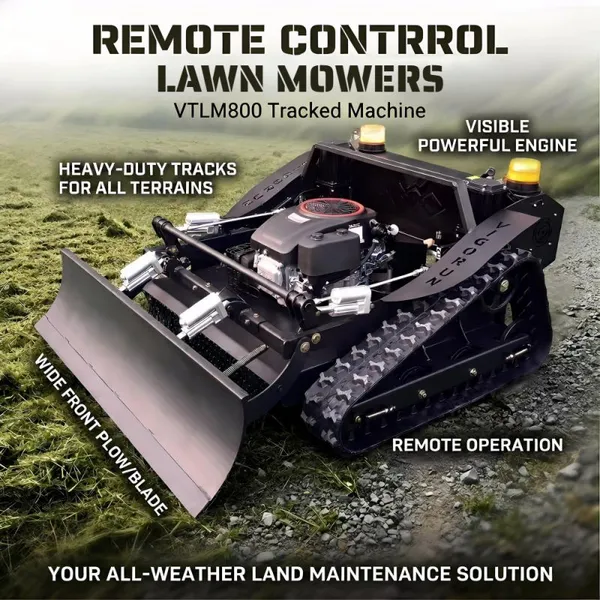
Side-slope stability is where track geometry wins decisively. The wider the track stance relative to the machine's height, the more side-slope it can handle before tipping. The VTLM800 uses a rubber track 200 mm wide by 1,200 mm long, with a low center-of-gravity chassis that sits closer to the ground than any wheeled equivalent. That geometry is why it holds a 45° rating on dry grass and stays stable at 35° on wet terrain where wheeled machines start drifting at 20°.
Want to see how track geometry translates to real slope performance? Explore the VTLM800 rubber track slope mower and compare its track dimensions against any wheeled competitor.
How to Choose the Best Mower for Rough Terrain
Once you accept that tracks are non-negotiable for rough terrain, the buying decision comes down to four spec categories. Get these right, and you'll own a machine that outlasts and outperforms anything else on your job site.
Engine Power and Emission Certification
Rough terrain demands more from an engine than flat-ground mowing. The machine is climbing, the blades are cutting dense material, and the hydrostatic transmission is working harder to maintain speed. A 22-hp gasoline engine is the practical minimum for commercial rough-terrain work.
Equally important is emission certification. If you are a distributor planning to resell into the EU, North America, or Australia, your customers' customs brokers will need CE, EURO V, and EPA documentation. Vigorun ships every gasoline engine with full certification paperwork so your container clears customs without surprises.
Remote Range and Operator Safety
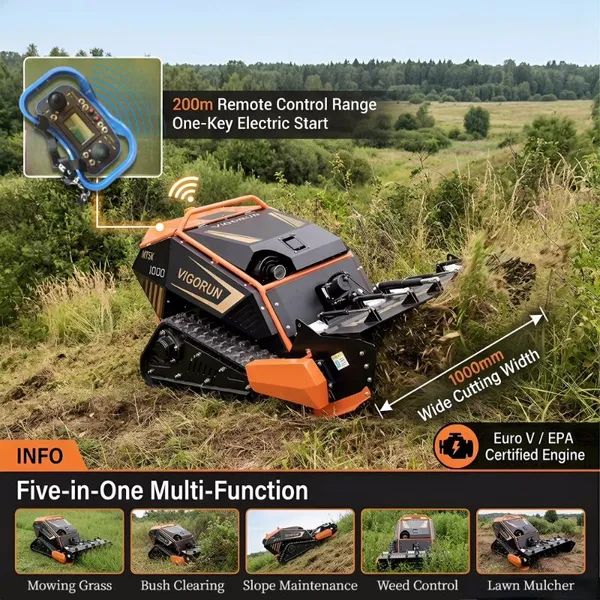
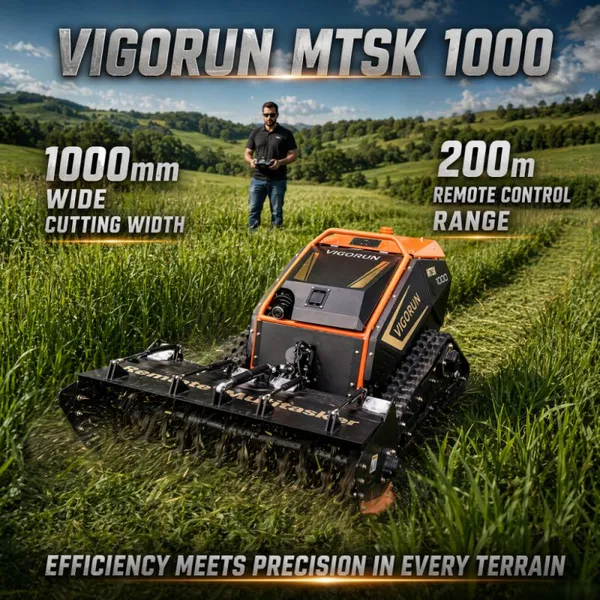
The entire point of a remote mower is keeping the human off the slope. A 200-meter wireless remote gives the operator clear line-of-sight control from a safe position — on the road, on the terrace above, or on the flat ground at the base of the embankment. Shorter-range systems force the operator to follow the machine up and down the slope, which defeats the safety purpose on steep or unstable ground.
Vigorun's 2.4 GHz industrial radio maintains reliable control at 200 meters with hardware emergency stops on both the transmitter and the chassis. If signal is lost, the mower automatically stops blade and motion.
Cutting Attachment: Rotary Deck vs. Flail Head
For grass and light weeds on rough terrain, a rotary deck is sufficient. For brush, saplings, and overgrown vegetation, a flail head is the only choice. The flail head uses hinged blades or hammer flails that shred woody material without jamming on impact with stone or hard ground.
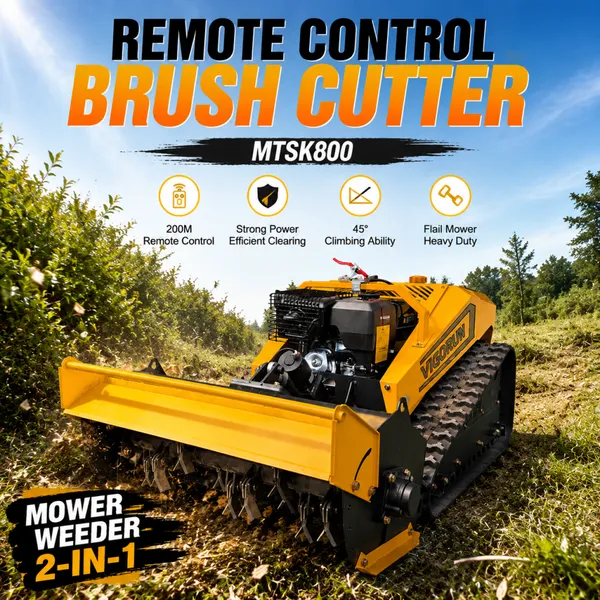
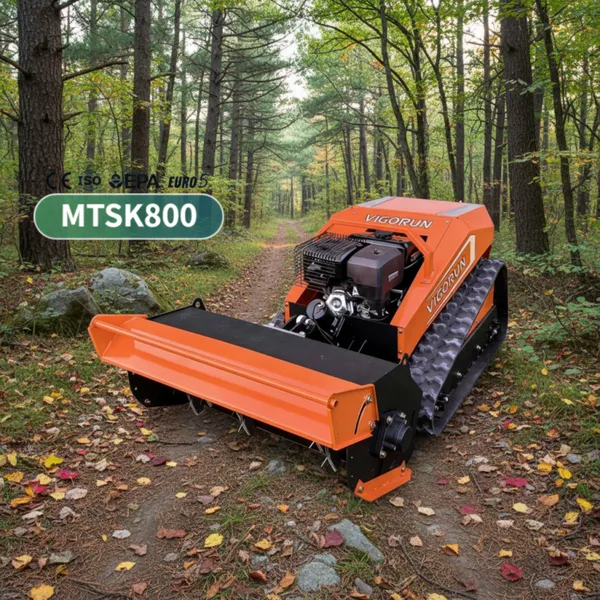
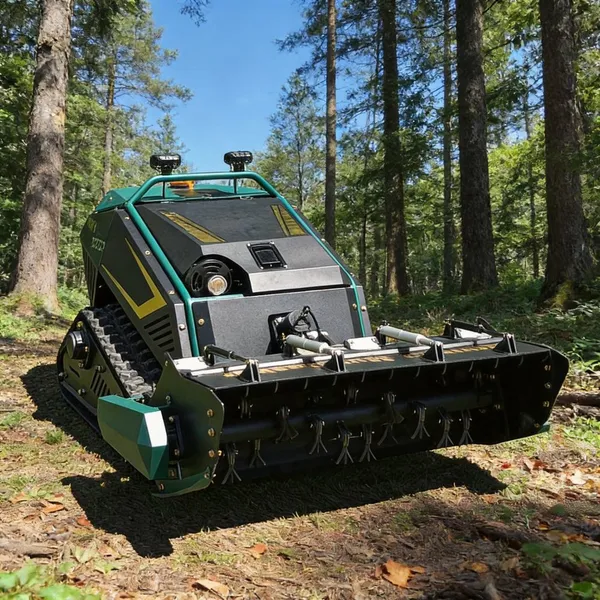
The MTSK1000 remote control flail mower is built for heavy brush on rough terrain. The MTSK800 remote-controlled flail mower handles mid-class brush with the same tracked chassis and 200-meter remote. Both models accept interchangeable attachments, so one chassis can mow in summer and clear snow in winter.
Durability and Parts Support
Rough terrain eats consumables. Tracks, blades, undercarriage idlers, and drive sprockets all wear faster on rocky, sloped ground than on flat lawns. Before you buy, confirm that the manufacturer stocks parts and can ship them to your country. A slope mower without parts is dead weight in your fleet by year two.
Vigorun commits to whole-life parts support on every unit sold, with international air-freight available for urgent orders. That is a factory-direct promise, not a dealer-network maybe.
Ready to compare specs side by side? Request a dealer quote on the VTLM800 or MTSK series — FOB Shandong pricing within 24 hours, full certification documentation included.
Vigorun Models Built for Rough Terrain
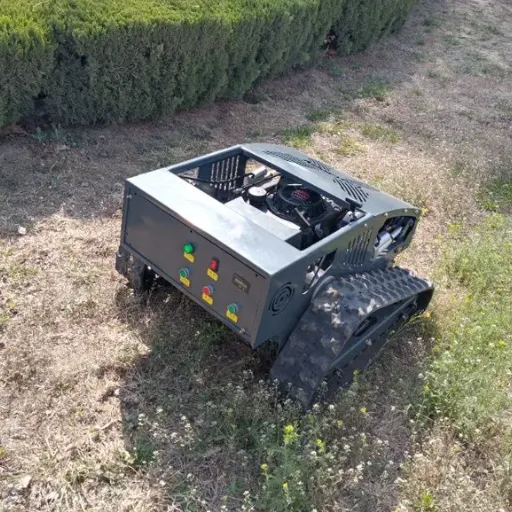
Here is how the three Vigorun rough-terrain models compare on the specs that matter for uneven ground.
| Model | Max Slope | Drive | Engine | Cutting Width | Best For |
|---|---|---|---|---|---|
| VTLM800 | 45° | Rubber track | 22 hp | 800 mm | Levee, riverbank, embankment, dam |
| MTSK1000 | 40° | Rubber track | 22 hp | 1,000 mm | Heavy brush, commercial maintenance, vineyard |
| MTSK800 | 40° | Rubber track | 22 hp | 800 mm | Solar farm, orchard, estate, brush |
The VTLM800 carries the steepest rating because its chassis was designed specifically for slope work. The lower center of gravity, wider track stance, and sump-modified engine hold oil pressure at angle. The MTSK series trades a few degrees of slope rating for platform versatility — the same chassis accepts flail heads, rotary decks, sprayers, and transport beds.
If your rough terrain is consistently steep — levees, riverbanks, retention ponds — the VTLM800 is the safer bet. If your terrain is mixed — orchards with some slope, solar farms with brush between arrays, estates with rolling lawns and rocky outcrops — the MTSK1000 or MTSK800 gives you more attachment flexibility without sacrificing tracked stability.
For a complete framework on selecting the right machine, see our remote control lawn mower buyer's guide.
Real-World Rough Terrain Applications
Rough terrain means different things to different operators. Here is how three common applications map to machine selection.
Levees and Riverbanks
Flood-control embankments combine the toughest conditions: sustained 30-45° slopes, wet clay, soft soil after rain, and dense vegetation that grows fast during wet seasons. The VTLM800 was built for this exact combination. Its rubber tracks grip clay that would spin wheeled machines, and the 45° slope rating means the operator never sets foot on the embankment.
Orchards and Rocky Slopes
Orchard terraces in Chile, Spain, and Italy often mix grass, weeds, and rocky outcrops on 20-35° slopes. The MTSK1000 with a flail head clears between rows without damaging tree trunks, and the tracked chassis climbs terraces that no ride-on can attempt safely. When harvest season arrives, the same chassis swaps to a transport bed and hauls fruit up the slope.
When Elena inherited her family's cherry orchard in the foothills outside Santiago, she faced a familiar problem: the terraces were too steep for the farm's aging tractor, and hand crews were increasingly expensive and hard to hire. She brought in an MTSK1000 in October 2025. By March 2026, she had cleared all 12 hectares of terrace rows and used the same machine with a transport bed to move 800 kg of harvested fruit per load from the lower blocks to the packing shed. The machine paid for itself in labor savings before the second harvest.
Solar Farms and Embankments
Solar arrays sit on gentle slopes, but the vegetation between panels grows thick and the ground is often compacted gravel over clay. The MTSK800 with a flail head clears between arrays safely, and the 200-meter remote keeps the operator away from energized equipment. For municipal roadside work with mixed grass and brush on 15-30° embankments, any of the three models handles the terrain, but the MTSK series' multi-attachment platform gives fleets better year-round utilization.
For more on slope-specific selection, read our guide on how to choose a remote control slope mower.
Rough Terrain Mowing: Safety and Operating Tips
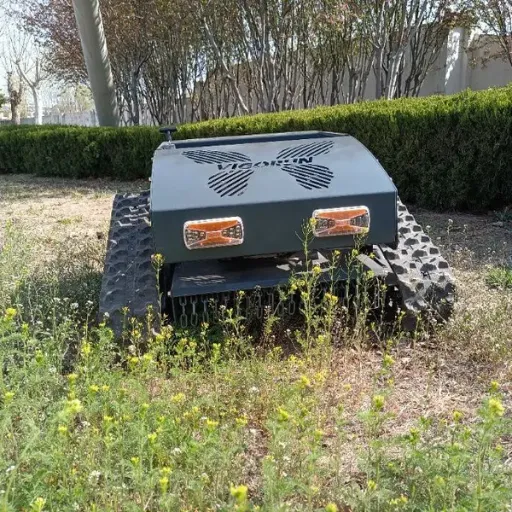
Even the best mower for rough terrain needs an operator who understands the limits. These five practices will keep your crew safe and your machine productive.
Pre-Operation Terrain Check
Walk the slope before you mow. Look for loose rock, hidden ruts, erosion channels, and soft spots that formed after the last rain. Measure the sustained slope angle with an inclinometer, not a guess. If the slope exceeds 35° and the surface is wet or loose, wait for better conditions or reduce your cut path to a safer angle.
Wet Weather Protocols
Track grip drops on wet grass and clay. Vigorun's 45° rating assumes dry, firm grass. On wet terrain, stay under 35° to maintain safe traction. If you feel the track slipping during a pass, stop immediately, reverse uphill, and reassess the surface. Never attempt to side-slope on wet clay.
Blade Engagement on Rough Ground
Engage the blade only after the chassis is stable and the receiver shows full signal strength. On rocky terrain, the flail head is more forgiving than a rotary deck — hammer flails bounce off stone, while rotary blades chip and dull on impact. Check blade condition after every rough-terrain session.
Operator Positioning
Stay uphill of the cut path whenever possible. If the terrain forces you to stand below the slope, maintain the full 200-meter range and position yourself where you can see the machine clearly. Line-of-sight is required for safe remote operation.
Daily Maintenance for Rough Terrain
Check track tension every morning. Rough ground loosens tracks faster than flat lawns. Inspect the undercarriage for packed clay or rock debris that can jam idlers. Verify fuel cap seal orientation — slope-rated engines have modified caps, but a loose cap on a 40° face is still a spill risk.
Need operator training materials? Our operation guides and safety resources include pre-start checklists and slope-mowing protocols you can share with your crew.
Total Cost of Ownership on Rough Terrain
The purchase price is only the first line item. On rough terrain, the real economics show up in labor, parts, and machine lifespan.
Labor Savings
A single remote mower replaces two to four workers on steep or hazardous terrain. On a typical municipal embankment contract, one operator with a VTLM800 clears what used to take a four-person hand crew. At $25 per hour per worker, the labor savings on a 200-hour annual contract fund a significant portion of the machine cost in year one.
Parts and Durability
Rough terrain accelerates wear on tracks, blades, and undercarriage components. Budget 2,000−2,000−3,000 per year in consumables for heavy commercial use on rocky or steep ground. Vigorun's whole-life parts support keeps those costs predictable — no discontinued parts, no mystery lead times.
Machine Lifespan
A well-maintained tracked remote mower on rough terrain delivers 8-12 years of commercial service. The key variables are track maintenance, blade replacement discipline, and keeping the engine air filter clean in dusty conditions. With proper care, the chassis outlasts two engine replacement cycles.
In early 2025, a commercial landscaping firm in Bavaria bid a solar farm vegetation contract they would have declined two years earlier. The terrain was rolling, rocky, and covered in dense brush between the arrays. They ran the numbers: two operators with MTSK1000 units could clear the site in 12 days, versus a six-person crew with brush cutters taking 28 days. They won the bid, bought the machines, and cleared the contract with a 34% margin. By autumn, the same machines were on a levee maintenance job that added another €18,000 to the year's revenue.
Conclusion
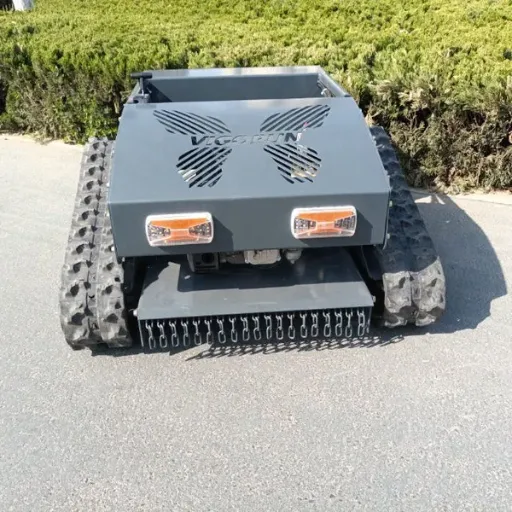
Rough terrain is not a mowing problem. It is a physics problem. Wheels slip, ride-ons tip, and hand crews get hurt. The best mower for rough terrain is the one that removes the operator from the danger zone, distributes weight across a tracked footprint, and carries enough engine power and cutting aggression to handle brush, clay, and slope in the same pass.
The three questions to answer before you buy are simple:
What is the steepest sustained slope you need to mow?
What is the worst surface condition you will face after rain?
What vegetation density do you need to clear — grass, weeds, brush, or woody saplings?
If your answers include 30°+ slopes, wet clay or rocky ground, and brush thick enough to choke a rotary deck, a tracked remote mower is not a luxury. It is the only machine that belongs on your job site.
Vigorun builds the VTLM800, MTSK1000, and MTSK800 in our Weifang factory with 100% indoor and outdoor field testing on every unit. We ship CE / EURO V / EPA documentation with every container, offer OEM customization from MOQ 5 units, and back every machine with a 1-year warranty plus whole-life parts support.
Request a quote on the best mower for rough terrain — FOB Shandong pricing, 24-hour response, full certification included.
Or contact our sales team to discuss your specific terrain, application, and fleet requirements. We'll recommend the right model, send a spec sheet, and provide a container loading diagram so you know exactly what's landing at your port.
Recently Posted
-
Steep Slope 600mm Tracked 200m Remote Control 45 Degree Brushless Electric Lawn Mower
August 10, 2026*Integrated Drive System with 73 Percent Efficiency: The VTLM600 remote control lawn mower features a fully integrated brushless m Read More
 -
Remote Controlled Pesticide Sprayer with 600L Tank 8.4m Boom for Agricultural Applications
August 10, 2026*Electric Start & 13kW Loncin Engine for Powerful Agricultural Spraying: Maximize field application efficiency with the SPRY60 Read More
 -
Self Propelled Agricultural Boom Sprayer with Adjustable Track for Modern Farming
August 10, 2026*Electric Start & 13kW Loncin Engine for Powerful Agricultural Spraying: Maximize field application efficiency with the SPRY60 Read More
 -
Automatic Remote Control Agricultural Spray Machine with 600L Chemical Tank and Boom System
August 10, 2026*Electric Start & 13kW Loncin Engine for Powerful Agricultural Spraying: Maximize field application efficiency with the SPRY60 Read More

Contact Us
Recommended Products
-
 Vigorun Lawn Mower Robot, Industrial Dual 48V 1500W Motors MTSK1000 Mulcher Machine for Large LandscapesUS$ 7500.00 - 7700.00MOQ: 1 Set
 -
Farmland Orchards Battery Powered Mower Gasoline Golf Mower Robot Lawn Mower 3000m2 Vigorun Remote Control Grass MowerUS$ 2580 - 2700MOQ: 1 Unit
-
Vigorun MTSK800 Automatic Remote Control Grass Cutting Machine 48V 20Ah Battery Remote Flail MowerUS$ 2800 - 2900MOQ: 1 Set
-
Vigorun MTSK1000 Remote Control Mower 24hp Fail-Safe Slope Braking Remote Control Forest MulcherUS$ 8000 - 8200MOQ: 1 Set
-
Industry Electric Motor Lawn Mower Flail Mower Atv Gasoline Hedge Trimmer Battery LawnmowerUS$ 2580 - 2900MOQ: 1 Unit
-
Vigorun Agricultural Tractor Sprayer Euro 5/EPA Electric Agricultural Sprayer 600l for VineyardsUS$ 2600 - 2700MOQ: 1 Set
-
Remote Control Tracked Hillside Mower 800mm Cutting Width 60 Degree Slope for Steep Terrain VegetationUS$ 2600 - 2700MOQ: 1 Set
-
Vigorun VTLM600 RC Lawn Mower Robot CE EPA Certified 45° Extreme Slope Mini Crawler Lawn MowerUS$ 1700 - 17900MOQ: 1 Set
-
Remote Controlled High Efficiency Fog Cannon Spraying Machine 600L Tank for Agriculture and Dust ControlUS$ 2800 - 2900MOQ: 1 Set
-
Vigorun Radio Control Mowing Euro 5/EPA Self-Propelled & Precise 6hp Remote Control Crawler MowerUS$ 1700 - 1790MOQ: 1 Set
-
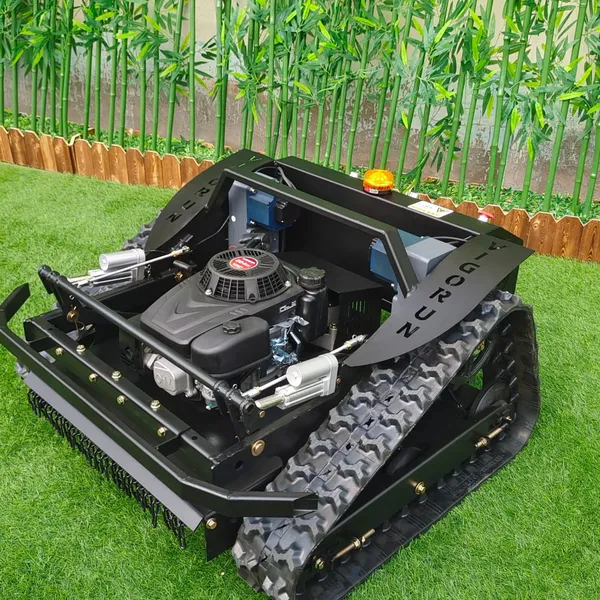
Factory Manufacturer Vigorun MTSK1000 1000MM Commercial Branch Cutter Flail Mower rc Remote Petrol Lawnmower Mower Grass Cutter TractorUS$ 8000 - 8200MOQ: 1 Set
-
Vigorun VTW550 Remote Control Grass Cutter Tractor Robot Gas Lawn Mower Grass Cutter Small Electric Lawn Mower Vigorun Lawn MowerUS$ 1000 - 1250MOQ: 1 Set
-
Vigorun Tech Gasoline Remote Control Lawn Mower Self-Locking Slope Safety RC Mower Tiller for EmbankmentsUS$ 2800.00 - 2900.00MOQ: 1 Set
-
Mower Gasoline Grass Cutter Machine Remote Control 1000mm Cut 35 Degree Slope Flail Hammer for Overgrown LandUS$ 7500 - 7700MOQ: 1 Set
-
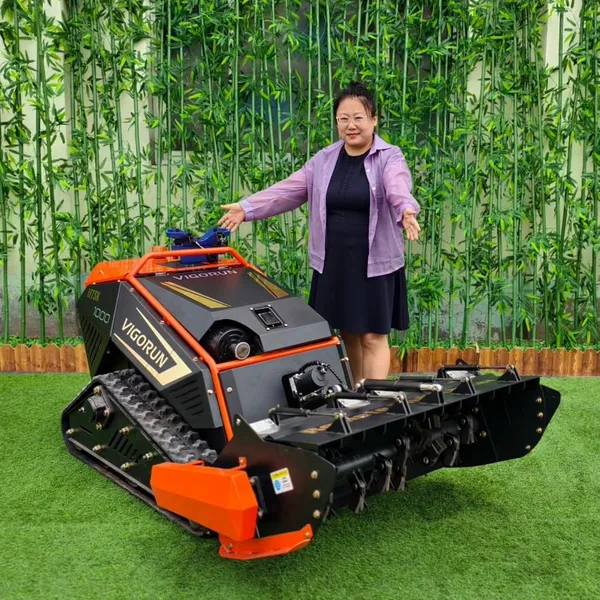
Vigorun VTLM800 Remote Control Electric Mower, Self-Locking Slope Safety Crawler Mower for Steep SlopesUS$ 2600.00 - 2700.00MOQ: 1 Set
-
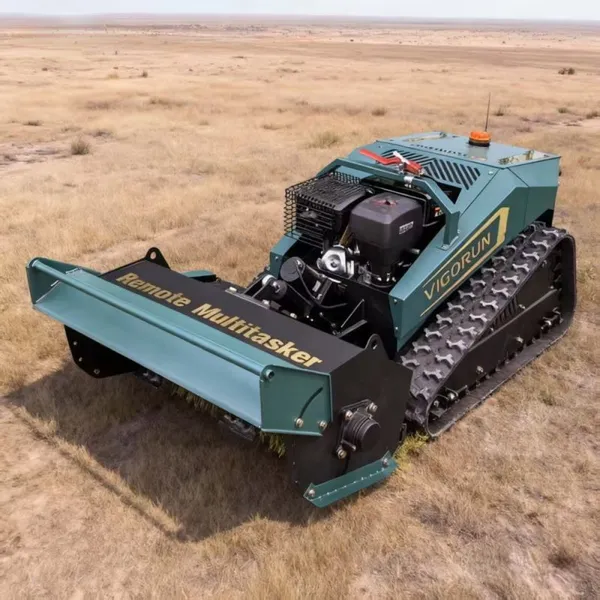
Shrub and Brush Clearing MTSK800 MTSK1000 Flail Mower rc Remote Weeding Weeder MachineUS$ 2800 - 2900MOQ: 1 Set
-
RC Robot Lawn Mower Electric Remote Control Flail Grass Cutter Garden Cutting Machine MTSK1000US$ 8000 - 8200MOQ: 1 Set
-
Remote Manipulation Rubber Track Brush Cutter Industrial Flail Mower for Efficient Shrub ClearingUS$ 2000.00 - 2790.00MOQ: 1 Set
-
Vigorun MTSK1000 Rc Lawn Mower, Loncin 764CC Gasoline Engine Forestry Mulcher With Remote Control for ForestryUS$ 7500.00 - 7700.00MOQ: 1 Set
-
Vigorun VTC550 Zero Turn Electric Mower Quality Guaranteed Crawler Brush Cutter For Embankments & LeveesUS$ 1600 - 1690MOQ: 1 Set