
 Business License

Best Mower for Tall Grass and Weeds: What Fleet Buyers Need to Know
Derek Hahn lost a $47,000 pipeline maintenance contract in April 2025 because his crew couldn't finish the right-of-way clearance on time. The grass and thistle along the access road had shot past 1 meter after an unusually wet spring. His two zero-turn mowers bogged down within 100 meters. The brush cutters he rented stalled on woody stems thicker than a finger. By day three, the client called in a competitor with a flail-equipped tracked machine, and Derek watched the job finish in six hours with one operator.
If you're buying mowing equipment for a fleet, a municipality, or a commercial landscaping operation, you've already learned the same lesson: the best mower for tall grass and weeds is rarely the machine that works for a manicured lawn. Tall grass and weeds change the physics of cutting. They hide hazards, overload engines, and turn a routine mow into an equipment stress test. Add a slope, and the wrong machine becomes a safety risk.
In this guide, you'll compare the five categories of mowers that professionals use for tall grass and weeds. You'll see where each type wins, where it fails, and why a flail-equipped remote-controlled mower has become the standard for steep, overgrown terrain. Every recommendation is grounded in 15+ years of field experience building and testing mowers in Weifang, Shandong, where we run every unit through tall-grass test ramps before it ships.
Why Tall Grass and Weeds Defeat Ordinary Mowers
Grass above 30 cm and weeds with woody stems introduce three problems that standard rotary mowers are not engineered to solve.
First, deck packing. A rotary blade relies on suction to pull grass upright before cutting. In dense, tall growth, the deck fills with clippings faster than the discharge chute can clear them. Airflow collapses, the blade starts tearing rather than cutting, and the engine loads up under the sudden drag.
Second, stem density. Weeds like thistle, ragweed, and dock have fibrous stems that wrap around a rotary spindle. A blade designed for soft turf grass meets resistance it was never sized for. Spindles overheat. Belts slip. Blades dull in hours instead of weeks.
Third, hidden debris. Tall grass conceals rocks, wire, stumps, and erosion holes that a rotary deck will strike at full speed. A single impact can crack a spindle housing or bend a blade shaft. On a slope, that same hidden obstacle can catch a wheel or track and shift the machine's balance at the worst moment.
According to OSHA lawn care safety data, struck-by and rollover incidents spike during overgrowth-clearance jobs, precisely because operators can't see what the machine is about to hit. The remedy is not a bigger rotary deck. It's a cutting system designed for the material, and a chassis that keeps the operator away from the danger zone.
Five Machine Types for Tall Grass and Weeds Compared
Professional crews and fleet buyers have five options when they spec equipment for overgrown terrain. Here's how each performs in real conditions.
Standard Rotary Mowers
Standard zero-turn and garden tractors handle grass up to about 25 cm on flat ground. Above that height, deck packing becomes unavoidable. Most manufacturers officially limit rotary decks to grass under 15 cm for warranty reasons. On slopes, the risk shifts from equipment damage to operator safety, a seated operator on a high-center-of-gravity machine has no margin for error when a hidden stump stops one wheel.
Best for: Regular lawn maintenance, light overgrowth under 25 cm, flat or gently sloped terrain.
Avoid when: Grass exceeds 40 cm, weeds are mixed with woody growth, or terrain pitches over 15°.
String Trimmers and Brush Cutters
Hand-held brush cutters with blade heads can knock down tall grass and light woody stems. The problem is productivity. A single operator with a brush cutter clears roughly 400-600 square meters per hour on flat ground. On a slope, that drops by half. For a 2-hectare overgrown field, you're looking at 30+ hours of labor. Workers' compensation exposure is high, and fatigue-related injuries climb after the first two hours.
Best for: Tight spaces, fence lines, detail work around obstacles, occasional jobs under 1,000 square meters.
Avoid when: Area is large, terrain is steep, or the job repeats more than a few times per season.
Walk-Behind Brush Mowers
Self-propelled walk-behind brush mowers with heavy-duty rotary or flail decks fill the gap between hand tools and ride-on machines. They handle grass up to 1 meter and stems up to 20 mm. The catch is the operator is still on the slope, pushing or guiding a machine that weighs 150-300 kg. On wet ground or grades above 20°, traction becomes a fight. Rollover risk is lower than a ride-on but not zero.
Best for: Flat to moderate slopes, medium-sized plots, budgets that can't stretch to remote-controlled equipment.
Avoid when: Slopes exceed 20°, ground is soft or wet, or operator safety regulations require distance from the hazard.
Tow-Behind Flail Mowers
ATV and tractor-towed flail mowers cover large areas efficiently. The flail mechanism, hinged blades or hammers that strike vegetation from multiple angles, handles tall grass and woody brush better than any rotary system. However, the towing vehicle limits slope access. Most ATVs become unstable above 15°. A tractor on a steep face is a documented rollover hazard. The tow-behind flail is only as safe as the machine pulling it.
Best for: Large flat fields, pasture maintenance, agricultural clearance on gentle terrain.
Avoid when: Slopes exceed 15°, terrain is uneven, or the towing vehicle can't safely access the area.
Remote-Controlled Flail Mowers
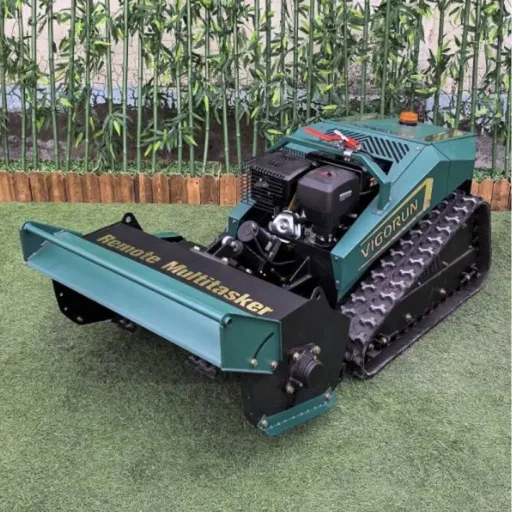
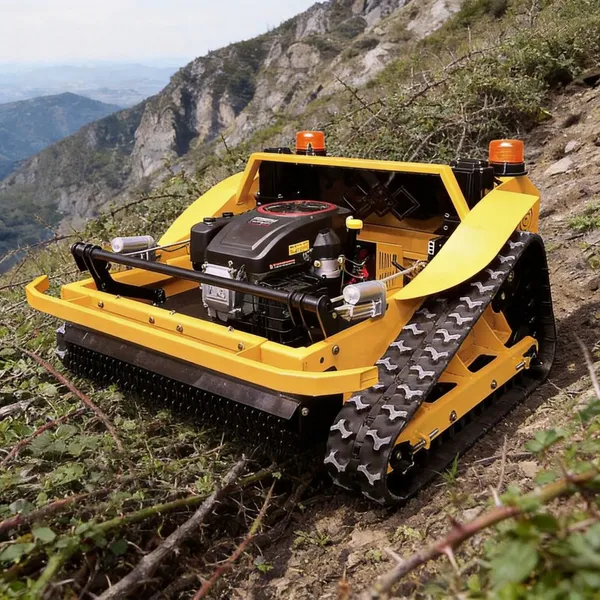
A remote-controlled flail mower combines the cutting advantage of a flail head with a tracked chassis and a 200-meter wireless control range. The operator stands on flat, stable ground while the machine handles the slope. The flail head cuts grass, weeds, and woody brush up to 25 mm without bogging down. The tracked chassis distributes weight across a wide footprint and climbs grades up to 45° that no ride-on or tow-behind can attempt.
Best for: Steep slopes, large overgrown areas, commercial and municipal contracts, any job where operator safety is non-negotiable.
Trade-off: Higher capital cost than a walk-behind or brush cutter, offset by labor savings and injury-risk reduction.
| Machine Type | Max Grass Height | Slope Limit | Best Application | Labor per Hectare |
|---|---|---|---|---|
| Standard rotary mower | 25 cm | 15° | Flat lawns, light overgrowth | 2-3 hours |
| String trimmer / brush cutter | 60 cm | 20° (on foot) | Detail work, fence lines | 30+ hours |
| Walk-behind brush mower | 100 cm | 20° | Medium plots, moderate terrain | 8-12 hours |
| Tow-behind flail mower | 120 cm | 15° | Large flat fields, pastures | 1-2 hours |
| Remote-controlled flail mower | 120 cm | 45° | Steep slopes, heavy brush, commercial jobs | 2-4 hours |
If your job involves slopes and overgrowth, the remote-controlled flail mower is the only category that solves both problems simultaneously. Browse the Vigorun flail mower range to compare deck widths, engine options, and track configurations.
When a Flail Mower Becomes the Only Answer
There is a threshold where tall grass crosses into brush, and at that threshold, rotary blades stop being viable. A flail mower is the best mower for tall grass and weeds because its cutting mechanism is fundamentally different from a rotary deck.
A rotary blade spins horizontally and relies on momentum and suction. It works when grass is soft, relatively short, and uniformly dense. When grass is tall and mixed with weeds, the blade pushes material forward rather than cutting it cleanly. Clippings clump. Stems tear rather than shear. The engine strains.
A flail head uses dozens of small hinged blades or hammers mounted on a horizontal drum. Each flail swings independently. When it meets vegetation, it strikes, shears, and retreats. The drum doesn't need suction. It doesn't pack with clippings. And because each flail is small and hinged, hitting a rock or stump damages one flail, not the entire spindle assembly.
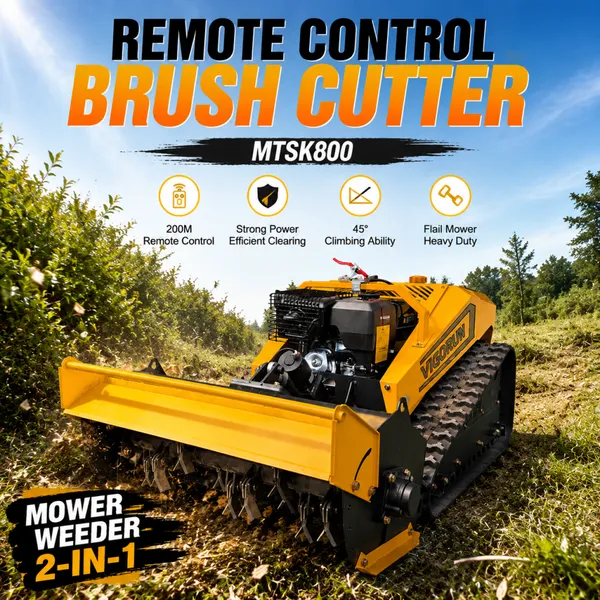
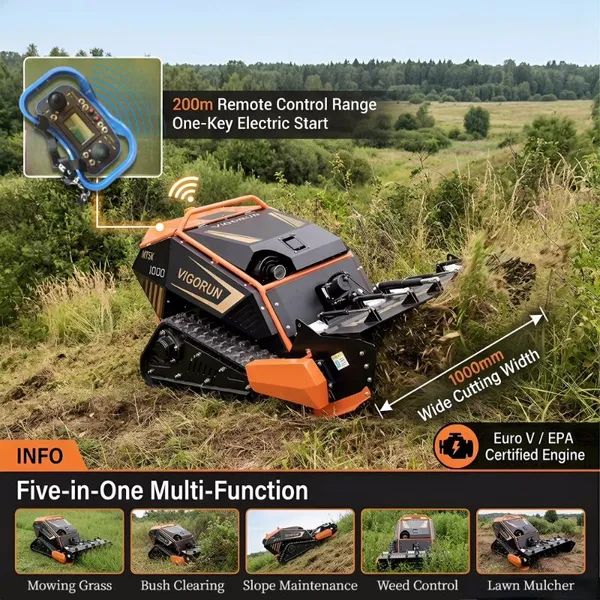
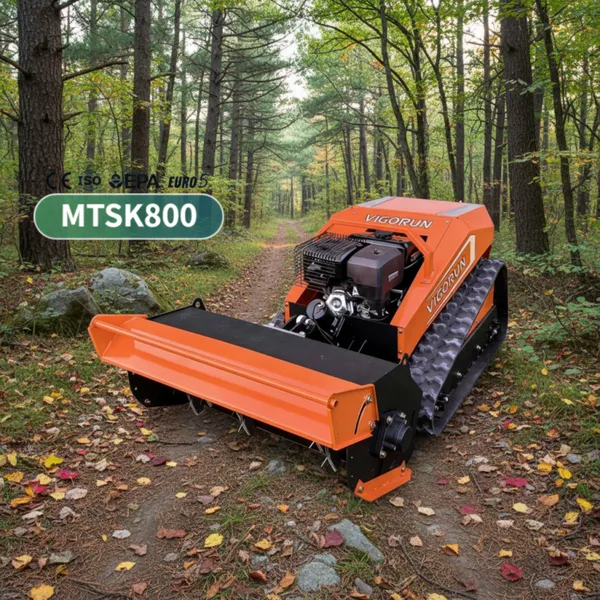
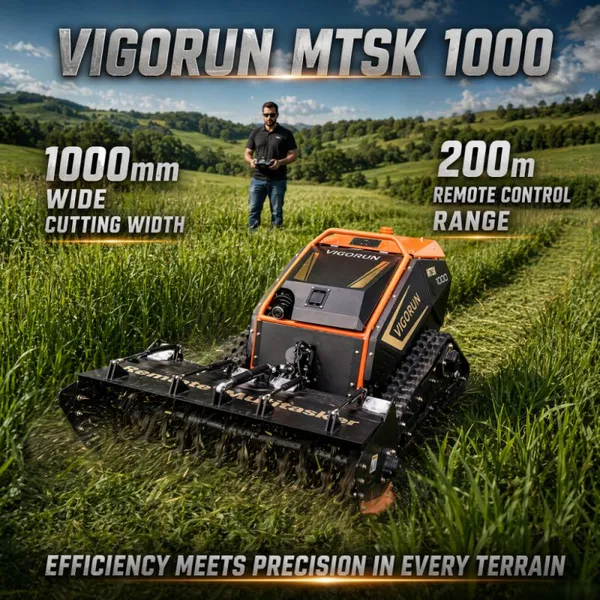
The Vigorun MTSK1000 and MTSK800 both run flail heads designed for heavy grass and brush. The MTSK1000 carries a wider drum and higher horsepower for commercial fleet duty. The MTSK800, recently patent-filed in 2026, offers a mid-class footprint that fits between solar-array rows and orchard terraces where a larger machine can't maneuver. Both cut woody material up to 25 mm, the exact density where rotary decks fail and brush cutters slow to a crawl.
For distributors building a fleet offering, the flail head is the upsell that converts a lawn-mower inquiry into a vegetation-management contract. See the MTSK1000 heavy-duty flail mower spec sheet for cutting width, engine options, and container-loading diagrams.
How Remote Control Changes the Math on Overgrown Slopes
The cutting mechanism solves the vegetation problem. The remote control solves the safety problem. And on steep terrain, the safety problem is usually the expensive one.
When tall grass covers a slope, the operator cannot see the ground surface. Hidden rocks, erosion channels, and debris lie under every square meter. A ride-on mower operator has milliseconds to react when a wheel drops into a hidden hole. On a 30° slope, that reaction time is never enough.
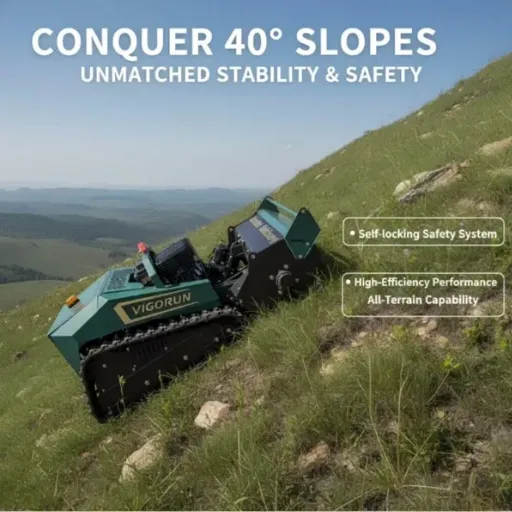
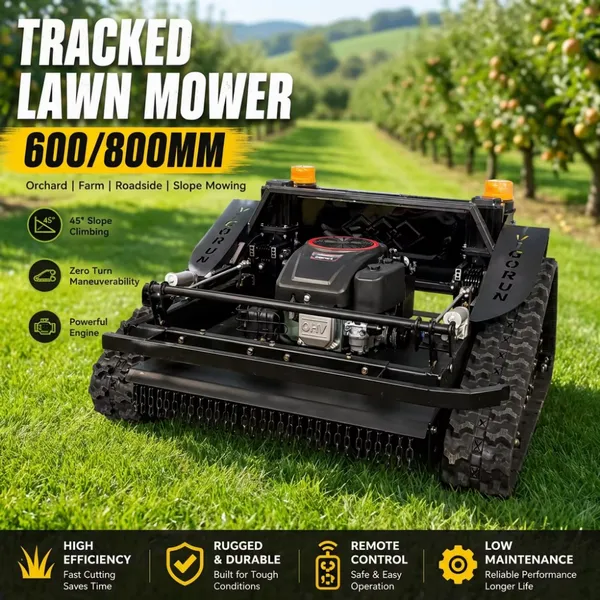
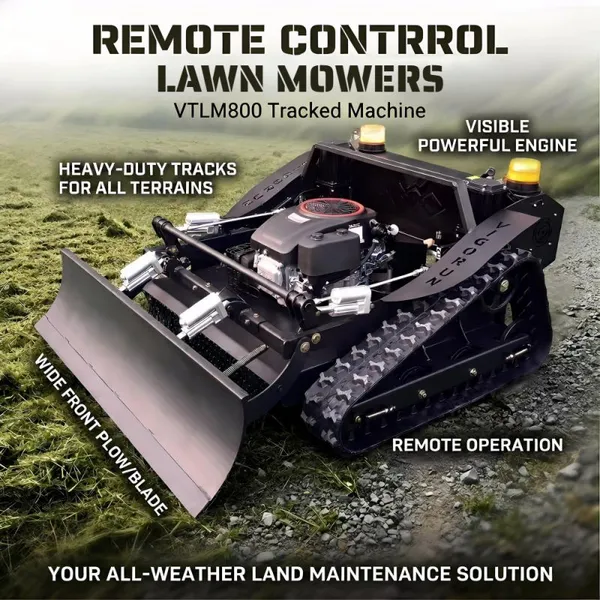
A remote-controlled slope mower removes the operator from the hazard zone entirely. The Vigorun VTLM800, purpose-built for slope work, lets the operator stand up to 200 meters away on flat, stable ground. The 2.4 GHz industrial radio maintains control through line-of-sight, and a lost-signal failsafe stops both blade and motion instantly if the connection drops.
The tracked chassis is the other half of the equation. Rubber tracks distribute the machine's weight across a long, wide footprint. Ground pressure drops. Traction rises. The VTLM800 climbs up to 45° on dry grass and maintains grip on wet, uneven terrain where wheeled machines slide.
When the municipal parks department in Krakow reviewed their 2024 injury logs, they found that 70% of their landscaping incidents happened on overgrown slopes taller than 30 cm. Visibility was poor. Ground conditions were unknown. And every incident involved an operator physically on the slope with a machine. They added remote-controlled flail mowers to their fleet in spring 2025. By August, they had cleared 14 hectares of overgrown riverbank with zero incidents. One operator replaced a four-person hand crew on every slope job.
Pro tip: When spec'ing a slope mower for tall grass, the operator's position matters more than horsepower. A 22-hp engine on a ride-on is useless if the operator can't safely position the machine. A 22-hp engine on a remote-controlled tracked chassis clears 2-4 acres per day on terrain no ride-on should attempt.
Matching the Best Mower to Your Application
The best mower for tall grass and weeds depends on where the grass grows, how dense it is, and how often you need to cut it.
Roadside and Highway Embankments
Highway verges accumulate dense grass, thistle, and trash-blown weeds. The slope is usually 15-35°, and safety regulations increasingly prohibit hand crews on active roadside faces. A remote-controlled flail mower with a rubber-track chassis clears the embankment while the operator stands safely behind the guardrail or on the shoulder above.
Solar Farms and Utility Corridors
Vegetation between solar arrays and under transmission lines must be kept low to prevent shading and fire risk. The terrain is often gently sloped but the area is large. A remote-controlled flail mower covers ground faster than a hand crew and keeps operators away from energized equipment. The MTSK800's narrower deck fits between array rows where larger machines can't turn.
Orchards and Vineyards
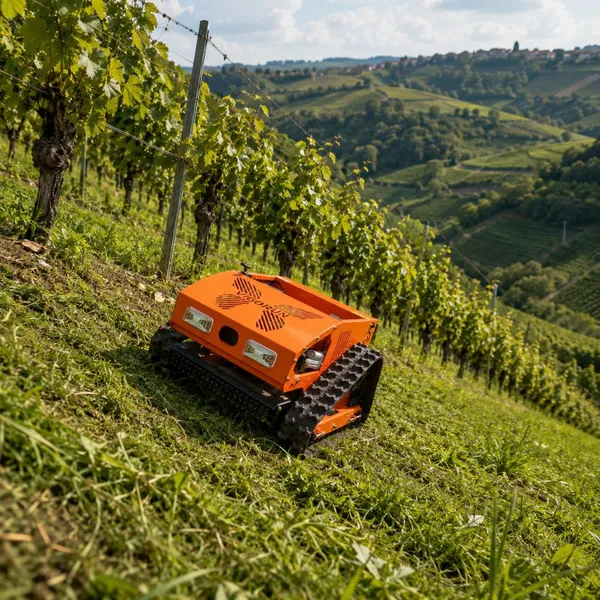
Groundcover between rows can grow aggressively through the growing season. Orchard floors often pitch at 20-35° on hillside plantings. A flail-equipped remote mower trims grass and weeds without damaging tree trunks or vine stakes. The operator controls the machine from the terrace above, never walking the slope.
Levees, Riverbanks, and Retention Ponds
These are the toughest tall-grass jobs. Wet soil, steep faces up to 45°, and dense riparian growth that includes woody brush. The VTLM800 was designed for this exact combination. The rubber-track chassis holds grip on wet clay. The flail head cuts through reeds, thistle, and saplings. And the operator stays on high ground, 200 meters from the waterline.
Estates and Large Private Properties
Overgrown acreage on estates, polo grounds, and large residential lots often includes sloped features around ponds, drainage channels, and natural terrain. A remote-controlled flail mower clears the overgrowth in a fraction of the time a brush-cutter crew would need, with no operator fatigue and no workers' comp exposure.
What to Demand From a Commercial Tall-Grass Mower
Fleet buyers and procurement officers should verify five specifications before adding a tall-grass mower to their line.
1. Cutting system type
Demand a flail head, not a rotary deck, for any job where grass exceeds 40 cm or includes woody stems. Rotary decks are lawn tools. Flail heads are vegetation-management tools.
2. Slope rating and chassis geometry
Ask for the sustained slope rating, not a peak marketing number. Verify track width, track length, and center-of-gravity height. A 45° rating on paper means nothing if the chassis geometry can't hold the slope under continuous mowing load.
3. Engine certification
Tall grass loads engines harder than turf. Insist on CE, EURO V, and EPA certification. Uncertified engines fail faster, can't be imported into regulated markets, and void insurance coverage on commercial jobs.
4. Pre-delivery testing
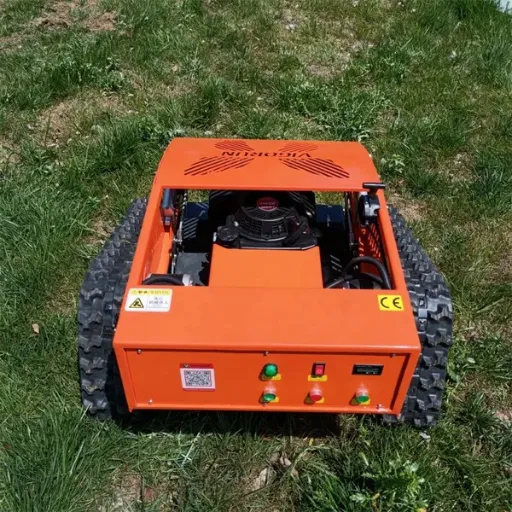
A commercial mower should arrive ready to run, not ready to debug. Vigorun tests every unit indoors for engine run-in, hydraulic pressure, and radio range, then outdoors on live overgrowth slopes. Ask your supplier for their QC protocol in writing.
5. Parts and warranty support
Tall-grass and brush work consume flails, tracks, and drive components faster than lawn mowing. A 1-year warranty is standard. Whole-life parts support is what keeps the machine earning in year five. If the supplier can't guarantee parts availability for the machine's full service life, the low purchase price is a false economy.
Vigorun ships every mower with full CE / EURO V / EPA documentation, backs every unit with a 1-year warranty, and commits to lifetime parts support from factory stock. For fleet buyers, we also provide container-loading diagrams, pre-shipment video training, and OEM customization from MOQ 5 units.
Choosing the Best Mower for Tall Grass and Weeds
The best mower for tall grass and weeds is not a single model. It's the right combination of cutting system, chassis, and operator safety for your terrain.
On flat ground with grass under 40 cm, a standard rotary mower or walk-behind brush mower gets the job done economically. When grass grows taller, when weeds turn woody, or when the terrain tilts beyond 15°, those machines become inefficient and dangerous.
At that threshold, the flail-equipped remote-controlled mower becomes the clear choice. The flail head cuts dense growth without bogging down. The tracked chassis climbs slopes no ride-on can safely attempt. And the 200-meter remote keeps the operator off the danger zone entirely.
If you're maintaining slopes, riverbanks, solar farms, orchards, or roadside embankments with tall grass and weeds, request a quote on the MTSK or VTLM series. We'll send FOB Shandong pricing, full CE / EURO V / EPA certification documents, and a spec sheet with slope ratings, cutting widths, and container-loading diagrams so you can compare line by line.
Recently Posted
-
Steep Slope 600mm Tracked 200m Remote Control 45 Degree Brushless Electric Lawn Mower
August 10, 2026*Integrated Drive System with 73 Percent Efficiency: The VTLM600 remote control lawn mower features a fully integrated brushless m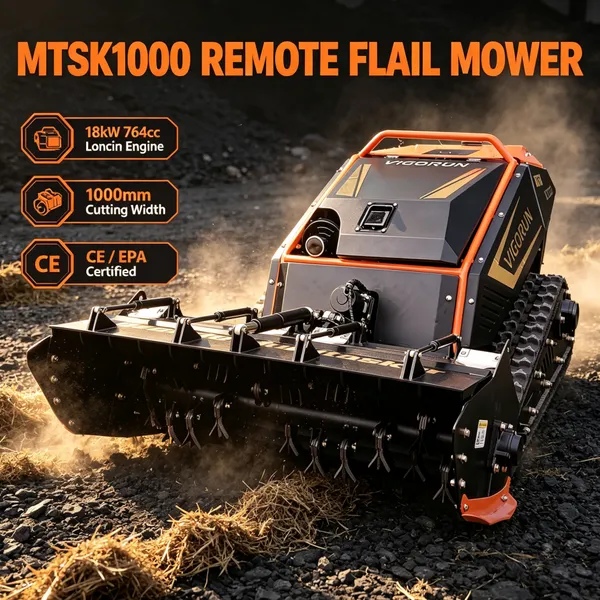 Read More
 -
Remote Controlled Pesticide Sprayer with 600L Tank 8.4m Boom for Agricultural Applications
August 10, 2026*Electric Start & 13kW Loncin Engine for Powerful Agricultural Spraying: Maximize field application efficiency with the SPRY60 Read More
 -
Self Propelled Agricultural Boom Sprayer with Adjustable Track for Modern Farming
August 10, 2026*Electric Start & 13kW Loncin Engine for Powerful Agricultural Spraying: Maximize field application efficiency with the SPRY60 Read More
 -
Automatic Remote Control Agricultural Spray Machine with 600L Chemical Tank and Boom System
August 10, 2026*Electric Start & 13kW Loncin Engine for Powerful Agricultural Spraying: Maximize field application efficiency with the SPRY60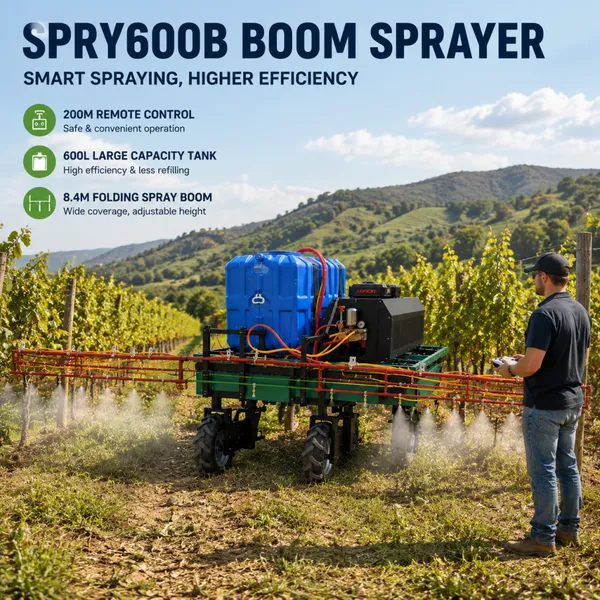 Read More

Contact Us
Recommended Products
-
 Vigorun Lawn Mower Robot, Industrial Dual 48V 1500W Motors MTSK1000 Mulcher Machine for Large LandscapesUS$ 7500.00 - 7700.00MOQ: 1 Set
 -
Farmland Orchards Battery Powered Mower Gasoline Golf Mower Robot Lawn Mower 3000m2 Vigorun Remote Control Grass MowerUS$ 2580 - 2700MOQ: 1 Unit
-
Vigorun MTSK800 Automatic Remote Control Grass Cutting Machine 48V 20Ah Battery Remote Flail MowerUS$ 2800 - 2900MOQ: 1 Set
-
Vigorun MTSK1000 Remote Control Mower 24hp Fail-Safe Slope Braking Remote Control Forest MulcherUS$ 8000 - 8200MOQ: 1 Set
-
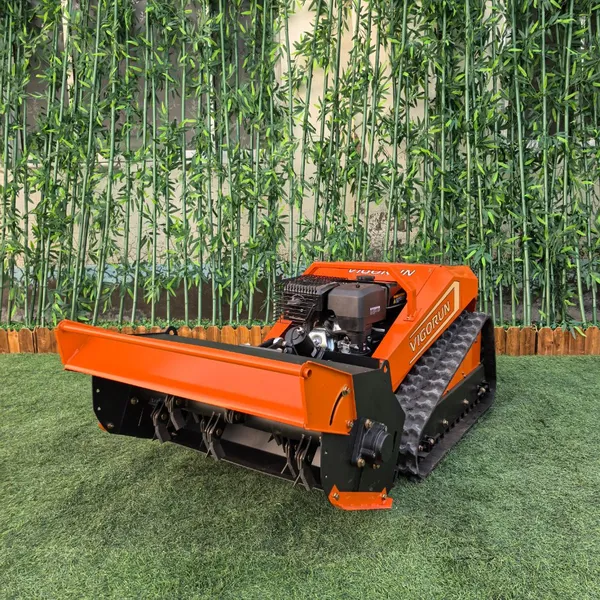
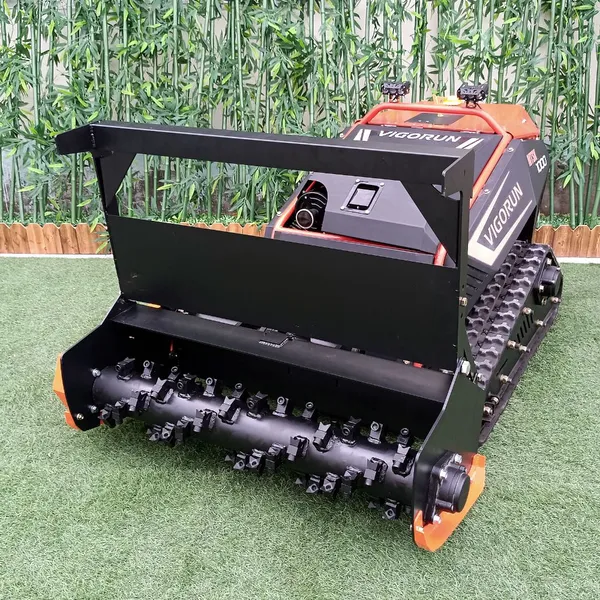
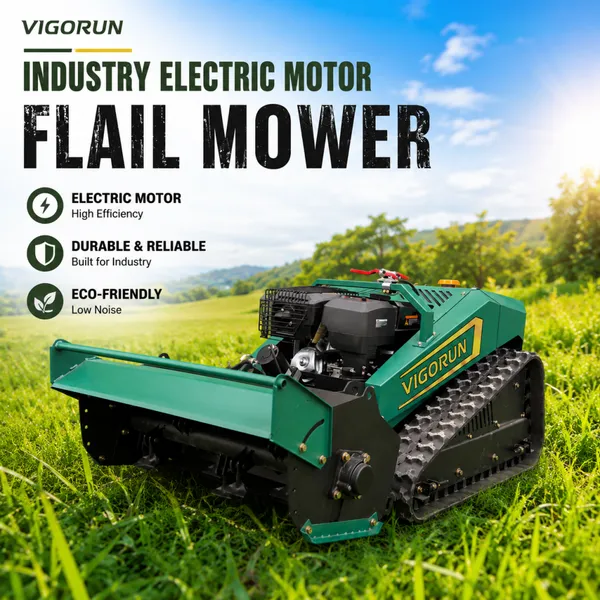
Industry Electric Motor Lawn Mower Flail Mower Atv Gasoline Hedge Trimmer Battery LawnmowerUS$ 2580 - 2900MOQ: 1 Unit
-
Vigorun Agricultural Tractor Sprayer Euro 5/EPA Electric Agricultural Sprayer 600l for VineyardsUS$ 2600 - 2700MOQ: 1 Set
-
Remote Control Tracked Hillside Mower 800mm Cutting Width 60 Degree Slope for Steep Terrain VegetationUS$ 2600 - 2700MOQ: 1 Set
-
Vigorun VTLM600 RC Lawn Mower Robot CE EPA Certified 45° Extreme Slope Mini Crawler Lawn MowerUS$ 1700 - 17900MOQ: 1 Set
-
Remote Controlled High Efficiency Fog Cannon Spraying Machine 600L Tank for Agriculture and Dust ControlUS$ 2800 - 2900MOQ: 1 Set
-
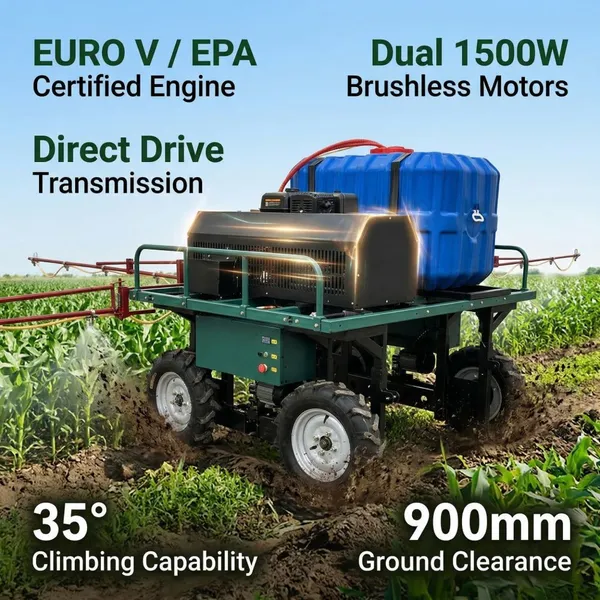
Vigorun Radio Control Mowing Euro 5/EPA Self-Propelled & Precise 6hp Remote Control Crawler MowerUS$ 1700 - 1790MOQ: 1 Set
-
Factory Manufacturer Vigorun MTSK1000 1000MM Commercial Branch Cutter Flail Mower rc Remote Petrol Lawnmower Mower Grass Cutter TractorUS$ 8000 - 8200MOQ: 1 Set
-
Vigorun VTW550 Remote Control Grass Cutter Tractor Robot Gas Lawn Mower Grass Cutter Small Electric Lawn Mower Vigorun Lawn MowerUS$ 1000 - 1250MOQ: 1 Set
-
Vigorun Tech Gasoline Remote Control Lawn Mower Self-Locking Slope Safety RC Mower Tiller for EmbankmentsUS$ 2800.00 - 2900.00MOQ: 1 Set
-
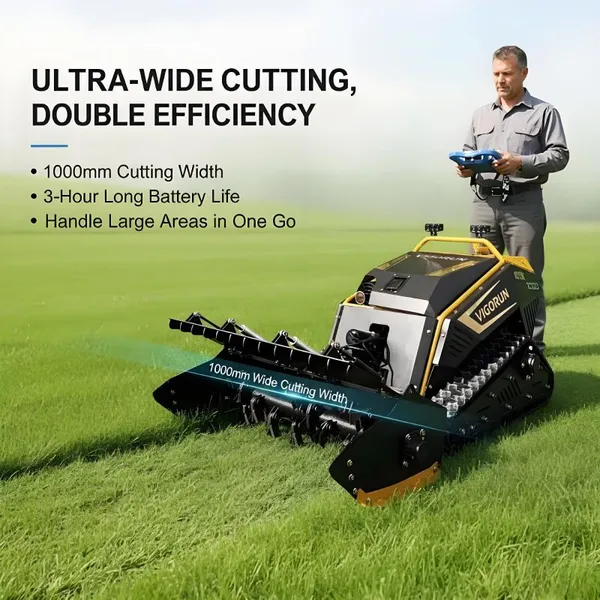
Mower Gasoline Grass Cutter Machine Remote Control 1000mm Cut 35 Degree Slope Flail Hammer for Overgrown LandUS$ 7500 - 7700MOQ: 1 Set
-
Vigorun VTLM800 Remote Control Electric Mower, Self-Locking Slope Safety Crawler Mower for Steep SlopesUS$ 2600.00 - 2700.00MOQ: 1 Set
-
Shrub and Brush Clearing MTSK800 MTSK1000 Flail Mower rc Remote Weeding Weeder MachineUS$ 2800 - 2900MOQ: 1 Set
-
RC Robot Lawn Mower Electric Remote Control Flail Grass Cutter Garden Cutting Machine MTSK1000US$ 8000 - 8200MOQ: 1 Set
-
Remote Manipulation Rubber Track Brush Cutter Industrial Flail Mower for Efficient Shrub ClearingUS$ 2000.00 - 2790.00MOQ: 1 Set
-
Vigorun MTSK1000 Rc Lawn Mower, Loncin 764CC Gasoline Engine Forestry Mulcher With Remote Control for ForestryUS$ 7500.00 - 7700.00MOQ: 1 Set
-
Vigorun VTC550 Zero Turn Electric Mower Quality Guaranteed Crawler Brush Cutter For Embankments & LeveesUS$ 1600 - 1690MOQ: 1 Set