
 Business License

Brush Hog vs Flail Mower: Which Cutting System Handles Your Slope?
Last spring, a landscaping contractor in Georgia named Derek watched his operator send a 15-foot rotary cutter over the edge of a 28° drainage ditch. The blade struck a buried concrete fragment. The resulting debris field shattered the windshield of a parked truck 40 feet away and cost the company $4,200 in repairs, a lost client, and a workers comp claim that still hasn't closed. The machine was a brush hog. The job was a slope. And the combination was a liability waiting to happen.
If you're clearing heavy brush, overgrown fields, or steep embankments, you've probably faced the brush hog vs flail mower decision. The two machines look similar on a trailer, but they cut differently, throw debris differently, and create very different safety profiles on angled ground. This guide breaks down how each system works, where each one wins, and why a growing number of commercial operators and municipalities are switching to flail heads for slope work.
We'll also look at how remote control flail mowers change the math entirely — because when you can stand 200 meters away while the machine handles the cut, the debris question becomes less urgent and the slope question becomes solvable.
What a Brush Hog Actually Does (and Where It Fails)
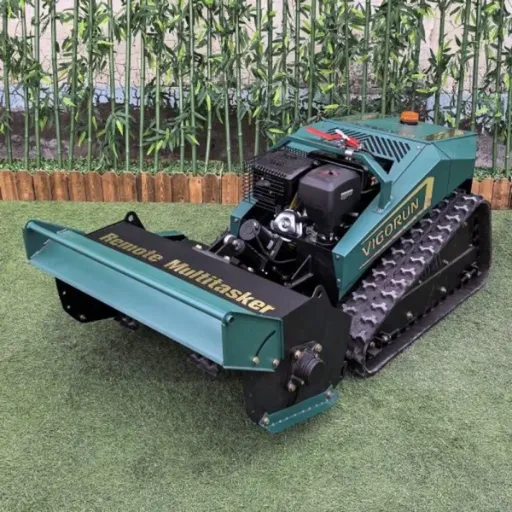
"Brush hog" is technically a brand name — Bush Hog, Inc. — but the term has become generic for any rotary cutter or rough-cut mower that uses one or two large spinning blades to chop through thick grass, weeds, and light brush.
How the Cutting System Works
A brush hog uses a heavy, horizontally spinning blade (or pair of blades) mounted beneath a welded deck. The blade tips swing at high speed — typically 150-200 mph at the outer edge — and sheer through vegetation by impact force. It's a simple, brute-force approach: the blade hits the material, cuts it, and the deck shapes the discharge pattern.
Key specs that matter:
Blade mass: Heavy blades store rotational energy and power through saplings up to 25-50 mm (1-2 in) thick
Deck height: Fixed or floating decks that ride over uneven ground without scalping
PTO or engine power: Typically 15-50 hp depending on cutting width
Where Brush Hogs Excel
Brush hogs are the right tool for flat or gently rolling ground where you need to clear large areas quickly and cheaply. They handle:
Tall grass and weeds up to 1-2 meters thick
Light brush and saplings under 25 mm
Flat pastures, fields, and roadside ditches with shallow grades
Jobs where purchase price matters more than finish quality
The Safety Problem on Slopes
Here's where the brush hog vs flail mower debate gets serious. A rotary blade spinning at 200 mph turns every rock, stump fragment, and piece of metal into a projectile. On flat ground, operators can direct discharge away from people and property. On a slope, gravity and blade rotation conspire against you.
Three slope hazards unique to brush hogs:
Downslope debris throw: On an angled face, discharge naturally carries downslope — directly into the area below the machine, where workers, vehicles, or structures sit
Blade strike on hidden objects: Embankments hide rocks, rebar, and concrete fragments better than flat fields; a brush hog blade has no give when it hits something solid
Rollover risk from weight distribution: The heavy blade and deck sit high on the chassis, raising the center of gravity on terrain where stability already matters
According to the U.S. Occupational Safety and Health Administration, struck-by-object incidents are among the leading causes of injury in landscaping and grounds maintenance. Rotary cutters contribute disproportionately because of the projectile energy they generate.
Safety note: If your job involves slopes steeper than 15°, a conventional brush hog is a liability tool dressed as a productivity tool. The faster it cuts, the harder it throws — and the less control you have over where that energy goes.
How a Flail Mower Works (and Why It Costs More Up Front)
A flail mower uses a completely different cutting physics. Instead of one or two large blades, it uses dozens of small, hinged flails mounted on a horizontal rotating drum.
The Flail Cutting Mechanism
Each flail is a small blade or hammer (typically 100-200 mm long) attached to the drum with a chain or hinge pin. As the drum rotates at 1,500-3,000 rpm, centrifugal force holds the flails outward. When a flail hits vegetation, it cuts and mulches in a single action. When it hits something hard — a rock, a stump, a piece of metal — the hinge allows the flail to deflect rather than shatter or launch the object.
What this means in practice:
Mulched finish: The material is cut multiple times as it passes through the flail curtain, producing a finer discharge than a brush hog
Contained debris: The flail drum and side plates form a partial enclosure; rocks and objects are not launched at high velocity
Flexible damage tolerance: A damaged flail is a $5-15 part; a damaged brush hog blade can destroy the spindle, gearbox, and deck
Where Flail Mowers Win
Flail mowers outperform brush hogs in specific conditions that matter to commercial operators:
Steep or uneven terrain: Lower center of gravity, better stability, and contained discharge make flails the standard for slope work
Areas with hidden debris: Riverbanks, demolition sites, overgrown lots, and reclaimed land where rocks and metal are common
Orchards and vineyards: The mulched finish doesn't throw stones into tree trunks or grape trellises
High-visibility maintenance: Municipal roadsides and estates where finish quality matters
The Price Reality
A flail mower typically costs 30-50% more than a comparable-width brush hog. The drum, flails, bearings, and side plates are more complex to manufacture than a simple spinning blade. However, the total cost of ownership often flips in favor of the flail within two to three years — especially on rough terrain where brush hog repairs add up fast.
Brush Hog vs Flail Mower: Side-by-Side Comparison
| Factor | Brush Hog (Rotary Cutter) | Flail Mower |
|---|---|---|
| Cutting mechanism | 1-2 large spinning blades | Dozens of hinged flails on a drum |
| Max brush size | 25-50 mm saplings | 20-40 mm depending on flail type |
| Debris throw | High-velocity, uncontrolled | Contained, low-velocity |
| Slope safety | Poor — projectile risk increases with grade | Good — enclosed drum contains discharge |
| Finish quality | Rough, uneven | Fine, mulched, even |
| Damage tolerance | Blade/shaft damage on hard impact | Flail deflects; individual flail replacement |
| Maintenance cost | Lower initially, higher on rough terrain | Higher initially, lower long-term on slopes |
| Weight distribution | Heavy deck, higher center of gravity | Drum sits low, better stability |
| Best application | Flat fields, pastures, light brush | Slopes, orchards, debris-heavy ground, roadsides |
The bottom line from the comparison table: If your work is flat and clean, a brush hog is probably the economical choice. If your work is sloped, debris-heavy, or safety-regulated, the flail mower pays for itself in reduced liability and repair bills.
When to Choose a Brush Hog
Despite everything above, there are legitimate situations where a brush hog is the right machine.
Choose a rotary cutter when:
The terrain is flat or under 10° slope
You're clearing open pasture or agricultural fields without hidden debris
Purchase price is the primary constraint and you can absorb repair costs
You're cutting extremely heavy, woody brush where blade mass matters more than safety containment
The job is occasional, not daily commercial use
A rancher in Texas clearing 200 acres of flat coastal prairie doesn't need a flail mower. A municipality maintaining highway embankments absolutely does.
When a Flail Mower Is the Only Safe Answer
Some jobs make the brush hog vs flail mower decision for you. If any of the following describe your work, a flail head isn't an upgrade — it's a requirement.
You need a flail mower when:
Slopes exceed 15° and operator safety is a priority
You're working near roads, paths, or structures where debris throw creates liability
Hidden rocks, concrete, or metal are common in the cutting area
Finish quality matters — golf courses, estates, municipal grounds
You're mowing between orchard rows or vineyard trellises where stone throw damages crops
Insurance or workplace safety regulations restrict high-velocity rotary cutters
Elena manages a 40-hectare cherry orchard in Chile's Central Valley. For three years, her crew used a tractor-mounted brush hog between tree rows. Every season, stone throw from the blade damaged tree bark and cost her $2,000-3,000 in lost yield from trunk infections. She switched to a flail mower in 2024. The mulched finish was cleaner, the trees stopped taking damage, and her crew stopped finding rocks in the canopy. The flail head cost 40% more upfront. It paid back in the first growing season.
What About Remote-Controlled Flail Mowers for Steep Slopes?
Here's where the conversation shifts from attachment choice to machine choice. A flail mower is safer than a brush hog on slopes. But a remote-controlled flail mower removes the operator from the slope entirely.
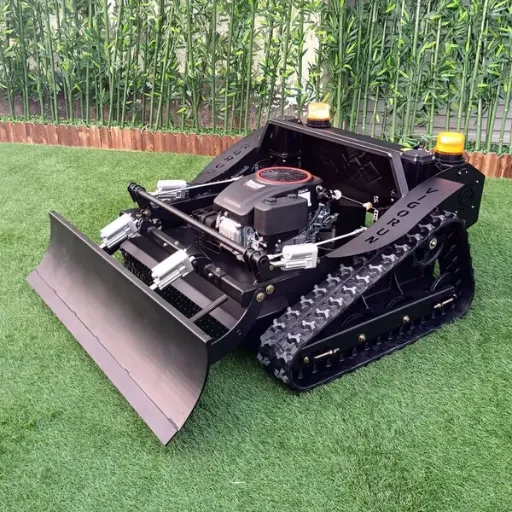
Vigorun builds two remote control flail mower models for exactly this application:
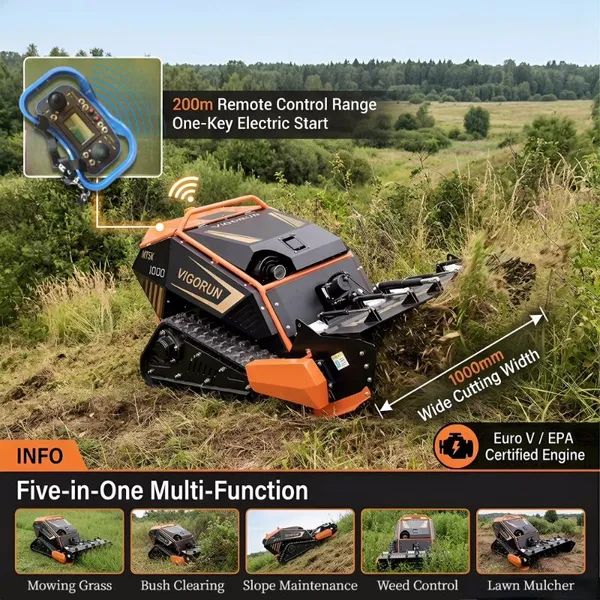
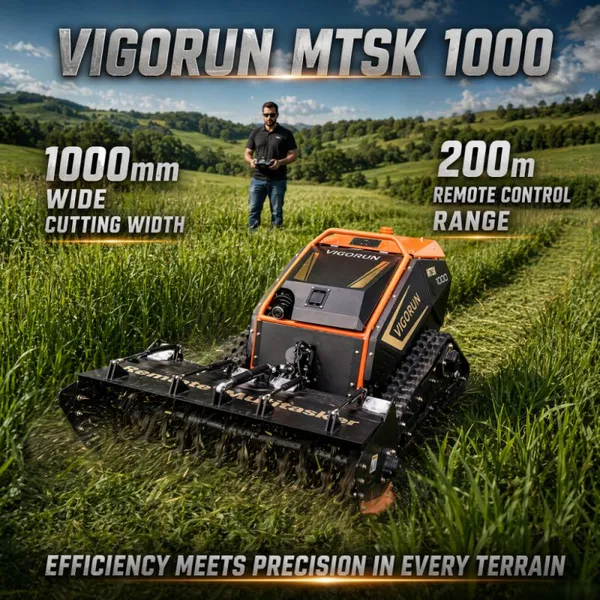
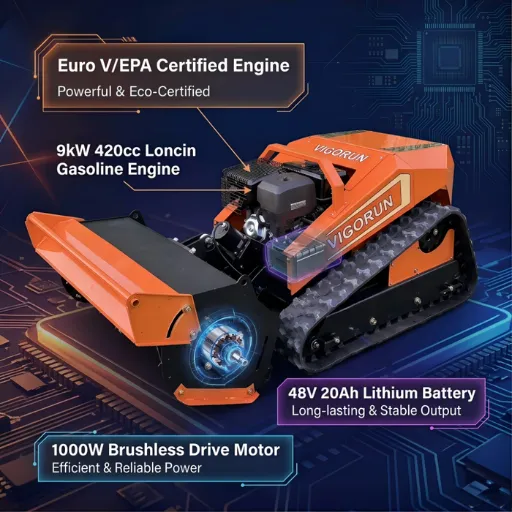
MTSK1000 remote control flail mower — heavy-duty flagship with a wide flail drum for commercial vegetation management
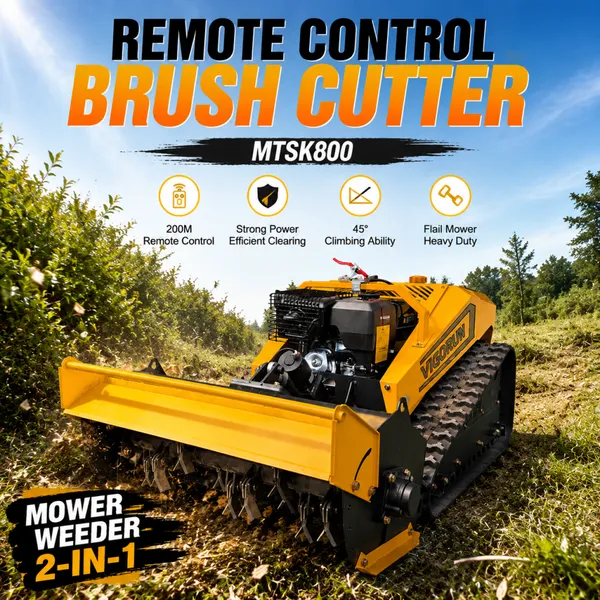
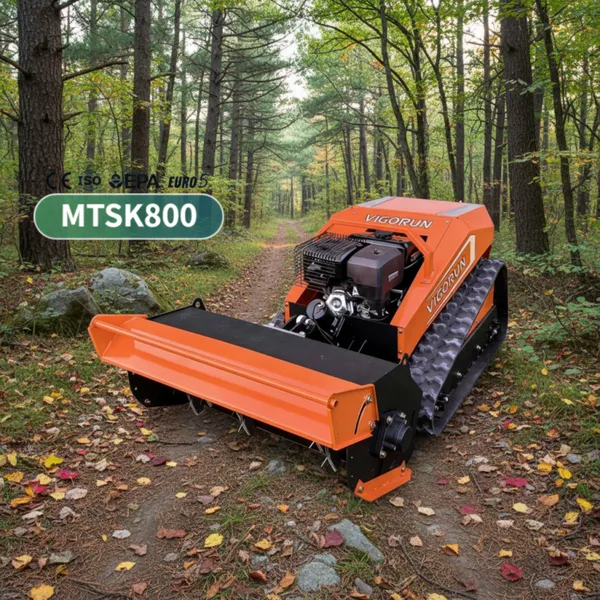
MTSK800 remote-controlled flail mower — patent-pending mid-class model with tracked chassis and 200-meter wireless control
Both machines use a flail head rather than a rotary deck for the same reasons outlined above: contained discharge, better slope stability, and reduced debris throw. The difference is that the operator stands up to 200 meters away, on flat ground, with clear line of sight — not on the slope, not in the debris path, and not at risk of rollover.
Why remote control matters for flail mowing:
A flail mower on a 35° slope is safer than a brush hog. A flail mower controlled from 200 meters away is safer still.
The tracked chassis on the MTSK800 and MTSK1000 climbs up to 40° on dry grass, with a low center of gravity that wheel-based machines can't match
The flail drum mulches as it cuts, so even if the machine encounters debris, the operator is never in the danger zone
For municipalities, solar farms, vineyard terraces, and roadside contractors, the combination of flail cutting + remote control + tracked chassis solves the three biggest problems in slope vegetation management: operator safety, debris liability, and terrain access.
Ready to see how remote control changes the slope-mowing equation? Explore the MTSK1000 remote control flail mower specifications →
Maintenance Reality: Which Costs More Over 5 Years?

Purchase price is a poor way to compare brush hogs and flail mowers. The real number is total cost of ownership — and on rough or sloped terrain, flail mowers typically win.
Brush Hog Maintenance Costs
Blade sharpening/replacement: $40-80 per blade, 2-4 times per season on rough ground
Spindle and gearbox repair: $300-800 per incident when the blade hits something solid
Deck repair: Welding and patching from rock strikes — $100-400 per season
Downtime: A damaged spindle can sideline the machine for days
Flail Mower Maintenance Costs
Flail replacement: $5-15 per flail; a full set of 30-40 flails runs $200-400
Drum bearings: Inspect annually, replace every 2-3 seasons — $150-300
Belt or drive maintenance: Standard wear item — $100-200 per season
Damage tolerance: Individual flails break and are replaced in minutes; the drum and drivetrain are protected
The 5-Year TCO Picture
On flat, clean ground, a brush hog is cheaper to own. On debris-heavy or sloped terrain, the flail mower's damage tolerance and contained cutting typically deliver lower 5-year costs — even accounting for the higher purchase price.
A German municipal fleet we work with tracked both machines across three seasons of roadside and levee maintenance. The brush hog averaged €1,800 per year in repairs. The flail mower averaged €620. The flail head cost €2,400 more upfront. It broke even in year two and saved €3,540 over five years — not counting the liability incidents the brush hog generated that never showed up in the maintenance log.
Can You Switch Between Systems on the Same Machine?
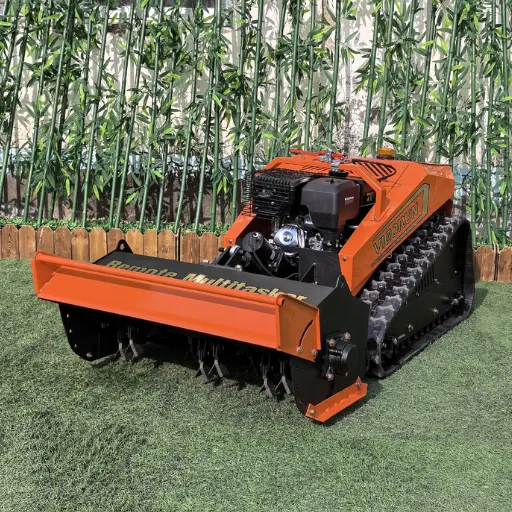
For operators who run mixed terrain, the ideal setup is a single chassis that accepts both flail and rotary heads. Vigorun's MultiTasker platform and remote control lawn mower lines support interchangeable attachments, letting one tracked chassis run a flail head for slope work and a rotary deck for flat-ground finishing.
Why attachment flexibility matters for distributors:
One chassis reduces fleet cost and parts inventory
End customers buy the head that fits their terrain, not a second machine
Seasonal switching — flail for spring brush, rotary for summer grass — extends contract value
If you're a distributor building a product line, OEM remote mower customization lets you spec a chassis with both attachment types from the factory, under your own brand, with CE / EURO V / EPA documentation in your company name.
Final Decision Framework: Brush Hog or Flail Mower?
If you're still weighing the brush hog vs flail mower choice, run your job through this checklist:
Is any part of the terrain over 15°? If yes, flail — and consider remote control for anything over 25°
Is hidden debris likely? Rocks, concrete, metal, and stumps all favor flail deflection over blade impact
Are people, vehicles, or structures within 50 meters of the cutting area? Flail containment reduces liability
Does finish quality matter to the client or regulator? Flails deliver a mulched, even cut; brush hogs leave a rough finish
Is this a daily commercial machine or occasional use? Daily commercial use on rough ground justifies the flail investment
What's your 3-year repair budget? If brush hog repairs historically run high, the flail TCO likely wins
Key Takeaways
Brush hogs use brute-force rotary blades that cut fast but throw debris at high velocity — a dangerous combination on slopes
Flail mowers use hinged flails on a drum that mulch vegetation and contain debris, making them safer on angled terrain and debris-heavy ground
On flat, clean ground, brush hogs are economical. On slopes or rough terrain, flail mowers deliver lower total cost of ownership and reduced liability
Remote-controlled flail mowers remove the operator from the danger zone entirely, combining the flail's safety advantages with 200-meter wireless control and tracked slope climbing
Vigorun's MTSK800 and MTSK1000 are factory-built remote control flail mowers with CE / EURO V / EPA certification, 100% pre-delivery field testing, and OEM customization for distributors
The right cutting system isn't the one with the biggest blade or the lowest sticker price. It's the one that clears your terrain safely, keeps your operator off the slope, and doesn't turn hidden rocks into projectiles.
If you're maintaining embankments, levees, orchards, or roadside slopes and you're still running a brush hog on angled ground, it's time to look at a flail head — and maybe time to look at taking the operator off the hill entirely.
Request a quote on the MTSK1000 remote control flail mower →
FOB Shandong pricing, full CE / EURO V / EPA documentation, and container loading diagrams included. OEM color, logo, and packaging available from MOQ 5 units for distributors building their own brand.
Recently Posted
-
Steep Slope 600mm Tracked 200m Remote Control 45 Degree Brushless Electric Lawn Mower
August 10, 2026*Integrated Drive System with 73 Percent Efficiency: The VTLM600 remote control lawn mower features a fully integrated brushless m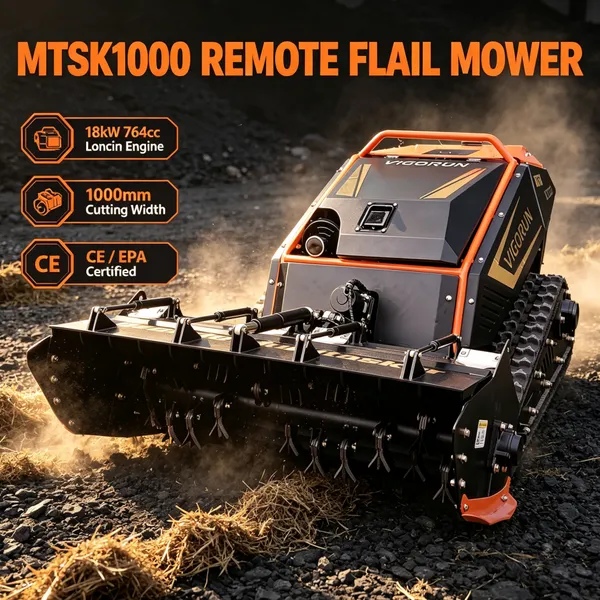 Read More
 -
Remote Controlled Pesticide Sprayer with 600L Tank 8.4m Boom for Agricultural Applications
August 10, 2026*Electric Start & 13kW Loncin Engine for Powerful Agricultural Spraying: Maximize field application efficiency with the SPRY60 Read More
 -
Self Propelled Agricultural Boom Sprayer with Adjustable Track for Modern Farming
August 10, 2026*Electric Start & 13kW Loncin Engine for Powerful Agricultural Spraying: Maximize field application efficiency with the SPRY60 Read More
 -
Automatic Remote Control Agricultural Spray Machine with 600L Chemical Tank and Boom System
August 10, 2026*Electric Start & 13kW Loncin Engine for Powerful Agricultural Spraying: Maximize field application efficiency with the SPRY60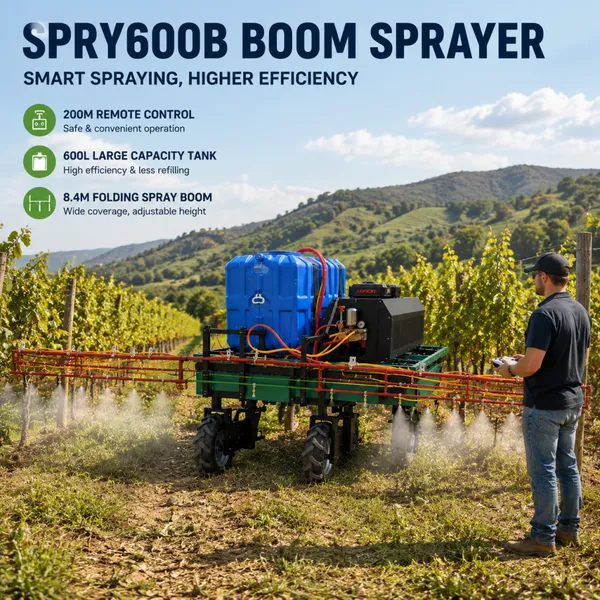 Read More

Contact Us
Recommended Products
-
 Vigorun Lawn Mower Robot, Industrial Dual 48V 1500W Motors MTSK1000 Mulcher Machine for Large LandscapesUS$ 7500.00 - 7700.00MOQ: 1 Set
 -
Farmland Orchards Battery Powered Mower Gasoline Golf Mower Robot Lawn Mower 3000m2 Vigorun Remote Control Grass MowerUS$ 2580 - 2700MOQ: 1 Unit
-
Vigorun MTSK800 Automatic Remote Control Grass Cutting Machine 48V 20Ah Battery Remote Flail MowerUS$ 2800 - 2900MOQ: 1 Set
-
Vigorun MTSK1000 Remote Control Mower 24hp Fail-Safe Slope Braking Remote Control Forest MulcherUS$ 8000 - 8200MOQ: 1 Set
-
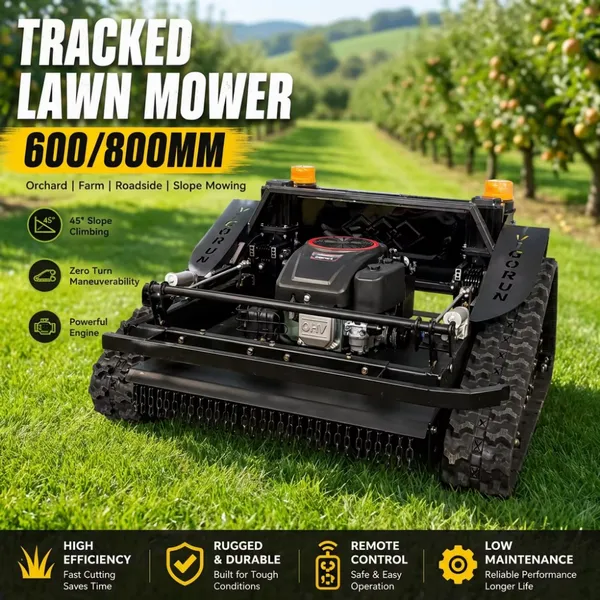
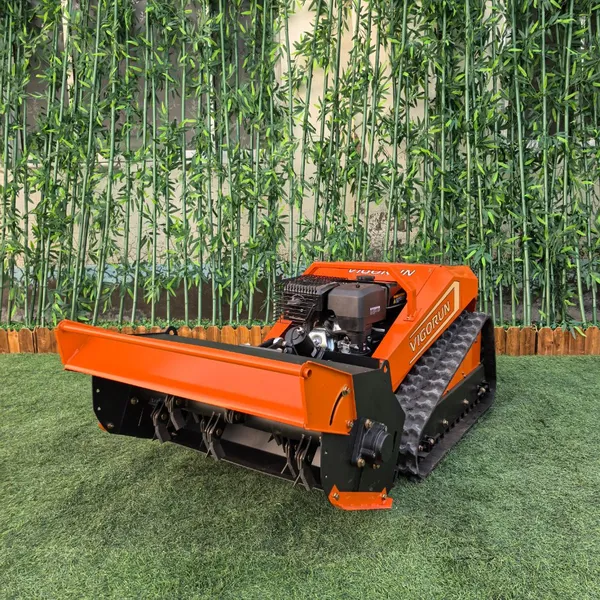
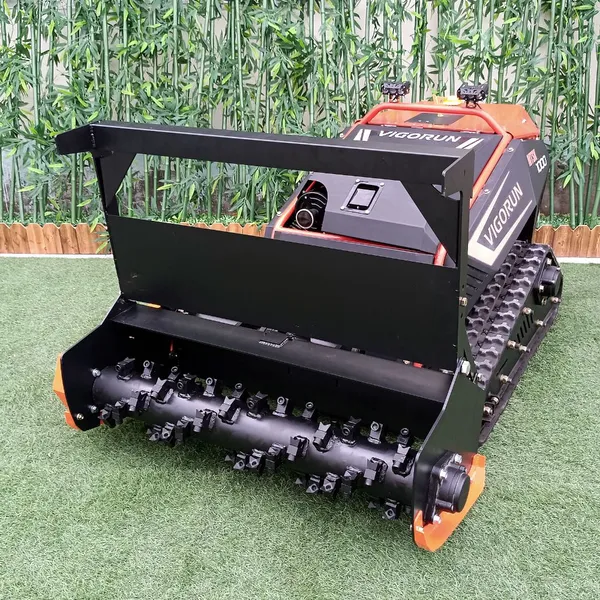
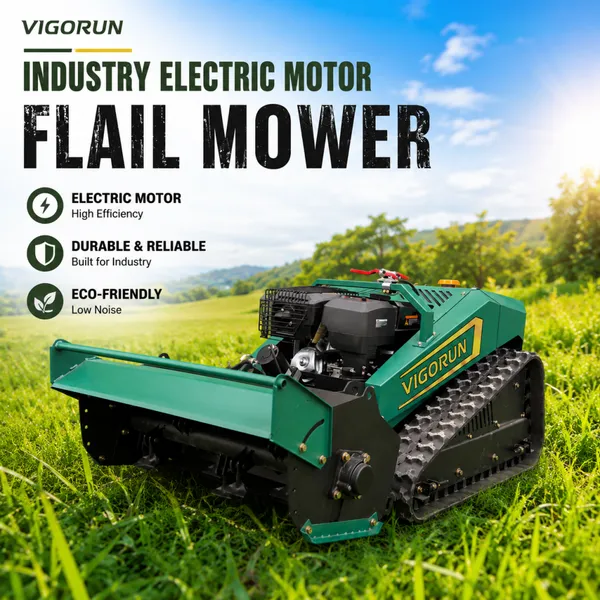
Industry Electric Motor Lawn Mower Flail Mower Atv Gasoline Hedge Trimmer Battery LawnmowerUS$ 2580 - 2900MOQ: 1 Unit
-
Vigorun Agricultural Tractor Sprayer Euro 5/EPA Electric Agricultural Sprayer 600l for VineyardsUS$ 2600 - 2700MOQ: 1 Set
-
Remote Control Tracked Hillside Mower 800mm Cutting Width 60 Degree Slope for Steep Terrain VegetationUS$ 2600 - 2700MOQ: 1 Set
-
Vigorun VTLM600 RC Lawn Mower Robot CE EPA Certified 45° Extreme Slope Mini Crawler Lawn MowerUS$ 1700 - 17900MOQ: 1 Set
-
Remote Controlled High Efficiency Fog Cannon Spraying Machine 600L Tank for Agriculture and Dust ControlUS$ 2800 - 2900MOQ: 1 Set
-
Vigorun Radio Control Mowing Euro 5/EPA Self-Propelled & Precise 6hp Remote Control Crawler MowerUS$ 1700 - 1790MOQ: 1 Set
-
Factory Manufacturer Vigorun MTSK1000 1000MM Commercial Branch Cutter Flail Mower rc Remote Petrol Lawnmower Mower Grass Cutter TractorUS$ 8000 - 8200MOQ: 1 Set
-
Vigorun VTW550 Remote Control Grass Cutter Tractor Robot Gas Lawn Mower Grass Cutter Small Electric Lawn Mower Vigorun Lawn MowerUS$ 1000 - 1250MOQ: 1 Set
-
Vigorun Tech Gasoline Remote Control Lawn Mower Self-Locking Slope Safety RC Mower Tiller for EmbankmentsUS$ 2800.00 - 2900.00MOQ: 1 Set
-
Mower Gasoline Grass Cutter Machine Remote Control 1000mm Cut 35 Degree Slope Flail Hammer for Overgrown LandUS$ 7500 - 7700MOQ: 1 Set
-
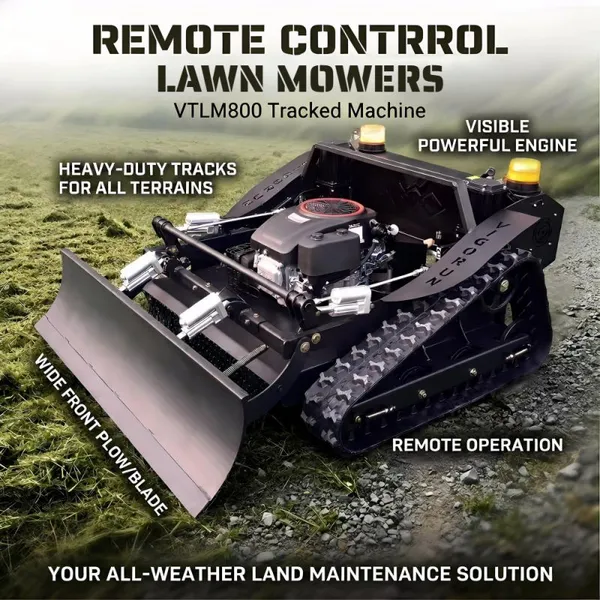
Vigorun VTLM800 Remote Control Electric Mower, Self-Locking Slope Safety Crawler Mower for Steep SlopesUS$ 2600.00 - 2700.00MOQ: 1 Set

-
Shrub and Brush Clearing MTSK800 MTSK1000 Flail Mower rc Remote Weeding Weeder MachineUS$ 2800 - 2900MOQ: 1 Set
-
RC Robot Lawn Mower Electric Remote Control Flail Grass Cutter Garden Cutting Machine MTSK1000US$ 8000 - 8200MOQ: 1 Set
-
Remote Manipulation Rubber Track Brush Cutter Industrial Flail Mower for Efficient Shrub ClearingUS$ 2000.00 - 2790.00MOQ: 1 Set
-
Vigorun MTSK1000 Rc Lawn Mower, Loncin 764CC Gasoline Engine Forestry Mulcher With Remote Control for ForestryUS$ 7500.00 - 7700.00MOQ: 1 Set
-
Vigorun VTC550 Zero Turn Electric Mower Quality Guaranteed Crawler Brush Cutter For Embankments & LeveesUS$ 1600 - 1690MOQ: 1 Set