
 Business License

How to Cut Tall Grass Safely on Any Terrain
Marcus bid a municipal contract in March 2025 without walking the full perimeter. The drainage ditch behind the sports complex looked manageable from the road, waist-high grass, maybe a little thick. When his crew showed up with two standard rotary mowers, they discovered 1.2 meters of dense, wet growth on a 30° slope. The mowers bogged down in minutes. One operator nearly rolled a machine trying to turn on the incline. Marcus lost the contract renewal and spent $3,200 replacing damaged equipment.
If you've ever faced tall grass that laughs at a standard mower deck, you already know the truth: cutting overgrown grass is not just a taller version of a normal mow. It's a different job with different risks, different techniques, and different equipment. Whether you're maintaining a roadside verge, clearing an orchard floor, or reclaiming an estate lawn that hasn't seen a blade in months, knowing how to cut tall grass safely saves time, money, and operator injury.
In this guide, you'll learn the step-by-step process professionals use to cut tall grass without damaging the turf or the machine. We'll cover when a standard mower works, when it doesn't, and what to do when tall grass grows on terrain no ride-on should attempt. Every recommendation draws from 15+ years of field experience building and testing remote-controlled mowers in Shandong, where we test every unit on real overgrowth before it ships.
Why Tall Grass Fights Back
Grass above 20-25 cm doesn't cut cleanly the way a maintained lawn does. The blades wrap around the spindle, the deck packs with clippings, and the engine loads up under the sudden demand. Worse, tall grass hides hazards: rocks, holes, debris, and uneven ground that a flat, manicured lawn never conceals.
Three physics problems make tall grass difficult:
Deck packing: dense clippings accumulate under the deck, reducing airflow and cutting efficiency.
Blade loading: each revolution meets more resistance, which heats the spindle and taxes the engine.
Uneven discharge: tall grass doesn't throw evenly, so clippings clump and smother the regrowth underneath.
These problems multiply on slopes. On even a 15° grade, a packed deck shifts the machine's center of gravity. Wet clippings add weight. The operator, already working harder to control the machine, has less margin for error. According to OSHA data, slope-related incidents account for a significant share of landscaping injuries every year, and tall grass makes the hazard invisible until it's too late.
Safety note: Always walk the cutting area before you start. Tall grass conceals wire, pipes, stumps, and drop-offs that can destroy a deck or flip a machine.
How to Cut Tall Grass Safely: A Five-Step Method
Professional grounds crews and municipal maintenance teams use a specific sequence when they tackle overgrown grass. Skip a step, and you'll either leave a ragged cut or damage the machine.
Step 1: Scout and Clear the Area
Walk the full perimeter. Remove visible debris, flag obstacles, and note wet spots or erosion. If you're working a slope, walk it from the bottom up, you'll spot soft ground and drop-offs more clearly. Mark any hazards with bright spray paint or flags so they're visible from the operator's position.
For commercial jobs, take photos before you cut. Insurance claims and client disputes are easier to resolve when you have documentation of the pre-cut condition.
Step 2: Set the Cutting Height to Maximum
Never cut tall grass at your final desired height in the first pass. Set the deck to its highest position, typically 8-10 cm for rotary mowers. The goal of the first pass is reduction, not finish. Cutting too low in one pass shocks the grass, scalps the turf, and overloads the engine.
If the grass is above knee height, consider a preliminary pass with a string trimmer or brush cutter to knock the top third off. This reduces the load on the mower and gives you a clearer view of the ground beneath.
Step 3: Cut in Passes, Lowering Gradually
Lower the deck by one setting per pass. Most professionals stop at two or three passes total. Each pass should move at a steady pace, don't speed up to compensate for the extra load. Let the blade do the work. If the engine labors or the deck sounds clogged, raise the cut height and slow down.
Key technique: Overlap each pass by 10-15%. Tall grass tends to lean in the direction of travel, and overlap catches the blades that stand back up after the first cut.
Step 4: Manage Clippings Strategically
Tall grass produces massive volumes of clippings. If you discharge them back onto the cut area, they smother the grass underneath and create thatch. Three options work better:
Side-discharge in windrows, then rake or collect afterward
Mulch only if the grass is moderately tall and dry; wet, heavy growth will not mulch cleanly
Bag or collect for formal lawns, estates, or sports fields where appearance matters
On commercial and municipal jobs, most crews side-discharge and follow with a blower or rake crew. It's faster than bagging and avoids the thatch problem.
Step 5: Clean the Deck and Inspect Blades
Tall grass stresses blades and spindles. After the job, scrape the deck clean, check blade sharpness, and inspect the spindle for heat damage or bearing wear. A nicked or dull blade tears grass rather than cutting it cleanly, which invites disease and gives the finished lawn a brown, ragged look.
For crews running multiple machines, keep a sharpening schedule. A blade that cuts 10,000 square meters of maintained lawn may only handle 2,000 square meters of overgrowth before it needs attention.
When Tall Grass Grows on a Slope, Everything Changes
The five-step method works well on flat ground. But when tall grass covers a slope, riverbank, levee, or retention pond, standard mowers become dangerous and ineffective. Here's why.
A ride-on mower rated for 15° slopes, the industry standard for most zero-turn and garden tractors, cannot safely cut tall grass on steeper terrain. The tall growth shifts weight unpredictably. The operator, already seated high above the center of gravity, has less stability with every turn. Wet grass underneath removes the last margin of safety.
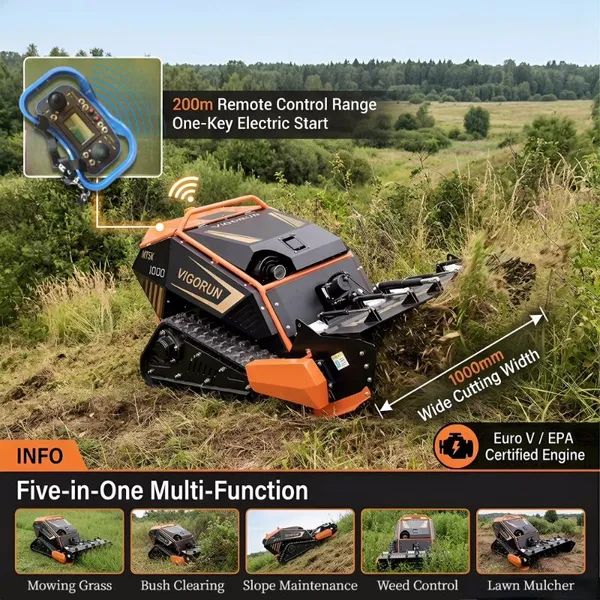
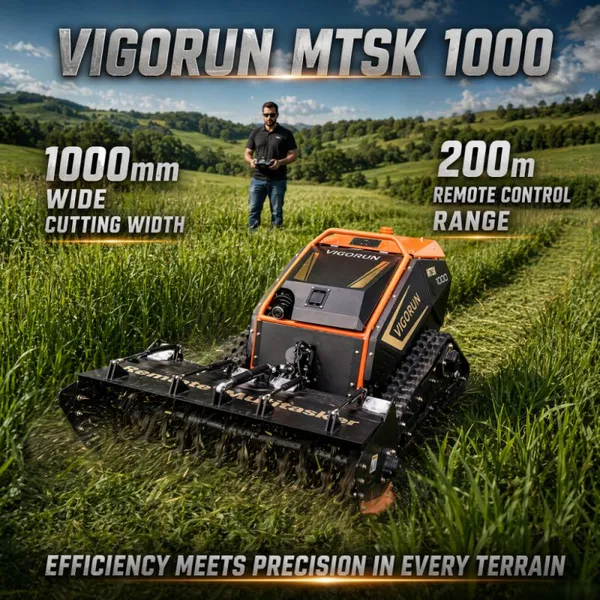
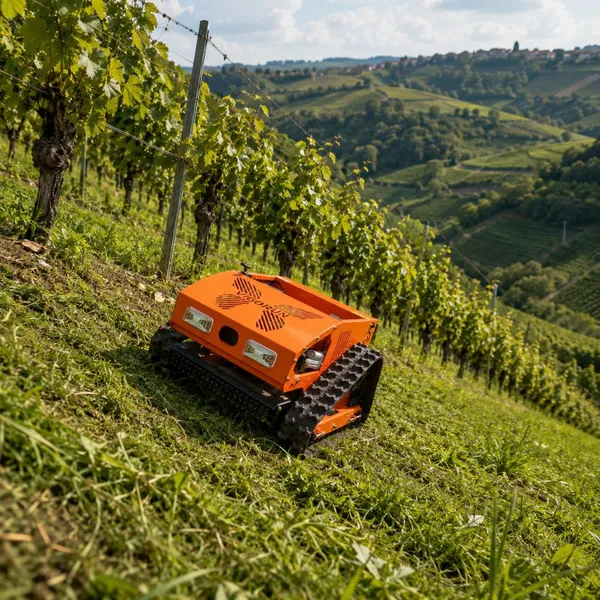
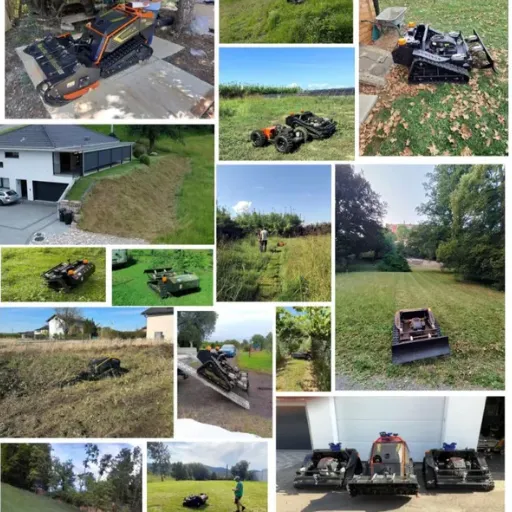
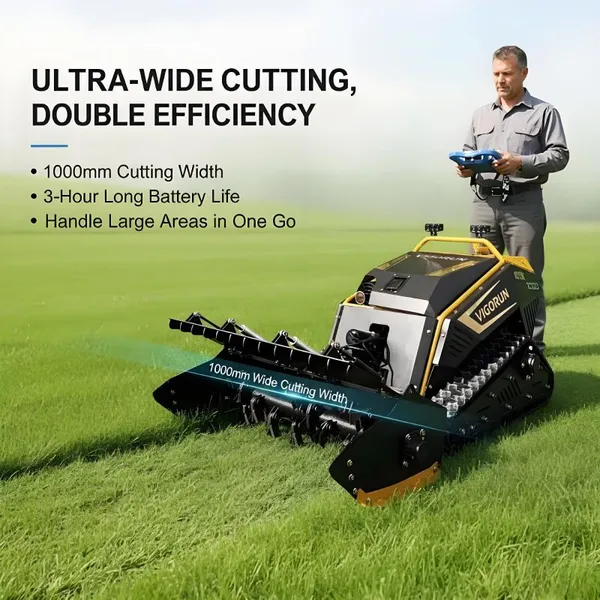
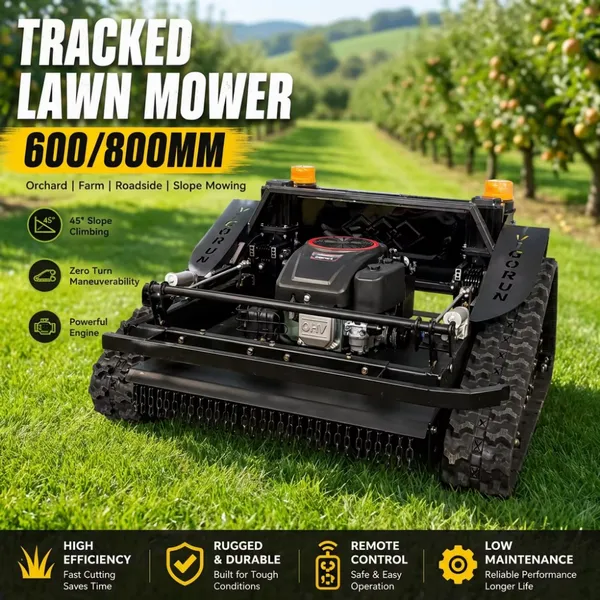
Remote control lawn mowers change the risk equation entirely. The operator stands on flat, stable ground up to 200 meters away while the machine handles the slope. The tracked chassis distributes weight across a wide footprint, and the low center of gravity resists tipping even on 45° faces.
Pro tip: When you're evaluating how to cut tall grass on a slope, the operator's position matters more than the machine's horsepower. A 22-hp engine on a ride-on is useless if the operator can't safely position the machine.
When Elena took over maintenance for a vineyard in Chile's Colchagua Valley, she inherited terraces that hadn't been mowed in two seasons. The grass between rows was shoulder-high, and the terraces pitched at 25-35°. Her crew of three workers took two full days per block with brush cutters, exhausting, slow work that cost $480 per block in labor.
Elena switched to a remote-controlled slope mower with a flail head. One operator now clears the same block in four hours, standing safely on the terrace above while the machine handles the slope. Labor cost dropped to $120 per block. The flail head cuts woody weeds and tall grass that choked the rotary brush cutters. And her workers' compensation exposure dropped to zero, no one walks the slope with a blade in hand anymore.
Choosing the Right Machine for Tall Grass and Rough Terrain
Not every tall-grass job needs a remote mower. But knowing when to upgrade from a standard machine keeps operators safe and jobs profitable.
Standard rotary mowers work when:
Grass height is under 40 cm
Ground is flat or gently sloped (under 15°)
Terrain is clear of rocks, stumps, and debris
Area is small enough that clippings management is practical
Brush cutters and string trimmers work when:
Grass is above 40 cm or mixed with weeds
Area is irregular or obstacle-dense
Slope is moderate but the machine is light enough to control safely
Job is occasional, not routine
Remote control lawn mowers work when:
Slopes exceed 15° and tall grass conceals hazards
Area is large enough that hand-crew labor costs stack up fast
Safety regulations or insurance require keeping operators off dangerous terrain
Grass is mixed with brush, saplings, or woody growth that defeats rotary decks
| Application | Slope | Tall Grass Condition | Recommended Machine |
|---|---|---|---|
| Flat estate lawn, light overgrowth | 0-10° | Under 30 cm | Standard rotary or push mower |
| Orchard floor, moderate weeds | 10-20° | 30-60 cm | Brush cutter or light RC mower |
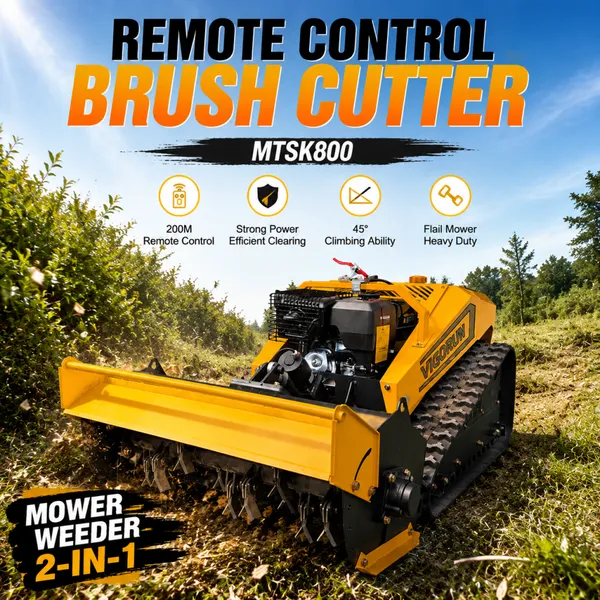
| Highway embankment, dense growth | 15-35° | 40-100 cm | MTSK1000 remote control flail mower |
| Levee or riverbank, heavy brush | 30-45° | 50-120 cm | VTLM800 rubber track slope mower |
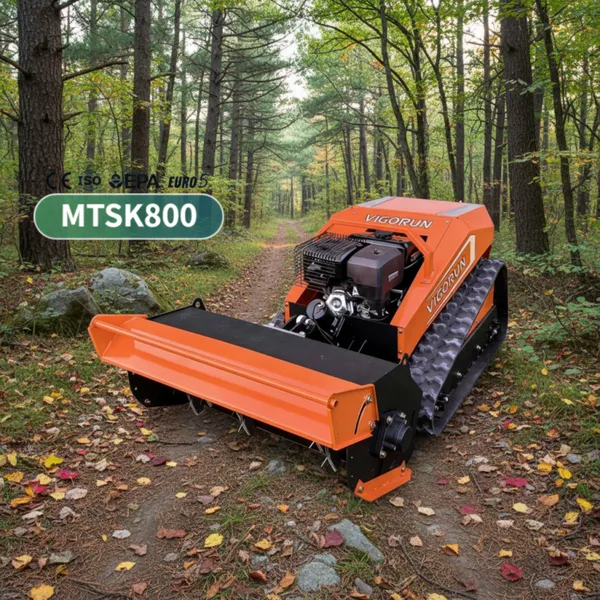
| Solar farm, between-array rows | 10-25° | 30-80 cm | MTSK800 or MTSK1000 with flail head |
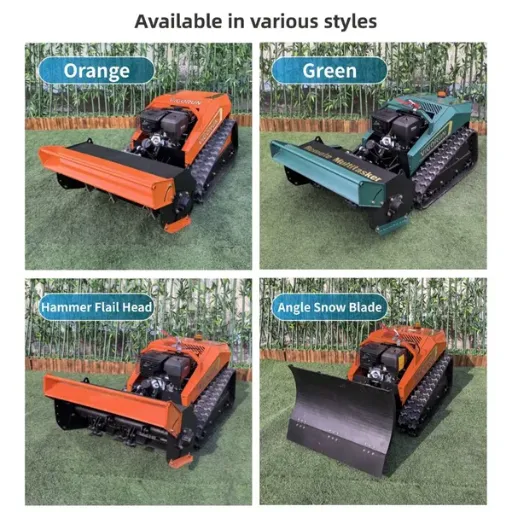
The flail head is the critical attachment for tall grass and brush. Unlike a rotary blade that relies on suction and momentum to stand grass up before cutting, a flail uses hinged blades or hammers that strike vegetation from multiple angles. It doesn't bog down in dense growth, and it handles woody material up to 25 mm thick that would destroy a standard mower deck.
If your fleet includes slope work, a flail-equipped remote mower replaces both the rotary mower and the brush cutter, one machine, one operator, no slope exposure. Browse the full remote mower range to match the deck and chassis to your terrain.
Maintenance After Cutting Tall Grass
Tall grass punishes equipment harder than maintained turf. After an overgrowth job, run through this checklist before the machine goes back into service:
Deck and undercarriage: Remove all packed grass and debris. Wet clippings left overnight corrode steel and clog drains.
Air filter: Tall grass creates more dust and pollen. Check the filter and blow it out or replace it if it's loading up.
Blades or flails: Inspect for nicks, cracks, and wear. A damaged flail link can throw metal; a cracked rotary blade can detach at speed.
Belts and pulleys: The extra load of tall grass accelerates belt wear. Check tension and surface condition.
Track or tire condition: If you worked soft or wet ground, check for embedded debris, cuts, or tension loss.
Engine oil and coolant: Heavy-load operation runs engines hotter. Verify levels while the machine is still warm.
For commercial operators, log every tall-grass job in the maintenance record. Warranty claims and resale value both benefit from documented care, and your service team can spot wear patterns before they become failures.
What Professional Crews Get Wrong
Even experienced operators make predictable mistakes when tall grass is involved. Avoid these five:
Cutting wet grass: Wet clippings pack the deck, reduce traction, and hide soft ground. Wait for dry conditions when possible.
Rushing the first pass: A fast first pass leaves uneven stubble and stresses the machine. Slow down and let the blades work.
Ignoring discharge direction: Throwing clippings into uncut grass is fine; throwing them back onto finished turf creates thatch and brown patches.
Single-pass scalping: Cutting from 60 cm to 3 cm in one pass shocks the turf and stalls the engine. Stage your cuts.
Sending a ride-on onto a slope it can't handle: If the slope feels questionable on foot, it's definitely unsafe for a seated operator on a machine with a high center of gravity.
That last mistake is the one that ends careers. According to OSHA lawn care safety data, rollover and struck-by incidents on slopes remain among the most common serious injuries in commercial landscaping. The remedy is not better technique on a dangerous machine, it's putting the right machine on the slope and the operator somewhere safe.
When a municipal maintenance team in Bavaria reviewed their incident logs for 2023, they found that 60% of their slope-related close calls happened on grass taller than 30 cm. Visibility was poor, ground conditions were hidden, and operators took risks they wouldn't have taken on clear, short turf. They added remote-controlled slope mowers to their fleet the following spring. Zero slope incidents in 2024. The machines paid for themselves in workers' compensation savings alone.
Ready to Tackle Tall Grass Without Putting an Operator at Risk?
Cutting tall grass is a skill, but it's also an equipment decision. On flat ground, the right technique and a sharp blade get the job done. On slopes, riverbanks, levees, and overgrown orchards, technique isn't enough, you need a machine that keeps the operator off the danger zone while it cuts through growth that would stall a standard mower.
The five-step method in this guide works for any tall-grass job: scout high, cut high, stage your passes, manage clippings, and maintain your machine afterward. When the terrain gets steep, add a sixth step: stand 200 meters away and let the tracked chassis handle the slope.
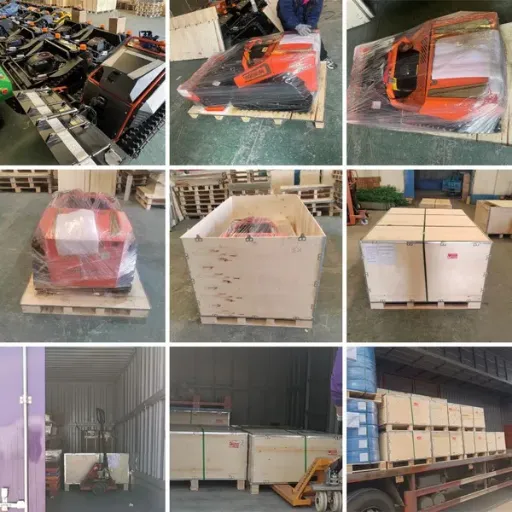
If you're maintaining slopes with tall grass and brush, request a quote on the VTLM800 or MTSK series, FOB Shandong pricing, full CE / EURO V / EPA documentation, and a 1-year warranty plus lifetime parts support. We'll send a spec sheet with slope ratings, cutting widths, and container loading diagrams so you can compare line by line.
Recently Posted
-
Steep Slope 600mm Tracked 200m Remote Control 45 Degree Brushless Electric Lawn Mower
August 10, 2026*Integrated Drive System with 73 Percent Efficiency: The VTLM600 remote control lawn mower features a fully integrated brushless m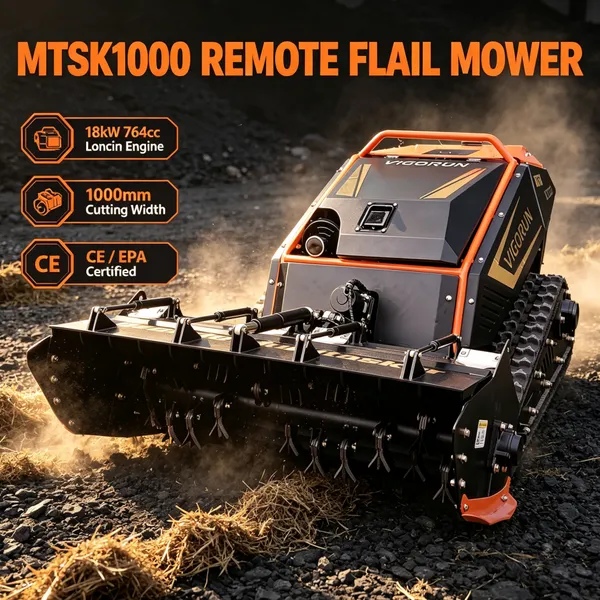 Read More
 -
Remote Controlled Pesticide Sprayer with 600L Tank 8.4m Boom for Agricultural Applications
August 10, 2026*Electric Start & 13kW Loncin Engine for Powerful Agricultural Spraying: Maximize field application efficiency with the SPRY60 Read More
 -
Self Propelled Agricultural Boom Sprayer with Adjustable Track for Modern Farming
August 10, 2026*Electric Start & 13kW Loncin Engine for Powerful Agricultural Spraying: Maximize field application efficiency with the SPRY60 Read More
 -
Automatic Remote Control Agricultural Spray Machine with 600L Chemical Tank and Boom System
August 10, 2026*Electric Start & 13kW Loncin Engine for Powerful Agricultural Spraying: Maximize field application efficiency with the SPRY60 Read More

Contact Us
Recommended Products
-
 Vigorun Lawn Mower Robot, Industrial Dual 48V 1500W Motors MTSK1000 Mulcher Machine for Large LandscapesUS$ 7500.00 - 7700.00MOQ: 1 Set
 -
Farmland Orchards Battery Powered Mower Gasoline Golf Mower Robot Lawn Mower 3000m2 Vigorun Remote Control Grass MowerUS$ 2580 - 2700MOQ: 1 Unit
-
Vigorun MTSK800 Automatic Remote Control Grass Cutting Machine 48V 20Ah Battery Remote Flail MowerUS$ 2800 - 2900MOQ: 1 Set
-
Vigorun MTSK1000 Remote Control Mower 24hp Fail-Safe Slope Braking Remote Control Forest MulcherUS$ 8000 - 8200MOQ: 1 Set
-
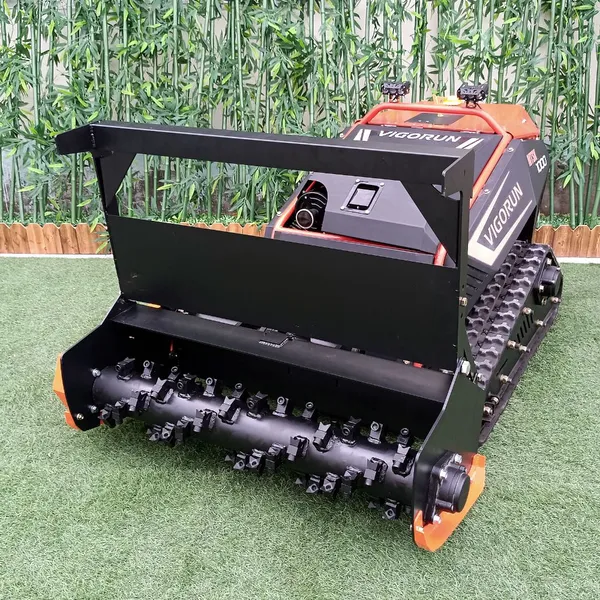
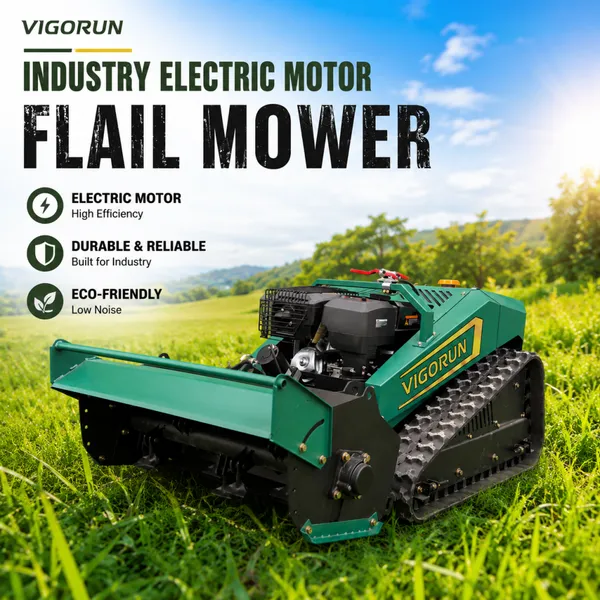
Industry Electric Motor Lawn Mower Flail Mower Atv Gasoline Hedge Trimmer Battery LawnmowerUS$ 2580 - 2900MOQ: 1 Unit
-
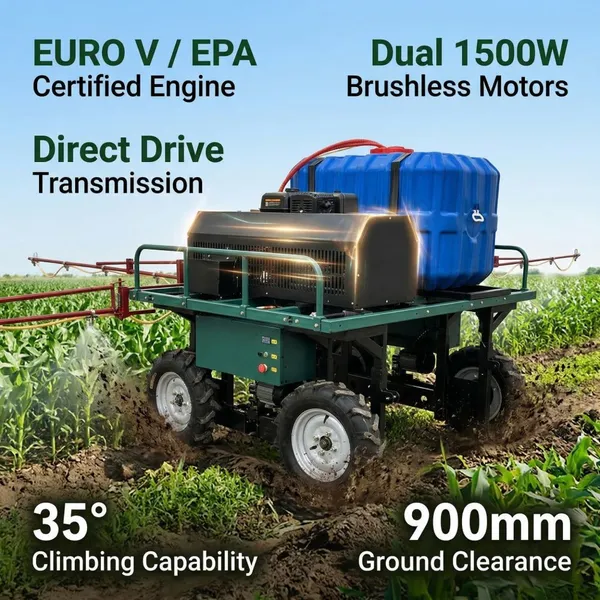
Vigorun Agricultural Tractor Sprayer Euro 5/EPA Electric Agricultural Sprayer 600l for VineyardsUS$ 2600 - 2700MOQ: 1 Set
-
Remote Control Tracked Hillside Mower 800mm Cutting Width 60 Degree Slope for Steep Terrain VegetationUS$ 2600 - 2700MOQ: 1 Set
-
Vigorun VTLM600 RC Lawn Mower Robot CE EPA Certified 45° Extreme Slope Mini Crawler Lawn MowerUS$ 1700 - 17900MOQ: 1 Set
-
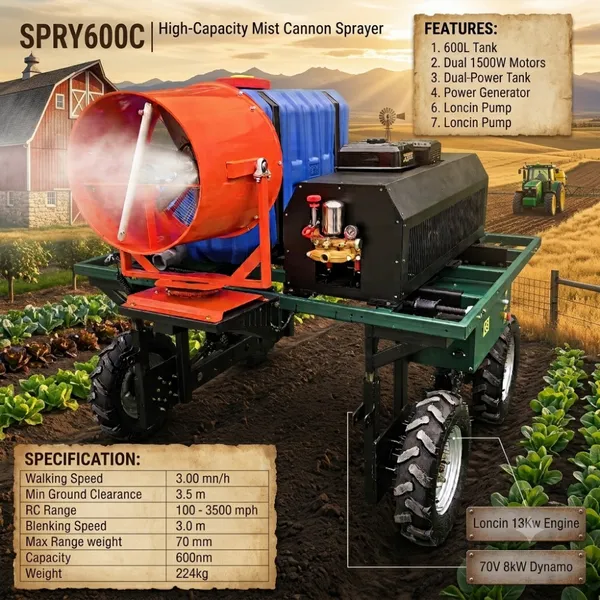
Remote Controlled High Efficiency Fog Cannon Spraying Machine 600L Tank for Agriculture and Dust ControlUS$ 2800 - 2900MOQ: 1 Set
-
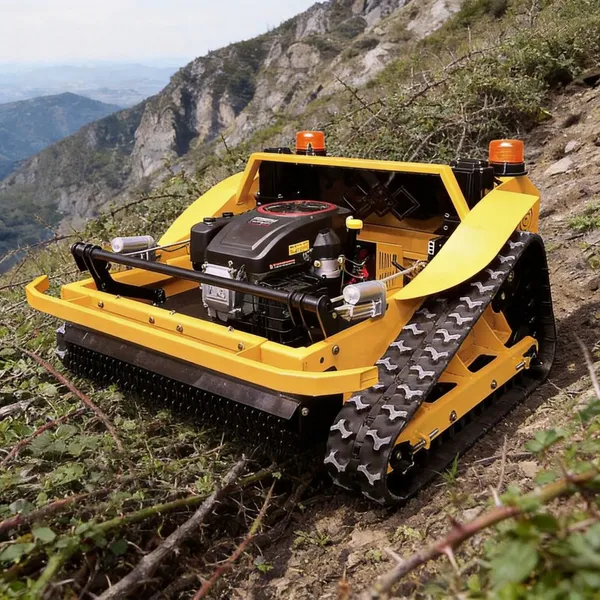
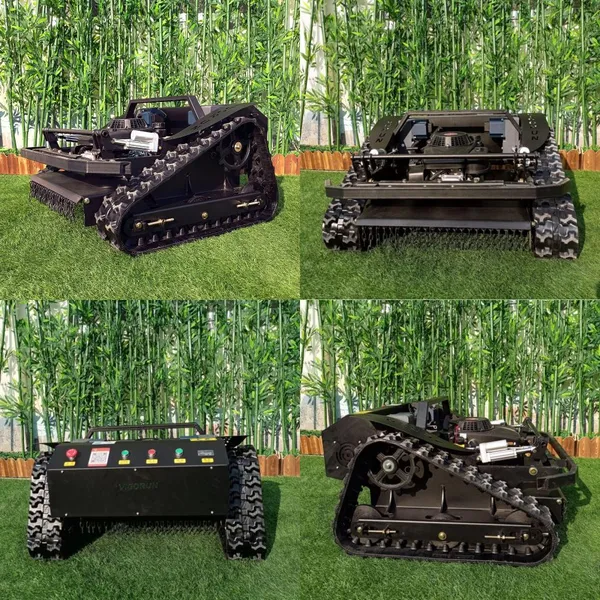
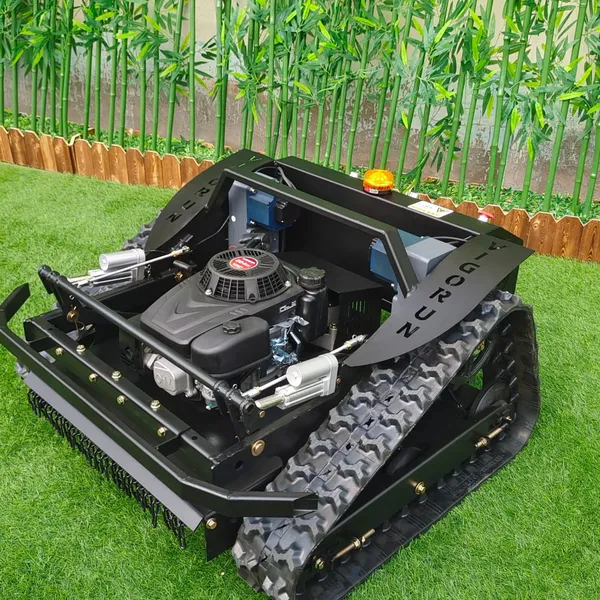
Vigorun Radio Control Mowing Euro 5/EPA Self-Propelled & Precise 6hp Remote Control Crawler MowerUS$ 1700 - 1790MOQ: 1 Set
-
Factory Manufacturer Vigorun MTSK1000 1000MM Commercial Branch Cutter Flail Mower rc Remote Petrol Lawnmower Mower Grass Cutter TractorUS$ 8000 - 8200MOQ: 1 Set
-
Vigorun VTW550 Remote Control Grass Cutter Tractor Robot Gas Lawn Mower Grass Cutter Small Electric Lawn Mower Vigorun Lawn MowerUS$ 1000 - 1250MOQ: 1 Set
-
Vigorun Tech Gasoline Remote Control Lawn Mower Self-Locking Slope Safety RC Mower Tiller for EmbankmentsUS$ 2800.00 - 2900.00MOQ: 1 Set
-
Mower Gasoline Grass Cutter Machine Remote Control 1000mm Cut 35 Degree Slope Flail Hammer for Overgrown LandUS$ 7500 - 7700MOQ: 1 Set
-
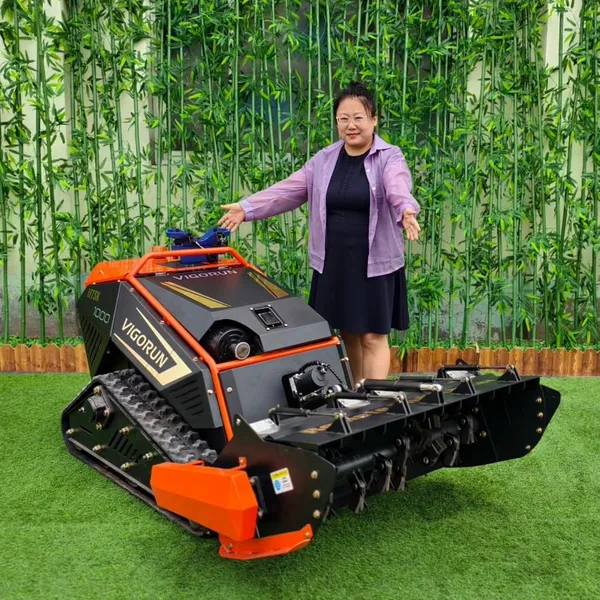
Vigorun VTLM800 Remote Control Electric Mower, Self-Locking Slope Safety Crawler Mower for Steep SlopesUS$ 2600.00 - 2700.00MOQ: 1 Set
-
Shrub and Brush Clearing MTSK800 MTSK1000 Flail Mower rc Remote Weeding Weeder MachineUS$ 2800 - 2900MOQ: 1 Set
-
RC Robot Lawn Mower Electric Remote Control Flail Grass Cutter Garden Cutting Machine MTSK1000US$ 8000 - 8200MOQ: 1 Set
-
Remote Manipulation Rubber Track Brush Cutter Industrial Flail Mower for Efficient Shrub ClearingUS$ 2000.00 - 2790.00MOQ: 1 Set
-
Vigorun MTSK1000 Rc Lawn Mower, Loncin 764CC Gasoline Engine Forestry Mulcher With Remote Control for ForestryUS$ 7500.00 - 7700.00MOQ: 1 Set
-
Vigorun VTC550 Zero Turn Electric Mower Quality Guaranteed Crawler Brush Cutter For Embankments & LeveesUS$ 1600 - 1690MOQ: 1 Set