
 Business License

How to Mow a Steep Hill: A Complete Safety Guide for Slopes Up to 45°
If you have ever stood at the top of a 35° embankment and watched your operator slide sideways on a ride-on mower, you already know the truth. Mowing a steep hill is not a landscaping task. It is an occupational hazard.
You agree that safety comes first. You also know that steep terrain needs to be cut, whether it is a highway embankment, a vineyard terrace, or a residential slope behind a villa. This guide shows you exactly how to mow a steep hill without putting an operator at risk. You will learn how to measure the slope angle, choose the correct machine for the grade, set a safe mowing pattern, and keep your crew off the danger zone entirely.
We have built remote-controlled slope mowers in Weifang, Shandong for more than four years. Every Vigorun unit is tested on our own slope ramps before it ships. The steps below come from field experience across 140+ countries, not from theory.
Want to keep your crew off dangerous slopes from day one? Explore the Vigorun remote control slope mower lineup →
Why Mowing a Steep Hill Is the Most Dangerous Job in Grounds Maintenance
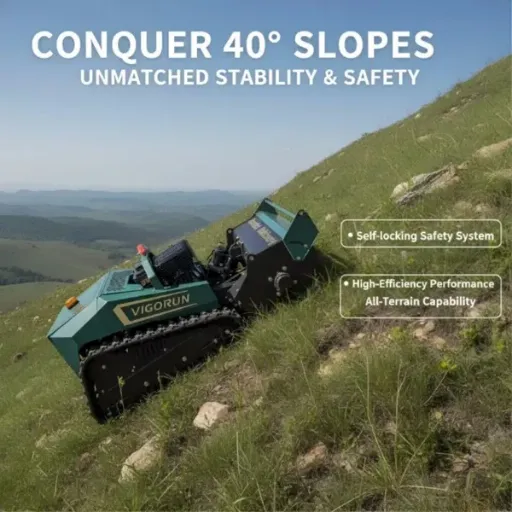
Mower rollover incidents rank among the most serious hazards in landscaping and grounds maintenance, according to the U. S. Occupational Safety and Health Administration . A standard zero-turn or garden tractor is engineered for flat lawns. Once the grade exceeds 15°, the center of gravity shifts past the stability threshold. At 25°, most ride-on mowers are genuinely unsafe. At 35°, they are a statistical guarantee of a rollover given enough operating hours.
The physics are simple. A seated operator sits high above the machine's base. The weight of the engine, the deck, and the operator themselves create a tipping moment that increases with every degree of slope. Add wet grass, a hidden gopher hole, or a sudden turn, and the machine goes over.
Safety Note: Never operate a ride-on mower on a slope steeper than 15°. Manufacturer warnings exist for a reason, and insurance adjusters will deny claims if the machine was operated outside its rated envelope.
Carlos Mendez runs municipal maintenance for a flood-control district outside Houston, Texas. In March 2024, he sent a two-person hand crew to mow a 30° levee face after spring rains. The crew made it halfway down before the lead operator lost footing on wet clay and slid 12 meters into the drainage channel.
The injuries were minor, but the workers comp claim was $8,400, and the crew refused to work that slope again. Carlos called us the following week. His Vigorun VTLM800 now clears the same levee face in 45 minutes, with the operator standing safely on the crest, 200 meters away.
That is the difference between traditional hill mowing and modern slope mowing.
Step 1: Measure the Slope Angle Before You Mow a Steep Hill
You cannot manage what you do not measure. Before any machine touches the grass, walk the slope with an inclinometer or a smartphone level app. Measure at three points: the top, the middle, and the bottom. Slopes are rarely uniform, and the steepest section is the one that will cause the accident.
Use this grade scale to categorize your terrain:
0-15°: Flat to moderate. Standard ride-on or walk-behind mowers are acceptable.
15-25°: Moderate to steep. Walk-behind mowers are possible, but physically demanding and risky in wet conditions.
25-35°: Very steep. Only specialized slope equipment should operate here. Remote-controlled machines are strongly recommended.
35-45°: Extreme slope. Conventional mowers are outright dangerous. Only tracked remote slope mowers with low center-of-gravity chassis are suitable.
45°+: Outside the range of most commercial equipment. Requires custom solutions or hand crews with ropes and harnesses.
Record your measurements. If you manage multiple properties or a municipal route, build a simple slope log that maps each location by address, maximum angle, and recommended equipment. Your crews will thank you, and your insurer will too.
Step 2: Choose Equipment That Matches the Grade, Not the Budget
This is where most operators make the fatal compromise. They send a machine up a hill because "it handled it last time" or because the specialized slope mower is still on the quote spreadsheet. Here is the honest equipment breakdown by grade.
Ride-on and zero-turn mowers: Rated to approximately 15° on dry, firm turf. Beyond that, rollover risk rises exponentially. These machines are designed for flat lawns, sports fields, and gentle grades.
Walk-behind mowers: Capable on slopes up to 20-25° in dry conditions, if the operator is fit and experienced. However, the operator is on the slope, in the path of discharge, and exposed to slipping hazards. Fatigue sets in quickly on large jobs.
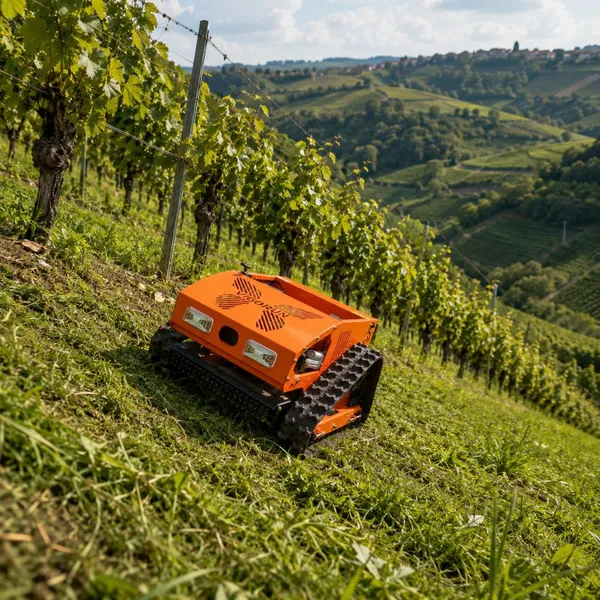
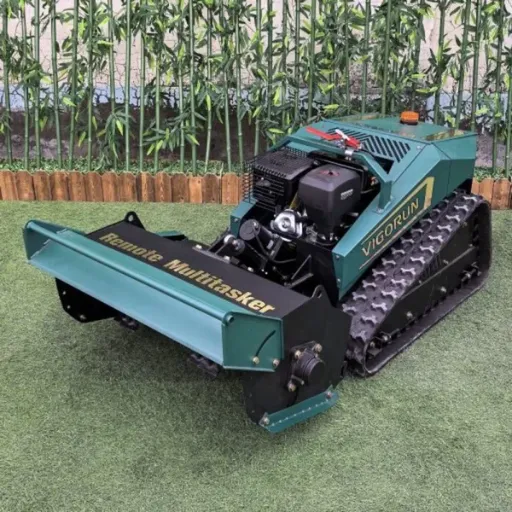
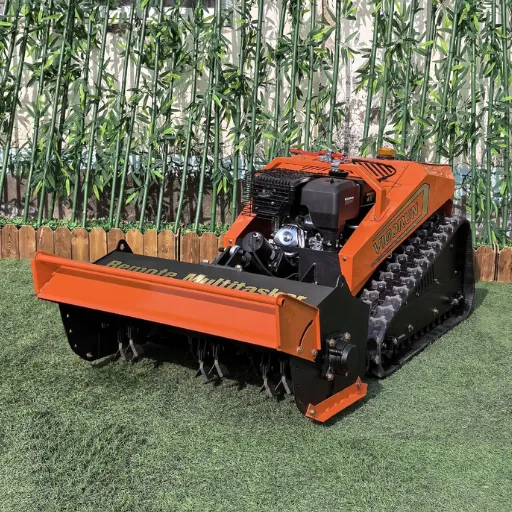
Remote-controlled slope mowers: Built specifically for steep terrain. A commercial-grade tracked unit like the Vigorun VTLM800 climbs up to 45° on dry grass and maintains traction on wet clay thanks to its rubber-track chassis. The operator stands up to 200 meters away, completely off the slope.
Want to see how a remote mower handles your specific grade? Browse the full Vigorun slope mower lineup and compare track width, engine output, and slope ratings side by side.
For slopes above 25°, the question is no longer "which mower is cheapest?" It is "which mower keeps the operator alive?" A remote-controlled slope mower replaces the labor cost of two workers within 14 months on most commercial contracts, and it eliminates the rollover liability entirely.
Step 3: Walk the Perimeter and Plan Your Mowing Pattern
Before the blade spins, walk the cutting area once. Look for rocks, stumps, or debris that could damage the deck or destabilize the machine. Check for gopher holes, erosion channels, or soft spots.
Mark underground utilities, irrigation heads, fences, walls, or drop-offs at the slope base. Note any wet patches that reduce traction.
Mark hazards with temporary flags. Then plan your mowing pattern.
For conventional mowers on moderate slopes, the industry rule is simple: mow across the face, not up and down. Driving straight up a steep hill can cause the machine to flip backward. Driving straight down can cause loss of braking control. A horizontal pattern keeps the center of gravity stable.
For remote-controlled slope mowers, the rules change. Because the operator is off the slope and the machine is built for angled traction, you can mow in whichever pattern delivers the cleanest cut and the safest operator position. The VTLM800's hydrostatic transmission lets the operator control speed precisely, and the tracked chassis grips the face whether it is moving uphill, downhill, or across.
Plan for overlap. On steep terrain, effective cutting width drops because the deck cannot sit perfectly level. Add 20-30% overlap between passes for a uniform finish.
Step 4: Position the Operator in a Safe Zone
If you are using a conventional mower, the operator is on the machine. Their only safe zone is the seat, which is inherently unsafe on a steep grade. That is why remote-controlled slope mowers exist.
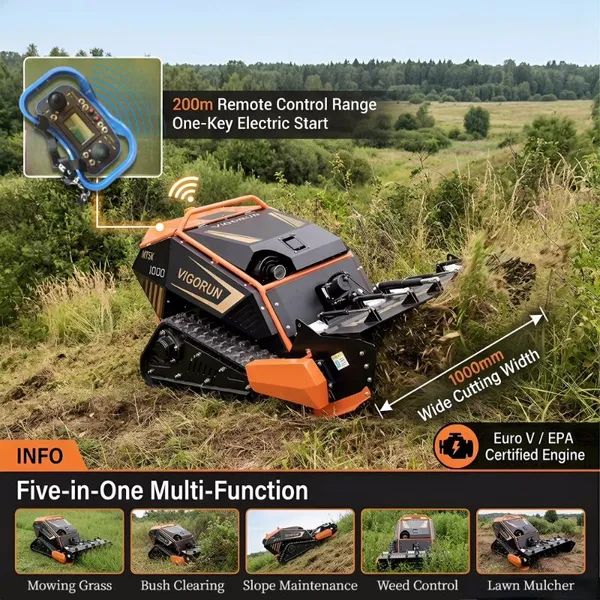
With a remote-controlled unit, the operator stands on flat, stable ground up to 200 meters from the machine. Position yourself uphill and to the side of the cut path. Maintain clear line-of-sight to the mower at all times. The 2.4 GHz industrial radio requires line-of-sight for maximum range, and you need to see the machine to react to terrain changes.
Keep the transmitter battery charged. The Vigorun remote shows real-time battery level, but a dead transmitter mid-slope means a long walk to retrieve the machine. Before each job, verify signal strength from your intended standing position. If trees, terrain, or structures block the signal, reposition before starting the cut.
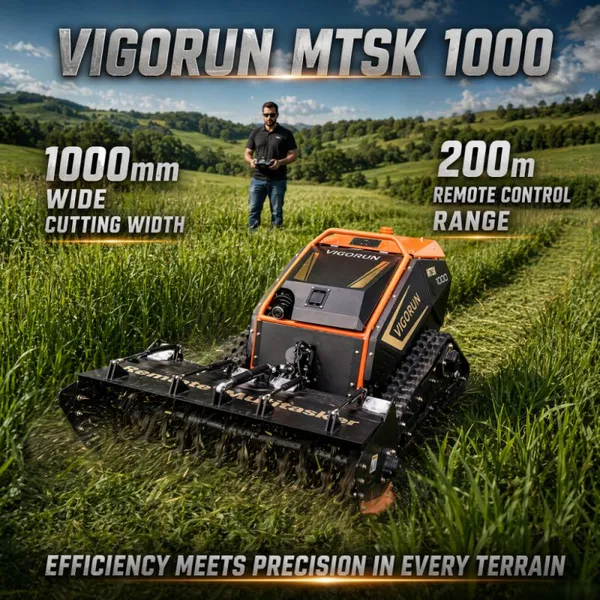
Pro Tip: On long embankments or levees, the 200-meter wireless range of the Vigorun remote control slope mower lets a single operator cover the full length from one safe position. Less walking means more cutting time per shift.
Step 5: Adjust Technique for Wet or Changing Conditions
Dry grass and firm soil are the best-case scenario. In the real world, you will face dew, recent rain, clay mud, and seasonal ground softening. Wet conditions reduce effective slope capability by 5° to 10° on any machine.
Our recommendation: if the slope is wet or the soil is loose, reduce your maximum operating angle by 10° from the dry rating. The VTLM800 is rated to 45° on dry grass. On wet clay, treat 35° as your practical limit. The same rule applies to every machine in your fleet.
Check track tension before wet-weather jobs. Loose tracks slip. Over-tightened tracks wear prematurely and reduce grip. The Vigorun production process includes track tension testing on every unit before it leaves the line, but field conditions change. A two-minute pre-job inspection prevents a two-hour retrieval operation.
Elena Vargas owns a 12-hectare vineyard in the Colchagua Valley of Chile. Her terrace slopes run 25-35°, and morning dew in harvest season keeps the grass slick until noon. She used to send a three-person crew with string trimmers, and the work took two full days.
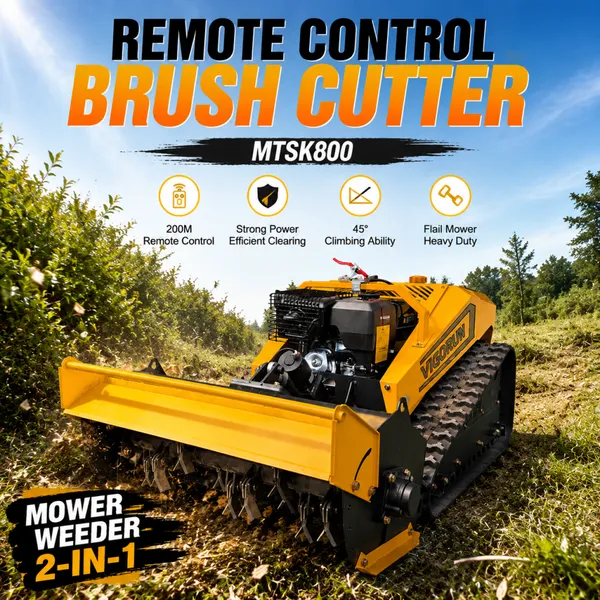
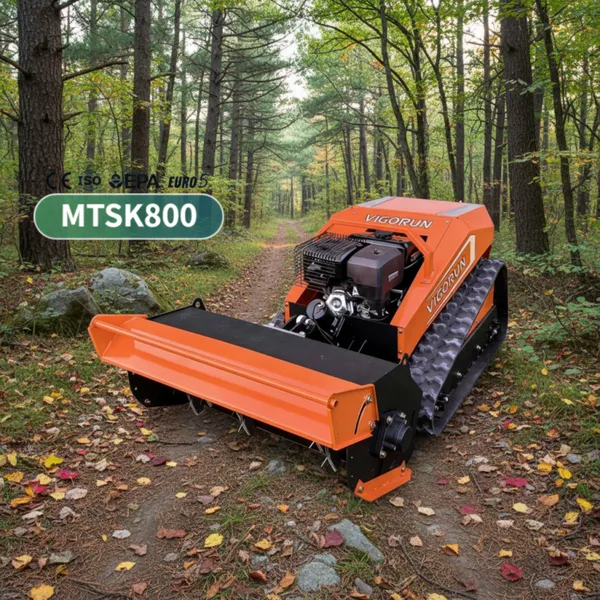
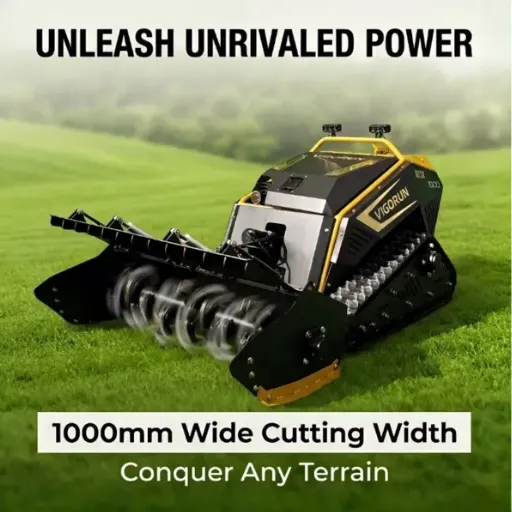
In 2025, she added an MTSK800 with a flail head to her equipment line. The rubber tracks grip the wet terrace faces, and the flail head cuts through the woody groundcover that choked her old rotary mower. The same job now takes four hours with one operator on the terrace rim. Elena cut her seasonal labor cost by 60%.
Step 6: Maintain the Slope Mower for Long-Term Reliability
Slope work is consumable-heavy. Tracks, blades, undercarriage components, and clutch packs all take more abuse on angled terrain than on flat ground. A slope mower without a reliable parts pipeline is a liability, not an asset.
After each slope job, inspect track condition. Look for cuts, separations, or missing lugs. Check blade or flail balance. An unbalanced deck vibrates more on slopes and wears bearings faster.
Verify engine oil level. Slope-rated sump engines hold oil pressure at angle, but you should still verify level daily.
Test the remote signal and E-stop. Test the emergency stop on both transmitter and chassis before the next job.
Vigorun ships every mower with a 1-year warranty plus whole-life parts support. For distributors and fleet managers, we keep consignment parts inventory for high-volume accounts. A tracked slope mower is only useful if it is running on Tuesday morning when the grass is knee-high.
Step 7: Know When to Upgrade Your Fleet Strategy
If you are still running hand crews or ride-on mowers on slopes above 25°, you are paying for inefficiency with labor hours and injury risk. The upgrade decision is simpler than it looks.
A single remote-controlled slope mower replaces two operators on steep terrain. It finishes the job in roughly half the time. It eliminates workers compensation exposure for slope-related injuries. And it opens bidding opportunities on contracts that were previously too dangerous to pursue.
For commercial landscaping firms, the return on investment typically lands between 12 and 18 months. For municipal fleets, the safety-case math is even clearer. One avoided rollover pays for the machine.
Marcus Jennings runs a grounds-care company in Brisbane, Australia. He had been declining solar-farm vegetation contracts because the array rows sit on 20-30° grades. In January 2026, he bought an MTSK800.
Within three months, he had won two solar-farm maintenance contracts that added $14,000 AUD monthly revenue. The machine paid for itself in 11 weeks. More importantly, his crew has not set foot on a steep grade since.
That is the upgrade that changes a business.
Frequently Asked Questions About Steep Hill Mowing
Can I mow a 45° hill with a ride-on mower?
No. A standard ride-on mower is designed for slopes up to approximately 15°. At 45°, a seated operator on a wheeled machine is at extreme risk of rollover. Only specialized tracked remote-controlled slope mowers are rated for 45° terrain.
Should I mow uphill or downhill on a steep hill?
With a conventional mower, always mow across the face, never straight up or down. With a remote-controlled slope mower, you can mow in any direction because the operator is off the slope and the tracked chassis is engineered for angled traction.
How do I know if my slope is too steep to mow safely?
Measure it with an inclinometer or smartphone level. If the grade exceeds your machine's rated slope angle, do not attempt the cut. Refer to our detailed guide on how steep a slope a remote control mower can climb for model-specific ratings.
Conclusion
Mowing a steep hill does not have to be dangerous. The seven steps above give you a clear framework: measure the angle, match the machine to the grade, inspect the terrain, position the operator safely, adjust for conditions, maintain your equipment, and upgrade your fleet when the economics make sense.
The core principle is simple. The operator should never have to stand on the dangerous slope. A 200-meter wireless remote, a 45° tracked chassis, and CE / EURO V / EPA-certified engines turn a hazardous manual job into a safe, productive operation.
If your team is still walking hand crews across 30° embankments, or if you are turning down contracts because the grade is too steep for your current fleet, it is time to change the equipment. Vigorun builds every remote-controlled slope mower in our Weifang factory, tests every unit on real slopes before shipment, and backs every machine with a 1-year warranty plus lifetime parts support.
Recently Posted
-
Vigorun VTLM600 RC Lawn Mower Robot CE EPA Certified 600mm Cutting Width Mini Crawler Lawn Mower
August 11, 2026*High Reduction Worm Gear System for Superior Slope Performance: Conquer mountainsides and steep terrain up to 45° with our VTLM600 electric grass cutting machine, featuring an integrated brushless motor and gearbox delivering 73% high transmission efficiency. This high reduction worm gear system provides exceptional durability and longevity while ensuring reliable operation on challenging inclines.*Precision Servo Control foRead More -
Vigorun VTW550-90 4WD Petrol Remote Mower CE/EPA Certified for Farm & Orchard Vegetation Clearing
August 11, 2026*Hazard-Free Remote Operation for Wildlife Safety: Protect personnel from snakes, spiders, and insects with our VTW550 self-driving lawn mower, engineered for complete remote control operation. This Euro5/EPA-certified lawnmower eliminates staff exposure to hazardous wildlife environments while delivering professional results across residential and commercial landscapes.*High-Speed 6km/h Efficiency for Maximum Productivity: ARead More -
Vigorun VTC550-90 Robot Grass Mower CE/EPA Certified 550mm Cut Petrol Mower for All-Terrain Land Mai
August 11, 2026*Safe Remote Operation for Wildlife Hazard Environments: Protect personnel from snakes, spiders, and insects with our VTC550 grass cutter, designed for complete remote control operation. This electric lawn mower eliminates the need for staff to work in hazardous wildlife areas while delivering professional results across residential and commercial properties.*16x Faster Than Hand Cutting for Maximum Efficiency: Achieve exceptRead More -
Remote Control Tracked 800mm 60 Degree Max Slope Grass Lawn Cutting Mower
August 11, 2026*Maximum Slope for Military Base Maintenance: The Vigorun VTLM800 delivers verified 60-degree climbing for defense installations where perimeter security zones, training embankments, and ammunition buffer areas require vegetation control on terrain no ride-on equipment can safely access.*Remote Operation Eliminates Personnel Risk: Military bases feature steep berms, fortified perimeters, and screening slopes concealing hazardRead More

Contact Us
Recommended Products
-
 Vigorun Lawn Mower Robot, Industrial Dual 48V 1500W Motors MTSK1000 Mulcher Machine for Large LandscapesUS$ 7500.00 - 7700.00MOQ: 1 Set
 -
Farmland Orchards Battery Powered Mower Gasoline Golf Mower Robot Lawn Mower 3000m2 Vigorun Remote Control Grass MowerUS$ 2580 - 2700MOQ: 1 Unit
-
Vigorun MTSK800 Automatic Remote Control Grass Cutting Machine 48V 20Ah Battery Remote Flail MowerUS$ 2800 - 2900MOQ: 1 Set
-
Vigorun MTSK1000 Remote Control Mower 24hp Fail-Safe Slope Braking Remote Control Forest MulcherUS$ 8000 - 8200MOQ: 1 Set
-
Industry Electric Motor Lawn Mower Flail Mower Atv Gasoline Hedge Trimmer Battery LawnmowerUS$ 2580 - 2900MOQ: 1 Unit
-
Vigorun Agricultural Tractor Sprayer Euro 5/EPA Electric Agricultural Sprayer 600l for VineyardsUS$ 2600 - 2700MOQ: 1 Set
-
Remote Control Tracked Hillside Mower 800mm Cutting Width 60 Degree Slope for Steep Terrain VegetationUS$ 2600 - 2700MOQ: 1 Set
-
Vigorun VTLM600 RC Lawn Mower Robot CE EPA Certified 45° Extreme Slope Mini Crawler Lawn MowerUS$ 1700 - 17900MOQ: 1 Set
-
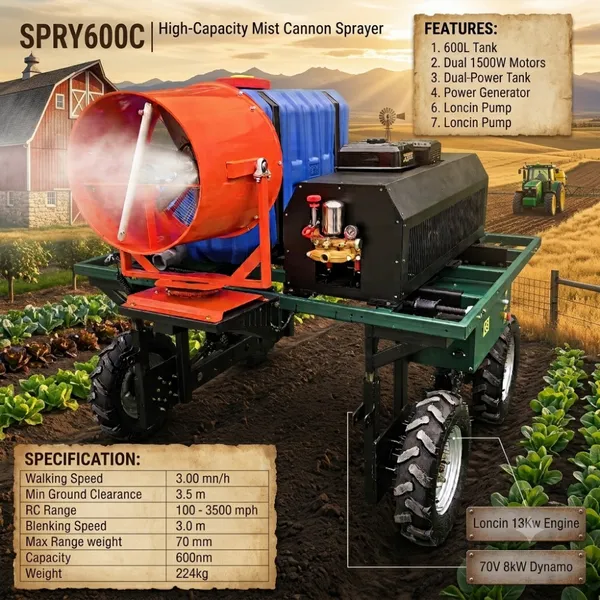
Remote Controlled High Efficiency Fog Cannon Spraying Machine 600L Tank for Agriculture and Dust ControlUS$ 2800 - 2900MOQ: 1 Set
-
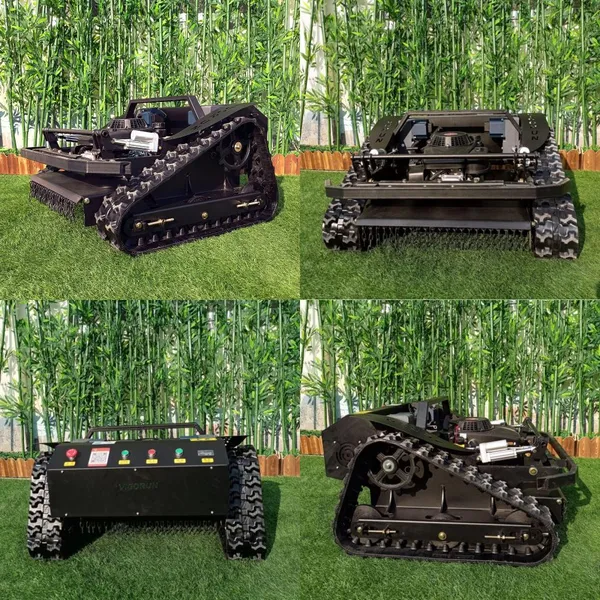
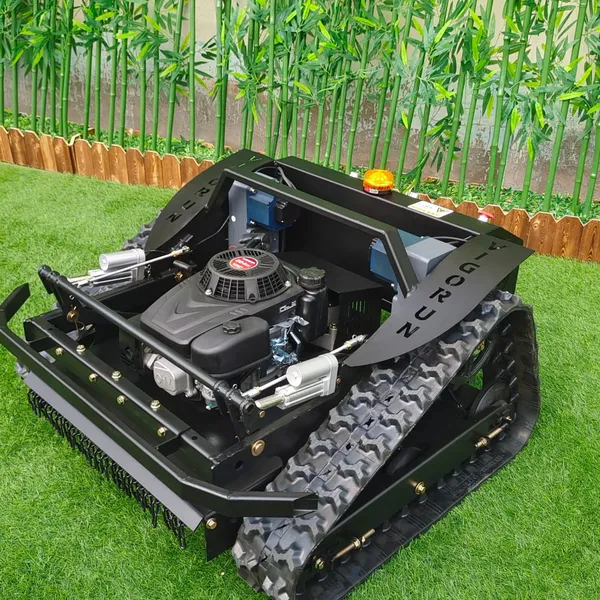
Vigorun Radio Control Mowing Euro 5/EPA Self-Propelled & Precise 6hp Remote Control Crawler MowerUS$ 1700 - 1790MOQ: 1 Set
-
Factory Manufacturer Vigorun MTSK1000 1000MM Commercial Branch Cutter Flail Mower rc Remote Petrol Lawnmower Mower Grass Cutter TractorUS$ 8000 - 8200MOQ: 1 Set
-
Vigorun VTW550 Remote Control Grass Cutter Tractor Robot Gas Lawn Mower Grass Cutter Small Electric Lawn Mower Vigorun Lawn MowerUS$ 1000 - 1250MOQ: 1 Set
-
Vigorun Tech Gasoline Remote Control Lawn Mower Self-Locking Slope Safety RC Mower Tiller for EmbankmentsUS$ 2800.00 - 2900.00MOQ: 1 Set
-
Mower Gasoline Grass Cutter Machine Remote Control 1000mm Cut 35 Degree Slope Flail Hammer for Overgrown LandUS$ 7500 - 7700MOQ: 1 Set
-
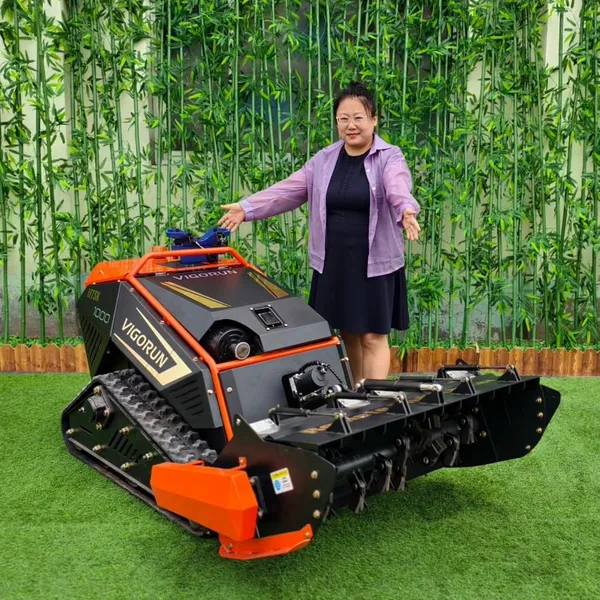
Vigorun VTLM800 Remote Control Electric Mower, Self-Locking Slope Safety Crawler Mower for Steep SlopesUS$ 2600.00 - 2700.00MOQ: 1 Set
-
Shrub and Brush Clearing MTSK800 MTSK1000 Flail Mower rc Remote Weeding Weeder MachineUS$ 2800 - 2900MOQ: 1 Set
-
RC Robot Lawn Mower Electric Remote Control Flail Grass Cutter Garden Cutting Machine MTSK1000US$ 8000 - 8200MOQ: 1 Set
-
Remote Manipulation Rubber Track Brush Cutter Industrial Flail Mower for Efficient Shrub ClearingUS$ 2000.00 - 2790.00MOQ: 1 Set
-
Vigorun MTSK1000 Rc Lawn Mower, Loncin 764CC Gasoline Engine Forestry Mulcher With Remote Control for ForestryUS$ 7500.00 - 7700.00MOQ: 1 Set
-
Vigorun VTC550 Zero Turn Electric Mower Quality Guaranteed Crawler Brush Cutter For Embankments & LeveesUS$ 1600 - 1690MOQ: 1 Set