
 Business License

How to Clear Overgrown Land: A Complete Equipment Guide
The property looked manageable from the road. Then Elena walked the perimeter and found waist-high bramble, saplings thicker than her wrist, and a 35° drainage slope that swallowed a riding mower whole. She had quoted the job for two days with a standard brush cutter. By noon on day one, her operator had stalled the machine three times, unearthed a rusted fence post, and refused to go back on the slope.
If you're figuring out how to clear overgrown land, whether it's an abandoned lot, a roadside embankment, an orchard gone wild, or a commercial acreage, the wrong equipment choice doesn't just slow you down. It can cost you the contract, the season, or worse, an operator. This guide walks through how to assess the vegetation, match the tool to the terrain, and clear the land safely from flat ground to slopes that no ride-on should attempt.
We build remote-controlled mowers, flail mowers, and tools carriers in Weifang, Shandong, and we field-test every unit on overgrown brush and test slopes before it ships. The recommendations below come from the same machines we send to operators in 140+ countries.
What "Overgrown" Actually Means on Your Job Site
"Overgrown" is not a single condition. A field that hasn't been mowed for one season is different from a hillside that hasn't been touched in five years, and both are different from a commercial lot choked with construction debris and invasive weeds.
Before you choose equipment, classify what you're cutting:
Grass and weeds up to 1 meter: Standard rotary or flail mowing. Most ride-on or walk-behind mowers handle this if the ground is flat and clear of debris.
Brush and bramble up to 25 mm thick: Dense woody stems require a brush cutter, flail mower, or dedicated brush-clearing machine. Rotary decks will bog down or break spindles.
Saplings and heavy scrub up to 40 mm: Flail mower with heavy-duty flails, or dedicated forestry mulcher. This is beyond most consumer-grade equipment.
Mixed debris and rock-strewn ground: Any hidden obstacle changes the calculation. Rotary blades strike hard objects. Flails pivot and absorb impact.
Terrain matters as much as vegetation. A flat pasture with thick brush is a different job from a 30° embankment with the same brush. Slope angle, soil moisture, and ground stability determine whether a person can safely walk the area with a hand tool, or whether the operator needs to stand 200 meters away and send a machine instead.
Safety Note: Overgrown land hides more than rocks. Fence wire, rebar, abandoned equipment, and utility markers can all lurk under dense growth. Walk the site with a metal detector if the history of the land is unknown.
Equipment Options: From Hand Tools to Remote-Controlled Mowers
There is no single best tool for clearing overgrown land. There is only the right match for your vegetation, terrain, and labor budget.
| Method | Best For | Max Vegetation | Slope Limit | Labor Required |
|---|---|---|---|---|
| Machete / brush hook | Small patches, precision work | 25 mm stems | Any walkable grade | High |
| String trimmer | Light weeds, grass, edges | 10-15 mm | Flat to moderate | Medium |
| Walk-behind brush cutter | Dense brush, flat to moderate slopes | 25 mm | 15° | Medium |
| Ride-on rotary mower | Grass, flat lawns, light weeds | 10-20 mm | 10-15° | Low |
| Ride-on flail mower | Heavy brush, rough flat ground | 25-40 mm | 15-20° | Low |
| Remote-controlled flail mower | Heavy brush, steep slopes, hazardous terrain | 25-40 mm | 40-45° | One operator |
The gap between walk-behind and remote-controlled equipment is where most commercial operators get stuck. A walk-behind brush cutter handles dense growth, but it requires an operator on the ground, in the heat, in the debris zone, and off balance on any slope past 15°. A ride-on mower keeps the operator seated, but most ride-ons lose stability past 15° and become a rollover risk past 20°.
For land that combines thick brush with steep grades, riverbanks, levees, retention ponds, orchard terraces, roadside embankments, the remote-controlled flail mower is the only option that keeps the operator safely away while the machine handles the vegetation and the slope.
Want to see which remote mower fits your overgrown terrain? Explore the full Vigorun remote mower lineup and slope ratings →
Hidden Hazards in Overgrown Land
Overgrown terrain hides risks that open lawn doesn't. Before any clearing starts, assess these hazards:
Projectile debris: Rocks, metal, and wood fragments become high-speed projectiles when struck by a spinning blade. On a slope, gravity adds downhill velocity. ANSI safety standards recommend a minimum 15-meter exclusion zone around rotary mowing operations. On steep ground, that zone should expand.
Rollover risk: Uneven ground, hidden holes, and side slopes combine to tip machines. According to OSHA data, ride-on mower rollovers are a leading cause of serious injury in landscaping and grounds maintenance.
Heat and exhaustion: Clearing overgrown land is slow, physical work in full sun. Hand crews tire quickly. Fatigue leads to poor decisions about slope safety and equipment handling.
Wildlife and insects: Ground-nesting wildlife, wasp colonies in old brush piles, and venomous snakes in warm climates all pose real risks to operators on foot.
Unstable ground: Wet soil, erosion channels, and loose fill can collapse under machine weight. What looks like firm turf from above can be a void or soft pocket that swallows a wheel or track.
The common thread through every hazard: the operator's proximity to the danger zone. Every meter of distance between the operator and the cutting area reduces risk. That is why remote-controlled equipment exists, not as a luxury, but as a safety tool for terrain that puts operators in harm's way.
Step-by-Step: Clearing Flat and Moderate Terrain
For flat or gently rolling land with overgrown grass, weeds, or light brush, follow this sequence:
1. Walk and mark the perimeter
Flag obstacles, utility access points, drainage structures, and changes in ground stability. Take photos for your records and for any contract compliance documentation.
2. Cut in stages if vegetation is dense
For growth over 1 meter, cut high first, then cut to final height. Trying to cut waist-high brush to ground level in one pass stalls most machines and leaves an uneven finish.
3. Choose your cutting direction
Cut perpendicular to the slope if the ground has any grade at all. This keeps clippings from forming windrows and reduces the chance of the machine sliding on wet mulch.
4. Remove debris before the final pass
Pick up or mulch visible rocks, branches, and trash before the finish cut. A flail mower handles small debris better than a rotary deck, but no machine benefits from striking a concealed concrete block.
5. Allow for regrowth management
Clearing is only the first step. Budget for follow-up mowing every 4-8 weeks during growing season, or the land will revert to the same overgrown state within a single season.
For commercial operators bidding flat-ground brush clearing, the standard tools, brush cutters, ride-on mowers, or compact tractors with flail attachments, usually suffice. The challenge, and the cost, escalates when the terrain tilts.
Step-by-Step: Clearing Overgrown Slopes and Embankments
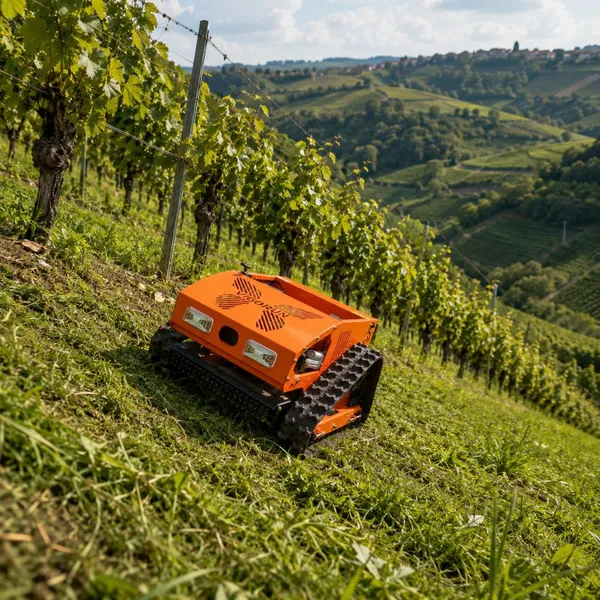
When overgrown land includes slopes steeper than 15°, every decision changes. The operator is now working on unstable ground, gravity is pulling debris downslope, and a trip or slip can become serious fast.
1. Measure the slope angle
Use a smartphone inclinometer or a contractor's level. Do not guess. A slope that looks like 20° can easily be 30° when measured. Most ride-on mowers have a manufacturer limit of 15°. Walk-behind brush cutters become dangerous to operate past 20° because the operator must fight for balance.
2. Identify the hazard zone
Mark the area where an operator could be injured by rolling debris, machine rollover, or loss of footing. On slopes above 25°, the hazard zone is effectively the entire slope face.
3. Select slope-rated equipment
If the slope exceeds 20°, do not send a walk-behind crew. The injury risk is too high and the productivity too low. A remote-controlled slope mower with rubber tracks, low center of gravity, and a flail head is the appropriate tool for slopes up to 45°.
4. Position the operator safely
The operator should stand uphill and at a safe distance from the cut path. With a remote-controlled mower, that distance is up to 200 meters, far enough that a thrown rock or machine tip-over cannot reach the operator.
5. Cut from the top down
Always start at the highest point and work downhill. This prevents the machine from climbing into uncut vegetation and reduces the risk of the operator being below a rolling machine or falling debris.
6. Account for reduced speed
On a 35° slope, effective cutting speed drops by 30-40% compared to flat ground. Overlap passes more generously to avoid skipped strips on the steepest faces. The cut quality inspection matters, a municipal or commercial client will notice uneven patches.
In 2025, a landscaping contractor in North Carolina named David bid a retention-pond clearing job for a new commercial development. The pond embankment was 32° with dense briar and mixed saplings up to 30 mm. His crew of two tried to clear it with walk-behind brush cutters. After three hours, one operator had twisted an ankle on loose soil, and they had cleared less than 15% of the perimeter. David called in a VTLM800 rubber track slope mower on rental for the following day. One operator, standing on the flat ground at the pond's edge, cleared the remaining 85% in six hours. The flail head mulched the briar and saplings without damage, and the 45° slope rating meant the machine held line cleanly on the 32° face. David won the ongoing maintenance contract because he could safely bid slope work that other contractors declined.
Ready to stop sending crews onto steep overgrown slopes? Request a quote for a Vigorun slope mower, 1-year warranty, lifetime parts support, FOB Shandong pricing within 24 hours.
After the Cut: Debris, Disposal, and Soil Recovery
Clearing overgrown land is not finished when the vegetation is cut. The next phase determines whether the land stays clear and whether the job passes inspection.
Debris disposal options:
Mulch in place: A flail mower reduces brush to fine mulch that decomposes into the soil. This is the lowest-cost option and improves soil organic matter.
Windrow and collect: If the contract requires a clean finish, rake or blow clippings into windrows and collect them. This adds labor but meets stricter municipal or commercial standards.
Burn or compost: Depending on local regulations, large brush piles may be burned or hauled to composting facilities. Check local fire and environmental codes before burning.
Soil recovery:
Overgrown land often has compacted soil, erosion gullies, or nutrient depletion from years of unchecked weed growth. After clearing, consider:
Aerating compacted areas
Seeding with erosion-control grass mix on exposed slopes
Installing drainage if water pooling caused the overgrowth in low areas
Regrowth prevention:
A one-time clear-cut without follow-up maintenance is an invitation for the same weeds to return, often thicker. Schedule the first follow-up mow before new growth reaches 150 mm. For commercial contracts, build the follow-up schedule into the initial quote so the client understands that clearing is a process, not a single event.
When a Remote-Controlled Flail Mower Becomes the Only Practical Choice
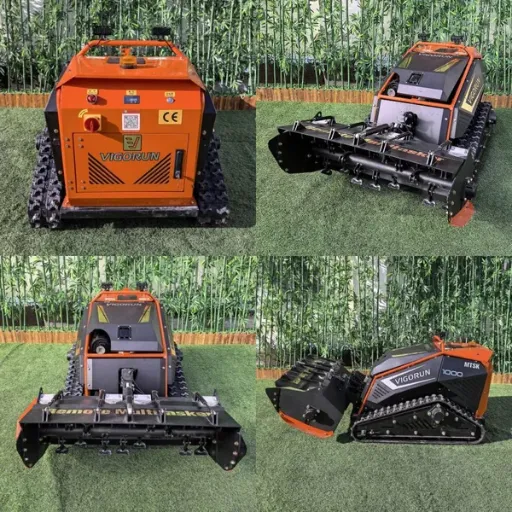
There is a point on every overgrown job where conventional equipment stops being a cost-saving choice and becomes a liability. That point is usually a combination of three factors:
Slope angle above 25°: Walk-behind crews cannot operate safely. Ride-ons risk rollover.
Vegetation thickness above 20 mm: Standard rotary decks bog down or break.
Hazardous terrain: Riverbanks with drop-offs, levees with soft shoulders, or roadside embankments with traffic exposure.
When two or more of these factors overlap, the remote-controlled flail mower is not a premium upgrade. It is the baseline tool for the job.
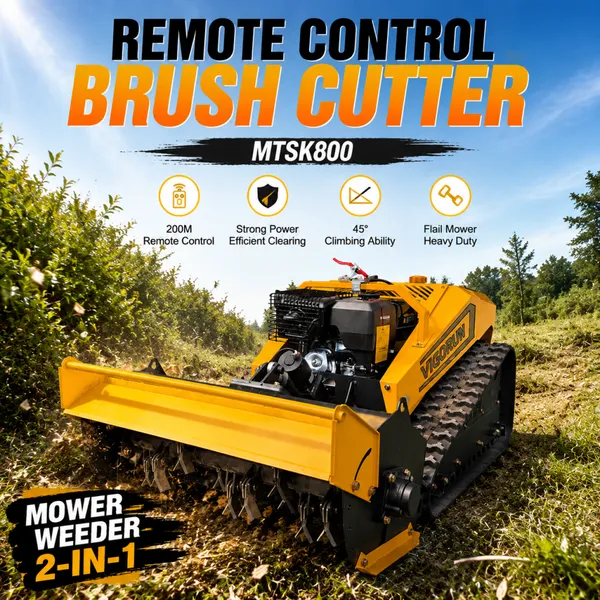
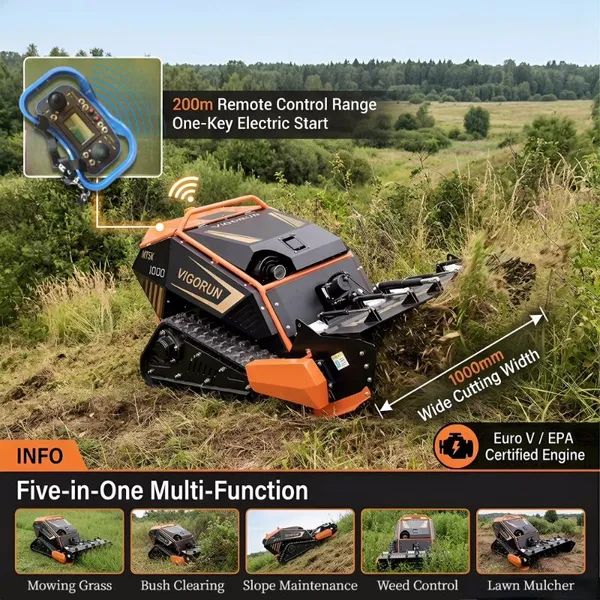
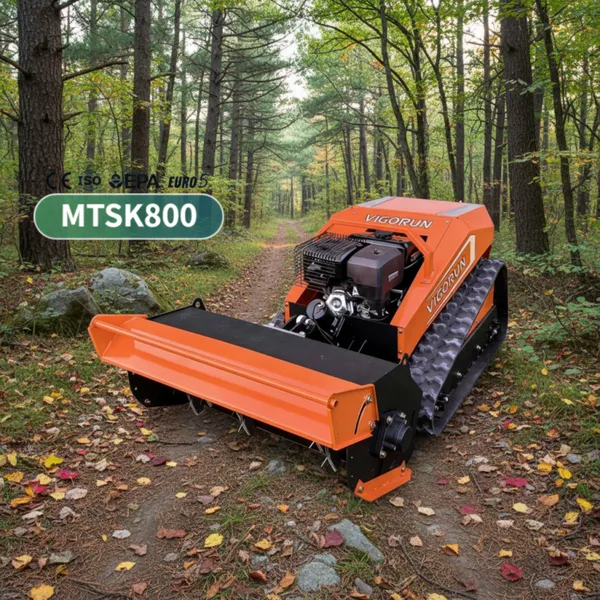
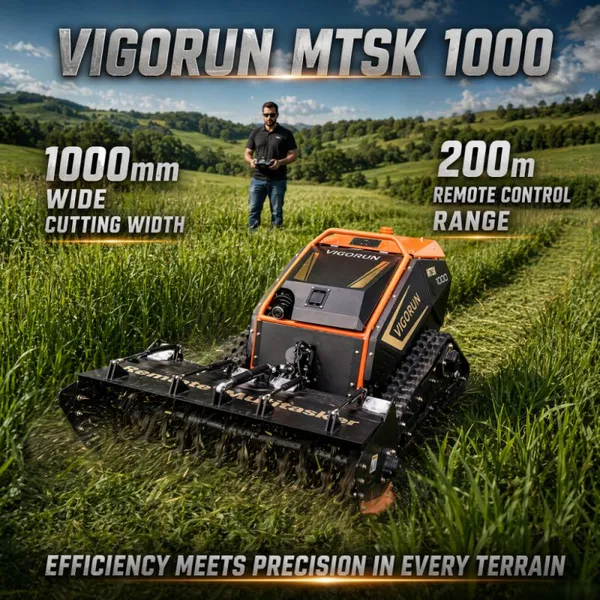
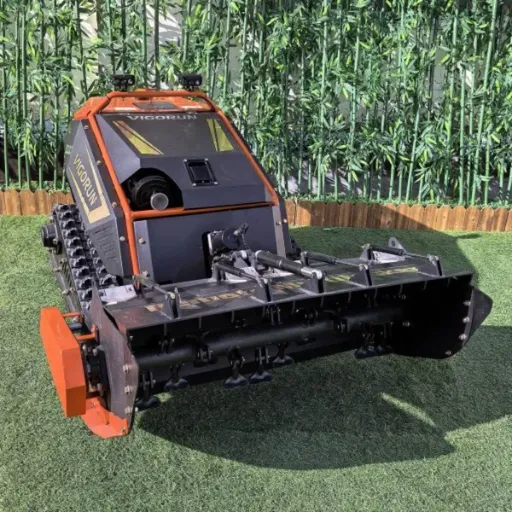
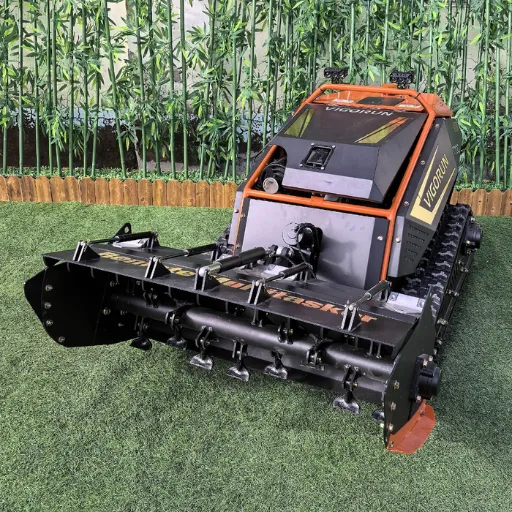
The MTSK1000 remote control flail mower handles woody brush and saplings up to 40 mm on slopes up to 40°. The MTSK800 remote controlled flail mower offers the same capability with a patent-pending chassis design. Both machines keep the operator 200 meters away on flat ground or at the safe top of an embankment while the flail head mulches material that would destroy a standard mower deck.
For distributors, overgrown land clearing represents a strong dealer opportunity. Municipalities, commercial landscapers, and orchard owners all face the same problem: land that has grown beyond the capability of their existing fleet. A remote-controlled flail mower opens bidding on jobs that were previously too dangerous or too slow to be profitable.
Carlos, a Vigorun distributor in Chile, added the MTSK1000 to his catalog in early 2025 specifically for vineyard terrace clearing. His end customers had been hiring manual crews for between-row brush control on 25-35° slopes. The labor cost was high, the scheduling unreliable, and one worker had suffered a serious fall the previous season. Carlos demonstrated the MTSK1000 on a 30° hillside covered in 2-year-old brush. The vineyard owner watched the flail head mulch the growth while the operator stood at the terrace edge, never setting foot on the slope. Carlos sold three units that quarter and signed two additional distributors in the wine region. The machine did not just clear brush, it removed the labor and liability barrier that had limited vineyard maintenance for years.
Key Takeaways for Clearing Overgrown Land
Assess before you cut: Classify the vegetation thickness, measure the slope angle, and flag hidden hazards before choosing equipment.
Match the machine to the terrain: Hand tools and walk-behind equipment work for small, flat jobs. Remote-controlled flail mowers are the right tool for steep, hazardous, or debris-strewn overgrown land.
Safety is a distance problem: Every meter between the operator and the cutting area reduces injury risk. On slopes above 25°, distance is the only reliable safety measure.
Plan for regrowth: Clearing is the first step. Follow-up mowing and soil recovery determine whether the land stays manageable.
Debris tolerance matters: Flail mowers absorb impact from rocks and hidden objects better than rotary decks. On overgrown land with unknown ground conditions, that tolerance saves blades, spindles, and downtime.
If your overgrown land includes slopes, embankments, or terrain where you would not want to stand with a brush cutter, it is time to change the equipment equation. A remote-controlled flail mower with a 40-45° slope rating, 200-meter operator distance, and CE / EURO V / EPA certification clears the vegetation and removes the operator from the danger zone.
Request a dealer quote on the MTSK1000 or VTLM800 → FOB Shandong pricing, full certification documentation, and container loading diagrams included. No obligation. 24-hour response.
Recently Posted
-
Steep Slope 600mm Tracked 200m Remote Control 45 Degree Brushless Electric Lawn Mower
August 10, 2026*Integrated Drive System with 73 Percent Efficiency: The VTLM600 remote control lawn mower features a fully integrated brushless m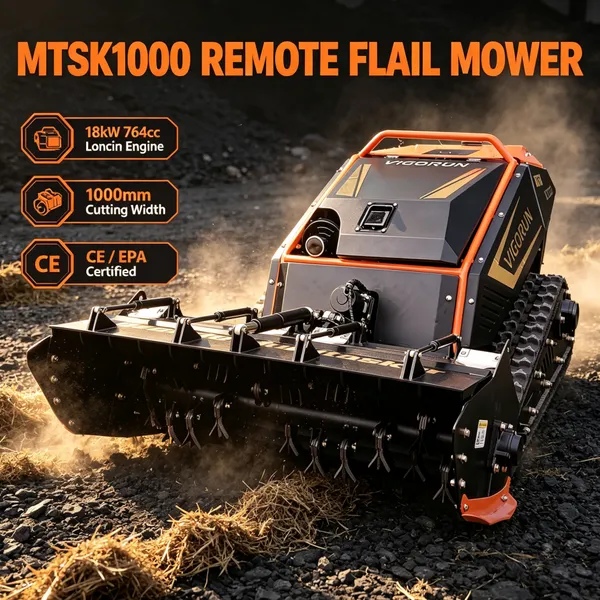 Read More
 -
Remote Controlled Pesticide Sprayer with 600L Tank 8.4m Boom for Agricultural Applications
August 10, 2026*Electric Start & 13kW Loncin Engine for Powerful Agricultural Spraying: Maximize field application efficiency with the SPRY60 Read More
 -
Self Propelled Agricultural Boom Sprayer with Adjustable Track for Modern Farming
August 10, 2026*Electric Start & 13kW Loncin Engine for Powerful Agricultural Spraying: Maximize field application efficiency with the SPRY60 Read More
 -
Automatic Remote Control Agricultural Spray Machine with 600L Chemical Tank and Boom System
August 10, 2026*Electric Start & 13kW Loncin Engine for Powerful Agricultural Spraying: Maximize field application efficiency with the SPRY60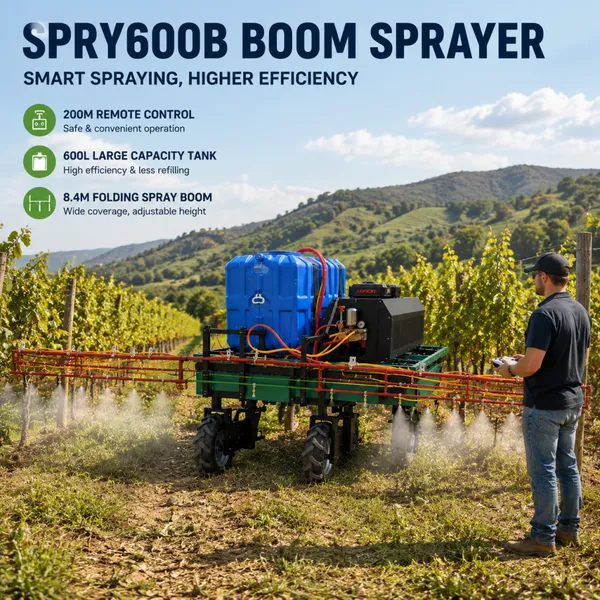 Read More

Contact Us
Recommended Products
-
 Vigorun Lawn Mower Robot, Industrial Dual 48V 1500W Motors MTSK1000 Mulcher Machine for Large LandscapesUS$ 7500.00 - 7700.00MOQ: 1 Set
 -
Farmland Orchards Battery Powered Mower Gasoline Golf Mower Robot Lawn Mower 3000m2 Vigorun Remote Control Grass MowerUS$ 2580 - 2700MOQ: 1 Unit
-
Vigorun MTSK800 Automatic Remote Control Grass Cutting Machine 48V 20Ah Battery Remote Flail MowerUS$ 2800 - 2900MOQ: 1 Set
-
Vigorun MTSK1000 Remote Control Mower 24hp Fail-Safe Slope Braking Remote Control Forest MulcherUS$ 8000 - 8200MOQ: 1 Set
-
Industry Electric Motor Lawn Mower Flail Mower Atv Gasoline Hedge Trimmer Battery LawnmowerUS$ 2580 - 2900MOQ: 1 Unit
-
Vigorun Agricultural Tractor Sprayer Euro 5/EPA Electric Agricultural Sprayer 600l for VineyardsUS$ 2600 - 2700MOQ: 1 Set
-
Remote Control Tracked Hillside Mower 800mm Cutting Width 60 Degree Slope for Steep Terrain VegetationUS$ 2600 - 2700MOQ: 1 Set
-
Vigorun VTLM600 RC Lawn Mower Robot CE EPA Certified 45° Extreme Slope Mini Crawler Lawn MowerUS$ 1700 - 17900MOQ: 1 Set
-
Remote Controlled High Efficiency Fog Cannon Spraying Machine 600L Tank for Agriculture and Dust ControlUS$ 2800 - 2900MOQ: 1 Set
-
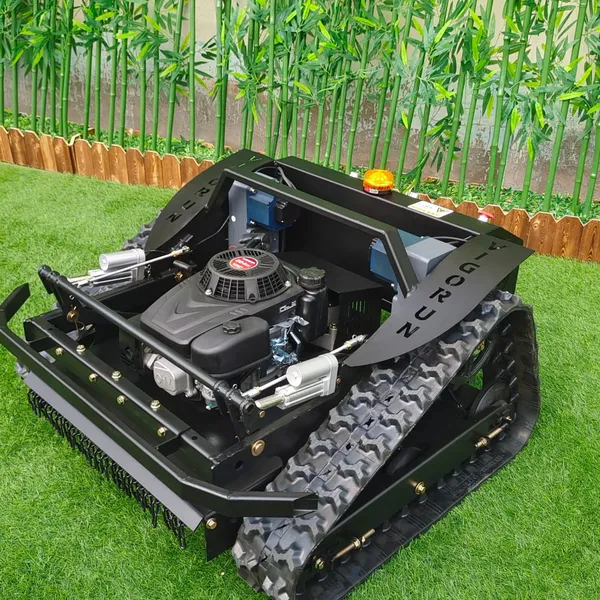
Vigorun Radio Control Mowing Euro 5/EPA Self-Propelled & Precise 6hp Remote Control Crawler MowerUS$ 1700 - 1790MOQ: 1 Set
-
Factory Manufacturer Vigorun MTSK1000 1000MM Commercial Branch Cutter Flail Mower rc Remote Petrol Lawnmower Mower Grass Cutter TractorUS$ 8000 - 8200MOQ: 1 Set
-
Vigorun VTW550 Remote Control Grass Cutter Tractor Robot Gas Lawn Mower Grass Cutter Small Electric Lawn Mower Vigorun Lawn MowerUS$ 1000 - 1250MOQ: 1 Set
-
Vigorun Tech Gasoline Remote Control Lawn Mower Self-Locking Slope Safety RC Mower Tiller for EmbankmentsUS$ 2800.00 - 2900.00MOQ: 1 Set
-
Mower Gasoline Grass Cutter Machine Remote Control 1000mm Cut 35 Degree Slope Flail Hammer for Overgrown LandUS$ 7500 - 7700MOQ: 1 Set
-
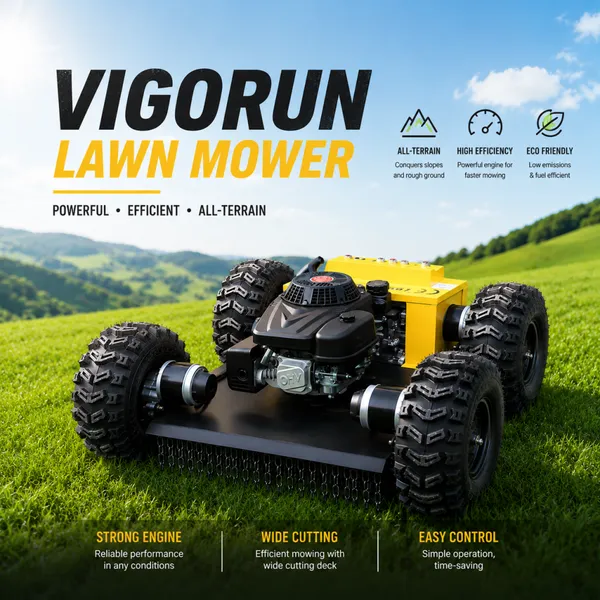
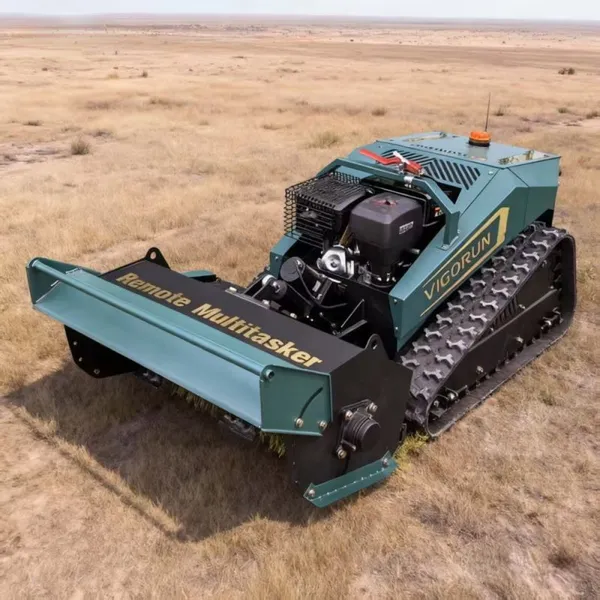
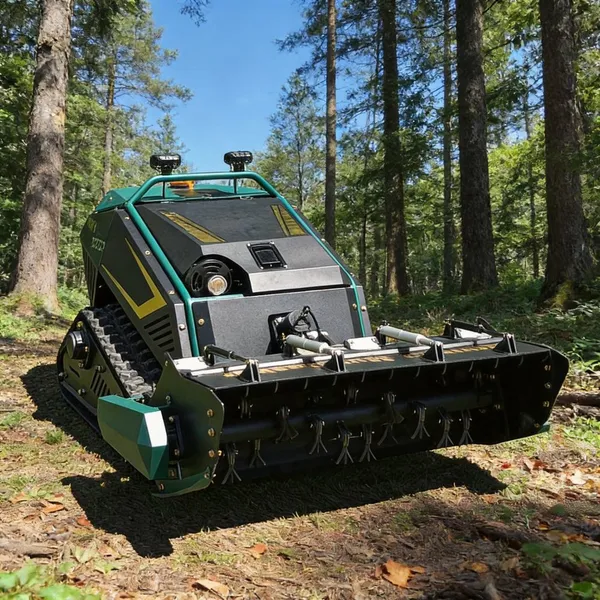
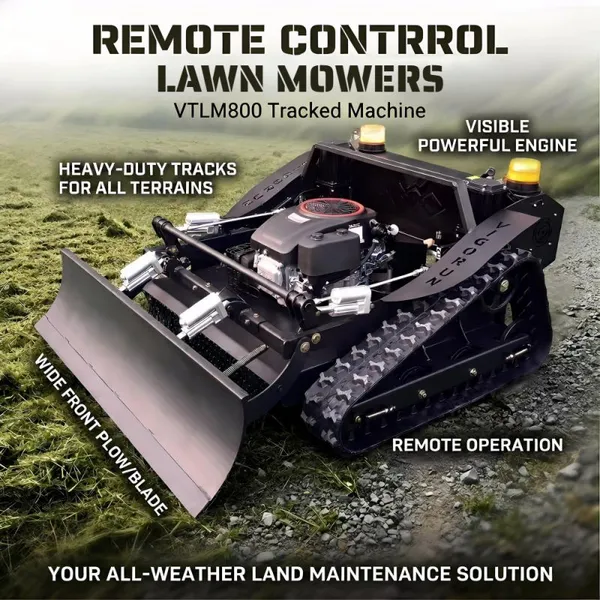
Vigorun VTLM800 Remote Control Electric Mower, Self-Locking Slope Safety Crawler Mower for Steep SlopesUS$ 2600.00 - 2700.00MOQ: 1 Set

-
Shrub and Brush Clearing MTSK800 MTSK1000 Flail Mower rc Remote Weeding Weeder MachineUS$ 2800 - 2900MOQ: 1 Set
-
RC Robot Lawn Mower Electric Remote Control Flail Grass Cutter Garden Cutting Machine MTSK1000US$ 8000 - 8200MOQ: 1 Set
-
Remote Manipulation Rubber Track Brush Cutter Industrial Flail Mower for Efficient Shrub ClearingUS$ 2000.00 - 2790.00MOQ: 1 Set
-
Vigorun MTSK1000 Rc Lawn Mower, Loncin 764CC Gasoline Engine Forestry Mulcher With Remote Control for ForestryUS$ 7500.00 - 7700.00MOQ: 1 Set
-
Vigorun VTC550 Zero Turn Electric Mower Quality Guaranteed Crawler Brush Cutter For Embankments & LeveesUS$ 1600 - 1690MOQ: 1 Set