
 Business License
Private Label Remote Control Lawn Mower: How Distributors Build a Branded Slope-Mower Line
In April 2025, Pierre Moreau walked into a municipal equipment fair outside Lyon with two catalogs. One carried a famous Czech brand every buyer recognized. The other carried his own logo on a tracked slope mower built in Shandong, China. By noon, four procurement officers had asked for his card. By Friday, he had booked three demos. Pierre did not invent the machine. He put his name on a proven chassis, backed it with local service, and stopped fighting on price.
That is the private label remote control lawn mower opportunity in one sentence. You do not need a factory. You need a manufacturing partner that builds a machine you can stand behind, customize, and sell under your own brand.
If you are a distributor, dealer, or importer, this guide will show you how private label remote mower programs work, what you can customize, what the process costs, and how to avoid the mistakes that sink first-time brand launches. You will leave with a clear checklist for evaluating a private-label partner and a realistic picture of the timelines and MOQs involved.
Want to see what a private-label mower program looks like? Browse Vigorun's customized mower configurations →
What "Private Label Remote Control Lawn Mower" Means
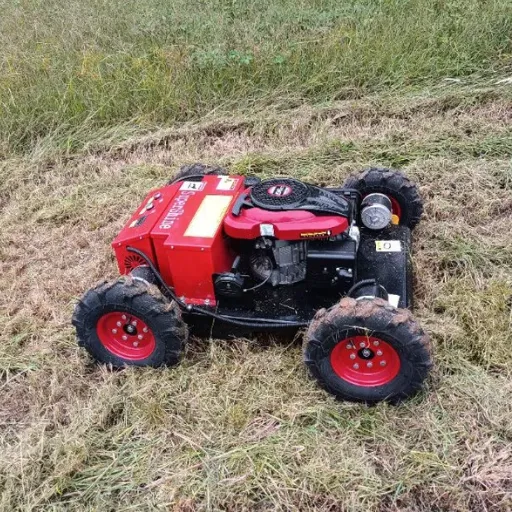
A private label remote control lawn mower is a commercially produced machine that carries your brand instead of the factory's. The manufacturer designs, builds, and tests the chassis. You specify the color, logo, packaging, documentation, and sometimes the model name. Your customers see your brand, call your number, and become your long-term accounts.
Private label sits between white label and full OEM:
White label: You buy a generic machine and apply your brand later. There is little customization, and any dealer can source the same unit.
Private label: The factory applies your branding during production, including paint, decals, manuals, and packaging. The machine is built for you from the start.
Full OEM: You co-develop specifications, request unique features, and share engineering changes. This requires larger volumes and a deeper partnership.
Most distributors start with private label. It gives you brand ownership without the R&D risk or the capital required to design a machine from scratch. You get a finished product that looks, feels, and ships like your own.
Why Distributors Choose Private Label Over Generic Resale
Generic resale forces you to compete on price. Every buyer can compare your quote against the same machine sold by ten other resellers. Private label changes the conversation. Your customer is no longer comparing unit prices. They are evaluating your brand, your service, and your local support.
Here is what private label remote mower distribution delivers:
Higher margins: A branded machine commands a retail premium and eliminates direct price comparison.
Customer retention: When the manual, packaging, and service hotline carry your name, the customer relationship belongs to you.
Dealer loyalty: Local dealers prefer selling a brand they cannot find online at a lower price.
Market positioning: A private-label line positions you as a manufacturer partner, not a commodity importer.
Product control: You choose the colors, features, and documentation that fit your region.
A private label remote control lawn mower program is not a shortcut. It is a strategic decision to own your market instead of renting shelf space in someone else's.
Mini-Story: The Dealer Who Stopped Competing on Price
Klaus Weber ran a small equipment dealership in Hamburg. For three years he sold standard remote mowers he bought through a trading company. His margin was thin. His customers treated him like a delivery service.
In 2024, Klaus switched to a private label remote mower program. He selected a tracked chassis from a Shandong factory, chose a dark-green paint scheme that matched his existing catalog, and added his logo to the chassis, transmitter, and operator manual. The factory produced the units with his branding and shipped them in cartons printed with his company details.
His landed cost dropped because he bought factory-direct. His retail price stayed firm because no one else sold the same branded machine. His margin doubled. More importantly, his customers started calling him for parts, service, and referrals.
A municipal buyer in Bremen remembered the green machine with the Hamburg logo. Klaus won a six-unit order that spring. He had not changed the product. He had changed the ownership.
What You Can Customize on a Private Label Remote Mower
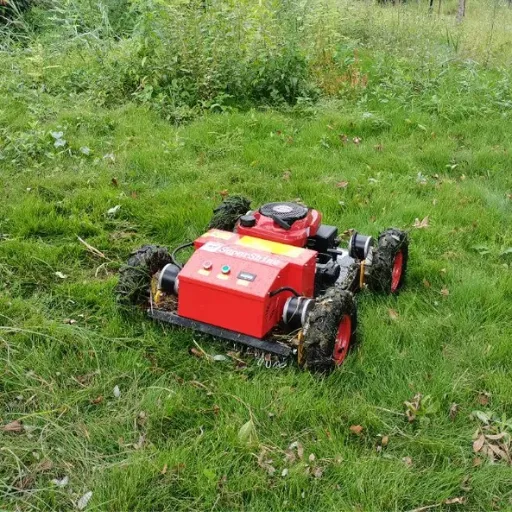
Customization depth determines how distinct your brand feels. A strong private label remote control lawn mower partner offers more than a sticker swap. Here is what most distributors negotiate.
| Element | Standard Private Label | Advanced Private Label |
|---|---|---|
| Chassis color | Yes | Yes |
| Logo on chassis and transmitter | Yes | Yes |
| Decal and graphics package | Yes | Yes |
| Operator manual branding | Yes | Yes |
| Packaging artwork and carton markings | Yes | Yes |
| Custom model name or number | Sometimes | Yes |
| Regional engine certification | No | Yes |
| Attachment or deck configuration | No | Yes |
| Exclusive territory | No | Sometimes |
Standard private label covers everything a customer sees and touches. Advanced private label moves into engineering and market-specific configurations. Start with standard. Expand into advanced once you have proven demand and a stable sales rhythm.
The chassis, engine, and control systems should stay factory-proven. Do not ask a new partner to redesign a track system or modify a sump engine on your first order. Brand the surface. Trust the engineering underneath.
Explore the MTSK1000 heavy-duty flail mower as a private-label base →
The Private Label Process, Step by Step
A well-run private label remote control lawn mower program follows a predictable timeline. Here is what to expect from a factory that handles private label regularly.
Week 1: Discovery and Quote
You share your target market, expected order volume, and customization requirements. The factory returns a quote with FOB pricing, MOQ, lead time, and a customization scope document. This is the time to ask about engine certifications, test protocols, and parts support.
Week 2: Branding Assets
You submit logo files, color codes, manual content, and packaging artwork. A good factory provides templates so you do not have to design from a blank page. Review digital mockups before production starts.
Week 3: Sample or Mockup
For your first order, request a branded sample or detailed photos of a pre-production unit. Verify logo placement, paint quality, manual formatting, and carton markings. Catching errors now saves thousands later.
Weeks 4-10: Production and Testing
The factory builds your units, applies branding, and runs each machine through indoor bench tests and outdoor field tests. Ask for photos or video from the test ramps. Confirm that every unit, not a random sample, passes before packaging.
Weeks 11-12: Documentation and Shipping
The factory prepares certification documents, packing lists, and commercial invoices. A factory with export experience will provide HS codes and container-loading diagrams. Your broker clears customs with the correct paperwork.
Week 13 and Beyond: After-Sales Support
Your customers call you, but the factory backs you up. Confirm warranty terms, parts ordering process, and technical support channels before the first unit ships.
Ready to price out your first private-label order? Request private-label pricing and MOQ details →
Mini-Story: The Brand That Forgot About Parts
Ahmed Al-Rashid launched a private label remote mower brand in Dubai in 2023. He focused on packaging, paint, and a slick website. His first container looked fantastic. Customers loved the unboxing.
Six months later, a track sprocket wore out on a customer's machine. Ahmed called his supplier. The supplier had no stock. The part had to be machined from scratch. Lead time was eight weeks. His customer missed the mowing season and blamed Ahmed's brand.
The problem was not the machine. It was the after-sales structure. A private label deal without lifetime parts support is just a prettier version of generic resale. Ahmed replaced his supplier with a factory that stocked spare parts and offered same-day air-freight support. His second season had zero parts delays.
Private label gives you the brand. You still need a partner that keeps the brand running after the sale.
MOQ, Lead Time, and Pricing for Private Label Remote Mowers
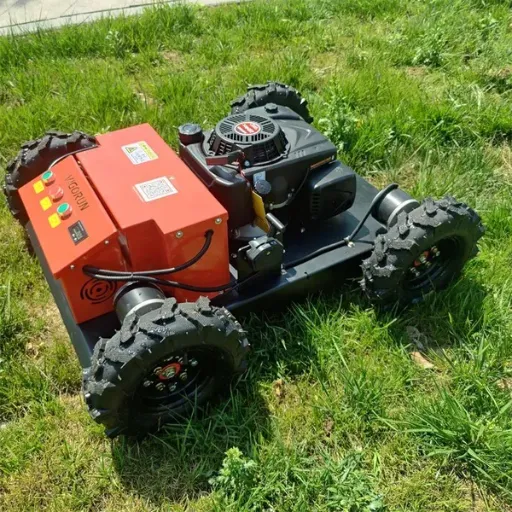
Distributors ask about numbers first. Here are realistic ranges for a private label remote control lawn mower program from a direct manufacturer.
| Item | Typical Range | Notes |
|---|---|---|
| MOQ for private label | 5-10 units | Logo, color, manual, packaging |
| Advanced customization MOQ | 20-40 units | Model variants, exclusive decals |
| Production lead time | 45-60 days | Includes branding and testing |
| Unit price range | 7,500−7,500−16,000 | Depends on engine, tracks, attachments |
| 20-foot container capacity | 4-6 units | Depends on crating |
| 40-foot HC container capacity | 10-14 units | Factory-optimized loading |
| Warranty | 12 months | Manufacturing defects |
| Parts support | Lifetime | Air-freight available |
The real savings come from cutting out the trading-company markup. Factory-direct pricing can reduce your landed unit cost by 15-25%. That margin funds your local marketing, demo fleet, and service network.
A full 40-foot container is almost always more efficient than half a container shipped LCL. Plan your first order to fill a container if your market justifies it. If not, start with 5-10 units and reorder quickly once demand confirms itself.
See the MTSK800 patent-pending flail mower for private-label branding →
How to Protect Your Private Label Brand Long-Term
Building a brand is more than a logo. You need legal, operational, and commercial protection to make your private label remote mower line defensible.
Register Your Trademark
File your brand name and logo in your primary markets before you launch. A factory can apply your logo to machines, but they cannot protect it legally for you. Trademark registration prevents competitors, including other distributors, from copying your identity.
Control Documentation
Make sure your operator manual, warranty terms, and safety instructions carry your company name and contact details. Customers should never need to call the factory. They call you.
Secure Territory Terms
If you plan to invest in local marketing, ask your manufacturing partner for territory consideration. A serious private label remote control lawn mower manufacturer will protect a committed distributor's region rather than selling the same branded machine to everyone.
Build a Parts Buffer
Keep critical wear parts in stock locally: tracks, blades, sprockets, belts, and filters. Your customers judge your brand by how fast you fix a down machine, not by how nice the carton looked.
Document Everything
Keep records of color codes, logo files, manual versions, and packaging specifications. Reorders should be simple and consistent. You do not want your second container to look different from your first.
Private Label Remote Control Lawn Mower FAQ
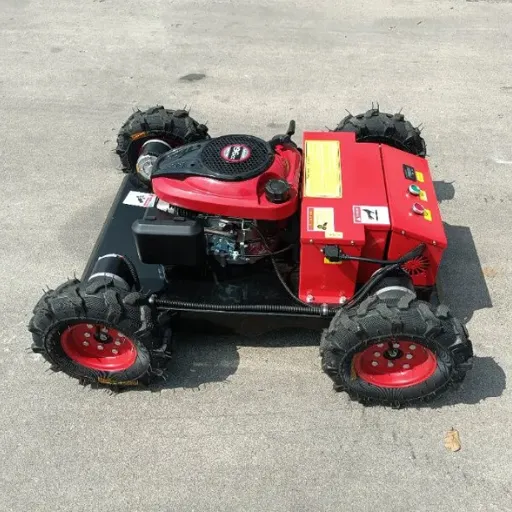
What is the minimum order for a private label remote mower?
Most factories start private label at 5-10 units. That covers color, logo, manual, and packaging customization. Advanced customization may require 20-40 units.
How long does private-label production take?
Plan for 45-60 days from deposit to shipment for a standard private-label order. The extra time covers branding, testing, and documentation preparation.
Can I get my own model number?
Yes. Advanced private label programs let you assign your own model name or number. The factory keeps the internal chassis code for parts support.
Do private-label mowers come with certifications?
A legitimate factory ships CE, EURO V, and EPA documentation with every unit. Make sure the certificates name the actual factory entity on your invoice. CE marking standards and EPA emission guidelines explain the requirements for regulated markets.
What happens if a customer needs parts?
Your factory partner should provide whole-life parts support. You handle customer communication locally. The factory ships parts from stock or produces them on demand.
Can I mix standard and private-label units in one order?
Yes. Many distributors order a container with both branded units for resale and unbranded units for rental fleets or demonstration machines.
Conclusion: Own the Brand, Not Just the Box
A private label remote control lawn mower program turns a distributor into a brand owner. You stop quoting against anonymous imports. You start building customer loyalty, dealer relationships, and long-term equity in your market.
The formula is simple. Partner with a real factory that builds and tests its own machines. Customize the visible elements that customers notice. Lock in certification documentation, parts support, and territory terms before the first deposit. Then deliver service that makes your brand the obvious choice.
Vigorun Tech builds remote-controlled mowers, flail heads, and tracked chassis in Weifang, Shandong. We offer private label color, logo, packaging, and documentation as a standard service for distributors. Every unit clears 100% indoor and outdoor field testing. Our gasoline engines carry CE, EURO V, and EPA certification, and we ship to approximately 140 countries with whole-life parts support.
Request private-label pricing and MOQ details →
Become a Vigorun dealer and build your branded mower line →
Whether you need five units to test your market or a full container to supply your dealer network, the right private label remote control lawn mower partnership starts with the right factory. Choose a partner that builds, tests, and backs every unit. Your brand is worth it.
Recently Posted
-
Remote Control Lawn Mower Wholesale: A Distributor's Guide to Bulk Sourcing
June 22, 2026Three pallets showed up at Marek's warehouse in Warsaw looking nothing like the catalog photos. The paint was uneven, the batt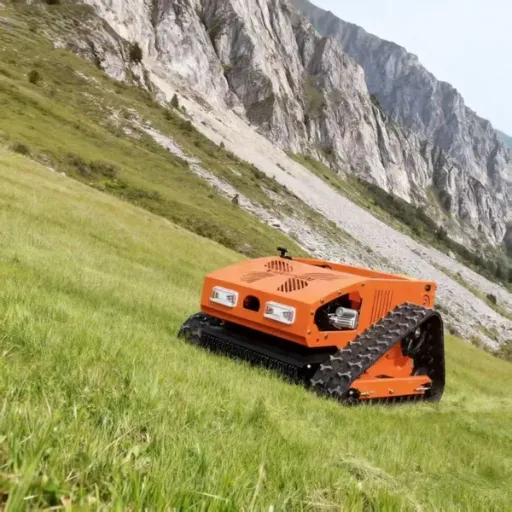 Read More
 -
Factory Direct Remote Control Lawn Mower: A Distributor's Guide to Buying Without the Middleman
June 22, 2026Marcus, a landscaping distributor in Dallas, thought he had found a bargain. A Shanghai trading company quoted him 12 tracked slop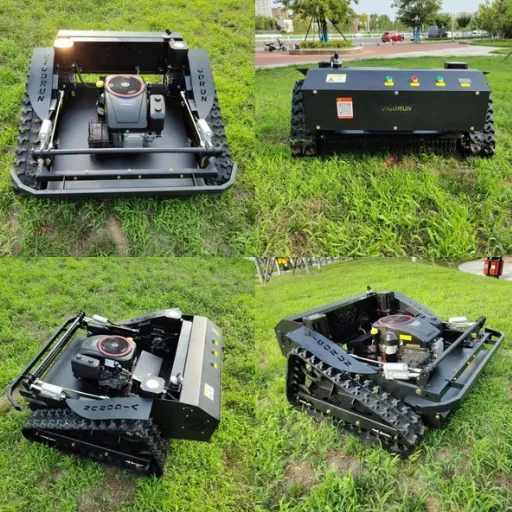 Read More
 -
Remote Control Lawn Mower from China: A Distributor's Factory Guide
June 22, 2026What separates a profitable container order from a warehouse full of unusable machines? Often, it's not the country on the shi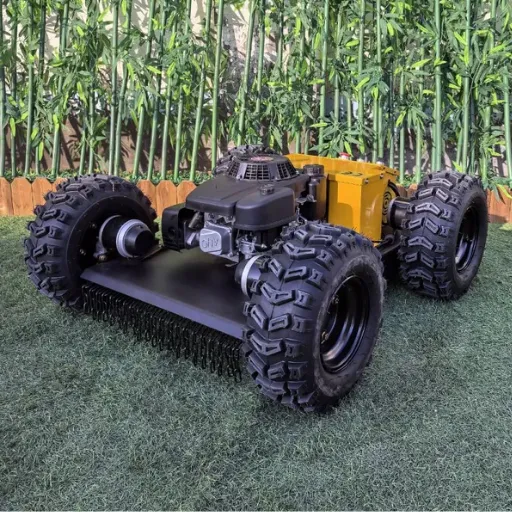 Read More
 -
Remote Control Mower for Hills: A Buyer's Guide to Safer Hill Mowing
June 22, 2026Mike Chen watched his zero-turn slide sideways on a damp 30-degree bank and knew he'd used up his last bit of luck. The mower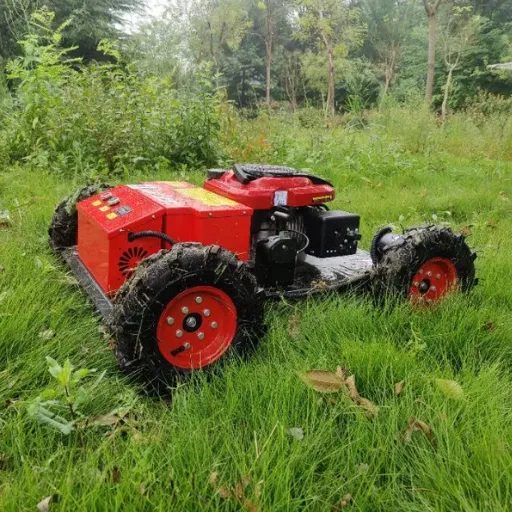 Read More

Contact Us
Recommended Products
-
 Vigorun Remote Control Electric Mower Self-Locking Slope Safety Crawler Mower for Lawn & GardenUS$ 2600 - 2700MOQ: 1 Set
 -
Vigorun RC Mower Remote Control Multi-Function Tool Carrier Remote-Controlled Electric MulcherUS$ 2800 - 2900MOQ: 1 Set
-
Vigorun Lawn Mowers Multi-Function Tool Carrier 1000mm Remote Control Forest Mulcher Flail MowerUS$ 8000 - 8200MOQ: 1 Set
-
Vigorun SPRY600 Tractor Sprayer Industrial 4-Stroke Agricultural Sprayers 600l for Soybean FieldsUS$ 2600 - 2700MOQ: 1 Set
-
Vigorun Grass Cutting Machine High-Speed (6 Km/h) Wheeled Lawn Mower for Tea & Coffee PlantationsUS$ 1000 - 1100MOQ: 1 Set
-
Vigorun Robot Brush Mower Euro 5/EPA Self-Locking Slope Safety Remote Control Track Lawn MowerUS$ 1700 - 17900MOQ: 1 Set
-
Vigorun Controlled Lawn Mower Anti-Rollback Security Lawn Mower Crawler for Slopes & HillsidesUS$ 2600 - 2700MOQ: 1 Set
-
Vigorun Robot Weed Cutter Quick-Change Attachment System Remote Controlled Motorcycle MulcherUS$ 2800 - 2900MOQ: 1 Set
-
Vigorun Remote Control Lawn Mower Quick-Change Attachment System Robot Tracked Forestry MulcherUS$ 8000 - 8200MOQ: 1 Set
-
Vigorun SPRY600 Boom Sprayer Electric Start Electric Sprayer Agricultural 600l for Cotton FieldsUS$ 2600 - 2700MOQ: 1 Set
-
Vigorun Brush Mower Euro 5/EPA Hazard-Free Operation Hightop Lawn Mower for Orchards & VineyardsUS$ 1000 - 1100MOQ: 1 Set
-
Vigorun Brush Cutter Robot High Transmission Efficiency 73% Crawler Lawn Mower for Steep SlopesUS$ 1700 - 17900MOQ: 1 Set
-
Vigorun Tractor Sprayer Agriculture Euro 5/EPA Agricultural Sprayers Self Starter for Wheat FieldsUS$ 2600 - 2700MOQ: 1 Set
-
Vigorun Grass Cutter Machine 16x Manual Efficiency Small Remote Control Lawn Mower for NurseriesUS$ 1000 - 1100MOQ: 1 Set
-
Vigorun RC Brush Cutter Euro 5/EPA Low Energy Consumption 6hp Crawler Remote Control Lawn MowerUS$ 1700 - 17900MOQ: 1 Set
-
Vigorun VTLM800 RC Mower Euro 5/EPA Remote Hazard Avoidance Robot Crawler Mower for Steep SlopesUS$ 2600 - 2700MOQ: 1 Set
-
Vigorun MTSK800 Automatic Grass Cutter Robot Euro 5/EPA User-Friendly Remote Control Mulcher RobotUS$ 2800 - 2900MOQ: 1 Set
-
Vigorun Lawn Mower Robot With Flail Mower/Hammer Flail/Forest Mulcher/Snow Blade Tracked MulcherUS$ 8000 - 8200MOQ: 1 Set
-
Tractor Sprayer, CE EPA Approved Gasoline Engine Gasoline Fst Power Spray Agriculture for Soybean Fields Vigorun SPRY600US$ 2600.00 - 2700.00MOQ: 1 Set
-
Vigorun SPRY600 Boom Sprayer, Remote Control Distance 200M Gasoline Engine Type Spraying Machine for Cotton FieldsUS$ 2600.00 - 2700.00MOQ: 1 Set