
 Business License

Remote Control Mower for Hills: A Buyer's Guide to Safer Hill Mowing
Mike Chen watched his zero-turn slide sideways on a damp 30-degree bank and knew he'd used up his last bit of luck. The mower didn't roll, but the near-miss cost him a full day of work and a week of lost sleep.
If you mow hills for a living, or even maintain a large property with rolling ground, you've probably had a moment like that. A remote control mower for hills won't remove every risk, but it can keep the operator off the slope while the machine does the dangerous work. In this guide, you'll learn what slope ratings actually mean, why tracked machines outperform wheeled ones on hills, which features matter most, and how to choose a machine that matches your terrain.
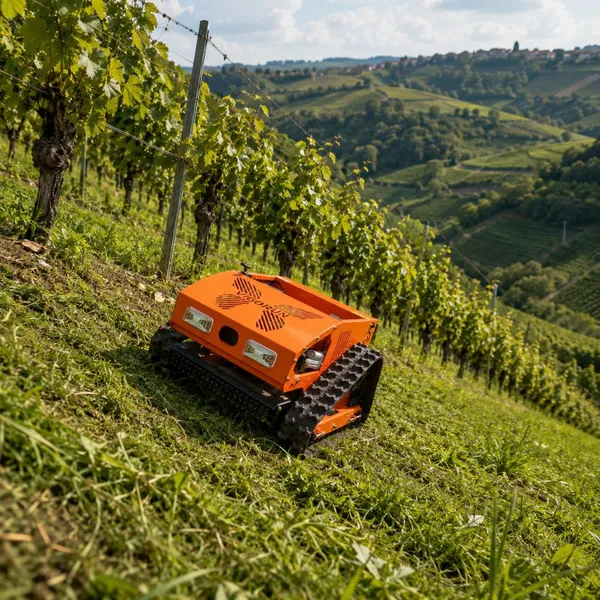
Want to see what a true hill mower looks like before you read on? Explore Vigorun's rubber-track remote operated slope mower →
What "Remote Control Mower for Hills" Actually Means
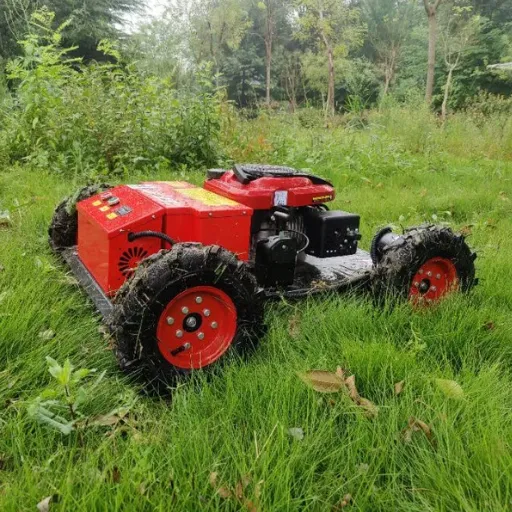
The phrase gets thrown around for anything with a handheld transmitter, but not every RC mower belongs on a hill. A real remote control mower for hills is built around three things: a low center of gravity, a drive system that grips on angled ground, and a remote system that works reliably when the machine is below you and out of easy sight.
Wheeled mowers can handle gentle grades. Once the slope pushes past 20 or 25 degrees, wheels start to lose traction, especially on dewy grass, loose soil, or clay. Tracks spread the machine's weight over more surface area. That extra grip is the difference between controlled mowing and a sliding machine.
Hill mowers also tend to be heavier and wider at the base than flat-ground RC mowers. The engine or motor sits low, the cutting deck is positioned to avoid scalping on angled passes, and the chassis is balanced so the unit doesn't tip when it turns across the slope. If you're comparing models, look past the marketing photos and check the rated slope angle, track width, and operating weight.
How Steep a Hill Can a Remote Control Mower Actually Handle?
Slope ratings are where a lot of buyers get confused. A manufacturer might claim "up to 45 degrees" or "up to 60 degrees," but those numbers depend on ground conditions, operator skill, and how the rating was tested.
A 45 degree slope mower is already extreme terrain. That's roughly a 100% grade. Most riders and walk-behinds can't safely operate there. A machine rated for 45 degrees should have wide tracks, a low profile, hydraulic or crawler drive, and an engine braking system that holds position when you release the sticks.
A remote control mower 60 degree slope rating enters specialized territory. At 60 degrees, even tracked machines need excellent balance, high-grip tracks, and often a winch or tether point for backup. These ratings are usually achievable only on dry, firm ground with an experienced operator. If your site is routinely wet, eroded, or covered in loose stone, treat the rated angle as a best-case number and subtract 10 to 15 degrees for real-world use.
Here's a simple way to think about it:
Under 20 degrees: Most quality wheeled or tracked RC mowers work fine.
20 to 35 degrees: Tracks become strongly preferred; wheeled units struggle.
35 to 45 degrees: You need a purpose-built steep slope mower with wide tracks and low center of gravity.
45 to 60 degrees: Specialist machines only; consider tethering, site access, and operator training.
When Maria Lopez quoted a job clearing a 40-degree reservoir embankment, she didn't trust the client's estimate. She brought a digital inclinometer, measured five points, and found the slope ranged from 34 to 47 degrees. That single measurement kept her from bringing a machine that would have been unsafe at the steepest section. She won the job with a tracked remote controlled flail mower and finished it without a single slip.
Why Tracks Usually Beat Wheels on Hills
Track systems outperform wheels on slopes for a few mechanical reasons. First, a track has a much larger contact patch than a tire. More contact means more friction and less ground pressure, so the machine is less likely to sink into soft soil or skid on grass.
Second, tracks handle lateral loads better. When a mower turns across a hill, gravity pulls it downhill. A wheeled machine can slide sideways because the tire sidewalls and tread pattern aren't designed to resist that force. A track's long footprint resists side-slip and gives the operator predictable control.
Third, tracked mowers can stop and hold position on a slope. Good hydraulic drive systems have holding valves or dynamic braking. That matters when you need to pause, reverse, or reposition without the machine rolling downhill.
The trade-offs are speed and cost. Tracked mowers move more slowly on flat ground and cost more than wheeled equivalents. But if your work is on hills, banks, or embankments, the extra investment usually pays for itself in safety and access to jobs you couldn't otherwise take.
Key Features to Look for in a Remote Control Mower for Hills
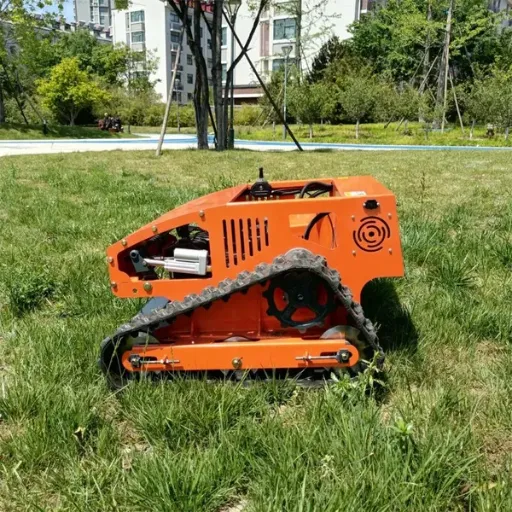
Not every slope mower remote control system is equal. Before you buy, check these details:
1. Rated slope angle with clear test conditions
Look for a number, but also ask how it was measured. Was it dry grass? Firm soil? Loose gravel? A honest rating includes the test surface.
2. Track width and ground pressure
Wider tracks float better on soft ground. Narrow tracks can dig in and spin. Ask for the track width and compare it to the machine's weight.
3. Remote range and signal reliability
On a hill, the machine may drop below the operator's line of sight. A 2.4 GHz system with 100 to 200 meters of range is common, but obstacles, terrain, and weather can reduce that. Some systems use frequency-hopping to resist interference.
4. Engine braking and hold functions
Hydraulic drives with dynamic braking let you stop on a slope without relying on a mechanical brake alone. This is critical for controlled downhill work.
5. Flail or rotary cutting deck
Flail mowers are generally safer on slopes because the cuttings stay closer to the deck and the rotor sits low. Rotary decks can throw debris farther, which matters when you're working near roads or water.
6. Kill switch and emergency stop
A remote kill switch should stop the engine and drivetrain instantly. Test the response time before you put the machine on a real slope.
7. Service access and parts availability
Hill mowing is hard on equipment. Belts, tracks, blades, and hydraulics wear faster than on flat ground. Choose a brand that stocks parts and offers clear documentation.
The team at Valley Grounds Maintenance learned this the hard way. They bought a low-cost wheeled RC mower for a 25-degree cemetery job. Within a month, they'd replaced two drive belts and a set of tires. The machine still couldn't climb the wet grass after rain. They traded up to a tracked remote control flail mower, cut their downtime by half, and expanded into embankment contracts they'd previously turned down.
Vigorun Remote Control Mower for Hills: Built for the Angle
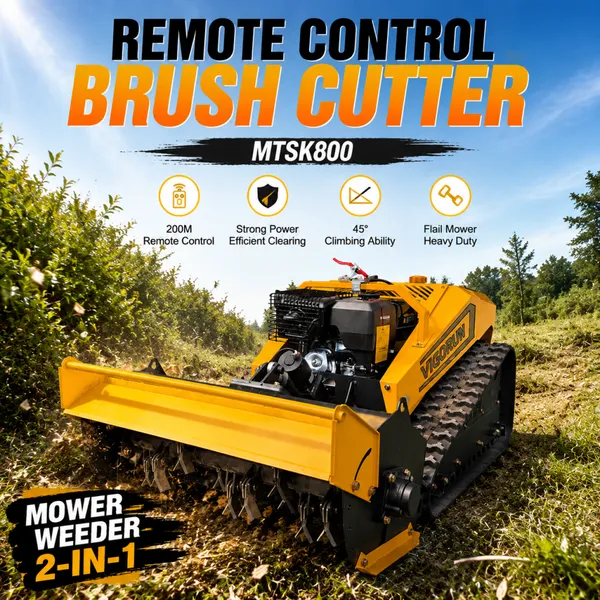
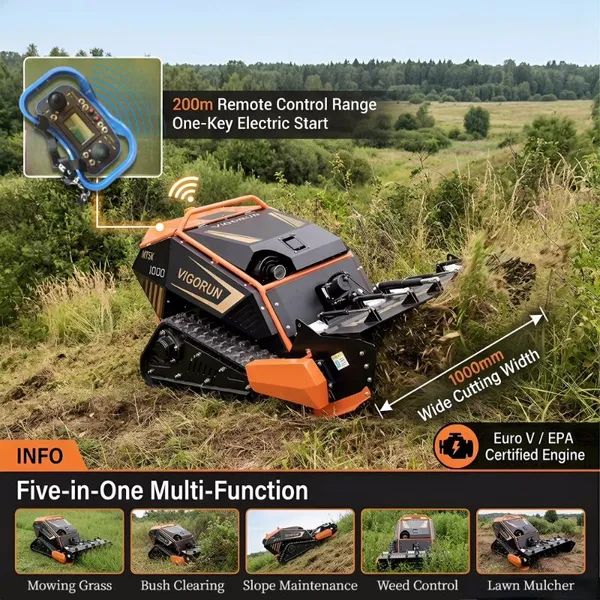
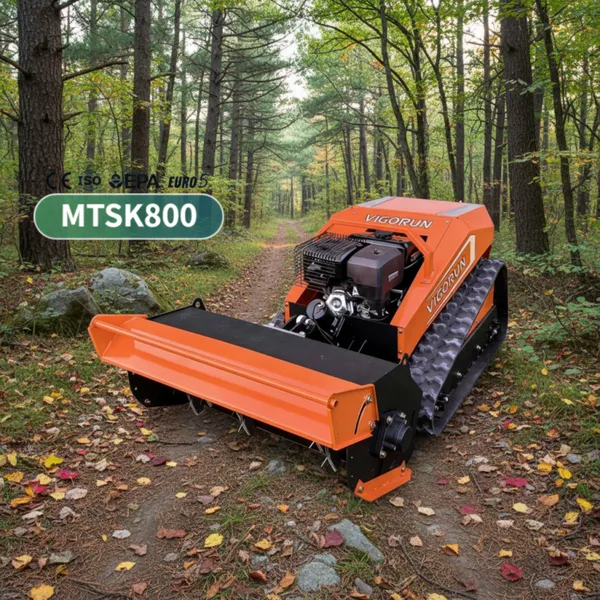
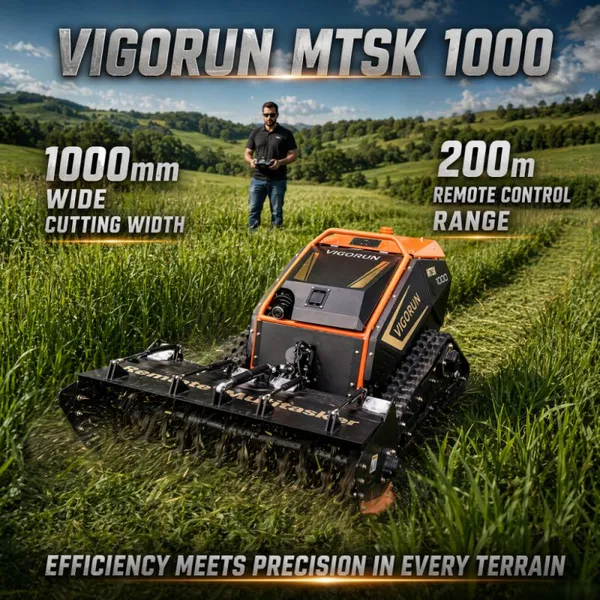
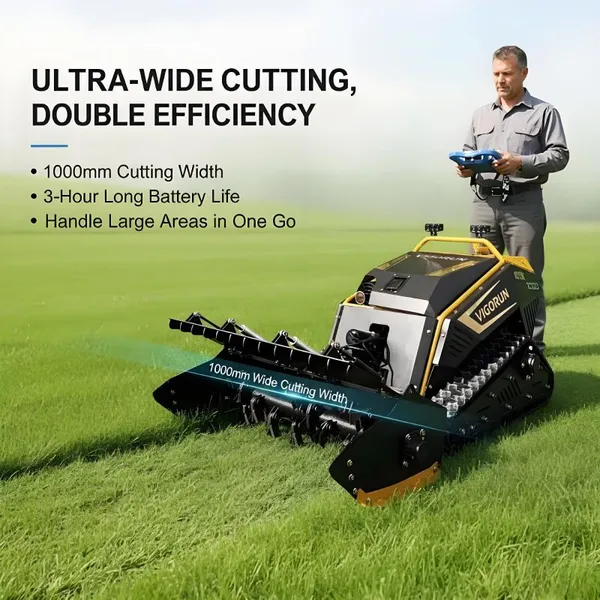
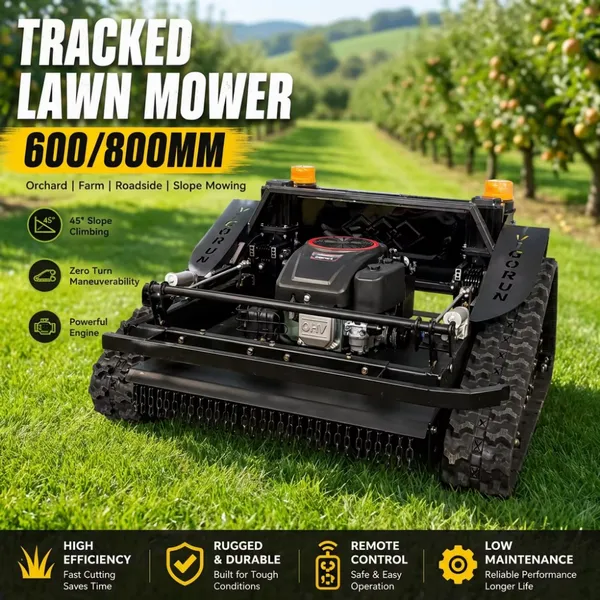
Vigorun builds slope mowers with the features that matter for real hill work. The rubber-track remote operated slope mower uses a crawler chassis, low-mounted engine, and flail cutting system designed for angled ground. It is rated for steep slopes and gives the operator full remote control from a safe distance.
The track system provides the grip needed for wet grass, clay banks, and uneven terrain. The flail deck mulches vegetation evenly and reduces debris throw, which is important near roads, ponds, and property lines. Hydraulic drive with dynamic braking helps the machine hold position when you need to stop or reverse on a grade.
Vigorun machines ship from the factory in Shandong with CE, EURO V, and EPA compliance options. That matters for dealers who need documentation for import, rental fleets that face local emissions rules, and contractors bidding on government or utility work. You can see the full range in the mower product category.
Real Jobs for a Remote Control Mower for Hills
Hill mowers show up in places where walk-behind or ride-on machines are either unsafe or impractical. Here are the jobs where a remote control mower for hills earns its keep.
Roadside and Highway Embankments
State and county maintenance crews need to cut grass on steep roadside slopes without putting operators at risk. A remote mower stays on the slope while the operator stands at the top or bottom, well away from traffic.
Retention Ponds and Stormwater Basins
These sites are often shaped like bowls with 3:1 or steeper side slopes. The ground is soft, the vegetation is thick, and access is limited. A tracked RC mower can climb the banks and cut where a tractor would slide.
Solar Farms and Utility Sites
Solar installations need regular vegetation control to prevent shading and fire risk. Rows of panels sit on graded ground that can be uneven and sloped. A compact remote mower can work between rows and on the banks without damaging infrastructure.
Orchards and Vineyards
Row middles and terrace edges in orchards and vineyards are rarely flat. A remote mower can trim grass on terraced ground while workers stay on level paths.
Levees, Dams, and Flood-Control Channels
These structures have engineered slopes that must be kept clear for inspection and flow capacity. A steep slope mower with tracks can handle the grade and the often-rough vegetation.
Safety Rules for Hill Mowing
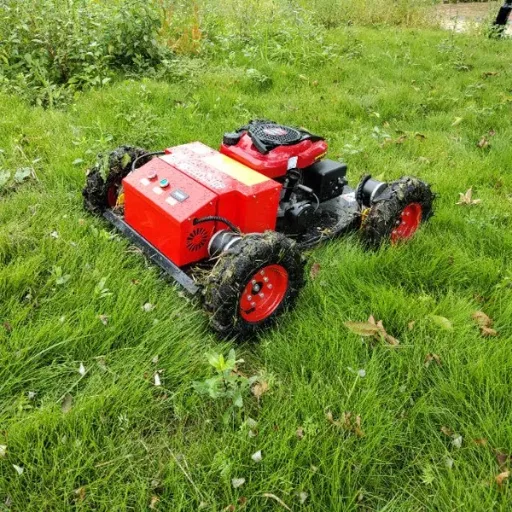
Even the best remote control mower for hills won't help if the operator ignores basic safety. Follow these rules every time you put a machine on a slope.
Walk the site first. Measure slopes, note soft spots, and locate obstacles.
Mow across the slope, not straight up and down. This reduces the risk of tipping or sliding.
Avoid mowing wet grass when possible. If you must, slow down and keep the machine lower on the slope.
Stay outside the rollover path. Position yourself where the machine can't reach you if it slides.
Use a spotter on steep or blind terrain. A second person watching from a safe angle can prevent accidents.
Keep the remote in hand and the kill switch accessible. Never set the transmitter down while the engine is running.
Inspect tracks, hydraulics, and blades daily. Hill work accelerates wear. Catching problems early prevents failures on a slope.
OSHA guidelines for agricultural and landscaping equipment emphasize keeping operators clear of rollover and struck-by hazards. For detailed safety standards, refer to OSHA's agricultural equipment regulations.
How to Choose the Right Hill Mower for Your Work
Start with the steepest slope you actually mow, not the average. Measure it with an inclinometer or a smartphone level app. Add a safety margin of 5 to 10 degrees for wet or loose conditions. Then match that number to a machine's rated slope angle.
Next, think about vegetation. Light grass needs less power than thick brush, saplings, or overgrown ditch banks. A flail mower handles heavier material better than a rotary deck and is usually the safer choice on slopes.
Consider transport and access, too. Some hill mowers are compact enough to load on a small trailer; others need a larger truck or loader. If you move between job sites, check the machine's weight and dimensions against your trailer capacity.
Finally, ask about support. Can you get replacement tracks, blades, and filters quickly? Does the manufacturer provide English documentation and technical support? Vigorun offers factory-direct pricing, parts support, and compliance documentation including CE and EPA. You can review certification details at the certification information page.
Price vs. Value on a Hill Mower
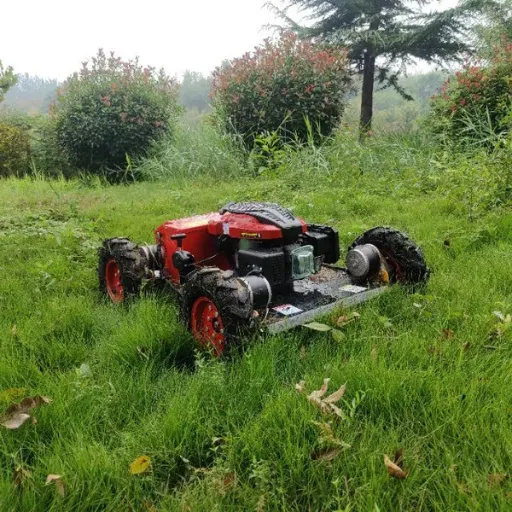
Entry-level wheeled RC mowers can look tempting, but they often lack the track system, braking, and balance needed for real hill work. A machine that slides or stalls on a slope costs more in lost time, repairs, and missed jobs than the difference in purchase price.
A purpose-built remote control mower for hills typically ranges from a few thousand dollars for smaller units to higher prices for large, high-slope commercial machines. Track drive, flail decks, hydraulic systems, and compliance certification all add cost. For contractors and rental fleets, the value comes from safety, productivity, and the ability to bid on jobs that require slope capability.
When you're comparing prices, compare the total cost of ownership: purchase price, maintenance, downtime, fuel or battery costs, and the revenue from jobs the machine lets you take. A higher upfront price often wins on that calculation.
Conclusion: Match the Machine to the Hill
A remote control mower for hills is one of the safest ways to handle sloped mowing, but only if the machine is matched to the terrain. Track drive, a low center of gravity, hydraulic braking, and a flail deck are the features that separate a real hill mower from a flat-ground toy.
Before you buy, measure your steepest slopes, check the rated angle under realistic conditions, and think about the vegetation and access you'll face. Look for compliance documentation if you import, rent, or bid on regulated work. And never forget that the operator's judgment matters as much as the machine's specs.
Ready to put a hill mower to work on your property or fleet? Browse Vigorun's remote control mowers for hills and slopes and find the model that fits your terrain.
Recently Posted
-
Steep Slope 600mm Tracked 200m Remote Control 45 Degree Brushless Electric Lawn Mower
August 10, 2026*Integrated Drive System with 73 Percent Efficiency: The VTLM600 remote control lawn mower features a fully integrated brushless m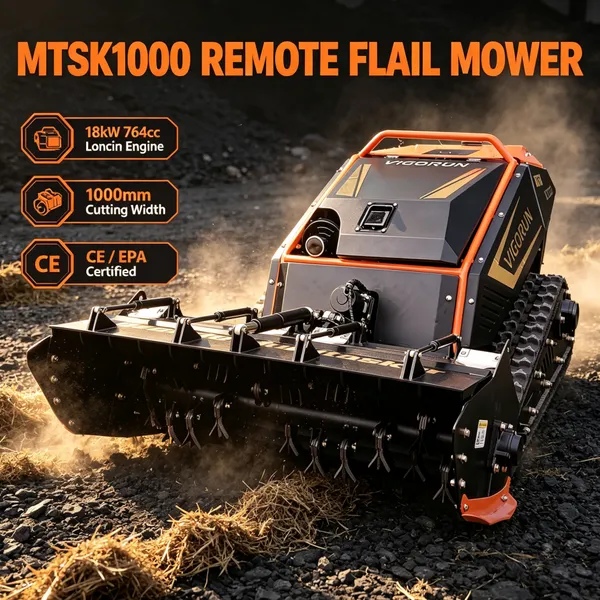 Read More
 -
Remote Controlled Pesticide Sprayer with 600L Tank 8.4m Boom for Agricultural Applications
August 10, 2026*Electric Start & 13kW Loncin Engine for Powerful Agricultural Spraying: Maximize field application efficiency with the SPRY60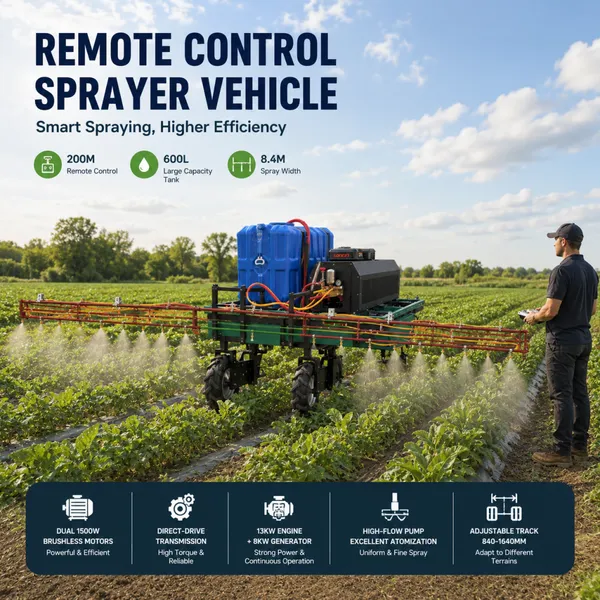 Read More
 -
Self Propelled Agricultural Boom Sprayer with Adjustable Track for Modern Farming
August 10, 2026*Electric Start & 13kW Loncin Engine for Powerful Agricultural Spraying: Maximize field application efficiency with the SPRY60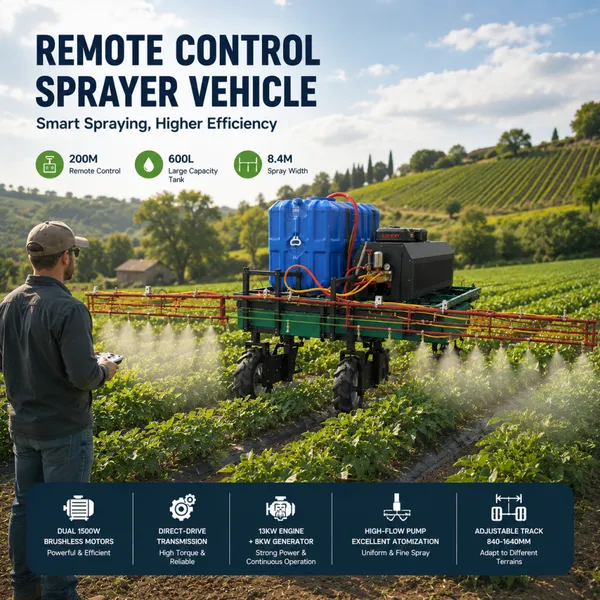 Read More
 -
Automatic Remote Control Agricultural Spray Machine with 600L Chemical Tank and Boom System
August 10, 2026*Electric Start & 13kW Loncin Engine for Powerful Agricultural Spraying: Maximize field application efficiency with the SPRY60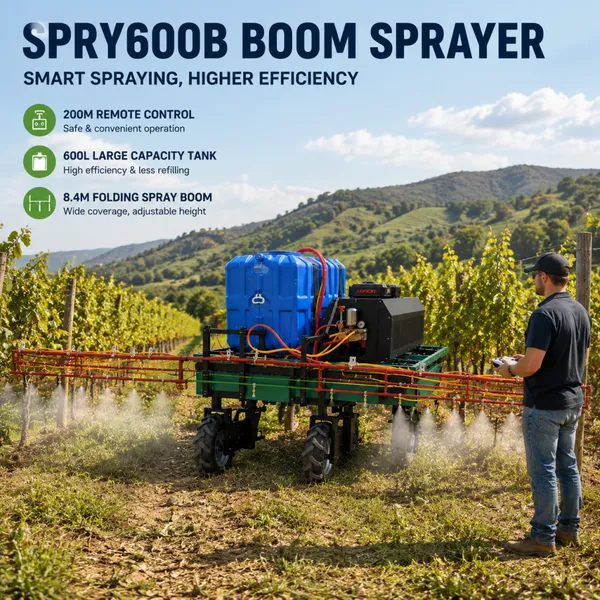 Read More

Contact Us
Recommended Products
-
 Vigorun Lawn Mower Robot, Industrial Dual 48V 1500W Motors MTSK1000 Mulcher Machine for Large LandscapesUS$ 7500.00 - 7700.00MOQ: 1 Set
 -
Farmland Orchards Battery Powered Mower Gasoline Golf Mower Robot Lawn Mower 3000m2 Vigorun Remote Control Grass MowerUS$ 2580 - 2700MOQ: 1 Unit
-
Vigorun MTSK800 Automatic Remote Control Grass Cutting Machine 48V 20Ah Battery Remote Flail MowerUS$ 2800 - 2900MOQ: 1 Set
-
Vigorun MTSK1000 Remote Control Mower 24hp Fail-Safe Slope Braking Remote Control Forest MulcherUS$ 8000 - 8200MOQ: 1 Set
-
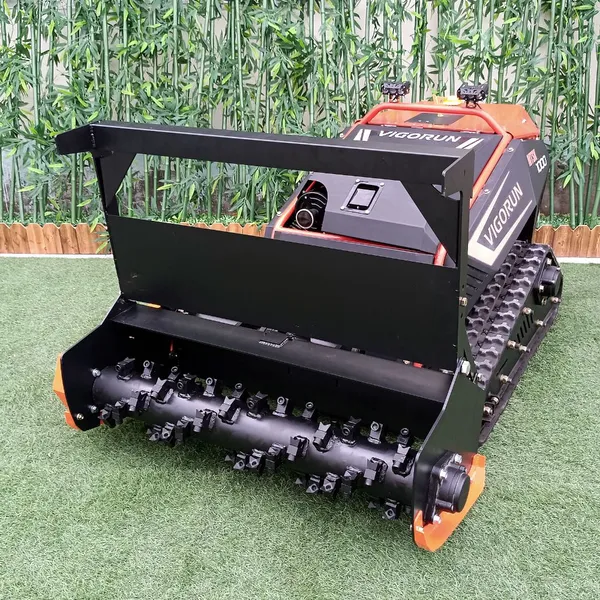
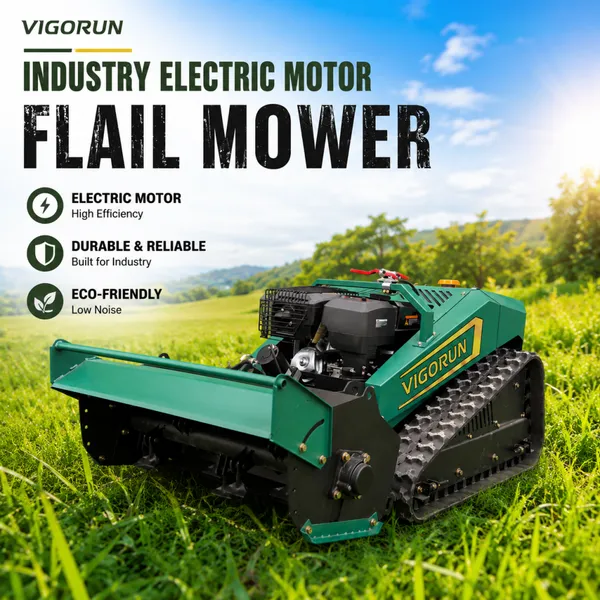
Industry Electric Motor Lawn Mower Flail Mower Atv Gasoline Hedge Trimmer Battery LawnmowerUS$ 2580 - 2900MOQ: 1 Unit
-
Vigorun Agricultural Tractor Sprayer Euro 5/EPA Electric Agricultural Sprayer 600l for VineyardsUS$ 2600 - 2700MOQ: 1 Set
-
Remote Control Tracked Hillside Mower 800mm Cutting Width 60 Degree Slope for Steep Terrain VegetationUS$ 2600 - 2700MOQ: 1 Set
-
Vigorun VTLM600 RC Lawn Mower Robot CE EPA Certified 45° Extreme Slope Mini Crawler Lawn MowerUS$ 1700 - 17900MOQ: 1 Set
-
Remote Controlled High Efficiency Fog Cannon Spraying Machine 600L Tank for Agriculture and Dust ControlUS$ 2800 - 2900MOQ: 1 Set
-
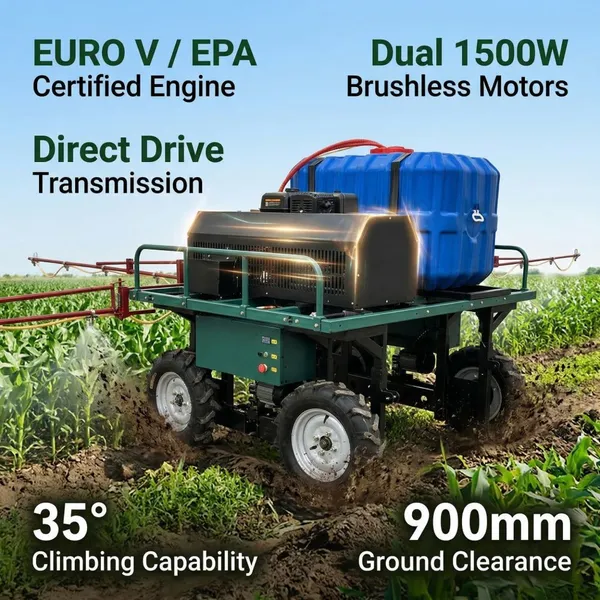
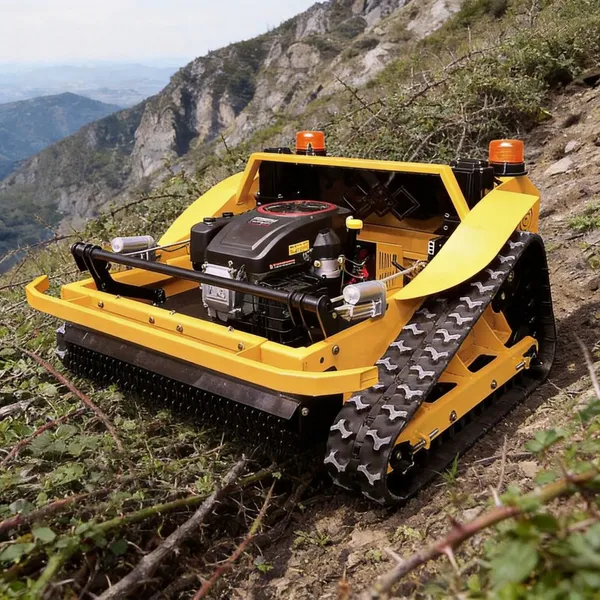
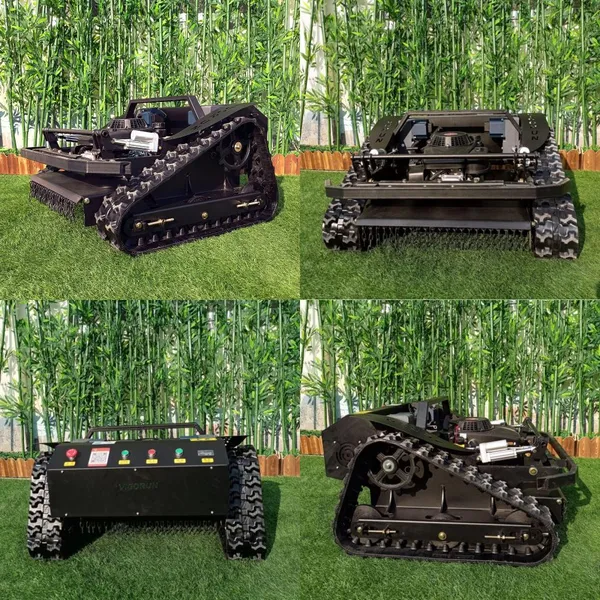
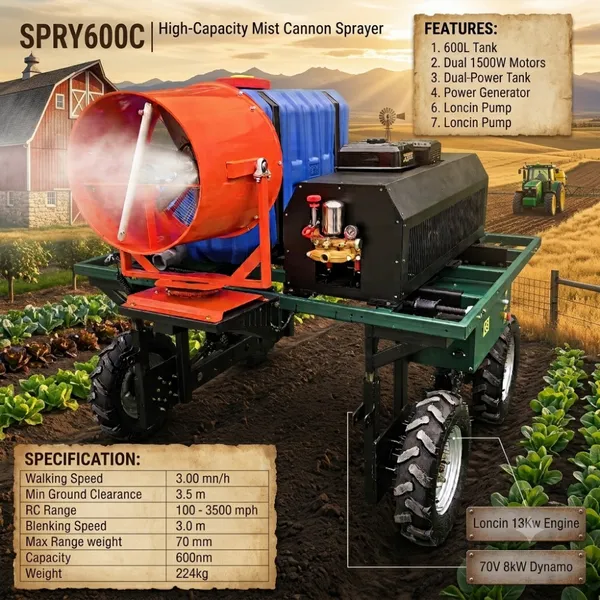
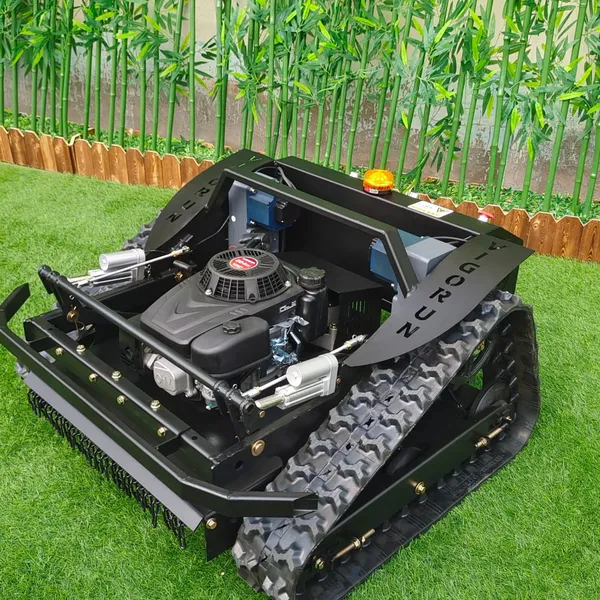
Vigorun Radio Control Mowing Euro 5/EPA Self-Propelled & Precise 6hp Remote Control Crawler MowerUS$ 1700 - 1790MOQ: 1 Set
-
Factory Manufacturer Vigorun MTSK1000 1000MM Commercial Branch Cutter Flail Mower rc Remote Petrol Lawnmower Mower Grass Cutter TractorUS$ 8000 - 8200MOQ: 1 Set
-
Vigorun VTW550 Remote Control Grass Cutter Tractor Robot Gas Lawn Mower Grass Cutter Small Electric Lawn Mower Vigorun Lawn MowerUS$ 1000 - 1250MOQ: 1 Set
-
Vigorun Tech Gasoline Remote Control Lawn Mower Self-Locking Slope Safety RC Mower Tiller for EmbankmentsUS$ 2800.00 - 2900.00MOQ: 1 Set
-
Mower Gasoline Grass Cutter Machine Remote Control 1000mm Cut 35 Degree Slope Flail Hammer for Overgrown LandUS$ 7500 - 7700MOQ: 1 Set
-
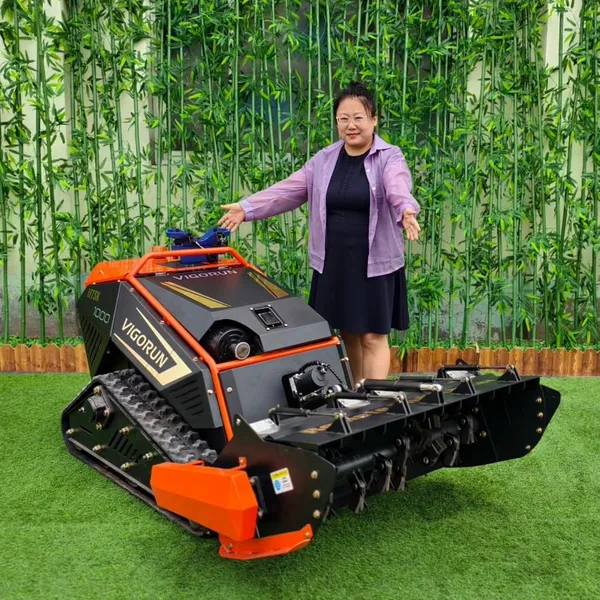
Vigorun VTLM800 Remote Control Electric Mower, Self-Locking Slope Safety Crawler Mower for Steep SlopesUS$ 2600.00 - 2700.00MOQ: 1 Set
-
Shrub and Brush Clearing MTSK800 MTSK1000 Flail Mower rc Remote Weeding Weeder MachineUS$ 2800 - 2900MOQ: 1 Set
-
RC Robot Lawn Mower Electric Remote Control Flail Grass Cutter Garden Cutting Machine MTSK1000US$ 8000 - 8200MOQ: 1 Set
-
Remote Manipulation Rubber Track Brush Cutter Industrial Flail Mower for Efficient Shrub ClearingUS$ 2000.00 - 2790.00MOQ: 1 Set
-
Vigorun MTSK1000 Rc Lawn Mower, Loncin 764CC Gasoline Engine Forestry Mulcher With Remote Control for ForestryUS$ 7500.00 - 7700.00MOQ: 1 Set
-
Vigorun VTC550 Zero Turn Electric Mower Quality Guaranteed Crawler Brush Cutter For Embankments & LeveesUS$ 1600 - 1690MOQ: 1 Set