
 Business License
Remote Control Lawn Mower Manufacturer: How to Audit the Factory Behind the Brochure
Rashid Al-Farsi flew from Dubai to Shenzhen in March 2024 to visit what a supplier called their "manufacturing base." The address led to a 200-square-meter warehouse on the third floor of a logistics building. Two workers were repackaging mowers that had arrived that morning in unmarked crates. There was no welding station. No test ramp. No QC team. The "factory director" was a salesman who had never assembled a chassis in his life.
Rashid's container order never shipped on time. The machines that did arrive lacked CE labels. His distributor reputation in the Gulf took two years to rebuild.
The remote control lawn mower manufacturer you choose is not a vendor decision. It is a structural decision that determines whether your distributor business grows or collapses under warranty claims and customs delays. This guide explains what a real manufacturer looks like, how to audit one from overseas, and why the factory's location, certifications, and OEM capabilities matter more than the unit price on the quote sheet.
Want to see how factory-direct pricing compares to European brands? Our guide on how to source an OEM remote control lawn mower from China walks through the full OEM process, from sample evaluation to container loading.
Why "Manufacturer" Means Different Things on Different Websites
Trading Companies vs. Assembly Shops vs. Vertically Integrated Factories
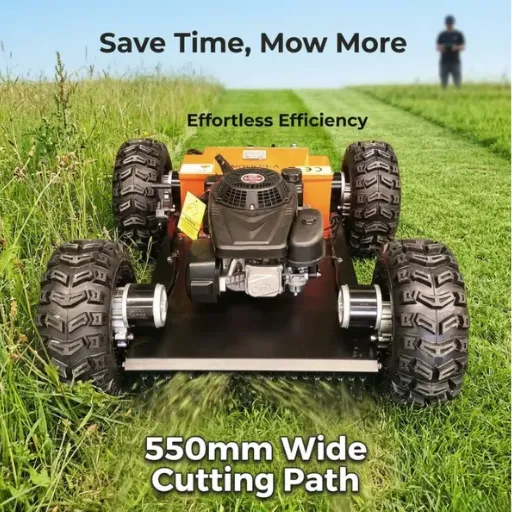
Every Alibaba listing claims to be a manufacturer. The word has been diluted to meaninglessness. In reality, the suppliers you encounter fall into three categories.
Trading companies own no production equipment. They source machines from anonymous factories, mark them up, and handle the English-language sales conversation. They cannot customize specifications. They do not hold certification documents. When a problem arises, they disappear or blame the unnamed factory they used.
Assembly shops rent a workshop and bolt together parts sourced from multiple suppliers. They may have a small welding station and a few assemblers. But they do not design chassis geometry, do not file patents, and cannot modify engine mounts or track systems to match your market's requirements. Their quality depends entirely on whichever sub-supplier delivered parts that week.
Vertically integrated manufacturers design, machine, weld, assemble, test, and certify in one facility. They hold the engineering drawings. They file patents. They run their own QC department and test ramps. They can modify a chassis for your local terrain, certify an engine for your country's emissions rules, and brand the machine with your logo and packaging.
A remote control lawn mower manufacturer worth partnering with is in the third category. The first two categories will cost you more in delays, defects, and lost distributor credibility than you ever save on the quoted unit price.
What a Real Remote Control Lawn Mower Manufacturer Looks Like
In-House R&D and Patent Filings
A manufacturer that builds its own remote-controlled mowers invests in engineering. That investment leaves a paper trail. Ask for patent application numbers, design registrations, or utility-model certificates. A real factory can produce them. A trading company will change the subject.
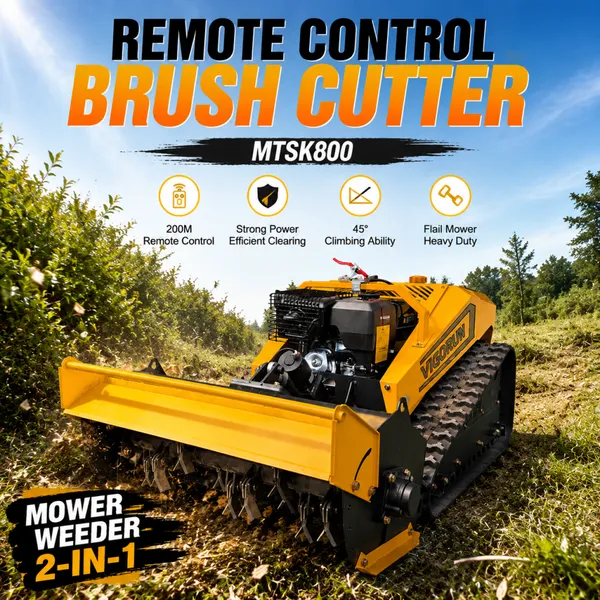
Vigorun Tech filed patent applications for the MTSK800 chassis and control system in 2026. The application covers the tracked chassis geometry, the attachment-interface design, and the failsafe control logic. For serious OEM partners, the application number and supporting drawings are available under NDA. This is not marketing decoration. It is legal proof that the factory designed the machine rather than copying someone else's mold.
Production Line and QC Infrastructure
A legitimate remote control lawn mower manufacturer can show you a production line. Not a marketing video. A live video tour. You should see chassis welding stations, engine-bay assembly benches, electronics integration areas, and a dedicated outdoor test ramp where every unit is run before shipment.
The absence of a test ramp is a disqualifying red flag. A slope mower that has never been driven on a slope before shipping is a liability waiting to become a warranty claim. Real manufacturers test every unit indoors on a bench and outdoors on an incline. They measure track tension, verify wireless range, and confirm emergency-stop function. Then they document the results.
Vigorun's facility in Weifang runs approximately 200 mowers per month through a line that includes welding, machining, assembly, and a dedicated QC team. Every unit clears 100% indoor and outdoor field testing before it leaves the building. The test report travels with the machine.
Certifications Issued Directly (Not Brokered)
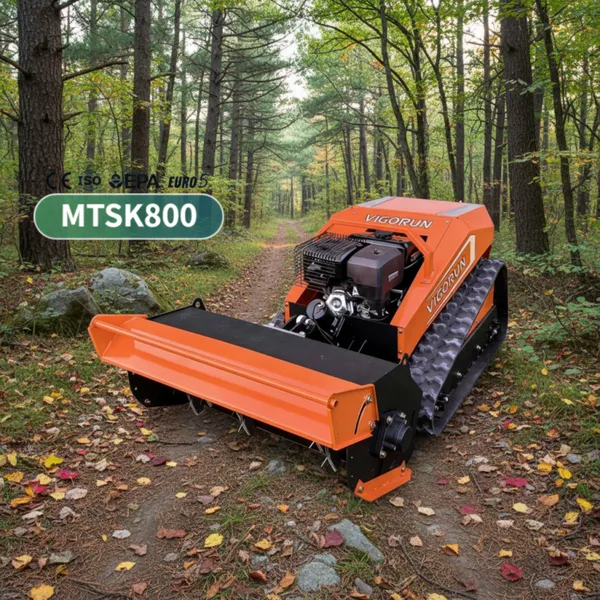
CE, EURO V, and EPA certifications are non-negotiable for regulated markets. But "CE certified" on a website means nothing without the Declaration of Conformity document showing the exact model, the notified body, and the standards tested against.
A real remote control lawn mower manufacturer holds these documents in their own company name. They can email the CE DoC, the EPA emission certificate, and the EURO V test report within 24 hours. The documents reference the manufacturer's legal entity, not a third-party trading company.
If the supplier says "we can get certification after you place the order," they do not have it. If they send a document with a different company name on it, they are brokering someone else's paperwork. Both situations end with customs detention, buyer storage fees, and delayed revenue.
The Weifang Industrial Corridor: Why Location Matters
Shared Supplier Networks and Inspection Standards
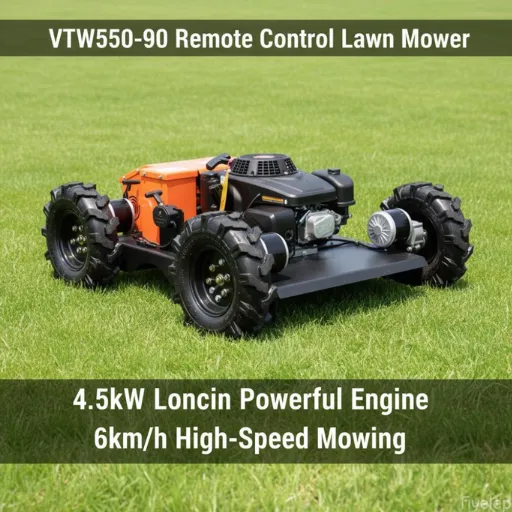
Weifang, Shandong sits in the same machinery manufacturing corridor as Weichai Power and Caterpillar SEM. The supplier ecosystem includes foundries that understand high-strength steel, rubber factories that formulate track compounds for heavy equipment, and machine shops that hold tolerances for hydraulic systems.
A remote control lawn mower manufacturer in this corridor sources from the same supplier base as billion-dollar equipment companies. The inspection standards are higher. The material traceability is better. The track rubber on your mower may come from the same compound supplier that serves the excavator factory down the road.
Factories in remote industrial zones without this ecosystem often source from low-cost sub-suppliers who optimize for price, not durability. The difference shows up in year two when tracks crack, welds fatigue, and control receivers fail.
Logistics and Container Shipping Advantage
Weifang is 250 kilometers from Qingdao Port, one of China's busiest container terminals. A manufacturer in this corridor can deliver a container to the port in hours, not days. For distributors ordering to seasonal deadlines, that proximity matters.
Qingdao also handles refrigerated and hazardous-goods certifications efficiently. If your remote mower shipment includes lithium batteries for the control system or pressurized fuel tanks for the engine, the port's familiarity with heavy-machinery export documentation reduces customs friction.
OEM and Private-Label Capabilities: The Manufacturer Advantage
Customization Levels and Lead Times
A real remote control lawn mower manufacturer offers OEM customization as a standard service, not a special favor. The typical levels are:
Color and badge only: 30-day lead time
Color, badge, transmitter shell, and decal pack: 45-day lead time
Full private-label package: custom model number, spec modifications, documentation in your language, HS-coded export paperwork: 60-day lead time
Trading companies cannot offer any of these. Assembly shops may promise color changes but cannot modify chassis geometry or engine certification. Only a vertically integrated manufacturer controls the full stack from design to documentation.
Lena Kowalski runs an equipment distribution company in Warsaw. In 2023 she tried to launch a private-label slope mower line through a trading company in Guangzhou. The machines arrived with generic decals and no CE documentation in her company's name. Polish customs refused entry. She spent six months and $12,000 in legal fees to sort out the paperwork.
In 2025 she switched to a factory-direct remote control lawn mower manufacturer. Her current container arrives with her logo on the chassis, her company name on the CE declaration, and her packaging on the pallet. Lead time is 45 days. Customs clearance takes four hours.
Documentation in Your Company's Name
The OEM advantage that most distributors overlook is documentation ownership. When the CE declaration, EPA certificate, and user manual are issued in your company's name, your end-customers see you as the manufacturer. Your brand owns the compliance. Your brand owns the warranty.
A trading company cannot transfer documentation ownership because they do not own the design. A real manufacturer can, because they created the machine, tested it, and certified it. This distinction is worth more than a 5% discount on unit price.
Red Flags That Expose a Trading Company
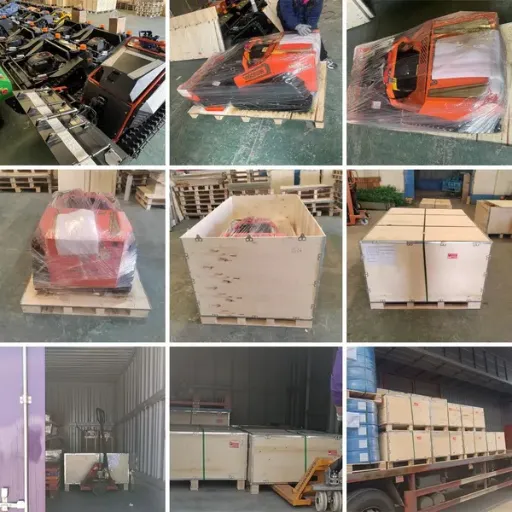
| Factor | Real Manufacturer | Trading Company |
|---|---|---|
| Video tour | Live walk-through of production line, same week | Pre-recorded marketing video, or refusal |
| Patent documents | Application numbers available under NDA | None, or vague claims about "technology" |
| Certifications | Documents in manufacturer's name, emailed within 24 hours | Documents in third-party name, or "available after order" |
| Customization | Detailed MOQ tiers and lead times for OEM | "We can ask the factory" — no direct control |
| Test ramp | Every unit tested on slope before shipment | Random spot checks, or no testing mentioned |
| Parts support | Lifetime parts catalog with same-day shipment | Parts availability unclear, or 4-6 week lead times |
| Factory address | Industrial zone with machinery corridor | Logistics warehouse, or residential district |
| Engineering contact | Direct access to design engineers | Only sales staff, no technical depth |
If a supplier scores negatively on more than two of these factors, you are not talking to a manufacturer. You are talking to a middleman who adds margin and subtracts accountability.
How to Audit a Remote Control Lawn Mower Manufacturer Before You Buy
Step 1: Request a live video tour. Ask to see the welding station, the assembly line, the QC bench, and the outdoor test ramp. Schedule it for the same week. A real factory will accommodate. A trading company will delay indefinitely.
Step 2: Ask for a patent or design document. Even a pending application proves engineering investment. No documents means no R&D.
Step 3: Request certification documents for the exact model. Verify that the company name on the CE DoC matches the supplier's legal entity. Check the EPA engine family name against the EPA's public certified engine database.
Step 4: Ask a technical question that requires engineering knowledge. "What is the track tension specification at 45° side slope?" or "How does the failsafe behave when signal is lost during blade engagement?" A manufacturer's engineer will answer in detail. A trading company's salesperson will copy-paste from a brochure.
Step 5: Request a sample unit before committing to container volume. Run it on terrain similar to your end-customers' conditions. Test the slope limit, the control range, and the build quality. A real manufacturer stands behind their sample because it is identical to the production unit. A trading company fears sample evaluation because their quality is inconsistent.
Tomás Herrera, a distributor in Santiago, Chile, followed this exact audit process in 2024. He evaluated three suppliers. One refused a live video tour. The second sent a CE document with a different company name. The third — a Weifang-based manufacturer — walked him through the line on a Tuesday afternoon, showed him the test ramp, and emailed certification documents that night.
Tomás placed a 20-unit order with OEM branding. His machines cleared Chilean customs in two days. In year one, he sold every unit and reordered twice. The manufacturer he chose was not the cheapest. It was the only one that was real.
Conclusion
A remote control lawn mower manufacturer is not defined by a website or an Alibaba badge. It is defined by the welding station on the factory floor, the test ramp behind the building, the patent document in the filing cabinet, and the certification papers that bear its own legal name.
Distributors who survive and grow in this market do not choose suppliers based on unit price alone. They audit for engineering depth, production control, certification integrity, and OEM capability. They verify that the factory can build the machine, test the machine, document the machine, and support the machine for the years after the sale.
Buyers who get this right follow the same process. They request live tours. They verify patents and certifications. They test sample units on real terrain. They confirm OEM documentation ownership. Then they choose a manufacturer who treats the relationship as a partnership, not a transaction.
If you are evaluating remote control lawn mower manufacturers for your distribution network, start with the audit. Then request a factory tour, a sample unit evaluation, and a detailed OEM quote from a remote control lawn mower manufacturer with the production line, the certifications, and the track record to back it up.
Recently Posted
-
Steep Slope 600mm Tracked 200m Remote Control 45 Degree Brushless Electric Lawn Mower
August 10, 2026*Integrated Drive System with 73 Percent Efficiency: The VTLM600 remote control lawn mower features a fully integrated brushless m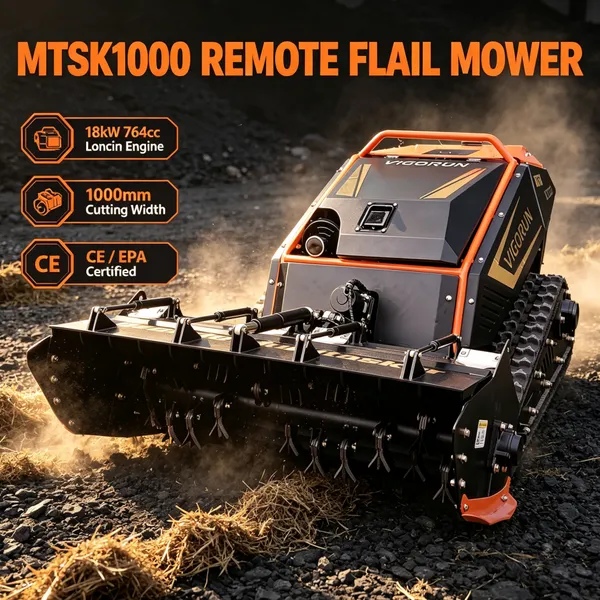 Read More
 -
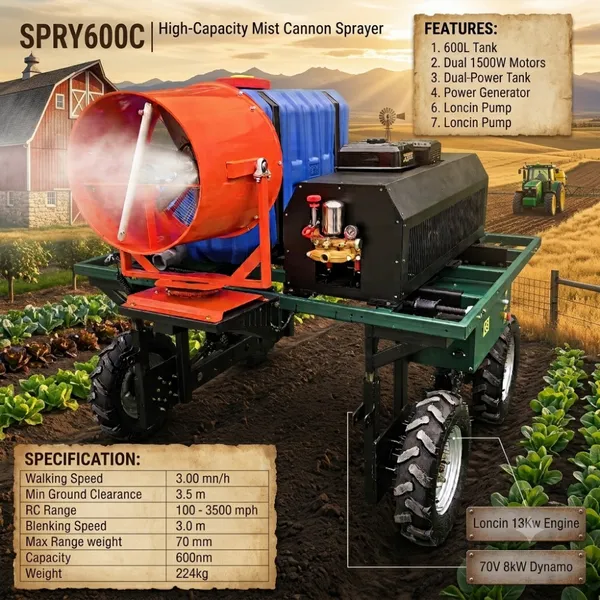
Remote Controlled Pesticide Sprayer with 600L Tank 8.4m Boom for Agricultural Applications
August 10, 2026*Electric Start & 13kW Loncin Engine for Powerful Agricultural Spraying: Maximize field application efficiency with the SPRY60 Read More
 -
Self Propelled Agricultural Boom Sprayer with Adjustable Track for Modern Farming
August 10, 2026*Electric Start & 13kW Loncin Engine for Powerful Agricultural Spraying: Maximize field application efficiency with the SPRY60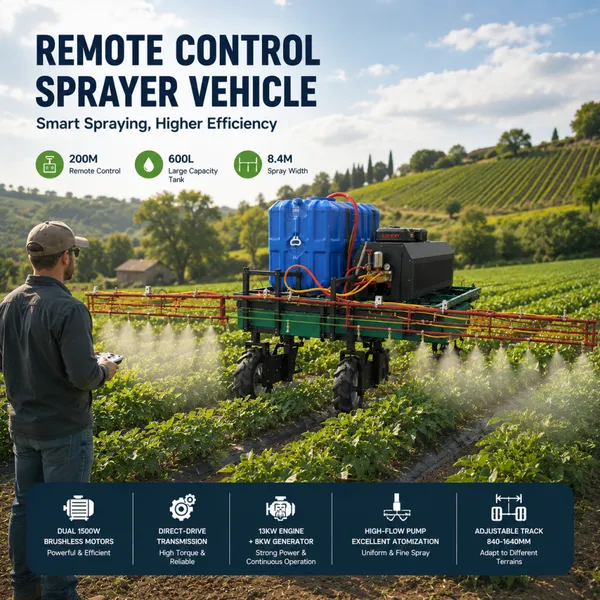 Read More
 -
Automatic Remote Control Agricultural Spray Machine with 600L Chemical Tank and Boom System
August 10, 2026*Electric Start & 13kW Loncin Engine for Powerful Agricultural Spraying: Maximize field application efficiency with the SPRY60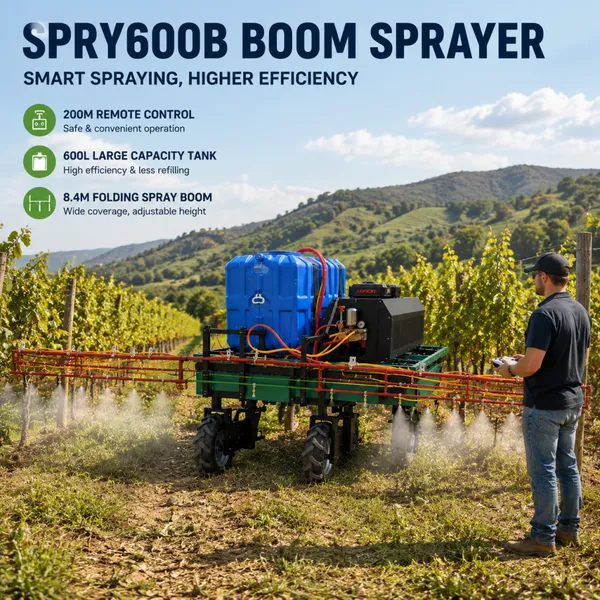 Read More

Contact Us
Recommended Products
-
 Vigorun Lawn Mower Robot, Industrial Dual 48V 1500W Motors MTSK1000 Mulcher Machine for Large LandscapesUS$ 7500.00 - 7700.00MOQ: 1 Set
 -
Farmland Orchards Battery Powered Mower Gasoline Golf Mower Robot Lawn Mower 3000m2 Vigorun Remote Control Grass MowerUS$ 2580 - 2700MOQ: 1 Unit
-
Vigorun MTSK800 Automatic Remote Control Grass Cutting Machine 48V 20Ah Battery Remote Flail MowerUS$ 2800 - 2900MOQ: 1 Set
-
Vigorun MTSK1000 Remote Control Mower 24hp Fail-Safe Slope Braking Remote Control Forest MulcherUS$ 8000 - 8200MOQ: 1 Set
-
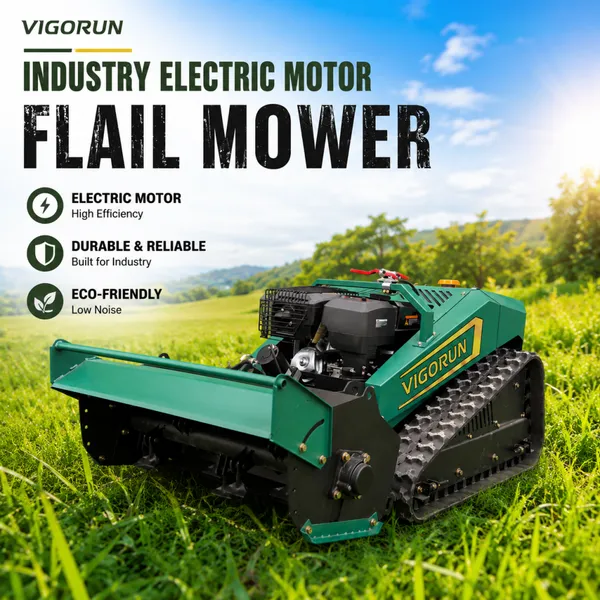
Industry Electric Motor Lawn Mower Flail Mower Atv Gasoline Hedge Trimmer Battery LawnmowerUS$ 2580 - 2900MOQ: 1 Unit
-
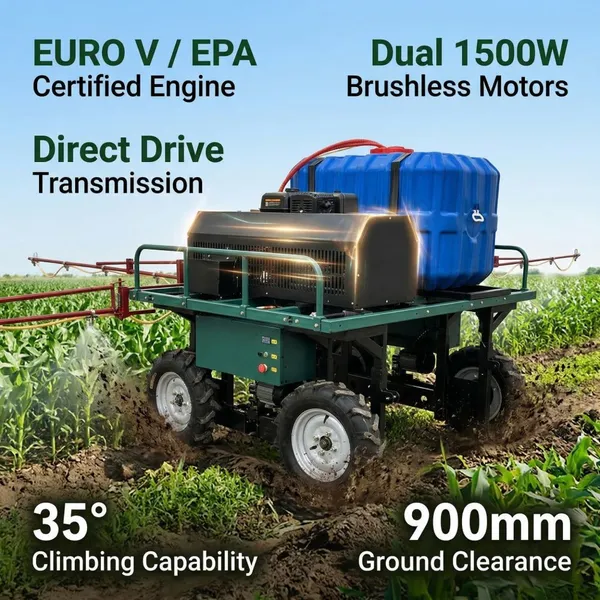
Vigorun Agricultural Tractor Sprayer Euro 5/EPA Electric Agricultural Sprayer 600l for VineyardsUS$ 2600 - 2700MOQ: 1 Set
-
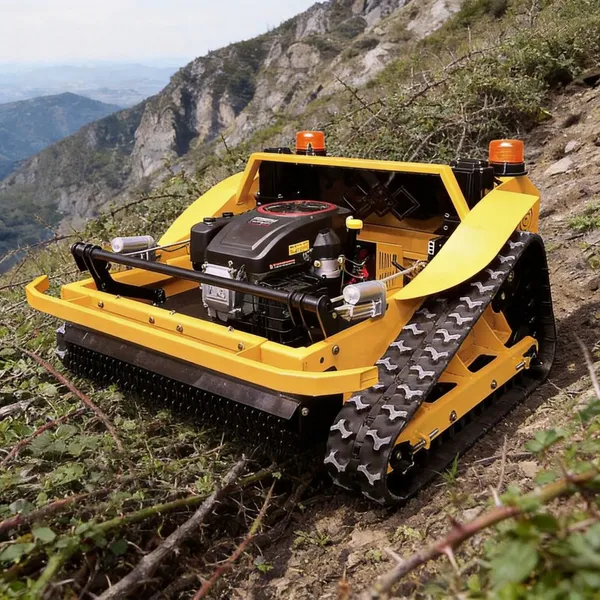
Remote Control Tracked Hillside Mower 800mm Cutting Width 60 Degree Slope for Steep Terrain VegetationUS$ 2600 - 2700MOQ: 1 Set
-
Vigorun VTLM600 RC Lawn Mower Robot CE EPA Certified 45° Extreme Slope Mini Crawler Lawn MowerUS$ 1700 - 17900MOQ: 1 Set
-
Remote Controlled High Efficiency Fog Cannon Spraying Machine 600L Tank for Agriculture and Dust ControlUS$ 2800 - 2900MOQ: 1 Set
-
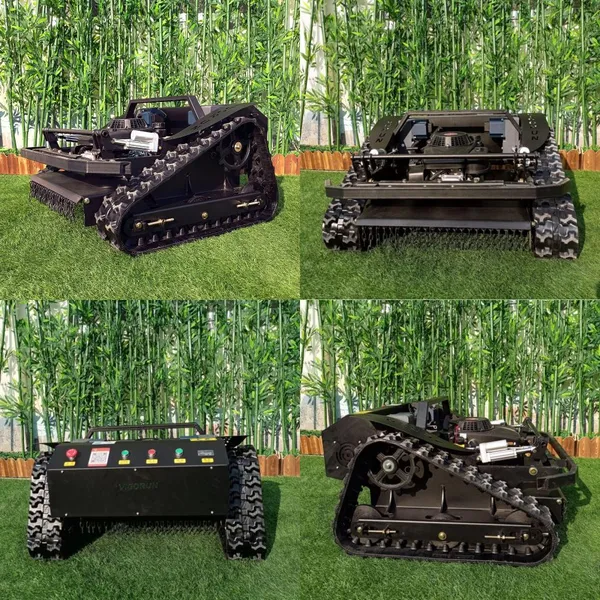
Vigorun Radio Control Mowing Euro 5/EPA Self-Propelled & Precise 6hp Remote Control Crawler MowerUS$ 1700 - 1790MOQ: 1 Set
-
Factory Manufacturer Vigorun MTSK1000 1000MM Commercial Branch Cutter Flail Mower rc Remote Petrol Lawnmower Mower Grass Cutter TractorUS$ 8000 - 8200MOQ: 1 Set
-
Vigorun VTW550 Remote Control Grass Cutter Tractor Robot Gas Lawn Mower Grass Cutter Small Electric Lawn Mower Vigorun Lawn MowerUS$ 1000 - 1250MOQ: 1 Set
-
Vigorun Tech Gasoline Remote Control Lawn Mower Self-Locking Slope Safety RC Mower Tiller for EmbankmentsUS$ 2800.00 - 2900.00MOQ: 1 Set
-
Mower Gasoline Grass Cutter Machine Remote Control 1000mm Cut 35 Degree Slope Flail Hammer for Overgrown LandUS$ 7500 - 7700MOQ: 1 Set
-
Vigorun VTLM800 Remote Control Electric Mower, Self-Locking Slope Safety Crawler Mower for Steep SlopesUS$ 2600.00 - 2700.00MOQ: 1 Set
-
Shrub and Brush Clearing MTSK800 MTSK1000 Flail Mower rc Remote Weeding Weeder MachineUS$ 2800 - 2900MOQ: 1 Set
-
RC Robot Lawn Mower Electric Remote Control Flail Grass Cutter Garden Cutting Machine MTSK1000US$ 8000 - 8200MOQ: 1 Set
-
Remote Manipulation Rubber Track Brush Cutter Industrial Flail Mower for Efficient Shrub ClearingUS$ 2000.00 - 2790.00MOQ: 1 Set
-
Vigorun MTSK1000 Rc Lawn Mower, Loncin 764CC Gasoline Engine Forestry Mulcher With Remote Control for ForestryUS$ 7500.00 - 7700.00MOQ: 1 Set
-
Vigorun VTC550 Zero Turn Electric Mower Quality Guaranteed Crawler Brush Cutter For Embankments & LeveesUS$ 1600 - 1690MOQ: 1 Set