
 Business License

Best Mower for Steep Hills: A 2026 Buyer's Guide for 30°-45° Slopes
In April 2025, a groundskeeper named Jose lost control of a 1,200-pound zero-turn on a 28° embankment behind a Houston retention pond. The mower rolled twice before pinning him against a chain-link fence. He survived. The mower didn't. The contractor's insurance carrier dropped them inside 90 days, and they spent the rest of the season subcontracting every job above 15°.
That story isn't rare. The U.S. Bureau of Labor Statistics counts roughly 90 fatal mower-related incidents every year in the country, and slope rollovers are a leading cause. If you're searching for the best mower for steep hills, you've already decided that sending another operator up the slope on a seated machine isn't the right answer. This guide walks through what actually works above 20°, where each mower category breaks down, and how to match a machine to the slope angle in front of you.
We build remote-controlled slope mowers and tools carriers in Weifang, Shandong, and ship them to operators in approximately 140 countries. The numbers below come from our own test ramps, public competitor spec sheets, and the field reports our distributors send back.
Why Conventional Mowers Fail Above 20°
Most ride-on and zero-turn mowers carry a manufacturer slope rating of 15°. A few stretch it to 20°. Above that, three things go wrong fast, and they go wrong in the order that gets operators hurt.
First, the center of gravity shifts past the wheelbase. A ride-on mower is tall, narrow, and top-heavy by design. The seat, fuel tank, and engine sit well above the axle line. On a 25° side-slope, an operator only has to hit a hidden gopher hole or a wet patch of bermudagrass before the chassis pivots past the tipping point.
Second, the wheels lose grip. Tires concentrate the machine's weight on four small contact patches. On wet grass or loose embankment soil, those patches slide before the operator can react.
Third, the engine starves. Flat-sump engines lose oil pickup at angle. Belt-driven decks slip. Hydrostatic transmissions overheat. The machine that climbed the slope yesterday quits halfway up today, and now there's a stalled mower on a 30° face with a person on top of it.
This is the engineering reality behind every OSHA slope-mowing fatality report. If your terrain spends any meaningful time above 20°, the right answer isn't a heavier ride-on or a better operator. It's a different machine category.
Quick check, do you actually need a steep-hill mower? Walk your worst slope with a digital inclinometer (any phone app works). If the answer is above 20° at any point, keep reading. If it's under 15°, a commercial zero-turn is still your most cost-effective choice. Browse our full mower lineup to see where remote-controlled equipment starts to make sense.
What "Best" Actually Means on a Steep Hill
"Best" is a slippery word. Before we name any model, here are the five criteria a real steep-hill mower has to clear:
Sustained slope rating, not a peak number from a promotional video, but the angle the machine will hold across a full mowing pattern under load.
Operator separation, how far the operator stands from the cut path. Anything less than 50 meters still puts a human in the rollover zone.
Ground pressure, how much weight presses on each square inch of slope surface. Wet levees, freshly seeded embankments, and saturated orchard terraces fail under wheel-point loading long before they fail under tracked footprint.
Cutting integrity at angle, a clean cut on a 35° face requires a deck that stays parallel to the slope, not one that gouges the uphill side and skims the downhill side.
Engine certification, CE, EURO V, EPA, and CARB compliance for your sales market. A non-compliant machine is a customs problem, not a slope solution.
Most marketing copy obsesses over criterion one and ignores the other four. The right buyer evaluates all five.
The Four Mower Categories for Steep Hills
![best mower for steep hills] (2)](https://img13.fr-trading.com/0/1_66_119760_512_512.jpg.webp?t=1779070187)
Every machine you'll find on a steep-hill search fits into one of four categories. Each has a real slope ceiling, a real cost ceiling, and a real failure mode.
1. Commercial Zero-Turn Mowers (Ceiling: 15°-20°)
The workhorse of flat and rolling lawn care. Brands like Scag, Ferris, and Exmark publish 15° ratings honestly. Some operators push them to 20° on dry, firm ground. Push them further and you're betting against the actuarial table.
Best for: Sports fields, golf fairways, large flat estates, and rolling commercial properties.
Where it fails: The moment the slope turns wet, soft, or above 20°.
2. Slope-Adapted Ride-Ons (Ceiling: 25°-30°)
Specialty ride-ons like the Ventrac 4500 with a ballast box or the Steiner 450 are engineered with low centers of gravity and wide stances. They genuinely hold a 25° slope better than a zero-turn, and a competent operator can take them to 30° on dry, firm grass.
Best for: Estate work, parks, and golf rough where occasional slopes hit the 25° range.
Where it fails: The operator is still on the machine. A 30° rollover at 700 pounds of curb weight will still kill someone. NIOSH data on agricultural and grounds-care incidents is consistent on this point, the operator stays in the danger zone until the machine is unmanned.
3. Walk-Behind and Stand-On Brush Mowers (Ceiling: 25°-35°)
Walk-behind brush cutters like the DR Pro or stand-on machines like the Wright Stander can technically climb steeper grades because the operator's weight isn't perched four feet in the air. A skilled operator handles 30°-35° on dry ground.
Best for: Light brush, fence lines, narrow strips, and occasional steep work where remote control isn't yet in the budget.
Where it fails: The operator is still on the slope, breathing exhaust, dodging projectile debris, and one wet patch away from a hospital trip. Productivity collapses above 30° because the operator slows down to manage footing.
4. Remote-Controlled Tracked Slope Mowers (Ceiling: 40°-55°)
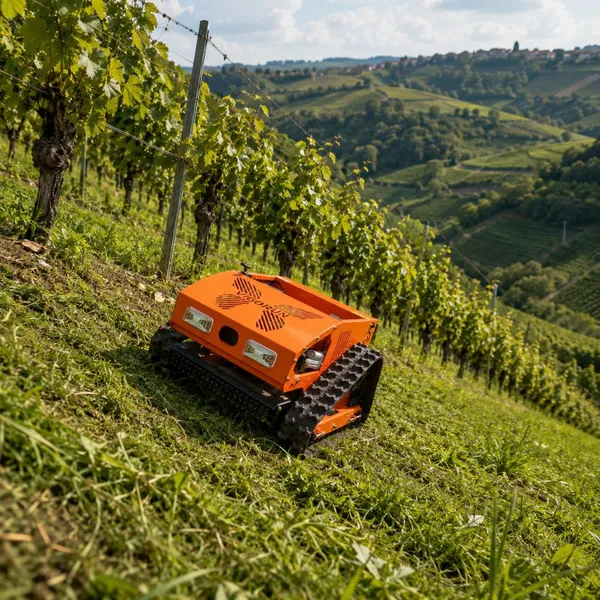
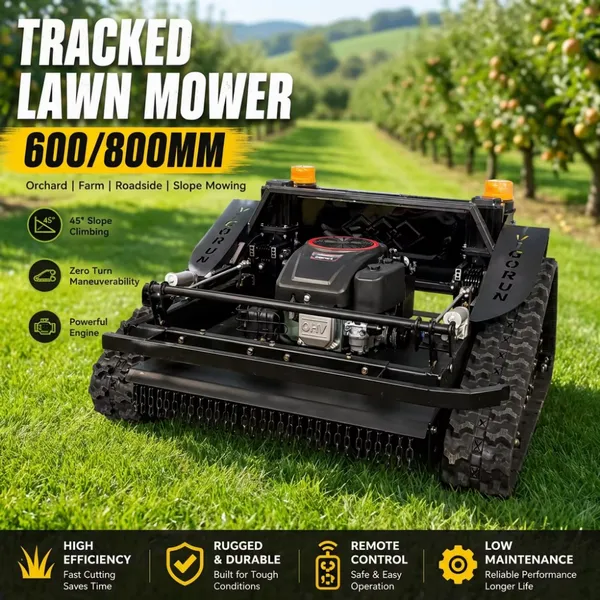
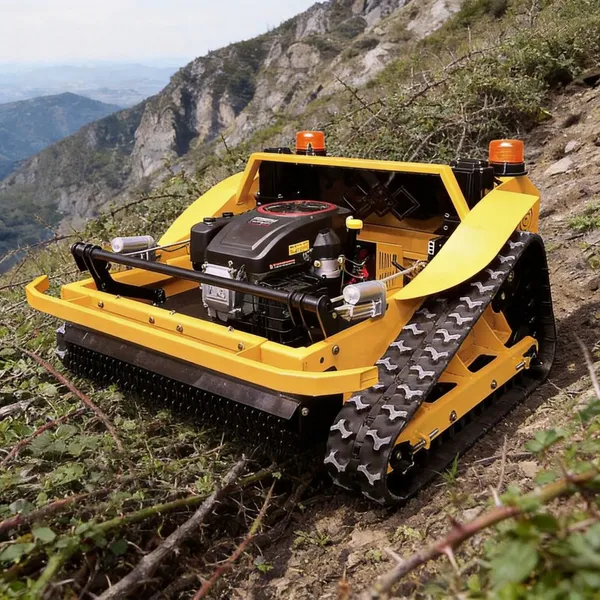
The category Vigorun, SPIDER, Green Climber, RC Mowers USA, and Mowrator all compete in. Tracked chassis, gasoline or diesel engines, 100-200 meter wireless remote, and operator separation that solves the safety problem at its root.
Best for: Anything above 25° where a human currently has to climb the slope. Levees, riverbanks, retention ponds, solar-array rows, orchard terraces, highway embankments, ski slopes, and dam faces.
Where it fails: Below 15° on flat, open ground, a remote-controlled tracked mower is overkill for a sports field, and the per-acre cost won't pencil out against a zero-turn.
Vigorun's Picks: Matching Mower to Slope Angle
For steep-hill work specifically, here's how the Vigorun lineup maps to slope angle and application. Every model below is CE / EURO V / EPA certified, 100% indoor and outdoor field-tested before shipment, and backed by a 1-year warranty plus lifetime parts support.
| Model | Max Slope (Sustained) | Drive | Best Application |
|---|---|---|---|
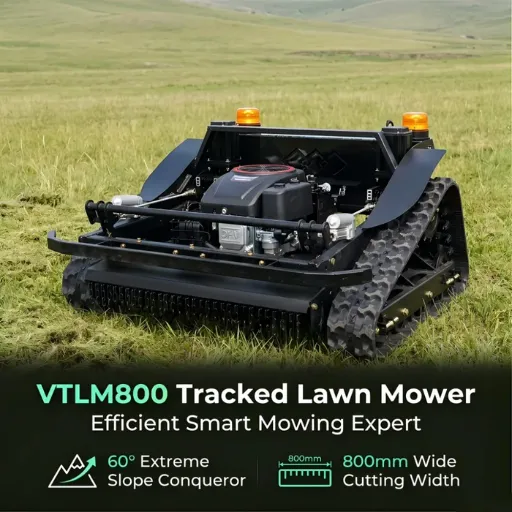
| VTLM800 | 45° | Rubber track | Levee, riverbank, retention pond, dam face |
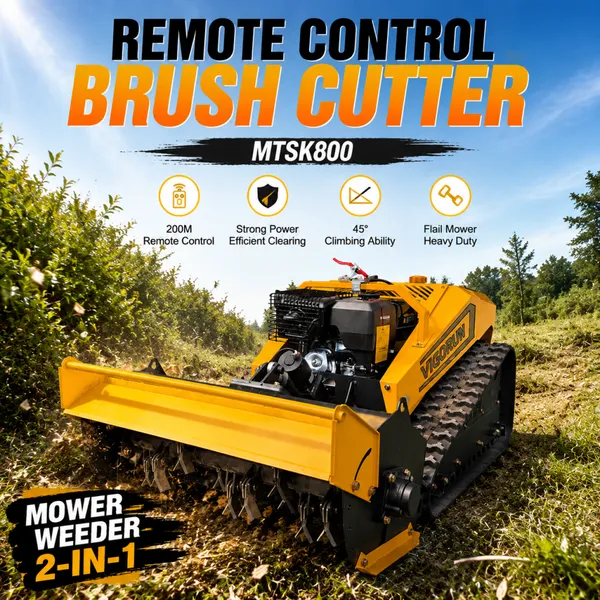
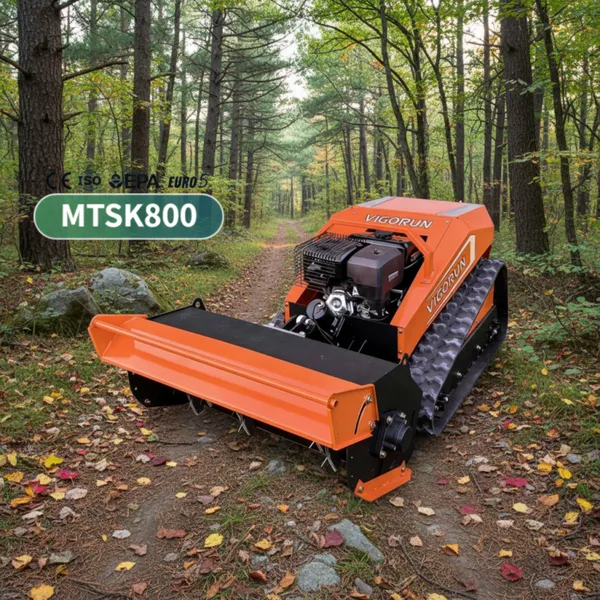
| MTSK800 | 40° | Rubber track | Orchard, solar farm, villa estate, brush |
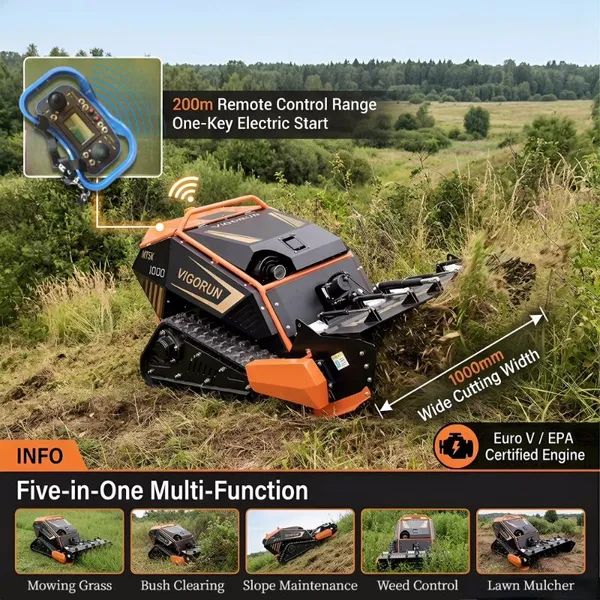
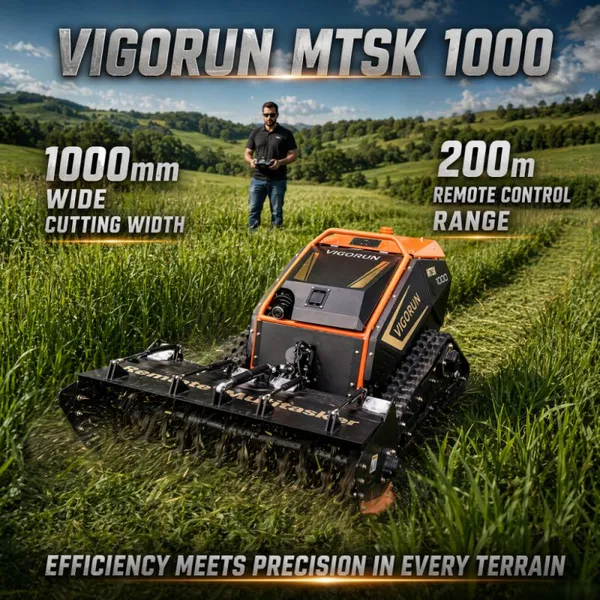
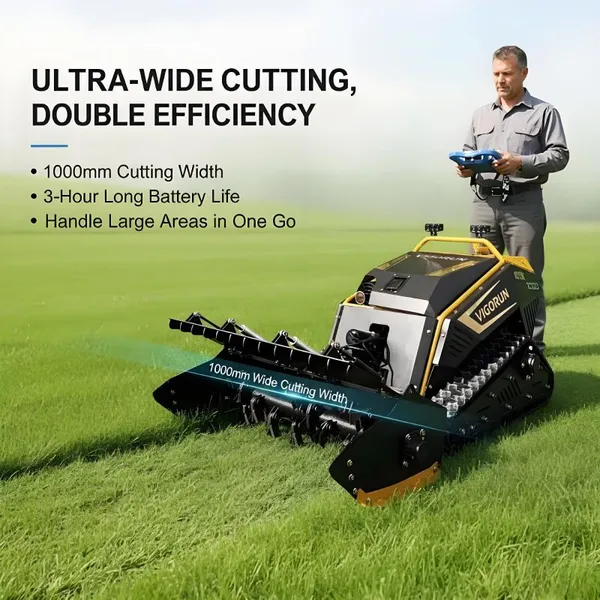
| MTSK1000 | 40° | Rubber track | Heavy brush, woody growth, vineyard, commercial right-of-way |
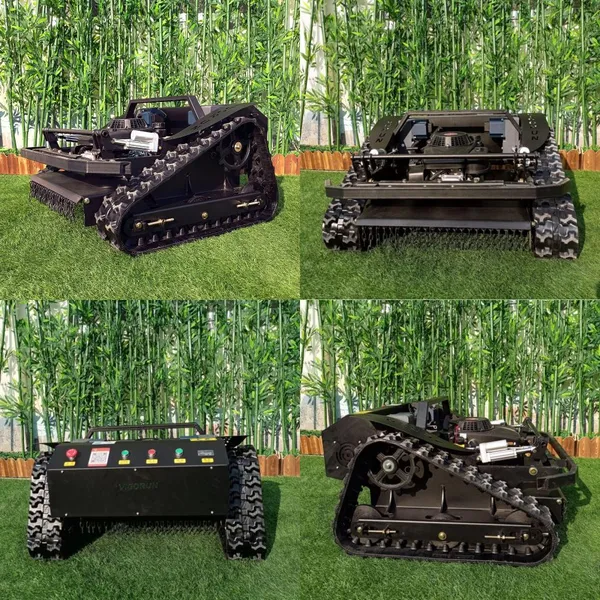
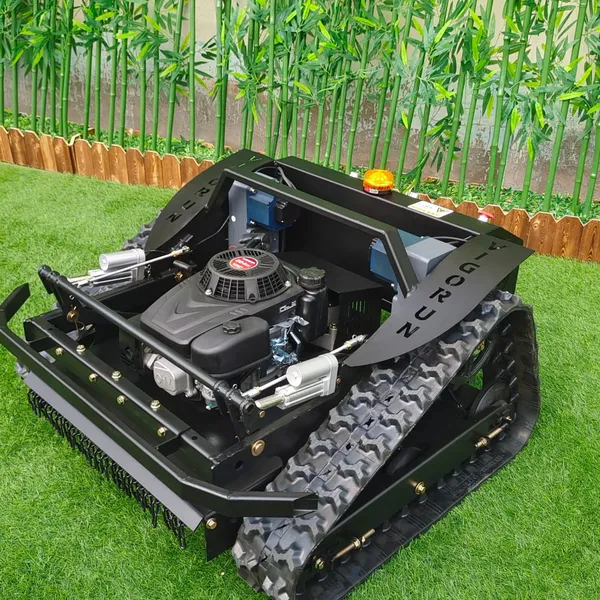
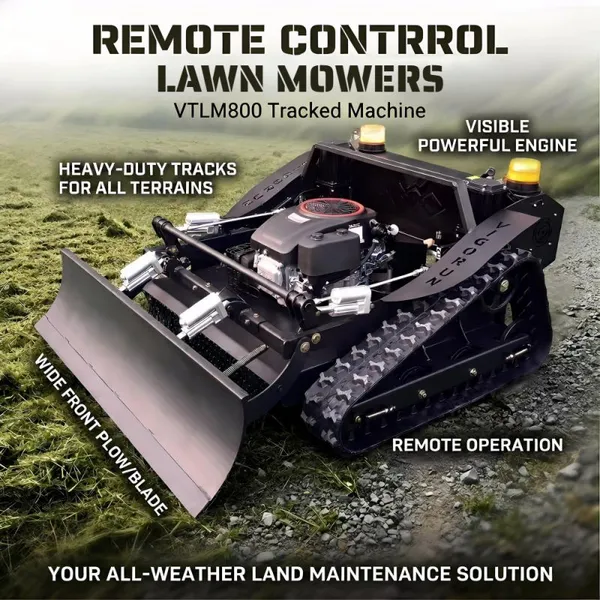
The VTLM800 rubber track slope mower is the steepest of the three because its chassis was engineered specifically for slope work: lower center of gravity, wider track stance, and a sump-modified engine that holds oil pressure at angle. The patent-pending MTSK800 trades a few degrees of slope ceiling for attachment flexibility, the same chassis runs a flail head, a rotary deck, and a snow plow.
Want a model recommendation tied to your specific terrain? Send us a slope profile and we'll come back within 24 hours with a model match and FOB Shandong pricing, no obligation.
Five Real Slope Jobs and Which Mower Wins
![best mower for steep hills] (3)](https://img13.fr-trading.com/0/1_291_120274_512_512.jpg.webp?t=1779070187)
Generic slope ratings only get you so far. Here's how the categories shake out on the five jobs that drive most steep-hill purchases.
1. Highway and Roadside Embankments (15°-35°)
Most municipal embankment work falls in this range. A slope-adapted ride-on like a Ventrac handles the lower end, but anything above 25° puts the operator near or above the rollover threshold. A remote-controlled tracked mower clears the entire range from a 200-meter operator position. Winner: MTSK800 with rotary deck, because the multi-attachment chassis lets the same machine run a flail in spring and a snow plow in winter.
2. Levees, Riverbanks, and Flood-Control Embankments (30°-45°)
This is the toughest steep-hill job in the catalog. Wet grass, soft soil, consistent steep faces, and a regulatory environment that punishes erosion. Last June, a flood-control district in Louisiana told us their hand-crew had quit twice in the previous 12 months, heat, snakes, and slope fatigue. They ordered three VTLM800 units, trained two operators in a single afternoon, and finished their season-long backlog in six weeks. Winner: VTLM800, because the rubber-track stance and slope-rated sump engine were designed for this exact application.
3. Solar Farm Vegetation Management (10°-30°)
Solar arrays sit on gentle slopes, but the operator-safety case is different, workers shouldn't be near energized panels and inverters with a push mower or a string trimmer. Winner: MTSK800 with flail head, because the 200-meter remote keeps the operator off the array entirely, and the flail clears the dense, woody growth that chokes a rotary deck between rows.
4. Orchard and Vineyard Slopes (20°-40°)
Orchard terraces are usually 20°-35° with the occasional steeper face on hillside vineyards. A standard tractor and brush hog can handle the lower angles but damages trunks on tight-row work. Winner: MTSK1000 with flail head, because the 800 mm cutting width fits row spacing and the flail handles the woody groundcover under fruit trees and grape vines.
5. Villa Estates and Sports Fields with Slope Features (15°-40°)
For estates with rolling terrain, particularly the steep faces around ponds, drainage channels, and ornamental features, sending an estate hand up on a stand-on mower is a liability lawsuit waiting to happen. A villa owner in Tuscany emailed us last September after his groundskeeper slid 12 meters down a 38° olive-grove terrace on a Ventrac. No injuries, but he ordered a VTLM800 the following week. Winner: VTLM800, because the 45° rating means no employee ever has to walk a hand-crew across a wet hillside on the property again.
What to Verify Before You Buy
A slope rating on a brochure isn't the same as a slope rating on your job site. Before you sign a purchase order, for any brand, including ours, verify the following:
Sustained vs. peak slope rating. Peak ratings (the 55°-65° marketing numbers) are for promotional video. Sustained ratings (40°-45°) are for actual work under load.
Track or wheel geometry. Ask for track width, track length, and center-of-gravity height. Those numbers don't lie. Wider stance plus longer footprint plus lower CG equals real slope capability.
Engine certification documents. CE Declaration of Conformity, EURO V Stage V emissions paperwork, EPA Tier IV documentation, and a CARB executive order if you're selling into California. Ask to see the documents before you pay the deposit, not after. Vigorun's full certification documentation is available on request.
Field-test methodology. Has the manufacturer's own QC team tested the machine on terrain that mirrors yours? Vigorun's QC team field-tests every unit on our internal slope ramps before it ships. Inside our Weifang factory, that step is non-negotiable.
Parts lead time and warranty scope. Slope work eats consumables, tracks, drive sprockets, undercarriage components, clutch packs. A slope mower without parts is dead weight. We commit to lifetime parts support and a 1-year warranty on chassis and electronics.
Sourcing Direct vs. Through a Distributor
![best mower for steep hills] (1)](https://img13.fr-trading.com/0/1_743_120548_512_512.jpg.webp?t=1779070187)
If you're a distributor evaluating remote-controlled slope mowers for your own dealer channel, the math is different from an end-user purchase.
European brands like SPIDER move through established dealer networks with a 25%-35% regional margin baked into the retail price. Mowrator and similar prosumer brands sell direct but skew toward residential SKUs. RC Mowers USA and Green Climber sit at the premium end with strong North American dealer networks and long-tail support pricing.
Factory-direct from Shandong is where the unit economics shift. FOB Shandong pricing on a comparably specified slope mower lands meaningfully below European retail, and the OEM customization window opens at MOQ 5 units, your color, your logo, your packaging, and certifications issued in your company name. A distributor in Brazil who switched from reselling a European brand to building their own private-label line on the MTSK800 chassis funded a complete spare-parts package out of the first-year margin differential.
Want the OEM playbook? Ask us for the MTSK800 OEM brief when you request a quote, it covers MOQ tiers, lead times, container loading, and the documentation path for CE / EURO V / EPA in your company name.
The Steep-Hill Buying Decision, Distilled
Pick the best mower for steep hills using three questions, in this order:
What's the worst slope on your worst job? Anything above 25° pushes you out of the ride-on category, full stop. Anything above 30° pushes you out of walk-behind. Above 35°, you're in the remote-controlled tracked category whether you want to be or not.
How often is the slope wet, soft, or recently rebuilt? Tracks beat wheels every time the ground stops being dry and firm. If your terrain is reliably dry, a wheeled slope mower may still pencil out. If it's not, the tracked footprint pays for itself in months one through twelve.
Is operator safety a fixable line item or a non-negotiable? If your insurance carrier is already asking questions about your slope work, or if you've had a near-miss in the last 24 months, remote-controlled is the only category that solves the safety problem at the source.
For most professional steep-hill operations above 25°, the answer is a remote-controlled tracked slope mower. For most operations above 35°, that mower needs the 45° rating and the sump-modified engine that the VTLM800 delivers. For mixed-attachment fleets, the MTSK800 earns its place. For heavy brush and woody growth, the MTSK1000 is the call.
Whichever category fits your terrain, stop putting an operator on the hill. The 200-meter remote, the 45° slope rating, and the 1-year warranty aren't luxury features. They're table stakes for safe commercial slope work in 2026.
Ready to evaluate a Vigorun against your specific slope? Request a quote and we'll come back within 24 hours with a model match, FOB Shandong pricing, and the full CE / EURO V / EPA documentation package. No obligation. No sales pressure. Just a number you can compare line-by-line against whatever quote you already have on your desk.
Recently Posted
-
Steep Slope 600mm Tracked 200m Remote Control 45 Degree Brushless Electric Lawn Mower
August 10, 2026*Integrated Drive System with 73 Percent Efficiency: The VTLM600 remote control lawn mower features a fully integrated brushless m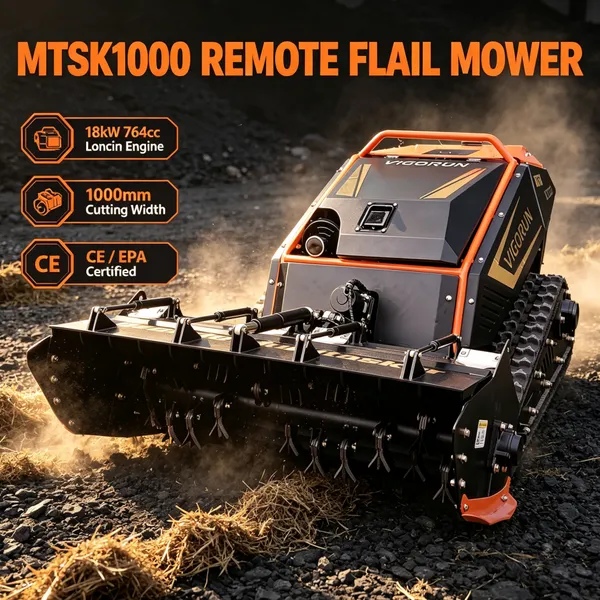 Read More
 -
Remote Controlled Pesticide Sprayer with 600L Tank 8.4m Boom for Agricultural Applications
August 10, 2026*Electric Start & 13kW Loncin Engine for Powerful Agricultural Spraying: Maximize field application efficiency with the SPRY60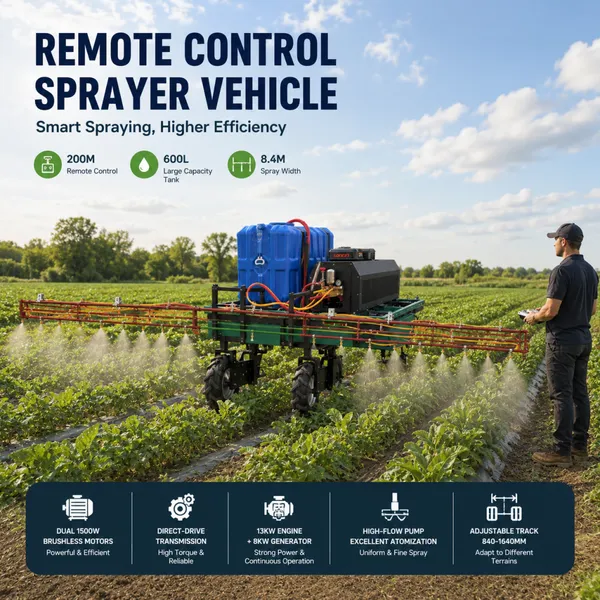 Read More
 -
Self Propelled Agricultural Boom Sprayer with Adjustable Track for Modern Farming
August 10, 2026*Electric Start & 13kW Loncin Engine for Powerful Agricultural Spraying: Maximize field application efficiency with the SPRY60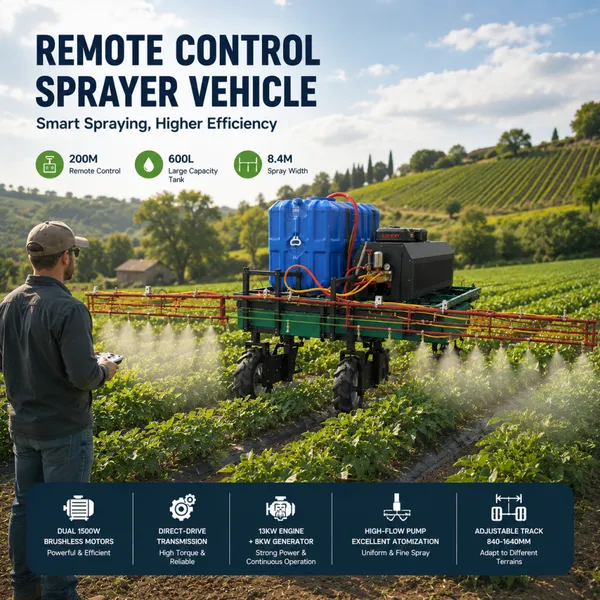 Read More
 -
Automatic Remote Control Agricultural Spray Machine with 600L Chemical Tank and Boom System
August 10, 2026*Electric Start & 13kW Loncin Engine for Powerful Agricultural Spraying: Maximize field application efficiency with the SPRY60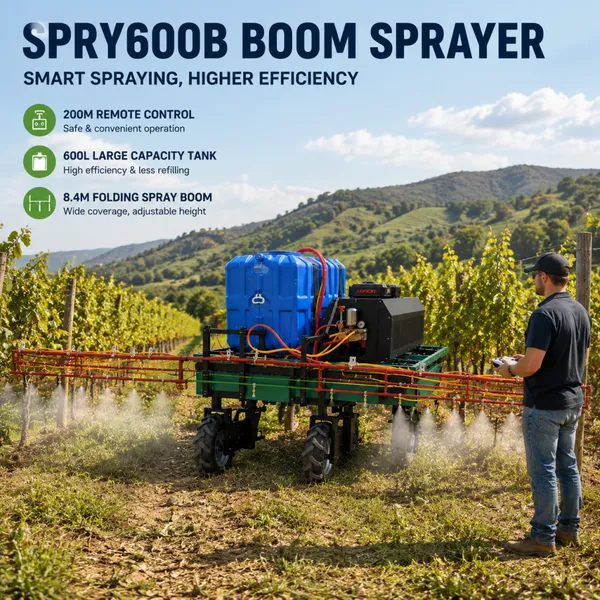 Read More

Contact Us
Recommended Products
-
 Vigorun Lawn Mower Robot, Industrial Dual 48V 1500W Motors MTSK1000 Mulcher Machine for Large LandscapesUS$ 7500.00 - 7700.00MOQ: 1 Set
 -
Farmland Orchards Battery Powered Mower Gasoline Golf Mower Robot Lawn Mower 3000m2 Vigorun Remote Control Grass MowerUS$ 2580 - 2700MOQ: 1 Unit
-
Vigorun MTSK800 Automatic Remote Control Grass Cutting Machine 48V 20Ah Battery Remote Flail MowerUS$ 2800 - 2900MOQ: 1 Set
-
Vigorun MTSK1000 Remote Control Mower 24hp Fail-Safe Slope Braking Remote Control Forest MulcherUS$ 8000 - 8200MOQ: 1 Set
-
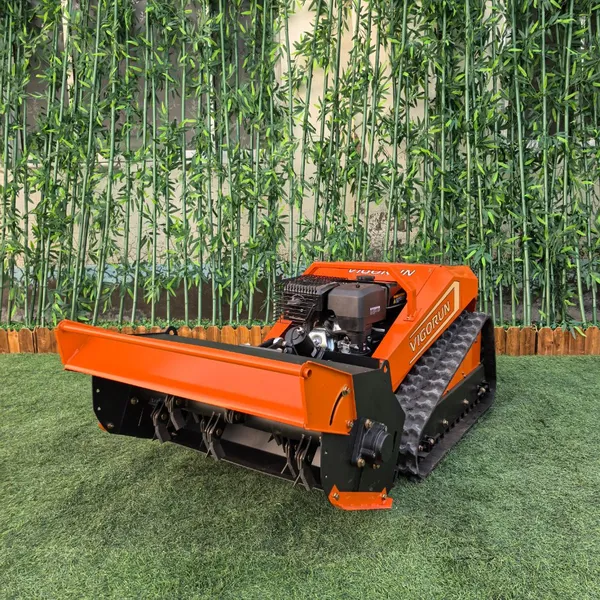
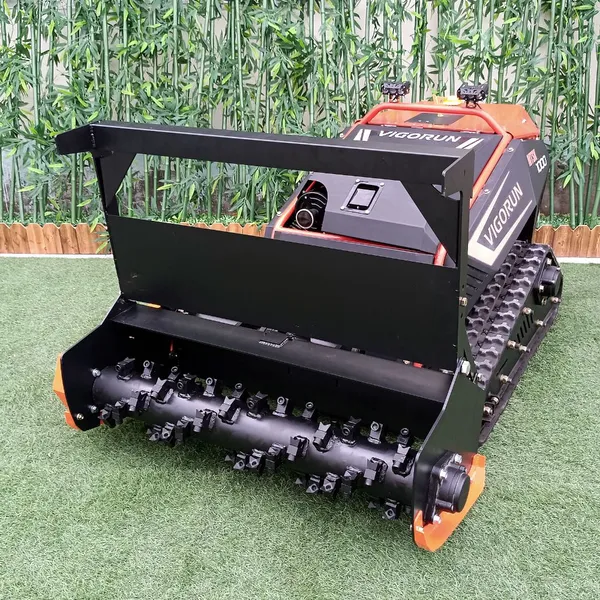
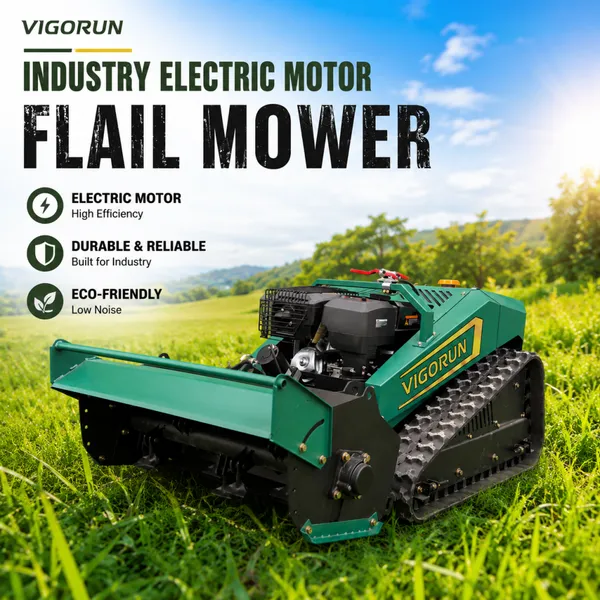
Industry Electric Motor Lawn Mower Flail Mower Atv Gasoline Hedge Trimmer Battery LawnmowerUS$ 2580 - 2900MOQ: 1 Unit
-
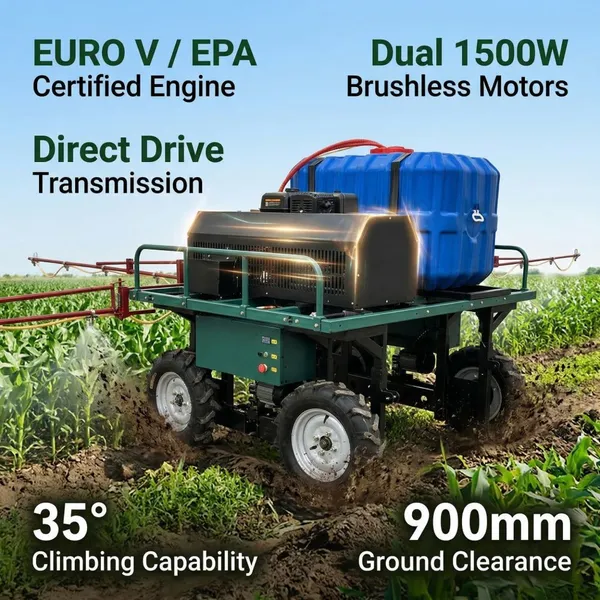
Vigorun Agricultural Tractor Sprayer Euro 5/EPA Electric Agricultural Sprayer 600l for VineyardsUS$ 2600 - 2700MOQ: 1 Set
-
Remote Control Tracked Hillside Mower 800mm Cutting Width 60 Degree Slope for Steep Terrain VegetationUS$ 2600 - 2700MOQ: 1 Set
-
Vigorun VTLM600 RC Lawn Mower Robot CE EPA Certified 45° Extreme Slope Mini Crawler Lawn MowerUS$ 1700 - 17900MOQ: 1 Set
-
Remote Controlled High Efficiency Fog Cannon Spraying Machine 600L Tank for Agriculture and Dust ControlUS$ 2800 - 2900MOQ: 1 Set
-
Vigorun Radio Control Mowing Euro 5/EPA Self-Propelled & Precise 6hp Remote Control Crawler MowerUS$ 1700 - 1790MOQ: 1 Set
-
Factory Manufacturer Vigorun MTSK1000 1000MM Commercial Branch Cutter Flail Mower rc Remote Petrol Lawnmower Mower Grass Cutter TractorUS$ 8000 - 8200MOQ: 1 Set
-
Vigorun VTW550 Remote Control Grass Cutter Tractor Robot Gas Lawn Mower Grass Cutter Small Electric Lawn Mower Vigorun Lawn MowerUS$ 1000 - 1250MOQ: 1 Set
-
Vigorun Tech Gasoline Remote Control Lawn Mower Self-Locking Slope Safety RC Mower Tiller for EmbankmentsUS$ 2800.00 - 2900.00MOQ: 1 Set
-
Mower Gasoline Grass Cutter Machine Remote Control 1000mm Cut 35 Degree Slope Flail Hammer for Overgrown LandUS$ 7500 - 7700MOQ: 1 Set
-
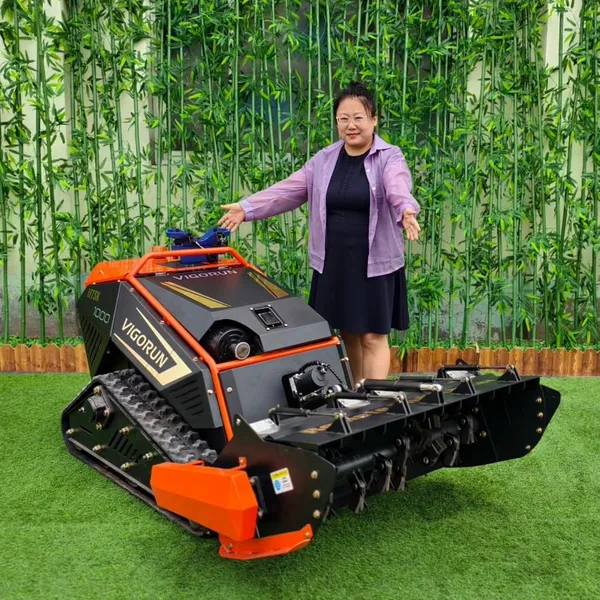
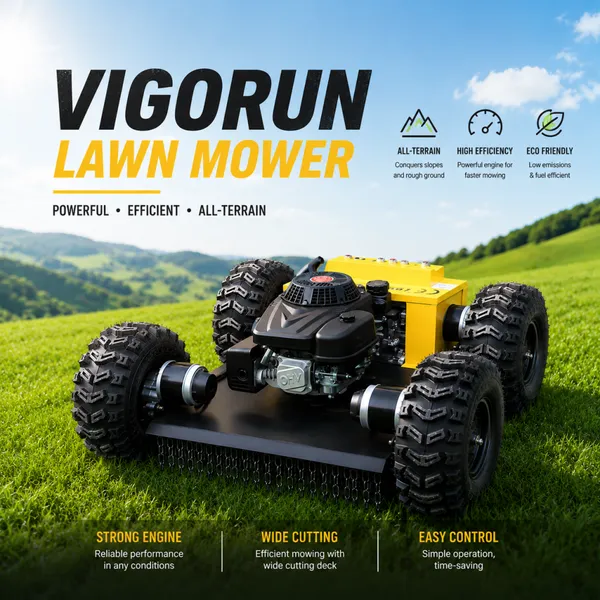
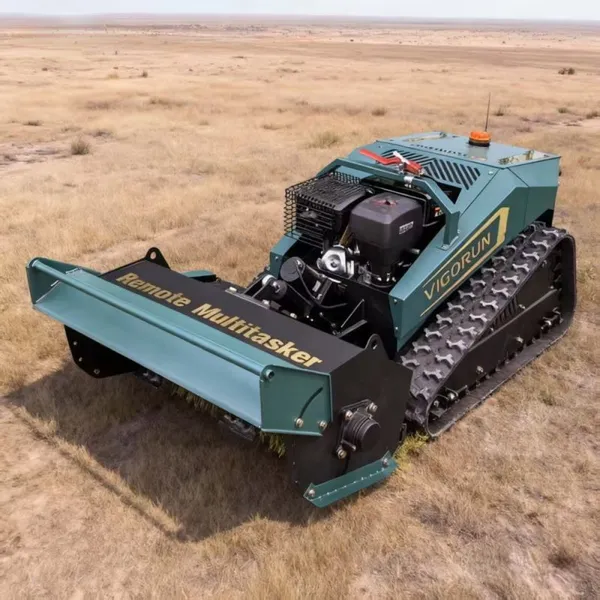
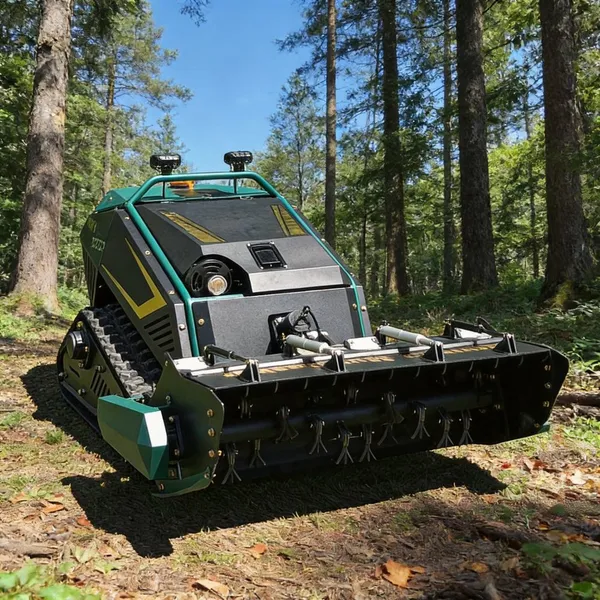
Vigorun VTLM800 Remote Control Electric Mower, Self-Locking Slope Safety Crawler Mower for Steep SlopesUS$ 2600.00 - 2700.00MOQ: 1 Set
-
Shrub and Brush Clearing MTSK800 MTSK1000 Flail Mower rc Remote Weeding Weeder MachineUS$ 2800 - 2900MOQ: 1 Set
-
RC Robot Lawn Mower Electric Remote Control Flail Grass Cutter Garden Cutting Machine MTSK1000US$ 8000 - 8200MOQ: 1 Set
-
Remote Manipulation Rubber Track Brush Cutter Industrial Flail Mower for Efficient Shrub ClearingUS$ 2000.00 - 2790.00MOQ: 1 Set
-
Vigorun MTSK1000 Rc Lawn Mower, Loncin 764CC Gasoline Engine Forestry Mulcher With Remote Control for ForestryUS$ 7500.00 - 7700.00MOQ: 1 Set
-
Vigorun VTC550 Zero Turn Electric Mower Quality Guaranteed Crawler Brush Cutter For Embankments & LeveesUS$ 1600 - 1690MOQ: 1 Set