
 Business License
Best Remote Control Lawn Mower for Hills: A 2026 Buyer's Guide
What if the safest way to mow a steep hill isn't to ride it, but to walk away from it?
Every year, ride-on mowers roll over on slopes that seemed manageable from the driver's seat. For landscaping crews, municipalities, and estate owners, a single incident can erase months of profit and put an operator in the hospital. A best remote control lawn mower for hills changes the equation: the operator stands on flat ground up to 200 meters away while a tracked machine handles the grade.
If you're comparing options for 2026, this guide will show you what separates a real slope mower from a marketing claim. You'll learn how steep a remote mower can climb, which specs matter most, and why factory-direct sourcing from Vigorun changes both price and support. We'll cover commercial buyers, distributors, and end-users, with enough detail to request a quote or spec out a fleet.
What Makes the Best Remote Control Lawn Mower for Hills the Right Choice?
The word "best" gets overused in mower marketing. For hill work, it should mean one thing: the machine keeps the operator safe while delivering a clean, consistent cut on the actual slope you face.
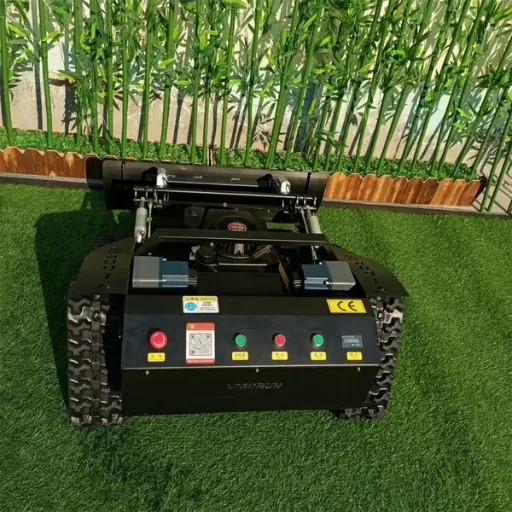
A real slope mower for steep slopes starts with a tracked chassis. Wheeled mowers lose traction on wet grass above 15°. Rubber tracks distribute weight, grip loose soil, and resist sliding sideways on side hills. The second requirement is a low center of gravity. A tall, top-heavy chassis is more likely to tip on uneven terrain, no matter how powerful the engine.
Engine power matters, but torque delivery matters more. A hydrostatic transmission lets the operator creep uphill or control descent without jerky stops. Blade engagement should be independent, so you can reposition on the slope without the deck spinning. Finally, the remote itself needs industrial-grade radio, not a toy-grade Bluetooth signal that drops behind a tree line.
Vigorun's take: We don't call a machine a slope mower unless it clears our own 45° test ramp on dry grass. Our VTLM800 rubber track slope mower is built specifically for this job, with a 200-meter 2.4 GHz remote and an emergency stop on both transmitter and chassis.
How Steep Can the Best Remote Control Lawn Mower for Hills Climb?
This is the first question most buyers ask, and it deserves a straight answer. A commercial 45 degree slope mower like the Vigorun VTLM800 is rated to climb up to 45° on dry, firm grass. On wet or loose terrain, we recommend backing down to 35° or less.
Why the difference? Traction. Dry grass lets the rubber tracks bite. Wet grass, loose soil, or leaf litter reduces grip the same way it would on a tractor tire. The machine may still climb, but the margin of safety shrinks. A responsible manufacturer tells you both numbers.
For context, most ride-on mowers become unsafe above 15°. Even premium zero-turns struggle past 20° because their weight distribution and caster wheels are designed for flat lawns, not embankments. That gap, between 15° and 45°, is where remote-controlled slope mowers earn their keep.
Mini-story: Tomás runs a landscaping crew near Santiago, Chile. Last season, a client asked him to bid a hillside residential property with slopes around 30°. He initially declined because his ride-on fleet couldn't handle it safely. After adding a tracked remote control mower for steep hills, he won the contract and finished the job with one operator instead of three. The machine paid for itself in 11 months on slope work alone.
Top Specs to Compare When Buying a Remote Control Mower for Hills
Use this checklist when evaluating any remote control mower for steep hills. The best machines score well across all seven categories, not just one.
| Spec | What to Look For | Why It Matters |
|---|---|---|
| Slope rating | 35°–45° on dry grass | Confirms the machine can handle real hills, not just gentle grades |
| Track type | Rubber tracked chassis | Better traction and stability than wheeled mowers on wet or uneven slopes |
| Control range | 150–200 meters line-of-sight | Keeps operator safely away from rollover and debris zones |
| Engine | Gasoline, EURO V / EPA compliant | Power for thick grass plus documentation for customs in regulated markets |
| Cutting width | 80–100 cm typical | Balances maneuverability between obstacles with job speed |
| Cutting height adjustment | Multiple positions | Lets you match grass condition and terrain without swapping decks |
| Safety features | E-stop, lost-signal stop, low-CG design | Protects the operator and the machine if something goes wrong |
Don't let a single impressive number distract you. A 45° rating is meaningless if the remote drops at 50 meters or the engine can't maintain blade speed under load. Read the full spec sheet, and ask for video of the machine on a real slope if the seller doesn't provide it.
Why Tracks Beat Wheels on Hills
Wheeled mowers work fine on flat lawns and gentle grades. On hills, they lose for three reasons.
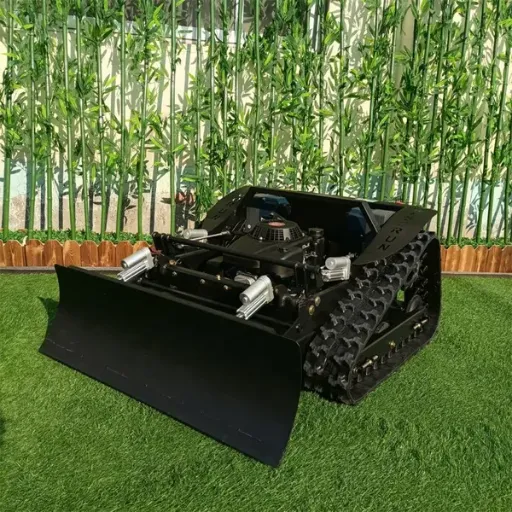
First, traction. A wheeled mower's contact patch is narrow. On damp grass, the tires slip before the slope gets steep. Tracks spread the machine's weight across a longer surface, so they grip where wheels spin.
Second, stability. Wheels sit higher off the ground. That raises the center of gravity and makes the chassis more likely to tip on side slopes or uneven ruts. A tracked chassis sits lower and wider, which is why Vigorun designs its slope mowers around a rubber-track platform.
Third, damage. Wheeled machines can rut soft ground, especially when they're operated repeatedly on the same path. Tracks distribute weight and reduce ground pressure, leaving the turf in better condition.
If your job site includes levees, retention ponds, riverbanks, or orchard terraces, tracks aren't optional. They're the reason a best remote control lawn mower for hills can go where traditional equipment can't.
Vigorun Slope Mowers: Built for Hills from the Factory Floor
Vigorun designs, builds, and tests every slope mower in its Weifang, Shandong facility. The same industrial corridor is home to Weichai Power and Caterpillar SEM, so the supply chain and engineering culture run deep.
Our current hill-focused lineup includes two primary options:
VTLM800 Rubber Track Slope Mower
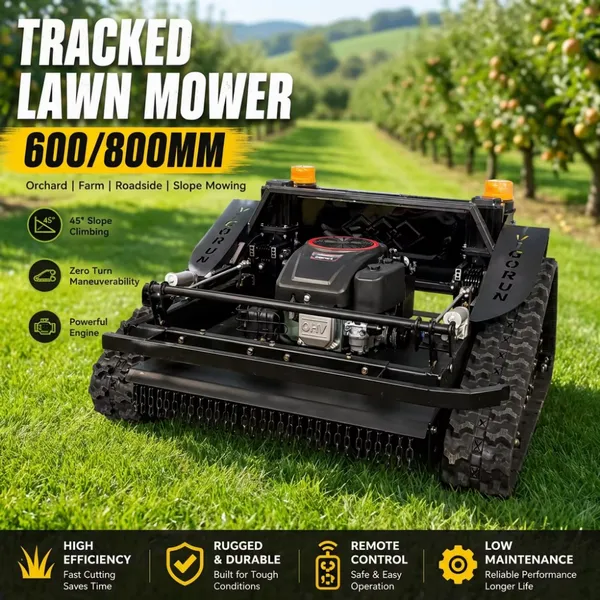
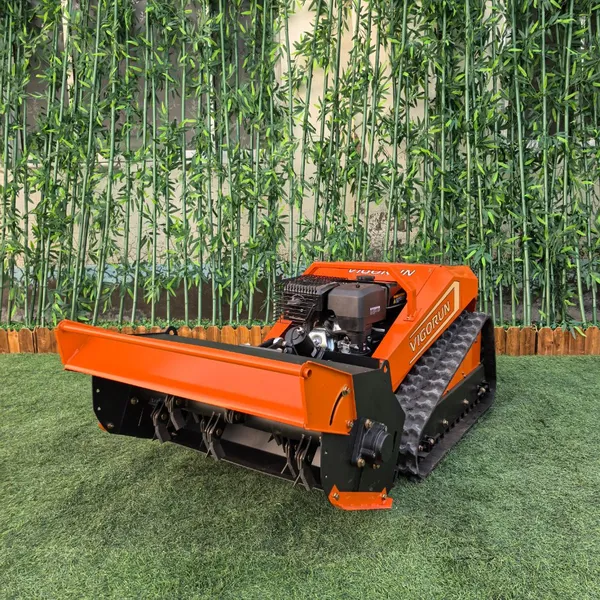
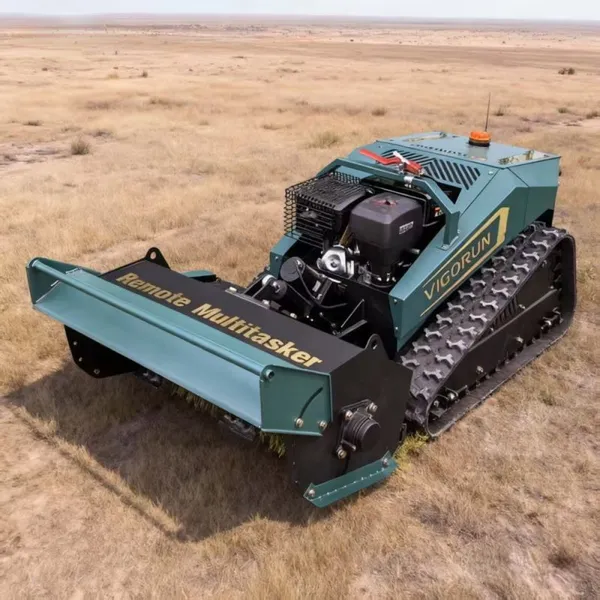
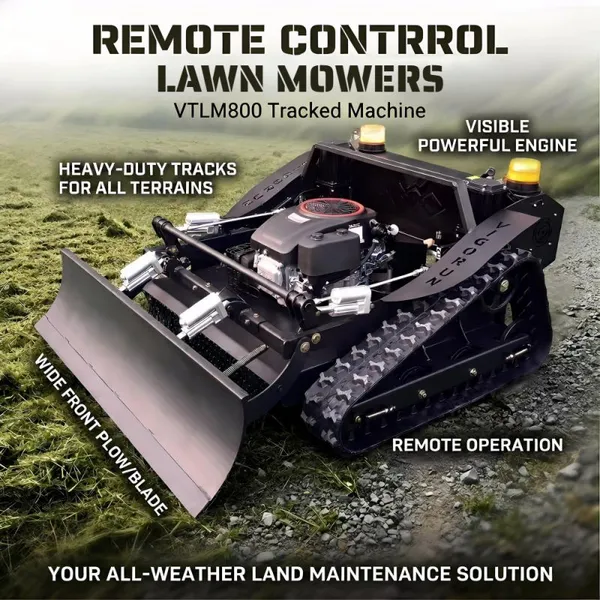
The flagship 45 degree slope mower for steep hills, embankments, and rough terrain. It features a tracked undercarriage, low center of gravity, and a 200-meter wireless remote. It's the right choice when slope angle is the main concern.
MTSK1000 Remote Control Flail Mower
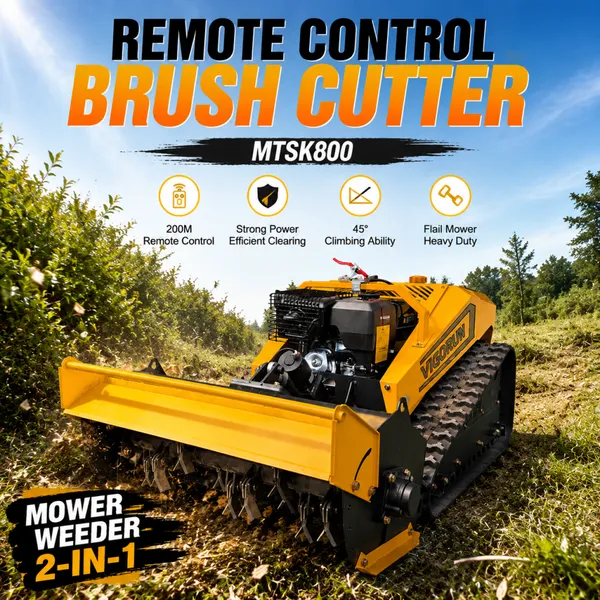
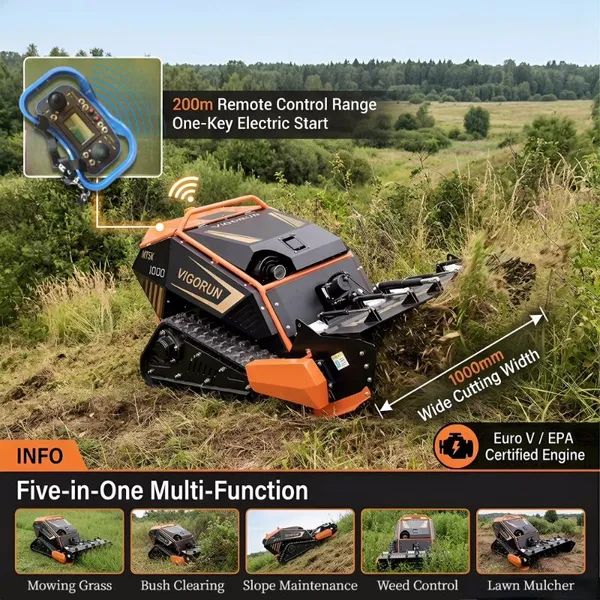
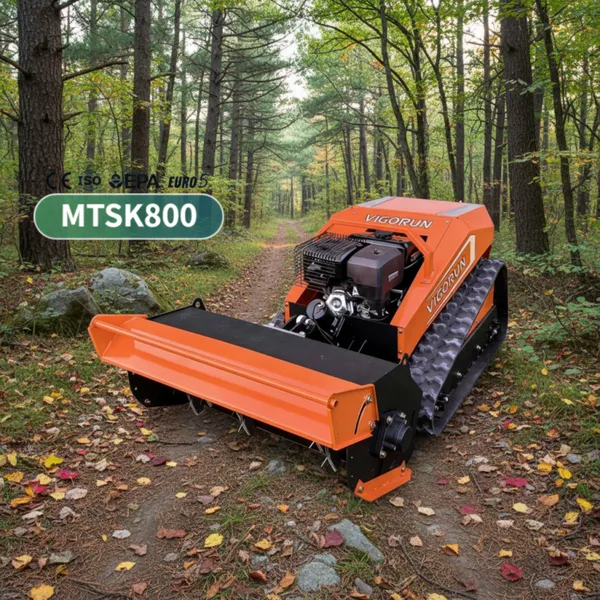
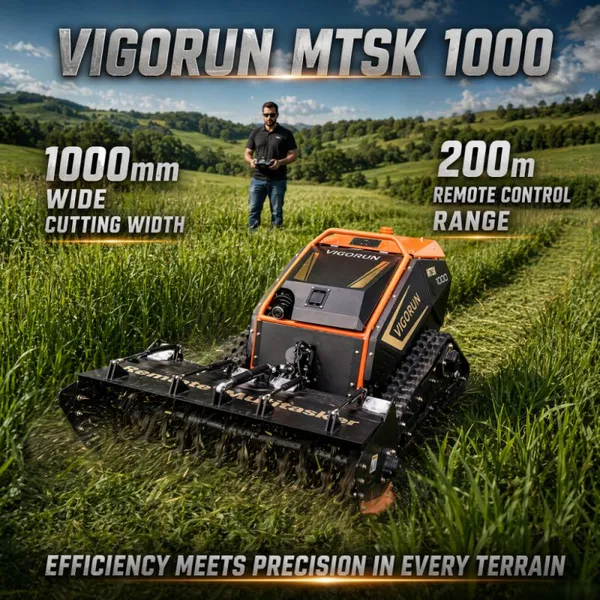
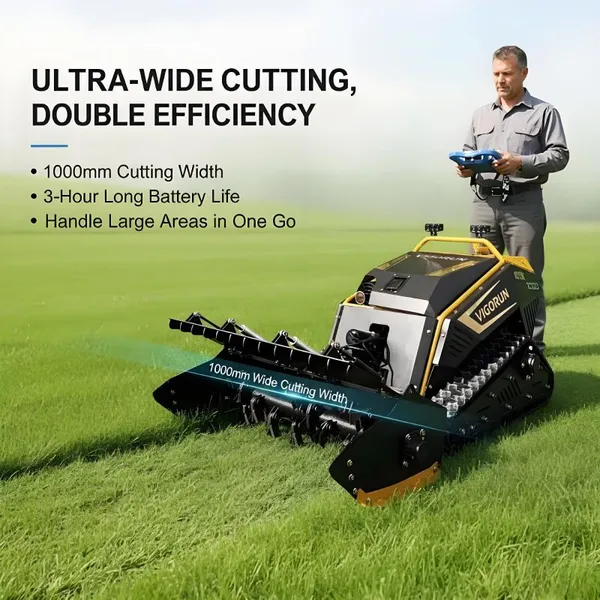
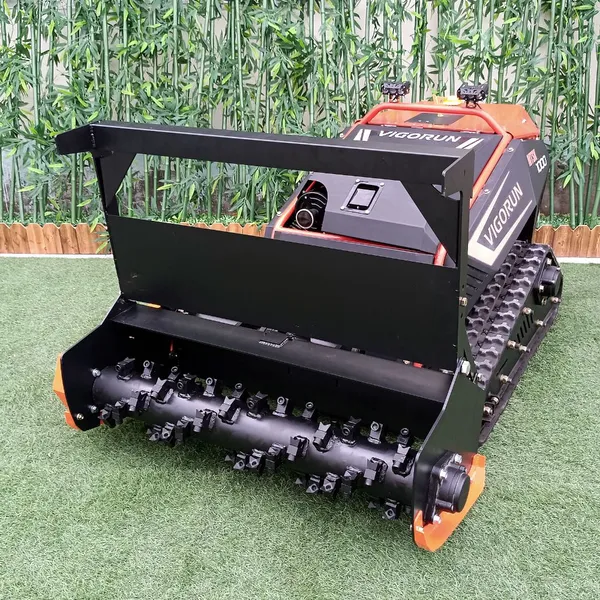
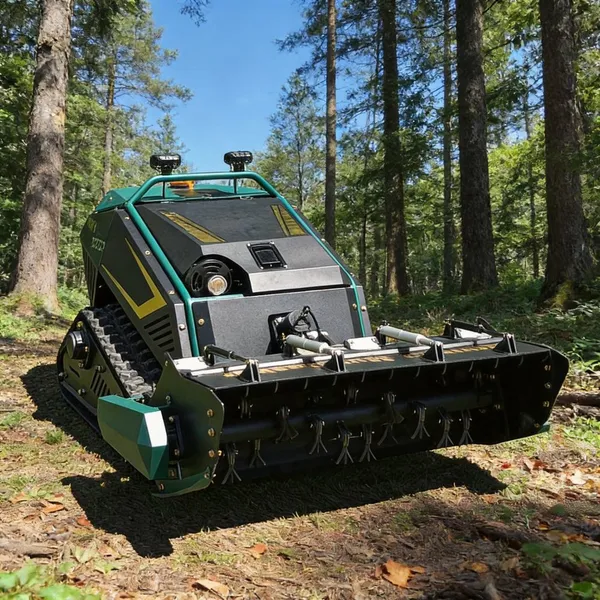
For hills with heavy brush, saplings, or overgrown vegetation, the MTSK1000 remote control flail mower adds flail-head cutting power to the same remote-controlled platform. It's the better fit for clearing work where grass has turned into brush.
Both models ship with CE / EURO V / EPA certification documentation, a 1-year warranty, and whole-life parts support. Every unit passes 100% indoor and outdoor field testing before it leaves the factory.
Safety Features That Matter on Steep Ground
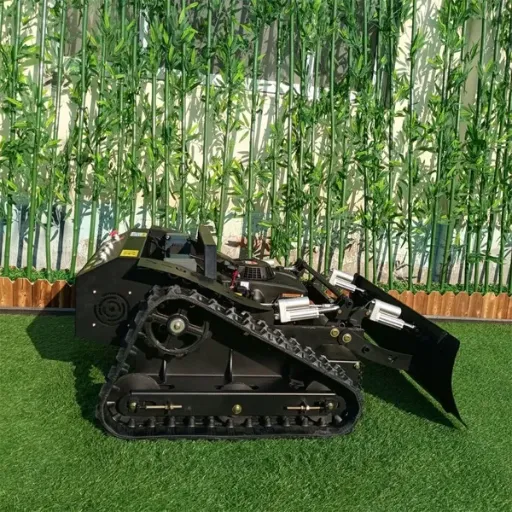
Operator safety is the whole point of a remote slope mower. These are the features that actually protect people on the job.
200-meter wireless control, the operator can stand on flat, stable ground away from the slope.
Emergency stop on transmitter and chassis, stops blade and motion immediately if something goes wrong.
Lost-signal failsafe, if the radio link drops, the mower stops moving and cutting.
Low center-of-gravity chassis, resists tipping on side slopes and uneven terrain.
Hydrostatic transmission, smooth speed control for climbing and descending.
Anti-roll geometry, designed to keep the machine stable at its rated slope limit.
No feature replaces good judgment. Walk the slope before mowing, check for loose rocks or holes, and reduce speed on wet grass. The machine gives you distance and stability; the operator provides the final safety check.
Best Remote Control Lawn Mower for Hills by Use Case
The best machine depends on what you're actually cutting. Here's how to match the job to the model.
| Use Case | Recommended Approach | Key Spec |
|---|---|---|
| Residential hillside lawns | VTLM800 tracked slope mower | 45° slope rating, 200 m range |
| Municipal levees and roadways | VTLM800 with routine maintenance contract | Low CG, whole-life parts support |
| Orchards and vineyards | Tracked mower or MultiTasker platform | Mow between rows, spray, haul on same chassis |
| Riverbanks and retention ponds | VTLM800 or MTSK1000 flail head | Tracks handle soft ground and brush |
| Commercial landscaping contracts | Fleet mix of slope and flail mowers | Cover both grass and overgrown sites |
Mini-story: A German municipal maintenance team bought their first Vigorun slope mower in early 2025. They used it on highway embankments that previously required a four-person hand crew. Within the first year, they cut labor hours on those jobs by roughly 60% and eliminated three near-miss incidents involving ride-on mowers. The crew now uses the same machine for levee maintenance and retention-pond edges.
Cost, ROI, and Why Factory-Direct Pricing Matters
Premium Western slope mowers can cost two to three times more than a comparable factory-direct unit. That markup often covers distribution layers, not better hardware. For buyers comparing the best remote control lawn mower for hills, the total cost includes the unit, shipping, import duty, parts, and support.
Vigorun ships factory-direct from Shandong. That removes the middleman markup and gives buyers direct access to the engineering and parts team. Lead time for standard configurations is typically 30–45 days, with container-load optimization for 20' and 40' high-cube orders.
ROI example: If a remote slope mower replaces two operators on dangerous hill work, labor savings alone often recover the machine cost within 12–18 months. Add lower insurance exposure, fewer sick days, and the ability to bid jobs that were previously too risky, and the payback can be faster.
Distributors and OEM partners: Vigorun offers custom colors, logos, packaging, and documentation from MOQ as low as 5 units. You can build your own brand on a chassis that's already deployed in 140+ countries. Contact our sales team for dealer pricing and container-load planning.
What to Avoid When Shopping for a Hill Mower
Not every machine marketed as a "slope mower" can handle real hills. Watch for these red flags.
Marketing-only slope claims. If the seller won't state a slope angle in degrees, assume the rating is inflated. Ask for video evidence on a measured grade.
Wheeled chassis with "hill kit." A wheeled mower with bigger tires is still a wheeled mower. It won't match a tracked machine on wet grass or loose soil.
Short-range or hobby-grade remotes. Bluetooth and consumer RC controllers often drop signal behind vegetation or at distance. Commercial work needs industrial 2.4 GHz radio.
No certification paperwork. If the engine isn't CE / EURO / EPA documented, you'll face customs delays or resale restrictions. Vigorun supplies the full documentation package with every container.
Unsupported parts promises. A low unit price means nothing if you can't buy a replacement track or blade in year three. Ask whether parts are stocked and how support is handled.
Frequently Asked Questions About Remote Mowers for Hills
How steep can a remote mower climb?
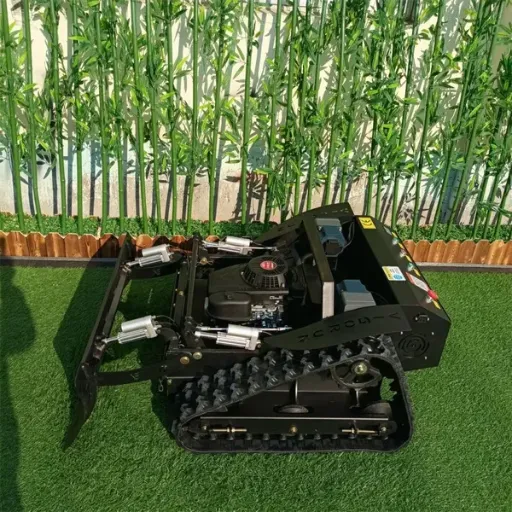
A commercial tracked remote mower like the Vigorun VTLM800 climbs up to 45° on dry, firm grass. On wet or loose terrain, stay at 35° or below. Always verify the manufacturer's stated slope rating with video or field testing.
Is a remote control mower safer than a ride-on on hills?
Yes, when used correctly. The operator stands away from the slope, so rollover and projectile-debris risks drop sharply. The OSHA guidance on agricultural equipment operation emphasizes keeping operators clear of hazardous machinery zones, which is exactly what a 200-meter remote achieves. You can read the relevant OSHA standard on mower and equipment safety here.
Can a remote mower handle wet grass on a slope?
It can, but with caution. Wet grass reduces traction, so reduce your slope angle and speed. Tracks handle wet conditions better than wheels, but no machine is immune to physics.
What's the best cutting head for hills with brush?
For thick grass and light brush, a rotary deck works. For woody brush, saplings, and overgrown vegetation, choose a flail head. The MTSK1000 is built for the heavier end of that range.
Do Vigorun engines meet EPA and EU standards?
Yes. All gasoline engines meet CE, EURO V, and U.S. EPA emission standards. The EPA's nonroad engine standards page explains the framework here.
Conclusion: Choose Distance, Traction, and Factory-Direct Support
The best remote control lawn mower for hills is the one that keeps your operator safely on flat ground while the machine handles the grade. Look for a tracked chassis, a real slope rating in degrees, a 200-meter industrial remote, and an engine with the certifications your market demands.
Vigorun's VTLM800 and MTSK1000 are built in our Weifang factory, 100% tested before shipment, and backed by a 1-year warranty plus whole-life parts support. Whether you're a landscaping contractor bidding steep jobs, a municipality protecting crews, or a distributor building your own brand, we can spec the right machine.
Ready to stop sending operators up dangerous slopes? Request a dealer quote and get FOB Shandong pricing within 24 hours.
Recently Posted
-
Steep Slope 600mm Tracked 200m Remote Control 45 Degree Brushless Electric Lawn Mower
August 10, 2026*Integrated Drive System with 73 Percent Efficiency: The VTLM600 remote control lawn mower features a fully integrated brushless m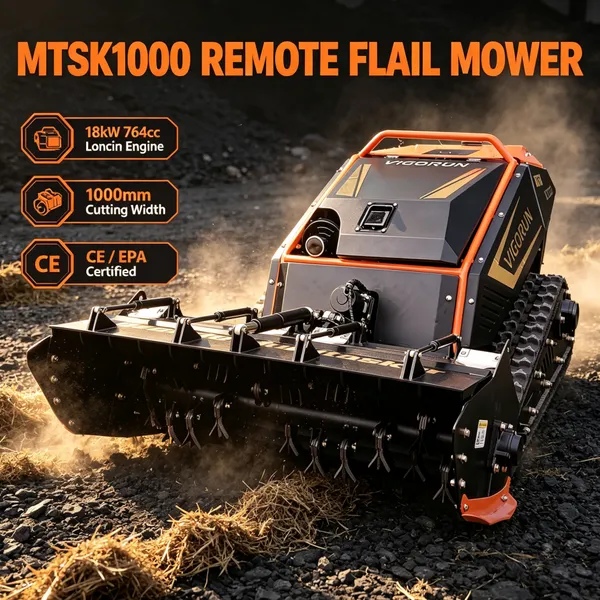 Read More
 -
Remote Controlled Pesticide Sprayer with 600L Tank 8.4m Boom for Agricultural Applications
August 10, 2026*Electric Start & 13kW Loncin Engine for Powerful Agricultural Spraying: Maximize field application efficiency with the SPRY60 Read More
 -
Self Propelled Agricultural Boom Sprayer with Adjustable Track for Modern Farming
August 10, 2026*Electric Start & 13kW Loncin Engine for Powerful Agricultural Spraying: Maximize field application efficiency with the SPRY60 Read More
 -
Automatic Remote Control Agricultural Spray Machine with 600L Chemical Tank and Boom System
August 10, 2026*Electric Start & 13kW Loncin Engine for Powerful Agricultural Spraying: Maximize field application efficiency with the SPRY60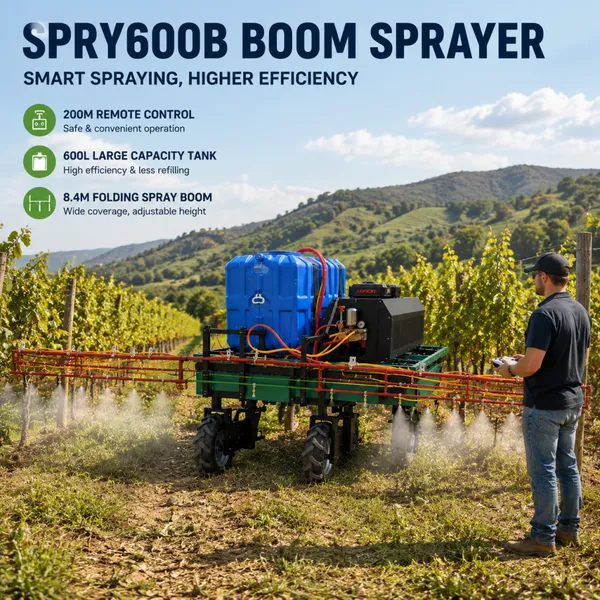 Read More

Contact Us
Recommended Products
-
 Vigorun Lawn Mower Robot, Industrial Dual 48V 1500W Motors MTSK1000 Mulcher Machine for Large LandscapesUS$ 7500.00 - 7700.00MOQ: 1 Set
 -
Farmland Orchards Battery Powered Mower Gasoline Golf Mower Robot Lawn Mower 3000m2 Vigorun Remote Control Grass MowerUS$ 2580 - 2700MOQ: 1 Unit
-
Vigorun MTSK800 Automatic Remote Control Grass Cutting Machine 48V 20Ah Battery Remote Flail MowerUS$ 2800 - 2900MOQ: 1 Set
-
Vigorun MTSK1000 Remote Control Mower 24hp Fail-Safe Slope Braking Remote Control Forest MulcherUS$ 8000 - 8200MOQ: 1 Set
-
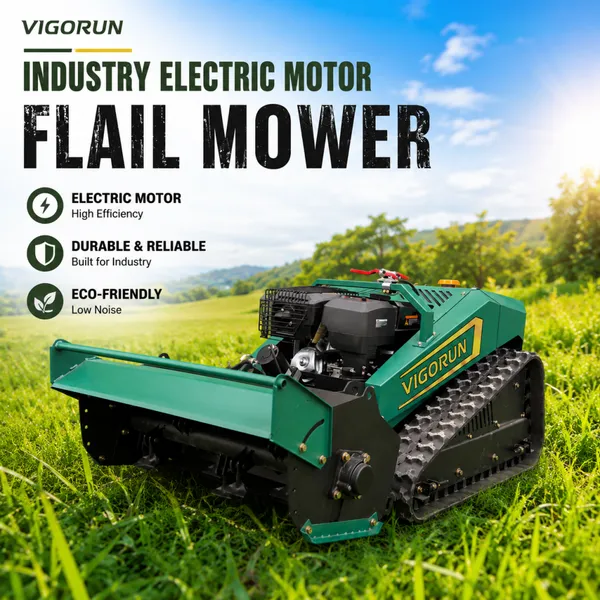
Industry Electric Motor Lawn Mower Flail Mower Atv Gasoline Hedge Trimmer Battery LawnmowerUS$ 2580 - 2900MOQ: 1 Unit
-
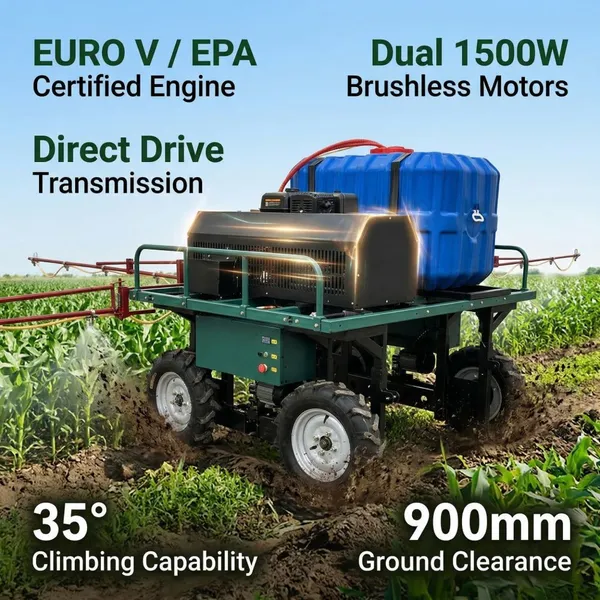
Vigorun Agricultural Tractor Sprayer Euro 5/EPA Electric Agricultural Sprayer 600l for VineyardsUS$ 2600 - 2700MOQ: 1 Set
-
Remote Control Tracked Hillside Mower 800mm Cutting Width 60 Degree Slope for Steep Terrain VegetationUS$ 2600 - 2700MOQ: 1 Set
-
Vigorun VTLM600 RC Lawn Mower Robot CE EPA Certified 45° Extreme Slope Mini Crawler Lawn MowerUS$ 1700 - 17900MOQ: 1 Set
-
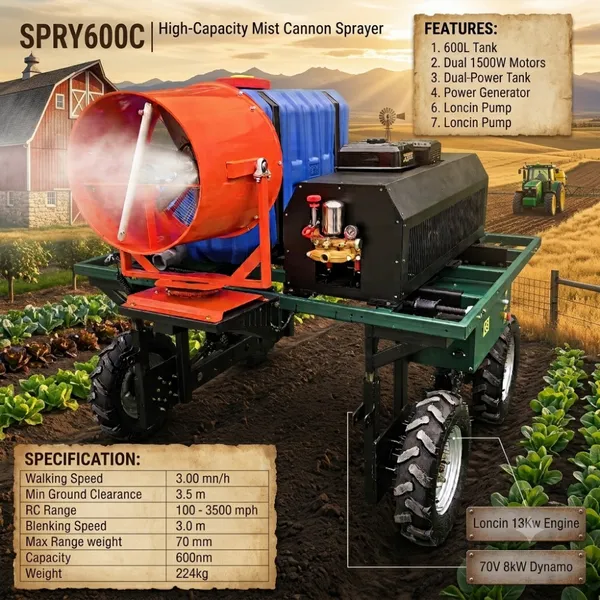
Remote Controlled High Efficiency Fog Cannon Spraying Machine 600L Tank for Agriculture and Dust ControlUS$ 2800 - 2900MOQ: 1 Set
-
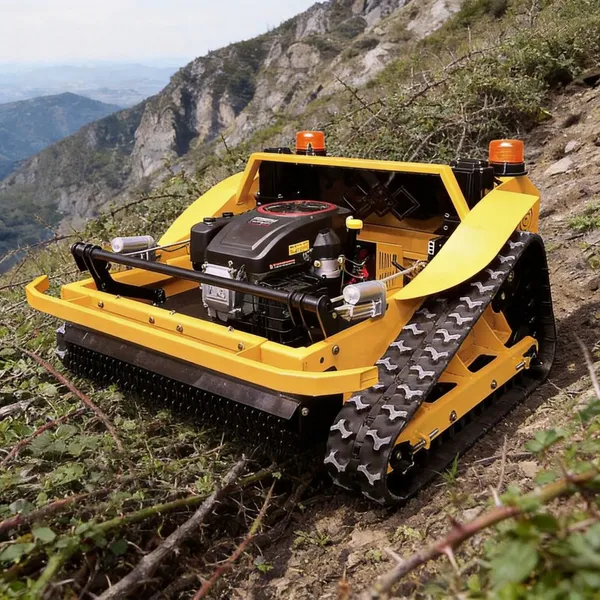
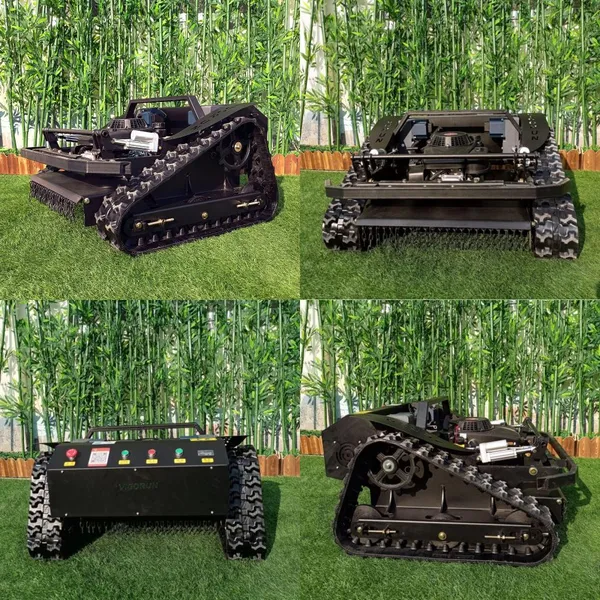
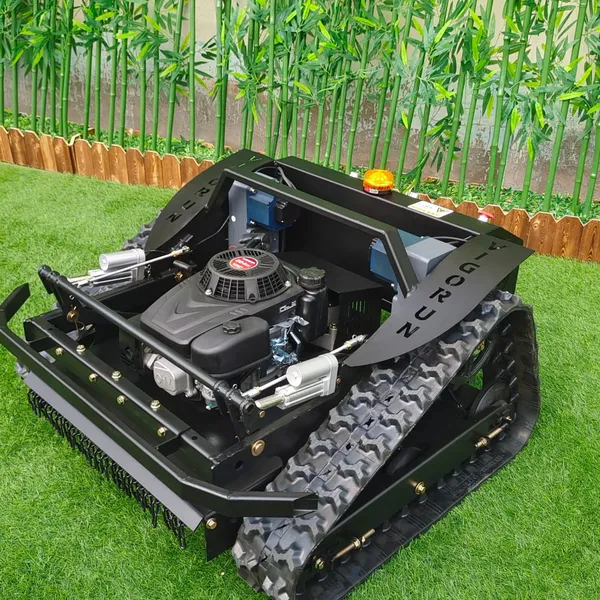
Vigorun Radio Control Mowing Euro 5/EPA Self-Propelled & Precise 6hp Remote Control Crawler MowerUS$ 1700 - 1790MOQ: 1 Set
-
Factory Manufacturer Vigorun MTSK1000 1000MM Commercial Branch Cutter Flail Mower rc Remote Petrol Lawnmower Mower Grass Cutter TractorUS$ 8000 - 8200MOQ: 1 Set
-
Vigorun VTW550 Remote Control Grass Cutter Tractor Robot Gas Lawn Mower Grass Cutter Small Electric Lawn Mower Vigorun Lawn MowerUS$ 1000 - 1250MOQ: 1 Set
-
Vigorun Tech Gasoline Remote Control Lawn Mower Self-Locking Slope Safety RC Mower Tiller for EmbankmentsUS$ 2800.00 - 2900.00MOQ: 1 Set
-
Mower Gasoline Grass Cutter Machine Remote Control 1000mm Cut 35 Degree Slope Flail Hammer for Overgrown LandUS$ 7500 - 7700MOQ: 1 Set
-
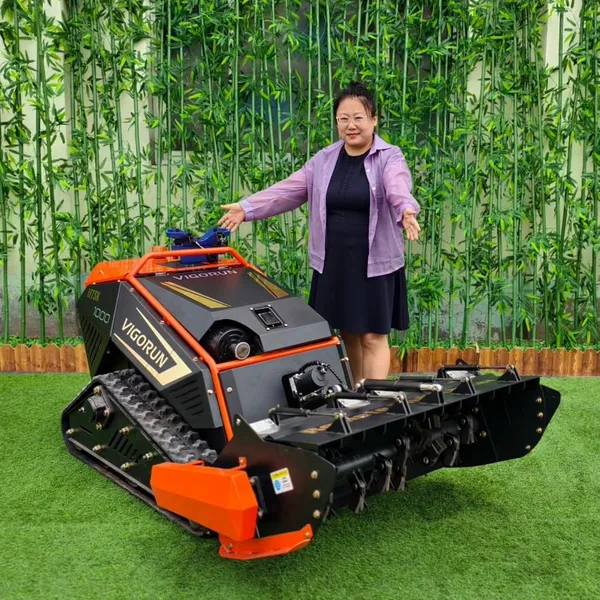
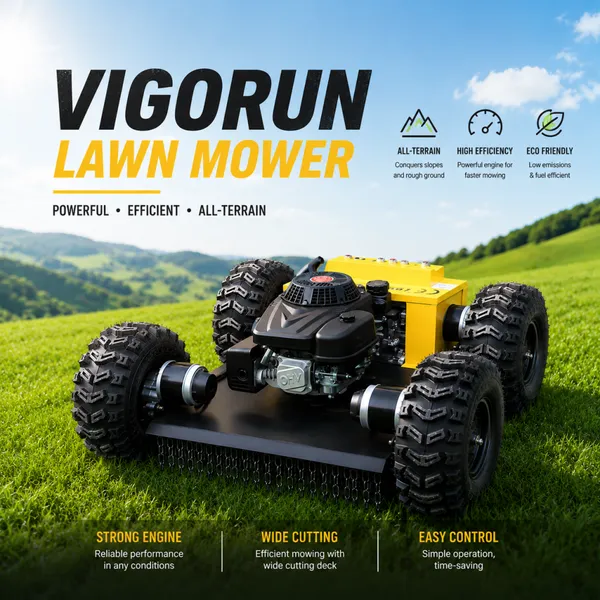
Vigorun VTLM800 Remote Control Electric Mower, Self-Locking Slope Safety Crawler Mower for Steep SlopesUS$ 2600.00 - 2700.00MOQ: 1 Set
-
Shrub and Brush Clearing MTSK800 MTSK1000 Flail Mower rc Remote Weeding Weeder MachineUS$ 2800 - 2900MOQ: 1 Set
-
RC Robot Lawn Mower Electric Remote Control Flail Grass Cutter Garden Cutting Machine MTSK1000US$ 8000 - 8200MOQ: 1 Set
-
Remote Manipulation Rubber Track Brush Cutter Industrial Flail Mower for Efficient Shrub ClearingUS$ 2000.00 - 2790.00MOQ: 1 Set
-
Vigorun MTSK1000 Rc Lawn Mower, Loncin 764CC Gasoline Engine Forestry Mulcher With Remote Control for ForestryUS$ 7500.00 - 7700.00MOQ: 1 Set
-
Vigorun VTC550 Zero Turn Electric Mower Quality Guaranteed Crawler Brush Cutter For Embankments & LeveesUS$ 1600 - 1690MOQ: 1 Set